“We’re not your nannies,” my mother laughed when I asked her to watch my sick four-year-old for just three hours. She had a brunch to attend in the Porsche I paid for. I quietly made other arrangements. By Friday, she was calling me in a panic. She had no idea what I’d found in the bank statements.
I am Arthur. I am 34 years old. And for the last five excruciating years of my life, I single-handedly funded my parents’ entire existence. I bought the roof over their heads when they were facing total financial ruin. I paid their property taxes, their utility bills, and their expensive medical insurance premiums. I even leased the pristine pearl-white Porsche 911 sitting right now in their perfectly manicured driveway. I gave up my own financial security to build a fortress around them.
But when I desperately needed them for just three hours so I could secure my own family’s future, my mother laughed through the phone. “We are not your nannies,” she told me, laughing at my panic just before stepping into the luxury sports car my salary paid for.
She claimed she had to attend a neighborhood brunch. But there is one massive earth-shattering detail they did not know. They honestly believed the house they lived in was protected by a bulletproof family trust. They thought I was just a soft, obedient, easily manipulated son who would endlessly absorb their disrespect and keep writing checks to keep the peace. They had absolutely no idea that I had spent the last several months quietly restructuring our entire financial relationship through a private real estate holding company.
And right now, as they are desperately leaving me dozens of voicemails, begging for forgiveness, crying about their credit cards declining at the grocery store checkout line, and screaming at a tow truck driver, they are learning a very hard, very permanent lesson about leverage. That Tuesday morning was when everything shattered into a million pieces. The email chime on my phone was offensively cheerful. It was Tuesday morning, just past 5:00. I was standing in the dark hallway of my house, exhausted, clutching a lukewarm cup of coffee. I squinted at the bright screen. The subject line read, “Final round interview, partner position.”
My heart skipped a beat. This was the email I had been grinding toward for fifteen brutal years in the corporate finance sector. It represented a massive salary bump, lucrative stock options, and the kind of generational wealth I desperately wanted to build for my wife, Elena, and our four-year-old son, Oliver. It meant finally fully funding his college fund. It meant a secure 401(k). It meant we could finally breathe.
But there was a massive immediate problem. From the bedroom down the hall, Oliver coughed. It was a harsh, dry, rattling sound that instantly twisted my stomach into knots. He had been sent home from his preschool two days ago with a severe fever. Elena, who works as a trauma nurse in a wildly understaffed emergency room, had already burned through her available personal leave, covering his first forty-eight hours of sickness. I watched her that morning, pulling on her scrubs, dark circles under her eyes, looking absolutely defeated. Calling out of her shift today was simply not an option without facing severe disciplinary action.
It was my turn to step up and manage the crisis. My partner interview was scheduled for 10:00 sharp. It was not a casual Zoom call. It was an in-person boardroom panel with six of the most intimidating senior executives in the firm. I obviously could not bring a sick, crying, feverish toddler into a high-stakes corporate negotiation that would determine the entire trajectory of my career. I frantically ran through my options. Every babysitter we knew was booked or unavailable on such short notice. I had exactly one lifeline left. I pulled up my contacts on my phone and stared at my mother’s name.
My heart hammered against my ribs. There was always a familiar acidic anxiety pooling in my gut whenever I had to ask my parents for absolutely anything. It was a preemptive brace for disappointment, a feeling I had carried since childhood. But I rationalized it to myself. I told myself this was different. I wasn’t asking for money. I wasn’t asking for a massive life-altering sacrifice. I just needed three hours of basic supervision. Three hours so my sick son could sleep on their comfortable couch while I drove downtown, secured a massive promotion, and drove right back.
A promotion that ironically would indirectly ensure their continued financial safety. I tapped the screen. The phone rang twice. She picked up, and her tone was immediately sharp, as though my call were an inconvenience.
“Arthur, what is it? It’s quite early, and I’m very busy preparing for the day.”
I swallowed my pride, pushing down the familiar sting of her coldness.
“Hi, Mom. Nothing’s wrong, but Oliver is quite sick. He has a fever and can’t go to preschool. Elena is already on her way to the hospital for her shift. Listen, I have the final partner interview at 10:00 today. I really need you and Dad to watch him for just three hours—just until 1:00. He’s exhausted. He’ll probably sleep on the sofa the entire time.”
The silence on the other end of the line was thick, heavy, and suffocating. I could hear the faint sound of a television news anchor in the background. I pictured her standing in the expensive custom kitchen I had paid to have remodeled, leaning against the imported quartz countertops I had picked out, wearing a look of profound theatrical inconvenience.
Then she let out a short, sharp scoff. It was not a sympathetic sigh of a grandmother worried about her sick grandson. It was a laugh of pure, unadulterated irritation. “Arthur, you cannot be serious,” she said, her voice dripping with condescension.
“Your father has a very important golf tournament at the country club this morning, and I have a highly anticipated brunch with the neighborhood ladies. It’s my turn to host the pre-brunch cocktails. We’re taking the Porsche. We are not your nannies. You and Elena make perfectly good salaries. Figure it out. You’ll just have to reschedule your little meeting, or Elena can take the day off. That’s what mothers are for.”
I froze. The words hung in the quiet of my hallway, heavy with contempt.
We are not your nannies. Reschedule your little meeting. The sheer contempt in her voice was paralyzing. She had just reduced a fifteen-year career milestone—the pinnacle of my professional life—to an annoying scheduling conflict. She had implied that I, the son who had single-handedly rescued them from a humiliating public bankruptcy, was treating them like hired help simply by asking for one isolated, desperate favor. Behind the initial shock, a cold, hard, terrifying anger began to crystallize in my chest. I gripped the phone until my knuckles turned white. I thought about the late night panic attacks I suffered trying to balance their debts.
I thought about the investments I had liquidated to wipe their massive financial slate clean. I thought about the luxury car she was about to drive to a brunch to impress a group of superficial women she secretly despised. “You are right, Mom,” I said. My voice was unnervingly steady. I did not yell. I did not list my grievances. I did not beg her to reconsider.
“You are not my nannies. Have a great brunch.” I hung up the phone before she could say another word. The migraine that had been forming behind my right eye suddenly vanished. The crippling anxiety in my stomach was entirely gone, replaced by a glacial mechanical clarity that I usually reserved for hostile corporate takeovers. The illusion was dead. They were not my family. They were financial parasites who had just arrogantly insulted their sole benefactor. I walked into my home office, opened my laptop, and realized I needed to surgically fix a catastrophic mistake I made five years ago.
To truly comprehend the absolute audacity of her refusal and the chilling resolve that took over my body that morning, you have to understand the deeply unbalanced history of my family. My entire life has been a textbook study in toxic favoritism and financial exploitation. From the time I was a teenager, the roles in our household were rigidly defined. I was the responsible one. I was the reliable workhorse. I was Arthur the planner, Arthur the fixer, Arthur the one who would show up and clean the mess. My older brother, Julian, was the golden child.
Julian was thirty-six years old and had never held a legitimate steady job for more than six months in his entire adult life. Julian was a professional dreamer, a man who spoke in buzzwords and empty promises. He was the kind of man who always had a million-dollar app idea, a revolutionary lifestyle brand, or a crypto investment scheme, but always desperately needed a $10,000 seed investment from the family to get it off the ground.
When we were younger, the disparity was glaring. I worked grueling night shifts at a local diner to pay for my own beat-up used car, a rusty sedan that smelled constantly of old French fries. I took out massive student loans to fund my college education, studying late into the night while working full-time. Julian, on the other hand, declared traditional college stifling to his creative genius. He racked up thousands in credit card debt, traveling through Europe to find himself.
When he returned, my parents co-signed a massive loan to buy him a brand new convertible to help him network with investors. Every time Julian failed, my parents blamed the economy, the market, or jealous business partners. When I succeeded, they called it luck and expected me to share the wealth. The real breaking point, the moment I essentially bought my own obligations, happened exactly five years ago. I had just stepped into a demanding senior management role at my firm.
Elena and I were newly married, living in a modest apartment, and we had finally saved up a substantial down payment for our first home. We were looking at properties, dreaming of a backyard for the children we wanted. Then the phone rang. It was my mother, absolutely hysterical, sobbing so hard she could barely breathe. Through the tears, she confessed a financial disaster of epic proportions. The adjustable-rate mortgage on their house, the house I grew up in, was about to reset to a staggering interest rate.
But that wasn’t all. They had secretly taken out a massive second mortgage, pulling out all their equity to fund Julian’s latest disaster. A boutique imported clothing company that completely imploded, leaving a garage full of unsold, worthless inventory. They had zero savings. They had maxed out every credit card. A lawsuit from aggressive creditors was looming. They were weeks away from foreclosure. They were about to be thrown out onto the street. Instead of letting them face the natural consequences of their terrible decisions and their endless enabling of Julian, I played the hero.
I spent three weeks digging through their disastrous finances, acting as their unpaid accountant. I did the math and the reality was grim. I had a painful, heart-wrenching conversation with Elena. With her incredibly selfless blessing, I took our entire down payment—money meant for our future and our security—and executed a buyout. I did not just write a check to pay off their debt. I structured a solution. I bought the house from the bank, placing the deed under a private limited liability company that I controlled, and then nested that within a family trust.
I allowed my parents to live there rent-free for the rest of their lives. I set up an automated monthly stipend to cover their groceries, utilities, and basic living expenses. I essentially handed them a golden parachute, fully funded by my own sacrifice, while Elena and I went back to square one, continuing to rent for three more years.
At the time, they wept and called me their savior. But gratitude has a very short shelf life in my family. Fast forward to two years ago, the incident with the Porsche. I was attending a rare Sunday dinner at their house. My mother cornered me in the kitchen looking profoundly distressed. She told me that the HOA meetings and the country club gatherings were becoming utterly humiliating because she and my father were the only ones pulling up in a 10-year-old Honda sedan.
“Arthur, it’s deeply embarrassing,” she whispered, looking over her shoulder as if the neighbors were judging her through the drywall. “People are starting to talk. They think your father lost his pension. They think we’re destitute. You make such a fantastic salary now, Arthur. You’re a director. Could you just help us upgrade? Nothing crazy. Just something respectable so we don’t look like paupers.”
I tried to explain the basic principles of depreciation. I told her their car was perfectly safe and reliable. She immediately deployed her weapon of choice. Tears and guilt. She brought up how much they sacrificed to raise me. How she went into labor for 20 hours, how they deserved a little dignity in their twilight years.
My father walked into the kitchen looking stoic and defeated, playing the perfect silent victim. Against my better judgment, against every financial instinct I possessed, I caved. I wanted the guilt trips to stop. I used my consulting firm’s corporate account to lease a pristine pearl-white Porsche 911. I rationalized it as a corporate perk, a business expense I could write off.
When I handed them the keys, they acted like royalty. They paraded that car around the neighborhood, soaking in the envy of their friends, completely forgetting who was actually paying the monthly premium. Elena saw right through the charade. That night, she gave me a look of profound, quiet disappointment. “Arthur, you are not helping them,” she said gently.
“You are enabling a massive fantasy. You are a human ATM that prints out apologies for Julian’s failures.” She was entirely correct. Whenever Julian inevitably crashed and burned, my parents demanded I step in. Just six months ago, Julian faced eviction from a luxury downtown loft he had no business renting. My parents hosted a family intervention, bringing in Aunt Beatrice, the family matriarch who thrived on inserting herself into everyone’s business.
Beatrice sat across from me, sipping my wine, and hissed, “Arthur, I’m appalled by your selfishness. Your brother is family. You have more money than you know what to do with, and you’re letting your own flesh and blood suffer. You’re tearing your parents’ hearts apart. It’s your duty to share your inheritance.” I held my ground. I refused to pay Julian’s rent, but the atmosphere shifted permanently. I became the villain, the cold corporate son who forgot his roots. All of this bitter history slammed into my brain as I stood in my hallway on that Tuesday morning.
I looked into Oliver’s room. He was tossing and turning. His small face flushed with fever. My son needed me. My career needed me. And my parents, who lived in a house I bought and drove a car I leased, decided a neighborhood brunch was more important. I did not have time to mourn the death of my family dynamic. I picked up my phone and bypassed family entirely. I called Mrs. Higgins, a bonded emergency childcare provider who catered primarily to executives. Her hourly rate was astronomically high, but I booked her immediately without blinking.
I then dialed the direct line of Mr. Vance, my personal attorney. “Vance, it’s Arthur,” I said, my voice cool and professional. “Pull the Brenda and Richard family trust documents. I’m initiating a full review of all terms. Halt the monthly stipend immediately.”
Vance paused. “Arthur, that’s going to bounce their automatic payments. Are you sure you want to trigger that kind of fallout?”
“I’m positive,” I replied. “And, Vance, look into the lease termination clauses for the corporate vehicles. I’m done playing the supportive son. Get the paperwork ready.” I hung up. The wheels were in motion. But what I didn’t know as I put on my suit was that their refusal to babysit was not just mere selfishness. It was a cover for a massive calculated financial betrayal. I thought the worst was over. I was so incredibly wrong. Mrs. Higgins arrived at my front door at exactly 9:15.
She was an impeccably dressed woman in her late 50s, wearing a crisp navy blazer, radiating an aura of absolute competence and calm. Within five minutes of stepping inside, she had assessed the situation, administered the correct dosage of children’s fever reducer, and had Oliver comfortably settled on the living room rug, quietly engaged with a set of wooden building blocks. I handed her a blank check, kissed my son’s burning forehead, and drove to the corporate headquarters downtown like a man possessed by a singular, unyielding focus. The partner interview was not designed to be a simple conversation.
It was a brutal psychological interrogation explicitly engineered to break weak candidates under pressure. Six senior partners, including Mr. Sterling, the incredibly intimidating CEO of our division, sat across a massive polished mahogany table. The room smelled of expensive cologne and ruthless ambition. To make matters infinitely worse, Marcus was there. Marcus was my direct competitor for the partner promotion. A slick, silver-tongued opportunist who wore tailored Italian suits and had spent the last two years actively trying to poach my best clients and undermine my projects.
Before the interview officially commenced, while we were still arranging our portfolios on the table, Marcus leaned across the mahogany wood with a fake, overly sympathetic smile plastered across his face. “Arthur, I heard through the grapevine that little Oliver is under the weather today,” Marcus said, his voice dripping with false concern, loud enough for all the senior partners to hear.
“It must be so incredibly difficult juggling a sick kid and a demanding career. We completely understand if your mind is elsewhere today. Family should always come first, right?”
It was a calculated, mean-spirited remark. He was deliberately trying to plant doubt in the partners’ minds. He wanted them to view me as distracted, unreliable, and hopelessly bound by domestic liabilities that would prevent me from dedicating my life to the firm. I looked Marcus dead in the eye. The calm resolve I had felt toward my mother carried into that room. I did not flinch.
“Thank you for the concern, Marcus,” I said, my voice carrying clearly across the silent room. “But my family is fully secured with top-tier private executive care. I compartmentalize my responsibilities. When I’m home, I’m a dedicated father. When I’m in this building, I execute high-level strategy. I don’t let personal emotions or domestic logistics cloud billion-dollar negotiations. Now, Mr. Sterling, if we can turn to page four of the quarterly projections, I’ll show you exactly how I plan to increase our profit margins by 12% in the next fiscal year.”
I absolutely dominated that room. For two grueling hours, I systematically dismantled every complex financial hypothetical, every stress test scenario they threw at me. I used the burning rage simmering just beneath my skin as high-octane fuel. When I finally walked out of those heavy double doors at noon, Mr. Sterling stood up, gave me a firm, meaningful handshake, and a look of profound respect. I knew, without a shadow of a doubt, that I had earned the promotion. I drove home feeling a triumphant electric high. The heavy weight of career anxiety was gone. Oliver was sleeping peacefully in his bed when I arrived.
Mrs. Higgins gave me a detailed professional report, handed me a receipt, and quietly left. I sat down at my kitchen island with a cup of strong black coffee, finally allowing the corporate adrenaline to fade from my bloodstream. That was when the quiet, persistent, nagging voice in the very back of my head started speaking.
My mother’s excuse from that morning deeply bothered me. A brunch with the neighborhood ladies on a Tuesday morning. The HOA wives were notoriously rigid. They usually held their social gatherings on Thursdays. And my father’s golf tournament, he had been complaining bitterly about a swollen, arthritic knee all week. He could barely walk up the stairs to his bedroom, let alone walk 18 holes on a sprawling golf course. The logistics made absolutely no sense. Something was fundamentally wrong.
Years ago, when I first set up their financial safety net and took over their debts, I insisted they keep one joint credit card for absolute life-or-death emergencies, medical bills, urgent home repairs, a blown furnace, things of that critical nature. I linked it directly to my primary checking account and I paid the balance automatically and unquestioningly every single month. I had not scrutinized the line-item statements in years. I simply trusted that they understood the definition of an emergency.
I opened my laptop, typed in the web address for the banking portal, and completed the two-factor authentication. I navigated to the emergency credit card account and pulled up the detailed transaction history for the last six months. What I saw on that screen made the blood drain entirely from my face. My breath caught in my throat. The statement was a digital graveyard of audacious lies. There were no co-pays for doctors. There were no emergency plumbing repair invoices. There were no pharmacy charges.
Instead, I saw a charge for $800 at a luxury golf pro shop. I saw a $1,200 charge at a high-end boutique furniture store. I saw hundreds of dollars spent at artisanal wine shops. But that wasn’t the worst part. My eyes locked onto a recurring monthly electronic transfer. Every single month, precisely on the first of the month, exactly $1,500 was transferred to a third party account. The memo line on the digital transfer read: “Julian — Rent Assistance.” My vision physically blurred. I gripped the edges of the kitchen island to steady myself. I was not just funding my parents’ lavish, consequence-free retirement.
I was directly paying my thirty-six-year-old brother’s rent. My parents were systematically siphoning money from the emergency fund I provided, taking the money I earned through 60-hour work weeks to subsidize the golden child’s extravagant lifestyle. They were lying straight to my face, playing the impoverished, vulnerable victims, all while funneling my hard-earned salary directly to Julian. My hands shook violently as I scrolled further down the page to the very top. I checked the pending transactions from that exact morning. The morning my son was sick. The morning my mother claimed she was going to a neighborhood brunch. Pending $450. Lupati Chateau.
Lupati Chateau is the most expensive, exclusive, pretentious French restaurant in the downtown financial district. It is nowhere near their suburban neighborhood. It certainly does not serve neighborhood ladies brunches. I immediately opened a new browser tab, logged into Instagram, and searched Julian’s public profile. There it was, a glossy, highly filtered photo posted just two hours ago. It was a picture of Julian wearing a designer suit I knew he couldn’t afford. He sat at a pristine white-clothed table at Lupati Chateau, holding up a crystal glass of expensive champagne.
Sitting right next to him, grinning from ear to ear and looking completely healthy and vibrant, were my mother and father. The caption below the photo read: “Celebrating the official launch of my new consulting firm. Massive thanks to my amazing parents for the generous seed money and the incredible endless support. I couldn’t do it without you. #blessed #entrepreneurlife #familyfirst.”
They didn’t go to a book club. They didn’t go golfing. They outright refused to watch their sick, feverish, helpless grandson so they could drive the luxury Porsche I leased to a luxury restaurant to celebrate Julian’s imaginary business using the thousands of dollars they stole from my bank account. The rage that washed over me in that quiet kitchen was not hot, loud, or explosive. It was absolute, terrifying, absolute zero. It was the kind of cold, calculated rage that burns bridges and salts the earth so nothing can ever grow there again.
The betrayal was so complete, so multi-layered, so deeply sociopathic that it entirely eradicated any lingering pathetic guilt I had about what I was about to do. They were not my parents. They were professional con artists and Julian was not a struggling brother trying to find his way. He was a malicious parasite. They had taken my love, my deep sense of familial duty and my money and weaponized it all against my own family. I did not scream. I did not cry. I meticulously downloaded every single bank statement, saving them as secure PDFs.
I took high-resolution screenshots of Julian’s social media posts, capturing the timestamps and location tags. I compiled it all into a massive, undeniable digital dossier. I opened my email client and drafted a new message addressed to my lawyer, Vance.
Subject: Material breach of trust.
Evidence attached. Execute all necessary measures immediately.
I hit send. The trap was set. There was no going back. I had just drawn a firm line with my own family. But a confrontation required careful planning, and I was about to build a legal and financial trap so devastating, so perfectly inescapable, they wouldn’t realize they were caught until the steel jaws snapped completely shut. The rest of that week was an absolute masterclass in psychological compartmentalization and strategic silence.
To the outside world, to my colleagues and neighbors, I was Arthur, the newly minted, highly successful partner at a top-tier financial firm, a dedicated husband, and a loving father who had it all together. But behind closed doors, late at night when the house was completely silent, I was a ruthless architect drafting the precise blueprints for a total demolition.
On Wednesday afternoon, I left the office early and drove directly to Vance’s law firm. His office, with its heavy mahogany walls, rows of leather-bound legal volumes, and sweeping views of the city, felt exactly like a general’s war room. Vance had the Brenda and Richard family trust documents spread out across his massive oak desk alongside the printed credit card statements and the screenshots I had emailed him. He looked at the paperwork, took off his glasses, and rubbed the bridge of his nose in sheer disbelief.
“Arthur, I’ve seen a lot of family disputes in my career, but this is blatant, documented financial misconduct,” Vance said, his voice grave. “The original charter of the trust explicitly states that the funds provided are for the sole and exclusive use and benefit of the named beneficiaries—your parents. Systematically diverting $18,000 a year to a third party like Julian is a massive material breach of the agreement. You have the legal authority to seek dissolution of the trust right now.”
“Dissolving the trust isn’t enough, Vance,” I replied, leaning forward, resting my forearms on the edge of his desk. “If I simply dissolve the trust, the deed to the house reverts directly to me. But the eviction process in this state can take six to eight months. They’ll drag it out in court. They’ll play the frail elderly victims to the judge and to our entire extended family. I don’t want a drawn-out battle. I want them to realize they have absolutely no leverage, and I want them to hand over the keys voluntarily.”
Vance slowly smiled, a sharp predatory look crossing his face. He understood exactly what I was aiming for. “Then we don’t act as the trustee. We act as the bank. Remember when you bought the house five years ago to save them from foreclosure? You didn’t pay it off completely in cash. You assumed the remaining mortgage through that private LLC we set up, Shell Company Alpha, to protect your personal liability. You’re technically their landlord and their mortgage holder. By diverting funds in violation of the agreement, they’ve also violated the core terms of their residency arrangement.”
We spent the next three hours drafting the airtight legal paperwork. We didn’t just freeze the discretionary accounts. We completely severed their access to the banking portal. We officially canceled the emergency credit card. I logged into my corporate portal and formally terminated the corporate lease on the pearl-white Porsche 911, scheduling the physical repossession for Friday morning, the first of the month, the exact day they expected their lavish allowance to hit their accounts.
But there was a sudden unexpected complication that threatened to unravel the element of surprise. Early Thursday morning, my phone buzzed with an encrypted text message from Simon. Simon was the senior branch manager at the private bank that held our family accounts. He was a guy who had been a family acquaintance for years, a man who always lingered a little too long at our Thanksgiving dinners, drinking my wine and pretending to be a loyal friend. “Arthur, just a quick heads-up,” Simon wrote.
“I saw the account-freeze orders come through on your parents’ accounts this morning. Julian just called my direct line, very panicked, asking why his automatic rent transfer is showing as pending and blocked. I told him there might be a system glitch, but you really need to call your folks and smooth this over. This is going to get messy, buddy.”
I stared at the screen. Simon was playing both sides of the fence. He was actively trying to warn Julian, trying to give them time to hide money or prepare a defense. I realized he had been speaking to both sides. I did not reply to Simon. I did not give him the satisfaction of an explanation.
Instead, I immediately called the regional director of the bank, an incredibly powerful man who had spent the last 3 years desperately trying to woo my firm’s multi-million dollar corporate accounts to his branch. “This is Arthur,” I said when he answered. “I’m calling to inform you that your branch manager, Simon, is violating client confidentiality protocols. He’s discussing my private trust instructions and account freezes with an unauthorized third party—my brother. If Simon isn’t removed from my accounts immediately, my firm will pull every corporate account we hold with your institution by the end of the business day.”
The regional director panicked. By noon, Simon was officially suspended pending a severe internal ethics investigation. His access was revoked. My accounts were securely transferred to an upper tier strictly confidential management team. I cut the communication lines completely. No one was going to warn my parents. The element of surprise was fully protected. Thursday night, the eve of D-Day. The atmosphere in my house was incredibly quiet. The storm had passed inside our walls. Oliver’s fever had finally broken, his temperature returning to normal, and he was sleeping soundly in his bed, clutching his favorite stuffed animal.
Elena and I sat outside on our back patio. The cool night air was a stark contrast to the heat of the past few days. We each held a glass of red wine. I had shown her everything. The credit card statements, the restaurant photos, the thousands of dollars stolen to pay for Julian’s apartment while we struggled and sacrificed. She didn’t yell. She didn’t act dramatically shocked. She just reached across the small patio table and took my hand. Her grip was fiercely protective, grounding me in reality.
“I’m so deeply sorry, Arthur,” she whispered, her eyes shining with unshed tears in the dim light. “You gave them absolutely everything. You gave them the financial security you never had growing up. You saved them from ruin, and they treated your sacrifice like it was garbage.”
“I’m officially done being the garbage man,” I said softly, looking out into the dark shadows of the yard. “Tomorrow is the first of the month. The trust stipend won’t arrive. The emergency credit card will decline at the register, and that car will be gone. I’m taking it all back.”
Elena squeezed my hand tighter. “Are you truly ready for the fallout tomorrow? They’re going to scream, Arthur. They’re going to bring Julian. They’ll try to manipulate you, cry, and use every trick they’ve ever used.”
I reached into the leather briefcase sitting on the patio chair next to me. I slowly pulled out a thick, heavy folder bound in black leather. On the cover, printed in crisp, imposing gold letters, were the words: “Shell Company Alpha: Complete Asset Transfer and Foreclosure Protocols.”
“They can scream all they want,” I said, my voice barely above a whisper. “They forgot one crucial rule of business, Elena. Never insult the man who holds the mortgage.” I took a slow sip of my wine, letting the quiet of the night settle over me. The storm was coming tomorrow morning. It was going to be ugly, loud, and destructive.
But for the very first time in my entire life, I wasn’t running away from the storm. I wasn’t trying to board up the windows to protect them. I was the one bringing the lightning. The tow truck would arrive right in the middle of my mother’s extravagant neighborhood party. Friday morning arrived beneath a brilliant, cloudless sky. It was the first of the month. To anyone else, it was just the end of the work week, a day to grab a coffee and look forward to the weekend.
But to my parents, the first of the month was a sacred holiday. It was the day the heavy reliable machinery of the family trust deposited their generous living stipend into their checking account. It was the day my mother usually scheduled her most expensive grocery deliveries and the day my father paid his country club dues. I woke up early, kissed Elena while she was still half asleep and drove to the corporate office. I was no longer in senior management. I was officially a partner. I moved into my new corner office, the one with the floor floor-to-ceiling windows overlooking the financial district.
I set my briefcase on the massive oak desk, poured myself a cup of black coffee, and opened my laptop. I didn’t look at market projections. I didn’t look at real estate portfolios. I simply opened my private banking dashboard, pulled out my phone, placed it face up on the desk, and waited. The silence was the most intoxicating sound I had ever heard. I knew the exact schedule of their Friday routine.
At precisely 8:30 in the morning, my mother would go to the high-end artisanal grocery store across town to buy the imported cheeses, the organic prosecco, and the expensive charcuterie meats for her highly anticipated neighborhood HOA brunch. At exactly 8:42, my phone screen lit up. It was a text message from my mother.
“Arthur, something is wrong with the bank. Our checking account is showing a zero balance for the trust transfer. Call Simon and fix this immediately. I’m at the checkout line.” I took a slow sip of my coffee. I didn’t reply. I let her sit in the uncomfortable mounting tension of a crowded checkout aisle. Three minutes later, my phone rang. I let it go straight to voicemail. Another text message appeared. This one riddled with frantic typos.
“Arthur, answer your phone. I just tried to use the emergency credit card, and it was declined. The cashier is looking at me. This is completely humiliating. Fix the account right now.” I set my coffee mug down. I typed out a perfectly measured, entirely emotionless reply. “Mom, there is absolutely nothing wrong with the banking system. The monthly stipend has been placed under administrative review due to suspicious activity. The emergency credit card has been permanently canceled. Since you and Dad are on a fixed income, you’ll simply have to manage your budget better. Put the cheese back.”
I hit send. I could vividly imagine the color draining from her face. I could see her standing there in her expensive tennis outfit, holding up a line of wealthy suburban housewives, forced to hand back hundreds of dollars worth of luxury groceries because her invisible safety net had suddenly evaporated. The barrage of phone calls started immediately. She called four times in a row.
My father called twice. I muted my phone and turned my attention to a client file regarding a massive corporate inheritance dispute. It was ironic, really. I was billing hundreds of dollars an hour to resolve wealthy families financial warfare while executing a perfectly legal, devastatingly precise siege on my own. But the grocery store was merely the appetizer. The main event was scheduled for 11:00. According to my mother’s bragging texts to the extended family group chat earlier in the week, her neighborhood brunch was set to begin at 10:30.
This meant that by 11:00, the driveway of the house I owned would be packed with the luxury SUVs of the neighborhood ladies. My mother would be in her element, pouring mimosas, complaining about the hired help, and holding court in a house she did not pay for. At exactly 11:15, my office phone rang. It wasn’t my cell phone. It was the direct line to my corporate office.
My father had bypassed my cell, completely hysterical. “Arthur! Arthur, are you there?” my father shouted into the receiver. His voice was high-pitched and trembling. He sounded like a man watching his house burn down. “I’m here, Dad,” I said. My voice was placid, still as a frozen lake. “What’s the emergency?”
“There’s a man here in our driveway,” he shouted, struggling to catch his breath. “He has a massive flatbed tow truck. He’s got the Porsche hooked up to the winch. He says the corporate lease has been officially terminated. Arthur, you have to call your firm right now. Tell them it’s a massive clerical error. They’re taking the car.”
I leaned back in my leather chair. “It’s not a clerical error, Dad. I terminated the lease.” The line went dead quiet for three long seconds. All I could hear was the distant mechanical grinding sound of the tow truck’s hydraulic lift pulling the pearl-white Porsche onto the steel bed. “What?” my father whispered, panic giving way to helpless confusion.
“What are you talking about, Arthur? Your mother’s friends are all standing on the front porch. They’re holding their drinks. They’re watching this happen. The entire neighborhood is looking out their windows. This is a public humiliation. Do something. Stop them.”
“I’m doing something, Dad,” I replied, letting a fraction of the ice in my veins seep into my words. “I’m managing my personal and corporate liabilities. You and Mom made it incredibly clear on Tuesday morning that our relationship was purely transactional. You are not my nannies, remember? Well, the terms of our transaction are no longer favorable to my bottom line. So the car goes back.”
I heard a muffled scuffle on the other end and then my mother snatched the phone. Her voice was shrill, manic, and completely stripped of her usual arrogant polish. “Arthur, you stop this immediately,” she shouted. “You tell that driver to put our car down this second. You have no right to do this. You’re embarrassing me in front of the HOA president.”
“That’s exactly where you’re mistaken, Mom,” I said, my voice dropping an octave. “It was never your car. It was my firm’s corporate asset—an asset that I foolishly allowed you to drive so you could pretend you were wealthy. But you broke the rules.”
“What rules?” she asked, her voice cracking. “We’re your parents.” “I’ve been reviewing the emergency credit card statements,” I said, enunciating every syllable with precision. “They make for fascinating reading. Did you honestly think I wouldn’t notice the $1,500 you siphoned out every single month for Julian’s rent? Did you think I wouldn’t see the $450 charge at Lupati Chateau on the exact morning you told me you were too busy at a book club to watch your sick grandson?”
The silence that followed was absolute. The background noise of the neighborhood brunch completely faded away. I could practically hear the gears in her mind shattering as she realized the depth of her exposure. You used the emergency credit card I paid for—with money I worked hard to earn—to misuse the family trust I set up to protect you. I continued, giving her no room to redirect the conversation.
“You lied to me for two years. You funded your thirty-six-year-old son’s delusions with my money. And meanwhile, while you’re living rent-free in a house I own, driving a car I lease, and living off a stipend I provide, you couldn’t find three hours to watch my son so I could secure my family’s future.”
“Arthur, please. You don’t understand,” she whispered. “Julian was struggling. He was facing an eviction lawsuit. He’s sensitive. He can’t handle corporate stress like you can. We had to help him.”
“I don’t care,” I said. And the beauty of that moment was that it was the absolute truth. I truly deeply did not care anymore. The emotional cord was violently severed. “I’m done being the responsible one. I’m done being the family ATM. The stipend is frozen permanently. The car is gone. Welcome to your actual fixed income, Mom. I hope the ladies enjoy the brunch, assuming you could even afford the groceries.”
I hung up the phone. I didn’t block their numbers yet. I wanted them to stew in the radioactive fallout of their own arrogance. The trap was sprung. The humiliation was public. And the financial supply line was entirely eradicated. But I knew this was only the opening salvo. They still thought they had leverage. They still thought they had the house. They still believed they could manipulate me if they just got me in a room. I spent the rest of the day reviewing real estate contracts, finalizing my promotion paperwork, and preparing for the inevitable weekend explosion.
The text messages from my parents shifted from demanding to pleading to thinly veiled threats about hiring a lawyer to sue me for their rightful inheritance. I forwarded every single threat directly to Vance to add to the legal file. They were walking blindfolded into a minefield, completely unaware that I held the detonator. The real confrontation was coming, and I was going to tear down the very foundation of their reality. The final confrontation began on Sunday afternoon. I had deliberately ignored their calls for forty-eight hours, letting their panic ferment into pure, unadulterated desperation.
Finally, I sent a single sterile text message to my father. “You, Mom, and Julian. My house. Sunday at 2:00 p.m. Do not be late.” Elena had taken Oliver to the zoo for the afternoon. I didn’t want my son anywhere near the toxic waste dump that was about to detonate in our living room. I sat in my favorite armchair, wearing a dark sweater and slacks, looking completely relaxed.
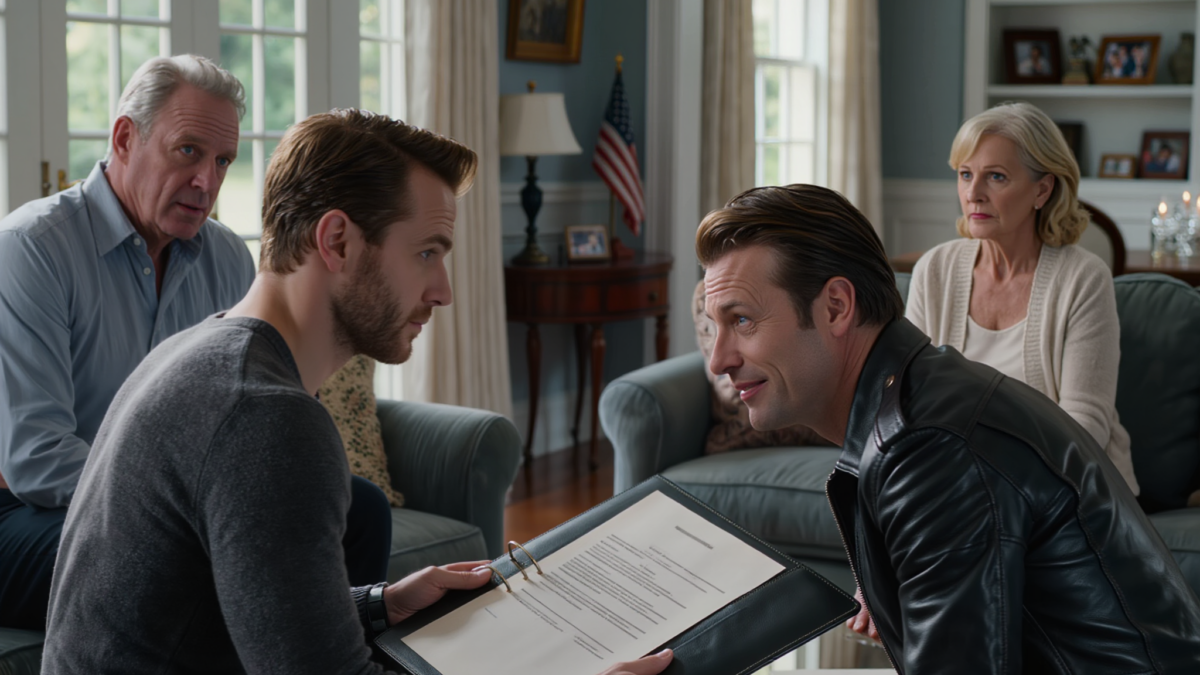
On the heavy glass coffee table in front of me sat the black leather folder labeled Shell Company Alpha, a stack of printed credit card statements, and three freshly drafted legal documents from Vance’s office. At exactly 1:55 p.m., the doorbell rang. I didn’t rush. I walked to the door and pulled it open. My parents looked like they had aged a decade in 2 days.
My mother’s eyes were swollen and red, her expensive makeup poorly applied, lacking her usual arrogant sheen. My father looked pale, his shoulders slumped, carrying the physical weight of a man who suddenly realized he was broke. And then there was Julian. Julian pushed past them, walking into my house with a fake, aggressive swagger. He was wearing a designer leather jacket, undoubtedly bought with my money and a look of profound indignation. He was trying to play the role of the protective older brother, a role he hadn’t earned a day in his life. “Arthur, this is completely insane.”
Julian started immediately, pointing a finger at my chest as he walked into the living room. “You’re completely out of control. You embarrassed Mom in front of the whole neighborhood. You took their car, and my landlord just sent me a default notice because my rent transfer bounced. You need to turn the accounts back on right now, or I swear to God—” “Or you’ll what, Julian?”
I interrupted, my voice level, stepping into his personal space. I was taller than him, and the years of corporate politics had given me a confidence that he lacked. “Are you going to hit me? Sue me? With what money? You don’t have a job. You don’t have a car. You won’t even have an apartment as of tomorrow.”
Julian faltered, taking a half step back, his fake bravado instantly crumbling under actual pressure. “Sit down,” I commanded, gesturing to the sofa. My parents immediately sat. Julian hesitated, then sank into the armchair across from me. They looked like defendants facing a judge. “Arthur, honey, please,” my mother started, clasping her hands tightly in her lap.
Tears began to well up—a perfectly rehearsed performance. “We’re so, so sorry about Tuesday. It was a terrible mistake. I was just stressed about the HOA brunch. But what you’re doing—freezing the trust, taking the car—it’s cruel. We’re your parents. You can’t just cut off our livelihood.”
“This meeting isn’t about my feelings, and it certainly isn’t about yours,” I said, leaning forward and resting my hands on the glass table. “This is a strictly administrative meeting to discuss the dissolution of a fraudulent arrangement.”
I tapped the stack of credit card statements. “$36,000. That’s the exact amount of money you diverted from an emergency medical fund to pay the rent of a thirty-six-year-old man who refuses to work. You violated the core charter of the family trust. You’ve committed serious financial misconduct. That kind of conduct can lead to a lawsuit and other legal consequences.”
My father went absolutely white. “Arthur, no, it wasn’t stealing. We’re the beneficiaries. It was our money to use as we saw fit to help our family.”
“No. It was my money,” I corrected him sharply. “Money I earned. Money I worked for. Money I took from my own wife and child’s future to ensure you wouldn’t be living in a homeless shelter five years ago.”
Julian scoffed trying to regain his footing. “You’re so dramatic, Arthur. It’s just a trust fund. You’re rich. You can’t just dissolve an irrevocable trust and throw Mom and Dad out. That house belongs to the trust. They’re legally protected. You’re just trying to scare us.”
This was it. The moment I had meticulously engineered, the exact trap they had walked right into. I looked at Julian, a slow, incredibly dark smile spreading across my face. I reached out and rested my hand on the black leather folder. “You’re right, Julian,” I said smoothly. “The house does belong to the trust, and dissolving a trust can be a messy, drawn-out legal process in probate court.”
My mother let out a small audible sigh of relief, thinking she had found a loophole. She thought she still had her fortress. “But you see,” I continued, flipping open the black folder to reveal the notarized mortgage documents, “you’re forgetting the fundamental mechanics of real estate debt. Five years ago, when you were facing foreclosure, I didn’t pay the bank off in cash. I bought the underlying debt.”
I slid the documents across the glass table. “I created a private limited liability company called Shell Company Alpha. That LLC purchased the mortgage from your original lenders. The LLC owns the debt on the property. And I’m the sole managing director of that LLC.”
They stared at the papers, completely unable to make sense of what they were seeing. “What does that mean?” my father asked, his voice shaking.
“It means,” I said, leaning in to deliver the fact they hadn’t considered, “that I am the bank. I hold the mortgage. The trust is simply the entity that pays the mortgage to my LLC. And because you’ve misused the funds in violation of your agreement, you’re now in default of your residency arrangement.”
I pulled out three single sheets of paper, the final legal decrees from Vance. “I’m not dissolving the trust,” I stated coldly. “I’m beginning the foreclosure process unless you sign this agreement.”
My mother gasped, covering her mouth with trembling hands. “You… you would evict your own parents?”
Without a second of hesitation, I replied, “Here are your only two options. Option A: You refuse to sign. Tomorrow morning, my lawyers file a formal eviction notice and a lawsuit for the $36,000 you misused. You’ll be dragged through court. You’ll lose the house. You’ll have a substantial civil judgment against you, and you’ll be left with almost nothing.” I tapped the paper.
“Option B: You sign this document right now. You voluntarily surrender all beneficiary rights to the trust. You acknowledge the debt. In exchange, I’ll allow you to continue living in the house rent-free. I’ll pay the property taxes and the basic utilities directly. But that’s it. There is no stipend. There is no car. There is no emergency credit card. There are no country club dues. You’ll live like actual retired people on a strict, unyielding fixed income.”
I turned my gaze to Julian, whose face was a mask of terror.
“And absolutely under no circumstances,” I said, pointing at him, “will another single red cent of my money find its way into your pockets. In fact, Julian, you have exactly twenty-four hours to vacate your luxury apartment. Because if you don’t, I’ll personally contact your landlord and inform him that your previous rent was paid with improperly diverted funds, and I’ll hand him the evidence.”
Julian leaped up from the chair. “You can’t do this! I’ll be homeless. Mom, Dad, tell him he can’t do this. You promised me I’d be taken care of. You promised!” He turned to our parents, expecting them to rise up, to defend him, to manipulate me one last time, but they didn’t move. My father stared at the foreclosure documents as if they were a death sentence.
My mother was sobbing uncontrollably into her hands. They realized with crushing absolute certainty that they had zero leverage. The ATM was permanently closed. The vault was sealed. The golden child had finally bankrupted them. My father reached out with a trembling hand, picked up the pen I had placed on the table, and signed the surrender document. He didn’t even read the fine print. He was entirely broken. The immediate aftermath of that Sunday afternoon was not explosive. It was eerily, painfully quiet.
The kind of quiet that follows a catastrophic natural disaster when the dust finally begins to settle and the sheer magnitude of the destruction becomes visible. My parents signed the documents, walked out of my front door, and climbed into an Uber I had ordered for them. They didn’t say goodbye. They didn’t look back. They simply vanished into the reality of the bleak, restricted life they had built for themselves. Julian, true to his utterly predictable nature, fell apart in spectacular fashion. He didn’t vacate his apartment voluntarily.
He tried to squat, barricading himself in the luxury loft, flooding social media with unhinged, rambling videos about how his narcissistic corporate brother had illegally stolen his inheritance and left him to die. He thought public pressure would force my hand. It did the exact opposite. His former investors, the people he had scammed out of thousands of dollars for his failed startups, saw the videos. They realized his wealthy safety net was gone. Within a week, the landlord formally evicted him with a police escort, and two separate civil lawsuits were filed against him for unpaid debts.
Julian ended up crashing on a stained mattress in the unfinished basement of a guy he barely knew from high school. The last I heard through the family grapevine, the so-called lifestyle entrepreneur was working the overnight shift washing dishes at a 24-hour diner just to afford basic groceries. No one in the family stepped in to save him. The reality check had finally arrived. As for my parents, their social lives completely evaporated overnight.
Without the pearl-white Porsche, without the country club membership, and without the endless stream of discretionary cash to buy expensive wines and host lavish HOA parties, they became instant paras in their own neighborhood. They were grounded. They were forced to take the public bus to the discount supermarket. They lived entirely within the precise, unyielding boundaries I had set. They were my tenants, and I was an incredibly strict landlord.
But the fallout wasn’t just limited to my immediate family. The shock waves hit the extended family, exposing the hidden rot that had been festering for years. 2 weeks after the confrontation, I received a phone call from Uncle Henry. Henry was my father’s younger brother, a man who always played the role of the jovial, harmless peacemaker at Thanksgiving dinners. He called my office line, his voice dripping with forced casual familiarity.
“Arthur, my boy, it’s Uncle Henry. Listen, I heard about the ugly business with your parents and Julian. It’s a real tragedy. It really is. Families shouldn’t fight over money. But listen, since you’re restructuring your portfolios, I’m in a bit of a tight spot with a bad real estate investment. I was hoping my successful nephew could float me a small short-term loan. Keep it in the family, right?”
I almost laughed at the sheer unadulterated audacity. “Henry, I’m not a bank. I don’t give out family loans.”
“Come on, Arthur,” Henry pushed, his tone shifting from jovial to slightly desperate. “I know for a fact you have the liquidity. Your mother told me years ago how much you put into that trust. Frankly, I think you overreacted.”
“I knew they were slipping Julian some rent money a year ago, and I told them it was risky, but he’s your brother. You can’t just leave us all hanging.” I stopped dead. The pen I was holding snapped in my fingers. “You knew?” I asked, my voice falling to a whisper.
“You knew they were misusing the trust and diverting my money, and you didn’t say a single word to me?”
Henry stammered, realizing what he’d just admitted. “Well, Arthur, it wasn’t my place to interfere in your parents’ finances. I didn’t want to cause a divorce or a massive family dispute over Julian. I was just trying to keep the peace.”
“You weren’t keeping the peace, Henry. You stayed silent because you thought that if they had access to my money, eventually you might get some of it, too,” I said coldly. “Don’t call this number again. Lose my contact information. And don’t involve my wife or my son in this.”
I hung up and immediately blocked his number. The purge was incredibly painful, but it was absolutely necessary. I was surgically removing the malignant tumors from my life. But the final, most sickening twist of the knife came a month later from a completely unexpected source. I was grabbing a coffee downtown between client meetings when someone called my name. I turned around and saw Chloe.
Chloe was Julian’s most recent ex-girlfriend, a smart, hard-working woman who had finally dumped him when she realized he was a financial black hole. She looked exhausted, but relieved. We sat down at a small corner table. She knew everything that had happened. Julian’s public meltdown had made sure of that. But she didn’t look at me with judgment. She looked at me with profound pity.
“Arthur, I need to tell you something,” Chloe said, wrapping her hands around her coffee cup. “Julian is a mess, yes, but you need to know the truth about your mother. Julian didn’t always beg for that rent money. Sometimes she forced it on him.”
I frowned, confused. “What do you mean? She complained constantly about being broke.”
Chloe shook her head sadly. “It wasn’t about the money, Arthur. It was about power. One night, Julian and I were at your parents’ house. You had just closed a massive corporate deal, and it was in the local business journal. Your mother had a few glasses of wine. She started crying, but she wasn’t happy for you. She was angry.”
Chloe leaned in closer.
“She told Julian that you thought you were better than them. She said that because you didn’t need them anymore, because you were independent and wealthy, you were abandoning your family. She literally said, ‘Arthur thinks he can buy us off and forget us. We need to remind him who he owes his life to.’ She funded Julian not just because he was the favorite, Arthur. She funded Julian because taking your money and wasting it was her way of punishing you for outgrowing her. It was a power play. That’s why she refused to watch your son. She wanted to prove that your corporate success meant nothing if she decided not to help you.”
I sat perfectly still. The ambient noise of the coffee shop faded into a dull roar. The final puzzle piece snapped violently into place. It wasn’t just entitlement. It was deep, toxic, malicious resentment. She resented my success because it highlighted her own failures. I thanked Chloe, paid for her coffee, and walked out into the bright city sunlight. I thought I would feel angry. I thought I would feel devastated.
But as I walked down the busy street, taking deep breaths of the crisp air, I realized I felt something entirely different. I felt completely free. The guilt was gone. The obligation was dead. They had handed me the scissors and I had finally cut the strings. Six months passed. The transition from the chaos of my family’s financial warfare to the quiet, structured peace of my new reality was profound. My new role as a partner at the firm was incredibly demanding, requiring 60-hour weeks and intense travel, but it was deeply fulfilling.
Without the constant, draining background noise of my parents’ manufactured emergencies and Julian’s endless crisis, my career skyrocketed. I was no longer distracted. I was completely focused. Elena and I used the massive increase in my salary to buy our true dream home, a beautiful sprawling property in a quiet, heavily wooded suburb with a massive backyard. We fully funded Oliver’s 529 college savings account. We maxed out our 401(k) contributions. We were building an impenetrable fortress of generational wealth, but this time the walls were built to protect us, not to harbor parasites. My parents, meanwhile, fell into a permanent silent exile.
The HOA ladies forgot they existed. The country club revoked their membership for non-payment. They lived in the house I owned, paid for by the LLC, existing on the meager social security checks they received. We did not speak. There were no holiday invitations. There were no birthday cards. The silence was an ironclad boundary that I rigorously enforced. Then, exactly six months to the day after the confrontation in my living room, I walked out to my mailbox and found a thick cream-colored envelope. The handwriting was shaky, unmistakably my father’s.
I took the letter into my home office, closed the door, and sliced it open with a letter opener. It was three pages long, written in blue ink. “Arthur,” it began.
“I know you don’t want to hear from me. I know you have every right to throw this letter away, but I’m an old man, and the silence in this house is deafening. Your mother stays in her bedroom most of the day. She watches television and cries. She refuses to accept that the life she thought she deserved is gone. Julian called us once from a pay phone. He asked for $20. We couldn’t give it to him. He hung up, and we haven’t heard from him since.”
I read the words, feeling an incredible detachment. It was like reading a case study of a stranger’s life. “I’m writing this because I need to confess,” the letter continued.
“You were right, Arthur, about everything. I was a coward. I let your mother’s pride and Julian’s delusions dictate my life. I was terrified of conflict, so I let them drain you because you were strong enough to take it. I used your strength as a shield for my own weakness. I was not a father to you. I was a dependent. I was a burden. I am not asking for the car back. I am not asking for the money. I am not even asking for your forgiveness, because I know I haven’t earned it and I never will. I just want you to know that, as I sit in this empty house, entirely reliant on the mercy of a son I betrayed, I finally see the truth. You are a better man than I ever was. Protect your wife. Protect Oliver. Don’t let anyone, even blood relatives, take advantage of your heart. I am deeply, profoundly sorry.”
I sat back in my leather chair and stared at the final signature. My father’s name scrolled in a weak, trembling hand. Five years ago, a letter like this would have broken me. I would have rushed over there, checkbook in hand, eager to fix his pain, desperate to buy the fatherly love I always craved. I would have mistaken his regret for genuine transformation.
But I wasn’t that man anymore. The corporate battles, the legal restructuring, the betrayal—it had all forged me into something infinitely stronger. I recognized the letter for what it truly was. It was honest, yes, but it was also a ghost reaching out from a grave I had already buried. Responding to it, engaging with the pain, would only reopen the door. And that door was nailed shut, reinforced with steel and guarded by the fierce love I had for my own wife and child. I slowly folded the letter along its original creases.
I opened the bottom drawer of my desk, the one where I kept old, closed client files and dropped the letter inside. I closed the drawer. I didn’t burn it, but I didn’t save it as a trophy either. It was simply a closed chapter, an archived file of a bankrupt entity. That Sunday, the weather was absolutely perfect. A crisp golden autumn afternoon. Elena, Oliver, and I packed a large woven basket with sandwiches, fresh fruit, and a bottle of sparkling cider, and we drove to the massive state park just outside our new neighborhood.
We laid out a thick tartan blanket on a grassy hill overlooking a calm, shimmering lake. Oliver, completely recovered and full of endless, vibrant four-year-old energy, was running across the grass, chasing a brightly colored kite that I had helped him launch into the wind. His laughter echoed across the park, pure and unburdened. Elena leaned her head against my shoulder. I wrapped my arm around her, pulling her close, smelling the faint scent of vanilla and fresh air in her hair.
“You look different,” she said softly, looking up at me, tracing the line of my jaw with her finger.
“Different how?” I asked, watching Oliver’s kite dive and soar against the blue sky.
“Lighter,” she said with a smile. “Like you finally put down a backpack full of rocks you’ve been carrying since you were a teenager.” She was perfectly right. For the first time in my entire existence, my mind was quiet. There was no anxiety about looming mortgage resets. There was no dread of a phone call demanding I fix a crisis. There was no suffocating guilt that I wasn’t doing enough to earn my place in my own family.
I looked at my beautiful, brilliant wife and my happy, healthy son. This was my family. This was my legacy. I had spent years trying to build a fortress of financial security to protect people who secretly despised me. But in the end, the most powerful protection I ever built wasn’t a family trust, a corporate LLC, or a high-yield investment portfolio. The ultimate protection was a boundary—the absolute, unyielding willingness to say, “No more.”
I learned the hardest lesson a son can ever learn: That sharing DNA does not automatically grant someone an all-access pass to your sanity, your success, or your wallet. Sometimes the most profound act of self-care is walking away from the people who are drowning because they refuse to let go of the anchor. I had my vindication. I had my career.
But most importantly, I finally had my life back. And I was never ever going to let anyone jeopardize it again.








