“We spent your savings on someone better,” my father said at dinner after draining the account I’d built since I was 15 to keep rescuing my younger brother. I kept my voice steady and asked, “Better than me?” Then my 75-year-old grandmother pushed back her chair, looked straight at her son, and said, “Richard, name that someone. Right now.”
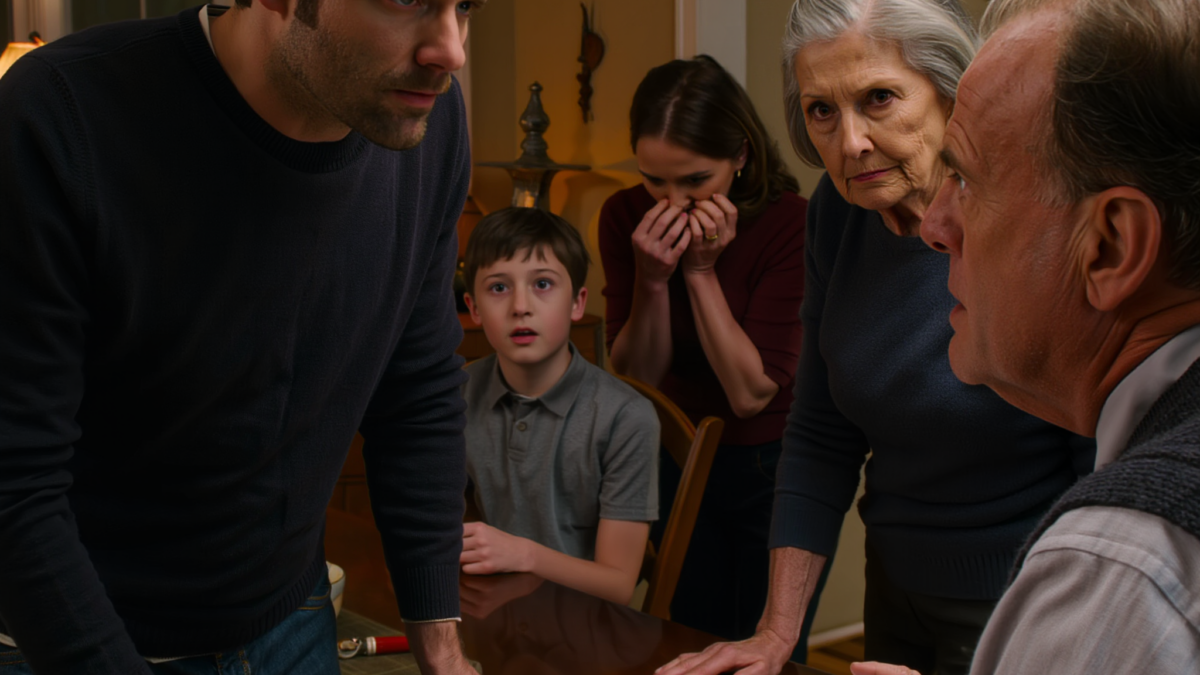
My name is Mason. I was 28 when my father looked across the dining room table and calmly told me that the money I had spent more than a decade saving had been used on someone he considered more deserving.
The silence around us felt heavy.
My mother, Helen, stared at her water glass. My younger brother, Leo, stopped chewing. My grandmother Eleanor, who had barely spoken all evening, slowly placed her knife and fork beside her plate.
Dad did not look embarrassed.
He did not look guilty.
“We spent your savings on someone better,” Richard repeated.
My fork stopped halfway to my mouth.
“Better than me?”
Dad sighed as if I had misunderstood something obvious.
“Your brother needed the support, Mason. You didn’t. It’s simple.”
Simple.
That was the word he used for money I had earned through years of work, skipped nights out, freelance jobs, and careful saving.
Before I could answer, Grandma Eleanor pushed her chair back.
At 75, she was not physically imposing, but the moment she stood, the entire room seemed to shrink around her.
“Richard,” she said. “Name that someone.”
Dad looked at her.
“Mother.”
“Right now.”
For the first time that evening, something changed in his expression.
To understand why that moment mattered so much, you have to understand how our family had worked for most of my life.
Leo had always been the one my parents believed was destined for something extraordinary.
I was the dependable one.
When I was 16, I had already been working part-time at a local diner for a year. I was saving for a used sedan I had seen for sale. It was not impressive, but to me it represented freedom.
For my birthday, Grandma gave me a book about graphic design. My parents gave me $100 and a card telling me how proud they were that I was learning to stand on my own two feet.
Two months later, Leo turned 16.
There was a brand-new cherry-red convertible waiting in the driveway with a bow on the hood.
Leo celebrated while Dad clapped him on the back.
“Only the best for my future CEO,” Dad said.
That night, I asked Mom why the difference between us was so extreme.
She told me I was practical.
Responsible.
Strong.
Leo, she explained, needed encouragement.
“He needs to see what’s possible to feel successful,” she said.
“So my hard work pays for my things, and his potential pays for his?”
She finally looked at me.
“Don’t be dramatic. Your father and I just want to give your brother every advantage. You’re strong enough to make your own way.”
For years, I tried to hear that as a compliment.
Whenever I brought home an academic certificate or won recognition for my artwork, my parents congratulated me politely.
Then Dad would wonder aloud what Leo might accomplish once he really applied himself.
My achievements were treated as expected.
Leo’s potential was treated as exceptional.
My parents paid for hobbies he abandoned after a few weeks. Tennis lessons. A DJ setup. Even flying lessons.
Every expense was described as an investment in his future.
Meanwhile, my dream of building a graphic design business after college was something Dad viewed as unrealistic.
He encouraged me to value stability.
A steady salary.
A safe job.
By the time I was older, I understood the unspoken rule.
The more capable I became, the less my family believed I needed anything from them.
The diner had been my first real source of independence.
I started working there at 15. The smell of coffee, bacon, and cleaning products became associated with something important to me: money that belonged to my future.
I worked weekends, then added evening shifts.
At first, I was saving for a car. Later, I began thinking about college and eventually my own design studio.
When I turned 18, I had accumulated enough that keeping everything in an ordinary checking account no longer seemed sensible.
That was when Dad approached me.
He invited me into his home office and explained that he could help me move the money into a proper savings and investment account.
He had contacts at an investment bank.
The account, he said, could be linked to his primary account so he could help manage the investments.
I hesitated.
That money represented years of work.
But Dad was speaking to me about finances in the way he normally spoke to Leo. For once, I felt as if he were treating me like an adult whose future mattered.
“It will still be my account, right?” I asked. “My name on it?”
“Of course.”
He smiled.
“It’s your money, your hard work. I’m just here to help it grow.”
Then he said something I remembered years later.
“This is what families do, son. We protect each other’s futures.”
I trusted him.
Over the next several years, nearly everything extra I earned went into that account.
Money from my college job doing graphic design for the student union.
Income from freelance projects I completed late at night.
Birthday checks from Grandma.
The statements showed steady growth.
By 28, I was working as a junior designer at a midsized firm, and that account had become more than savings.
It was supposed to finance the design studio I had dreamed about for years.
Then one Wednesday evening, I came home to my apartment and sat down to do my monthly budget.
I heated leftover spaghetti, opened my laptop, and logged into my bank account.
The balance appeared.
I stared at it.
Then I refreshed the page.
The same number appeared again.
The account was almost empty.
I opened the transaction history.
There were withdrawals I had never made.
Transfers I did not recognize.
Payments stretching back for months.
The amounts varied. None seemed dramatic by itself, but together they had steadily reduced years of savings to almost nothing.
I called the bank.
After being placed on hold, I was told the transactions had been authorized through the primary linked account.
There had been no security breach.
The primary account was my father’s.
I next called Mr. Henderson, the account manager Dad had introduced me to.
When I explained what I was seeing, he sounded uncomfortable.
Eventually, he confirmed that Richard had handled the transactions.
He described them using a phrase that made my stomach tighten.
“Family portfolio adjustments.”
This did not feel like an adjustment.
It was money I had earned.
That Saturday, I drove two hours to my parents’ house.
During the drive, I kept telling myself there might still be an explanation.
Maybe Dad had moved money temporarily.
Maybe something had gone wrong.
Maybe the situation looked worse than it was.
Then I entered the living room.
Leo was sitting on the floor surrounded by new equipment.
There was a professional digital drawing tablet, a powerful laptop, and noise-canceling headphones.
Thousands of dollars’ worth of equipment sat around him.
“Wow,” I said. “Looks like Christmas came early.”
Leo barely looked up.
“Yeah. It’s pretty sweet. Dad said it was time I had a professional setup for my business classes.”
Mom came in from the kitchen.
She was delighted.
“Leo is finally getting serious about his future.”
I looked at her.
“Mom, I’ve been working in this field for six years. I built my career from nothing.”
She dismissed the comparison.
That had been my choice, she said.
I was already stable.
Leo needed a push.
Later, after dinner, I found Dad in his office reading The Wall Street Journal.
I stood in the doorway holding my bank statements.
“Dad, we need to talk.”
He lowered the paper.
“What is it, Mason?”
“There’s money missing from my savings account. A lot of it.”
He did not look confused.
He did not ask to see the statements.
He simply folded his newspaper and said, “We didn’t think you’d notice so soon.”
For a moment, I could barely process the sentence.
“You used it?”
“We did.”
He explained that the money had gone toward Leo.
According to Dad, my brother was at a critical point in his life and needed opportunities.
Things I had never needed.
“I never needed opportunities?”
“You made your own,” I said.
“Exactly.”
He actually sounded satisfied.
“You’re fine. You’re self-sufficient. Leo’s future requires more support, more capital.”
Then he called it a business decision.
“We reallocated family assets to where they would generate the best return.”
Family assets.
I had spent years earning that money.
Dad had somehow converted my work into something he believed belonged to the family whenever he decided someone else needed it more.
He picked his newspaper back up.
As far as he was concerned, the discussion was over.
But one sentence would not leave my mind.
“We didn’t think you’d notice so soon.”
Not eventually.
Soon.
That suggested he had expected the situation to continue.
I could not sleep.
Around 2:00 a.m., I went downstairs.
Dad’s office door was slightly ajar.
I knew he kept important financial records in the bottom right-hand drawer of his desk. I opened it and found stacks of bills and investment reports.
Behind them was a plain manila folder.
My name was written on it.
Mason Carter.
I expected to find more statements from my savings account.
Instead, the first document was a completed application for a personal business loan.
The amount was $25,000.
My personal information was filled in.
My Social Security number.
My address.
My employment history.
And on the signature line was a crude version of my signature.
I had not signed it.
I sat on the floor holding the folder.
Until then, I had been trying to understand what had happened to money I had already earned.
The application changed the question.
Someone was preparing to create debt in my name.
I photographed every page.
The application.
The signature.
The account records.
Then I returned everything exactly where I had found it.
Back in the city, I called Chloe.
We had been friends since our first art class in college. She was working as a paralegal at a corporate law firm while studying for the bar.
We met at a 24-hour diner.
I told her about the missing savings, Dad’s confession, Leo’s new equipment, and the loan application.
Then I showed her the photographs.
Her reaction became more serious with every image.
“Mason, this isn’t a family drama anymore.”
She told me to document everything.
Print the photographs.
Obtain official copies of the bank statements.
Create a timeline of the withdrawals.
And stop discussing the situation casually with my family.
On my way home, Aunt Carol called.
Mom had already spoken to her.
According to Carol, my parents were under pressure because Leo was different and needed more help.
I had always been the strong one.
Sometimes, she said, strong people had to carry more weight for the family.
Then she told me not to let “a little thing like money” tear us apart.
I ended the conversation quickly.
The call clarified something I had spent years avoiding.
My parents’ logic was not confined to one financial decision.
An entire family system had been built around the assumption that because I could cope with less, I should receive less.
I needed someone inside that family who would see the situation differently.
There was one person I trusted.
Grandma Eleanor.
She lived across the city in a small brick house with a garden she cared for meticulously.
Her home had always felt different from my parents’ house.
Quiet.
Safe.
I called before going over.
“Grandma, can I come over? There’s something important I need to talk to you about.”
“The kettle’s on, dear. Come whenever you’re ready.”
When I arrived, she took one look at my face and guided me inside.
She handed me tea and sat across from me.
“Tell me everything from the beginning.”
So I did.
I told her about the birthdays.
The awards.
The endless comparisons.
The way my parents had praised my independence while using it to justify giving Leo more.
I told her about the account.
Dad’s admission.
And the loan application.
I placed printed copies of the documents and bank statements on the coffee table.
Grandma listened without interrupting.
When I finished, she picked up the photograph of the signature and studied it.
“My son did this.”
It was not really a question.
Then she looked at me.
“You have been far too patient for far too long, Mason.”
She told me that my parents had mistaken my strength for weakness and my silence for acceptance.
“That ends now.”
Her plan was a family dinner.
She would contact Mom and arrange for everyone to gather at my parents’ house.
Dad would feel comfortable there.
He would assume he controlled the conversation.
Grandma believed his ego would eventually force him to explain his actions in front of her.
I was to bring my evidence but keep it out of sight.
“Let your father make his move,” she told me.
Then she mentioned something about herself I had never fully appreciated.
Grandpa had built a construction business from the ground up.
Grandma had spent 40 years beside him as bookkeeper, partner, and what she described as his silent board member.
She understood businesses.
She understood people who used authority to intimidate others.
Most importantly, she understood her son.
I left her house with the evidence organized in a professional-looking binder.
When the evening of the dinner arrived, I entered my parents’ house at exactly 7:00.
Mom greeted me with forced enthusiasm.
Leo sat on the couch staring at his phone.
Dad stood near the mantel with a glass of scotch.
Grandma was already at the dining table.
Aunt Carol and Uncle Ben had also been invited.
For most of dinner, everyone pretended nothing unusual had happened.
We discussed weather.
Sports.
Carol and Ben talked about a vacation.
Dad told a long story about a deal at work.
I kept my answers short.
Eventually, he could not resist addressing the tension.
“Mason, I’m glad you came tonight. It gives us a chance to clear the air.”
The table became quiet.
Dad explained that every decision he and Mom made was supposedly for the good of the family.
They were proud of my independence.
But because I was independent, he said, I did not require the same level of support as Leo.
Then he repeated the sentence that had brought us to that table.
“We spent your savings on someone better.”
I looked at him.
“Better than me?”
Dad scoffed.
“Don’t be childish. This isn’t about you. It’s about securing Leo’s future.”
Grandma pushed her chair back.
“Richard.”
Everyone looked at her.
“Name that someone right now.”
Dad’s face reddened.
“Mother, this is a private family matter. It doesn’t concern you.”
“Everything this family does concerns me. Especially when it involves theft.”
I opened my briefcase.
The binder went onto the center of the table.
I opened it to the summary of withdrawals.
Then the bank statements.
Then the photographs showing Leo’s new equipment.
Finally, the loan application.
The room changed.
Mom covered her mouth.
Leo looked from the documents to Dad.
“Wait. That money came from Mason’s account?”
Dad’s composure disappeared.
Instead of addressing the documents, he focused on how I had obtained them.
“You went through my desk.”
“You went through my life.”
Dad raised his voice and insisted he had done everything for Leo.
Leo finally spoke.
“I didn’t ask you to steal from him.”
Dad turned toward him.
“Because you deserved it.”
He argued that the family invested in potential.
I did not need a promotion or expensive equipment, he said.
I had always managed on my own.
That was when Grandma put her palm firmly on the table.
“His ability to manage on his own does not make him less deserving, Richard.”
She looked directly at him.
“It makes him exploited. By you.”
Dad responded by talking about the pressure he carried.
Running the company.
Supporting his sons.
Making difficult decisions.
Grandma listened.
Then she brought up Carter Construction.
Dad immediately reminded her that Grandpa had left the company to him.
Grandma corrected him.
“He left you the title of CEO.”
Dad stared at her.
She explained that Grandpa had left Richard the office and responsibility for running the business day to day.
But not complete control.
In his will, Grandpa had left 60% of Carter Construction’s shares to Eleanor.
Grandma was the majority shareholder.
Dad’s face changed.
So did the rest of the table.
Mom looked stunned.
Carol stopped talking.
For years, Dad had behaved as if the company was entirely his.
Grandma calmly explained that, for practical purposes, she was his boss.
His handling of my money showed extremely poor judgment.
The loan application created an even larger problem.
If he refused to correct what he had done, she said, the board could meet Monday morning to discuss whether he should remain CEO.
Dad sat back in his chair.
The authority he had carried through every previous conversation suddenly looked much less certain.
Grandma turned to me.
“Mason. Tell them what you want.”
No one in that house had ever asked me that with any real expectation that my answer would matter.
I knew exactly what I wanted.
First, every dollar returned.
Not eventually.
Not through installments.
I wanted a certified check by the end of the week.
Second, I wanted the loan application destroyed in front of me that night.
Third, I wanted an apology without excuses.
Mom began crying.
She said they did not have enough money immediately available to repay everything.
Grandma did not soften.
“Then you’ll adjust.”
She suggested they sell the new car, cancel their country club membership, and find a way to make me whole.
Dad eventually agreed.
He went into his office.
From the dining room, we heard the small shredder running.
When he returned, he would not meet my eyes.
“We’re sorry.”
It was not the apology I might once have wanted.
But it was the first time he had admitted that what happened was wrong.
I closed my binder and put it back in my briefcase.
“I’m going home now.”
No one stopped me.
I reached the front door and put my hand on the knob.
“Mason, wait.”
It was Leo.
He followed me into the hallway.
The confidence he usually carried was gone.
“I’m so sorry,” he said. “I swear I had no idea.”
He told me Dad had claimed the money came from the business.
Leo believed he was simply being helped.
“I never would have taken it if I knew it was yours.”
For most of my life, I had viewed Leo as the person who benefited from everything I was denied.
That night, for the first time, I saw how Dad’s favoritism had harmed him too.
I asked why he had needed so much money.
The tablet and laptop did not explain everything.
Leo looked down.
He had gotten involved in online sports betting.
He thought he could handle it.
Instead, he had lost heavily and owed serious people money.
When he finally confessed to Dad, Richard became furious.
Then he offered a solution.
According to Leo, Dad told him there were family funds available.
He presented the money as part of a larger investment strategy and told Leo to remain quiet and grateful while he handled the problem.
“He told me you wouldn’t mind,” Leo said. “He said you were doing fine and that it was my turn.”
The explanation did not excuse Leo’s choices.
But it changed how I understood them.
Dad had used my strength as an excuse to take from me.
He had used Leo’s weakness as a reason to control him.
“It wasn’t your turn,” I told him. “It was my money. And you’re going to have to figure out how to stand on your own two feet without his solutions.”
Leo nodded.
He promised to repay me, even if it took years.
Four days later, a certified check arrived by courier.
Holding it felt strange.
The money represented everything that had been taken from me, but getting it back also gave me the opportunity to make the decision I had postponed for years.
I went to my boss, Mr. Davies.
I told him I was resigning.
I was finally going to open my own design studio.
He was supportive.
“I always knew this firm was just a stepping stone for you, Mason.”
He shook my hand.
“You’re too talented to work for someone else forever.”
As I packed my desk, a colleague named Jessica came over and asked about my plans.
I kept my answer vague.
Two weeks later, a former coworker told me Jessica had tried to suggest to Mr. Davies that I had left unprofessionally and might be taking clients.
Mr. Davies did not accept the accusation.
After looking into the situation, he learned that she had also been speaking negatively about other colleagues.
She was let go the following week.
I used my returned savings to lease a small office downtown.
I furnished it simply and invested in the equipment I needed.
I called the business Bedrock Design.
The work was difficult.
The hours were long.
But every project belonged to something I had built on my own terms.
My first major client was Mr. Davies.
He hired Bedrock Design to redesign his firm’s corporate branding.
That contract gave me enough stability to hire my first employee.
My parents tried to contact me.
Mom sent occasional messages saying she hoped I was well.
Dad left an awkward voicemail once referring to everything as a misunderstanding and suggesting we move forward.
I did not respond.
I was not trying to punish them.
I simply wanted peace.
About a year after the dinner, Grandma and I were having our regular Sunday tea when she mentioned Dad.
Carter Construction was struggling.
Without Grandma’s shares available as collateral, the bank was tightening the company’s line of credit.
Dad was being forced to operate within limits he had previously ignored.
Then Grandma told me something she had never explained before.
Grandpa had not given her controlling shares only to protect the business.
He had also wanted to protect me.
Even when Leo and I were younger, my grandparents had noticed the favoritism.
Grandpa worried that Richard would eventually pour company resources into Leo while assuming I would somehow manage without help.
Giving Grandma control ensured that Richard could never make every decision alone.
“He just trusted me to know the right time to use that power,” she said.
Grandpa had seen what was happening long before I understood it myself.
Later that week, Leo appeared at my office.
He looked different.
Tired, perhaps, but clearer.
He brought coffee and a small envelope.
“It’s not much,” he said.
He had found a real job working a warehouse graveyard shift.
He was also seeing a counselor for his gambling problem.
He told me that a portion of every paycheck would go toward repaying what had been spent on him.
Inside the envelope was a $200 money order.
Compared with everything that had been taken, it was small.
But it meant more to me than I expected.
Dad’s certified check had been restitution forced by consequences.
Leo’s $200 represented accountability he had chosen.
“Thank you, Leo.”
We stood there quietly.
Then he said something I had never heard from him before.
“For the first time, I think I’m actually proud of something I’ve done.”
“Me too.”
Our relationship did not suddenly become perfect.
Too much history existed between us for that.
But the roles we had grown up playing had finally begun to loosen.
Three years have passed since that dinner.
Bedrock Design now has three full-time employees, and we are preparing to move into a larger office.
I am not rich.
But I pay my bills, I love my work, and I sleep well.
I see Grandma every week.
She became more than my grandmother during that conflict.
She became my mentor and the person who reminded me that being strong did not mean accepting whatever other people chose to take from me.
My relationship with my parents is distant but civil.
We see each other during holidays.
The conversations are careful and superficial.
They never mention the money.
They never talk about that dinner.
But the boundary created that night remains.
They understand it.
Leo is still repaying me every month.
The envelopes continue to arrive.
He works harder now and carries himself differently.
We are not the kind of inseparable brothers people sometimes imagine siblings should become.
But we are no longer strangers living inside roles someone else created for us.
For years, I believed keeping the peace meant staying quiet.
I thought strength meant absorbing disappointment without asking anyone else to change.
What happened with my savings taught me something different.
Silence can preserve a family’s appearance while slowly erasing one person inside it.
Speaking up cost me the version of my family I thought I had.
But it also gave me the freedom to build a life that was actually mine.
My father once believed that because I could survive without his support, I deserved less of it.
I no longer measure my value by what he was willing to give me.
And I no longer confuse being capable with being available for other people to use.
The greatest thing my grandfather left behind was not money or a title.
It was a way for Grandma to protect something until I was finally ready to protect myself.








