Three weeks before our wedding, my brother announced my fiancée was pregnant with his baby. Dad ordered me to sit down, and Mom told me to “be reasonable.” Then they drained the $40,000 college fund Grandpa left me to help my brother marry her. I left Chicago and cut contact. Four years later, Dad called asking for a family dinner in Denver. This time, I was the one choosing where we met.
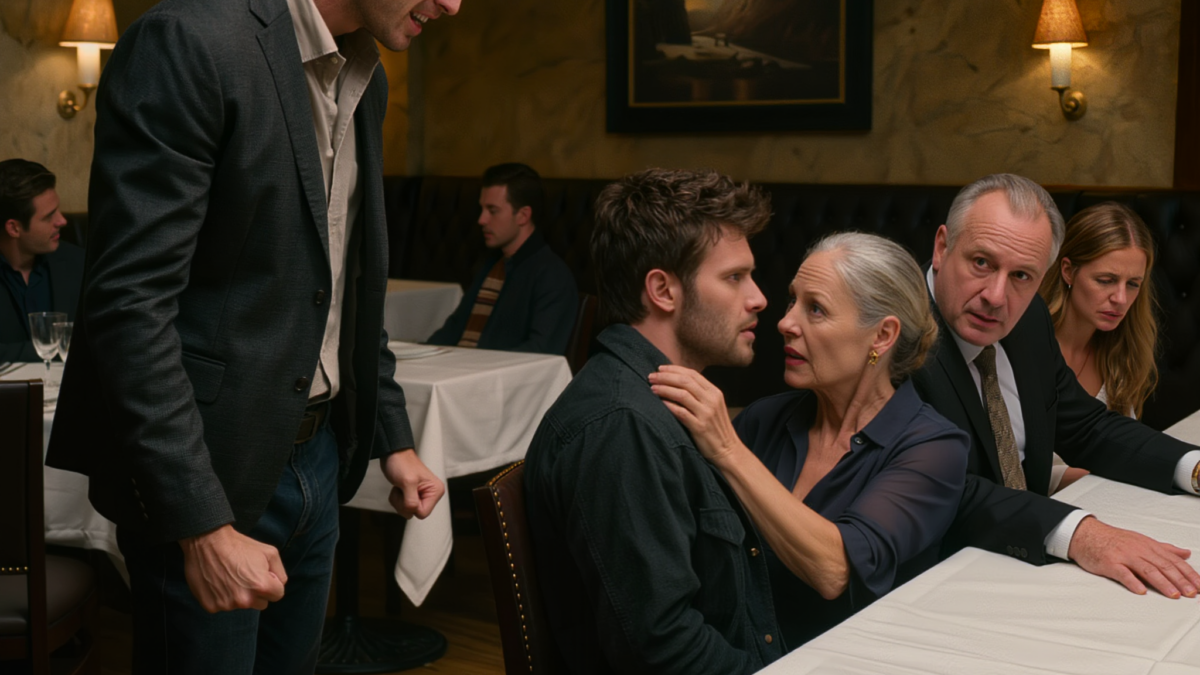
The first thing I noticed was that my younger brother couldn’t look me in the eye.
We were sitting in the private dining room of an upscale steakhouse, surrounded by the smell of roasted garlic and expensive red wine. My parents, Robert and Susan, were smiling and raising their glasses. Across from me sat Sarah, the woman I was supposed to marry in exactly three weeks.
My brother Dylan sat to my right, staring at his water glass. His hands were shaking slightly. I assumed he was nervous about giving a toast as my best man.
Then he stood.
He placed both hands on the white tablecloth, looked toward our parents, and cleared his throat.
“Mom, Dad, Mason, I have something to say.”
He swallowed.
“Sarah is pregnant.”
For a moment, I was simply confused. Sarah and I had agreed to wait until after the wedding. I looked across the table, expecting her to explain the announcement.
She wouldn’t meet my eyes.
Tears were already running down her cheeks.
Then Dylan finished what he’d started.
“And the baby is mine.”
The crystal wineglass slipped from my fingers, struck the edge of my plate, and shattered. Red wine spread across the white tablecloth.
I waited for somebody to laugh. I wanted someone to tell me this was a terrible joke.
Nobody did.
My mother covered her mouth. My father leaned back, his face reddening.
I stared at Sarah.
“Tell me he’s lying.”
She finally looked at me.
“I’m sorry, Mason. It happened. We didn’t mean to.”
I stood so suddenly that my chair crashed backward.
Before I could say anything else, Dad slammed his hand onto the table.
“Mason, sit down. Sit down and act like a grown man. We are going to figure this out as a family.”
I couldn’t believe what I was hearing.
“Figure this out? He slept with my fiancée. She’s pregnant with his child!”
My mother reached across the table and grabbed Dylan’s arm.
“And that child needs a father! Dylan made a mistake, but he’s stepping up. We have to think about the baby, Mason. You have to be reasonable.”
I looked from my mother to my father.
Neither was asking whether I was okay. Neither had a word of comfort for the son whose future had just collapsed.
Their concern was Dylan.
I walked out of the restaurant without another word.
That was the night I understood something about my family that I should have recognized years earlier.
I had never been the son they felt they needed to protect.
I was the son they expected to absorb the damage.
Four years earlier, I had been a junior architect at a demanding firm in downtown Chicago.
I worked 80-hour weeks, stayed late checking structural loads, and regularly spent weekends correcting other people’s CAD drawings. I didn’t have a trust fund supporting my lifestyle or parents covering my bills.
Everything I owned came from my work.
I met Sarah while she was working in marketing for a real estate developer our firm partnered with. She was beautiful, ambitious, and seemed to understand why I cared so much about my career.
After a year together, we moved in.
I believed we were building something permanent.
When I earned my promotion to senior architect, my salary increased substantially. I used my savings to buy a custom-set two-carat diamond ring.
I proposed on a rooftop overlooking the Chicago skyline.
Sarah cried and said yes.
We spent evenings sitting on the living room floor, surrounded by wedding magazines and fabric samples. I booked a beautiful historic estate outside the city, paid the nonrefundable deposits, hired the caterer, and even helped design the floral arrangements.
I wanted everything to be perfect for her.
Looking back, the warning signs were there.
My college friend Elijah had noticed how often Sarah texted while I was talking to her. He also pointed out that her best friend Chloe frequently criticized how much I worked.
She believed Sarah shouldn’t have to compete with my career for attention.
I told Elijah he was worrying about nothing. Sarah understood what I was trying to build.
I was wrong.
And Dylan was another warning I’d spent years ignoring.
He was five years younger than me, charming, athletic, and exceptionally good at avoiding responsibility.
If he damaged a car, our parents replaced it. If he dropped college classes, they paid the penalties and told him he simply hadn’t discovered his passion.
I was expected to be responsible.
Dylan was expected to need help.
The difference became painfully obvious a year before my wedding.
Dylan wanted to impress a woman by renting a Lamborghini for the weekend. When his credit cards were declined, Dad called me in the middle of an important client presentation.
He demanded that I immediately transfer $3,000 into Dylan’s account.
I refused.
I told him Dylan needed to learn what money was worth.
My parents refused to speak to me for a month.
Eventually, they took out a personal loan to give Dylan the money themselves.
I knew my brother resented my career, my apartment, and the life I’d built. He asked intrusive questions about my salary and made comments about how seriously I approached everything.
What I didn’t fully understand was how much attention he paid to Sarah.
Whenever we visited my parents, Dylan hovered around her.
He laughed at her jokes, stood close to her in the kitchen, and criticized how much time I spent working.
“Mason is always so serious,” he’d say. “You must get bored waiting up for him all the time. If you were with me, we’d be out having fun.”
I dismissed it as immature behavior.
I believed Sarah saw through him.
Instead, while I was working to pay for our future, the two of them were destroying it.
Two hours after I walked out of the steakhouse, I was sitting in the dark at the apartment Sarah and I shared.
I’d been paying the mortgage on that apartment for three years.
When Sarah finally unlocked the front door, I was waiting in an armchair.
“Pack your things,” I said.
She dropped her purse.
“Mason, please let me explain.”
I stood.
“Explain what? Explain how you managed to hide a pregnancy while smiling at me and trying on wedding dresses?”
She started crying.
She said I was always working and never home. One evening, Dylan had come over to assemble a bookshelf I hadn’t had time to put together.
They’d been drinking.
She’d felt lonely.
“It only happened twice,” she insisted.
As though that made the betrayal smaller.
Then she told me Dylan loved her and wanted to raise the baby.
“A child needs a father, a real family,” she said. “Dylan is willing to give us that. You wouldn’t want to raise your brother’s child, would you?”
That was when I realized she wasn’t simply asking me to forgive her.
She was trying to convince me that what they’d done was reasonable.
Dylan had been available when I was working. She’d enjoyed his attention. Now they were presenting their decisions as a sacrifice for their unborn child.
I told her to pack a bag and leave.
I would send the rest of her belongings to my parents.
If they wanted to protect Dylan so badly, they could take care of Sarah too.
For the next week, I heard nothing from my parents.
No apology. No attempt to find out whether I was coping.
Then Aunt Martha called.
Martha was my father’s sister. She was direct, practical, and had never pretended not to notice how differently my parents treated their sons.
“Mason, have you spoken to your father?”
“No. And I don’t plan to.”
Her next words made my stomach drop.
“You need to check your bank accounts. The shared account your grandfather set up for your college fund.”
Grandpa had left me a modest inheritance intended for my education. Because I’d earned full academic scholarships, I’d never needed to use it.
My parents’ names remained on the joint account.
I’d planned to put that money toward a house for Sarah and me after our wedding.
I opened my banking app.
The account had contained nearly $40,000.
Now the balance was zero.
I called my father immediately.
“Where is my money?”
He sounded defensive.
“Mason, I was going to call you.”
He explained that Dylan and Sarah needed somewhere to live before the baby arrived. They also wanted to get married.
According to Dad, my cancellation of the wedding meant the deposits were lost. He and Mom had decided to use Grandpa’s money to help Dylan and Sarah secure an apartment and pay for a ceremony.
“It’s the right thing to do,” he insisted. “You have a good salary. You can make that money back. Dylan has nothing.”
I could barely process his words.
My brother had betrayed me, and my parents had taken the inheritance Grandpa intended for me to finance his new life with my former fiancée.
When I confronted Dad, he accused me of being selfish.
He said Dylan was taking responsibility and the family needed to support him.
I told him he no longer had a family with me.
Then I hung up.
Aunt Martha later told me she’d confronted my father at his house and cut ties with him over what he’d done.
She was the only family member who stood beside me.
That night, I packed my essential belongings. I couldn’t bear the thought of remaining in Chicago, surrounded by memories of the life I’d lost.
I broke my lease, abandoned the wedding plans, and drove away in the rain.
I transferred to a smaller branch of my architectural firm in Denver, Colorado.
I thought distance would help.
It didn’t.
The first six months were terrible.
I drank too much, stopped taking care of myself, and lost twenty pounds. I went to work, stared at AutoCAD drawings until I could barely focus, then returned to an empty apartment.
I felt as if everything I’d believed about loyalty, effort, and family had been proven wrong.
The worst day was the date Sarah and I had originally planned to marry.
Against my better judgment, I opened social media.
There were the wedding photographs.
Dylan and Sarah had married.
But they hadn’t held the small ceremony Dad had described.
They had used the exact historic estate I’d booked.
The same florist I’d hired had provided the arrangements.
Sarah wore a white dress, her pregnancy clearly visible. Dylan stood beside her in a custom tuxedo, smiling.
My parents stood proudly beside them.
They hadn’t simply moved on with their lives.
They had stepped into the wedding I’d planned and made it theirs.
I became physically ill. I spent hours alone on my bathroom floor, unable to imagine how I would face another morning.
That night, I deleted my social media accounts, changed my phone number, and emailed Aunt Martha my new contact information.
I asked her never to share it.
I wanted to disappear from my family’s lives completely.
I might have continued down that path if Mr. Carter hadn’t intervened.
He was a senior partner at the Denver firm, an old-school architect in his late sixties who drove a vintage Porsche 911.
He didn’t tolerate excuses.
One Tuesday morning, I failed to show up for work.
Around noon, someone began pounding on my apartment door.
I opened it to find Mr. Carter standing there in a three-piece suit.
He took one look at me and stepped inside.
“You smell like a brewery, Mason.”
He examined the empty bottles and pizza boxes.
Then he told me he’d read my transfer file.
I’d been a top producer in Chicago, but now I was missing deadlines and submitting poor work.
He demanded to know what had happened.
I told him everything.
Sarah. Dylan. The dinner. The stolen inheritance. The wedding photographs.
I expected sympathy.
Instead, he looked at me and asked a question I wasn’t prepared to answer.
“So, you’re letting them win?”
He pointed out that my family had already taken enough from me. Now I was allowing their actions to destroy the career I’d worked so hard to build.
“You’re an architect,” he reminded me. “When a structure collapses, you don’t sit in the rubble and cry. You clear the debris, pour a stronger concrete foundation, and you build a skyscraper that casts a shadow over everyone who doubted you.”
He ordered me to clean myself up and report to work at seven the following morning.
If I was late, I’d be fired.
After he left, I stood in my apartment thinking about what he’d said.
Then I went into the bathroom and shaved.
I threw away the alcohol.
I returned to work.
Over the following two years, I devoted myself to rebuilding my career.
I secured major commercial contracts, became a lead project manager, and eventually tripled my salary.
I bought a modern house in the hills and drove a sleek black car.
Professionally, I was more successful than I’d ever imagined.
Personally, I still struggled to trust anyone.
Then Emily came into my life.
She was the lead interior designer on a major hotel project our firm had secured.
We disagreed immediately.
I wanted clean, modern lines in the lobby. She wanted warmth and texture.
One Friday evening, we stayed late arguing over drawings.
By midnight, we were sitting on the floor, eating inexpensive Chinese takeout and laughing.
It was the first time I’d genuinely laughed in years.
Emily was independent, intelligent, and unwilling to let anyone dismiss her professional judgment.
Our relationship developed slowly.
She respected my boundaries and never pushed me to explain more than I was ready to share.
After six months of dating, I finally told her about my family.
We were sitting on my patio, looking toward the city lights.
I told her about Dylan and Sarah, the money my parents had taken, and the humiliation that had followed me from Chicago.
I worried she’d see me differently.
Instead, she took my hand.
“They didn’t break you, Mason,” she said. “They stripped away everything fake in your life, and what was left was solid steel.”
She told me she respected the man I’d become and was deeply sorry for what I’d endured.
She didn’t try to fix me.
She simply stayed beside me.
A year later, we married at a beautiful courthouse in the mountains.
Mr. Carter and Aunt Martha were there.
There were no elaborate wedding arrangements, no family arguments, and no pressure to impress anyone.
It was exactly what we wanted.
Eventually, I became a partner at the firm. Emily’s design business grew, and we settled into a home with two dogs.
We trusted each other.
For the first time, I had the kind of marriage I’d always wanted.
Then we decided to start a family.
I wanted to be a father who treated his children equally and never made them compete for love.
But month after month passed without a pregnancy.
We consulted specialists, underwent testing, and learned that we were dealing with unexplained infertility.
We began IVF treatment.
It was exhausting for both of us.
There were injections, appointments, medical tests, and repeated disappointments.
During our second round, Emily became pregnant.
We were overjoyed.
We painted the nursery and bought a crib.
At ten weeks, we lost the pregnancy.
I held Emily while she cried on the bathroom floor, unable to find words that could make the loss easier.
My old feelings of guilt returned.
For a while, I convinced myself that my inability to forgive my family somehow meant I didn’t deserve to have children.
One night, I admitted those thoughts to Emily.
She stopped me immediately.
“Don’t you ever say that again. Do not give those people the power to take this from us, too.”
She reminded me that our fertility struggles had nothing to do with my parents or Dylan.
“This is our journey,” she told me. “It is hard and it is unfair, but it is ours.”
We decided to try one more round of IVF.
Then my phone rang.
I was in my office reviewing a contract when an unfamiliar Chicago number appeared on my private cellphone.
I answered.
“Mason.”
I recognized the voice immediately.
It was Dad.
We hadn’t spoken in years.
I asked how he’d obtained my number.
“Martha gave it to me,” he claimed.
I didn’t believe him. Aunt Martha had promised not to share my information. I suspected he’d found another way to locate me.
Dad said too much time had passed.
He told me Mom missed me.
Then he said Dylan missed me too.
I nearly hung up.
But he continued.
The family would be visiting Denver the following week for a convention my mother wanted to attend.
They wanted to take me to dinner.
They wanted to clear the air.
For a moment, I considered refusing.
Then I looked around my office.
I thought about my career, my home, and the framed photograph of Emily on my desk.
My family had last known me as the devastated man who’d left Chicago.
They didn’t know the person I’d become.
Mr. Carter had told me to build something stronger from the wreckage.
Perhaps it was time my family saw what I’d built.
“Fine,” I said. “Next Thursday. I’ll text you the restaurant address. I’ll bring my wife.”
Dad sounded surprised.
“You got married? That’s wonderful, Mason. We can’t wait to meet her.”
I ended the call and told Emily.
I explained that I wasn’t looking for reconciliation.
I wanted to face my family without feeling like the powerless person they’d abandoned.
Emily didn’t hesitate.
“Tell me what to wear.”
I chose one of Denver’s most exclusive restaurants, a place with dim lighting, impeccable service, and an atmosphere where making a scene was considered deeply inappropriate.
Emily arrived in a sleek emerald green dress.
I wore a tailored suit.
We were seated when the hostess brought my family to the table.
My parents looked older and exhausted.
Dylan, once the confident golden boy, wore an inexpensive, poorly fitted suit. His face was tired, and he seemed uncomfortable.
Sarah looked equally drained.
They brought two children.
The younger was a toddler in a high chair. The older boy, Julian, was about four.
I couldn’t stop looking at him.
He had eyes like mine and the same facial structure I’d had in childhood photographs.
Seeing him brought back emotions I hadn’t expected.
Dad approached to shake my hand.
I remained seated and nodded.
Mom’s eyes filled with tears.
“Mason, you look so successful.”
“I am,” I said.
Then I introduced Emily.
Sarah studied her. I could see how uncomfortable she was.
My parents spent much of the first course praising Dylan’s new position at a logistics company.
They didn’t mention that he was thirty years old and still relying on them to help pay his rent.
Dylan concentrated on his food.
Sarah seemed increasingly irritated.
When the main courses were cleared, Mom turned toward Emily.
She complimented our home, saying I’d shown them photographs on my phone.
Then she asked whether we planned to fill the empty rooms with children.
She added that Dylan and Sarah were wonderful parents.
I felt Emily stiffen beside me.
I reached beneath the table and held her hand.
Before Emily could respond, Sarah laughed.
“Oh, I heard through Aunt Martha that you guys were having trouble.”
She leaned forward, holding her wineglass.
Then she began commenting on how frustrating it must be to want children and struggle to have them.
The entire table grew quiet.
Even Dad appeared shocked.
But Sarah continued.
She announced that she was pregnant again.
Their third child.
Then she suggested that when a man and woman truly loved one another and were healthy, God rewarded them.
She looked directly at me when she said “healthy.”
I understood exactly what she was implying.
She was using our private grief to make herself appear superior.
I looked toward Dylan.
He stared at his plate.
He didn’t defend Emily.
He didn’t ask Sarah to stop.
My mother tried to dismiss the remarks.
“Mason, don’t be sensitive. Sarah didn’t mean it like that.”
Something inside me settled.
For years, I’d carried the memory of that first steakhouse dinner. I’d remembered being ordered to sit down while my family defended the people who’d betrayed me.
I stood.
The chair scraped against the polished floor.
People in the private dining area turned toward our table.
I looked at my father.
“You want to talk about sensitive, Dad? Let’s talk about the $40,000 you stole from my college fund.”
I reminded him that Grandpa had left the money for my education.
He’d taken it to help finance Dylan’s wedding to my former fiancée.
Dad’s face lost its color.
He looked around at the other diners, suddenly aware that people could hear us.
Then I faced Dylan.
I reminded him how he’d spent his life comparing himself to me, envying my possessions, my career, and eventually my relationship.
Our parents had helped him take what belonged to me.
Yet years later, he still couldn’t pay his own rent.
Dylan looked down at his unfinished dinner.
He didn’t answer.
Finally, I turned to Sarah.
I reminded her that she’d chosen Dylan because she believed he could give her the life she wanted.
Now she was sitting across from the woman I’d married, using our struggle to start a family as an excuse to humiliate her.
I told Sarah that despite everything, I didn’t envy her.
I felt pity.
Then I reached into my suit jacket and removed three $100 bills.
I placed them on the table.
“This covers our drinks and your cheap dinner.”
I offered Emily my hand.
“Emily, we are leaving.”
She stood beside me.
We walked out together.
I didn’t look back.
Outside, the cool Denver air felt different.
For the first time in years, I felt as though I could breathe without the weight of my family’s judgment pressing against my chest.
That evening, Emily and I returned home, poured bourbon, and sat on the patio.
We didn’t need to say much.
But after she went to bed, I remained awake.
The confrontation had brought relief, yet something still bothered me.
Back in Chicago, my family had spent years controlling how other people understood what happened.
As far as many relatives and friends knew, I’d been the bitter, career-obsessed son who abandoned his family.
They didn’t know about the inheritance.
They didn’t know how my parents had financed Dylan and Sarah’s wedding.
I opened my laptop.
Using an anonymous account on a large online forum, I wrote about everything.
I left out the real names and the city.
But I included the wedding arrangements, my work schedule, the affair, the dinner announcement, and the college fund my parents had emptied.
I described how Dylan and Sarah had married at the same historic estate I’d reserved.
Then I published the post and went to bed.
The next morning, I woke up to thousands of notifications.
The story had spread rapidly.
Readers were furious about what my family had done.
But something unexpected happened.
People began comparing the details.
Sarah had once publicly shared photographs of her wedding, proudly describing the venue and Dylan’s decision to become a father.
Someone connected those photographs with my account.
The dates and details matched.
Within forty-eight hours, people in our hometown had identified Dylan, Sarah, and my parents.
The story spread across multiple platforms.
Three days later, Aunt Martha called.
“Mason, have you seen what’s happening back here?”
She explained that someone had printed my post and put it on the community board at my parents’ country club.
Local Facebook groups were discussing it.
Dad had recently gone golfing, and two longtime friends refused to sit with him afterward.
For the first time, people outside our family were questioning his version of events.
I hadn’t anticipated that kind of exposure.
But I wasn’t prepared to interfere with it.
Soon, Aunt Martha began telling me about the consequences.
Dylan’s employer learned about the controversy.
The story itself wasn’t the official reason he lost his job.
His supervisor examined his expense reports and company accounts, discovering discrepancies.
Dylan had been taking small amounts of money from company logistics funds to support his lifestyle.
He was fired for misconduct and warned that legal action could follow if he failed to repay the money.
Sarah began experiencing consequences of her own.
Parents at her children’s preschool shared the story and stopped inviting her to social gatherings, birthday parties, and playdates.
Her friend Khloe, who had encouraged her relationship with Dylan, publicly distanced herself from Sarah.
As their finances deteriorated, Dylan and Sarah began arguing constantly.
Their marriage was falling apart.
Then, about a month after our dinner in Denver, my receptionist called.
I was reviewing blueprints in my office.
“Mr. Mason, there’s a woman here to see you. She doesn’t have an appointment, but she says it’s a family emergency.”
I asked for her name.
“Sarah.”
I could hardly believe she’d come to Denver.
I told my receptionist to send her in.
Before the door opened, I started the voice memo application on my phone and placed it face down on my desk.
Sarah entered looking exhausted.
She began crying almost immediately.
She claimed she’d used the last of her available credit to buy a plane ticket.
“Mason, please. You have to help me.”
I didn’t offer her a seat.
I asked her to explain why she’d come.
She said Dylan had lost his job, was drinking heavily, and blamed her for their problems.
They were getting divorced, she told me.
“He ruined my life.”
I reminded her that she had made her own decisions.
Then she reached across the desk, attempting to take my hand.
I pulled away.
She told me she’d made the biggest mistake of her life.
She should never have left me.
She said I was strong, successful, and everything she’d wanted.
Then came the words I never expected to hear from her again.
“I still love you.”
She offered to leave Dylan and start over with me.
“I will do anything you want.”
I stared at her.
Years earlier, she’d told me Dylan could provide the family she needed. Now that he’d lost his income and their marriage was collapsing, she wanted to return to the life I’d built.
I wasn’t interested.
I asked whether she was finished.
She insisted she was filing for divorce the following week.
I stopped the recording on my phone and saved it.
Then I told her she needed to leave my office immediately or I would call security.
When she continued pleading, I began counting down.
She finally ran from the room.
After she left, I attached the recording to an email and sent it directly to Dylan.
I wanted him to hear what Sarah had said.
Two weeks later, a thick envelope arrived at my office by certified mail.
Inside was a cease-and-desist letter and notice of a defamation lawsuit.
Dylan was suing me for half a million dollars.
He claimed my anonymous online post had ruined his reputation, caused emotional distress, and contributed to losing his job.
I called David, the lead corporate attorney for my architectural firm.
David was known for his confidence and charged $1,000 an hour.
I brought the documents to his office.
He read them and laughed.
He asked whether the events I’d described could be supported.
I told him I had bank statements showing the withdrawal from my college fund and receipts connected with the wedding venue.
The rest of the story included Dylan’s relationship with Sarah and the circumstances of his dismissal.
David said the truth of the statements would be central to defending the claim.
He believed Dylan was attempting to intimidate me.
He prepared a response and planned to challenge the lawsuit while seeking reimbursement of legal expenses.
Three days later, Dylan dropped the case.
He was left with mounting legal bills, no job, and a marriage in serious trouble.
For a while, I believed I’d won everything.
My family had lost the ability to control the story.
Dylan had been exposed.
Sarah had come asking for another chance, and I’d refused.
But the happiest moment of that period had nothing to do with them.
It happened one Friday evening when I returned home from work.
I found Emily standing in our bathroom, leaning against the marble counter.
She was crying.
I immediately feared something was wrong.
Then she looked up and smiled.
In her hand was a pregnancy test.
Two clear pink lines were visible.
“I’m pregnant,” she whispered. “Mason, we did it. We are going to have a baby.”
I dropped to my knees and wrapped my arms around her.
After the treatments, the disappointment, and our earlier loss, we’d conceived naturally.
I cried harder than I had in years.
We were finally going to become parents.
I thought that would be enough to quiet everything else.
But the satisfaction I’d taken from my family’s troubles had become a habit.
Even with Emily pregnant and my career flourishing, I kept checking social media under a fake account.
I read discussions from our hometown.
Dylan and Sarah were going through a difficult divorce and custody dispute.
My parents had downsized their house after spending much of their retirement money helping Dylan with legal expenses.
Every negative update gave me another brief feeling of vindication.
I was beginning to understand that revenge could become its own kind of dependency.
Six months later, I traveled to Chicago to finalize a major commercial real estate deal.
I arranged to visit Aunt Martha while I was there.
After we had coffee, I stopped at a grocery store to buy flowers for Emily.
As I walked into the parking lot, I heard children shouting.
Near the back of the lot, three older children were surrounding a smaller boy.
They were pushing him, pointing at him, and laughing.
One shouted that his father was a thief.
Another insulted his mother.
They said everyone on the internet knew what his family had done.
The younger boy was crying and clutching his backpack.
When he looked up, I recognized him.
Julian.
My nephew.
He was seven years old.
I had spent years imagining the consequences my brother deserved.
I hadn’t spent enough time thinking about what those consequences might mean for his children.
Julian had done nothing wrong.
He hadn’t chosen his parents or their decisions.
Yet there he was, being humiliated because of a public story I’d created.
I started toward the children.
Before I reached them, my father’s old sedan pulled into the lot.
Dad climbed out, shouted at the older children, and hurried Julian into the car.
I remained behind a concrete pillar and watched them leave.
I didn’t feel triumphant.
I felt ashamed.
I’d spent years condemning Dylan for destroying someone else’s life through selfishness.
Now I was watching an innocent child carry the consequences of my own anger.
I returned to Denver that night.
Emily was sitting on the couch reading, her pregnancy visibly progressing.
I sat beside her and told her everything.
I described Julian crying in the parking lot.
I admitted how much time I’d spent searching for news about my family’s problems.
Emily listened.
Then she placed her hand on the back of my neck.
“Mason, you survived the poison they fed you, but now you are drinking it voluntarily.”
She told me I was letting my hatred shape the person I was becoming.
Then she rested her hand on her stomach.
“We are having a son. What kind of father do you want to be? A man consumed by the past or a man building a future?”
She looked at me.
“The war is over, Mason. You won. Now you have to drop the sword.”
I knew she was right.
That night, I deleted the fake accounts and stopped following discussions about my hometown.
I made a deliberate choice to stop feeding my resentment.
Three years passed.
Our son, Isaac, became the center of our lives.
He had Emily’s bright eyes and my stubborn chin.
Fatherhood changed how I understood success.
I’d spent so much of my adult life designing buildings and pursuing professional achievements. Now I could spend hours helping a small boy build towers out of blocks.
I learned that protecting someone mattered more than proving someone else wrong.
Eventually, I stopped thinking about Dylan and my parents every day.
Then Aunt Martha called again.
I was standing at the kitchen island, watching Isaac get mashed peas into his hair.
Martha’s voice sounded different.
“Mason. It’s your mother.”
I stopped wiping the counter.
“What happened?”
She explained that Mom had collapsed two days earlier.
Doctors had discovered advanced pancreatic cancer.
It had spread to her liver and lungs.
They believed she had approximately six months to live, perhaps less.
I stood there trying to absorb the news.
I hadn’t spoken to my mother since that dinner in Denver.
For years, I’d convinced myself that her life was no longer my concern.
But hearing how sick she was stirred emotions I hadn’t expected.
She was still my mother.
Martha said Mom wanted to see me before she died.
I looked at Emily.
She was watching me quietly.
I told Martha I would book a flight.
Two days later, I was walking through a Chicago hospital toward the oncology ward.
I stopped outside room 412.
Before I reached the door, I heard footsteps.
Dylan was approaching with two plastic cups of hospital coffee.
He stopped when he saw me.
He was thirty-three, but he looked much older.
His hair was thinning, his complexion was tired, and the confidence he’d once displayed was gone.
Standing beside him was Julian, now ten.
The boy looked up at me.
“Are you… are you Uncle Mason? Grandpa showed me a picture of you once before.”
I looked at my nephew.
I remembered the frightened child in the parking lot.
“Yes,” I said. “I’m your uncle, Mason.”
Dylan’s hands were shaking badly enough that coffee splashed against the plastic lids.
“Mason. I didn’t know you were coming.”
“I’m here for her,” I answered. “Not for you.”
Then I opened the hospital room door.
My mother passed away four months later.
Her funeral took place on a gray, rainy Tuesday.
There weren’t many mourners.
Years of scandal and conflict had reduced my parents’ social circle. Most of the people present were relatives, a few loyal neighbors, and Aunt Martha.
Emily stayed in Denver with Isaac.
She was pregnant with our second child, and we decided she didn’t need the additional strain of traveling.
I stood near the open grave while rain soaked the grass beneath my shoes.
Across from me, Dad held an umbrella over Dylan and Julian.
We didn’t speak during the service.
When the prayers were finished and the casket had been lowered, people began returning to their cars.
I stayed behind.
I was looking toward the grave when I heard footsteps in the mud.
Dylan approached and stopped several feet away.
“Thank you for coming,” he said quietly. “It meant a lot to Dad.”
I kept my eyes on the grave.
“I didn’t do it for him.”
Dylan nodded.
For a long time, neither of us spoke.
Then he began talking.
“I hated you, you know.”
He admitted he’d always resented how hard I worked and how much I’d achieved.
Dad had repeatedly bailed him out, but Dylan believed our father secretly respected me more.
He’d wanted to prove he could take something important from me.
Sarah had been that something.
“I was just a thief,” he said.
Then he acknowledged everything he’d lost.
His marriage.
His job.
His dignity.
He was living in Dad’s basement.
“Mason, I am a joke. You won. You won everything.”
I looked at my brother.
He seemed defeated.
But I also remembered the frightened boy I’d seen in the grocery store parking lot.
Dylan was Julian’s father.
I reached inside my coat and removed a thick waterproof envelope.
I held it out.
Dylan looked confused.
“What is this?”
“It’s a trust fund document,” I explained. “I set up a college fund for Julian.”
The money was protected.
Neither Dylan nor Sarah could access it.
It would transfer directly to Julian when he turned eighteen and could be used only for tuition and housing.
“He is going to need an education to get out of the mess you created.”
Dylan stared at the envelope.
His hands trembled as he accepted it.
“Mason, I don’t know what to say. After everything I did to you…”
I stopped him.
“Don’t thank me. I am not doing this for you. I am doing this for him.”
I knew what it felt like to have my future taken away by the very people who were supposed to protect it.
I wasn’t going to allow Julian to experience the same thing if I could help prevent it.
Then I told Dylan something I’d spent years trying to understand.
“I don’t forgive you. I will never forget what you and Mom and Dad did to me. But I am done carrying this weight. I am done seeking revenge. I won’t hate you anymore.”
I wished him well.
Then I turned and walked away through the rain.
I left Dylan beside our mother’s grave, holding the documents that would help secure his son’s future.
That was three years ago.
Last month, my father turned seventy.
Emily and I decided to attend his birthday barbecue at his Chicago home.
We brought Isaac, now six, and our two-year-old daughter.
I stood on the back deck with a cold beer while the summer sun lowered over the yard.
Isaac was running across the grass, laughing as he played tag with Julian.
Julian was thirteen now, tall and awkward in the way boys sometimes are at that age.
Watching them together felt strange.
They were simply two children enjoying an afternoon.
They weren’t thinking about the history between their fathers or the years of resentment that had shaped our family.
They were free of it.
Dylan sat quietly at a picnic table across the yard.
His life had become more stable.
He was sober, working as a manager at an auto parts store, paying his own rent, and sharing custody of Julian with Sarah.
We weren’t close.
I doubted we ever would be.
At family gatherings, we exchanged polite greetings. Neither of us pretended the past had disappeared.
But there was no longer a need to keep fighting.
Dad approached me on the deck.
He looked fragile.
The intimidating authority I remembered from childhood had faded.
We stood beside each other, watching the boys.
“They are good boys,” he said.
“Yes, they are.”
He was quiet for a moment.
Then his voice began to crack.
“Mason, I look at what you built. Your family, your career. I was wrong. I was so incredibly wrong about everything. I should have protected you.”
I kept watching Isaac.
For years, I’d imagined hearing those words.
I’d wondered whether Dad would ever understand what his decisions had cost me.
Now he was standing beside me, finally acknowledging it.
But I no longer needed his approval to know what my life was worth.
“You made your choices, Dad. I made mine. Let’s just focus on making sure they make better ones.”
I looked across the yard again.
Isaac was laughing.
Julian was running after him.
My daughter was there with us.
And Emily, the woman who’d helped me rebuild my life, was part of a family founded on the trust and loyalty I’d once believed I’d lost forever.
For much of my life, I’d thought strength meant being able to withstand anything.
Later, I’d believed it meant becoming successful enough that the people who hurt me would regret their decisions.
But standing on that deck, I understood something different.
Destroying another person doesn’t require much strength.
Any fool can burn a house down.
The harder task is walking away from the wreckage, gathering what remains, and building something strong enough to protect the people who depend on you.
My family’s betrayal could have defined the rest of my life.
For a while, I almost allowed it to.
Instead, I found a way to stop repeating the damage.
I built a home where my children wouldn’t have to compete for love.
I protected Julian’s future without pretending his father’s choices were acceptable.
I learned that forgiveness and reconciliation weren’t obligations, and that letting go of hatred didn’t require abandoning my boundaries.
I hadn’t recovered the years I’d lost.
The family I’d grown up in would never become the family I’d once wanted it to be.
But looking at my son laughing in the summer sunlight, I realized I no longer needed to win another argument or prove another point.
I’d built something worth protecting.
And that was the only victory that truly mattered.








