Three days before my wedding, I learned my mother had changed all 88 family RSVPs to “declined” and spent weeks telling relatives I didn’t want them there. At the rehearsal dinner, she held up my place card and laughed, “Even paper knows better than to sit with you.” On my wedding day, I walked past 88 empty chairs—then both side doors opened at once.
Three days before my wedding, my mother had already torn through my guest list and killed all 88 invitations in my name.
Everyone stayed home.
This wasn’t random cruelty. She needed me standing there abandoned before the week was over.
A daughter no one claims is a daughter no one protects.
That was the point.
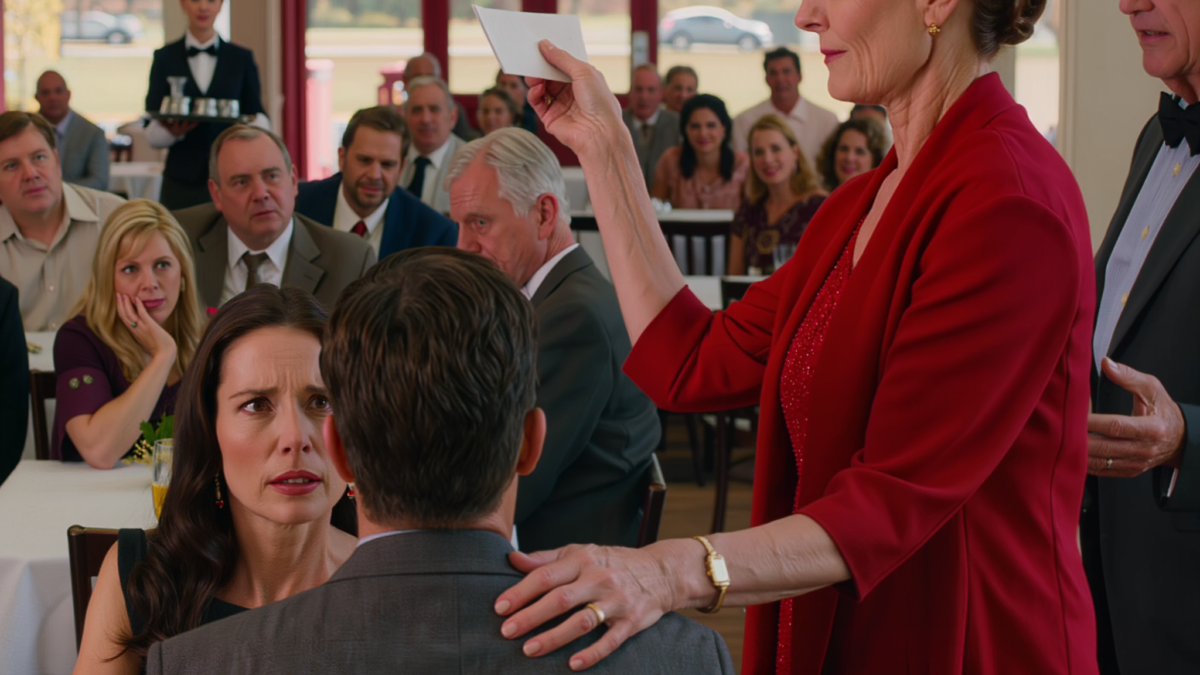
At the rehearsal dinner, in front of everyone, she snatched up my untouched place card.
“See? Even paper knows better than to sit with you.”
People laughed.
She beamed.
On my wedding day, I walked in alone past a wall of empty chairs. I didn’t look for her.
Then the side doors opened.
A line of people in dark suits filed in and began taking every seat she’d cleared.
From the parking lot, my mother grabbed my father’s arm.
Her plan was dying in front of her.
I’m Nora Dolan. I was 34 when this happened, and the woman who emptied a church to break me had no idea who my grandfather had already asked to fill it.
To understand what happened at that wedding, you have to understand what my mother was really afraid of.
It started with a phone that wouldn’t stop lighting up.
Cousins I hadn’t heard from in years. A great-aunt in Florida. My father’s old fishing partner.
One after another, the same handful of words arrived in different forms.
“So sorry, honey. Can’t make it. You understand?”
I did not understand.
Not yet.
I had mailed those invitations myself, cream envelopes hand-addressed at my kitchen table over two long nights, my grandfather’s brass pocket watch ticking beside me for company.
Eighty-eight of them.
I know the number because I counted twice, the way he taught me to count anything that mattered.
By Wednesday, the yeses had curdled into nos.
All of them.
In less than a week, my entire family had decided, as if by vote, that my wedding was something to skip.
I told myself there had to be a mistake.
There is a particular kind of hope that only a badly loved daughter carries. The hope that this time, it isn’t what it looks like.
I carried that hope right up to the phone call.
I called my mother and made my voice light.
“Oh, that,” she said, like I’d asked about the weather. “I handled the RSVPs for you, sweetheart. You had enough on your plate.”
“You handled them how?”
“I let people off the hook. Nobody wants to drive three hours to watch you play dress-up.”
She said it gently.
That was the part that took the air out of me.
She sounded like she was folding laundry on the other end of the line while telling me no one was coming.
I gripped my grandfather’s watch until the edges pressed into my palm.
“You told them not to come to my wedding.”
“I told them the truth,” she said. “You’ll thank me later.”
Then she hung up because, in her mind, the conversation was already over.
To understand why she did it, you have to understand my grandfather.
Warren Castell built a business out of one lumber truck and forty years of getting up before the sun.
Castell Building Supply.
Everyone in Milbrook, Ohio, knew the name.
By the time I was old enough to notice, Warren was the kind of man other men stood a little straighter around. He had the kind of quiet money a small town orbits without quite admitting it.
But at home, he was just Grandpa.
The one who saved me a seat.
Family dinners at his long oak table were a competition, and I always lost.
My mother, Paula, and her two siblings, my aunt Karine and my uncle Gerald, had spent their whole lives circling their father like planes waiting to land.
Who called most.
Who visited.
Who casually reminded him the others weren’t visiting enough.
They kept score out loud.
They thought he couldn’t hear it.
I wasn’t in the running.
I was the granddaughter who liked to sit beside him and listen to how the lumberyard had done that week.
“You’re the only one who doesn’t want anything from me,” he told me once when I was nineteen and helping him wind that brass watch. “You have no idea how rare that makes you.”
I thought he was being sentimental.
I didn’t know he was taking notes.
I didn’t go into business or law or anything that would have made my mother proud at a dinner party.
I became a hospice nurse.
I chose it on purpose.
Somebody has to sit with people at the end.
It turned out I was good at the sitting. Good at the small hours, the ice chips, the way you say a hard, true thing softly.
My mother called it my little job.
She called it that for eleven years.
A little over two years before the wedding, cancer came for Warren.
He refused a facility the way he refused everything he didn’t choose himself.
So I moved my shifts and became his nurse.
Not his visitor.
His nurse.
For twenty-six months, I drove to that farmhouse.
I learned his medications, his moods, the exact hour in the afternoon when the pain crested, and the exact joke that would get him through it.
My mother came for holidays and photographs.
My aunt Karine sent cards.
My uncle Gerald called the company accountant more often than he called his own dying father.
Every evening, Warren would pat the chair beside his bed and say the same three words.
“Sit with me.”
So I sat.
I never once asked that man for a dollar.
I emptied his bedpans, read him the sports page, and held his hand through nights when the medication wasn’t enough.
I did it because I loved him.
The money never crossed my mind.
It crossed everyone else’s constantly.
I’d hear them in the kitchen while I changed his sheets down the hall.
“When he goes, the house has to be appraised right away before the market slips,” my mother would say.
Then Karine:
“Does anyone even know what’s in the will? Has anyone actually seen it?”
Gerald was always focused on the company.
“He keeps everything with that Howerin woman. She won’t return my calls. That’s not normal, Paula. That’s a man hiding something.”
They thought I was too tired to listen.
I was tired.
But a hospice nurse learns to hear everything and show nothing.
Warren heard it too.
He was dying, not deaf, and he had never in his life been fooled by his own children.
One December afternoon, four months before the end, he asked me to help him to the desk in his study.
He hadn’t sat there in half a year.
He wrote for a long time in his slow, careful hand, pausing to rest his wrist while I pretended to organize his medication.
When he finished, he sealed a cream envelope and pressed it into my hands.
“Don’t open this until the morning after your wedding.”
I laughed.
“Grandpa, I’m not even engaged.”
“You will be,” he said. “Owen’s a good one. He’ll ask by spring.”
He was right about that too.
“Promise me. The morning after. Not one day sooner. Whatever happens between now and then, and something will, you keep this closed.”
Something about the way he said something will made me stop laughing.
“Grandpa, what’s going on?”
He looked at me for a long moment.
There was something in his face that wasn’t sadness.
It was almost mischief.
The expression of a man who had planned something so thoroughly he could afford to enjoy it.
“I’m going to make sure you land on your feet,” he said. “That’s all. Now put it somewhere your mother won’t go looking.”
I tucked the envelope into the back of my closet behind the shoe boxes.
I thought it was a letter. A blessing. Something sweet to read after I eventually got married.
I had no idea what my grandfather had actually done.
I had no idea he’d handed me the second half of a plan whose first half was the will nobody had been allowed to read.
Warren died in April at eighty-four.
It was a Tuesday morning.
My hand was around his, and the brass watch was ticking on the nightstand where I’d set it so he could hear it.
He hadn’t been able to talk much by then, but that morning he was clear for a few minutes, the way the dying sometimes are right at the end.
He squeezed my fingers and said the last real sentence he ever said to me.
“You were the only one who stayed.”
I’ve held on to that sentence ever since.
The funeral was three days later.
That’s where the machinery started turning out loud.
My mother wore black and cried on cue for the neighbors.
The moment the casseroles were cleared and the last mourner’s car pulled out, I watched her corner Gerald by the coat closet.
“The reading?” she whispered. “When is the reading?”
I was close enough to hear Gerald answer.
“Howerin says there’s a delay. Some instruction from Dad about timing. She won’t say more than that.”
“Timing?” My mother repeated. “Timing for what?”
“I don’t know, Paula, but I don’t like it.”
Something happened to my mother’s face then.
It stopped grieving.
It started calculating.
In the space of one breath, she went from bereaved daughter to a woman doing math.
Whatever came next was going to be about the number at the bottom of that math.
I just didn’t know yet that I was the number she needed to zero out first.
Owen proposed in May in Warren’s old workshop because he knew what the place meant to me.
He had asked my father for a blessing and gotten a shrug, which was about as much as Ray Dolan gave anyone.
Owen didn’t care.
He got down in the sawdust and asked me himself.
My grandfather’s watch was in my jacket pocket, the smell of cedar all around us, and I said yes before he finished the sentence.
For a few weeks, I let myself be simply happy.
In June, the happiness developed a leak.
My mother wanted to help plan.
She had never helped me with anything in my life, but suddenly she was warm about the wedding, complimentary even.
I was so starved for it that I didn’t ask why.
“Let me manage the RSVPs, sweetheart,” she said over the phone. “You’ve got that little job eating up all your hours. Just give me the login to the wedding site. I’ll track everyone down for you.”
My little job.
Twenty-six months at her father’s deathbed and it was still my little job.
I should have said no.
But I was raised to hand my mother whatever she demanded, and that training runs deeper than sense.
I gave her the login.
Within a week, the nos began.
My cousin June called me on a Tuesday.
June and I had grown up close, back before the dinner-table scorekeeping split the cousins into camps.
She was crying.
“Nora, I don’t understand. I RSVPed yes the day the invitation came. I’ve had the dress for a month, and your mom just called and told me you’d rather I not come. She said you specifically asked her to tell me.”
My stomach dropped.
“I never said that. June, I would never.”
“She said you were embarrassed to have poor relations there in front of Owen’s family.”
Her voice cracked.
“That doesn’t sound like you, but she was so sure.”
“It isn’t me,” I said. “June, I swear on Grandpa. It isn’t me.”
There was a silence on the line.
Then, quietly:
“Okay. Then I’m coming.”
She would end up being one of only four people from my side at the rehearsal dinner.
But I didn’t know that yet.
All I knew after hanging up was that my mother wasn’t simply declining invitations.
She was building a story around each one.
A custom insult tailored to the exact person so that even people who loved me would walk away believing I’d thrown them out.
That wasn’t careless spite.
That was work.
That was a woman with a reason.
I drove to my mother’s house unannounced on a bright June evening.
Her car was in the driveway.
Through the front window, I saw her at the kitchen table with Karine.
A laptop sat open between them.
They were laughing at something on the screen.
I let myself in through the side door the way I had my whole childhood.
Neither of them heard me.
“Read the next one,” Karine said. “The Hendersons.”
My mother clicked.
“Declined.”
She typed something.
“There. That’s the last of the far cousins.”
“You are terrible,” Karine said, delighted, refilling both their wine glasses.
“I’m efficient,” my mother said. “By Saturday, that church is going to be the quietest room in Ohio.”
I stepped into the doorway.
“What are you doing?”
They didn’t even flinch.
My mother closed the laptop with the calm of a woman who had rehearsed being caught and decided long ago that she didn’t mind.
“Managing your wedding,” she said. “You’re welcome.”
“You’re telling people not to come.”
“I’m telling people the truth. You’re marrying a shop teacher in a rented chapel and calling it an event. No one needs to burn a Saturday pretending to be impressed.”
Karine studied her wine.
I kept my voice level.
“Why? What do you actually get out of this?”
My mother stood, crossed to me, and cupped my face with a hand that had never once cupped it in kindness.
Her palm was cool.
Her eyes were almost tender.
“Because a daughter no one claims,” she said softly, “is a daughter no one protects. Remember that, sweetheart.”
Then she turned me toward the door and told me to let myself out.
I sat in my car in her driveway for a long time with the engine off, hands shaking on the wheel, trying to make the sentence make sense.
Protects from what?
There was nothing to protect.
There was a chapel, a dress, and a man I loved.
I was missing a piece.
I had no idea how big that piece was.
That night, I couldn’t sleep.
So I logged into the wedding website myself and went looking for the admin history.
There it was.
One session.
One evening.
Eighty-eight RSVPs flipped to declined in ninety minutes.
All from a single device that wasn’t mine.
My mother hadn’t merely discouraged people from coming.
She had gone through every response in my name so the people who might have shown up would believe they simply weren’t wanted.
I took screenshots.
I didn’t have a plan.
I wasn’t building a case.
I saved that log because I needed proof that I wasn’t imagining what had been done to me.
Then I opened the extended family group chat.
There were forty-some cousins, aunts, and uncles in it, the kind of thread that usually filled with birthday wishes and prayer requests.
I’d muted it years ago.
That night, I scrolled.
My mother had been posting about me for weeks.
“Please keep Nora in your prayers. She’s not been herself since Dad passed.”
“We’re all just worried about the influence she had at the end.”
“I hate to say it, but the lawyer won’t tell us anything. And Nora won’t either. Draw your own conclusions.”
Karine reinforced it.
Relatives replied with sad-face emojis and messages of concern.
Weeks of it.
A slow, patient campaign carried out while I was grieving the only person in that family who had consistently chosen me.
By the time the invitations went out, the whole family had already been handed a version of me they were prepared to reject.
My mother hadn’t just clicked no eighty-eight times.
She had spent two months making eighty-eight people ready to believe it.
I typed a reply.
Deleted it.
Typed another.
Deleted that too.
Anything defensive coming from me would have sounded, to people already primed against me, like confirmation.
So I called my mother’s cousin Ellen, who had sent me birthday cards my whole childhood.
I wanted one relative to tell me they didn’t believe it.
“Ellen, it’s Nora. I need you to know none of what my mother’s saying is—”
“I really can’t get in the middle of family business, Nora.”
Her voice was cool and closed.
“Whatever’s going on, it’s between you and your mother. Please don’t put me in it.”
She hung up.
That was the moment the isolation stopped being an idea and became something I could feel.
I sat with the phone in my hand until the sky started going gray.
Then a cold clarity settled into me.
It wasn’t rage.
It was a decision.
I was going to get married anyway.
I would walk into that chapel in front of every empty chair she’d made.
I didn’t know yet that I wasn’t the only one who had been keeping a record.
The next morning, my phone rang.
I didn’t recognize the number.
A woman’s voice came through, dry and precise.
“Miss Dolan, this is Ruth Howerin. I represented your grandfather’s estate.”
A pause.
“I understand you’re being married this Saturday.”
“I am,” I said carefully, “though it’s shaping up to be a very small affair.”
“So I’ve gathered.”
There was something under her words I couldn’t place.
“Nora, may I call you Nora? Your grandfather left me a set of instructions to be carried out in a particular order. I’m not permitted to discuss the contents of his estate before the formal reading, but he was extremely specific about one thing, and I intend to honor it to the letter.”
“What thing?”
“He asked me to make certain that you would not stand alone on your wedding day.”
I stopped breathing for a second.
“Whatever it took,” she continued. “Those were his words.”
“I don’t understand. How would you even—”
“You’ll understand Monday. Please do not miss the reading Monday morning, Nora. No matter what happens this weekend. And bring the envelope your grandfather gave you. Do not open it early.”
Then her voice softened.
“He knew, dear. He knew what they’d do before any of them thought to do it. Now go get married.”
She hung up before I could ask another question.
I sat with the phone against my ear after the line went dead.
For the first time in weeks, I felt something other than dread.
I didn’t tell my mother about the call.
I didn’t tell anyone.
Some instinct told me to keep it folded away like the envelope in my closet.
My mother, of course, was not keeping anything folded.
Karine came next.
That was the pattern I started to see.
My mother directed.
Her siblings each had a job.
Karine’s job was the poison.
Two days after Ruth’s call, Owen came home from work with his jaw tight.
“Your aunt found my mother at the grocery store,” he said. “Spent twenty minutes telling her you’d been arrested for stealing from your grandfather, that the family was protecting the estate from you, and that we should postpone the wedding until it’s investigated.”
“That’s insane. There’s no investigation. There’s nothing to investigate.”
“I know that. My mom knew it too. She told your aunt to go to hell in the dairy aisle, which I’d have paid money to see.”
He took my hands.
“But, Nora, they’re not just embarrassing you now. They’re telling people you’re a thief. Why would they need people to believe that?”
I didn’t have an answer.
But the question wouldn’t leave.
Why would they need it?
What was coming that required me to be discredited before it arrived?
The next afternoon, the venue called.
A young coordinator named Priya sounded apologetic and confused.
“Miss Dolan, I’m so sorry to bother you. A woman called this morning saying she was you. She had your booking number and asked to cancel the reception hall and cut the catering down to twelve people. When I asked to verify her identity, she got upset and hung up. I just wanted to make sure. Are you canceling?”
My hand tightened around the phone.
Twelve people.
My mother had even done the math on the food.
“I am not canceling anything,” I said. “And that woman was not me. Please put a note on the file. No changes are authorized unless I come in person with ID. No one else. Not my mother. Not my aunt. No one.”
“Of course.”
Then, more quietly:
“Are you okay? I’ve done a lot of weddings. This isn’t normal.”
“No,” I said. “It’s not. But I’m still getting married Saturday. Please keep everything exactly as it is.”
After I hung up, I stood in my kitchen and finally understood that my mother wasn’t going to stop at emptying the church.
She was trying to shrink the whole day down to something small enough to bury.
The guest list.
The family chat.
The catering.
Every front she could reach.
She was quietly closing one door at a time so that whatever the will said Monday, I’d walk into that reading already erased.
Uncle Gerald made it even clearer.
He showed up at my apartment three days before the wedding.
He did not come to congratulate me.
Gerald was the one who cared about the company, the controlling interest, the name over the yard.
He stood in my doorway in a golf shirt and got straight to it.
“Your grandfather wasn’t well at the end,” he said. “You know that better than anyone. You were there.”
“He was clear to the last morning.”
Gerald ignored that.
“Whatever that Howerin woman reads Monday, there’s going to be paperwork. A waiver. Standard stuff. Keeps the estate from getting tied up in court for years.”
He slid a folded document halfway out of his jacket, then pushed it back.
“Smart thing for you is to sign it. Take a clean number, walk away, don’t make trouble. You’re a nurse. You don’t want a war with lawyers.”
“What’s on the waiver, Gerald?”
“Peace of mind.”
“For everyone?”
“For everyone.”
“Or for the three of you?”
His friendly mask shifted.
“Don’t get greedy, Nora. It’s not a good look on a girl who wipes chins for a living.”
He tucked the document away.
“Think about it. You’ve got no one in your corner anyway. Might as well be reasonable.”
Then he left.
The next morning, they came for the one thing I thought they couldn’t touch.
My work.
My supervisor at the hospice, a kind, tired woman named Dana, called me into her office and closed the door.
She never did that.
“I have to ask you something, and I need you to know I’m on your side.”
She slid a printout across the desk.
Someone had sent a complaint to our director and the state nursing board.
It accused me, Nora Dolan, RN, of financially exploiting a terminal patient in my care and manipulating a dying man for his estate.
It named Warren.
It named me.
It asked the board to investigate my license.
My license.
Eleven years.
The only thing in my life I’d built entirely by myself, with no one’s money and no one’s blessing.
“It’s not true,” I said.
My voice came out steadier than I felt.
“He was my grandfather. I nursed him for free. Every hour is documented. The agency has the charts. The family knew. The doctor knew.”
“I believe you,” Dana said. “I’ve watched you sit with dying people for eleven years. But a complaint like this, even a false one, can cause months of trouble while they investigate. Whoever sent it knows they don’t have to be right. They just need you tied up.”
She looked at me.
“This feels less like a report and more like a hostage situation.”
That was exactly what it was.
They didn’t need me convicted of anything.
They needed me busy, frightened, and discredited before Monday.
Karine’s poison.
Gerald’s waiver.
My mother’s empty church.
Three tools tightening around the same target.
I drove home.
I wound Warren’s watch until the spring was tight.
They were all so certain I had no one.
They kept saying it.
You’ve got no one.
You’ve got no one in your corner.
Why did people who were winning need to say it so often?
Two days before the wedding, I found out they’d already started dividing Warren’s belongings.
I drove to his farmhouse on Thursday.
I still had the key.
I still went there sometimes to check the pipes, sit in his study, and breathe.
That day, there was a rented box truck in the driveway with the back rolled up.
Through the window, I saw Gerald carrying Warren’s roll-top desk toward the door.
Karine followed with framed photographs from the hallway.
I got out of my car.
“What are you doing?”
Gerald didn’t stop walking.
“Securing family assets before the vultures come.”
“He isn’t cold yet. The estate isn’t even settled.”
“Which is exactly why we’re taking inventory now,” Karine said, walking past me with an armful of Warren’s things. “You’d know that if you’d ever cared about anything but playing nurse.”
I watched them load his desk, his tools from the workshop where Owen had proposed to me, the kitchen clock, and boxes of ledgers Francis had kept for thirty years.
They moved through his house like a store was closing.
Every so often, one of them looked at me to make sure I was watching.
I could have blocked the truck.
I could have called someone.
Instead, I stood in my grandfather’s front yard and said one thing quietly as Gerald passed.
“You know he’s watching all of this, Gerald. Every box.”
He laughed.
“He’s in the ground, Nora. Nobody’s watching.”
He was so sure.
Standing there while they emptied a dead man’s house, I understood something.
They truly believed no one was watching.
That was their flaw.
They had never imagined that someone could keep track without announcing it.
Warren had spent forty years watching quietly.
They’d never felt his eyes.
That afternoon, I drove to the cemetery.
I sat in the grass beside his stone, my back against the granite the way I used to sit beside his bed.
I told him everything.
The empty church.
The complaint against my license.
The truck in his driveway.
“I don’t know if I can do it, Grandpa,” I said out loud. “I don’t know if I can walk in alone.”
The wind moved through the maples.
No answer came.
But when I stood to leave, I noticed flowers on his grave.
They weren’t mine.
A large, plain arrangement, the kind men buy when they don’t know what to choose.
Tucked into it was a small card, rain-warped and written in block letters.
Warren,
The yard remembers. We’ve got her.
Sal and Denny and the boys.
I read it three times.
We’ve got her.
Got who?
I turned the card over.
Nothing else.
For the second time that week, I felt the possibility that something was moving around me that I couldn’t yet see.
The last strange thing happened Friday at the grocery store.
I was buying too much wine for a reception almost nobody was coming to when a man in a canvas work jacket, maybe sixty, stopped his cart beside mine.
He studied my face.
“You’re Warren’s Nora.”
It wasn’t a question.
“I am.”
“Thought so. You’ve got his way of standing.”
He nodded once.
“He was good to my family when nobody else would have been. Carried our account two winters when the mill closed and never said a word about it.”
He put one rough hand on my cart for a second.
“You won’t be alone, miss. Whatever you’ve heard, you won’t be standing there alone.”
Then he pushed his cart away before I could ask his name.
I stood in the aisle with my heart pounding.
The flowers.
Ruth’s call.
This stranger.
Those seats are spoken for.
Something was moving in the dark.
Something my mother couldn’t see.
Something with Warren’s fingerprints all over it.
I just couldn’t see its shape yet.
That night, I called June.
She was the only cousin still speaking to me.
“June, the reading of Grandpa’s will. Do you know why it got pushed back?”
Silence.
Then, carefully:
“You really don’t know?”
“Know what?”
“Nora, everybody’s been assuming it’s you. That the delay is because Grandpa left something to you. Your mom’s been working the family for weeks to make sure that when the will is read, nobody is on your side. She’s been telling people you manipulated a dying man.”
Her voice dropped.
“She started two months ago. I think this wedding thing is the finale. I think she needs everyone to see you humiliated and alone right before the reading so that whatever it says, no one in the family will stand up for you.”
I sat down on my kitchen floor.
There it was.
The missing piece.
My mother hadn’t emptied my wedding only because she was cruel or embarrassed by me.
She’d emptied it as preparation.
A daughter no one claims is a daughter no one protects.
She was making me unprotectable in public, right before a will was read.
Which meant Warren had left me something she was terrified of.
“June,” I said. “Is your brother still coming Saturday? Tell me at least one of you is coming.”
Another silence.
This one hurt.
“Nora, I have to tell you something. My brother pulled out this afternoon. Your mom got to him. She told him if he showed up on your side, she’d make sure the family cut him out of everything.”
June was crying.
“He’s got kids. He caved. I’m so sorry. It’s just going to be me and my husband now. Sal and Denny from the lumberyard. That’s all I could hold.”
Four people.
My entire side down to four.
I sat on the kitchen floor and cried until I had nothing left.
My mother’s plan was working.
In three days, I was going to walk into a church and prove her right.
A daughter no one would come for.
Then Owen came home and found me on the floor.
He didn’t tell me to stop crying.
He sat beside me on the linoleum.
“Okay,” he said. “Here’s what we know. Your grandfather asked a lawyer to make sure you weren’t alone. Your grandfather never asked for anything he couldn’t deliver. So either that man was wrong about you for the first time in his life…”
He wiped my face with his thumb.
“Or your mother is about to find out she’s not the only one who spent two months planning a wedding.”
“You believe that?”
“I believe him,” Owen said. “You believe him. That’s enough to walk in on.”
The rehearsal dinner was two days before the wedding at a family-style restaurant on Milbrook’s main square.
Owen’s side filled their tables.
His parents.
His three sisters.
A warm, loud crowd who had already started calling me “our Nora” like it was the most natural thing in the world.
My side had exactly four people.
June and her husband.
Sal and Denny, Warren’s two oldest friends from the yard, both past seventy and watching the door like men expecting weather.
Paula arrived late.
She wore red.
She found my place card at the head table, lifted it, turned it over, and raised her voice so the entire restaurant would hear.
“See? Even paper knows better than to sit with you.”
For a second, the room was silent.
Then Karine laughed.
A few relatives laughed with her.
My mother beamed.
Owen started to rise beside me.
I put my hand on his arm.
Sal stood instead.
Slowly.
One joint at a time.
He set down his water glass.
Then, in a voice that had run a lumberyard for fifty years and did not require a microphone, he said:
“Paula, sit down and shut your mouth. Your father would be ashamed of the neck on you.”
The restaurant went dead still.
A waiter froze with a tray.
My mother’s smile flickered.
Only for a second.
Then she smoothed it back into place.
“Sentimental old fool.”
She sat down.
But I had seen the flicker.
Something about Sal’s certainty frightened her.
He had said, “Your father.”
And for half a heartbeat, my mother looked at him as if he knew something.
He did.
I just hadn’t figured out what.
That night, Owen held me while I finally cried.
“We can cancel,” he said. “We can go to the courthouse Monday morning. Just us and a clerk. You never have to walk into that church.”
Monday.
The word caught.
Bring the envelope Monday.
Don’t miss the reading Monday.
Sign what you’re told Monday.
“No,” I said. “We’re getting married Saturday in that chapel with every empty chair my mother built.”
“Why put yourself through it? Nobody would blame you.”
I didn’t have the whole answer.
I only had Ruth Howerin’s voice saying, He knew.
And Warren saying, You were the only one who stayed.
And something stubborn under my ribs.
“Because I’m done being managed,” I said. “She spent two months making me small so that when this thing is read Monday, I’ll already be beaten. If she wants a quiet room, she can watch me be happy in it.”
Owen was quiet for a moment.
Then he kissed my forehead.
“Then we walk in loud.”
His family made sure of it.
The night before the rehearsal, Owen’s mother had filled her kitchen with the people my mother had not managed to drive away.
June and her husband.
Sal and Denny in their work boots.
A couple of Owen’s sisters.
Me, red-eyed at the end of the table.
Owen’s mother set down a coffee cake nobody ate.
“All right,” she said. “Here’s how I see it. Paula wants an empty church, so the rest of us are going to make sure that whatever chairs are left, we put ourselves in them. I don’t care if it’s eight people. Eight people who chose to be there beats eighty who were bullied into staying home.”
“It won’t be eight,” Denny said.
There was something odd in the way he said it.
A private certainty.
Sal elbowed him under the table.
I noticed.
I didn’t understand.
“Nora,” Sal said, leaning toward me. “You wind that watch tomorrow morning like your grandfather taught you. You put on that dress and you walk in. That’s the whole job. You do your part and let the rest of us do ours.”
He held my eyes.
“Warren didn’t spend forty years earning this town’s respect for nothing. You just walk in, girl. Trust the man.”
I thought he was being kind.
I went home believing I’d have eight people, maybe ten, and that ten chosen faces would be enough.
I had no idea what Sal and Denny already knew.
Friday afternoon, my mother made one last move.
She came to my apartment alone.
No Karine.
No Gerald.
No audience.
That alone was a warning.
My mother did almost nothing without an audience.
She stood in my living room in her good coat.
“I’ll say this once,” she said. “Whatever Howerin tells you Monday, whatever that woman has cooked up, you are going to sign the papers Gerald showed you. You’re going to take your number and walk away quiet. Do you understand me?”
“Or what?”
“Or I will make the rest of your life a court case. I will tie up that estate for a decade. I will tell every soul in this county what a manipulative little vulture you were at your grandfather’s bedside. You’ll spend your marriage in depositions.”
Her voice climbed.
Then I noticed her hands.
They were trembling.
“You have no idea what you’re sitting on. You have no idea what he did. Just sign it, Nora. For God’s sake, sign it and let me—”
She stopped.
“Let you what?”
For one moment, the mask came off.
What was underneath it wasn’t hatred.
It was fear.
My mother, who had never once been afraid of me, was standing in my living room afraid of me.
“You were always his favorite,” she whispered. “You didn’t even try, and you were his favorite. Now he’s reached out of the ground to hand you everything and leave me with nothing, and you’re going to let him.”
Her voice broke.
“A good daughter would share. A good daughter wouldn’t take everything just because a dead man told her she could.”
Then she pulled herself together and walked out.
For the first time, I understood the shape of it.
She wasn’t going to my wedding simply to watch me fail.
She needed to see whether the failure held.
If I was isolated enough, humiliated enough, and frightened enough, she still had time before Monday to force me to sign.
If the church somehow filled, her entire two-month campaign would collapse in public.
The empty church wasn’t just cruelty.
It was the last brick in a wall she was building between me and anyone who might protect me.
I barely slept.
But sometime before morning, I stopped being afraid.
I still didn’t know what the will said.
I still didn’t know what Ruth had planned.
But I knew my mother had been outmaneuvered by a dying man months earlier.
Saturday came bright and hot.
The chapel was a pretty white building on the edge of town.
Tall windows.
A center aisle.
Back in the spring, when I still believed eighty-eight people were coming, I’d ordered eighty-eight numbered name cards and attached one to every chair on my side.
I hadn’t removed them.
Maybe I wanted the emptiness to be specific.
Maybe some part of me was daring the day to fill them.
Owen’s family arrived early and packed the right side.
They tried to spill over onto mine.
Priya stopped them.
She came into the bride’s room wearing her headset and holding a clipboard.
“I’m so sorry,” she said. “I’ve been asked to hold your side. Keep it clear.”
“Held by whom? My mother?”
Priya hesitated.
“No. By the estate office. Ms. Howerin. She was extremely insistent that your side stay open until she called me directly.”
She glanced at her phone.
“I assumed you knew. She said something strange, so I wrote it down.”
Priya looked at me.
“Those seats are spoken for.”
My heart began a slow, hard knock.
Then the door opened.
My mother walked in.
She looked me over in my grandmother’s veil and simple white dress.
“Well,” she said, “at least the photos will be quick. Nothing to shoot but empty chairs and a bride nobody came for.”
“Get out.”
Owen’s mother was standing in the corner.
I hadn’t seen her come in.
She crossed the room and opened the door.
“This is the bride’s room. You gave up your seat in it two months ago.”
My mother laughed.
At the threshold, she turned back to me.
“Don’t you dare embarrass this family Monday,” she said. “Whatever happens today, you sign what you’re told to sign.”
Then she left.
For about ten minutes after that, everything I’d been quietly hoping came apart.
Priya returned.
Her face had changed.
“I need to tell you something, and I’m so sorry. The estate office just called. Miss Howerin has been delayed. She said she may not make it in time.”
Priya swallowed.
“And your mother’s out front telling every guest who arrives that your side is closed. Family instructions. Some of the people who came anyway are turning around. I don’t have authority to override her. And the person who did just called to say she might not make it.”
The room went quiet.
Owen’s mother took my hand.
There it was.
The bottom of it.
Everything I’d been leaning on suddenly felt thin.
The flowers at the grave.
The stranger in the grocery aisle.
Ruth’s promise.
He knew.
And outside that window, my mother was personally turning away some of the few people who had tried to come.
I was minutes away from doing exactly what she’d spent two months arranging.
Walking into a church.
Standing beside eighty-eight empty chairs.
Becoming, in front of a hundred witnesses, a daughter no one came for.
I sat down on the little velvet bench.
I thought about canceling.
Owen would have married me in a parking lot and called it the best day of his life.
Nobody would have blamed me.
I took out Warren’s watch.
I wound it one full turn.
I listened to it tick in my palm.
Then I remembered him sitting at that desk four months before he died.
Whatever happens between now and then, and something will.
You walk in anyway.
“I’m walking in,” I said.
My voice didn’t shake.
“Empty or full. He asked me to show up to my own life. I’m going to show up.”
Owen’s mother squeezed my hand.
Priya nodded and went to line us up.
The cello started in the chapel.
A single cello.
Owen went ahead to the altar.
Then it was just me and my father.
Ray Dolan, for all his silence, had insisted on walking me even after my mother told him not to.
He stood there in his one good suit, not quite looking at me.
“Your mother’s out in the car,” he said quietly. “Says she can’t stand to watch.”
His jaw worked.
“I don’t understand her anymore, Nora. I want you to know that. I’ve known that woman forty years, and I don’t understand what she’s become since he died.”
It was the closest my father had ever come to an apology.
I took what little was offered.
I put my hand through his arm.
The chapel doors opened.
The right side of the aisle was full.
Owen’s whole warm world stood as I entered.
My side was a desert.
Eighty-eight white chairs.
Eighty-eight little name cards trembling in the draft from the air-conditioning.
The names of people who had loved me, or should have, printed neatly and abandoned.
I walked toward Owen.
My grandfather’s watch was tucked against my heart.
I kept my chin level.
I looked at the man waiting for me at the end of the aisle.
One foot in front of the other.
Halfway down, I heard it.
The side doors.
Both of them opening at once.
I turned my head.
So did everyone else.
People were filing in through both side entrances.
Dozens of them.
Men and women in dark formal clothes, quiet and unhurried, moving with the calm of people who had been told exactly where to sit.
At the front walked a silver-haired woman in charcoal gray, carrying a slim leather portfolio.
Resting on top was a cream envelope sealed with red wax.
Ruth Howerin.
She found my eyes across the room.
She gave me the smallest nod.
Then the people behind her began filling my side of the aisle.
Chair by chair.
Name card by name card.
Every empty seat my mother had cleared.
And they weren’t strangers.
Some were faces I half knew and hadn’t seen in years.
Others I knew very well.
Warren’s other world.
The men and women who had built Castell Supply beside him for forty years.
His foreman, still tanned from the yard, his tie knotted a little too tight.
His bookkeeper, Francis, who had kept his ledgers for three decades.
His lawyers.
His oldest friends.
Sal and Denny were leading them like ushers who had waited years for the job.
The same men who had left flowers at Warren’s grave with a card that said, We’ve got her.
The man from the grocery store was there too, in an ill-fitting suit.
He nodded at me as he took his seat.
Behind them came relatives who had discovered they’d been told lies.
Cousins who had been told I didn’t want them.
People whose RSVPs had been changed without their knowledge.
June was near tears.
Her brother looked ashamed.
Ruth had tracked them down and told them the truth in time.
They didn’t rush.
That was what undid me.
They moved slowly, deliberately, as if they’d been asked to do something sacred.
Each person found a chair and sat.
Eighty-eight chairs.
All eighty-eight filled.
Through the tall windows, I could see my mother’s car in the parking lot.
I saw her turn in the driver’s seat.
Her face went slack.
Her hand shot out and grabbed my father’s arm through the open passenger window as the impossible thing unfolded inside.
She had emptied a church to prove no one would come for me.
My grandfather, four months in the ground, had filled it anyway.
My knees went soft.
Owen came down two steps to meet me.
We finished the walk together while a room full of people Warren had loved stood for the bride her own mother had tried to erase.
We were married in a full church.
I didn’t understand the whole of it yet.
I knew Ruth had done something extraordinary.
I knew the envelope on her portfolio matched the one I’d kept hidden in my closet.
I knew my mother had just watched her plan collapse.
But the true shape of what Warren had built didn’t become clear until Monday morning.
The reception mattered first.
Once the vows were over, the people in dark suits weren’t stiff at all.
They were Warren’s people.
They had loved him.
They treated me like the last thing he’d asked them to protect.
Sal and Denny told lumberyard stories that had the hall roaring.
Francis, the bookkeeper, pressed both my hands between hers.
“He talked about you every single week, honey. Every week right up to the end. ‘My Nora sat with me again.’ Every week.”
I found Sal and Denny near the bar.
“You knew,” I said. “Last night, you said it wouldn’t be eight. You knew.”
Denny looked sheepish.
Sal did not.
“Warren came to the yard the winter before he passed,” he said. “Sat us all down in the break room. Told us his own kids were circling and that when the time came, they’d try to make sure his granddaughter stood alone.”
He took a slow drink.
“He asked us to fill her side. Every empty seat, no matter what. Made us shake on it one at a time like it was a contract.”
Sal’s eyes went bright.
“Girl, half this room shook that man’s hand on a promise about you. We’d have crawled here.”
Across the hall, the man from the grocery store caught my eye.
He lifted his glass.
Told you.
Then the relatives began comparing notes.
“I RSVPed yes in April,” June’s brother said, staring at his phone. “It says here I canceled in June. I never touched it.”
“Neither did I,” a great-aunt said. “Paula called and said Nora asked her to uninvite me. Said Nora was ashamed of us.”
“She told me Nora was arrested.”
“She told me the wedding was postponed.”
One by one, in the middle of my reception, my family reconstructed the machinery out loud.
They realized Paula Dolan had manufactured the abandonment.
The empty church had never been proof that nobody loved me.
It had been a lie.
My mother had not only tried to isolate me.
She had lied to all of them to do it.
She did not come to the reception.
Neither did Karine nor Gerald.
Around nine, my phone buzzed.
A text from my mother.
It was not an apology.
Whatever Howerin is planning Monday, you owe this family. You will not take what isn’t yours. A good daughter would share.
Share.
There was that word again.
It told me, finally, that this had never truly been about my wedding.
Ruth found me near the cake, away from the noise.
She had stayed the entire time, still formal in charcoal, quietly watching the room.
“You did well today,” she said. “You walked in. Do you understand how much that mattered?”
“If you hadn’t walked in, if you’d canceled or run, the record would read differently. He needed you to show up to your own life. You did.”
“Tell me what happens Monday. Please. I’ve earned it.”
She shook her head.
“Monday. With the envelope. I’ve already broken enough of your grandfather’s rules getting these good people into pews.”
Then she smiled.
“Get some rest, Mrs. Brandt. The hardest part is behind you.”
She paused.
“Well, the hardest part for you.”
That night, I lay beside my sleeping husband.
The cream envelope rested on the nightstand beside Warren’s brass watch.
I kept my grandfather’s rule.
I didn’t open it early.
But I finally did the math I’d been avoiding.
The delayed reading.
Warren’s insistence on timing.
After the wedding.
Always after the wedding.
Ruth’s certainty.
My mother’s fear.
Share.
Three siblings who had spent their lives circling their father’s money.
And one granddaughter who had never asked him for a dime.
You’re the only one who doesn’t want anything from me. You have no idea how rare that makes you.
For the first time, I began to understand what rare had been worth to him.
Sunday crawled.
My mother called four times.
I didn’t answer.
She left one voicemail.
I’ve kept it because it may be the clearest thing she ever said to me.
“You think you’ve won something?” Her voice was low and shaking. “You have no idea what you’re about to do to your own mother. He always loved you best, and you let him. You could have shared him. You could have shared any of it. Now you’re going to take everything, and you’ll have to live with what that makes you.”
A long breath.
“Monday. Ten o’clock. Wear something decent.”
Even then, she was still managing me.
I wore my grandmother’s blue.
Monday morning, ten o’clock.
Howerin and Fisk.
A quiet office of oak and old carpet three floors above Milbrook’s main square.
The same square where, four days earlier, my mother had lifted my place card and told a restaurant that even paper knew better than to sit with me.
I sat between Owen and my father.
My father had come in his one good suit and taken the chair beside mine without being asked.
On my side for the first time in my life.
Before it started, he reached over and squeezed my hand.
His hand was rough, cold, and shaking slightly.
I wound Warren’s watch in my pocket.
One full turn.
Across the table sat my mother, Karine, and Gerald.
Three siblings in a row.
My mother wouldn’t look at me.
Gerald kept clearing his throat.
Karine had brought her own lawyer.
Ruth Howerin entered, set down her portfolio, and placed a sealed cream envelope on the table.
“Before I read the will,” she said, “your father asked me to explain how it was built so that no one leaves this room confused and no one wastes money on a challenge they will lose.”
She looked at the three siblings.
“Warren Castell was of entirely sound mind. He executed this document fourteen months before his death with two independent witnesses and a letter from his physician confirming his capacity that day. It has already cleared the preliminary steps in probate.”
She let that settle.
“What I read to you now is enforceable. It is not a draft, and it is not the rambling of a sick old man. He was sharper than everyone in this room, including me.”
Nobody spoke.
“Your father spent forty years watching this family,” Ruth continued. “He told me he knew precisely what would happen when he was gone. His three children would fight over what he left, and that fight would land, as it always had, on the one grandchild who had never fought for anything in her life.”
Her eyes moved to me.
“He was determined she would not be standing alone when it did.”
Then she looked back across the table.
“So he built this will in two parts, and he built the second part to spring only if someone in this family did exactly what one of you chose to do.”
My mother’s chin rose.
“This is manipulation from beyond the grave. We will contest.”
“Please let me finish,” Ruth said.
Her voice hardened.
“You will very much want to hear this before you use that word again.”
She opened the portfolio.
“The bulk of Warren Castell’s estate, the farmhouse, the land, and his controlling interest in Castell Building Supply, valued together at just over four million dollars, is left in full to his granddaughter, Nora Dolan Brandt.”
The room changed.
Gerald half rose.
Karine’s lawyer put a hand on her arm.
My mother sat completely still.
I didn’t move.
I’d suspected the shape of it since Sunday.
But hearing the number and hearing Warren hand me his life’s work across a conference table loosened something inside me.
I reached into my pocket and held the watch.
“There are provisions for his three children,” Ruth continued. “Warren left each of you a bequest of one hundred thousand dollars, subject to a condition.”
My mother looked at me.
That was when I realized she already knew.
She had known enough since the days after the funeral to be afraid.
“Your father included what’s called a conduct provision,” Ruth said.
Then she read directly from the document.
“It is my belief that how my children treat my granddaughter Nora once I am gone and can no longer protect her is the truest measure of the people I raised.
“Therefore, any of my three children who, after my death, is shown to have deliberately isolated, publicly humiliated, defrauded, or acted to sabotage Nora, as judged by my executor upon clear and documented evidence, shall forfeit his or her bequest in its entirety.
“That forfeited share shall pass to Nora.
“I set this test in love, not in spite. I pray all three of them pass it. But if my executor is reading this provision aloud in a room, then at least one of them did not, and that one has told you exactly who they were the moment I could no longer make them behave.”
Silence.
My mother’s voice came out thin.
“Ms. Howerin, you cannot possibly enforce a feeling. A judgment call. What evidence could a lawyer possibly—”
Ruth reached into the portfolio.
She laid one sheet of paper on the table.
I recognized it immediately.
The admin log.
My wedding website.
Eighty-eight RSVPs declined in ninety minutes.
One device.
One session.
“This is the access record from Nora’s wedding registry,” Ruth said. “It documents eighty-eight guests declined in a single session from an IP address and device registered to you, Paula.”
My mother stared at the page.
“I have signed statements from eleven of those guests confirming they never declined and never authorized anyone to decline on their behalf. Several are downstairs right now.”
Ruth continued.
“I have the venue coordinator’s written log regarding the instructions given in your name to keep the bride’s section empty, as well as her account of you turning arriving guests away at the church door on Saturday in front of dozens of people.
“And I have witnesses from the rehearsal dinner two nights earlier, including two of your father’s oldest friends, who watched you stand in a restaurant and announce that even paper knew better than to sit with your own daughter.”
She set the page flat on the table.
“Warren didn’t need to guess whether you would fail his test, Paula. He wrote it certain that you would. He only needed you to fail it somewhere it could be seen and recorded.”
Ruth held my mother’s eyes.
“And you did.”
My mother stood.
She did not apologize.
Being caught did not suddenly make her sorry.
“He tricked me,” she said.
Her voice climbed.
“He dangled that money in front of me. He sat there dying and watched. He wanted me to reach for it. This is entrapment. This is a cruel man’s cruel joke. You cannot let a corpse reach out of a box and steal from his own children.”
Then she turned on me.
“And you. You let him. You sat by that bed for two years and let him build this. You knew. You knew the whole time.”
“I sat by that bed.”
It was the first thing I’d said since Ruth began.
My voice was quiet.
My mother stopped.
“I sat by that bed because I loved him. That’s the part you were never able to understand, Mom. Not in two years. Not in thirty-four.”
I stood.
“There was no plan on my side. There was just a man who was dying, a chair beside his bed, and me sitting in it every night while you three were in the kitchen doing math.”
My hands were completely still.
“You needed me to be a daughter no one would claim so you could take what he left without anyone standing in your way. You spent two months making me unprotectable. You emptied my wedding to finish the job.”
I looked across the table at her.
“But he claimed me, Mom. He claimed me at a desk four months before he died.”
Her face changed.
“While you were asking when the reading was, every seat you cleared, he’d already saved. You just couldn’t see him doing it because you’ve never understood why anyone would sit with a dying man for free.”
For the first time, my mother looked like someone who had believed she understood the game and realized too late that someone else had been watching the board longer.
Gerald was already on his feet.
“Undue influence. She lived with him. She controlled his medications. Any judge in this state would—”
“Read the physician’s capacity letter, the two witness affidavits, and the fourteen-month gap between signing and death,” Ruth said, without looking up. “And dismiss it before lunch.”
Gerald stopped.
“Your father anticipated you, Gerald. He told me you’d say undue influence within five minutes of the reading.”
Ruth checked the time.
“You took four.”
She turned a page.
“He also asked me to remind you that Nora refused a salary for twenty-six months of nursing that would have cost this estate well over two hundred thousand dollars at agency rates. That is not the behavior of a woman working an angle. It’s in the file if you would like to argue otherwise before a judge.”
Gerald sat down.
Karine tried a different approach.
“I never wanted any of this,” she said through tears. “Paula dragged me into it. I love Nora. I’ve always loved Nora.”
“You laughed while she clicked decline eighty-eight times,” I said. “I was standing in the doorway. You told her she was terrible, and you meant it as a compliment.”
Ruth added calmly:
“You are also the likely author of a false complaint filed with the state nursing board against Nora three days ago. I have already sent the board the relevant record and a preservation letter regarding the complaint’s origin.”
Karine stopped crying.
But Ruth explained that neither Karine nor Gerald’s conduct had crossed the specific threshold Warren had written into the provision.
Their bequests stood.
One hundred thousand dollars each.
Only my mother had forfeited hers.
That fact would create its own consequences later.
Gerald would come to believe Paula had cost the family millions with her campaign against me.
Karine would insist she had only followed her sister.
Eventually, the three of them would fracture without any help from me.
But sitting in that room, all I knew was that my mother’s one-hundred-thousand-dollar share had passed to me because she could not let her daughter be loved without trying to destroy it.
I could have left it there.
Everyone in the room expected me to.
Instead, I reached across the table and picked up the cream envelope.
The one Warren had given me.
The one I’d promised not to open until the morning after my wedding.
I’d kept the promise.
I had opened it Sunday.
It wasn’t legal paperwork.
It was a letter in Warren’s slow, careful handwriting.
“My mother is going to lose her share today,” I said. “Those are his terms, not mine, and I’m not going to undo them. But before anyone leaves, I’m going to read the last thing my grandfather ever wrote to me, because it decides what I do next.”
I unfolded the letter.
Nora,
If you’re reading this, then you’re married and you found out what the rest of them are.
I’m sorry it had to be a lesson instead of a gift.
Here’s the part the lawyers won’t tell you, so I will.
The money was never the gift.
The money is just money.
The gift is that you finally get to choose your own family, free of them and free of any doubt, with proof in writing that you were the one worth choosing all along.
You spent two years proving who you were.
I only made sure the record showed it.
Now do whatever you want with the share your mother’s about to lose. Burn it, keep it, give it away.
But if you can find it in you to be kinder to her than she ever was to you, not for her sake but for yours, so it doesn’t take root in you the way it took root in her, then I’ll know I raised at least one of you right.
You were the only one who stayed.
Let that be the reason you get to be free of all of them.
Love,
Grandpa.
When I finished, the room was quiet again.
But it was a different quiet.
I looked at my mother.
She was still standing.
“I’m not going to keep your hundred thousand,” I said.
Her head came up.
“I’m going to put it in a trust. A trust that pays your mortgage and your medical bills for the rest of your life.”
She stared at me.
“You’ll never touch the principal. You’ll never be able to leverage it, gamble it, lose it, or hand it to Gerald for one of his schemes.”
I kept going.
“Every month, for as long as you live, you’ll receive a check that exists for one reason only: to remind you that the daughter you tried to erase decided to protect you anyway.”
I watched her understand.
It wasn’t simple kindness.
I knew that.
There was anger in it too.
Warren would have understood.
“You can’t do that,” my mother whispered. “I don’t want your charity.”
“It isn’t charity. It’s a boundary. You’ll be safe. You’ll be provided for. And you’ll be completely out of my life.”
I picked up the watch and the letter.
Then I took my husband’s hand.
“That’s the last conversation we’re going to have, Mom. Ruth has my address for the paperwork. Please don’t ever bring yourself to it in person.”
I walked out of that oak-paneled room the same way I’d walked down the aisle two days before.
Chin level.
Not looking back.
Owen and I moved into Warren’s farmhouse that fall.
I still work hospice.
I always will.
The money gave us the freedom to keep living without needing to turn Warren’s life into something it had never been for me.
My father visits on Sundays now.
The first time, he asked whether he could sit at the long oak table.
I told him he could if he came as himself and not as my mother’s messenger.
He’s kept to it.
Some evenings, he looks at Warren’s empty chair and says, “I should have seen it sooner. I should have stood up sooner.”
I let him say it.
It isn’t nothing.
It’s a start.
My mother’s checks clear on the first of every month.
She has never thanked me.
I have never expected her to.
Karine and Gerald no longer speak to each other.
I hear about it secondhand, the way you hear weather from a county over.
I keep Warren’s brass watch on my nightstand.
Every morning, I wind it.
I count the clicks the way he taught me, the way I once counted eighty-eight envelopes at a kitchen table believing eighty-eight people would come.
They came.
Every chair was filled.
Just not by the people I’d addressed them to.
He saved me a seat my whole life.
In the end, when I needed it most, he saved me every seat in the room.
And the empty church my mother built to break me became the place where I finally learned who my family really was.








