My Sister Mocked My Job, Then Accused Me of Ruining Her Daughter’s Future
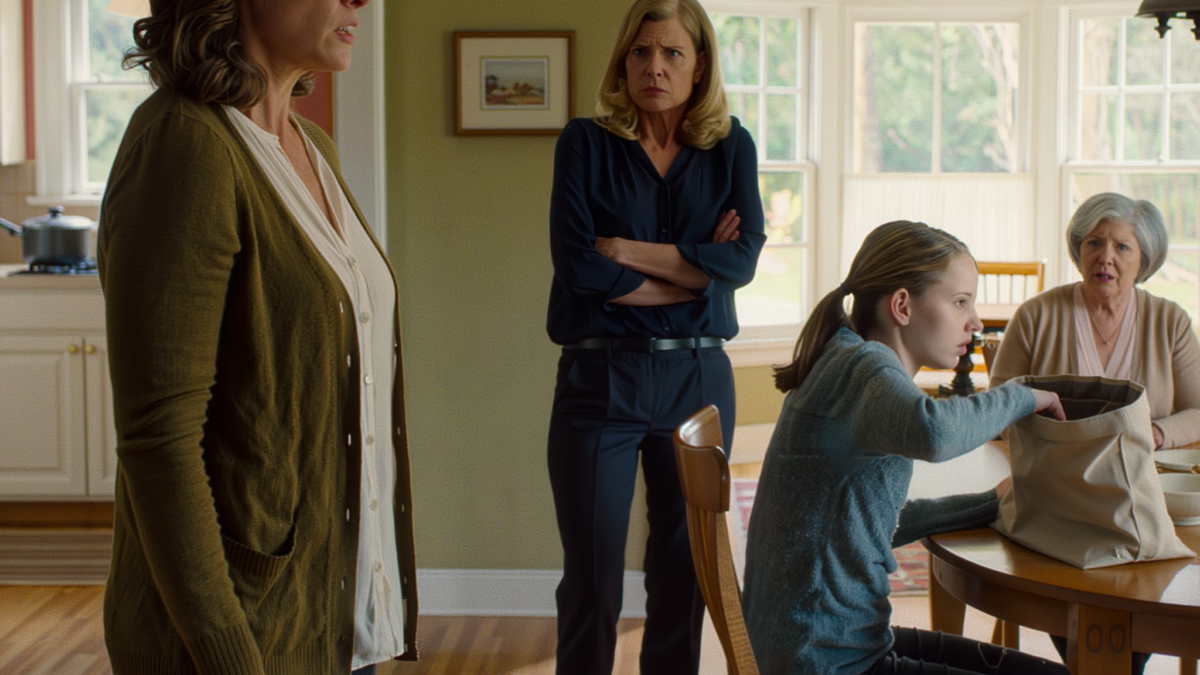
My sister called my job “helping dropouts fill out forms” at our mother’s seventy-fifth birthday brunch.
Then she laughed.
Not the embarrassed kind of laugh people make when they realize they’ve said something inappropriate. Paula laughed like she’d delivered a clever joke, confident that everyone at the table would appreciate it.
A couple of relatives chuckled. My mother smiled. And I sat there with my coffee cooling between my hands, wondering why, at fifty-one years old, I still felt like a child whenever my family got together.
“That’s not really what I do,” I started to explain.
Paula waved her fork dismissively.
“Oh, Joanne, don’t start giving us the whole presentation. We’re eating.”
My mother, Evelyn, reached across the table and patted my hand.
“Your sister didn’t mean anything by it, honey. We’re all proud you have steady work.”
Steady work.
I had spent nearly fifteen years helping adults retrain for new careers, coordinating apprenticeship opportunities, and working with employers who were willing to give people another chance.
But in my mother’s eyes, I simply had steady work.
My younger sister, on the other hand, had a career.
And that difference had defined our family for as long as I could remember.
My name is Joanne Miller. I’m fifty-one, divorced, and the career training and apprenticeship coordinator at a community college outside Lancaster, Pennsylvania.
I live in a modest townhouse, drive a seven-year-old Honda, and spend most weekends gardening or reading on my back porch.
My life isn’t particularly glamorous.
But it’s mine, and for the most part, I’m happy with it.
Paula is forty-seven. She’s a manager at a regional insurance company, drives a much nicer vehicle than I do, and has always known how to make an ordinary accomplishment sound like the most important thing that happened that week.
She is smart, hardworking, and ambitious.
She’s also spent most of her life treating me as though I simply hadn’t tried hard enough.
That morning, she’d arrived at Mom’s birthday brunch with news about another promotion.
“There’s my successful girl!” Mom had called when Paula entered the restaurant.
Paula kissed her cheek and handed her a gift bag from an expensive department store.
I had brought Mom a framed photograph of our late father sitting in his vegetable garden, taken the summer before he died.
She’d thanked me and set the picture beside her chair.
Paula’s gift, meanwhile, had been passed around the table so everyone could admire it.
I told myself not to care.
I was old enough to know my mother loved us both, even if she had a peculiar way of showing it.
But knowing something intellectually doesn’t always make it easier to live with.
Halfway through breakfast, Mom started talking about her granddaughter Emma.
Emma was Paula’s only daughter, twenty years old and finishing her second year at a private university.
She was studying business, largely because Paula had spent years telling her it was the smartest route to a secure future.
“Emma might run a company one day,” Mom announced proudly.
Paula nodded.
“She has the opportunities. She just needs to stay focused.”
Then Mom turned toward me.
“Joanne, are you still doing that little job program at the college?”
I put down my fork.
“I’m still coordinating the career training and apprenticeship programs, Mom.”
That was when Paula made her comment about dropouts and forms.
And when everyone laughed, I made a decision I’d made dozens of times before.
I let it go.
I stayed through the birthday cake. I helped carry Mom’s gifts to Paula’s SUV. I hugged Emma goodbye in the parking lot.
Then I drove home with a familiar knot in my stomach.
I wasn’t angry that my sister had a good career.
I was angry that my family seemed to believe her success required mine to be smaller.
And I was tired of helping them believe it.
What I didn’t know was that a few days later, Emma would walk into my office carrying a brochure that would eventually force all of us to confront what we thought a successful life was supposed to look like.
My office at the college wasn’t impressive.
It was on the second floor of an older brick building, between the financial aid department and a hallway that always smelled faintly of coffee and printer toner.
I had two filing cabinets, a desk drawer that never closed properly, and a bulletin board covered with training announcements and job opportunities.
I liked it there.
Every week, people came through my door carrying worries they rarely admitted out loud.
Some had lost jobs they’d held for twenty years. Others had spent most of their adult lives raising children and were trying to enter the workforce.
Some were recent high school graduates who knew a traditional four-year college wasn’t the right fit for them.
Others already had degrees but wanted to do something entirely different.
My job wasn’t to promise them everything would work out.
It was to help them understand what opportunities existed, what training would require, and whether a particular path made sense for their circumstances.
On the Friday after Mom’s birthday, I was reviewing information from a local employer when someone knocked.
“Come in.”
The door opened, and Emma stepped inside.
“Hey, Aunt Jo.”
I looked up in surprise.
“Emma? What are you doing here?”
She closed the door behind her.
“Can I ask you something without you telling Mom?”
There was something about the way she said it that made me put my paperwork aside.
“Of course. Sit down.”
She lowered herself into the chair across from my desk and pulled a folded brochure from her bag.
It advertised an electrical apprenticeship program.
I looked at the cover, then back at her.
“You’re interested in becoming an electrician?”
Emma nodded.
I tried not to sound surprised.
“Tell me about it.”
She took a breath.
“I hate my business classes.”
“All of them?”
“Pretty much.”
She explained that she’d spent the previous summer working part-time for a local property maintenance company.
One of the technicians had let her observe some electrical troubleshooting, and she’d been fascinated by the work.
She liked figuring out why things stopped working.
She liked understanding how different systems fit together.
Most of all, she liked seeing the results of what she’d learned.
“When I’m sitting in class listening to another lecture about marketing strategies, I keep thinking about how much I’d rather be doing something practical.”
She looked embarrassed.
“I know that sounds stupid.”
“It doesn’t sound stupid.”
“Mom would think it does.”
I turned the brochure over.
“Have you talked to her about any of this?”
Emma gave me a tired look.
“She already has internship applications picked out for next summer.”
That sounded like Paula.
My sister wasn’t a cruel mother. She loved Emma, had worked hard to provide for her, and believed a good education would protect her daughter from the struggles she’d experienced when she was younger.
But Paula was also very good at deciding what other people needed before asking them.
“Emma, electrical work can be a great career,” I told her. “But it’s not easy.”
“I know.”
“There are early mornings, physical demands, strict safety rules, classroom requirements, and years of training. It’s not something you should choose just because you’re unhappy at college.”
“I’ve thought about that.”
“Good. Because changing direction is a serious decision.”
For the next hour, we discussed apprenticeship programs.
I explained how applications and selection processes generally worked, what questions she should ask about training schedules and wages, and why she needed to understand the financial consequences before leaving her current university.
I told her to speak with an academic advisor before withdrawing from classes or making any commitments.
I didn’t offer to secure her a place.
I couldn’t have done that, even if I’d wanted to.
We were discussing a separate apprenticeship opportunity with its own admissions process.
Toward the end of our conversation, Emma grew quiet.
Then she asked something that caught me completely off guard.
“Aunt Jo, do you think Mom would ever be proud of me if I did something like this?”
I looked at her.
There it was.
The same question I’d spent much of my life asking, only in a different form.
I had wanted Mom to be proud of my work.
Emma wanted Paula to be proud of a future that might look nothing like the one she’d planned.
“I think your mother loves you very much,” I said carefully. “But she may need time to understand what you want.”
Emma nodded.
“And if she never does?”
I sat with that question for a moment.
“Then you still have to build a life you can live with.”
She folded the brochure and slipped it into her bag.
Before leaving, she gave me a quick hug.
“Thanks for not making me feel ridiculous.”
After she left, I sat at my desk thinking about how much I wished someone had told me the same thing when I was twenty.
I considered calling Paula.
For a few minutes, I even picked up my phone.
But Emma was an adult, and she’d asked me for information in confidence.
She hadn’t asked me to intervene with her mother.
She hadn’t asked me to make the decision for her.
And I wasn’t about to become another person trying to control her future.
So I returned to work.
Three weeks later, the college hosted its annual career and apprenticeship showcase.
We invited employers, training representatives, instructors, former students, and members of the community to discuss different career pathways.
It wasn’t a fancy event.
There were folding tables covered with blue cloths, stacks of brochures, a coffee station, and displays showing the types of equipment used in various training programs.
But it mattered.
People came looking for possibilities they hadn’t known existed.
A woman in her forties wanted to know whether she could retrain while raising two children.
A young man asked about paid apprenticeships because his family couldn’t afford traditional college tuition.
A former factory employee was hoping to find work that wouldn’t require him to start at minimum wage.
Those were the conversations I cared about.
That morning, Emma called to say she was bringing Grandma Evelyn.
“She wants to see what you do,” Emma told me.
“Did she actually say that?”
“Not exactly. She said she wanted to see the campus.”
I laughed.
“Close enough.”
Still, I felt nervous when Mom arrived.
She was wearing a navy cardigan and the pearl earrings Paula had given her for Christmas.
She looked around the multipurpose hall with mild curiosity.
“This is bigger than I expected,” she said.
“We usually get a good turnout.”
She studied a display from a manufacturing company.
“Are all these places actually hiring?”
“Some are recruiting. Others are explaining training options. Every program is a little different.”
Mom nodded.
Then a man named Marcus Lee stepped up to the microphone.
Marcus was forty-four, a former warehouse employee who had lost his job when his company restructured.
When I’d first met him, he was deeply worried about supporting his family.
He had a mortgage, two teenagers, and years of experience in an industry that no longer seemed willing to hire him.
He’d convinced himself he was too old to start something new.
We’d spent several appointments discussing his skills, financial concerns, and realistic training options.
Eventually, he’d enrolled in a technical program.
He completed the training and found work maintaining industrial equipment.
I’d invited him to speak because he understood the challenges involved in starting over.
Marcus wasn’t a polished public speaker.
He didn’t pretend the experience had been easy.
He described the fear of losing his job and the embarrassment he’d felt walking into the college to ask for help.
Then he looked toward me.
“Joanne was one of the first people I talked to.”
I felt my cheeks grow warm.
I hadn’t expected him to mention me personally.
“She didn’t promise to fix my life,” he continued. “She asked me what I knew how to do, what I wanted to learn, and what I could actually afford.”
He explained that we’d reviewed training options and worked out a plan he felt capable of following.
“There were days I wanted to quit,” he admitted. “But I knew what I was working toward.”
He paused.
“Now I’ve got a job I’m proud of. My kids watched me go back to school, and they watched me finish. That means something.”
People applauded.
Marcus turned toward me again.
“Joanne, I never properly thanked you. So thank you.”
I nodded, suddenly unable to trust my voice.
Then I looked at Mom.
She was watching Marcus with an expression I hadn’t seen before.
After the presentation, she approached him while I was helping another visitor.
They spoke for several minutes.
When Mom returned, her voice was quieter.
“That man really thinks highly of you.”
“Marcus worked hard for everything he’s achieved.”
“He said you helped him when he was going through a terrible time.”
“That’s part of my job, Mom.”
She looked around the room again.
“I didn’t realize this was what you did.”
For a moment, I wanted to ask her why.
Why hadn’t she listened when I talked about my work? Why had she accepted Paula’s description without ever questioning it?
But I looked at the crowded hall, at the people talking to advisors and asking about training, and decided I didn’t want to spend that moment arguing.
“I’m glad you came,” I told her.
She squeezed my arm.
It wasn’t an apology.
But it was the first time in years that my mother had looked at my work without comparing it to my sister’s.
I thought something might finally be changing.
Then Paula found out about Emma’s apprenticeship interview.
The call came on a Tuesday evening.
I had just put a pot of soup on the stove when my sister’s name appeared on my phone.
“Hey, Paula.”
“What exactly have you been telling my daughter?”
I turned off the burner.
“What are you talking about?”
“Don’t play dumb, Joanne. Emma has been interviewing for an electrical apprenticeship.”
I sat down at the kitchen table.
Paula had discovered an interview appointment on Emma’s calendar, for a meeting Emma had already attended.
“She wants to leave college and go work on construction sites,” Paula continued. “And apparently you’ve been helping her.”
“Emma came to see me about career options.”
“And you didn’t think to tell me?”
“She asked for information, Paula. She’s twenty years old.”
“She’s my daughter.”
“I know that.”
“Then why would you encourage her to throw away everything I’ve worked for?”
I took a breath.
“I didn’t encourage her to leave college. I explained the options and told her to think carefully about the consequences.”
Paula laughed sharply.
“Of course you did.”
“What does that mean?”
“It means you’ve always had a problem with the kind of career I chose.”
I stared at the wall.
I’d never had a problem with Paula’s career.
I admired how hard she’d worked to reach her position.
I just wished she could extend the same respect to me.
“Paula, I don’t think there’s anything wrong with working in an office.”
“Then why are you filling Emma’s head with ideas about doing something else?”
“Because she asked me about something she’s interested in.”
“She’s studying business at a good university. I’m paying a fortune for her education.”
“I understand that.”
“Do you? Because you don’t seem to understand what she’s about to throw away.”
I rubbed my forehead.
“Emma isn’t trying to hurt you.”
“You don’t know that.”
“I know she sounded serious about exploring another career.”
My sister’s voice hardened.
“You’ve never been happy with your own life, so now you’re trying to make my daughter like you.”
I stopped breathing for a moment.
There are insults you can dismiss because they come from strangers.
And then there are the ones that hurt because the person saying them knows exactly how long you’ve struggled to stop believing them.
“Paula,” I said quietly, “you can disagree with me. But you don’t get to talk to me that way.”
“Oh, now you’re offended.”
“I’m ending this call.”
“Mom needs to hear about this.”
“Then talk to Mom.”
I hung up.
For several minutes, I sat there with my hands resting on the kitchen table.
I was angry.
But underneath the anger was something harder to explain.
Paula genuinely believed she was protecting her daughter.
She’d worked long hours, made sacrifices, and paid for an expensive education because she wanted Emma to have a secure future.
I understood that.
What I couldn’t understand was why she seemed unable to believe that Emma might want something different.
Over the next few days, Mom called twice.
The first time, she asked whether I’d thought about how inappropriate it was to interfere with Paula’s parenting.
The second time, she sounded more upset.
“Your sister is devastated, Joanne.”
“I know she’s unhappy.”
“She’s worked so hard to give Emma opportunities.”
“I know that too.”
“And now Emma is talking about leaving university.”
“Mom, Emma has to make her own decisions.”
Mom sighed.
“Couldn’t you have told her to finish her degree?”
“I told her to speak with her advisor and consider everything carefully.”
“Sometimes I think you enjoy making things difficult.”
I closed my eyes.
There was that familiar accusation.
Whenever I disagreed with Paula, I was causing trouble.
Whenever I tried to defend myself, I was being sensitive.
And whenever I refused to accept responsibility for somebody else’s feelings, I was making things difficult.
But this wasn’t only about me anymore.
It was about Emma.
I didn’t want her to abandon college impulsively.
I also didn’t want her to spend years pursuing a career she’d chosen only to keep her mother happy.
So I sent her a message.
Your mom called. I’m not getting between you two, but I hope you’re asking all the questions you need to ask. Whatever you decide, make sure it’s your decision.
She replied later that evening.
Thanks, Aunt Jo. I know. I’m figuring things out.
I left it there.
Two days later, Paula called again.
She wanted everyone at Mom’s house on Sunday afternoon.
“We need to sit down and clear this up,” she said.
“Paula, I don’t think another argument is going to help.”
“Emma will be there. She needs to hear you admit you’ve given her bad advice.”
I almost refused.
I’d spent enough Sunday afternoons sitting in my mother’s dining room while Paula explained why I was wrong about something.
But I kept picturing Emma alone at that table.
So I agreed to come.
Mom had made pot roast.
I remember that because she always cooked when she was anxious.
The house smelled like onions and rosemary, and the dining room table was already set when I arrived.
Paula stood near the kitchen counter, arms folded.
Emma sat quietly at the table with a canvas bag beside her chair.
Mom greeted me with a tight smile.
“Let’s try to have a calm conversation.”
I took off my coat.
“That’s fine with me.”
Paula didn’t wait until I sat down.
“I want you to tell Emma that you’ve given her terrible advice.”
I looked at my sister.
“What advice, exactly?”
“That she should leave a four-year university and become an electrician.”
“I never told her to leave school.”
“You pointed her toward that program.”
“No. She brought the information to me.”
Paula shook her head.
“That’s convenient.”
Mom raised a hand.
“Girls, please.”
I was fifty-one. Paula was forty-seven.
But we were still girls whenever Mom wanted us to stop disagreeing.
Paula turned toward Emma.
“Tell your aunt what you told me. Tell her you understand how much this decision is going to cost.”
Emma looked down.
“I know you pay my tuition.”
“And do you appreciate that?”
“Yes, Mom.”
“Then I don’t understand why you’re determined to waste it.”
Emma’s expression tightened.
“I’m not trying to waste anything.”
Paula began listing everything Emma stood to lose.
The remaining years of university. The internships she’d discussed with colleagues. The possibility of starting a career at a company like hers after graduation.
Some of what she said was reasonable.
Leaving university could have financial and academic consequences.
There was no guarantee that every apprenticeship would lead to a permanent job.
But Paula kept talking about the future she’d imagined for Emma without asking whether Emma wanted it.
When she finally stopped, Mom looked at me.
“Joanne, perhaps you could explain why you thought this was appropriate.”
I felt a familiar urge to apologize.
I could have said I should have called Paula sooner.
I could have promised not to discuss career options with Emma again.
I could have taken responsibility for the whole situation just to make everyone stop arguing.
Then Emma reached into the canvas bag beside her chair.
“Actually, I need to show you something.”
She pulled out her laptop and opened an email.
Paula frowned.
“Emma, we’re trying to have a conversation.”
“I know.”
Emma turned the screen toward her mother.
“I applied to the apprenticeship program before I ever went to Aunt Joanne.”
Paula stared at her.
“What?”
“I submitted the application myself.”
On the screen was the application confirmation, with a date clearly visible.
It was nine days before Emma had walked into my office.
I leaned forward.
This was the first time I was seeing it too.
“I found the program online,” Emma continued. “I read the requirements. I filled out the application. I wanted to know if I even had a chance before I talked to anyone.”
Paula looked at me.
“You knew about this?”
“No.”
Emma shook her head.
“She didn’t know. I brought the brochure to Aunt Joanne because I wanted information about the career. She didn’t tell me to apply.”
Then Emma opened another email.
“And I got accepted.”
Mom leaned closer.
“Accepted where?”
“The apprenticeship program.”
Emma explained that she’d completed the required assessments and interview and received an offer to join the next training group.
“I went through their regular process,” she said. “Nobody got me in. Nobody called someone as a favor.”
Paula stared at the laptop.
For the first time that afternoon, she seemed to have run out of things to say.
Emma closed the computer but kept her hands on it.
“I didn’t apply because Aunt Joanne told me to. And I didn’t do it to upset you.”
She looked directly at her mother.
“I applied because I finally found something I actually want to learn.”
Paula sat down.
“But you never told me you were unhappy.”
Emma’s eyes filled with tears.
“I tried.”
“When?”
“Last Thanksgiving. And in February, when I told you I didn’t like my classes.”
Paula opened her mouth, but Emma continued.
“You said I was being lazy. You said everyone hates college sometimes and that I’d thank you when I had a good job.”
“I was trying to encourage you.”
“I know, Mom. But you never asked what I wanted instead.”
I watched Paula’s expression change.
She wasn’t suddenly convinced that her daughter had made the perfect decision.
She was frightened.
For years, she’d treated Emma’s future like a carefully organized plan.
Now she was realizing Emma had been making a different plan without her.
Mom turned toward me.
“Is this actually a good program?”
I answered honestly.
“It has structured training, classroom requirements, and paid work experience. But it’s a serious commitment. Emma needs to understand the schedule, the expenses, and what she’ll be expected to do.”
Emma nodded.
“I’ve been working on a budget. I also have an appointment with my university advisor to discuss leaving at the end of the semester.”
Paula looked at her.
“You’ve planned all this?”
“Yes.”
“And you didn’t think to ask me?”
Emma hesitated.
“I wanted to. But every time I tried talking about a different career, you acted like I was throwing my life away.”
Paula looked down at the table.
After a moment, she said quietly, “I just don’t want you struggling the way I did.”
Emma’s expression softened.
“I know you’ve worked hard, Mom.”
“Then why can’t you understand what I’m trying to give you?”
“Because what you wanted for yourself isn’t necessarily what I want.”
Paula began to cry.
Not dramatically.
She just lowered her head and wiped at her eyes.
I felt sorry for her.
My sister had spent years saving for Emma’s education. She had worked late nights, missed weekends, and made choices she believed would give her daughter an easier life.
But somewhere along the way, she’d started treating her sacrifices as a reason Emma couldn’t choose differently.
And Emma was asking her to understand that gratitude wasn’t the same thing as obedience.
Paula eventually turned toward me.
“You still should have told me she came to your office.”
I didn’t pretend the situation was simple.
“I understand why you wish I’d called. But Emma is an adult. She came to ask about career options, and I respected her privacy.”
“You could have warned me.”
“Maybe. But I wasn’t the person who needed to tell you what Emma wanted. She was.”
Paula looked at her daughter.
“And I’m supposed to just pay for whatever she decides?”
“No,” Emma answered immediately.
That surprised all of us.
Emma reached into her bag again and took out a folded sheet of paper.
“I don’t expect you to pay for this.”
She unfolded a basic budget.
She’d written down her expected apprenticeship wages, transportation costs, shared housing expenses, groceries, and other necessities.
There were still uncertainties.
It wasn’t a perfect plan.
But it was clear she’d thought about the practical side of her decision.
“I’ve been looking at apartments with roommates,” she explained. “I know I won’t have much money at first. And I know the work will be hard.”
Paula studied the page.
“You really are serious.”
“Yes.”
Mom reached across the table and touched Emma’s arm.
“Your grandfather would have understood that.”
I looked at her in surprise.
Our father had been an auto mechanic for most of his working life.
He’d loved repairing things and had only retired when arthritis made the work too difficult.
Emma looked at Grandma Evelyn.
“Really?”
Mom nodded.
“He used to say there was nothing wrong with coming home tired if you’d done something useful.”
Paula gave a short, unhappy laugh.
“Dad wanted us to go to college too.”
“He wanted you to have choices,” Mom replied.
I stared at her.
My mother had spent years measuring success by job titles and formal education.
But now, sitting at the dining room table, she’d said something I never expected to hear from her.
I didn’t point out the contradiction.
I didn’t need to.
Emma was looking at her grandmother with tears in her eyes.
And for the first time that afternoon, she seemed to believe somebody might understand.
The conversation didn’t end with hugs and apologies.
Paula still thought Emma was making a risky choice.
Mom still worried about what would happen if the apprenticeship didn’t work out.
Emma still had a difficult conversation ahead with her university advisor.
But one thing had changed.
Nobody could honestly accuse me of being the person who’d made Emma apply.
She had made that decision herself.
Before leaving, I asked Paula if we could speak privately.
We stepped into the hallway while Emma helped Mom clear the table.
My sister looked exhausted.
“What now?” she asked.
“I need to tell you something.”
She crossed her arms again.
I recognized the gesture.
She’d been doing it since we were teenagers.
“You don’t have to approve of my career,” I said. “You don’t even have to understand it. But I’m not going to keep showing up to family gatherings just so you can make jokes about it.”
Paula looked uncomfortable.
“It was just brunch, Joanne.”
“It wasn’t just brunch.”
“You’re still upset about that?”
“I’m upset about years of it.”
She looked toward the dining room.
I could hear Emma and Mom moving plates in the kitchen.
“I didn’t realize you took it that seriously,” Paula said.
“That’s part of the problem.”
She looked back at me.
I continued.
“I know you’ve worked hard. I know you’re proud of what you’ve accomplished. You should be. But you don’t have to make my life sound less important to feel good about yours.”
Paula didn’t answer.
“I love Emma,” I said. “And I love you. But I’m not going to keep accepting insults just because we’re family.”
I picked up my coat.
For years, I’d tried to make every uncomfortable conversation end pleasantly.
I’d apologized when I wasn’t wrong, changed subjects when I felt hurt, and laughed at jokes that weren’t funny.
This time, I left without trying to make Paula feel better about what I’d said.
It was uncomfortable.
But I didn’t regret it.
Emma finished the semester before leaving university.
She met with an academic advisor, completed the necessary paperwork, and formally accepted her apprenticeship offer.
Her first few months were harder than she’d expected.
She had to adjust to early mornings, physical work, technical instruction, and the responsibility that came with being the least experienced person on a worksite.
She called me one evening sounding discouraged.
“I thought I’d be better at this.”
“Better at something you’re still learning?” I asked.
She sighed.
“When you put it that way.”
“Do you still want to do it?”
There was a pause.
“Yeah. I really do.”
“Then give yourself permission to be a beginner.”
She laughed.
“I wish Mom understood that.”
“Give her time.”
Paula wasn’t happy about every part of Emma’s decision.
She stopped paying university tuition once Emma left, as they’d discussed.
Emma moved into an apartment with roommates and started learning how much independence actually cost.
There were weeks when she was exhausted.
There were unexpected expenses.
There were evenings when she came home frustrated because she’d struggled to understand something her classmates seemed to grasp immediately.
But she kept going.
And Paula, despite her reservations, slowly stopped suggesting Emma return to university every time they spoke.
Instead, she began asking questions about the training.
Not always the right questions.
Sometimes her concern still came out sounding like criticism.
But Emma noticed the effort.
So did I.
Mom changed more slowly.
About a month after the family meeting, she called and asked whether she could visit my office.
“Again?” I asked.
“If you wouldn’t mind.”
“Of course not.”
She arrived alone on a Wednesday morning.
I showed her around the career center and introduced her to a few of my colleagues.
She watched advisors speak with students.
She looked through information about technical training and adult education.
At one point, she stopped beside a bulletin board covered with photographs and newsletters.
There was a picture of Marcus Lee in his work uniform, taken for a college article about adults changing careers.
Mom recognized him immediately.
“That’s the man who spoke at the event.”
“Yes.”
She studied the photograph.
Then she said, “I think I’ve been unfair about your job.”
I turned toward her.
Mom kept looking at the bulletin board.
“I didn’t understand what you actually did.”
I wanted to ask why she hadn’t tried.
I’d talked about my work over countless holiday meals, family gatherings, and phone calls.
She’d had years to take an interest.
But I could also see that admitting she’d been unfair wasn’t easy for her.
So I didn’t turn the moment into another argument.
“Thank you for saying that,” I replied.
She nodded.
Then she looked at me.
“Your father would have been proud of you too.”
My throat tightened.
Dad had died before he got to see some of the work I was most proud of.
He’d never been particularly good at expressing emotions, but he’d always respected people who took their responsibilities seriously.
“I wish he’d gotten to see more of it,” I said.
Mom nodded again.
And for once, she didn’t change the subject to Paula.
That fall, Emma sent me a photograph from her training site.
She was wearing a hard hat, safety glasses, and a work jacket that looked slightly too big for her.
There was a faint smudge of dirt on her cheek.
She looked tired.
She also looked happier than I’d seen her in years.
Under the photograph, she’d written:
We finished our first big installation today. I checked my work three times because I was scared I’d missed something. My instructor said I did good.
I laughed when I read it.
Then another message appeared.
Mom asked me to send her a picture too.
I stared at those words for a moment.
A few minutes later, Paula texted me.
Emma looks happy, doesn’t she?
I looked at the photograph again.
She really does, I replied.
There was a pause.
Then Paula wrote:
I’m still getting used to all this.
I know.
Another message appeared.
I shouldn’t have said those things about your job at Mom’s birthday.
I read it twice.
For a long time, I’d imagined what it would feel like to hear my sister acknowledge the way she’d treated me.
I’d pictured a family gathering where she finally admitted she’d been unfair.
Maybe Mom would be there.
Maybe everyone would understand.
But the apology came as an ordinary text message on an ordinary afternoon.
There was no audience.
No speech.
No dramatic reconciliation.
Just my sister acknowledging something she should have acknowledged years earlier.
I didn’t tell her everything was fine.
I didn’t pretend one sentence had erased decades of comparisons.
I wrote back:
I appreciate you saying that. I hope we can treat each other differently from now on.
Paula replied a little later.
I’d like that.
I believed she meant it.
I also knew we’d both need time.
Our family had spent too many years repeating the same habits for everything to change after one difficult conversation.
But for the first time, Paula seemed willing to notice when she was doing it.
That was a beginning.
A few weeks later, I was sitting in my office when a woman in her late forties knocked on my door.
She’d lost her administrative job after her company downsized.
She had been unemployed for four months and was beginning to believe no employer would want someone her age.
She sat across from me, gripping the strap of her purse.
“I don’t even know where to begin,” she admitted.
I pulled a blank notepad toward me.
“That’s okay. We can start with what you’ve done before and what you’d like to do next.”
She exhaled and relaxed her shoulders.
Outside my office, students were talking in the hallway.
Somebody was running the printer again.
The familiar smell of coffee drifted through the open doorway.
It was an ordinary Tuesday in an ordinary community college.
There were no cameras, no awards, and no family members waiting to hear how important my work was.
Just a woman who needed help finding her next step.
I asked her about her previous experience, and she started telling me what she knew how to do.
As I listened, my phone buzzed quietly on the desk.
It was a photograph from Emma.
She’d sent me a picture of a completed training project, along with a short message.
Got it right this time.
I turned my phone facedown and returned my attention to the woman across from me.
There would be time to answer Emma later.
For now, I had work to do.
And after all those years of wanting my family to understand why it mattered, I was finally comfortable knowing that I already did.








