My parents skipped my wedding for my brother’s vacation. Six months later, Mom claimed my older brother was in crisis and begged me to meet her. Instead, she slid a legal agreement across the table, demanding $60,000 for my younger brother’s wedding. I read the signature line without saying a word, then tapped my phone twice.
My name is Arthur. Five years ago, when I was thirty-two, my parents skipped my wedding for my younger brother’s Cabo yachting trip. While Eleanor and I sat on our living room floor figuring out the seating arrangements, my mother looked me in the eye and said,
“It’s not a life-or-death situation, Arthur. Sterling already paid his nonrefundable deposit.”
They laughed it off over Sunday pot roast, as if my life’s biggest milestone was an inconvenient dentist appointment. But there was one major thing they didn’t know. I wasn’t just some junior architect struggling to pay his mortgage. Months earlier, my real estate firm had quietly begun negotiations to buy the industrial park where my father operated his business.
And now they were calling me nonstop, begging for an enormous favor. To understand what happened, you have to understand the family I came from—and why I eventually decided that being related to someone did not entitle them to my life. I still remember the invitation that brought everything back.
It was a piece of ultra-thick, cream-colored cardstock with embossed gold lettering, the kind that probably cost twenty bucks apiece. It invited Eleanor and me to celebrate the marriage of my younger brother, Sterling, and his fiancée, Tiffany, at an exclusive country club in Newport. Inside was a response card and a preaddressed, stamped return envelope.
I set the heavy cardstock on my kitchen island. Beside it, I placed another envelope—an older one. Its edges had yellowed, and the postmark was dated October, five years earlier. Inside was an uncashed $500 check signed by my mother, Beatrice. It had sat in my safe for half a decade—not as money, but as a receipt for a relationship that had ended.
I picked up a black Sharpie. There was no hesitation, no sudden nostalgia, none of the familiar guilt that had ruled my twenties. I uncapped the marker, pressed its tip firmly against Sterling’s RSVP card, and put a dark, decisive check beside the words “Will not attend.”
I wrote neither “So sorry, we’ll miss it” nor “Wishing you the best.” I slid the refusal into its envelope, sealed it, and left it by the door for the next morning’s mail. My phone lit up on the counter. It was the fourth text from my mother that day.
“Arthur, honey, please call me back. Sterling’s caterer needs the final headcount by Friday. Your father and I are so excited to have the whole family together again. It’s time to put the past behind us.”
I read those words twice. Put the past behind us. It was the universal slogan of every person who has ever caused a wreck and desperately wants to avoid paying the insurance deductible. To them, the past was just a collection of minor misunderstandings that can be wiped away with a polite hug over a Thanksgiving turkey.
They did not understand that, to me, the past was not behind us at all. The past was a load-bearing pillar in the life I had built. If you looked at my family from the outside thirty years ago, you would have seen the quintessential American dream.
My father, Richard, owned a regional heavy equipment leasing company. My mother, Beatrice, was a fixture on the local HOA board, the kind of woman who organized neighborhood block parties and kept our four-bedroom colonial in the suburbs looking like a spread in a Pottery Barn catalog. My older brother, Conrad, was the serious, academically minded heir apparent.
My younger brother, Sterling, was the golden boy, the charismatic athlete who could charm his way out of a broken window or a failing grade. And then there was me, the middle son, the quiet kid who spent his weekend sketching floor plans on graph paper while Richard and Conrad talked about equipment profit margins and Beatrice cheered Sterling on from the bleachers. In the family dynamic, I was the baseline.
I was the reliable utility closet. Nobody checks on the utility closet to see how it’s feeling. They just expect the light bulb to turn on when they open the door. When I met Eleanor, everything shifted. She didn’t look at me like an extension of Richard’s legacy or Beatrice’s household management.
She saw me as someone who could build his own life. We dated for five years, building a quiet, solid life together. I started my own boutique architectural firm specializing in commercial real estate conversions. I took my salary, lived way below my means, and reinvested every dollar into commercial equity.
I didn’t drive a flashy car. I didn’t wear a replica Patek Philippe watch like Sterling did to look successful at college bars. I just bought concrete, steel, and square footage. When I proposed to Eleanor on a rainy Tuesday in October, it felt like the final step in constructing my own foundation.
We didn’t want a massive theatrical production. We chose October 14, the exact anniversary of the day we met at a municipal zoning hearing. We drove over to my parents’ house the following Sunday to share the news. I remember the smell of garlic and baked ziti hitting me the moment I walked through the front door.
For the first hour, the illusion held perfectly. Beatrice gasped, threw her arms around Eleanor, and immediately started talking about color palettes and table runners. Richard popped a bottle of midrange sparkling wine and made a joke about how he was going to need a second mortgage to pay for the open bar.
Conrad gave me a firm corporate handshake and Sterling slapped me on the back asking if we were going to have a cigar lounge at the reception. It felt warm. It felt like the family I had spent thirty years trying to earn. “So, what’s the big date?”
Beatrice asked, setting down her wineglass and pulling out her iPad. “We need to lock down the country club before the autumn rush.”
“October 14,” I said, holding Eleanor’s hand under the table. “We already secured the venue. An old restored stone mill up in the Hudson Valley. The deposit was down.”
“October 14,” Beatrice repeated. Her smile stayed glued to her face, but her eyes went blank for a fraction of a second. I watched her left hand slide beneath the edge of the mahogany dining table. Her thumb began moving rapidly over the screen of her iPhone. “That’s a fantastic time of year,” Richard said, totally oblivious, scooping more pasta onto his plate. “The foliage up there is incredible.”
“Yes,” Beatrice said, her voice dropping into that strange, flat register she used whenever someone rearranged her kitchen cabinets without asking. “Incredible foliage.” We left that night feeling victorious. Eleanor fell asleep in the passenger seat on the drive back to our townhouse. Her engagement ring caught the amber glow of the highway streetlights.
I remember gripping the steering wheel, feeling a profound sense of peace. I thought the worst of my family’s indifference was finally over. I thought we were all finally standing on the same ground. I was so incredibly wrong. The storm did not arrive with thunder.
It crept through the baseboards like rising groundwater.
Three weeks after our announcement dinner, I was standing on the second floor of an old textile warehouse I was converting into luxury lofts. The air was full of drywall dust and the sharp hum of industrial drills. My phone vibrated in my pocket. It was Beatrice.
“Arthur, sweetie,” she said the moment I answered. Her voice was dripping with that heavy, artificial sweetness she usually reserved for bank tellers when she wanted a late fee waived. “Do you have a minute? We need to talk about the wedding calendar.” I wiped a streak of gray dust off my forehead.
“Sure, Mom. What’s up? The caterer is already locked in, if that’s what you’re worried about.”
“Well, no, honey. It’s not the food,” she sighed. It was a long trembling sigh designed to communicate that she was bearing an unimaginable burden solely for my benefit. “It’s the date, October 14. I was looking over the family schedule last night, and it’s just completely unworkable for the boys.”
I paused. The structural blueprint in my hand suddenly felt very heavy.
“Unworkable how?”
“You know Sterling’s annual Cabo trip with his fraternity brothers is always the second week of October,” she said, as if I had committed a serious scheduling offense. “He’s been doing it for four years. Arthur, they charter that massive yacht out of the marina. He’s already put down his share of the deposit, and he’s the main organizer this year. If he doesn’t go, the whole trip falls apart for his friends.”
I stared out the arched brick window of the warehouse, watching the traffic crawl along the interstate below. “Mom, it’s my wedding. It’s the day Eleanor and I met. We aren’t moving our wedding so Sterling can drink tequila on a rental boat.”
“Don’t take that tone with me, Arthur,” she snapped, the sweet veneer evaporating instantly. “It’s not just Sterling. Conrad has his corporate networking retreat in Denver that exact same weekend. You know how important his promotion track is right now. He can’t just skip a mandatory executive function.” “Conrad has known about our date for almost a month,” I said, keeping my voice level. “And Sterling’s trip is a vacation. It’s not a medical emergency. It’s not a deployment. It’s a party in Mexico.”
“It is a locked-in commitment!” Beatrice raised her voice, the sound echoing harshly through my phone. “Why do you always have to make things so difficult? You and Eleanor picked this date out of thin air without consulting anyone’s schedule. Couldn’t you just push it to November or do a nice spring wedding next year? November is lovely, honey. We could combine it with Thanksgiving weekend.” “We didn’t pick it out of thin air, Mom. I explained this at dinner. And no, we aren’t getting married over Thanksgiving weekend so you can save on floral arrangements. The date is October 14.”
“Fine,” she said coldly. “Be obstinate, but don’t be surprised when your brothers have to make a very difficult choice.” Ten minutes after she hung up, a notification popped up on my screen. It was a three-minute voice note dropped into the family group chat by Sterling. I leaned against a raw concrete pillar and pressed play.
“Yo, Arty.” Sterling’s voice drifted out over the sound of loud bass and clinking glasses. “Mom just called me freaking out, bro. Seriously, of all the fifty-two weekends in a year, you pick the exact weekend my guys are locked in for Baja? That’s super selfish, man. You know, I’ve been putting this charter together since January. My guys rely on me. If I pull out, they lose their deposits. Can’t you just tell Eleanor to push the caterer back a couple of weeks? It’s not like you guys are in a rush. Just be a team player, bro.”
Be a team player. That was the family code phrase for roll over so Sterling gets the master bedroom. I didn’t type a furious paragraph. I didn’t call him out on the fact that his locked in charter was actually a glorified booze cruise funded partly by Beatrice slipping him cash from her household account.
I called my father. I thought Richard, as a business owner who dealt with binding contracts every single day, would introduce a shred of objective reality into the situation. Richard answered over the roaring clatter of an air compressor in his maintenance yard.
“Arty, what’s going on, son?”
“Dad, Mom and Sterling are asking me to postpone my wedding because it conflicts with the fraternity trip to Mexico,” I said directly. “Tell me you aren’t entertaining this.” The air compressor in the background shut off, leaving a thick, uncomfortable silence on the line. I could hear Richard hissing a breath through his teeth. “Look, Arty. Your mother is really worked up about this. You know how her blood pressure gets when the boys are arguing.”
“We aren’t arguing, Dad. I’m stating a boundary. My wedding date is fixed.”
“I know, son. I know,” Richard muttered, his voice dropping into that evasive, placating mumble that defined his entire marriage. “There’s just a lot going on that time of year. Conrad’s firm is doing its quarterly review, and Sterling’s had this Baja thing on the books for months. Couldn’t you just bend a little here for your mother’s sanity? It’s just a date on a calendar, Arty. What’s the difference between October and November?” “The difference is that it’s my life, Dad,” I said, my knuckles turning white against the phone. “I’m thirty-two years old. I built my own business. I bought my own home. I’ve never asked you or Mom for a single dime since I was eighteen. And now you’re asking me to tell my future wife that her wedding day is an afterthought to a yacht rental.”
“Nobody’s saying that, Arty.” Richard sighed defensively. “You’re twisting my words. Just talk to Eleanor. See if there’s some wiggle room. I don’t want any drama hanging over the family.” He hung up before I could answer. I don’t want any drama. That was Richard’s core philosophy.
He would gladly watch someone set my house on fire as long as the smoke didn’t drift into his garage. That night, the text bombardment began. Beatrice didn’t call me again. Instead, my screen lit up every hour from midnight until 3:00 in the morning with screenshots of generic internet poetry and fake philosophical quotes about family unity. “A true brother builds bridges, not walls.” “Family is the only anchor in a stormy sea.” “Do not cut the rope.” “When you have your own children someday, Arthur, you will understand the agony of a divided home.”
I sat on the edge of my bed in the dark, watching the pale blue light of my phone illuminate Eleanor’s sleeping face. I realized then that my mother wasn’t trying to solve a scheduling conflict. She was waging a war of attrition. She believed that if she made the process sufficiently miserable, I would eventually collapse just to make the notification stop.
That was how she handled Conrad. That was how she handled Richard. I unlocked the screen, opened the family group chat, and typed one definitive message.
“The wedding date is October 14. The venue is fully paid for, and the contracts are signed. You are all invited and welcome to stand with us. However, the schedule will not be shifted by a single minute to accommodate outside vacations or corporate trips. If you choose not to attend, we will miss you, but the ceremony will proceed.”
I hit send. I didn’t wait for the typing bubbles to appear. I put the phone on the nightstand and closed my eyes. The next morning at 7:00 a.m., my phone rang. It wasn’t my parents. It was my cousin Lucas, the son of Richard’s younger brother.
Lucas was an independent contractor, a guy who worked with his hands and had zero tolerance for suburban theatricality. “Arty,” Lucas said, his voice rough with morning coffee. “You awake?”
“Yeah, Luke. What’s up, man?”
“You kicked over a massive hornet’s nest.” Lucas chuckled, though there wasn’t any humor in it. “My mom got off the phone with Aunt Beatrice an hour ago. Beatrice was sobbing so hard she sounded like she was breathing through a wet towel.” I rubbed the back of my neck. “What’s the official narrative?”
“Oh, it’s a masterpiece,” Lucas said. “According to Beatrice, Eleanor’s family is completely controlling you. She told my mom that Eleanor’s mother demanded October 14 because it fits her high-society garden club schedule, and that you’re maliciously forcing Sterling to forfeit $5,000 in nonrefundable deposits just to prove a point. She’s telling everyone you’re having some kind of emotional breakdown.”
“An emotional breakdown?” I repeated, staring at the ceiling.
“Yeah. And get this: she told Aunt Clara that if nobody pushes back against Eleanor now, you’re going to cut the family off entirely once you have kids. She’s implicitly asking the extended family to boycott the RSVP list to shock you back to your senses.” “Thanks for the heads-up, Luke,” I said quietly.
“Hey, Arty.” Lucas’s voice dropped, becoming entirely serious. “Stand your ground, man. My dad spent twenty years eating Richard’s dust in the family business because he didn’t know how to say no. Don’t let them move your markers.” I hung up the phone. I looked across the bedroom. Eleanor was sitting up, her hands wrapped around a warm mug of tea, watching me with those clear, sharp gray eyes. She didn’t look panicked. She didn’t look angry. She looked like an architect examining a faulty foundation. “They aren’t coming, are they?” she asked softly.
“No,” I said. “I don’t think they are.”
“Okay,” Eleanor said, setting her mug down and standing up. “Then we build without them.” I thought the battle lines were officially drawn. I thought the worst they could do was stay home, but a narcissist losing control doesn’t just retreat into silence. They set fire to the surrounding fields.
The silence from my brothers was absolute. It was the heavy weaponized silence of a corporate legal department preparing for litigation. I sent Conrad a direct message with the link to the tuxedo rental portal at Men’s Wearhouse explaining that his measurements needed to be logged by the end of the month.
The read receipt appeared beneath the text within two minutes. Zero reply. I called his office line. His executive assistant told me he was in a high-priority strategy cycle and couldn’t be routed. Two days later, Beatrice dropped her public manifesto on Facebook. It wasn’t a direct callout.
It was one of those brilliantly engineered, highly ambiguous paragraphs paired with a high-contrast stock photo of a lone tree standing on a foggy cliff. “It is the most devastating heartbreak a mother can endure when the child she nurtured with her own sweat and sacrifice turns his back on the sacred traditions of the family table. Sometimes outside influences enter a young man’s life and convince him that cold pride is worth more than the unconditional love of the brothers who stood by him through everything. True wealth isn’t measured in square footage or stubbornness. It is measured in loyalty. Praying for healing, praying that certain eyes are opened before unbreakable bonds are torn apart forever.”
Within three hours, the post had forty-seven comments. It was a digital town hall for every distant relative and suburban busybody within a fifty-mile radius. My third cousins in Ohio, women I hadn’t seen since a family reunion in the ’90s, left paragraphs about how this generation has no concept of honor.
Aunt Clara commented, “Stay strong, Beatrice. A mother’s intuition is never wrong. The truth always comes to light.” I didn’t reply. I didn’t defend myself in the comments. Eleanor took my phone, logged out of the application, and set the device face down on the counter. “When someone is throwing mud,” she said calmly, “they want you to get into the pit so nobody can tell who started out clean.”
The final confirmation arrived the following Thursday. I came home from a site inspection to find two thick, cream-colored envelopes sitting in my mailbox. The handwriting on the front was Beatrice’s calligraphy. Inside were the formal response cards for Conrad and Sterling. There were no notes attached.
There were no polite falsehoods written in the margins. The “Will not attend” boxes had been filled in with a heavy black ballpoint pen that had pressed so hard into the paper it left physical ridges on the back of the cardstock. I stood in my foyer holding the two stark rejections.
I felt a strange cold sensation behind my ribs. It was the definitive end of my biological family tree. I took the cards, walked into my home office, and dropped them into the metal mesh trash can beside my desk.
That afternoon, my phone rang. The screen displayed the name of my cousin, Brenda. Brenda was the eldest daughter of Beatrice’s sister. In our family, Brenda was the clearinghouse for every rumor and private dispute. She collected domestic tragedies, marital disputes, and financial rumors with the meticulous dedication of a stamp collector, repackaging them and trading them across the family network for social currency.
I answered on speakerphone while reviewing a commercial lease agreement.
“Hello, Brenda.”
“Arthur, honey,” Brenda began, her voice dropping into that thick theatrical whisper she used at funerals. “I am just so, so devastated by what’s happening. I saw your mother’s post and I just had to call and check on your spirit. You must be in absolute agony.” “I’m fine, Brenda. We’re busy finalizing the reception details.”
“Oh, Arthur, don’t put up that brave front with me.” She sighed, a wet, sympathetic sound that made my skin crawl. “You know you can tell me anything. Your mother’s heart is just entirely shattered. Honey, she called me yesterday completely inconsolable. You know she’s had those palpitations ever since your grandfather’s funeral. If you just reached out, Arthur, if you just apologized for that harsh text in the group chat and offered to push the date back just a teeny little bit, I know she’d forgive you instantly. Family has to compromise, honey.”
I kept my eyes fixed on the lease document.
“There’s nothing to compromise, Brenda. My brothers chose a corporate event and a yacht rental over my wedding. That’s their right. But I’m not apologizing for getting married on my anniversary.” “Arthur, it’s not just the boat,” Brenda blurted out, her desire to demonstrate superior insider knowledge overriding her tactical empathy. “You know Sterling’s situation is very delicate right now.”
I stopped scrolling. “What situation?”
“Well…” Brenda hesitated, realizing she was about to breach protocol, but the temptation to reveal a secret was irresistible. “You know his new girlfriend, Tiffany? The one whose father owns those luxury auto dealerships in Connecticut? Well, her father is taking the whole family to their estate in Palm Beach that second week of October, and he invited Sterling. Beatrice told me that if Sterling doesn’t go, Tiffany’s family will think he’s not serious about the relationship. Beatrice is terrified he’ll lose his footing with that family if he misses the trip.”
I sat motionless in my leather office chair.
“Say that again.”
“Oh, honey, I probably shouldn’t have said anything.” Brenda backtracked rapidly, her voice fluttering. “It’s just that Beatrice is trying to protect her boys. You know how important connections are.” “Brenda,” I said, my voice dropping enough to stop her mid-sentence. “Are you telling me my mother asked me to forfeit my wedding date, lose thousands of dollars in deposits, and disrespect my future wife’s family so my twenty-seven-year-old brother wouldn’t miss a free trip to Palm Beach with a girl he’s been dating for five months?”
“Arthur, you’re making it sound so ugly,” Brenda gasped. “It’s about family positioning. Beatrice just wants—” Before she could finish her sentence, Brenda’s technological incompetence betrayed her. She was attempting to text Beatrice while speaking to me on speakerphone, lost track of the interface commands on her screen, and accidentally triggered the forward function on a saved audio file she had received from Beatrice two days prior.
A little gray bubble popped up in our active message thread. It was an audio recording labeled “Beatrice voicemail Tuesday 14:12.” “Oh God,” Brenda whispered over the line. “Arthur, don’t open that. Arthur, please delete that immediately. I pressed the wrong button.” I disconnected the call.
I clicked the audio file. The sound of my mother’s voice filled my quiet office. It wasn’t the sweet, trembling voice she used on Facebook or the helpless, stressed out tone she used with Richard. It was the sharp, calculating, razor-thin voice of a corporate liquidator.
“Brenda, it’s Beatrice. Make sure when you call Arthur, you really lean into the emotional angle about my blood pressure. Don’t mention Tiffany or Palm Beach under any circumstances. If Arthur finds out Sterling is skipping his little Hudson Valley thing for Tiffany’s father’s estate, he’ll go completely scorched earth and Eleanor’s father will get involved. We need Arthur to move the date to November so Sterling can do Palm Beach and still show up for the family photos. If Arthur refuses to budge, I’m going to start calling the Connecticut cousins and tell them the venue has severe black mold and parking restrictions so nobody goes. He’ll have to cancel if his side of the aisle is entirely empty. Call me when you’re done.”
The audio cut out. I didn’t smash my keyboard. I didn’t feel a sudden urge to scream. What I felt was a profound clinical clarity. The heavy fog of obligation that had choked my entire life just completely vanished, leaving behind a sterile, brightly lit crime scene.
My mother wasn’t a misguided suburban parent trying to keep her sons from squabbling. She was a social engineer who viewed my life as a raw resource to be mined for Sterling’s advancement. She was actively constructing a boycott of my wedding to protect her golden child’s access to a luxury auto dealership fortune.
I took the forwarded audio file. I didn’t drop it into the family group chat for public consumption. I attached it to a direct text message to my father, Richard. Beneath the file, I typed exactly four words: “Keep defending this family.” I didn’t wait for his reply.
I turned off my mobile network, stood up, and walked out to the front porch of my townhouse. It had started to rain, heavy autumn drops slapping against the concrete steps. As I stood there in the damp chill, a silver Lincoln Navigator with commercial plates pulled slowly into my driveway.
The heavy doors clicked open. Harrison and Genevieve, Eleanor’s parents, stepped out into the rain. Harrison wasn’t wearing a suit. He wore his standard waxed canvas field jacket and heavy leather boots. Genevieve was carrying a massive insulated carrier smelling of roasted garlic and braised beef along with a thick leather binder stuffed with floral swatches and seating charts.
They walked up the steps. Harrison didn’t look at me with pity. He didn’t offer a sad sympathetic suburban sigh. He looked at my face, saw the absolute coldness in my eyes, and set his heavy hand down on my shoulder with the solid, immovable force of an iron beam. “Arthur,” Harrison said, his voice deep and steady over the rain. “A man who doesn’t protect his own perimeter has nothing to build a roof over. Your father made his choice. From this second forward, you are a son of my house. When you stand at that altar next month, you look at our side of the room. We will fill every single inch of it with people who actually know what you’re worth.”
We walked inside. We sat down at my kitchen island while Genevieve ladled hot stew into bowls. I opened my master wedding spreadsheet on my laptop. I navigated to the tab labeled processional and VIP seating. With four clean, rhythmic clicks of my trackpad, I highlighted the names.
Richard, Beatrice, Conrad, and Sterling. I hit the delete key. The rows vanished, leaving clean blank white space. I took the title of best man and groom’s witness, the title I had dutifully reserved for my older brother, Conrad, and reassigned it to Marcus, an old college roommate who had spent three years working alongside me on raw construction sites.
A guy who had already booked a red-eye flight from Seattle just to help carry wooden folding chairs. The seating chart was cleared. The old structure was completely demolished. And then the morning of October 14th arrived. The morning of October 14 broke with that sharp, crystalline Hudson Valley cold that makes the sky look like shattered blue glass.
I woke up at 5:30 a.m. In the master suite of the converted stone mill. The Hudson Valley mist was still clinging to the tops of the maple trees outside the arched windows. My phone sitting on the bedside table gave a short double vibration.
It was a text message from my cousin Lucas. “Arty, just passed Terminal B at Logan Airport on my way to a job site. Sterling, Aunt Beatrice, and Uncle Richard were standing in the international security line. They were carrying oversized hard-shell golf cases and two enormous straw sombreros. They actually did it, man. They’re gone.”
I lay there on the crisp white linen, staring at the glowing words. They actually did it. There wasn’t any pain left. There wasn’t any lingering suburban hope that Richard would suddenly grow a spine at the boarding gate, turn around, and drive back to stand by his middle son.
The definitive verification of their absence acted like an instant neutralizer. The thirty-year psychological weight of being the family baseline just completely detached from my shoulders and evaporated into the morning air. I stood up and walked into the massive master bathroom. I stood before the fulllength mirror, looking at my reflection in the cool morning light.
I examined my jawline, the small scar above my left collarbone from an old rebar accident, the steady rhythmic rise and fall of my chest. I wasn’t the invisible middle child standing in the utility closet anymore. I was the sole proprietor of my own existence.
I put on my trousers, slipped my arms into the crisp white poppplan shirt, and began fastening the black onyx studs down the placket. Outside the window, a low, incredibly rich mechanical rumble shook the gravel driveway. I walked over and looked down from the secondstory archway.
Harrison Head didn’t just arrange standard wedding transportation. Idling in the center of the circular stone courtyard was a pristine midnight black Rolls-Royce Phantom. Its massive chrome grill caught the pale orange glow of the sunrise. The car sitting there like an armored monument to dignity and absolute worth.
The driver, an older man in a tailored charcoal suit, stepped out and polished the silver Spirit of Ecstasy hood ornament with a microfiber cloth before standing at attention beside the heavy rear door. It was Harrison’s silent, unmistakable declaration to the entire county. The man inside this car matters.
By 2 p.m., the stone mill was vibrating with life. The interior of the main hall smelled of cedarwood, roasted autumn squash, and thousands of white hydrangeas Genevieve had imported from an organic farm in Vermont. The string quartet stationed near the restored wooden waterwheel played a rich, cello-heavy arrangement of the folk song Eleanor and I had listened to during our first road trip.
I stood at the head of the aisle next to Reverend Vance, an older, no-nonsense Presbyterian minister who had spent forty years watching families come together and fall apart. I looked down the front row on the left side of the aisle, the side traditionally reserved for the groom’s immediate family. There were three wooden crossback chairs sitting there.
Genevieve hadn’t removed them. She had draped each one in a heavy ivory silk sash tied off with small embossed tags that read, “Reserved for family.” They sat there in the front row like three glowing white tombstones, a stark visual manifestation of an empty promise.
The guests were filing in, filling the 60 seats behind those three chairs with Marcus’s family, my college colleagues, and structural engineers who had flown in from across the country. I watched people glance at the three empty silk chairs, their expressions shifting from confusion to a quiet, grim understanding.
Then, just as Reverend Vance raised his hand to signal the processional music, there was a sharp commotion near the heavy oak entrance doors. The main usher stepped back, looking completely bewildered. Walking through the stone archway was Vivien, Beatrice’s own younger sister. Vivien was 55 years old, a woman who ran a highly successful commercial interior design firm in Boston and had spent twenty years maintaining a cool, polite distance from Beatrice’s suburban theatricality.
She was wearing a magnificent, structured emerald silk coat. She didn’t slip in through the back. She didn’t look around with that nervous apologetic suburban flutter. She walked straight down the center of the burlap runner, her heels clicking authoritatively against the ancient wooden floorboards.
She reached the front row on the left. She stopped in front of the chair labeled mother of the groom with one swift, entirely unapologetic tug of her gloved hand. Vivien untied the ivory silk sash, let it drop to the floorboards, and sat down in the center of the wooden seat with the upright, regal posture of a Supreme Court justice.
She looked up at me standing at the altar. She didn’t offer a sad trembling smile. She looked me dead in the eye and mouthed five words: “I don’t give a damn.” The cello music swelled, shifting into the deep, resonant opening notes of the processional.
The heavy oak doors at the back of the hall swung wide open. Eleanor stepped into the light. She was wearing a structured architectural silk gown with clean, sharp geometric lines that made her look like a sculpture carved out of white marble. Harrison was walking beside her, his chest puffed out so far his tuxedo jacket was straining at the button.
When they reached the altar, Harrison didn’t just do the standard handoff. He took Eleanor’s hand, placed it firmly inside mine, reached up, and gripped the back of my neck, pulling me into a firm, rough, masculine embrace that was captured by every camera in the room. The ceremony was completely flawless.
When Reverend Vance pronounced us husband and wife, the applause from the right side of the room didn’t just fill the hall. It roared, bouncing off the raw stone walls and completely drowning out any lingering shadow of the three empty chairs. By 8:00 p.m., the reception hall was a masterpiece of light and sound.
Glasses were clinking. The jazz band was playing a brassy rendition of an old standard, and Harrison had just delivered a welcome toast that left half the room laughing and the other half wiping away tears. I was sitting at our sweetheart table, watching Eleanor laugh as Marcus demonstrated an absurd dance move near the bar.
A venue coordinator in a black uniform approached the side of our table. She leaned down and set a crisp standard white business envelope beside my water goblet. “Mr. Pendleton,” she whispered, “this arrived by certified courier just before the ceremony. The office staff held it until the formal speeches concluded.”
I looked at the top left corner of the envelope. The return address was printed in sharp block letters: Richard and Beatrice Holdings LLC. I picked up my dinner knife, slid the silver tip under the flap, and sliced it open. Inside was a corporate check for $500, signed by Beatrice.
Wrapped around the check was a single slip of yellow legal paper containing one handwritten line: “We hope you learn the value of family someday.” I didn’t crumple the paper. I didn’t pass it to Eleanor. I folded the note and the check together with extreme geometric precision, reached inside my tailored tuxedo jacket, and slid them deep into my inner breast pocket right over my heart, feeling their physical weight against my ribs like a lead weight.
At that exact divine second, the smartwatch strapped to my left wrist gave a long, solid vibration. It was an encrypted priority notification from Mr. Henderson, my senior real estate attorney and private wealth manager. I tapped the glass screen. “Arthur, the wire transfer cleared the banking system at 4:30 p.m. The county clerk recorded the master deed at 5:15 p.m. All escrow contingencies are satisfied. You are now the sole equity owner, through your holding entity, of Apex Industrial Park.”
I stared at the glowing green letters on my wrist. Apex Industrial Park. It was the massive thirty-acre commercial yard where Richard’s heavy equipment leasing business had leased its central maintenance and storage facilities for twenty-two years. Richard didn’t own the dirt under his bulldozers.
He leased it from an aging commercial syndicate that had quietly put the entire parcel up for private equity liquidation eight months ago. I looked across the dance floor at Eleanor. She caught my eye, saw the strange absolute stillness in my posture, and raised her champagne flute toward me with a slow knowing smile.
I reached up, let my fingers brush against the exterior of the breast pocket containing my mother’s $500 check, and smiled a cold, silent smile in return. My mother thought she had left me with a hollow memory. She thought she had punished me with three empty chairs and a cheap piece of paper.
She had no idea she had just handed the master key of her entire domestic reality over to her middle son. The storm was over. The ground was clear. And now the demolition crew was officially moving in. We spent the first three weeks of our marriage on a tiny private atoll off the coast of Belize.
There were no paved roads, no television screens, and most importantly, zero cellular reception. We kept our devices powered down in the bottom of our luggage, spending our days swimming in the warm turquoise water and our evenings eating grilled red snapper by the light of kerosene lanterns.
When we finally landed at Miami International Airport for our connecting flight back to New York, Eleanor turned her phone back on while we were waiting on the tarmac. The device didn’t just chime. It vibrated so violently and continuously against the airplane’s plastic armrest that the gentleman sitting across the aisle actually looked over in alarm.
Over those twenty-one days, my biological family had been conducting a nonstop argument through its group chats. My cousin Lucas had forwarded me 42 separate screenshots from the extended family group chat. The day after our wedding, Beatrice had apparently realized that her sister Vivien had defied the family embargo.
Beatrice had launched into an unhinged multiparagraph tirade, accusing Vivien of being a Judas, a home wrecker, and an emotionally unstable unmarried woman who was trying to steal her son. Vivien hadn’t responded with anger. She had simply replied with a single high-resolution photograph of Eleanor and me standing at the altar, looking supremely happy, accompanied by the caption, “The food was magnificent. Beatrice, you really missed out on the prime rib.”
According to Lucas, Beatrice had thrown her iPad across her kitchen, shattering the screen against her porcelain sink. I read through the backlog of chaos as our plane taxied toward the gate. I felt entirely detached from it. It felt like reading the synopsis of a cheap daytime soap opera about people I used to know in high school. I archived the message thread, locked my screen, and took my wife’s hand. We went home. We unpacked our bags, and we went back to work.
Six months passed in absolute productive silence. The Hudson Valley trees shed their leaves. The heavy New York winter came and went, and the first damp, green buds of spring began appearing along the city sidewalks. My commercial real estate portfolio was performing at an all-time high.
And Eleanor’s architectural preservation nonprofit had just secured a major federal grant. We were living in complete serenity. Then on a rainy Tuesday afternoon in late April, the bait arrived. I was sitting in my glass-walled conference room going over the structural load assessments for a twelve-story parking garage conversion when my personal cell phone lit up with a text from Beatrice.
It was the first direct communication I had received from her since the $500 check arrived at my wedding reception.
“Arthur, please. I am begging you as your mother to pick up the phone. It is about your brother Conrad. He is in a very severe, very dark place. We don’t know what to do anymore. Please come to the Newport Country Club this Thursday at four in the afternoon. Your father and I have secured the private garden room. We need the family whole to save him.”
I stared at the screen, a very severe, very dark place. In the standard suburban mother’s playbook, the mental health crisis is the ultimate non-negotiable trump card. It is designed to instantly paralyze the target sense of self-preservation. If you refuse to respond to a wedding invitation, you’re stubborn.
If you refuse to respond to a brother’s potential psychological collapse, you’re a monster. Beatrice knew exactly what buttons to push to make the guilt receptors in my brain start firing. There was just one massive flaw in her assumptions. Beatrice assumed that because Conrad and I hadn’t spoken at the wedding, we were still completely estranged.
She didn’t know that three months earlier, Conrad had quietly reached out to my professional email address to ask for a referral to a top-tier corporate tax attorney. We had spoken on the phone twice since then. Brief, dry, entirely professional conversations between two adult men who were slowly learning how to view each other without our mother’s narrative filter.
I picked up my desk phone and dialed Conrad’s direct office extension at his venture capital firm. He answered on the second ring.
“Conrad Pendleton.”
“Conrad, it’s Arthur. Quick question. Are you currently experiencing a serious emotional crisis?” A long pause ensued over the line. I could hear the rhythmic clicking of Conrad’s mechanical keyboard. “I am currently eating a Sweet Onion Chicken Teriyaki sandwich from Subway while reviewing a Series B funding round for a logistics tech startup. Why do you ask?”
“Mom just texted me,” I said, leaning back in my chair. “She told me you were in a dark place and that I needed to report to the Newport Country Club on Thursday afternoon for an emergency family intervention to save your life.” Conrad let out a short, incredibly dry sound that was half laugh, half groan. “Oh, good grief, she’s using the health-scare maneuver. For the record, Arty, I haven’t spoken to Beatrice in three weeks. She called me last Sunday demanding that I contribute $10,000 toward Sterling’s rehearsal dinner at the Ritz-Carlton. I told her my capital was tied up in index funds and hung up. She’s trying to drag you into a room so they can gang up on your wallet.” “That’s what I figured,” I said.
“Arty,” Conrad said before I could disconnect. “Don’t go. If you step into that room, she’s just going to bleed you.”
“I have to go, Con,” I said softly, looking out at the gray New York rain. “The foundation is already excavated. It’s time to pour the concrete.” On Thursday afternoon at 3:15 p.m., I stepped out of my office building and walked down into the subterranean executive garage.
I didn’t take the standard company sedan. I unlocked the pristine GT Silver Porsche 911 Carrera S that my holding entity had purchased as a corporate tax write off the previous fiscal quarter. I slid into the low leather seat, started the twin turbo engine, and let the deep mechanical bark echo off the concrete walls before pulling up onto the damp asphalt of the Westside Highway.
The drive up to Newport took 45 minutes. I didn’t listen to music. I didn’t practice a speech. I just listened to the steady hum of the tires against the road. The Newport Country Club looked exactly as it had when I was a teenager.
A massive, sprawling neoclassical building with dark green striped awnings, perfectly manicured bentgrass lawns, and an overwhelming atmosphere of generational pretension. I pulled the Porsche 911 directly up to the main valet circle, stepped out, and handed the key fob to a young man in a white polo shirt who couldn’t take his eyes off the car’s aggressive rear fenders. I walked through the double glass doors, past the trophy cases, smelling of brass polish and old mahogany, and approached the maître d’ desk.
“The Pendleton party,” I said. “The private garden room.” The maître d’ gave a crisp nod and led me down a long carpeted hallway lined with historic golfing portraits. He reached a heavy oak door at the very end of the corridor, turned the brass handle, and stepped aside.
I walked into the room. It was a circular private dining area with floor-to-ceiling glass panels overlooking the eighteenth hole. In the center of the room sat a round mahogany table covered in a heavy white linen cloth set with fine porcelain teacups, silver spoons, and a massive centerpiece of pink calla lilies.
Sitting around the table were three people, Beatrice, Richard, and Sterling. There was no Conrad. There was no medical personnel. There was no crisis. The moment the heavy oak door clicked shut behind me, the immediate visual reality of the trap was exposed. Beatrice was wearing a somber, high-necked navy cashmere dress, her hair sprayed into an unmoving helmet.
Richard was wearing a slightly rumpled gray suit, staring down at his cuticles with the posture of a beaten dog. Sterling was sitting back in his chair with his ankle resting on his knee, wearing a tailored linen sports coat and a smirking, supremely confident expression. “Arthur!”
Beatrice gasped, pressing a hand over her sternum and rising half an inch from her chair before sinking back down. “Oh, thank God you came. Look at you. You look so thin, honey. Sit down. Please sit right here next to your brother.” I didn’t take off my tailored charcoal overcoat.
I didn’t pull out the chair next to Sterling. I remained standing exactly three feet inside the threshold, my hands resting loosely inside my coat pockets. “Where is Conrad?” I asked, my voice entirely level. Beatrice waved her hand dismissively toward the window, her tragic expression instantly replacing itself with smooth administrative efficiency. “Oh, Conrad’s therapist felt that the emotional intensity of a full family reconciliation might be too stimulating for his nervous system today. We felt it was much safer to start with just the core unit. Sit down, Arthur. I ordered the Earl Grey.”
“You lied about Conrad having a breakdown to get me into a tearoom,” I said. It wasn’t a question. “Don’t use that harsh word, Arthur.” Beatrice sighed, her eyes darting toward the closed door to make sure no staff could hear her. “It wasn’t a lie. It was an emotional interpretation. You have been completely unreachable for six months. You blocked your own mother on Facebook. You returned your brother’s RSVP cards like they were junk mail. We had to use an urgent framing to break through your wall of stubbornness.”
Before I could answer, Sterling leaned forward, setting his elbows down on the pristine white linen. He didn’t look remorseful. He looked like a fraternity president conducting a disciplinary hearing. “Bro, seriously, enough with the dramatic tough-guy act,” Sterling said, rolling his eyes. “You made Mom cry for three weeks straight after your little Hudson Valley stunt. She actually had to double her dosage of lisinopril because her blood pressure was spiking. You proved your point, okay? You showed everyone you’re independent. Now it’s time to grow up and fix the family.”
I looked at Sterling.
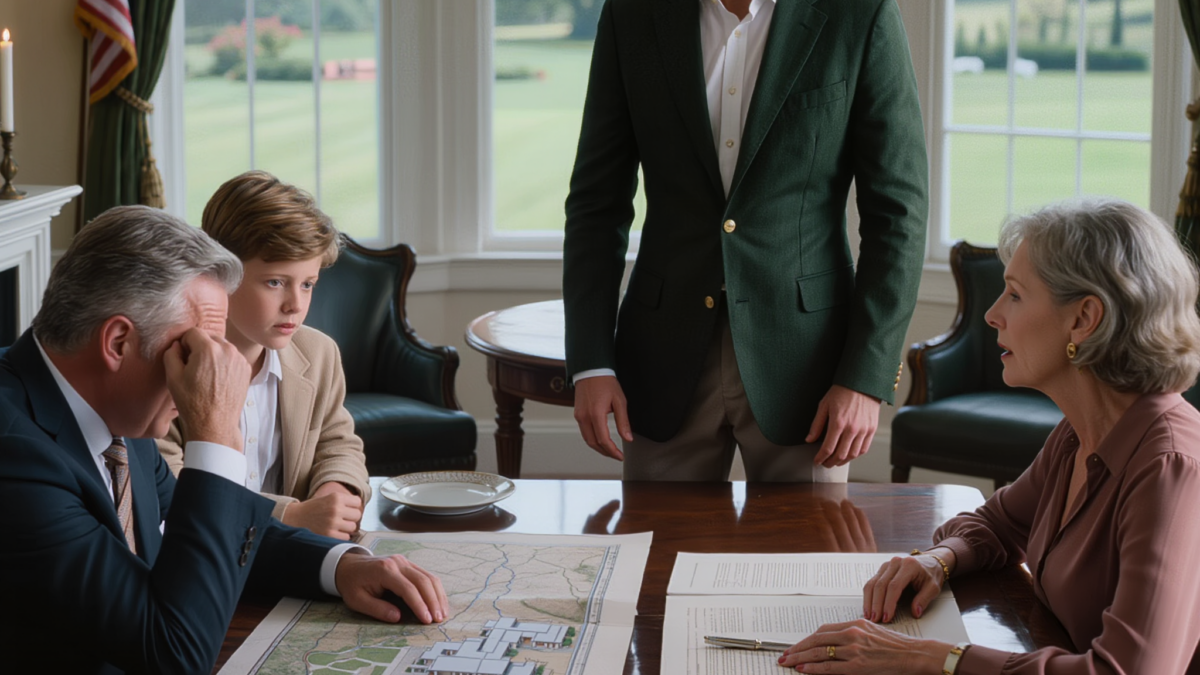
“Fix the family? How, Sterling?” Beatrice reached into her pristine leather handbag and pulled out a clean, multi-page legal document printed on heavy bond paper. She laid it flat on the table and slid it across the mahogany surface until the bottom edge hung over the side right in front of where I was standing. Across the top of the document, in bold capital letters, were the words “Family Reconciliation, Cost Sharing, and Non-Disparagement Agreement.” “What is this?” I asked, looking down at the black ink.
“It is a fresh start,” Beatrice said, her voice dropping into the rhythmic, hypnotic register she used when trying to convince the HOA board to approve a special assessment. “We had an attorney draft it, Arthur. It simply states that we all agree to put the unfortunate misunderstandings of last October behind us, that neither party will make negative statements about the family in public or on social media, and that you agree to assume your rightful place as a co-sponsor for Sterling’s upcoming wedding.” I let out a slow, quiet breath. “A co-sponsor?”
“Yes, bro,” Sterling chimed in, his smirk widening. “Look, Tiffany’s dad is covering the reception at the Breakers in Palm Beach, but the groom’s side is responsible for the welcome dinner, the luxury transportation shuttles, and the private yacht charter for the bridal party. It’s running about sixty grand. Conrad’s being a total cheapskate, and Dad’s business has had some cash-flow hiccups this quarter. Since you and Eleanor saved all that money by doing that low-budget mill wedding, Mom and Dad figured you could pick up the tab for the welcome events. It’s your brotherly duty, Arty. Plus, it’ll be a great networking opportunity for your little architecture firm to get in front of Tiffany’s dad’s developer friends.”
I looked from Sterling’s smug face to Beatrice’s expectant eyes, and finally down to Richard, who was actively refusing to make eye contact with me. His shoulders hunched so high they were touching his earlobes. They didn’t want to apologize. They didn’t want to heal a broken bond.
They had lured me into a private room at a luxury country club to hand me an invoice for my own emotional abuse. “Come on, Arthur. Don’t drag this out,” Beatrice said softly, tapping her manicured fingernail against the signature line. “Let’s put the past behind us and be a family again.”
I didn’t pick up the silver pen sitting beside the paper. I didn’t raise my voice. I simply reached into my pocket, pulled out my cell phone, and gave a sharp double tap against the glass screen. The sharp double tap of my fingernail against my phone screen wasn’t an emotional tick.
It was a pre-arranged audio cue. Sitting at a small two-person table in the far corner of the adjacent public lounge, separated from our private room only by a heavy velvet curtain, was Mr. Henderson. He was 62 years old, a former federal corporate litigator who now managed the master trust of my commercial holdings.
He was wearing a bespoke three-piece navy pinstripe suit. His silver hair parted with razor-sharp precision the moment he heard the double tap over our open cellular line. The velvet curtain stirred. Henderson walked into the private garden room carrying a massive, incredibly worn corduroy legal briefcase.
He didn’t look at Beatrice. He didn’t acknowledge Sterling. He walked directly up to the mahogany table, unlatched the brass locks of the briefcase, and pulled out a two-inch thick stack of legal documentation bound in heavy blue backing paper. He set the massive stack down directly on top of Beatrice’s pristine family reconciliation agreement.
The weight of the legal papers created a solid thud that rattled the fine porcelain teacups. “Excuse me,” Beatrice gasped, instantly bristling, her polite mask slipping. “Who are you? This is a private family conference. Maître d’! There is an unauthorized person in the garden room!”
“Sit down, Beatrice,” I said. My voice wasn’t loud, but it carried a cold institutional density that hit her like a physical hand against her chest. She stopped midshout, her mouth hanging open, her eyes darting from my face to Henderson’s incredibly calm, predatory stance. “Mom,” I said, stepping up to the mahogany table and resting my fingertips lightly against the heavy blue backing paper, “before I look at your little arts-and-crafts project, I want to introduce you to someone. This is Arthur Henderson. He is the senior managing director of Sanctuary Holdings LLC. He is also my chief general counsel.”
Sterling scoffed though his posture stiffened slightly. “Bro, what is this? You brought a lawyer to a family sit-down? That’s super weird, man.”
“It’s not a family sit-down, Sterling,” I said, keeping my eyes locked on my father, Richard. “It’s a formal notice concerning a commercial lease.” Richard finally looked up from his cuticles. His eyes widened, the skin around his mouth suddenly turning the color of skim milk.
“Arty, what are you talking about? Lease expiration for what?” I opened the top cover of the heavy blue legal stack. I flipped past the title pages, the municipal tax stamps, and the federal incorporation records, stopping on a high-resolution, full-color plat map of the Newport Industrial Corridor. “Parcel 4B,” I said, pointing to a red-outlined square near the shipping docks. “Thirty-two acres of heavy commercial zoning. It contains two maintenance hangars, a four-story administrative brick building, and a secure concrete storage yard for three hundred vehicles. It is the central operating headquarters of Richard and Sons Heavy Excavation.”
Richard’s hands began to shake. He reached out and gripped the edge of the table so hard his knuckles turned yellow. “How—how do you have that map?”
“You’ve been writing a monthly commercial rent check of $12,400 to the Apex Commercial Syndicate since October of 2004, Dad,” I said, my voice dropping into a steady cadence. “It was a fantastic deal, a standard triple-net commercial lease with a ten-year locked renewal cap. But what you didn’t know, because you don’t read the municipal commercial registry, is that the senior partners of the Apex syndicate passed away eighteen months ago. Their heirs had no interest in managing industrial property. They quietly put the entire syndicate’s holdings up for private sale last August.”
Beatrice looked completely bewildered, her brain struggling to translate commercial real estate terminology into suburban social currency. “Richard, Richard, what is he talking about? Why is he talking about the truck yard?”
“Be quiet, Beatrice,” Richard hissed, his voice cracking with a panic I had never heard from him before. He looked at me, his eyes wide. “Arty, who bought the property?” I leaned forward, placing my palms flat on the table, bringing my face exactly two feet from my father’s shaking head. “I bought it, Dad,” I said softly. “Sanctuary Holdings LLC acquired 100 percent of the voting stock and physical assets of the Apex Syndicate three days before my wedding. I control the holding entity. I own the ground under your excavators. I own the asphalt where you park your trucks. I own the concrete walls of your office. And according to Section 8, Subsection C of your commercial master lease, your ten-year renewal window closes at midnight on November 30.”
The silence in the private garden room became absolute. The only sound was the distant muffled thack of a golf club hitting a ball somewhere out on the fairway. Richard looked like someone had just hit him in the sternum with a bag of wet sand.
He slumped back into his chair, his jaw trembling. “You… you’re the landlord?”
“Yes,” I said.
“Bro, wait. Hold on.” Sterling stammered, his smirk collapsing into confusion. He looked at Beatrice, then Richard. “Dad, what does that mean? If Arty owns the yard, he just signs the renewal paper. Right? He’s your son.”
“He doesn’t have to sign it, Sterling,” Henderson said, his voice quiet and professional. He opened a secondary folder inside the blue stack and slid a clean single page document across the cloth directly toward Richard. “Under the terms governing this commercial lease, the holding entity may propose an updated rate based on current market value when the contract expires. Based on recent storage developments in this corridor, the estimated market rent for Parcel 4B is $34,700 per month.”
Richard let out a strangled wheezing gasp. “Thirty-four thousand? Arty, no. No, son, please. That’s a 180 percent increase. That’ll wipe out my entire operating margin. I’ll be underwater by February. I’ll have to liquidate the fleet.”
“That is not my concern, Richard,” I said, addressing him by his first name for the first time. “You are a tenant whose legacy subsidy has expired. You have forty-five days to review the new lease agreement and remit the updated security deposit of $14,000. If you do not reach a new agreement, Mr. Henderson’s office will begin formal proceedings after the lease expires. Unpaid obligations could also lead to collection proceedings affecting the company’s equipment.”
Beatrice finally snapped out of her administrative paralysis. Her face turned a mottled crimson. She slammed her hands down on the table, knocking over her porcelain teacup, sending a dark stream of Earl Grey soaking into the white linen. “Arthur Pendleton!” she cried, her voice rising across the room. “You are a heartless man. You would evict your own father. You would destroy your own family’s livelihood over a petty little grudge about a wedding date. I carried you for nine months. I wiped your tears. I fed you. You owe us your life.”
I didn’t flinch. I reached inside my inner tailored breast pocket. I didn’t pull out a handkerchief. I pulled out the crisp white business envelope containing her uncashed $500 wedding check and the handwritten note about learning the value of family. I dropped the check directly into the center of the spreading puddle of spilled tea. “You carried me for nine months, Beatrice,” I said, my voice quiet enough that she had to listen. “And then you spent thirty-two years treating me like an unpaid utility closet. You didn’t nurture me; you maintained a resource. You skipped the most important day of my life so Sterling wouldn’t miss a free trip to Palm Beach with a girl he’s known for five months. And then you tried to pressure my wife’s family with false rumors about black mold.”
Beatrice gasped, her hand flying to her throat as she realized the Brenda voicemail had been fully exposed. “Here is your $500,” I said, pointing at the soggy check. “Use it to pay for your own tea today. And if I ever see another passive-aggressive paragraph on Facebook mentioning my wife, or receive another manipulative text about Conrad’s health, Mr. Henderson will pursue the remedies available under the lease and the repayment of the $80,000 you took from my grandfather’s college trust fund when I was eighteen.”
Richard’s head snapped toward Beatrice with incredible violence. “What? Beatrice? What trust fund? You told me Arthur’s trust fund was wiped out in the dot-com crash.” Beatrice shrank back into her chair, her face turning gray, her lips trembling silently as she realized her ultimate financial crime had been fully reconstructed by Henderson’s forensic accountants. “We are done,” I said, turning my back on the table. “Mr. Henderson, leave the lease documents with the tenant. Let’s go.”
I didn’t wait to watch them squabble. I didn’t wait for Sterling to start crying. I walked out of the private garden room down the long hallway of golf portraits and stepped out into the clean, cool Newport rain. I slid into the Porsche 911, started the engine, and pulled out onto the main road, feeling the immense, crushing weight of my past completely detach and dissolve into the rear view mirror.
I thought I had reached the end of the hardest part of my story. But the consequences were still unfolding, and I would soon learn just how much the confrontation had changed my family. The fallout from the country club meeting reached the extended family within forty-eight hours.
By Friday evening, my phone was receiving a steady stream of automated notifications from the family network. Beatrice hadn’t gone on Facebook to write a tragic update. She had completely deactivated her account. According to my cousin Lucas, who called me while driving home from a lumber yard, the atmosphere inside my parents’ house had become a nonstop argument. “Arty, it’s absolute insanity over there,” Lucas said, a note of disbelief in his voice. “My dad went over to their place to drop off a pipe wrench, and he said Richard was screaming at Beatrice in the driveway. Richard found the old bank statements in her sewing desk. She didn’t just take your eighty grand, Arty. She took forty grand out of Conrad’s trust fund, too, and funneled the whole pile into a shell LLC to pay for Sterling’s fraternity housing, his luxury car down payments, and his credit-card debt. Richard’s heavy equipment business is officially underwater, and he’s blaming her for losing the real estate subsidy.” “What’s Sterling doing?”
I asked, looking over a series of architectural blueprints with Eleanor.
“Oh, the golden child is panicking.” Lucas laughed. “Tiffany’s father found out about the commercial eviction notice through his developer friends in Newport. He realized Sterling’s family isn’t regional old money. They’re industrial tenants whose finances are in trouble, and now there are questions about the kids’ trust funds. Tiffany’s dad pulled the funding for the Palm Beach wedding at the Breakers. He told Sterling that if he wants to marry Tiffany, they have to do a standard local church wedding, and Sterling has to sign a strict prenuptial agreement waiving any claim to the dealership equity.”
I didn’t feel a warm rush of vindication. I didn’t feel the urge to call Sterling and gloat. I felt the profound sterile satisfaction of watching a math equation balance itself out. Two weeks later, at 11:15 p.m., the physical manifestation of their collapse arrived at my front door.
It was raining violently, heavy spring sheets slapping against the brick exterior of our townhouse. The security intercom in the kitchen gave a sharp, persistent buzz. I pressed the video monitor. Standing on our concrete stoop, completely soaked without an umbrella or an overcoat, was my father, Richard.
He looked ten years older than he had at the country club. His gray suit was plastered to his skin. His hair plastered across his forehead, water dripping from his chin onto his soggy collar. Eleanor walked into the kitchen wrapped in a thick wool cardigan holding a warm mug of chamomile tea.
She looked at the small video screen, then looked at me. “Do you want me to call the precinct?”
“No,” I said quietly. “I’ll handle it.” I opened the heavy oak front door but left the inner wrought-iron security gate locked. Standing in the warm, dry entryway, I looked through the iron bars at my father in the rain. “Arty,” Richard croaked, his voice barely audible over the downpour.
He gripped the iron bars with both hands, his knuckles white. “Arty, please, son, you have to let me in. We have to talk about the commercial lease. I went to the commercial bank today, Arty. They won’t extend my operating line of credit. If that $34,000 rental rate takes effect on December 1, I’m finished. I’ll have to declare Chapter 11 bankruptcy. I’ll lose the trucks. I’ll lose the maintenance contracts I spent thirty years building. You can’t do this to me, son. I’m your father.”
I stood two feet behind the iron gate, my hands resting inside my pockets. I looked at his desperate, rain lashed face. “You aren’t my father, Richard,” I said, my voice clear and steady. “You are a bystander. You stood by while Beatrice stole my college fund. You stood by while she tried to sabotage my wedding. You stood by while Sterling treated my home like a hotel. You never protected my perimeter. You just managed the utility closet so the light bulb would turn on when you needed a tool.” “I was weak, Arty,” Richard said, tears mixing with the rainwater on his cheeks. “I know I was weak. Your mother, her temper… I just wanted to keep the peace in the house. I didn’t want the boys fighting.”
“You didn’t keep the peace, Richard,” I said. “You helped someone take what belonged to your sons because you were too afraid to have an uncomfortable conversation. And now the bill has arrived.” “Arty, please,” he begged, shaking the iron gate. “What do you want me to do? Tell me what the price is. I’ll do anything.”
“You want the legacy rental rate locked in for five years?” I asked.
Richard nodded frantically, his eyes wide with desperate hope. “Yes. Yes, Arty, please.”
“Then here is the price,” I said, stepping up to the iron bars. “Tomorrow morning at nine, you will log onto your personal Facebook account. You will write a public, unrestricted post. You will state clearly that you and Beatrice fabricated the narrative about Eleanor controlling me. You will state clearly that Beatrice took $80,000 from my trust fund. You will explicitly apologize to my wife by name. And you will tag Beatrice, Sterling, and every member of the extended family in the post. You do that, and Mr. Henderson will lock your rent in at $12,000 through 2031. Do you accept?”
Richard completely froze. His hands stayed gripped around the wet iron bars, but his mouth hung open in silent, paralyzed terror. He couldn’t do it. To write that post would mean losing his standing in the suburban circle he had spent decades trying to impress.
It would mean Beatrice’s country club friends would learn what had happened to the trust funds. It would mean his brothers would know he was a humiliated financial failure. His core philosophy, I don’t want any drama, was so deeply ingrained in his nervous system that he would literally rather lose his thirty-year business than endure a public uncomfortable truth.
He let go of the iron bars. He took a slow, trembling step backward into the pouring rain, his head dropping to his chest.
“That’s what I thought,” I said. I closed the heavy oak door through the deadbolt and turned off the porch light, leaving him standing alone in the dark. Eighteen months later, the final domino fell. Sterling’s scaled-down church wedding to Tiffany was a complete social disaster.
According to Lucas, Tiffany’s family sat on the right side of the aisle looking grim and uncomfortable, while the groom’s side consisted of Richard, Beatrice, and three fraternity brothers who showed up hung over. Less than a year after the ceremony, Sterling’s luxury lifestyle completely outpaced his junior sales salary. He defaulted on the mortgage of his Connecticut townhouse.
Tiffany didn’t stick around to help him rebuild. She filed for divorce, enforced the prenuptial agreement, and moved back into her father’s Palm Beach estate. Beatrice attempted one final desperate public pivot. She reactivated her Facebook account and posted a blurry black-and-white photograph of Sterling looking sad, accompanied by the caption:
“Some young men have hearts too pure for this cruel world. My sweet boy was completely deceived and abandoned by a toxic, narcissistic woman who took advantage of his unconditional grace. Family is the only true sanctuary left.” My cousin Lucas didn’t write a long reply.
He simply took a screenshot of her post, attached the public municipal bankruptcy filing of Richard and Sons Heavy Excavation, and commented, “Aunt Beatrice, your commercial landlord called. Your storage unit is locked due to nonpayment.” The family had completely lost its grip on reality, and as for me and Eleanor, we were already standing on higher ground.
Three years after the country club meeting, the New York spring arrived with an explosion of brilliant golden sunlight. I was sitting at a quiet outdoor corner table at a small French bistro in Soho, watching the morning foot traffic move along the cobblestone street. Sitting across from me was my older brother, Conrad.
He looked entirely different from the stressed out corporate drone I had known in my 20s. He was wearing a simple, unbuttoned Oxford shirt. His skin was slightly tanned from a recent hiking trip in Patagonia. Conrad reached into his leather satchel and pulled out a small, incredibly heavy brass key.
He set it down on the marble table directly next to my espresso cup. “What’s this?” I asked, picking up the cool metal.
“It’s the safe-deposit box key from Grandfather’s original estate firm,” Conrad said, leaning back and crossing his arms. “I spent the last six months untangling the trust paperwork with Henderson’s team. When Beatrice set up that shell company to drain our college funds, she missed a secondary municipal holding account Grandfather opened in 1994. It was specifically designated as an architectural seed fund for you, Arty. It’s been sitting in low-yield municipal bonds for thirty years. After taxes, it’s worth roughly $140,000.”
I stared down at the small brass key. I felt a profound, incredible sensation of complete spiritual closure. For thirty-two years, I had operated under the lingering internal assumption that my family’s neglect was a reflection of my own personal deficit. I thought I was unlovable.
I thought I was too quiet, too boring, or too independent to earn the warmth that Beatrice lavished on Sterling. This little brass key proved the absolute ultimate truth. I was never unlovable. I was just an inconvenient audit. My mother didn’t ignore me because I was flawed.
She ignored me because my independence was a constant living threat to her financial embezzlement. My success was a daily visual reminder of the money she had stolen. “Thanks, Con,” I said, sliding the key into my pocket.
“Don’t thank me, Arty,” Conrad said softly, looking down at his coffee. “I should have looked at the ledger ten years ago. I let Mom use me as an administrative hammer to keep you in line. I’m sorry.”
“The ledger is balanced, Con,” I said, offering him a genuine smile. “Drink your espresso. We have to be uptown by noon.” At 12:30 p.m., we pulled up to the iron gates of Harrison and Genevieve’s estate in the Hudson Valley. The sprawling two-acre back lawn was an absolute masterpiece of life and color.
Thousands of yellow and white daffodils were blooming along the stone retaining walls, and a massive white sailcloth tent was set up near the restored greenhouse. Inside the tent, a string quartet was playing a light, joyful Vivaldi arrangement, and long wooden farm tables were covered in white linen, fine glass pitchers of iced lemon water, and massive platters of fresh spring pastries. It was the formal baby shower for our firstborn son.
I walked under the canvas archway, feeling an overwhelming, incredible sense of pride. The guest list was a masterclass in strict boundary preservation. Sitting at the main family table were Harrison, Genevieve, Vivien, Conrad, Lucas, and Marcus’ family. There were no distant suburban cousins whispering in the corners.
There were no passive-aggressive aunts evaluating the floral arrangements. There were zero ghosts from my biological past. Every single person sitting under that canvas roof was an active, supportive, emotionally clean contributor to our lives. Eleanor was sitting in a high-backed wicker peacock chair, looking incredibly radiant in a flowing sage green linen dress, resting her hand over her seven-month pregnancy bump while laughing at a story Vivien was telling about a disastrous interior design client in Boston.
I walked over, stood behind her chair, and let my hands rest gently on her shoulders. Harrison stood up from the end of the table, raised a fine crystal glass of sparkling cider, and looked directly at me. “To the architect,” Harrison said, his deep voice carrying over the garden. “A man who had the courage to tear down a rotten frame so he could build a true sanctuary for his son. May this boy grow up never knowing the weight of an empty chair.”
The entire tent erupted in warm, heartfelt applause. I looked down at Eleanor. She reached up, covered my hand with hers, and leaned her head back against my chest. At that exact second, my private cell phone sitting inside my pocket gave a short, silent pulse.
I didn’t pull it out. Later that evening, when we were back in our quiet townhouse, I checked the administrative log. A high-priority email had attempted to breach my professional server from an unverified address registered to Beatrice Pendleton. The subject line read, “Arthur, please. I have a legal right to see my biological grandson.”
The automated corporate firewall Henderson had installed didn’t even route the message to my inbox. It didn’t trigger a desktop notification. It didn’t make a sound. The system identified the sender syntax, categorized it as external domestic spam, and permanently wiped the message from the server, leaving behind only clean, empty, uncorrupted digital space.
I stood out on our third-story wrought-iron balcony, watching the warm New York twilight settle over the city rooftops. I could hear Eleanor inside the nursery, softly humming as she folded tiny soft cotton onesies and placed them into the cedar drawers I had built with my own hands.
I looked down at the street below, watching the golden streetlights flicker on one by one. I finally understood what a true narrative architect does. You don’t spend your life trying to edit a bad script written by people who want you to fail. You don’t spend your life begging for scraps of validation from an empty table.
You take your capital, you establish your perimeter, and you lay your own brick. Looking back on this journey, I understand how much it mattered to have people who stood beside me. If there is one lesson I took from everything that happened—one I would share with anyone who has spent years sacrificing peace to preserve the appearance of a happy family—it is this: being related is a biological fact, not a lifelong moral obligation.
Family ties are not a binding moral mortgage. You do not owe your peace, your savings, or your self-worth to people who treat your life as an administrative convenience. Setting a boundary isn’t an act of cruelty. It is the highest form of self-respect. If someone is determined to treat you like an afterthought to a Cabo trip, let them pack their bags, but make sure you change the locks before they get back.
I sometimes wonder how many other people have had to rebuild their boundaries just to protect their own peace, and what finally gave them the courage to walk away. Every family tells its own version of events. I can only tell mine, and hope it gives someone else the blueprint for a home that truly feels safe.
Whatever comes next, I know I have a family worth protecting—and a life that finally belongs to me.








