My older brother left me bleeding on Grandpa’s study floor, telling me, “You are erased,” as he carried away a gray lockbox. Our parents had spent ten years believing his lies about me. At the will reading the next morning, they sat beside him while he claimed Grandpa had left him everything. I kept my sunglasses on as the estate attorney asked him to explain exactly where he had found that handwritten will.
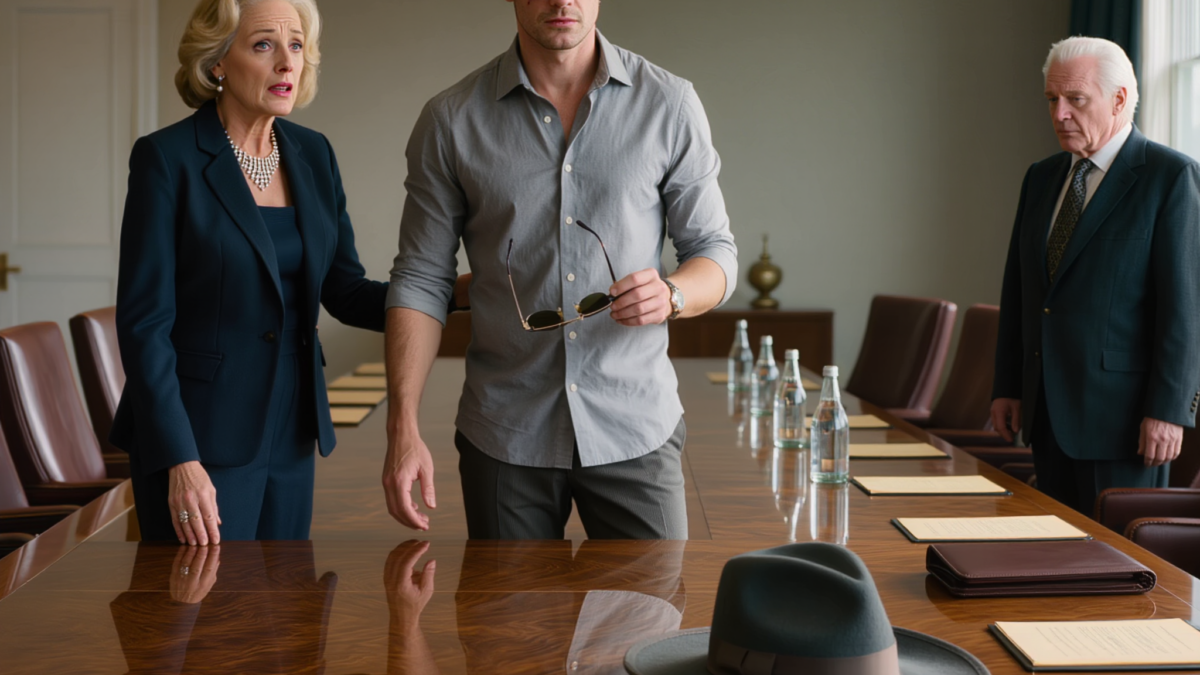
“You are erased. Just fade away, Bennett. Do us all a favor.”
Those were the words my older brother said as I lay injured on the hardwood floor of our late grandfather’s house.
I could barely focus on his face. My right eye was swelling, and the pain in my head made the room seem to tilt. Through my blurred vision, I watched Garrison pick up a gray metal lockbox, tuck it beneath his arm, and straighten his expensive sweater.
Then he stepped over my legs.
He didn’t check whether I could move. He didn’t reach for his phone. He didn’t ask if I needed help.
I heard the front door close, followed by the unmistakable sound of his Porsche starting outside. A moment later, tires scattered gravel across the driveway.
My brother had taken the box and left me alone.
My name is Bennett. I’m 35 years old, and until that night, I had spent most of my adult life trying to convince my family that I deserved to belong to it.
For ten years, Garrison had carefully turned our parents against me. He made himself the successful, devoted older son and painted me as an ungrateful failure who resented everything he had accomplished.
He controlled what they heard, what they believed, and ultimately how they treated me.
By the time Grandpa Augustus passed away, I had become almost invisible to my own family.
Garrison believed that taking the lockbox would secure his inheritance and silence me for good.
There was something he didn’t know.
The study window had been left open that night. Outside, in the neighboring garden, someone had witnessed what happened. And that person had a smartphone.
By the following morning, Garrison would be sitting in a lawyer’s conference room, confidently presenting a handwritten will he claimed to have discovered.
He believed he had eliminated the only person capable of challenging him.
To understand why he was so certain, I have to go back to the morning we buried Grandpa.
It was a Tuesday at Cedar Hill Funeral Home.
The room smelled of white lilies and old perfume. Sunlight filtered through stained-glass windows, casting soft colors across the rows of mourners.
I stood at the very back in a simple black suit I’d bought at a discount store five years earlier. My hands were clasped in front of me, and I kept my eyes lowered whenever someone passed.
I had become very good at making myself unnoticeable.
At the front of the chapel sat Garrison, flanked by our parents, Benson and Hadley.
My older brother looked flawless in his tailored suit. His expression suggested dignified grief, the kind people associate with a respectable man who has suffered a terrible loss.
Dad kept one hand on his shoulder. Mom held his other hand and gently stroked his knuckles.
The three of them looked like a family portrait.
There was no room for me in it.
A man in a gray suit approached while we waited for the service to begin. I vaguely recognized him as a second cousin from Mom’s side.
He nodded toward the casket, then studied my face.
“Excuse me,” he whispered. “I don’t mean to be rude, but I don’t think we’ve met. Are you one of the administrators from the hospice facility?”
For a moment, I couldn’t answer.
Then I forced a polite smile.
“No. I’m Bennett. Benson and Hadley’s youngest son.”
His eyebrows rose.
He glanced toward the front row, then back at me.
“Oh, my goodness. I’m so sorry. I didn’t realize. Garrison always talks about carrying the burden of being an only child.”
He looked increasingly uncomfortable.
“Well, I suppose I haven’t seen you at the Thanksgiving dinners or holiday gatherings in years.”
He excused himself and hurried away.
I remained where I was.
A relative who barely knew me had accepted the idea that my brother was an only child because that was the version of our family Garrison had presented.
And everyone seemed perfectly comfortable believing it.
When Garrison stood to deliver Grandpa’s eulogy, he spoke beautifully.
His voice trembled as he described their extraordinary bond. He told everyone how he’d held Grandpa’s hand through his final painful moments and how much the old man had meant to him.
People nodded. Several wiped away tears.
I stood at the back and listened.
Garrison hadn’t visited Grandpa in eight months.
His last visit had ended badly after Grandpa refused to withdraw money from his retirement fund to invest in one of Garrison’s questionable real estate ventures.
After that, Garrison stayed away.
I was the one who coordinated with the hospice nurses. I was the one answering calls at three in the morning about medication and pain management. When Grandpa needed additional physical therapy, I helped pay for it from my modest salary.
Yet somehow, the man who had been absent was receiving everyone’s admiration.
And the grandson who had been there was standing alone.
After the service, I waited until most of the guests had left before approaching the open casket.
Grandpa looked peaceful. For the first time in months, his face wasn’t tightened by pain.
I rested my hand gently against his.
“Thank you for everything, Grandpa,” I whispered. “I promise I’ll be okay.”
Behind me, someone took a sharp breath.
I turned.
Mom was standing a few feet away.
“Mom.”
She flinched.
For one brief moment, I thought I saw guilt in her expression. But before she could respond, Garrison appeared between us.
He placed his hand against her back and turned her toward the exit.
“Come on, Mom. The driver’s waiting outside. We really don’t want to get held up by random strangers today.”
He said the last words loudly enough for me to hear.
Mom went with him.
She didn’t look back.
I stood alone beside Grandpa’s casket, wondering how much longer I could keep hoping for something my parents had stopped offering years ago.
It hadn’t always been one dramatic confrontation after another.
Mostly, it was smaller things.
A missed invitation. A phone call that went unanswered. A story about me that everyone accepted without asking whether it was true.
Garrison understood that he didn’t need to convince our parents of one enormous lie.
He only needed to repeat enough small ones.
I worked as a social worker for the county. My salary wasn’t impressive, and the hours could be exhausting, but I cared about the children and families I helped.
Garrison worked in corporate real estate. He drove luxury vehicles, wore expensive watches, and lived in a gated community.
Our parents cared deeply about status.
Garrison’s accomplishments were evidence that they’d raised an exceptional son. My modest life embarrassed them.
Five years before Grandpa’s funeral, I had tried to give Mom something meaningful for her sixtieth birthday.
I couldn’t afford the diamond tennis bracelet or first-class trip to Paris that Garrison could buy.
Instead, I spent three months making a memory quilt.
I found pieces of dresses Mom had worn when we were children and carefully stitched them together. Each piece reminded me of a different part of our childhood.
It wasn’t expensive, but it was personal. I wanted her to know I remembered those years, even if our relationship had become painful.
By then, I was no longer included in the family’s elaborate birthday dinners.
I mailed the quilt to their house.
Then I waited.
A week passed without a call. Then another.
Eventually, I phoned Dad.
“Hi, Dad. It’s Bennett. I just wanted to see if Mom got the package I sent for her birthday.”
There was a long silence.
Then Dad sighed.
“Garrison told us about your little joke.”
“My joke?”
“Sending your mother a cardboard box full of filthy rags. Your brother said you cleared out your garage and mailed her your garbage just to spite her. She cried for two days, Bennett. Why are you so bitter about Garrison’s success?”
I was stunned.
“Dad, no. It was a handmade quilt. I sewed it myself. It took me months.”
“Stop lying. Garrison opened the box right in front of us. We saw what you sent. Don’t call here for a very long time. You’re upsetting your mother.”
He hung up.
I sat on my apartment sofa, staring at the phone.
Months later, a gossiping aunt told me what had happened.
According to her, Garrison intercepted my package on the front porch, removed the quilt, threw it into a neighborhood dumpster, and replaced it with oil-stained rags from his garage.
Then he presented the box to our parents.
He hadn’t simply ruined a birthday gift.
He had taken something I made out of love and turned it into supposed proof that I was cruel.
Three years later, he did something similar during a medical emergency.
Dad needed quadruple bypass surgery.
I was terrified. Because my parents wouldn’t answer my calls, I depended on Garrison for updates.
Every day, he assured me that Dad was too fragile to see me.
“Your presence stresses him out, Bennett. Please respect his boundaries.”
On the day of the procedure, Garrison texted me that surgery was scheduled for four in the afternoon.
He warned me not to arrive early and cause a scene.
I left work and hurried across town.
At 3:30, I reached the cardiac ward and asked for Dad.
The nurse checked his records, then looked at me with unmistakable sympathy.
“Your father went into surgery at seven this morning. The procedure was successful. He’s already recovering.”
I rushed to his room.
Dad was awake, resting against white pillows. Mom sat beside him.
The moment Dad noticed me, he turned toward the wall.
“Look who finally decided to show up,” he muttered. “Garrison was here at dawn. He held my hand before they took me in. Bennett probably remembered me after he finished his shift.”
I pulled out my phone, trying to show them the message Garrison had sent.
Mom raised her hand.
“We don’t want your excuses. Garrison already told us you said hospital waiting rooms were too depressing and you had better things to do. Just leave. You’re raising his blood pressure.”
They wouldn’t even read the text.
That was how Garrison operated.
If I offered money, he told them I was trying to buy affection.
If I couldn’t afford to give money, he told them I was selfish.
If I called, he described me as demanding.
If I stayed away, he called me neglectful.
No matter what I did, he decided what it meant.
For years, I responded by getting quieter.
I had learned early that confronting my family usually made things worse. I tried to be agreeable, patient, and understanding.
Some part of me believed that if I never gave them a reason to be angry, they would eventually see who I really was.
But at Grandpa’s funeral, watching Garrison receive praise for care he hadn’t provided, something finally changed.
I couldn’t keep waiting for my family to become fair.
That evening, my cousin Cashion sent me a message.
He was one of the few relatives who occasionally contacted me.
He said he was sorry about how Uncle Benson had treated me and asked whether I was doing anything to clear my head.
I told him I planned to visit Grandpa’s old house, check on the property, and spend a little time there before the lawyers took control.
He wished me well.
I put my phone on the passenger seat and drove forty-five minutes toward the outskirts of the city.
Grandpa’s Victorian house stood at the end of a long, tree-lined dirt road.
The white paint was peeling. The porch sagged on one side. The central air conditioning had been broken for more than four years because Grandpa stubbornly preferred an open window to a repairman’s visit.
It was a hot, humid July evening.
The official reading of the will was scheduled for nine the following morning.
I had a brass key Grandpa had given me five years earlier. I’d never told anyone else in the family about it.
Cashion had occasionally shown me screenshots from the extended family group chat. Garrison had recently been telling everyone that Grandpa had become completely senile during his final months.
I suspected he was preparing to challenge the will if it didn’t favor him.
But I wasn’t visiting to take anything.
An hour after the funeral, Grandpa’s elderly neighbor, Mrs. Asa, had called me with something important.
She was seventy-five and had lived next door for forty years.
Unlike most of my relatives, she had always treated me warmly.
When I arrived at the house, she was waiting beside the low hedge separating the properties, wearing a faded floral housecoat and holding a glass of iced tea.
“Bennett, honey. How are you holding up?”
“I’m hanging in there.”
She looked at me over her glasses.
“Don’t lie to an old woman. I saw your brother in the funeral home parking lot. That performance belonged at the Academy Awards.”
I managed a tired smile.
“Did Grandpa say anything to you before the end?”
Her expression changed.
“He was worried, Bennett. He knew Garrison was circling his bank accounts. A few days before he passed, he called me over to the fence and told me he’d hidden his most important documents.”
She glanced around the quiet garden.
“He said, ‘If anything happens to me, tell Bennett to look for the mockingbird.'”
“The mockingbird?”
“He said you’d understand. He said you were the only one smart enough to figure it out.”
I did understand.
To Kill a Mockingbird was the first chapter book Grandpa had ever read aloud to me.
We used to sit in his study during summer afternoons, reading a little at a time. My parents often left me with him while they took Garrison on expensive trips to Europe.
Those visits had been lonely in one sense, but Grandpa made them special.
He built elaborate scavenger hunts around the house, hiding chocolate bars and leaving riddles for me to solve.
The moment Mrs. Asa mentioned the mockingbird, I knew where to begin.
I thanked her and went inside.
The house smelled of old paper, lemon polish, and dust. With the sun nearly gone, the rooms were dim and warm.
I switched on the brass lamp in Grandpa’s study and walked toward the towering oak bookshelves he had built himself.
His favorite classics were arranged together.
There, among them, was the worn hardcover copy of To Kill a Mockingbird.
I opened the front cover.
Nothing.
I turned through the pages until I reached page 174.
A neon yellow sticky note had been pressed against the text.
In Grandpa’s unmistakable handwriting, it said:
“Attakus defended the innocent in the courtroom. Look exactly where I kept my own silent defense.”
I laughed despite myself.
Grandpa had left me one of our old games.
His “silent defense” was an antique Colt revolver kept inside a glass-fronted display case in the hallway.
It was an old, rusted historical piece, not something he used. He had always called it his silent defense.
I opened the display case and carefully lifted the red velvet lining.
Beneath it was another yellow note.
“The brutal truth is very often bitter, but it goes down incredibly smooth with a single block of ice.”
I knew that one immediately.
Every evening at eight, Grandpa enjoyed a glass of single-malt scotch with exactly one large ice cube.
I went to the formal dining room and opened the tall mahogany liquor cabinet.
Behind a half-empty bottle of aged Glen Livit, taped to the mirrored back, was another note.
“You are almost there, little bird. The final secret sleeps precisely where the foundation is strongest.”
This one stopped me.
The foundation?
I thought of the basement and the unfinished root cellar. I paced around the dining room trying to understand.
Then I remembered something Grandpa used to say when he showed me the furniture he’d built.
“Bennett, a strong foundation is not just poured concrete. A true foundation is the solid knowledge you hold up to the world.”
The bookshelves.
I hurried back into the study and knelt in front of the bottom shelf.
The solid oak base appeared perfectly ordinary. I ran my fingers along the trim, feeling for anything unusual.
Near the far-right corner, I found a tiny groove.
I pressed it.
Something clicked.
A two-foot section of the wooden baseboard released, revealing a concealed compartment beneath the bookshelf.
Inside was a heavy gray fireproof lockbox.
It was nearly midnight.
The house remained hot despite the study window I’d opened earlier to let in air from the garden. Crickets chirped outside as I lifted the box onto the floor.
The clasp was unlocked.
I opened it.
There was no cash, jewelry, or anything else that looked particularly valuable.
Only documents.
On top lay a thick manila envelope labeled “Last Will and Testament,” bearing a recent notarized date from two weeks earlier.
Beneath it was a brown leather journal.
I opened the journal to its final written entry.
The date was June 12.
Grandpa described overhearing Garrison on the phone through a baby monitor the hospice nurse had accidentally left switched on.
According to the entry, Garrison was telling our mother that he needed to move Grandpa to a cheaper state-run facility so he could sell the property and cover his business debts.
Grandpa wrote that Garrison believed he was asleep and had no idea he’d heard the conversation.
He also described how Garrison had tried to make him sign a blank cashier’s check, claiming it was needed for medical supplies.
Grandpa had refused.
I turned backward through the journal.
An entry dated May 4 mentioned me.
Grandpa wrote that I’d called the nurse’s station again at three in the morning to check on his fever.
He said Garrison constantly claimed I hated him and wished him harm.
Then Grandpa wrote something I had never expected to read.
He knew the truth.
He knew a grandson who called at three in the morning to check on an elderly man’s pain wasn’t acting out of hatred.
He had deliberately allowed Garrison to think he was confused because he was protecting the estate for me.
Grandpa had already changed his will.
He feared that if Garrison discovered he’d been excluded, he would destroy the documents.
I could hardly see the words through my tears.
For years, I’d worried that Grandpa believed the same horrible things everyone else did.
I thought he might have died disappointed in me.
Instead, he’d understood everything.
At the bottom of the lockbox was a smaller white envelope addressed to me.
“For my grandson Bennett.”
I opened it.
Grandpa began by apologizing for not confronting my parents and brother while he was alive.
He said he’d been afraid they would retaliate by keeping me away from him.
Then he wrote about the quilt.
He knew I had made it for Mom.
He knew I had helped pay for his additional physical therapy.
He said he had watched the way I treated people and knew I was an honest, decent person despite what the rest of the family claimed.
The box, he explained, contained proof of Garrison’s financial misconduct, his attempts to forge checks, and the finalized will leaving the estate to me.
His last words were simple.
“Use these weapons, Bennett. Do not let them erase you.
“I love you, Grandpa.”
I held the letter against my chest and cried.
For ten years, I’d tried to earn love from people who seemed determined to deny it.
Grandpa had known me all along.
I was so overwhelmed that I didn’t hear the car arrive.
I missed the crunch of tires on the gravel and the headlights sweeping across the living room wall.
The sound that brought me back was a key turning in the front door.
Then the door swung open.
I scrambled to my feet, clutching the lockbox.
Heavy footsteps moved down the hallway.
The study door opened, and Garrison stood there holding a flashlight.
He wore a navy quarter-zip sweater, immaculate slacks, and the expensive watch he seemed to wear everywhere.
When his flashlight reached my face, he stopped.
“Bennett? What the hell are you doing creeping around here?”
I held the box tighter.
“I could ask you the same thing. It’s midnight. The funeral was six hours ago.”
His eyes moved from my face to the box.
His expression immediately changed.
He claimed he’d returned because he’d left his expensive sunglasses on the kitchen counter during an earlier visit.
He wanted to collect them before the estate lawyers secured the property.
I didn’t believe him.
“You don’t have a key to this house. How did you get inside? And how did you know I was here?”
His mouth curled into a smirk.
“I have my ways, little brother. Cashin is a very loyal, very talkative guy. He knows who pays the bills in this family.”
My stomach tightened.
Cashion had told him.
Garrison looked at the box again.
“Is that Grandpa’s lockbox?”
“It’s none of your business.”
“Give it to me, Bennett.”
I backed toward the heavy oak desk.
He laughed.
He mocked me for pretending to be brave and reminded me that I’d always given in whenever he pressured me.
But something had changed.
“Not this time,” I told him. “I read the journal. I know about the checks. I know you wanted to move Grandpa so you could sell the house. I know you’ve been lying to Mom and Dad for years.”
His laughter stopped.
For the first time, I saw the expression beneath his polished public image.
“You actually think Mom and Dad care?” he asked.
He reminded me that he paid for their vacations and had a successful corporate career.
He said even if I showed them the journal, he could convince them I’d forged it.
He could tell them I was having a breakdown.
And they would believe him.
Then he reached for the lockbox.
I refused to release it.
We struggled in the center of the study. A stack of old magazines fell, and a lamp crashed onto the floor.
“Let go of the box, you pathetic little leech!” he shouted.
“It isn’t yours! Grandpa left the estate to me!”
Garrison pulled hard, dragging me forward. I stumbled over a rug, and he shoved me back against the desk.
Pain shot through my hip.
Still, I held on.
He grabbed my hair and forced me backward toward the study doorway.
The original oak doorframe was thick and solid.
He drove the side of my head into it.
There was a sharp impact, followed by a flash of light and a terrible ringing in my ears.
My legs gave way.
The lockbox slipped from my hands and struck the floor.
I reached toward my temple and realized I was seriously injured.
The room blurred. I could barely hold myself upright.
Garrison stood above me, breathing heavily.
He seemed more irritated than frightened.
He bent down, picked up the box, and adjusted his clothes.
I thought he might finally understand what he’d done. I expected him to call for help.
Instead, he crouched near me.
“You really should have stayed away, Bennett.”
His voice was calm.
He told me nobody knew I was there and nobody cared.
He accused me of trying to steal what rightfully belonged to him.
Then he looked down at me and said the words I would never forget.
“You are nothing. You are erased. Just fade away, Bennett.”
He made it clear that he had no intention of helping me.
He stood, stepped around me, and walked away.
I heard the front door close.
A moment later, his Porsche pulled out of the driveway.
Then the house was quiet again.
The grandfather clock kept ticking in the hallway. Crickets chirped beyond the open window.
I tried to move, but my head hurt too badly.
As my vision darkened, I thought about Mom and Dad.
Would they come to my funeral?
Or would Garrison persuade them that even that was too much trouble?
Eventually, I closed my eyes.
The next thing I remember was someone calling my name.
“Bennett! Bennett, wake up!”
A hand touched my face.
I struggled to open my eyes.
Mrs. Asa was kneeling beside me, pressing a clean towel against the injury on my head.
“Oh, thank God. Stay with me, honey. Keep your eyes open.”
“Mrs. Asa?”
“I’m right here.”
I tried to ask how she’d found me.
She told me she’d been outside watering her hydrangeas because she couldn’t sleep.
The study window was open.
She’d heard shouting.
Then she’d looked inside.
“I saw him, Bennett. I saw what your brother did.”
Suddenly, I remembered the box.
“Garrison took it. He took the will. He took everything.”
I tried to sit up, but the room spun.
Mrs. Asa looked at me with an expression I couldn’t immediately understand.
“No, honey. He didn’t take everything.”
She reached into her floral housecoat and pulled out an older iPhone in a bright pink case.
“I recorded it.”
She explained that she’d been standing on the grass outside the open window, with the blinds raised.
Her phone had captured the struggle, the moment Garrison hurt me, the words he said afterward, and his departure with the lockbox.
She wanted to call the police immediately.
I asked her to wait.
She looked horrified.
“Bennett, your brother just seriously injured you. You need help.”
I understood. But I also feared what Garrison would do once he realized there was evidence against him.
He had money for lawyers and a family that had defended him for years.
I believed he would claim self-defense, hide the lockbox, and destroy whatever documents he thought might incriminate him.
The official will reading was only hours away.
If he arrived believing he’d secured the estate, he might expose his own dishonesty in front of our parents.
I explained that I wanted him to make his claims where the lawyer could hear them.
Mrs. Asa listened.
Then she nodded.
She told me she knew a retired physician who made private house calls, someone who owed her a favor.
She would make sure I received treatment that night.
The next morning, she would stand beside me.
Dr. Finley arrived at Grandpa’s house shortly before two in the morning.
He carried an old leather medical bag and a battery-powered surgical light.
He examined my head and closed the injury with seven black stitches.
He told me I had suffered a serious concussion.
He was particularly concerned about the possibility of a hidden complication and strongly advised me to go to an emergency room for a CT scan as soon as the sun came up.
He also instructed me to rest in a dark room.
I knew he was right about the seriousness of the injury.
But I was determined to attend the reading of the will.
Mrs. Asa stayed with me throughout the night, bringing water and holding cold packs against the swelling.
By morning, the right side of my face looked terrible.
My eye was badly swollen, and the white bandage around my temple was impossible to miss.
I found a wide-brimmed fedora in Grandpa’s closet and put on dark aviator sunglasses.
They covered enough of my face to let me enter the law office without immediately revealing what had happened.
Before the family meeting, Mrs. Asa and I went to see Grandpa’s attorney.
His name was Mr. Gideon.
He worked at Gideon and Associates, a modern downtown firm with polished furniture, expensive suits, and an atmosphere that made me feel as though my old sedan belonged several streets away.
Mr. Gideon was a reserved man with a serious expression.
He sat behind his mahogany desk and watched the recording on Mrs. Asa’s pink phone.
When the video reached the moment Garrison drove me into the doorframe, he visibly flinched.
He paused the recording and removed his glasses.
For a while, he said nothing.
Then he looked at me.
“In forty years of practicing estate and probate law, I’ve never seen anything this vile committed by a blood relative.”
He said what he’d witnessed was far beyond an ordinary family dispute.
He believed Garrison had deliberately and seriously endangered me over the inheritance.
Then he asked whether I was absolutely certain I wanted to proceed with the meeting.
He could contact the district attorney, he said, and arrange for Garrison’s arrest without waiting.
I told him why I wanted our parents to witness what happened.
They had spent ten years accepting Garrison’s version of events. Even with physical evidence, I feared they would immediately begin defending him and blaming me.
I needed them to see him make his own false claims.
Mr. Gideon studied me for a long moment.
Then he opened a locked drawer and removed a thick manila file.
He had something to show me.
Inside was the original, legally binding copy of Grandpa’s true final will.
Grandpa had mailed it directly to Mr. Gideon by certified tracked courier on the day he signed it, with two independent witnesses present.
The copy I’d discovered in the lockbox was only a duplicate.
Garrison had risked everything to take a document that didn’t give him legal control of the estate.
I could hardly believe it.
Grandpa had been thinking ahead even while his health was failing.
Mr. Gideon explained his plan.
He would let Garrison present whatever document he had prepared. He would ask him directly whether he claimed it represented Grandpa’s final wishes.
And he would allow him to explain exactly how and where he’d supposedly found it.
Then the recording could be presented.
Mrs. Asa sat beside me, watching the lawyer with fierce approval.
She told me she’d spent decades watching my parents favor Garrison while treating me as though I barely mattered.
She was ready for them to see the truth.
At 8:55, the receptionist knocked.
The rest of the family had arrived.
We walked down the carpeted hallway to the large glass doors of the main conference room.
Garrison was already seated at the long mahogany table.
Dad sat near him. Mom was on his other side. Cashion was there too.
The table held sparkling water, yellow legal pads, and silver pens.
Garrison looked immaculate in a custom-tailored navy suit, white shirt, and conservative silk tie.
He appeared perfectly comfortable.
Then he saw me.
His eyes moved immediately to my hat and sunglasses.
For an instant, his expression changed.
He seemed surprised that I was standing there at all.
But the reaction disappeared almost as quickly as it came.
He looked at my hunched posture and concealed face, then gave a faint, dismissive smile.
He apparently believed I was too frightened or ashamed to challenge him.
Dad looked me over and scowled.
“Bennett. How nice of you to finally join us. Take off those ridiculous sunglasses and that stupid hat. You’re indoors. Show some respect for your grandfather’s memory.”
“I have a terrible migraine, Dad,” I said quietly. “The lights are making me sick.”
I took a seat at the far end of the table.
Garrison rolled his eyes.
“Of course you do. Always the victim. Always making a scene when the attention isn’t on you. You couldn’t even bother to dress properly for a meeting about the grandfather you supposedly cared so much about.”
I kept my sunglasses on.
Beside him sat Dalton, his personal corporate lawyer.
Dalton was known for taking aggressive positions in difficult custody and commercial property disputes. He watched me with obvious contempt, as though he considered a county social worker hopelessly out of place at that table.
Mrs. Asa sat quietly beside me.
Mom noticed her almost immediately.
“Who on earth is she? This is a confidential family matter. We don’t need random neighbors sitting in on our financial discussions.”
Mr. Gideon responded before I could.
He explained that Mrs. Asa was a documented witness whose presence had been specifically requested by Augustus and was legally required for the proceedings.
Mom didn’t argue further.
Mr. Gideon opened his leather folder.
“I have here the official last will and testament of Augustus, formally documented, notarized, and filed with my office.”
“Objection!”
Dalton stood abruptly.
He announced that Garrison had a critical document to present before any supposedly outdated paperwork was read.
Garrison rose from his chair.
He carefully unbuttoned his jacket, reached into his leather messenger bag, and removed a crumpled piece of white paper.
The paper appeared stained with coffee and dirt.
He slid it across the table.
“That document you’re holding is outdated, Mr. Gideon. I found this new will in Grandpa’s bottom desk drawer yesterday afternoon while I was securing the property.”
He claimed it was a holographic will written entirely in Grandpa’s handwriting.
According to Garrison, it had been dated just three days before Grandpa passed away.
Mom and Dad exchanged proud, approving looks.
Garrison explained that the new document left him the Victorian property, the rest of the estate, and all liquid investment accounts.
Then his voice began to tremble.
He claimed Grandpa had cried while writing it.
According to Garrison, Grandpa no longer trusted me with any of his money because I’d abandoned him during his final days.
Dad immediately turned toward me.
“Is that true, Bennett? Did you abandon your grandfather while he was dying just to spite us?”
I looked at him through my sunglasses.
I didn’t answer.
Garrison seemed encouraged by my silence.
He continued.
He claimed Grandpa had told him I’d been taking money from his checking account.
Then he made an even more serious accusation.
He said I’d stolen Grandpa’s prescribed pain medication and sold it.
He claimed that was why Grandpa had changed the will.
Mom covered her mouth.
“Oh, Bennett. How could you do something so disgusting? Stealing from a defenseless old man? You belong in jail.”
I held the underside of the table tightly.
Even after everything they’d said to me over the years, their certainty still hurt.
They hadn’t asked to see a bank statement.
They hadn’t asked for medical records.
They hadn’t asked how Garrison knew any of these things.
They simply believed him.
I remembered the discarded quilt and the surgery text they’d refused to read.
The pattern hadn’t changed.
Mr. Gideon lifted Garrison’s stained paper and examined it carefully.
Then he looked directly at him.
“Are you formally submitting this document as the true, legally binding final intent of the deceased?”
“Yes,” Garrison answered confidently. “Absolutely. I’m the sole named executive. That document represents his final wish.”
Mr. Gideon picked up his silver pen.
“And you’re testifying that you personally found this document? Exactly where?”
“Inside his private study, hidden in the false bottom of his desk drawer. Yesterday afternoon. I drove out there alone to check on the property and make sure it was secure.”
“Completely alone?”
“Yes.”
“No other family members were present?”
“Nobody. Just me and my grief.”
Mr. Gideon wrote down the answer.
Then he set the pen aside and closed his folder.
He looked from Garrison to Dalton.
“Before I accept this handwritten document into the probate record, there’s a digital multimedia addendum to this meeting that must be reviewed.”
Garrison frowned.
“A what? There aren’t digital addendums in probate law. Stop stalling and file the paperwork.”
Mr. Gideon didn’t argue.
He reached for his laptop and pressed a button.
A large presentation monitor behind him came to life.
The screen displayed the brightly lit study of Grandpa’s Victorian house.
It was nighttime.
The image had been filmed from outside, through the open window.
Two people were struggling over a gray metal lockbox.
Dad leaned forward.
“What is this? Bennett, is this some kind of joke? Turn it off.”
Then the audio began.
“Let go of the box, you pathetic little leech!”
Garrison’s voice filled the conference room.
He stopped moving.
His expression changed completely.
The recording continued.
On the screen, Garrison grabbed my hair as we struggled. My body was forced backward toward the oak doorway.
Mom covered her mouth.
“Oh my God, Benson. Look at what he’s doing to him.”
The recording showed the moment Garrison drove my head against the doorframe.
I fell.
The room watched him pick up the lockbox while I lay injured on the floor.
Dad pushed back his chair so suddenly that his coffee spilled across the table and onto his pants.
He barely seemed to notice.
He was staring at the screen.
Garrison’s recorded voice continued.
“You are nothing. You are erased. Just fade away, Bennett.”
He made it clear that he intended to leave me there without help.
The video showed him step around me and walk out carrying the box.
Then the screen went black.
Nobody spoke.
Garrison was still standing beside his chair.
He looked toward Mom and Dad, but neither seemed capable of defending him.
The confidence he’d displayed only moments earlier had disappeared.
He looked at Mr. Gideon, then down the long table toward me.
I was still sitting there.
The brother he had tried to silence was alive, and the entire family had just watched what happened.
For years, Garrison had decided which version of events everyone heard.
For the first time, they had seen something he couldn’t explain away with another story.
He seemed to understand that his career, reputation, inheritance plans, and freedom were now in serious danger.
His body reacted before he could form another explanation.
He doubled over and became violently sick on the conference table.
The forged will lay directly beneath him.
He collapsed into his chair, visibly shaken.
Dalton stood so abruptly that his briefcase nearly slipped from his hands.
“I’m formally withdrawing as legal counsel immediately,” he announced.
He said Garrison had misled him and that he had known nothing about the violence or the questionable document.
He also said he would report the matter to the State Bar Association.
Then he gathered his belongings and hurried out.
Garrison was left sitting in the chair he’d occupied so confidently only minutes earlier.
I watched him without speaking.
For ten years, I had been the one forced to defend myself against stories he invented.
Now he was the one facing the consequences of his own words and actions.
Mr. Gideon calmly announced that the reading of the will was concluded.
The next half hour was chaotic.
I learned that he’d contacted the local police department ten minutes before the meeting began.
Two uniformed officers and a plainclothes detective had been waiting in the firm’s private lobby.
They had already seen the recording on Mr. Gideon’s tablet.
The officers entered the conference room while Garrison was still visibly distressed.
They approached him and placed him in handcuffs.
As the detective began informing him of his rights, Garrison suddenly broke into desperate tears.
“Daddy, please help me! Call the mayor. You know the judge. Don’t let them take me to jail. Please, Daddy, do something. Write them a check.”
Dad stood against the wall.
He didn’t move.
He didn’t reach for his checkbook or demand that the officers release Garrison.
He simply watched.
I had never seen him look so old.
For decades, he’d treated Garrison as proof that our family was successful and respectable.
Now his favorite son was being led away in handcuffs while the rest of us stood around the remains of a meeting that had exposed everything.
The officers escorted Garrison out through the glass doors.
Mom slowly turned toward me.
Her face was pale, and her hands were shaking.
She took a few uncertain steps forward.
“Bennett,” she whispered. “We honestly didn’t know. He told us horrible lies about you. He said you were the one who attacked him.”
She reached toward my shoulder.
I stepped back.
I didn’t want her touching me.
Slowly, I removed Grandpa’s fedora and placed it on the table.
Then I took off my dark aviator sunglasses.
The room reacted immediately.
My right eye was swollen shut. A large white bandage covered my temple, with dark bruising around it and the edges of the stitches visible beneath the gauze.
Even Cashion, who had been sitting quietly in the corner, covered his mouth.
Mom stared at my face.
“This is what your precious golden child did to me,” I told her. “And you helped him get to this point for ten years.”
Dad stepped forward.
“No, Bennett, please. We just believed him because he was so successful. He’s your older brother. We thought you were jealous of his career. We didn’t know he was capable of something like this.”
I looked at him.
For once, I wasn’t scrambling to find the right words to make him understand.
“That’s exactly the problem, Dad. You believed him for ten years. You never once called to ask for my side. You never came to my apartment to see whether I was okay. You chose the easy lie because it was more comfortable than admitting what Garrison was doing.”
He couldn’t hold my gaze.
“You chose the vacations and the bragging rights over your own son.”
I picked up my briefcase.
I told them the detectives would need my medical statement and hospital records. Mr. Gideon would handle the legal transfer of the estate.
I was leaving.
Mom began to cry.
She sank to her knees on the office carpet, pleading with me.
“Please, Bennett. Let us go to the hospital with you. Let us pay your medical bills. Let us make this right. We love you.”
I stopped at the glass doors.
I looked back at my parents.
They seemed smaller than I’d ever remembered them.
For years, I’d wanted nothing more than for them to acknowledge that I mattered.
Now they were finally asking me to let them into my life.
But something inside me had changed.
“I don’t need you to make it right,” I said quietly. “I just need you to stay as far away from me as possible for the rest of your lives.”
Then I walked out.
It has been exactly six months since that meeting.
The legal consequences for Garrison were severe.
Mrs. Asa’s recording provided direct evidence of the assault, while Grandpa’s journal documented his concerns about Garrison’s attempts at financial exploitation and forgery.
Garrison hired another expensive defense team.
According to what followed, his lawyers warned him that a trial could expose him to a sentence of twenty years for the alleged attempted murder and elder abuse.
He accepted a plea agreement instead.
He pleaded guilty to aggravated felony assault with a deadly weapon and first-degree financial fraud.
He is now serving a mandatory three-year sentence in a maximum-security state prison, with no possibility of early parole under the sentence described to me.
His professional life collapsed after his arrest became public.
His wealthy fiancée ended their engagement the same day his mugshot appeared in local online news. She sent a brief two-sentence message and demanded the return of her diamond ring.
His real estate firm fired him, took control of company assets, froze his 401(k), and pursued him over hidden business debts.
His downtown condo went into foreclosure.
His Porsche was repossessed.
The man who had spent years presenting himself as untouchably successful lost the lifestyle he had used to impress our parents.
As for Cashion, I ended his access to the family trust funds once I gained legal control of the estate.
He sent me a long apology, claiming he’d been afraid of Garrison and had allowed himself to be manipulated.
I blocked his number.
I had no interest in another relationship where someone claimed to care about me while secretly helping the person who hurt me.
Grandpa’s estate passed to me as he’d intended.
I inherited the Victorian house, the surrounding land, and the investment accounts he’d worked so hard to protect.
Last month, I moved out of my cramped apartment and into his house.
It needed attention.
Dust covered the shelves, the paint was worn, and the central air conditioning still didn’t work.
But the moment I walked through the door, it felt different from anywhere I’d lived as an adult.
It was a place where I had been loved without having to earn it.
Mrs. Asa and I hired a local contractor, and last week the air conditioning was finally replaced.
Now we spend weekends on the back porch drinking sweet iced tea and talking.
My friend and coworker James, who helped cover my social work cases while I recovered from the concussion, came over for Thanksgiving dinner.
For the first time in years, I sat at a family-sized dining table without feeling like an unwanted guest.
There was good food, laughter, and no one watching for an opportunity to criticize me.
I still work as a social worker.
The inheritance gave me financial security, but I didn’t want Grandpa’s legacy to be measured only by the money in his accounts.
I used part of it to establish a scholarship fund for children in foster care.
Grandpa believed that knowledge was the strongest foundation a person could build.
Helping young people find that foundation felt like a way to honor him.
My parents haven’t stopped trying to contact me.
They send letters filled with apologies.
They leave emotional voicemails asking for a family dinner, a cup of coffee, or even five minutes of conversation.
They say they miss their youngest son.
They say they want us to be a family again.
But I think about all those years when I was trying to reach them and they refused to listen.
I think about the quilt, the hospital, and the funeral.
I think about how many times they could have asked one simple question and chosen not to.
An apology matters only when someone is willing to confront what they’ve done.
I don’t believe my parents have fully done that.
They seem devastated by the loss of the successful son they worshipped and by the realization of what they allowed him to do to me.
But their regret doesn’t require me to reopen a relationship that cost me so much.
Yesterday afternoon, a powerful thunderstorm swept through the valley.
I was inside Grandpa’s study when I noticed a familiar car pulling up at the end of the driveway.
It was Dad.
He parked near the locked iron gate and got out without an umbrella.
Rain soaked his clothes almost immediately.
He stood there for an entire hour.
I watched from the same study window Mrs. Asa had looked through on the night Garrison hurt me.
Dad seemed defeated.
He looked older, lonelier, and far less certain of himself than the man who had once dismissed my handmade quilt as garbage without asking a single question.
And for a moment, I felt something familiar.
The little boy inside me who had spent his childhood wanting his father’s approval wanted to open the gate.
I wanted to bring him inside, give him a towel, and make the sadness on his face disappear.
That was the part of me that had always tried to fix everyone else’s feelings, even when doing so meant ignoring my own.
But I didn’t move.
I stood in the warm study, holding a cup of chamomile tea, and watched the rain fall.
Then I turned away from the window.
I walked to the bookshelves Grandpa had built with his own hands, selected my favorite book, and returned to reading.
Some bridges are damaged so badly that rebuilding them would only invite the same pain back into your life.
For years, I thought being a good son meant enduring whatever my family chose to believe about me.
Now I understand that protecting my peace doesn’t make me cruel.
It means I finally recognize that my life belongs to me.
Garrison once told me I was erased.
He was wrong.
I’m still here.
And for the first time in my adult life, I’m the one deciding how my story is written.








