My Mother Wanted Me to Delay Visiting My Pregnant Daughter to Cook Christmas Eve Dinner
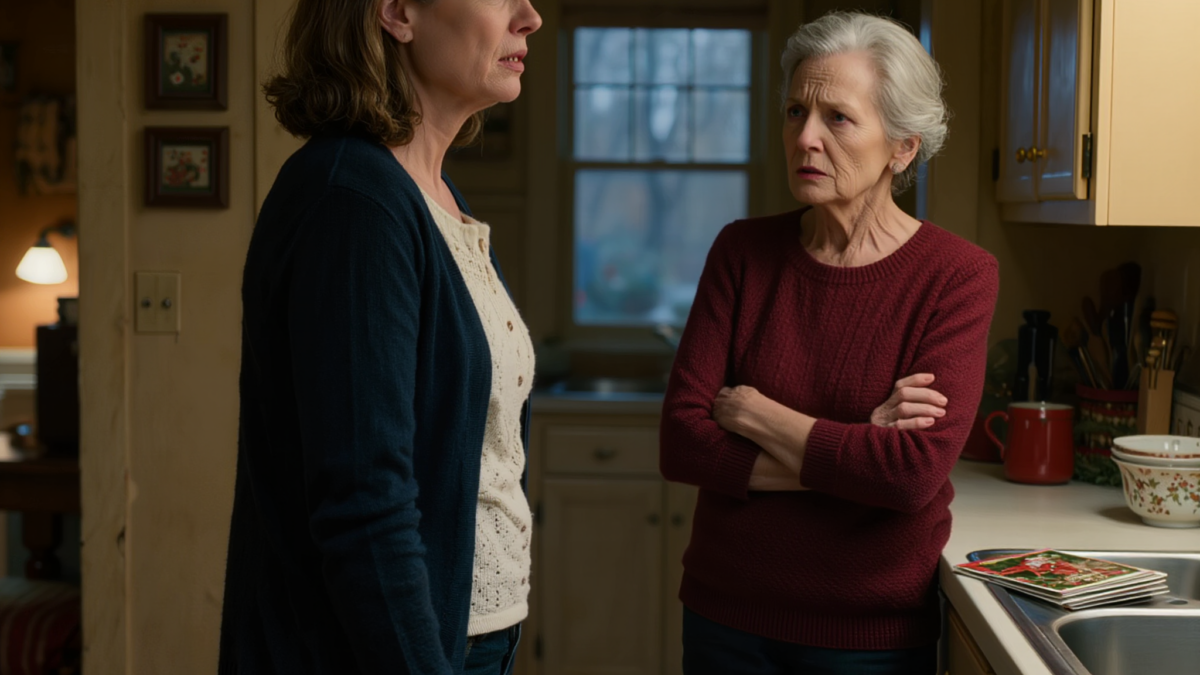
“You can see the baby after Christmas,” my mother said, sliding a grocery list across her kitchen table. “Your brother is coming for dinner, and somebody has to cook.”
I looked at the list.
A fourteen-pound ham. Potatoes. Green beans. Dinner rolls. Ingredients for three different desserts.
At the bottom, in my mother’s neat handwriting, she’d added:
Linda—arrive by 8 a.m.
“Mom, I already told you. I’m flying to Raleigh on the twenty-second.”
She looked up from her coffee.
“And I already told you Christmas Eve is at my house.”
My name is Linda Mercer. I’m fifty-four years old, I manage the circulation department at a public library in Grand Rapids, Michigan, and for the past ten years, I’ve cooked nearly every holiday dinner my family has eaten.
But that December, my daughter Erin was expecting her first baby.
My first grandchild.
Her due date was December twenty-eighth. She was thirty years old, nervous about becoming a mother, and wanted me to come a few days early.
I’d requested vacation time months earlier. My flight was booked for December twenty-second, and I had a small suitcase waiting in my bedroom.
My mother knew all of that.
She also knew that, for the first time in ten years, I wouldn’t be preparing her Christmas Eve dinner.
Apparently, that was the problem she couldn’t accept.
“Paul doesn’t know how to cook,” she continued. “And Rose is getting too old to spend all day on her feet. You’ll have to come up with something.”
“Paul is fifty years old, Mom.”
“That doesn’t mean he can put dinner on the table.”
“He manages to feed himself.”
“Linda, don’t be difficult.”
There it was.
The familiar warning that I’d disappointed her, followed by the expectation that I’d immediately fix whatever had upset her.
I folded the grocery list and pushed it back across the table.
“I’m going to Raleigh.”
Mom pressed her lips together.
“We’ll see.”
At seventy-eight, my mother, Dorothy Mercer, was still perfectly capable of managing her own household.
She drove herself to the grocery store, maintained her flower beds, attended church every Sunday, and had strong opinions about everything from the price of eggs to the correct way to arrange a Thanksgiving centerpiece.
What she didn’t do anymore was organize family holidays.
At least, that was what I’d always believed.
My father died ten years earlier, just before Thanksgiving. That first Christmas without him was miserable for everyone, especially Mom.
I remember standing in her kitchen, trying to figure out how much food to make, while she sat at the table staring at the empty chair where Dad used to sit.
So I took care of everything.
I bought the groceries, decorated the house, cooked the meal, washed the dishes, and sent leftovers home with our relatives.
I was forty-four then, recently divorced, working full-time, and raising a teenage daughter.
It was exhausting, but Mom was grieving. I wanted to help.
The following Thanksgiving, she asked whether I’d handle everything again.
Then Christmas.
Then Easter.
Eventually, nobody bothered asking.
Holiday dinners were simply something Linda did.
My younger brother Paul showed up when the food was ready and usually left carrying two containers of leftovers. Aunt Rose brought flowers or sparkling cider. Other relatives arrived at the appointed hour, ate, and thanked me for the wonderful meal.
Meanwhile, I spent most of the celebration in the kitchen.
I’d prepare the food while everyone visited in the living room. After dinner, I’d scrub roasting pans while the others had coffee.
If somebody asked whether I needed help, Mom usually answered before I could.
“Linda has her system. Best not to get in her way.”
And because I didn’t want an argument over something as small as washing dishes, I rarely challenged her.
Over time, I stopped expecting anyone to ask.
Whenever I complained afterward about how tired I was, Mom would shake her head.
“People don’t appreciate what you do, Linda. Nobody else wants to put in the effort.”
I believed her.
Why wouldn’t I?
She was my mother.
And I thought she was the one person who understood how much I sacrificed to keep our family traditions going.
But this year was different.
Erin wasn’t sixteen anymore, sitting on a kitchen stool while I washed dishes and listened to stories about school.
She was thirty, married, living in North Carolina, and preparing to bring a child into the world.
When she asked me to spend Christmas with her, I said yes immediately.
I hadn’t expected saying yes to my daughter would feel like saying no to my mother.
A few days after the grocery-list conversation, Erin called.
“How’s everything going with Grandma?” she asked.
“About how you’d expect.”
“Mom, you are coming, right?”
“Of course I am.”
“Because you sound like you’re trying to figure out how to be in two places at once.”
I glanced at the calendar above my desk.
“I just hate leaving everybody scrambling.”
“Everybody?”
“Your uncle Paul. Grandma. Aunt Rose.”
“Mom, they’re adults.”
I laughed a little.
“You sound like me when you were sixteen.”
“Then maybe you should listen.”
She paused before continuing.
“I want you here because I want my mom. Not because I need somebody to clean my house or make dinner.”
For a moment, I couldn’t answer.
I’d spent so many years being useful to everyone that I’d almost forgotten what it felt like to be wanted simply because somebody loved me.
“I’ll be there, honey,” I promised.
After hanging up, I sat at my kitchen table and looked at the Christmas grocery list Mom had insisted I take home.
Then I picked up my phone.
I called Paul.
He answered from his car.
“Hey, Lin. Everything okay?”
“Everything’s fine. I wanted to talk about Christmas Eve.”
“Sure. What time are we eating?”
I stared at the phone.
Of course that was his first question.
“Actually, that’s why I’m calling. I’m going to Raleigh this year.”
“Oh, right. The baby.”
“Yes. The baby.”
“That’s exciting.”
“Thanks.”
There was a pause.
“So what’s Mom doing for dinner?”
I took a breath.
“I thought maybe you could host.”
He made a sound like I’d asked him to perform surgery.
“Me?”
“You have a house.”
“I have a small dining room.”
“You have a table that seats eight.”
“I don’t even own a roasting pan.”
“Paul, you can buy a cooked ham.”
Another pause.
“Can you actually do that?”
I almost laughed.
“Yes.”
He laughed, too.
Then, to my surprise, he said, “Well, I guess I could.”
I sat straighter.
“Really?”
“Sure. I’d need help with everything else. I can barely make mashed potatoes.”
“Then don’t make mashed potatoes. Let somebody else bring them.”
“Like a potluck?”
“Exactly.”
He thought about it.
“You know, that might actually be easier than the whole production at Mom’s.”
For a moment, I didn’t know what to say.
I’d expected an argument.
I’d expected him to remind me that Mom hated changing traditions. I’d expected him to explain why cooking Christmas dinner was still my responsibility.
Instead, he wanted to know whether Costco sold decent rolls.
By the time we hung up, he’d agreed to host Christmas Eve at his house.
I called Aunt Rose next.
She was seventy-four, my mother’s younger sister, and one of the warmest people I knew.
“Linda, honey! How’s Erin feeling?”
“Tired. Excited. Ready to be done being pregnant.”
Rose chuckled.
“I remember that feeling.”
I told her about my trip and Paul’s offer to host dinner.
Then I asked whether she’d be willing to bring her macaroni and cheese.
“Of course,” she said immediately. “I’ll bring that and the sweet potatoes, if you like.”
“You don’t have to do both.”
“I know I don’t have to. I’d like to.”
Something about her answer caught me off guard.
There was no sighing. No complaint. No suggestion that I was abandoning my responsibility.
She simply wanted to help.
Before the afternoon was over, Paul had started a group text and shared a potluck signup list.
Relatives volunteered for vegetables, bread, desserts, and drinks.
Paul would buy the ham and handle the plates, chairs, and cleanup.
Everything was covered.
Not perfectly, of course.
Paul asked whether stuffing and dressing were the same thing. Somebody volunteered for two desserts while nobody had signed up for green beans. Rose reminded him to count how many people were actually coming.
But they worked it out.
And nobody called me to ask how many cups were in a quart.
That evening, I looked at the completed list on my phone.
For ten years, I’d believed our family couldn’t manage a holiday meal without me.
One afternoon of phone calls had proved otherwise.
Nobody complained.
Nobody refused.
The entire Christmas Eve dinner was arranged, and I hadn’t bought a single potato.
I felt relieved.
I thought Mom would be relieved, too.
I was wrong.
I stopped by her house after work to tell her everything was settled.
“Paul’s hosting Christmas Eve,” I said. “Everybody’s bringing something. You won’t have to worry about a thing.”
Mom was standing beside the kitchen counter, sorting Christmas cards.
She stopped.
“Paul is doing what?”
“Hosting dinner. At his house.”
“Who decided that?”
“We talked about it.”
“We?”
“Paul, Rose, and the rest of the family.”
“And nobody thought to ask me?”
I hesitated.
“It’s still Christmas Eve, Mom. We’re just changing where it’s happening.”
She put down the cards.
“I’ve hosted Christmas Eve for forty years.”
“And you still can, if you want. But Paul offered to have everyone over this time.”
“Because you’re too busy for your mother.”
“Because I’m going to see Erin.”
“Your daughter has a husband.”
I felt my face get warm.
“Mom.”
“What? It’s true. She won’t be alone.”
“That’s not the point.”
“Then what is the point?”
I looked at her, standing in the kitchen where I’d spent so many Christmas mornings preparing dinner before anyone else arrived.
“The point is that I want to be there when my grandchild is born.”
Her expression hardened.
“And what am I supposed to do? Spend Christmas by myself?”
“No. You’re invited to Paul’s. Everybody will be there.”
“That’s not the same.”
I waited, hoping she’d explain what she meant.
But she turned back toward her Christmas cards.
I realized there wasn’t anything more I could say.
I’d found a way for everyone to have dinner together. Nobody was being excluded, and Mom wasn’t being asked to do any extra work.
Yet she was angrier than when she’d thought the meal might not happen.
I left feeling miserable.
But I didn’t cancel my flight.
Two days later, Aunt Rose called.
She sounded cheerful.
“Paul says we’re all set. He’s even found the good paper napkins.”
“That sounds like Paul.”
“I’m glad you finally changed your mind about letting us help, Linda.”
I was sitting at my kitchen table, sorting mail.
“What do you mean?”
“About Christmas dinner.”
“I know. Isn’t it nice?”
“Yes, but I never thought you’d agree to it.”
I stopped sorting.
“Why wouldn’t I agree?”
Rose was quiet for a moment.
“Well, Dorothy always said you preferred doing it yourself.”
I frowned.
“She said what?”
“That you had your own system. That you got upset when other people tried to take over.”
I looked toward the calendar on my refrigerator.
“I never said that.”
“Oh.”
Something changed in her voice.
“Linda, I don’t want to get in the middle of anything.”
“Aunt Rose, please. What exactly did Mom tell you?”
She hesitated.
Then she began talking.
It turned out Rose had offered to help many times over the years.
Not just to bring a dish or set the table.
She’d offered to arrive early and cook. She’d offered to host Easter at her own house. One year, she’d suggested splitting Christmas dinner between three households so nobody had to do all the work.
According to Rose, my mother always had an answer.
Linda likes to organize everything herself.
Linda already has the menu planned.
Linda gets upset when people interfere.
And then Rose told me something that made my stomach tighten.
One year, when she’d suggested changing the Christmas arrangements, Mom had told her that I took pride in being the person everyone depended on.
“She said you’d feel rejected if we took that away from you,” Rose explained.
I sat perfectly still.
For years, I’d stood in that kitchen feeling exhausted and wondering why nobody offered to share the work.
I’d complained about it to my mother more than once.
And she’d always told me that other people were selfish, that nobody appreciated what I did, and that I was the only one willing to keep our family together.
Now I was hearing something entirely different.
“Rose, I had no idea.”
“I thought you knew.”
“No.”
“Your mother said you didn’t want us getting in your way.”
I pressed my fingers against my forehead.
“How long has she been saying this?”
“Years, sweetheart.”
“Why didn’t you ask me directly?”
Rose sighed.
“Because I believed her. And because you always seemed to have everything under control.”
I couldn’t even be angry with her.
I’d spent ten years acting like I did.
After we hung up, I remained at the table, staring at the pile of unopened mail.
My mother had told me that nobody wanted to help.
Then she’d apparently told the people offering help that I didn’t want them involved.
It wasn’t one misunderstanding.
It was years of conversations I’d never been part of, all of them ending with me back in the kitchen.
And the worst part was that I couldn’t get those years back.
I remembered Christmas afternoons when Erin had asked if we could go for a walk after dinner.
I’d told her I couldn’t leave until Grandma’s kitchen was clean.
I remembered the holiday when she’d brought home a friend from college and wanted to show her around town. I’d stayed behind to prepare food while they went without me.
I remembered her sitting on a stool when she was younger, talking about school while I washed dishes.
At some point, she’d stopped sitting there.
She’d grown up, gone to college, moved to North Carolina, and gotten married.
And I’d continued spending my holidays at the sink.
I wasn’t angry that I’d cooked for my family.
There were meals I’d genuinely enjoyed making.
I was angry that I’d been allowed to believe there was no alternative.
The next afternoon, I went to my mother’s house.
She was decorating her little artificial Christmas tree.
“Linda,” she said brightly. “I was just thinking about you. Could you stop at the store for more ribbon? I can’t find the kind I like.”
“We need to talk.”
She turned.
“About what?”
“Aunt Rose called me.”
Mom’s hands stopped moving.
“Rose is always calling somebody.”
“She told me you’ve been telling people I don’t want help with holiday dinners.”
Mom set an ornament in its box.
“Oh, for heaven’s sake.”
“Is it true?”
“People misunderstand things.”
“Did you tell Rose I would be offended if she helped?”
“I might have said something like that.”
“Why?”
“Because you like things done properly.”
I felt my jaw tighten.
“Mom, I spent ten years exhausted. I complained to you about it.”
“Well, you never complained to anybody else.”
“Because you told me nobody else wanted to help.”
She turned back toward the tree.
“You’re making this into something it isn’t.”
“What is it, then?”
“Family. Traditions. Your father loved Christmas Eve here.”
I looked at the ornament in her hand.
It was a little wooden cardinal Dad had bought her on a trip to Wisconsin years before he died.
She still hung it near the top of the tree.
“I loved it, too,” I said. “That doesn’t mean I wanted to spend every Christmas in the kitchen.”
“Somebody had to.”
“No, Mom. That’s what I’ve been trying to tell you. Somebody else could have.”
She lowered herself into the armchair beside the tree.
For a minute, neither of us spoke.
Then she said, “You don’t understand what happened after your father died.”
I sat down across from her.
“I was there.”
“You went back to work. Paul had his family. Everyone had somewhere to be.”
She looked toward the front window.
“Christmas was the only time I knew everyone would come.”
I waited.
“If I hosted, they’d all be here. And if you were cooking, you’d come early. You’d stay after everyone left.”
My chest tightened.
“Mom.”
“I know that sounds selfish.”
“It is selfish.”
She flinched.
I hated seeing that.
Even after everything I’d learned, telling my mother she’d hurt me still felt like I’d done something wrong.
But I couldn’t pretend I hadn’t heard her.
“You could have asked me to visit. You could have told me you were lonely.”
“And what would you have said? That you were busy? That you had to work?”
“Sometimes, yes. Sometimes I would have come anyway.”
She picked at a loose thread on the armchair.
“I didn’t want to be somebody people had to make time for.”
“So you made sure I never had a choice?”
“I didn’t think of it that way.”
“But you knew what you were doing when you told Rose I didn’t want her help.”
She looked down.
For several seconds, she didn’t answer.
Then she nodded.
“Yes. I told her that.”
There it was.
No shouting. No elaborate excuse.
Just a small admission from the woman I’d trusted to tell me the truth.
“Why?” I asked.
“Because if somebody else did everything, I was afraid you’d stop coming over so much.”
I stared at her.
“I came because you were my mother.”
“I know.”
“Did you?”
She didn’t answer.
I’d expected to feel better once she admitted what she’d done.
Instead, I felt tired.
I wanted her to apologize.
I wanted her to say she’d been wrong to let me struggle for so long.
But she said something else.
“I never made you do it, Linda.”
For a moment, I considered leaving without another word.
Instead, I took a breath.
“No. You didn’t force me. But you made sure I believed nobody would help if I stopped.”
She pressed the wooden ornament between her palms.
“I suppose you’ll tell everyone I’m a terrible mother now.”
“I haven’t said that.”
“You’re certainly making me feel like one.”
I looked at her.
And I recognized the familiar turn in our conversation.
I’d come to talk about something she’d done that hurt me.
Now I was being invited to comfort her.
I could feel the old habit rising. The urge to reassure her that she was wonderful, that I hadn’t meant to upset her, that I’d find a way to make everything right.
But I didn’t.
I stood.
“I’m not going to argue about whether you’re a good mother. I’m telling you what needs to change.”
She looked up.
“Which is?”
“I won’t organize every holiday anymore. I’ll help when I can. I’ll bring food. I’ll visit you. But I won’t keep being responsible for everyone else.”
“And Christmas?”
“I’m leaving on the twenty-second, like I planned.”
She looked toward the tree.
“I don’t suppose there’s anything I can say.”
“You can tell me to have a good trip.”
She didn’t.
I drove home feeling as though something important had shifted between us.
I hadn’t stopped loving my mother.
But I was beginning to understand that loving her didn’t mean I had to arrange my entire life around her fears.
The next few days were awkward.
Mom called twice about small things.
Once to ask where I’d stored the extra tablecloths, even though she’d watched me put them in the linen closet every January.
Once to ask whether Paul knew she didn’t like overly sweet cranberry sauce.
I answered her questions.
I didn’t offer to take over dinner.
When Paul called about the seating arrangement, I told him to figure it out with Mom.
He laughed.
“You really aren’t running this thing, are you?”
“Nope.”
“Well, I guess we’ll survive.”
Then his voice changed.
“Rose told me what happened.”
I looked out my kitchen window.
“She did?”
“Yeah. I didn’t realize Mom had been turning down help.”
“Neither did I.”
He was quiet.
“I should’ve asked you myself, Lin.”
I sat on the edge of a chair.
“You could have.”
“I know.”
There wasn’t much else to say.
His apology didn’t give me back the weekends I’d spent cooking.
But I appreciated that he didn’t try to make excuses.
Before hanging up, he said, “You go take care of Erin. I’ll take care of Christmas Eve.”
On December twenty-second, I drove to the airport before sunrise.
My suitcase was in the trunk, and my phone was sitting in the cup holder.
Mom hadn’t called to wish me a safe flight.
I told myself I wasn’t going to let that ruin the day.
I parked, checked my bag, and bought an overpriced cup of coffee.
Then I sat near my gate, watching other travelers hurry past.
A young couple trying to entertain a toddler. A man asleep against his backpack. A woman carefully rearranging gifts in a shopping bag.
Ordinary people on their way to see people they loved.
My phone buzzed.
A message from Mom.
I hope Erin appreciates what you’re doing.
I read it twice.
For a second, I was tempted to explain everything again.
Why I was going.
Why my daughter needed me.
Why I wanted to be there.
But I’d already explained.
So I typed:
She does. I love you, Mom. Merry Christmas.
Mom didn’t answer.
I put my phone away and boarded the plane.
Erin cried when she saw me at the Raleigh airport.
She stood beside her husband, one hand resting on her stomach, looking tired and excited and a little frightened.
“Mom.”
I wrapped my arms around her as carefully as I could.
“I’m here.”
She held on for a long time.
That evening, we ate takeout on the couch while she told me about her latest doctor’s appointment.
Her husband showed me the nursery.
The crib was assembled. The dresser drawers were full of impossibly small clothes. A stack of children’s books sat beside the rocking chair.
Erin came into the room holding a yellow sleeper.
“Can you believe somebody’s going to fit in this?”
I ran my thumb over the soft cotton.
“No,” I said. “I really can’t.”
For the first time in years, I spent an evening with my daughter without wondering whether I needed to start dinner or finish washing somebody else’s dishes.
On Christmas Eve, Paul called just after six.
“Don’t laugh,” he said when I answered.
“About what?”
“I may have bought enough food for twenty people.”
“How many are coming?”
“Twelve.”
“Then you’re going to have leftovers.”
“That’s what I was hoping you’d say.”
I could hear voices behind him.
Somebody was asking where the serving dishes were. Somebody else was laughing.
“Wait,” I said. “Are you having a good time?”
He sounded surprised.
“Yeah. Actually, we are.”
He switched to video.
His dining room was crowded with people carrying plates and reaching past one another for serving spoons.
Rose stood near the kitchen counter in a red sweater, talking about her macaroni and cheese.
The ham looked a little unevenly sliced.
Nobody seemed to care.
Then I spotted Mom sitting near the end of the table.
She was wearing the green cardigan Dad used to call her Christmas sweater.
I’d half expected her to refuse the invitation.
Paul turned the phone toward her.
“Mom, Linda’s on.”
She looked into the camera.
“Hello, Linda.”
“Hi, Mom. Merry Christmas.”
“Merry Christmas.”
“Everything looks nice.”
She glanced around.
“Paul’s managed to feed everyone.”
“Imagine that.”
For a moment, I thought she might laugh.
Instead, she said, “Rose brought enough macaroni to feed the neighborhood.”
From somewhere behind Paul, Rose called, “And you’re welcome!”
Everybody laughed.
Including Mom.
It wasn’t the dramatic reconciliation I’d once imagined.
There were no tears, no long speeches, no sudden admission that everything she’d done was wrong.
But my mother was sitting at someone else’s table, eating a meal somebody else had prepared.
And the world hadn’t ended.
Paul turned the camera back toward himself.
“Okay, Lin, I need to go before somebody eats all the pie. Tell Erin we love her.”
“I will. Thank you for doing this.”
He waved one hand.
“We’ll do it again sometime.”
After the call, I remained on the couch for a while.
Erin sat beside me with her feet propped on a pillow.
“Everything okay back home?”
“Yeah.”
“Really?”
I thought about Mom’s face on the screen.
“It isn’t perfect. But everybody ate dinner.”
Erin laughed.
“Sounds like a successful Christmas.”
I leaned my head against the back of the couch.
“It does, doesn’t it?”
Three days later, on December twenty-seventh, Erin went into labor.
She woke me a little after three in the morning, standing in the guest room doorway with her phone in one hand.
“Mom?”
I sat up.
“What is it?”
“I think it’s time.”
We followed the instructions she’d received from her care team and headed to the hospital.
There was nothing particularly graceful about the morning.
Her husband couldn’t find his keys. I had to remind him they were already in his hand. Erin alternated between laughing at him and asking him to please stop talking.
At the hospital, I stayed when they wanted me there and stepped outside when they needed privacy.
I watched my daughter work through one of the hardest days of her life.
Sometimes she wanted her husband’s hand.
Sometimes she wanted a cool cloth.
And once, during a difficult contraction, she reached for me.
“Mom, I’m scared.”
I brushed the damp hair away from her forehead.
“I know, honey.”
“Was it this hard when you had me?”
I glanced at her husband, who was trying very hard to look calm.
“It wasn’t a picnic.”
She laughed, then groaned.
“I don’t know why I asked.”
I squeezed her hand.
“You’re doing everything you need to do.”
I stayed close enough for her to reach me.
That afternoon, my granddaughter was born.
She was small and pink and furious about being introduced to the world.
When the nurse placed her against Erin’s chest, my daughter began to cry.
Her husband cried, too.
So did I.
Erin looked up at me, exhausted.
“Mom, look at her.”
I stepped closer.
My granddaughter opened one eye for a moment, then shut it again as if she’d already seen enough.
I laughed through my tears.
“She’s beautiful.”
Erin held out her hand.
“Thank you for coming.”
I squeezed her fingers.
“There was nowhere else I wanted to be.”
And I meant it.
I thought about the flight I’d almost allowed my mother to talk me out of.
I thought about how easily I’d spent years putting my own life on hold because somebody insisted there was no other way.
If I’d delayed my trip for Christmas dinner, I couldn’t have known exactly what I might miss.
But I knew what I would have given up.
Those quiet days with Erin before the birth.
The conversations in her living room.
The chance to reassure her when she was frightened.
The certainty that I’d been there when she wanted her mother.
And now, standing beside her hospital bed, I was grateful I’d made a different choice.
A week later, Mom called.
I was still in Raleigh, sitting at Erin’s kitchen table while the baby slept in the next room.
“How’s everyone doing?” Mom asked.
“Tired. Happy. Mostly tired.”
She made a small sound of amusement.
“That’s how it goes with newborns.”
We talked about the baby for a few minutes.
Then Mom mentioned Christmas Eve.
“Paul’s house was very crowded.”
“I imagine.”
“He didn’t put enough chairs around the table.”
“That sounds like Paul.”
“And the rolls were cold.”
I waited.
“But the ham was good,” she added.
“I’m glad.”
Another pause.
“Rose said we should do something similar for Easter.”
I looked down at my coffee.
“That sounds nice.”
“She wants everybody to bring something.”
“Good idea.”
“Would you make your potato salad?”
I sat a little straighter.
It was such an ordinary question.
But after ten years, I noticed the difference.
She was asking me to bring one dish.
Not handing me a grocery list.
Not assuming I’d arrive early, cook all day, and clean up after everyone had gone.
Just asking.
“I can bring potato salad,” I said. “But I’ll be helping with cleanup, not running the whole meal.”
Mom was quiet for a moment.
Then she said, “All right. I’ll tell Rose.”
I didn’t know whether she’d truly accepted the change or was simply trying to avoid another argument.
I suspected we’d have more uncomfortable conversations before we found a better way to be a family.
But that was all right.
I wasn’t asking my mother to become a different person overnight.
I was asking her to let me be one.
When I returned to Michigan, Paul called to make sure I’d gotten home safely.
Then he asked whether I could show him how to set up another potluck signup list for Easter.
“Not make the list for me,” he added quickly. “Just show me how you organized it.”
I laughed.
“I can do that.”
A few minutes later, I sent him the instructions.
He sent back a photograph from Christmas Eve.
His dining room was crowded with serving dishes, mismatched chairs, and relatives leaning around one another to talk.
Near the end of the table sat Mom, holding a plate of food.
She wasn’t looking at the camera.
She was laughing at something Rose had said.
I saved the picture.
There had been a time when I thought our family depended on me being the person who kept everything running.
And maybe, for a while, it really had.
But that Christmas, Paul had hosted, Rose had cooked, the relatives had contributed, and Mom had still enjoyed a holiday surrounded by people who loved her.
Nobody had needed me to spend twelve hours in the kitchen to make that happen.
Later that afternoon, Erin sent me a picture of my granddaughter asleep in the yellow sleeper we’d admired before she was born.
I printed it at the library and brought it home.
There was already a photograph on my refrigerator from a Christmas years earlier.
In it, Mom was seated at the head of her table, Paul was carving the ham, and I was standing behind everyone in an apron, holding a serving platter.
I remembered that day.
I’d cooked since early morning, missed most of the conversation, and stayed behind to wash dishes after everybody else had left.
I hadn’t been unhappy every minute.
But I’d been tired.
And I’d never thought to question why I was always the one standing while everyone else sat.
I placed the new photograph beside the old one.
My granddaughter was sleeping peacefully, her tiny hands curled beneath her chin.
Then I took down the Christmas picture and slipped it into the drawer with the other family photographs.
I didn’t throw it away.
Those years were still part of my life, and not every memory from them was unhappy.
But I wanted to look at something different when I walked into my kitchen.
I made myself a cup of tea.
For once, there was no holiday dinner to plan, no grocery list waiting on the table, and no one expecting me to start another chore.
I pulled out a chair, sat down beneath my granddaughter’s photograph, and drank my tea while it was still hot.








