My mother-in-law slid my credit card across the funeral home’s table to pay for my wife’s $23,000 service. Declined. Twice. “Nathan, give him your other card,” she demanded. Five days earlier, I’d watched her comfort my wife’s secret lover at the hospital. I quietly reached for my briefcase instead.
I am Nathan Brooks. I am 34 years old. 19 months ago, my wife of 11 years died of cardiac arrest in another man’s apartment and her family tried to make me pay for the privilege of burying her. While I was standing in a sterile, freezing hospital hallway, trying to process the fact that my entire world had just collapsed, my wife’s parents and her brother were sitting in the intensive care waiting room. They were not crying for me.
They were not waiting to comfort me. They were actively comforting the man she had been sleeping with.
When I walked into that room, my own mother-in-law, a woman whose entire luxurious lifestyle I had funded for a decade, looked up at me and simply said, “Finally.” They treated me like a nuisance. They laughed at my loyalty, guarding my wife’s affair like it was a precious family heirloom, humiliating me in front of strangers and medical staff. But there is one thing they did not know. They did not know that I am a senior financial auditor.
I make my living hunting down financial fraud, tracking hidden assets in complex real estate transactions, and dismantling shell companies. They thought I was just a blind open wallet. They had absolutely no idea that I already held all the receipts. And today, they are completely bankrupt.
Their luxury cars have been repossessed. And they are desperately leaving voicemails begging for a second chance. Before I tell you exactly how I dismantled their lives legally and completely, please hit the like button if you believe that absolute betrayal deserves absolute justice. And do not forget to let me know where you are watching from in the comments below.
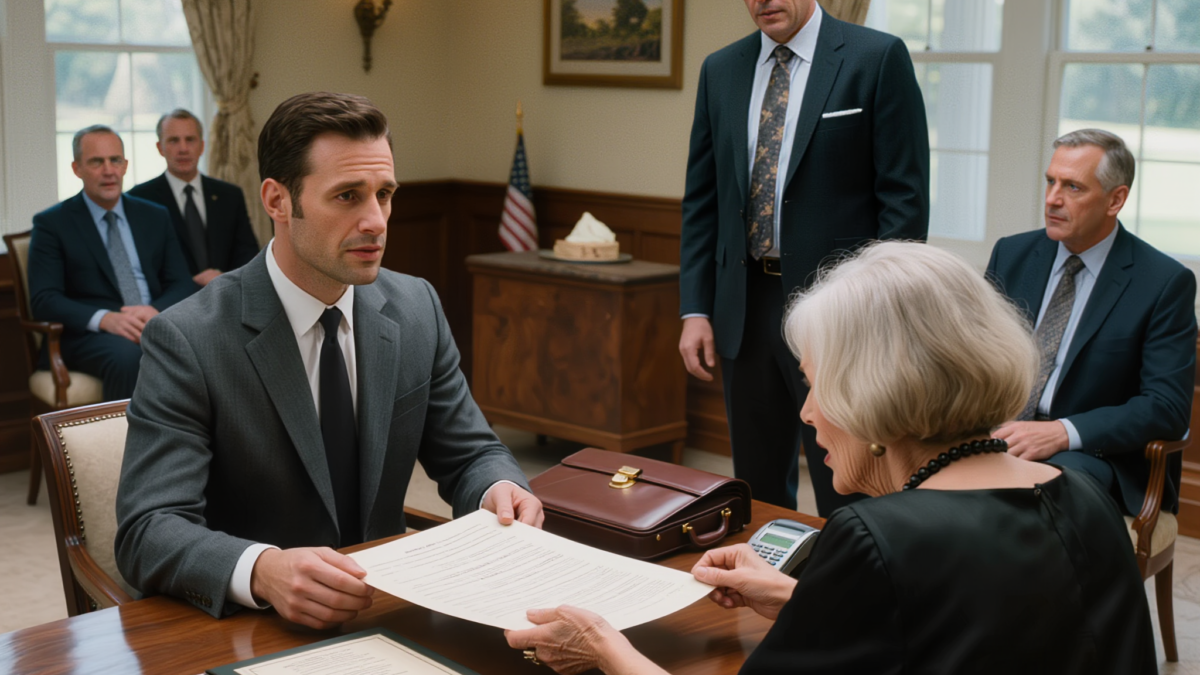
Now, let’s go back to the exact moment the illusion shattered. The air inside the Brandt and Sons funeral home smelled like a suffocating mixture of lemon oil, old carpet, and wilting white lilies. It was a Wednesday morning, exactly 5 days after my wife Jordan passed away. We were sitting around a massive mahogany conference table in a room designed to make grieving families feel wealthy and comfortable.
To my left was my mother-in-law, Martha. Next to her sat my father-in-law, Arthur, and my brother-in-law, Tyler. At the head of the table sat William Carter, the funeral director. He was a third-generation mortician with a silver mustache.
And the patient neutral face of a man who has watched thousands of families tear each other apart over inheritance money. Martha was wearing her expensive black pearls. I knew exactly how much they cost because I bought them for her two Christmases ago right after I got a major corporate promotion. She had a thick binder open in front of her, tabbed and color-coded like she was planning a high-end corporate retreat instead of a burial.
Without asking anyone, and certainly without asking me, she had selected the most expensive casket in the catalog. She demanded the premium floral package, the standing sprays, the alterpieces, and a fully catered reception for 200 guests. Jordan did not know 200 people. Martha just wanted an audience.
She wanted a stage to play the tragic, grieving mother. Throughout the entire meeting, she kept dabbing her completely dry eyes with a tissue and repeating, “Only the best for my beautiful girl.” Mr. Carter calculated the total on a yellow legal pad with a mechanical pencil. The scratching sound filled the quiet room.
He cleared his throat. With the plot opening and the catered reception, you are looking at approximately $23,000. We require a deposit of $8,000 today to begin preparations for the weekend service. Martha did not flinch.
She did not even look at me. She reached into her designer handbag, pulled out a sky blue credit card, and slid it across the polished walnut table. She pushed it with two fingers right toward Mr. Carter like she owned the world.
It was my card, the grocery rewards card, the one my salary paid for every single month without question. Mr. Carter picked it up, walked over to the payment terminal on the side credenza, and inserted the chip. The machine processed for a second, then let out a sharp, unhappy beep.
Mr. Carter frowned, looking at the digital screen. I am sorry, ma’am, says declined. Martha waved her hand dismissively, annoyed by the inconvenience.
Run it again. The chip must be dirty. These machines are always faulty. He ran it again.
The same sharp beep echoed in the quiet room. Declined. Martha’s perfectly practiced tragic smile twitched. One corner of her mouth pulled down and snapped back up like a broken rubber band.
She let out a bright artificial laugh meant entirely for the funeral director. There is clearly a mistake with the bank. My son-in-law makes an excellent salary. He is good for it.
Then for the first time that morning, she looked at me. Arthur looked at me. Tyler crossed his arms, leaning back in his leather chair and stared at me. Mr.
Carter stood there holding a piece of plastic with my name on it, waiting for me to fix everything. Martha gave me that warm, sickening smile she always used on Thanksgiving. right before asking for a massive financial favor.
“Tell him, sweetheart,” she said. I looked back at her. I did not smile. I did not blink.
I knew exactly what I was about to do to her. I knew the exact sequence of events that would leave her with nothing. But if I tell you how that meeting ended right now, you will think this is just a story about a declined credit card. It is not.
It is a story about a hospital hallway, a profound betrayal, and the darkest night of my entire life. It was 11:38 p.m. on a Thursday. My phone vibrated aggressively on the nightstand. I was half asleep, expecting it to be a work email or an alert about a late real estate closing.
Instead, caller ID showed Riverside Memorial Hospital. A clinical detached voice on the other end told me that my wife Jordan had suffered a massive cardiac arrest and I needed to come immediately. I stood in my kitchen in the dark wearing only sweatpants and one sock. I asked the voice to repeat the information, certain there was a catastrophic administrative error.
Jordan was 32 years old. She taught advanced Pilates. She drank green juice, tracked her macros, and ran 5 miles every single morning. Just 6 hours earlier, she had kissed my cheek, grabbed her gym bag, and told me she had a late dinner meeting with a potential new studio client downtown.
I drove to the hospital in 11 minutes. I do not remember the drive. I do not remember stopping at any red lights, the songs on the radio, or the temperature outside. I just remember the cold leather of the steering wheel and the deafening pounding of my own heartbeat in my ears.
I kept praying to a god I barely spoke to, offering everything I own just to keep her alive. When I reached the brightly lit entrance to the ICU waiting area, a nurse stepped directly into my path, effectively blocking the double doors. Her badge read nurse. She was a woman in her late 50s.
She had the tired, steady eyes of someone who had spent 20 years delivering the worst news a human being can ever receive. “Are you Nathan Brooks, Jordan’s husband?” she asked, her voice calm but firm.
“Yes,” I said, my voice cracking, struggling to catch my breath. “Where is she? Can I see her? Is she going to be okay?” Nurse Vega put a firm, warm hand on my forearm.
She leaned in close and lowered her voice so the people at the nearby reception desk could not hear. The cardiac team is with her right now. They are doing absolutely everything they can. But before you walk through those doors, I need to tell you something.
I am telling you this because I do not think anyone else in there is going to tell you the truth. She glanced over her shoulder down the long sterile corridor, then looked back at me. Your wife did not come in alone. She collapsed at a private residence across town.
The man who lives there called 911. He rode in the ambulance right behind her. He is in the waiting room right now. I stared at her.
My brain did what human brains do when faced with sudden trauma. It scrambled desperately for a logical, innocent explanation. Client, I thought, coworker. Maybe she was looking at a commercial property with a real estate agent.
Okay. I said, my voice completely hollow. Thank you for letting me know. I need to go in now.
Nurse Vega did not let go of my arm immediately. She held my gaze for one long heavy second. Mr. Brooks, she said quietly, her tone laced with a profound, unspoken pity.
Walk in there with your eyes open. Then she stepped aside. The heavy electronic doors slid apart with a hiss, and I walked into the waiting room. My eyes were wide open, but nothing could have possibly prepared me for the sheer audacity of the nightmare I was about to step into.
The ICU waiting room was a depressing windowless box of gray linoleum, harsh fluorescent lights, and uncomfortable plastic chairs. I walked in expecting chaos. I expected to find my wife’s family in tears, demanding answers from doctors, pacing the floor in agony. Instead, I found a deeply unsettling, organized quiet.
My mother-in-law, Martha, was sitting in a corner chair, the one she somehow always claimed, no matter whose house or hospital she was in. My father-in-law, Arthur, stood by the far wall, his arms crossed tight against his chest, staring blankly at a muted television. My brother-in-law Tyler was slumped in a chair, scrolling mindlessly through his phone, looking completely detached. And right beside Martha, sitting so close that their knees were practically touching, was a man I had never seen before in my life.
He looked to be in his late 30s. He had dark, carefully styled hair and was wearing a wrinkled silk dress shirt. It was the kind of expensive casual shirt a man wears when he is trying to impress someone on a date. He was sitting with my wife’s family as if he belonged there, as if he had a permanent seat at their dinner table.
I stopped in the middle of the room. The silence stretched out thick and heavy. Martha looked up at me. She did not stand up.
She did not rush over to hug me. She did not ask if I was okay or tell me she was sorry or even say my name. She looked at me, sighed, and said one single word. Finally, she said it with a tone of deep inconvenience, as if I were a contractor who had shown up 3 hours late to fix her plumbing.
I ignored her. I walked straight up to the man in the wrinkled silk shirt. The air between us felt electric, volatile. I could hear the hum of the vending machine down the hall.
“I am her husband,” I said, my voice dangerously low and steady. “Who are you?” silence. The man looked down at the floor. He did not look guilty.
He looked annoyed. He looked like a man whose flight had been delayed by bad weather. He did not introduce himself. He did not offer his hand.
He did not say a single word to me. Before I could demand an answer, Martha stood up and physically stepped between us, acting as a human shield for this stranger. Nathan, please. She hissed, her face contorting with disapproval.
This is not the time or the place. From over by the wall, Arthur spoke up. He used that deep authoritative tone men use when they want to instantly shut down a conversation. Let it go, Nathan.
He has been Jordan’s friend for years. It means nothing. Let the doctors do their jobs. Years.
Nobody flinched at that word. Nobody rushed to correct him or soften the blow. Nobody bothered to explain how this friend of yours had never once been mentioned in my house. He had never been to a birthday party, a Thanksgiving dinner, or a summer barbecue.
Yet, here he was sitting knee to knee with my mother-in-law while my wife’s heart was failing on the other side of a hospital wall. Tyler did not even look up from his phone screen to acknowledge my presence. I want to tell you that I figured it all out right in that moment. I want to say I screamed at them, flipped the table, and demanded the brutal truth.
But I didn’t. Clarity is a luxury you cannot afford at midnight when the woman you married is dying. My brain simply could not process the math of the situation. So I backed away.
I found a plastic chair on the exact opposite side of the room. I sat down, folded my hands tightly in my lap, and I waited. For the next four hours, not a single member of my wife’s family spoke to me. I sat there in the terrible buzzing fluorescent light and my mind started doing what it was trained to do.
I am an auditor. I balance ledgers. I look for the missing numbers, the hidden liabilities, the unrecorded debts. And sitting in that chair, I started running the ledger of my entire marriage.
For 11 years, I had been the sole provider. And I do not just mean I paid the mortgage on our house. I funded the entire Matthews family ecosystem. Jordan worked part-time at a boutique fitness studio.
She called it her passion project. Her income barely covered her own clothes, her expensive skincare routines, and her daily coffee habits. My salary, my annual bonuses, my late nights reviewing endless commercial real estate contracts. That is what kept the lights on.
But it went so much further than our own household. Three years ago, Jordan sat on the edge of our bed, wearing one of my old t-shirts, looking up at me with tears welling in her eyes. She begged me to add her mother, Martha, as an authorized user on my premium grocery credit card. She is on a fixed income, Nathan Jordan had pleaded, stroking my arm.
She is eating can soup half the week. It breaks my heart. It is just for basic groceries. I promise we will monitor it closely.
I signed the paperwork. Suddenly, the basic groceries included imported cheeses, premium cuts of steak, and cases of expensive wine delivered directly to Martha’s house twice a week. I paid the bill without complaining because I thought that was what a good husband did. I thought taking care of her parents meant taking care of her.
Then came Arthur. Arthur was a retired middle manager who loved the image of wealth but hated the effort required to build it. Two years ago, his old sedan broke down. Jordan convinced me to co-sign and make the payments on a brand new Porsche Macan for him.
It was a temporary setup, she promised, just until his pension adjusted. I paid the $900 lease and the exorbitant insurance premium every single month. I never missed a payment.
Then there was Tyler. Tyler was 28 years old, chronically unemployed, and always waiting for his big break as a cryptocurrency day trader. I had even contributed heavily to his college fund years ago. Money he completely wasted when he dropped out after two semesters.
His cell phone line had been on my family plan for 5 years. I paid for his unlimited data so he could sit on my couch during the holidays and lecture me about how traditional corporate jobs were a scam. Every single one of these financial arrangements started the exact same way. Jordan would rub my shoulders, kiss my neck, and say, “Just for a little while, baby.
You know how they are. They would do it for us if we needed it. I knew exactly how they were. I just stupidly believed that their bottomless greed meant they viewed me as family.
I believed I was buying loyalty. I was buying a seat at their table. Thank God we never had children. A custody battle with these people would have been an absolute bloodbath.
At 4:16 a.m., the heavy double doors finally swung open. The attending physician walked out, his green scrubs wrinkled, his face drawn and pale. He did not need to speak. I saw the answer in his exhausted posture.
He looked at the room and delivered the news. Jordan’s heart had given out a second time. Despite their best, most aggressive medical efforts, they could not bring her back. She was gone.
Martha wailed loudly, a theatrical, piercing sound that echoed down the quiet hall. Arthur pressed his palms flat against the window glass and hung his heavy head. Tyler dropped his phone onto the linoleum floor. I watched the man in the wrinkled silk shirt cover his mouth and turn away, his shoulders shaking.
And then I watched Martha, my mother-in-law, the woman whose groceries I bought every week, reach out, grab the stranger’s hand, and squeeze it tight to comfort him. I sat in my plastic chair across the room, completely isolated, and I felt absolutely nothing. My wife was dead. But as I watched her mother hold her lover’s hand, I realized with terrifying clarity that my marriage had been dead for a very, very long time.
The man in the silk shirt let go of Martha’s hand and hurried out of the waiting room, disappearing through the sliding doors before the sun even came up. He never told me his name. I found out his name myself 39 hours later, and by then I had found out enough to destroy them all.
Friday afternoon, after returning from the hospital empty-handed and completely hollowed out, Martha and Arthur showed up at my house. They did not come to comfort me. They did not bring food or offer a shoulder to cry on. They came to sit at my kitchen table, drink my coffee, and immediately start discussing the funeral arrangements as if I were a hired event planner.
Martha started talking about booking the local country club for the reception. Arthur mentioned needing cash to fly in some extended relatives from out of state. I sat there in a dense fog, nodding along, letting them talk. When they finally left, the house fell into a crushing, deafening silence.
I could not sleep. At 1:00 a.m., I found myself wandering the dark house like a ghost. Eventually ending up on the living room sofa, sitting on the glass coffee table was the family iPad. It was the device we kept in the kitchen for recipes, controlling the smart home system, and making shared shopping lists.
Jordan never logged out of anything. She was careless with technology because she believed she was invincible. In 11 years of marriage, I had never once checked her phone or looked through her private messages. Trust is not auditing the person you share a bed with.
That is the fundamental rule I had always believed and lived by. But nurse Vega’s words were echoing in my head in the dark. Cutting through the grief, walk in there with your eyes open. I picked up the iPad.
The screen illuminated the dark room. I told myself I just wanted to look at her photos. I just wanted to see her face smiling before the hospital, before the nightmare began. I tapped the photos app.
The very first image in the recent stream was a selfie. It was taken on Tuesday afternoon while I was at the office running numbers on a commercial real estate deal. Jordan was sitting on a plush leather sofa in a high-end apartment I did not recognize. She was holding a glass of expensive wine.
Smiling brilliantly into the camera and wrapped tightly around her waist. Pulling her close was the arm of the man from the hospital waiting room. My thumb hovered over the screen. My heart stopped beating as a grieving husband and started beating as a forensic auditor.
When a document and a story disagree, the document is telling the truth. My job is to follow the paper trail before the money moves. I turned off the part of my brain that was bleeding and I went to work.
I opened her iMessage app. The man’s name was Cameron Hughes. His message thread was pinned to the very top of her screen. He was pinned above me.
He was pinned above her own mother. I scrolled to the very top of the message history. The first text was dated 2 and 1/2 years ago. For the next 4 hours, I sat completely still in the dark, the cold blue light of the iPad illuminating my face, and I excavated the ruins of my own life.
I read the detailed archaeology of a betrayal so deep, so systematic, it made me physically nauseous. There were forwarded restaurant receipts, table for two at Prime Steakous every other Thursday, the exact nights Jordan told me she was taking an advanced certification class at the fitness studio. There were photos from weekend trips to Austin and Palm Springs, trips she had categorized as girls wellness retreats that she desperately needed for her mental health.
Then I found the hotel receipt. It was dated April 9th of last year. It was our 10th wedding anniversary. Jordan had told me she needed to fly to Denver to help her sister deal with a devastating breakup.
I had spent our 10th anniversary eating cold takeout alone at my kitchen table, telling her over the phone that it was fine that family comes first and we would celebrate properly when she got back. The hotel on the receipt was a luxury resort exactly 20 minutes from my house. She had been 20 minutes away, sleeping with Cameron Hughes, ordering room service on a Tuesday night while I was eating cold noodles and paying the mortgage. My hands began to shake violently.
I put the iPad down on the coffee table because I was genuinely afraid I was going to snap the device in half. I walked into the downstairs bathroom, gripped the edges of the porcelain sink until my knuckles turned white and stared at myself in the mirror. I waited for the tears to come. I waited to break down, but nothing happened.
The sadness had completely evaporated, replaced by a cold, sharp, metallic rage. I walked back to the couch.
I opened her email because if there is one thing I know from 14 years of corporate auditing, it is that text messages are what people do for fun. Email is where they do serious business. The whole file was worse, much, much worse.
At 5:15 a.m., I found a group text thread that Jordan had synced to her email for backup. It did not have a clever name. It was just a thread containing five people, Jordan, Martha, Arthur, Tyler, and Cameron Hughes. The history went back 22 months.
I read birthday wishes. Happy birthday to our favorite guy, Cameron. Sent by Tyler last summer. I read dinner plans.
See you both at the steakhouse at 7. Sent by Arthur. A dinner they had on a Friday night while I was out of town at a real estate conference working to secure my promotion. I saw a photo Cameron sent to the group of Jordan cooking in his kitchen.
Martha had replied with a string of red heart emojis. These people sat at my Thanksgiving table every single year. They ate the turkey I paid for. They drank the wine I provided.
Arthur would raise a glass and toast to my hard work. Martha would hug me at the door, hold on for an extra second, and whisper, “You are such a blessing to this family, Nathan. We love you like a son.” And every single one of them drove home that night fully aware that they were coordinating a massive collective lie. They had guarded my wife’s affair like it was a precious family heirloom.
I was the only person in the room who did not know what the joke was. I made a sound in the dark. It wasn’t a sob. It was a dry, hollow laugh with the middle taken completely out of it.
I walked into my home office, grabbed a fresh yellow legal pad, and switched on the desk lamp. Grieving Nathan was gone. Auditor Nathan was fully awake and he was clocking in. I started pulling financial statements.
I logged into our joint banking portals, running exhaustive searches going back 3 years. You do not audit the emotion, you audit the transaction.
By 6:30 a.m., I found it. It was an alert buried in a spam folder on her email linking to a digital statement for a platinum Visa card. I pulled the statement. The card was in my name, my full legal name, my social security number.
I had never opened this account. I had never seen this card in my life. It was opened 19 months ago. It was set to paperless billing, routed directly to a secondary email address Jordan had created that looked almost identical to mine, just with one extra number at the end.
The balance was $14,240. I stared at the itemized charges. It was a geographical map of her affair. Fine dining, the spa resort in Palm Springs, luxury lingerie boutiques, and jewelry.
The minimum payments were being made every month, exactly on time, originating from an account Jordan called her studio expense fund, an account I blindly deposited $2,000 into every month to help her small business grow. I was literally financing my own wife’s affair through a fraudulent credit card opened with my stolen identity. I pulled up the original application PDF from her archives. There was my name, my date of birth, my social security number, and under employment status.
She had listed herself as the primary earner and me as a consultant. It was identity theft, pure and simple. It does not get reclassified as a misunderstanding just because the person who did it shared your last name. My stomach dropped with the familiar heavy dread I get at work when I realize a multi-million dollar closing is dirty and someone is going to prison.
I made a note on my legal pad. I wrote down the account number, the balance, and the dates. Then, as the sun began to rise and cast long shadows across my office floor, I opened her drafts folder. Sent mail is what people want the world to see.
Drafts are where the actual truth lives. There were two items in that folder that sealed the fate of the Matthews family forever. The first was a PDF document downloaded from Cornerstone Life Insurance. It was the $500,000 term life policy I had taken out on Jordan 10 years ago when we bought the house to ensure she would be taken care of if anything happened to me and vice versa.
The document was a change of beneficiary form. It was filled out, dated 3 weeks before she died and saved. Under remove beneficiary, she had typed Nathan Brooks. Under add beneficiary, she had typed Cameron Hughes 100%.
She had prepared the document. She just hadn’t submitted it yet. Her heart quit in his apartment before she could get to the post office. The second item was a screenshot of a text message thread between Jordan and her mother, Martha.
It was dated from April of last year. I have read the screenshot so many times it is permanently burned into my retinas. It read, “Martha, do not file the divorce papers until your name is on the deed of the new rental property. You have no idea how these legal things go.
Protect your inheritance.” Jordan, I know, Mom. I’m working on it, but Cameron is getting impatient. Martha, tell Cameron to wait. You need to be smart and whatever you spend on him needs to stay completely off Nathan’s joint cards.
Keep using the Visa you set up. Jordan, it feels risky. What if he checks his credit? Martha, slow and careful, sweetheart.
Nathan will sign anything if you are sweet to him in the evenings. He always has. Get the assets secured, then you leave. I stood up from my desk.
The silence in the house was absolute. They had not just kept her secret. Martha had been actively coaching her daughter on how to systematically strip my assets, drain my credit, and secure real estate in her name before filing for divorce. Martha was using a psychological profile of my own loyalty to orchestrate my financial ruin.
He will sign anything if you are sweet to him. I did not scream. I did not throw the iPad against the wall. I did not call Cameron. and I did not drive to Martha’s house to confront her.
I got incredibly quiet and I got to work. If you have ever wondered what a financial auditor looks like when he finally decides to audit his own life, I will tell you it looks like absolute terrifying stillness. It looks like a man drinking a cup of black coffee while making three physical copies of every digital footprint his wife left behind. One copy for the file, one copy for the lawyer, and one copy for the day the Matthews family tried to pretend none of this ever happened.
Monday morning, 8:45 a.m., I was parked outside the First Meridian Credit Union, sitting in my car, waiting for the heavy glass doors to unlock. I was wearing a tailored suit, holding a thick leather briefcase. I looked like I was going to a corporate board meeting, not dismantling my life. At exactly 9:00 a.m., I walked in and asked for Derek Coleman, the branch manager.
Derek had handled the mortgage for my house and knew me well. I walked into his glass-walled office, firmly shut the door behind me, and placed a folder on his desk. I told him my wife had died on Thursday. Derek’s face immediately fell.
He stood up, offered his hand, and gave me his deepest condolences. He meant it. But I did not need his sympathy right now. I needed his administrative access.
Derek, I said, keeping my voice perfectly level and devoid of emotion. I need to restructure my accounts immediately. In the state we live in, joint bank accounts carry rights of survivorship. The second Jordan’s heart stopped at 4:16 a.m. on Friday morning, every single dollar in those accounts legally became my sole property.
I need to close every joint checking and savings account. I instructed, I want new accounts opened in my name only. New account numbers. Zero linked history.
Derek nodded, understanding the gravity of the request, his fingers flying across his keyboard. Next, I said, pulling out a typed list. I am the primary account holder on the premium rewards credit card. I need to remove an authorized user.
Martha Matthews, revoke her access immediately. Derek clicked his mouse. Done. Her card is deactivated.
I watched the screen. In less than 2 seconds, the grocery gravy train completely derailed.
Now, I continued, cancel the automatic clearing house payments for the Porsche Macan lease and the auto insurance policy under Arthur Matthews. Block any future charges from those vendors. blocked,” Derek confirmed. Looking up at me cautiously, I pulled out the printed statement for the fraudulent Visa card. I placed it on the desk and slid it toward him.
I also need to report this account as fraudulent. I did not open this line of credit. My identity was stolen. Derek looked at the balance, his eyebrows shooting up toward his hairline.
He printed out the bank’s internal fraud dispute paperwork, walking me through exactly where to sign an initial. When we were finished, he stacked the papers neatly on his desk. He looked at me, noticing the cold mechanical way I was operating. Nathan, Derek asked quietly, “Are you absolutely sure about all of this?” Derek, I replied, looking him dead in the eye.
I have never been more sure of anything in my entire life. He nodded once like a man locking a bank vault and shook my hand.
By 11:00 a.m., I was sitting in the mahogany-paneled office of Victoria Hughes, a ruthless estate and probate lawyer who had been practicing for 30 years. I handed her the timeline, the bank statements, the emails, and the screenshot of Martha’s coaching texts. Victoria put on her reading glasses. She read the entire file in complete silence for 20 minutes.
The only sound in the room was the ticking of a grandfather clock and the crisp rustle of paper. When she finally finished, she took off her glasses, folded them meticulously on her desk, and looked at me.
“All right, Nathan, I have three things to tell you, and you need to listen very carefully,” she said, holding up one finger. Number one, the funeral. In this state, funeral expenses are considered a debt of your wife’s estate. They are not your personal debt.
Nobody can force you to pay for it out of your own pocket. Not her mother, not the funeral director, not a judge, unless you personally sign the goods and services authorization. She leaned forward, her eyes locking onto mine. Whatever happens at that funeral home on Wednesday, you do not ign a single piece of paper.
If Martha wants the mahogany casket, the person who signs for the mahogany pays for the mahogany. She held up a second finger. Number two, the Visa card is a clear-cut case of identity theft and financial fraud. Her death does not magically launder the crime.
You are going to take this file to the police station today and file a formal report. We will dispute it under the Fair Credit Reporting Act and the bureaus will block it from your credit history. It might even spark a civil lawsuit against her estate, but we will protect your assets. She held up a third finger.
Number three, that iPad does not leave your possession. Not for a second. If her family asks for her devices, you tell them it is in the hands of your attorney. Is this normal?
I asked her, gesturing to the file on her desk. The texts, the deliberate planning. Victoria sighed heavily. The dying is normal, Nathan.
The rest of this, this is a Tuesday for me and a profound tragedy for you. I am sorry they did this to you, but we are going to make sure they do not get another dime.
At 2 p.m., I walked into the local police precinct. I presented the visa file to a young desk officer. He skimmed it, looked at my wedding ring, and shrugged indifferently. Husband and wife man, joint finances.
This is really a civil matter. You should talk to a divorce lawyer. Honestly, I did not move. I used my heavy authoritative boardroom voice.
The application contains a forged signature and my stolen social security number. I have the original PDF with the metadata proving the IP address of origin. This is a felony. A woman sitting two desks away looked up from her monitor.
Her badge read, “Detective Sarah Jenkins, financial crimes.” She walked over, took the file from the young officer, and reviewed the forged signature against my driver’s license for 60 seconds. “A forged application is a forged application,” Detective Jenkins said sharply to the young officer.
“Death doesn’t erase the crime. The account is still open and reporting on his credit.” She took me to her desk and took the official report herself. As she handed me the card with my case number, she looked at me sympathetically.
“You would be shocked how many people apologize to me for filing fraud charges against family members. Don’t be one of them. I have nothing to apologize for,” I said, putting the card safely in my briefcase. By Tuesday afternoon, the rest of the silent demolition was complete.
Tyler’s cell phone line was removed from my family plan, effective at midnight. The streaming services the family used were passwords changed and logged out of all devices. I did not announce a single move. I let them keep living in their fantasy world where I was their obedient servant.
Tuesday night at 7:30 p.m. My doorbell rang aggressively.
I opened it to find Martha standing on my porch. Her luxury SUV was still idling in my driveway. She didn’t say hello. She didn’t ask how I was holding up.
I need Jordan’s things, Martha demanded, trying to peer past me into the house. Her iPad, her laptop, her journals. A mother should have her daughter’s personal effects. I looked at her.
In 11 years, Martha had never once shown interest in her daughter’s electronics. I knew exactly why she was here. She knew about the group chat. She knew about the texts she had sent coaching Jordan on the divorce.
She was trying to secure the evidence. Everything is currently with my attorney for probate, Martha, I said smoothly, blocking the doorway with my body. Her eyes widened in absolute panic for a fraction of a second before the mask slipped back on. Attorney Nathan, there is no need to involve lawyers.
We are family. The funeral meeting is tomorrow at 11:00 a.m.,” I said, ignoring her completely.
“Get some rest.” I closed the door in her face and locked the deadbolt. At 9:15 p.m., my phone buzzed. It was a text from Tyler. It was the first time he had communicated with me since his sister died.
Whatever you think you are doing with the lawyer, tomorrow is about Jordan. Don’t embarrass this family, Nathan. I stared at the screen. Don’t embarrass this family.
They had spent years making a fool out of me, plotting to steal my assets, and parading her lover in front of my face in a hospital. and he was telling me not to embarrass them. I didn’t reply.
I walked into my home office, turned on the printer, and stood there until 2:00 a.m. feeding it paper. I assembled three pristine, organized folders. I tabbed them with post-it notes just like Martha’s funeral binder. I sat in the dark and understood the choice in front of me with absolute crystal clarity.
I could go to the funeral home tomorrow, keep my mouth shut, sign the papers by the mahogany casket, and remain the quiet ATM husband they expected me to be. I could let them win, or I could refuse out loud in front of the funeral director, detonate the evidence, and become the villain of every story the Matthews family would tell for the rest of their miserable lives. I turned off the desk lamp, packed the folders into my briefcase, and smiled in the dark.
I chose villain. Wednesday morning arrived with a heavy, oppressive gray overcast that hung low over the city. The sky looked exactly how I felt inside. Cold, impenetrable, and completely stripped of all the comfortable illusions I had built my life upon.
I stood in the master bathroom, the room my wife and I had shared for years, and stared at my reflection in the mirror. I did not look like a grieving widower. I looked like a man preparing for a corporate execution. I was tying a dark silk tie, ensuring the knot was absolutely perfect.
I was wearing my best charcoal gray suit, the custom-tailored one I usually reserved for high-stakes corporate audits, federal tax hearings, or board meetings where millions of dollars were on the line. Today, the stakes were infinitely higher. Today, I was auditing my own family. I picked up my heavy leather briefcase from the bed.
Inside, perfectly aligned, were the three meticulously organized folders I had prepared at 2:00 in the morning. Each folder felt like a loaded weapon. I locked the front door of the house, the house that my salary had paid for, the house where she had plotted my financial ruin. Got into my car and began the drive to Brandt and Sons funeral home.
The drive was agonizingly slow. I took the exact route Jordan and I used to take when we drove to her parents’ house for Sunday dinners. I remembered the times she would sit in the passenger seat, holding my hand, telling me how much her parents appreciated my hard work while secretly texting Cameron Hughes on her phone. I gripped the steering wheel until my knuckles turned stark white.
I didn’t shed a single tear. The grief had been entirely incinerated by the absolute disrespect.
When I pulled into the sprawling manicured parking lot of the funeral home, the very first thing I saw was Arthur’s gleaming Porsche Macan. He had parked it diagonally, arrogantly taking up two premium parking spaces right near the front entrance doors. The Porsche that I paid the lease for the Porsche I insured, Tyler’s beat up rusted sedan was parked next to it. They were already inside.
They were probably sitting in the showroom circling the most expensive options in the catalog, spending my money in their heads before I even walked through the door. I turned off the engine. I took one long deep breath, gripped the handle of my briefcase, and walked inside. The air inside the funeral home smelled like a suffocating manufactured mixture of lemon oil, old carpet, and wilting white lilies.
It was designed to smell like expensive morning. Mr. William Carter, the third generation funeral director, met me in the grand lobby. He was a tall man with a silver mustache dressed in an impeccable black suit.
He offered a polite, practiced nod, his eyes full of the manufactured sympathy his profession required, and led me down a carpeted hallway into the main conference room. It was a large imposing room designed specifically to make grieving families feel wealthy, comfortable, and willing to spend money. The walls were lined with dark wood paneling, and a massive mahogany conference table dominated the center of the room. My wife’s family was already seated.
To my left was my mother-in-law, Martha. She was wearing a tailored black dress and her expensive black pearls. I knew exactly how much those pearls cost because I had purchased them for her two Christmases ago. Right after I got a major corporate promotion and she had hinted heavily that she needed something elegant for her country club dinners.
Next to her sat Arthur, wearing a suit that looked entirely too tight around the collar, his face flushed with self-importance. Tyler was slumped in a plush leather chair at the far end of the table, wearing a wrinkled, untucked dress shirt, aggressively tapping his phone screen with his thumbs. Not a single one of them stood up when I walked in. Not one of them offered a hug, a handshake, or a word of comfort.
They didn’t ask how I had slept, or how I was holding up. Arthur just looked at his watch. A heavy ostentatious gold piece that Jordan had bought him for Father’s Day using my checking account.
“Glad you could finally make it, Nathan,” Arthur said, his voice dripping with unapologetic condescension. “We have a lot of ground to cover and not a lot of time.” “Martha has been up all night making decisions. The weekend is approaching quickly and we need to lock down the vendors.” I did not reply to his provocation. I pulled out a heavy leather chair directly opposite Martha, sat down deliberately, and placed my briefcase flat on the mahogany table.
I folded my hands over the leather flap, leaned back, and simply watched them. Martha had a thick leather-bound binder open in front of her. It was tabbed, highlighted, and color-coded. She looked like a high-end wedding planner going over a million-doll venue contract. not a mother preparing to bury her 32-year-old daughter.
She did not even look at me when I sat down. She kept her eyes fixed firmly on Mr. Carter, who took his seat at the head of the table, opening his yellow legal pad. Mr.
Carter, let’s go over the final selections so we can get the deposit out of the way. Martha announced. She spoke with a tone of absolute authority, the entitled tone of a woman who has never had to check a price tag because someone else was always holding the wallet. She flipped a page in her binder, running a manicured finger down a list.
For the casket, we have decided on the solid mahogany model with the champagne velvet interior and the gold-plated hardware. Jordan always loved the finer things in life. She had exquisite taste. It is exactly what she deserves for her final resting place.
Mr. Carter gently made a note on his pad. The mahogany is a beautiful, dignified choice, Mrs. Matthews.
It is one of our most premium models. Handcrafted. Exactly, Martha said, dabbing at her completely dry eyes with a tissue. Only the best for my beautiful girl.
Now, moving on to the floral arrangements. I want the premium package. Do not skimp on this. I want massive standing sprays of white roses and rare orchids framing the casket.
I want a full cascading blanket of lilies draped over the top. I want the room to look like a botanical garden in spring. Noted, “Ma’am,” Mr. Carter said, his mechanical pencil scratching loudly against the paper.
“And the reception,” Martha continued, leaning forward, her voice growing animated. We cannot just have people standing around eating stale cookies and drinking weak coffee. I have a reputation in this town. We have invited our entire church congregation, my country club associates, the local homeowners association board, and all of Jordan’s fitness clients.
We are expecting a minimum of 200 guests. We need full catering. I want prime rib carving stations, a premium open bar with top-shelf liquor, and circulating waitstaff with hors d’oeuvres. We will host it in the grand parlor downstairs.
Immediately following the service, Tyler finally looked up from his phone. Yeah, and make sure they have decent bourbon at that open bar. Not that cheap well stuff you usually get at these things. People are going to want to drink.
I sat there in absolute freezing silence. I watched this family, these emotional parasites, orchestrate a luxury gala to celebrate themselves, using the tragic death of the woman who had been cheating on me as the ultimate excuse. Jordan did not know 200 people. Half of Martha’s country club friends probably didn’t even know Jordan’s last name or what she did for a living.
This event was entirely about Martha putting on a grand show. It was a theatrical performance of wealth, status, and tragedy. Fully expected to be financed by the man they had humiliated in a hospital waiting room just 5 days earlier. They were so incredibly smug.
They felt so safe in their entitlement. They honestly believed that my grief, combined with the social pressure of a funeral director and my historical compliance, would force me to simply nod my head and write the massive check. They thought they had me trapped in a corner. Mr.
Carter finished writing. He tapped his mechanical pencil on the desk and ran a long sequence of numbers on a large desktop calculator. The clacking of the buttons was the only sound in the room. He cleared his throat, looking at the final sum.
“Well, Mrs. Matthews,” Mr. Carter said softly, maintaining his professional composure. With the premium mahogany casket, the top tier floral package, the plot opening fees at the cemetery, and the fully catered reception with an open bar for 200 guests.
You are looking at approximately $23,000. The number hung heavily in the air. $23,000. It was enough to buy a brand new car. It was more money than Tyler made in an entire year of his non-existent crypto trading career.
We require a deposit of exactly $8,000 today to secure the vendors, order the casket, and begin preparations for the weekend service. Mr. Carter concluded, looking expectantly around the table. Martha did not flinch.
She did not hesitate, and she certainly did not look across the table at me for approval or permission. She simply reached into her designer handbag, pulled out a sky blue credit card, and slid it confidently across the polished walnut table. She pushed it with two manicured fingers, sending it gliding right toward Mr. Carter, acting like she owned the entire building and everyone in it.
It was my card, the premium grocery rewards card, the one I had authorized years ago for basic survival necessities like canned soup and bread. The card my corporate salary paid the balance of every single month without question. Mr. Carter picked it up, walked over to the payment terminal on the side credenza, and inserted the gold chip.
The machine processed for a second, communicating with the bank servers, the same servers I had personally visited and shut down on Monday morning. Then the machine let out a sharp, unhappy, high-pitched beep. Mr. Carter frowned, taking off his reading glasses and looking closely at the small digital screen.
“I am sorry, ma’am,” it says declined. Martha waved her hand dismissively, clearly annoyed by the technological inconvenience interrupting her grand performance.
“Run it again. The chip must be dirty. These machines are always faulty. Just wipe it on your jacket and run it again.” He wiped the chip with his thumb, inserted it into the reader again, and waited.
The exact same sharp, rejecting beep echoed in the quiet room, declined. Insufficient authorization, Martha’s perfectly practiced, tragic smile twitched violently. One corner of her mouth pulled down and snapped back up like a broken rubber band. She let out a bright artificial laugh.
It was a terrible sound, hollow and forced, meant entirely to save face in front of the funeral director. Well, there is clearly a mistake with the bank, Martha said smoothly, adjusting her posture and straightening her pearls. These fraud alerts trigger over the smallest things nowadays. It doesn’t matter.
My son-in-law makes an excellent salary in corporate finance. He is perfectly good for it.
Then she finally turned her head and looked directly at me. It was the very first time she had made direct eye contact with me since I walked into the room. Arthur turned his heavy head to look at me, expectant and annoyed. Tyler put his phone face down on the table, crossing his arms, waiting for me to pull out my primary black card and fix everything.
Mr. Carter stood by the credenza, holding a piece of useless plastic with my name on it, waiting for the family patriarch to resolve the financial hiccup. Martha gave me that warm, sickeningly sweet smile she always used on Thanksgiving right before asking for a massive financial favor.
“Tell him, sweetheart,” she said, her voice dripping with fake manufactured affection. “Give Mr. Carter your other card so we can get this sorted out and move on with the planning. I did not reach for my wallet.
I did not break eye contact with her. I let the silence in the room stretch out. It became thick, heavy, and incredibly dangerous. I could hear the low hum of the air conditioning unit.
I could hear Arthur shifting uncomfortably in his leather chair, the leather squeaking under his weight. There is no mistake with the bank, Martha, I said. My voice was completely flat, devoid of any warmth or grief. I spoke with the exact same ruthless tone I use when I inform a corrupt corporate client that they are being audited for federal tax evasion.
Martha’s smile faltered, confusion creeping into her eyes. Excuse me, I said. There is no mistake, I repeated, inunciating every single syllable perfectly. Every joint account you have ever touched, every line of credit you have ever accessed, every card you have ever swiped.
I closed them all on Monday morning at exactly 9:00 a.m. Nobody moved. The air in the room suddenly felt freezing cold, as if all the oxygen had been instantly sucked out. The trap had officially sprung, and they were sitting right in the middle of it.
I reached forward and snapped open the heavy brass latches of my leather briefcase. The metallic clicks echoed like two gunshots in the dead quiet room. I reached inside, pulled out the three thick, meticulously tabbed folders, and set them squarely on the center of the mahogany table.
Monday morning, I said, locking my eyes directly onto Martha’s pale face. I sat in the office of my branch manager. I closed the joint checking accounts. I closed the savings accounts.
I removed every single authorized user from every credit card where my social security number was the primary guarantor. That blue card you just tried to use to buy a mahogany box. That card stopped being yours at exactly 9:41 a.m. on Monday. I sat there and watched the bank manager click the revoke access button myself.
Martha’s face drained of all color. The fake aristocratic sweetness completely melted away, replaced by genuine panicked alarm. Nathan, what on earth are you doing? This is a funeral meeting for your wife.
Have you lost your mind? I ignored her completely and turned my head slowly to look at my father-in-law. The automatic a payments for your Porsche Macan insurance ended yesterday at midnight. Arthur, the $900 lease payment you expect me to make will bounce on the first of the month.
I highly suggest you return that vehicle to the dealership immediately before they send a repo truck to your driveway and embarrass you in front of the entire homeowners association you care so much about. Arthur’s jaw dropped open. He gripped the armrests of his chair. You can’t do that.
We have a verbal agreement. You promised Jordan you would help me out. I turned my cold gaze to the end of the table. Tyler, your phone number comes off my family cellular plan on Friday at midnight.
I canceled your data. They will text you the instructions to port your number to a new carrier, assuming you can scrape together $40 from your imaginary crypto profits for a prepaid burner phone. Tyler slammed his hand flat on the table, standing up halfway, his face contorted in anger. Are you out of your damn mind?
My sister is dead. You piece of garbage. You are going to disrespect her memory over some stupid phone bills. You owe this family.
How dare you? Martha hissed, her voice trembling with genuine unadulterated rage now. You would do this to your own family, to Jordan’s memory after everything we have been through. Family?
I asked, my voice dangerously soft. I reached for the first folder, opened it, and slid a thick stack of printed papers across the polished wood toward Martha. Let’s talk about family. Let’s talk about Cameron Hughes.
Martha completely froze, her mouth formed a tight, panicked line. Arthur stiffened, his eyes darting nervously to the folder like it was a live grenade. Tyler slowly sat back down in his chair, the anger draining from his face, replaced by sudden apprehension.
“You tabbed your funeral binder, Martha. I tabbed my evidence,” I said, flipping to a green marked page.
“Here is the itemized receipt for a $1,400 gold bracelet purchased on my joint credit card. It was bought the exact same month I worked three consecutive weekends of overtime, so we wouldn’t have to put your Christmas presents on a credit card. Here is the luxury hotel receipt exactly 20 minutes from my own house. Dated on my 10th wedding anniversary.
While Jordan looked me in the eye and told me she was in Denver helping a friend. I turned another page, my hand completely steady, my voice unrelenting. And here is your family group chat. All four of you and him.
Cameron. 22 months of messages. I picked up a highlighted piece of paper and read from it clearly, projecting my voice. Here is your red heart emoji. Martha sent on March 14th in response to a photo of Cameron cooking in his kitchen.
A kitchen my wife was standing in drinking wine. I dropped the paper and looked straight at Arthur. You stood by the window in that hospital waiting room and told me that he was her friend of yours and that it meant nothing. I was standing there losing my mind, my world collapsing.
And you looked me dead in the eye and lied to protect the man sleeping with my wife. Your group chat wished him a happy birthday. It has cake emojis, Arthur. Did you buy him a present with my money?
Two. Arthur looked down at his expensive shoes. He did not say a single word. Tyler had gone the exact pale, sickly color of the white lilies in the corner of the room.
He stared at his phone, refusing to make eye contact. She stopped being my wife two and a half years ago. I said, my voice rising in volume, echoing off the dark wood-paneled walls. Everyone at this table knew it before I did.
You ate the food I bought. You drove the cars I paid for. You spent my salary while coordinating her affair behind my back like it was a fun little family secret. Martha’s chest was heaving.
Her face was flushed dark red, a mixture of profound embarrassment and furious indignation. You are sick. You invaded her privacy. You hacked into her devices.
Jordan made mistakes. Yes, she was confused. But she loved you. Did she?
I asked quietly, almost a whisper. I reached into the second folder. I pulled out a single sheet of paper and slid it across the table until it rested right on top of her funeral binder.
Then maybe you can explain this one, Martha, because this piece of paper right here, this is my absolute favorite. It was the printed screenshot of her text messages. I read it out loud, projecting my voice so it filled every corner of the room, reading it with zero emotion, exactly the way an attorney reads damning terms into a court record. Do not file the divorce papers until your name is on the deed of the new property.
Tell Cameron to wait. Whatever you spend on him needs to stay off Nathan’s cards. Keep using the visa you set up in his name. Slow and careful.
Nathan will sign anything if you are sweet to him in the evenings. He always has. Secure the assets first. I slapped the paper down on the table.
The sharp smack made Tyler jump in his seat. You wrote that to your daughter in April, Martha? I said, staring directly into her terrified, calculating eyes. You coached her on how to systematically strip my assets before leaving me.
You taught your own daughter how to steal my identity and commit financial fraud. And I want you to know it is my favorite text message in the entire world because you were absolutely right. I signed for the groceries. I signed for the Porsche.
I signed for the phones. I signed my life away for 11 years because I thought I was taking care of my family. I reached forward, closed my leather briefcase, and snapped the brass latches shut. But I am done signing.
Martha’s hands were shaking violently. She looked down at the stack of evidence.
Then looked up at me, pure desperation, finally cracking her voice. Nathan, please. You are angry, and I understand that, but we are grieving. You can’t just abandon us right now.
The funeral, we have to bury her. What will people think? I didn’t lose a wife on Friday, I said, cutting her off completely. My voice hard as stone.
And you didn’t lose a daughter. You lost your funding. You lost your private bank account. And you are so completely pathologically detached from reality that you cannot even tell the difference.
That is not grief on your face, Martha. That is a financial panic attack. I turned away from their shocked faces and looked directly at Mr. Carter, the funeral director, had stood silently by the credenza through this entire explosion, his hands neatly folded in front of him.
He was watching with the absolute immaculate professional calm of a man who has seen families implode over money, secrets, and lies a thousand times before. Mr. Carter, I said, my tone instantly returning to polite, detached professionalism. I have one very important legal question for you from a contractual standpoint.
Am I personally obligated to pay for any of this out of my own pocket? No, sir, Mr. Carter said gently, his voice smooth and legally precise. Responsibility for payment rests solely with whoever signs the goods and services authorization contract today.
A small, heavy, suffocating pause settled over the room. Mr. Carter turned his body smoothly, placing the contract and his mechanical pencil right in front of Martha.
“Mrs. Matthews,” Mr. Carter said politely, his face a perfect mask.
“Would you like to proceed with signing the contract for the $23,000 arrangements you have selected today?” The silence that followed lasted exactly 11 seconds. I counted them in my head out of pure, unadulterated spite. Martha looked at the mahogany casket in the catalog. She looked at the massive total on the legal pad.
She looked at the contract. Then she looked at her declined credit card sitting uselessly on the table. My estate attorney has the contact information for Jordan’s legal estate. Mr.
Carter, I said, picking up my heavy briefcase. Funeral costs are a claim against the estate itself. The estate is completely insolvent, but my attorney will walk you through what the estate can actually support. It will cover a basic dignified cremation service.
Absolutely none of this. I pointed a finger at the premium floral packages and the catered reception menu. I am not the estate and I am not the Matthews family ATM plan. Not anymore.
I turned my back on them. I walked out of the conference room, my footsteps echoing on the hardwood floor, past the showroom of velvet-lined caskets, and out the heavy glass front doors into the flat, gray Wednesday morning. I got into my car, locked the doors, and sat in the parking lot. I gripped the steering wheel, and waited for the massive surge of adrenaline to fade.
It took exactly 11 minutes for my hands to stop shaking enough to turn the key in the ignition safely. I did not cry. I have thought a lot about why no tears came that day, why my eyes remained completely dry. And I think the answer is simple and a little tragic.
You cannot grieve the death of a marriage at the exact same funeral twice. If you have ever wondered what happens to a magnificent, towering house of cards when someone ruthlessly pulls out the foundation, I will tell you collapses loudly, messily, and completely. The funeral service happened the following Tuesday. It was an exercise in brutal reality.
It was not held in the grand parlor of Brandt and Sons. There was no prime rib carving station, no premium open bar, and no waitstaff. There were no standing sprays of white orchids framing a handcrafted mahogany casket. Because Martha had been backed into a corner and refused to sign a contract she knew she could not pay for, the funeral fell to whatever the insolvent estate could legally manage.
It was a direct cremation followed by a very short barebones memorial service in a rented fellowship hall at a local community center on the edge of town. There were exactly 60 folding metal chairs set up in rows on a scuffed linoleum floor. The floral arrangements consisted of basic cheap pink carnations in plastic vases that looked exactly like they came from the discount bin at a local grocery store. There was no catering whatsoever, just a large plastic jug of ice water and a stack of thin paper cups on a folding table in the back.
Because Martha had eventually signed the rental agreement for the fellowship hall, Martha had to pay for it out of her own dwindling fixed income savings account. I attended the service for exactly 40 minutes. I sat in the very back row next to my older brother, Mason, who had flown in cross country the minute I called him. Mason is a large, imposing guy, built like a linebacker, and he spent the entire 40 minutes sitting with his arms crossed, glaring a hole directly into the back of Arthur’s head.
When the short, awkward service ended, I stood up, buttoned my jacket, and left through the back doors before the receiving line even had a chance to form. Cameron Hughes, the man in the wrinkled silk shirt, the man my wife had died with in his apartment, the man my in-laws had protected and celebrated behind my back, did not show up. He did not send flowers. He did not send a sympathy card.
He completely vanished. To this day, Cameron has never said a single word to me. And in a strange twisted way that I cannot fully defend to my friends, I have decided that this makes him the most honest person in that entire miserable group. He never pretended to love me.
He just took what was freely offered by a cheating wife. The Matthews family, on the other hand, pretended to love me, hugged me at Thanksgiving, and called me son, all while picking my pockets and laughing at my loyalty. Over the next 6 weeks, the harsh legal reality of what I had unleashed began to crush them. The estate went through probate exactly the way my brilliant attorney, Victoria, promised it would.
Jordan’s so-called studio expense fund. The account I used to fund held exactly $3,112 against a $23,000 vision. It was completely insolvent before the first creditor claim was even filed. The letters of administration the creditor claims the final accounting Victoria handled every single grueling step.
Every time Martha’s cheap, strip mall lawyer tried to send a threatening letter claiming the parents were entitled to some portion of my personal assets or the house. Victoria answered it with brutal legal language that cost them hundreds of dollars an hour just to receive and read. They eventually ran out of money to pay their lawyer. The fraudulent Visa card in my name died the way fraud is supposed to die. slowly, methodically, buried in an avalanche of paperwork.
Detective Jenkins followed through on her end, the bank’s internal fraud unit launched a full investigation using the digital metadata and IP addresses I had provided. 6 weeks later, I received a certified letter in the mail confirming the account was officially closed as fraudulent. The $14,000 balance was completely zeroed out by the bank. The negative trade line was permanently blocked and removed from my credit report under section 605B of the Fair Credit Reporting Act.
I took that letter, made a pristine copy of it, and put it in the third folder on my desk. Then came the life insurance policy. Cornerstone Life assigned my claim to a senior payout specialist named Rachel. She called me on a quiet Thursday afternoon to confirm the final details of the payout.
She paused delicately on the phone before speaking, her voice careful. “Mr. Brooks,” Rachel said, clearing her throat.
“I feel I should inform you, just for full transparency, that there was an unsubmitted change of beneficiary form associated with this policy file on the digital portal.” “I am aware,” I told her, my voice calm. “Well,” she continued, her tone shifting to professional finality. Unsubmitted forms have absolutely no legal effect in this state. The ink was never dry and the document was never formally filed with our underwriters.
You are the sole beneficiary of record. The $500,000 policy paid out in full directly into a brand new highly secure account with only one name on it. Mine. She had been exactly 3 weeks away from stealing a half million and handing it to Cameron Hughes to start a new life.
I try not to do the math on how close I came to absolute financial ruin, but I still do the math on it about once a week just to remind myself to stay sharp. The consequences of their greed landed exactly where they should have in the exact sizes they deserved. Nobody’s life was unfairly destroyed. The universe just balanced the ledger.
Arthur’s leased Porsche Macan sat in their driveway for exactly one month without my automatic a payments. The dealership grew impatient very quickly. One Tuesday morning, while Arthur was having his morning coffee on the front porch, a repossession tow truck backed loudly into his driveway. In full view of the entire homeowners association, the neighbors Martha constantly tried to impress.
The driver hooked up the Porsche and dragged it away. Arthur now drives a 15-year-old sedan with a cracked windshield and a failing transmission. Tyler’s cell phone was disconnected the Friday after the funeral. Without my unlimited data plan, without my high-speed internet, and without a free place to crash and eat my groceries, reality finally hit him like a freight train.
I heard through a mutual acquaintance that the supposed cryptogenius is now working grueling night shifts at a local Amazon logistics warehouse, moving heavy boxes for minimum wage, barely able to pay rent on a tiny studio apartment. and Martha. Martha texted me exactly once more about 2 months after the funeral. It was not an apology. It did not mention Jordan’s name.
It did not ask how I was doing or if I was healing. The text read, “The premium cable channels aren’t working on the living room TV. It was a service complaint. She had sent it to me out of pure conditioned habit, completely mistaking the man whose life she had tried to destroy for the local utility company.
I did not answer it. I blocked her number entirely, and the absolute deafening silence since that day has been the most honest, authentic conversation the Matthews family and I have ever had. I kept the house. For a while, well-meaning friends and colleagues told me I should sell it.
They told me there were too many ghosts in the hallways, too many toxic memories attached to the walls, and that I needed a fresh start in a new zip code. But I am an auditor. I deal in hard facts, not ghosts. The fact was my salary had qualified for this beautiful house alone, and my salary had carried this massive mortgage completely alone for 10 years.
I refused to let their betrayal chase me out of my own property. I was not going to run away. The refinance went through flawlessly in March. The title was transferred solely into my name, legally stripping away the last remnants of her presence on paper.
I signed the final closing documents at a massive conference table at a title company downtown. When the notary handed me the heavy pen, I actually laughed out loud at the signature line. The notary looked confused and didn’t ask why I was laughing, but I was laughing because I realized Martha was finally wrong about something. I wouldn’t just sign anything anymore.
My signature was now a fortress. I spent the next 6 months aggressively reclaiming my space. I hired contractors to tear up the old carpets and put down rich, dark hardwood floors. I threw away the expensive, uncomfortable, pretentious furniture Jordan had bought with my money and bought deep, comfortable leather couches.
I painted the walls a dark, quiet, calming blue. I took the guest room, the room Tyler used to crash in for weeks on end when he was between opportunities and turned it into a massive, fully equipped home gym. Every single time I lifted a heavy weight in that room, every time I sweat, I felt a little more of their toxicity and entitlement leaving my body. A few weeks after the dust had completely settled, I went to a stationary store and bought a highquality thank you card.
I wrote a very short deliberate message inside, addressed the envelope to the intensive care unit at Riverside Memorial Hospital, and directed it to charge nurse Mariselle Vega. She had bent a massive hospital protocol in a hallway for a complete stranger. She didn’t have to tell me about the man who rode in the ambulance. She could have just stayed quiet, protected her job, and let me walk into that waiting room blind, letting me be humiliated and gaslit by that family without any warning.
But she chose compassion over protocol. She chose to give me a fighting chance. Walk in there with your eyes open. It was the only piece of true mercy anyone showed me that entire week.
It was the spark that woke me up from an 11-year coma and saved the rest of my life. I wrote in the card, “You were right. My eyes were open. Thank you for saving me.” I mailed it with no return address.
She never wrote back and she didn’t need to. Her job was done and my new life was just beginning. Sometimes on quiet Sunday mornings, I sit in my newly renovated kitchen drinking black coffee. The house is completely beautifully silent.
No one is asking me for a credit card. No one is asking me to co-sign a luxury car lease. No one is manipulating my love into a financial transaction. The word mine has become a loadbearing pillar in my life.
This coffee is mine. This house is mine. My peace is mine. My future is mine.
I sit there and I think about that hospital waiting room for hours sitting in a hard plastic chair surrounded by people who knew the darkest most humiliating secret of my life and used my ignorance as a shield for their greed. I think about the very first word out of my mother-in-law’s mouth when I walked in on the absolute worst night of my existence. Not my name, not I’m so sorry, Nathan. Finally, for 11 years, she was waiting on me.
She was waiting for the bank deposit to clear, for the premium groceries to be delivered to her door, for the car insurance to be paid, for my signature on the dotted line. Sweetheart will handle it. That was their secret family motto. And then one Wednesday morning in a funeral home that smelled like wilting liies, the sweetheart finally stood up.
The woman who had spent an entire decade mistaking my kindness for weakness, mistaking my loyalty for stupidity, and mistaking me for a walking bank account learned the hardest financial lesson in the world. It is the lesson that every bank, every auditor, and every self-respecting human being eventually teaches the people who try to bleed them dry. An account you never pay into, an account you only ever withdraw from, does eventually close.
And when it finally closes, you are left holding the massive debt all by yourself with nowhere left to run. Thank you for listening to my story. Took me a long time, a lot of therapy, and a lot of quiet nights to find the courage to sit in front of this camera and lay it all out bare for the world to see. But I did it because I know deep down there are so many of you watching right now who are doing the exact same thing I did.
You are pouring your energy, your hard-earned money, and your endless love into a family dynamic that only views you as a resource to be extracted. You are signing the checks, keeping the peace, and accepting the bare minimum because you think that is what family requires. Doesn’t your loyalty should never be a weapon used by others to bankrupt your soul or your bank account. You have the right to close the account.
You have the right to stand up from the table when respect is no longer being served. Have you ever faced something similar with your own family? Have you ever had to draw a hard, unforgiving financial or emotional line with the people who were supposed to love you the most? Share your story in the comments below.
I read every single one of them, and your stories help me realize I am not alone in this. And don’t forget to like and subscribe so you don’t miss the next journey we take together on this channel. Stay strong, keep your eyes open, and always know your true worth.








