My husband left me for my sister, and my parents helped him take the house, the savings, and even my grandmother’s walnut desk. At dinner, Mom said, “She won. Have some dignity and disappear.” So I did. One week later, Grandma’s lawyer found me at the bakery at 4:00 a.m. and handed me a sealed envelope with one photograph—and six words on the back: “Don’t stop them. Let them move in first.”
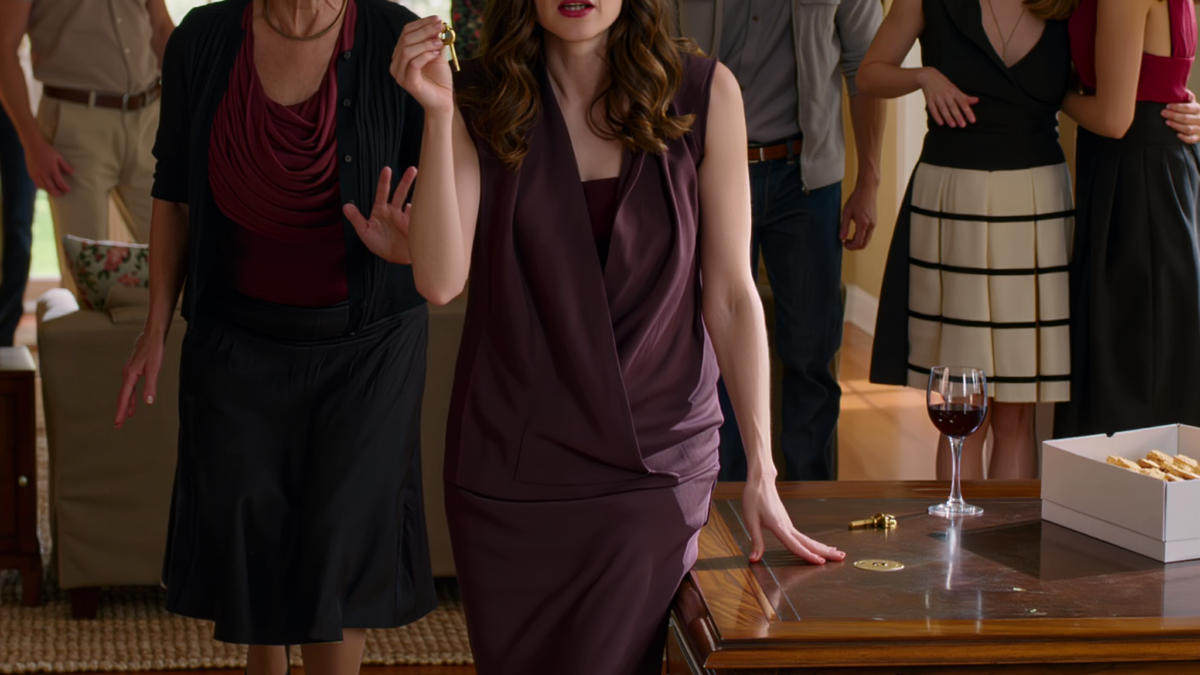
My mother looked at me across the dinner table the night my husband moved my sister into our bedroom and said, “She won. You’re the leftover. Have some dignity and disappear before you embarrass us further.”
My father nodded.
My sister smiled.
They took the house, the savings, and every keepsake my grandmother ever owned, including the walnut writing desk I had sat beside every Sunday of my life.
I left my key on the table and vanished.
One week later, my grandmother’s lawyer walked into the bakery at 4:00 a.m., set a sealed envelope on the flour-dusted counter, and said she had been waiting for exactly this moment.
Inside was a single photograph of that desk.
On the back, in her handwriting, were six words.
“Don’t stop them. Let them move in first.”
I smiled for the first time since the funeral.
They thought they had erased me.
They had only carried the one thing that could destroy their entire story straight into their new living room.
And I still had the only key that opened it.
My name is Samantha. I’m 36 years old.
But to understand what was inside that drawer, you have to understand my mother’s kitchen.
Thirty years ago, my mother ran that kitchen the way some people run small countries. There was a planner on the counter, blue cover, corners softened from years of handling, and everything that happened to our family seemed to happen in that planner first.
Dentist appointments. Payment plans. Which daughter got which opportunity.
By the time any of us heard about a decision, it had already been made, dated, and underlined.
I was 12 the first time I understood my place in it.
There was a Saturday baking class at the community center that spring. Advanced pastry. Eight weeks. A real instructor from a restaurant in the city.
I had circled the listing in the paper and practiced my speech in the bathroom mirror.
I remember my mother listening with the patient expression she used for weather reports.
“Be realistic, Samantha,” she said. “Lessons cost money, and your sister has real potential.”
Heather was eight.
Her potential that year was gymnastics. The year after that, it was piano. The year after that, a math tutor.
I want to be fair about my mother.
She did not scream. She did not hit. She would have been insulted by the suggestion.
What she did was quieter.
She decided what things meant.
She decided who we were.
And once she decided, the whole house arranged itself around her version.
Heather was the investment.
I was the helper.
Those were the roles, and the kitchen enforced them.
My grandmother stood in the doorway of that kitchen a lot.
Grandma Evelyn, my mother’s mother.
She would come over on weekends, drink her coffee standing up, and watch my mother move through the room with the planner in one hand.
She rarely argued.
She just watched.
The way you watch weather you cannot change but intend to remember.
She was always watching.
It took me 30 years to understand what she did with what she saw.
When I was 16, I got my first job at a little bakery in town that is gone now.
Weekend shifts. Flour in my hair.
I loved it in a way I did not have words for then, and I saved.
By the end of that year, I had $1,900 in a passbook savings account, which in 2005 in our town was enough to make a used car feel possible.
I never bought the car.
Heather needed braces that year.
Then she made the cheer team that traveled to nationals, and the fees came due all at once.
I came home one afternoon and found a note on my dresser, written on my mother’s cream stationery in her tidy administrator’s handwriting.
We’ll pay you back, Mom.
That was the whole note.
The account was empty by Friday.
My father never said a word about it.
Not to her.
Not to me.
He just got quieter for a week, the way he always did, like silence was a room he could step into and close the door.
I did not fight.
Fighting my mother meant fighting the meaning of things, and she owned the meanings.
Instead, I took the empty passbook and the note across town to my grandmother’s cottage because I did not want them in my room anymore.
Grandma read the note once.
Something crossed her face and disappeared.
“Give it to me, sweetheart,” she said. “I’ll keep this safe.”
I thought she meant the object.
I was 16.
I thought a lot of things.
I forgot about that passbook for 21 years.
My grandmother did not forget anything.
Sundays were ours.
I do not remember when it started, only that it never stopped.
Every Sunday afternoon of my childhood, and most of them after, I sat in my grandmother’s kitchen while lemon shortbread came out of her oven on a dented sheet pan.
Sometimes we talked.
Sometimes we did not.
Both were fine.
Her cottage smelled like lemon and furniture polish.
And in the corner of her front room stood the walnut writing desk.
It was the one beautiful thing she owned.
My grandfather had bought it secondhand the year they married, and she kept it the way some women keep a garden.
Waxed. Dust-free. Cared for.
The wood was such a deep brown that it seemed almost lit from inside.
It had drawers down the right side, and the bottom one was always locked.
Family lore said the key had been lost forever.
At Thanksgiving one year, when I was already grown, Heather rattled that drawer with one finger and asked what was inside.
It was 2019.
Grandma did not even look up from her cards.
“Lost that key before you were born,” she said.
When we were kids, I had asked too.
I remembered Grandma polishing the little brass plate around the keyhole. It was always brighter than the wood around it.
And she had said something I filed away as grandmother talk.
“Some things open when it’s time.”
My grandmother did not lose things.
She placed them.
I know that now.
Back then, it was just a locked drawer in a house that smelled like lemons.
I grew up.
I stayed in town.
And at 23, I walked into the Maragold Bakery in Chestnut Ridge, 38 minutes up the county road, because they had a card in the window.
June Callaway hired me on a Tuesday and changed my life without either of us making a speech about it.
June was 61 when this story happened, and she had owned the Maragold for half her life.
She taught me lamination the proper way and how to read an oven’s moods.
She let me write the chalkboard menu every morning in my own handwriting.
It was the only thing in my life I got to author from start to finish, and I took a stupid amount of pride in it.
At my family’s table, my job was a punchline.
“Heather’s in pharmaceutical sales,” my mother would tell company, and her voice would put a little shine on it.
Then she would wave a hand toward me.
“Samantha makes lovely muffins.”
Everyone would smile.
I would smile.
That was what the helper did.
I met Jason in 2015.
His company supplied the lumber when June renovated the front of the shop, and he kept finding reasons to come back after the job was done.
He was easy in a room. Good with names. Quick to laugh.
He liked that I was calm.
He said it like a compliment, and for a long time, it was one.
We married in September 2017.
I was 27.
I have gone through our wedding album more times than I would admit, and I always stop on one photograph.
It is a candid from the reception.
My mother is leaning toward Jason’s mother, Paula, whispering something behind her hand.
Both of them are smiling.
Two seats down, my grandmother is looking at them.
She is not smiling.
In every other photograph from that day, she is.
In that one, her face has gone still in the same way it used to in the kitchen doorway.
I never asked what my mother said to Paula that night.
I did not know there was anything to ask.
Eight years later, my husband would quote my mother without even realizing it.
But before he did, there was another spring no one in my family talked about.
The spring of 2008.
The spring I stopped checking the mailbox.
Senior year, I had one teacher who saw me.
Mrs. Hutchkins taught culinary arts in a classroom that smelled like burnt sugar.
One October afternoon, she stood over my bench, broke a piece off the tart I had made, chewed it slowly, and asked, “Who taught you this?”
“My grandmother,” I said.
“Well,” she said, “somebody should finish the job.”
She was the one who told me about Lake View Culinary Institute in Vermont and its pastry program.
Students moved across the country to attend.
There were merit scholarships for students who could prove they belonged.
Mrs. Hutchkins kept a brochure in her desk drawer, and I borrowed it so many times that she finally told me to keep it.
I can still see the crest.
A lighthouse inside a laurel wreath, stamped into the corner of every page.
I stared at it through the whole winter I was 17.
I memorized it the way you memorize a face you are hoping to see again.
I applied in secret.
Not because anyone had forbidden me, but because I already knew what my mother would say.
I wanted the answer in my hand before she could say it.
Mrs. Hutchkins wrote my recommendation.
I paid the application fee out of my paycheck.
I baked my submission twice because the first one was not good enough.
Then I mailed the envelope myself on a Tuesday in January.
And when spring came, I checked the mailbox every day.
Our mailbox stood at the end of the driveway with a little red flag on the side.
Every afternoon I walked out to it.
Every afternoon there was nothing with a lighthouse on it.
April.
May.
I would close the box and walk back up the driveway, and every day the walk seemed a little longer.
My mother found me sitting on the porch steps one afternoon.
She sat beside me, which she almost never did, and patted my knee.
“Be realistic, honey,” she said, gentle as anything. “Not everyone is built for a way.”
By June, I stopped checking.
I told Mrs. Hutchkins I had not gotten in.
She frowned.
A long frown.
“Not even a letter?”
“No,” I said. “Not even a letter.”
Something in me closed like a drawer.
For 18 years, I believed the mailbox had told the truth.
I enrolled in the community college 20 minutes from home because it was practical, and my mother approved of practical.
The following year, in 2009, something strange happened on a Sunday.
Grandma and I were in her kitchen. Shortbread was cooling on the sheet pan.
Out of nowhere, without looking at me, she said, “You should ask your mother about the culinary school.”
I laughed.
I actually laughed.
“What culinary school?”
“Ask her,” Grandma said.
So I did.
That evening, at my parents’ kitchen table, I asked my mother what Grandma meant.
I watched my mother’s face do something I had never seen before.
It went white.
Then soft.
Then wounded.
The teacup in her hand started to tremble, just enough for everyone at the table to notice.
“After everything I do for this family,” she said, her voice cracking in exactly the right place. “My own mother invents stories about me.”
My father put his hand on her shoulder.
Heather, 15 and loyal, glared at me like I had thrown something.
Within a week, the family had a new fact.
Grandma was starting to slip.
It was sad.
It happened at her age.
Best not to upset her.
Best not to take what she said too seriously.
Grandma never brought the culinary school up again.
Not once in 17 years.
I thought she forgot.
She was taking notes.
The years after that are easy to tell because my family told only one story about them.
In 2011, Heather got a partial academic scholarship to the state college.
It was real and good for her.
I mean that.
My mother inflated it until it filled the whole sky.
“One scholarship girl in the family,” she would tell the neighbors, laughing. “We can’t all be lucky.”
The refrigerator at my parents’ house became a museum with a single wing.
Heather’s dean’s list letter.
Heather’s sorority photo.
Heather’s job offer from the pharmaceutical company, framed.
There was nothing of mine on that refrigerator.
Not even the write-up when the Maragold won best bakery in the county.
Nothing.
Eventually, I stopped noticing.
That is its own kind of injury.
Heather married in 2019 and divorced at the start of 2024.
My mother explained the divorce the way she explained everything about Heather.
As a form of ambition.
“She knows her worth,” she said. “She won’t settle.”
Then, in June 2025, Heather came home.
She needed a place to land.
My mother said it would only be a few weeks between the divorce being final and Heather finding an apartment.
Somehow, the place she needed to land was not my parents’ house with its two empty bedrooms.
It was my guest room.
“Family helps family,” my mother said on the phone in the voice that ended discussions. “It’s three weeks, Samantha. Don’t be territorial about family.”
Three weeks became three months.
I want to be careful here because from the outside, it looked like nothing.
Heather was pleasant.
She mostly did her dishes.
She and Jason had the same sense of humor, one I had never fully shared.
The house was full of laughter that summer.
And what kind of woman complains that her house is full of laughter?
But I worked Saturdays.
I had always worked Saturdays.
The bakery’s biggest day.
And I started coming home to a house with its own weather.
Two coffee mugs in the sink.
Furniture slightly moved.
Inside jokes I arrived in the middle of.
My kitchen smelled like someone else’s cooking.
My husband looked lit up in a way I had not seen in a while.
I told myself the thing you tell yourself.
It’s good for him.
Company.
Family.
Heather got her own apartment in September.
Something of hers stayed.
I could not have told you exactly what.
That was the maddening part.
Jason joined a gym, which men do.
His phone started lying face down on the counter, which phones do.
He worked late some Tuesdays.
Then, once in October, I buckled into the passenger seat of his truck and smelled perfume on the seat belt.
Not mine.
Sweet. Expensive. Familiar in a way I refused to place.
“It’s Heather’s perfume,” Jason said easily when I mentioned it. “She borrowed the truck. Remember?”
I did not remember.
But here is what 30 years of training does to a person.
I heard my mother’s voice in my own head, in the one place where I should have been safe from her.
Be realistic, Samantha.
You’ve always been dramatic.
So I chose the version of reality where I was the problem, because I had been choosing it since I was 12.
I am not telling you that so you will feel sorry for me.
I am telling you because the lie did not start with Jason.
Jason moved into a lie that was already furnished.
That December, my grandmother was dying.
Everyone knew it.
Nobody said it.
Congestive heart failure. Her third winter with it.
She had sold the cottage in 2021 and moved into a small apartment at Fairview, the senior community across town.
The one piece of furniture she refused to leave behind was the walnut desk.
It sat by her window, too large for the room, and she would not hear a word about getting rid of it.
The last Sunday I saw her was December 21.
I brought shortbread made from her recipe.
She ate one piece very slowly and told me the lemon was right.
She was small in her chair by then, but her eyes were the same as they had always been.
They missed nothing.
Before I left, she took my hand and pressed her key ring into it.
The whole ring.
House keys from houses she no longer lived in.
A car key from a car she no longer drove.
And one small brass key I had never noticed before.
“Keep these for me,” she said. “The little one matters most.”
I thought she meant her jewelry box.
I told her I would keep them safe.
She smiled at the word safe like it was an old friend.
Then she asked about Jason.
Plainly, the way she asked everything.
And I heard myself say, “We’re fine, Grandma. Everything’s fine.”
She looked at me for a long moment.
Not unkindly.
The way you look at a bad bluff from someone you love.
“You never could lie to me, sweetheart,” she said. “That was always your best quality.”
Sixteen days later, she was gone.
She died in her sleep on January 6 at 89 years old, with her hair pinned and her affairs, as I would learn, in devastating order.
The funeral was that Saturday.
I do not remember most of it.
Grief is a bad camera.
But I remember three things.
I remember Heather crying the loudest.
Front pew. Shoulders heaving. Loud enough that people looked.
“She was like a mother to me,” Heather said at the reception more than once.
My sister had visited Grandma perhaps four times in 10 years.
But grief in my family was like everything else.
It went to whoever claimed it first and loudest.
I remember a tall, gray-haired man I did not know standing near the guest book in a dark suit.
At some point, across that crowded room, his eyes found mine.
He nodded once.
A small, deliberate nod, like a man confirming an appointment.
I nodded back, confused, and forgot about him by the coffee urn.
And I remember Jason’s hand.
We were standing in the reception line.
Heather said something to him too quietly for me to hear.
He put his hand on her back.
Low on her back.
Two inches below where comfort goes.
I saw it.
Some animal part of me saw it and knew.
Then the trained part of me, the daughter part, picked up that knowledge and put it somewhere dark because my grandmother was in a box at the front of the room.
I could not afford to know one more unbearable thing that day.
Grief bought them one more month.
Two weeks later, my mother cleared out Grandma’s apartment in a single weekend.
I offered to help.
I was managed instead.
My mother moved through those small rooms with sticky notes and garbage bags.
Deciding.
Sorting.
Assigning.
The whole time, she talked about being practical.
The furniture went here.
The dishes went there.
The clothes went to the church.
The desk went to my parents’ garage.
“Until it’s decided,” my mother said.
I asked for it.
I stood in my grandmother’s doorway and asked for one thing out loud in front of my father.
The desk.
And the photo albums.
My voice shook.
I hated that.
My mother did not even pause.
“Be realistic, Samantha,” she said. “Where would you even put it?”
I got a box of kitchen things.
Sheet pans, including the dented one.
Her rolling pin.
Her tin recipe box.
I stood in the corner holding that box while my mother taped shut the rest of my grandmother’s life.
Before the jewelry box disappeared into the car, I did one small, strange thing.
I still do not fully know why.
I took out Grandma’s key ring, found the little brass key, and tried it in the jewelry box lock while no one was looking.
It did not fit.
A short, dead click.
Wrong key.
I stood there for a second feeling foolish.
Then I drove home.
I did not think about that key again for six weeks.
Ten days later, my husband finished what my mother had started.
It was Monday, February 2.
I came home from the early shift, and Jason was sitting at the kitchen table with both hands around a cup of coffee.
He was not drinking it.
I knew before he said a word.
He had prepared.
That was the worst part.
He had clearly rehearsed, maybe in the truck, maybe with her.
His voice had the smooth, regretful evenness of a man reading a statement.
He and Heather had not planned it.
It just happened.
They were going to be together.
He hoped that someday I could understand.
I stopped hearing individual words for a while.
Then, near the end, his voice came back into focus.
“Be realistic,” my husband said. “You’ve always known we didn’t match.”
Be realistic.
Eight years of marriage, and at the end of it, he handed me my mother’s words in my mother’s cadence.
I do not think he even knew whose words they were.
That was the moment something in me went very quiet.
Not broken quiet.
Attentive quiet.
Because for one strange second, I was not listening to my husband leave me.
I was listening to my mother’s voice come out of another person’s mouth and wondering how long it had been speaking through people.
I looked past him toward the hallway coat hooks.
His winter coat was already gone.
He had moved it before telling me.
Whatever else was true, my husband had packed for this conversation.
He left that night.
And I did the thing I had been trained since childhood to do when I was hurting.
I called my mother.
That was my second mistake of the day.
She listened for less than a minute.
Then she sighed.
The sigh I had heard for 30 years.
The one that meant I was making things difficult by having things happen to me.
“What did you do to push him?” she asked.
I wish I could tell you I hung up.
I did not.
I sat on my kitchen floor with the phone against my ear and let her explain that men did not just leave.
That I had been distant for years.
Somewhere in there, she called me dramatic.
Somewhere in there, unbelievably, she said Heather was going through a lot too.
Within the week, my parents had Jason and Heather over for dinner.
I knew because Heather posted a photograph of my mother’s pot roast.
“Keeping the family together,” my mother called it when I asked.
“Someone had to be the adult.”
The paperwork, when it came, was almost insultingly simple.
The house had belonged to Jason before the wedding.
He bought it in 2016, the year before we married.
My name had never been on it.
Eight years of my paycheck had gone into groceries, utilities, paint, furniture, and the life inside that house.
None of that left a paper trail that counted the way ownership did.
Our joint savings had held a little over $18,000.
In January, while I was drowning in casseroles and sympathy cards after Grandma died, $15,500 had quietly moved into Jason’s personal account.
“For the roof,” he had said at the time.
The roof fund.
He filed for a no-fault divorce on February 6.
Sixty days, the papers said.
I signed everything they sent me.
People ask why women do not fight.
All I can say is that fighting requires believing you might deserve to win.
And that particular muscle had been weakened in me a long time ago by people who said they loved me.
Then came February 20.
That afternoon, my cousin Melissa told me Heather’s boxes had gone into the master bedroom.
My bedroom.
I was still sleeping down the hall in the guest room, waiting on an apartment.
My sister’s boxes went up the stairs past my door while I was at work.
That evening, my mother hosted a family dinner to discuss things “like adults.”
We sat around my parents’ table.
My mother had cooked a roast.
I watched her pick up the wine bottle and fill Jason’s glass first.
Before my father’s.
Before anyone else’s.
And I understood, watching the wine pour, that a new order had already been settled in this family.
I do not remember what I asked for.
Something small.
Time, maybe.
Basic decency, probably.
I remember my mother setting down her fork, dabbing her mouth, and looking at me down the length of the table.
“She won,” my mother said. “You’re the leftover. Have some dignity and disappear before you embarrass us further.”
My father nodded.
Then he looked down at his plate.
My sister smiled.
Small.
Quickly covered.
But I saw it.
Nobody at that table disagreed.
Not one person.
The pain was there.
An ocean of it.
But floating on top was a strange, flat calm.
And out of that calm came one thought.
All right.
Then you’ll never see me coming.
I did not know yet what I meant by it.
There was no plan.
There was nothing to plan with.
I had simply stopped explaining myself to people who had already decided what I was.
So I did exactly what my mother asked.
Just not the way she meant it.
That week, my father helped Jason carry my boxes out of the house.
My own father hauled my life to my car in cardboard without meeting my eyes.
At the end of it, he pressed an envelope into my hand.
Five hundred dollars in twenties.
“It’s from your mother and me,” he said, looking somewhere around my collarbone. “To get settled.”
Five hundred dollars.
The severance package for 36 years.
June Callaway did not ask a single question.
She heard my voice on the phone and said the studio apartment above the bakery was empty.
The stairs creaked.
The radiator worked.
I could pay her when I paid her.
On the last day of February, I blocked six phone numbers.
My mother.
My father.
My sister.
Jason.
And two aunts on my mother’s side who reported back to her like field offices.
I took the key to the house that was never mine off my key ring.
I placed it on the hallway table, on wood I had polished for eight years.
No note.
My mother could have written a story around a note.
I did not leave her one word to work with.
Then I drove 38 minutes north to Chestnut Ridge with everything I owned in a hatchback.
For one week, I was nobody.
Then, at 4:00 in the morning, a stranger knocked on the bakery glass and asked for me by name.
Grief has a schedule, and mine ran on ovens.
The studio above the Maragold had a slanted ceiling and a radiator that clanked like someone kicking a pipe.
I was grateful for all of it because it was mine.
I slept badly.
I got up at 3:30.
I went downstairs in the dark and fed the starter, scaled the dough, and did the same 11 things in the same order every morning.
The 11 things did not care what had happened to me.
June said exactly one thing about my situation that first week.
She watched me fold laminated dough with more force than lamination requires.
“Dough doesn’t care what happened to you,” she said. “That’s the good thing about dough.”
Then she went back to her books.
Seven days after I left the house key on that hallway table, Saturday, March 7, at 4:00 in the morning, someone knocked on the front glass.
Nobody knocks on the glass of a dark bakery at 4:00 a.m.
I came out from the back with flour to my elbows and my heart pounding.
Through the front window, I saw a tall gray-haired man in a good dark coat standing under the streetlight with a leather case.
Patient as a lamp post.
I knew his face before I remembered where I had seen him.
The funeral.
The guest book.
The single nod.
I opened the door on the chain first.
He introduced himself through the gap.
Alan Whitfield.
Attorney.
He had been my grandmother’s lawyer for 16 years.
“I apologize for the hour,” he said once I let him inside. He looked around at the cooling racks and the flour hanging in the light. “But I’m following instructions.”
He told me my grandmother had updated those instructions in November.
“She was sharper than any of us right to the end.”
He placed his case on the counter and took out a sealed manila envelope.
My name was written across the front in Grandma’s handwriting.
He also took out a page of his own notes.
He wanted, he said, to get the wording exactly right.
“She’ll be wherever the bread is,” he read. “She’ll be there before the sun. Knock on the glass.”
I put my hand flat on the counter.
Grandma had known not only where I would run, but what time I would be standing at a bench.
Which door would be locked.
That I would hear the knock over the mixer.
Months before my marriage collapsed, she had given a lawyer directions to the exact center of my ruin and told him to wait.
“Waiting for what?” I asked.
Whitfield looked almost apologetic.
“For you to leave.”
Her instruction had been specific.
One week after Samantha walks away from all of them, find her and give her this.
Not before.
“She said she’d know when it happened,” Whitfield told me. “She said your mother would make sure everyone heard about it.”
He slid the envelope across the flour-dusted counter.
“I don’t know what’s inside. That wasn’t my business. She said you would understand it.”
Then he checked his notes again.
“And if you didn’t understand right away, she said, ‘Give it a week and a Sunday.’”
I broke the seal with a bench scraper.
My hands were not steady.
Inside was a single photograph.
No letter.
No documents.
One old color photograph with a white border, the kind they used to print at the drugstore.
Grandma was decades younger, her hair still more brown than gray.
She was sitting at the walnut desk in her front room at the cottage.
Sunlight came from the left.
Her right hand rested beside a small key.
And the small key was sitting in the lock of the bottom right drawer.
On the desk blotter beside her hand sat a business envelope, squared carefully to the edge.
The photograph was old.
The envelope was small.
But the printing in the corner was clear enough.
A lighthouse inside a laurel wreath.
I knew that crest.
I had memorized it at 17 from a borrowed brochure through an entire winter of wanting.
There was only one way Grandma could have had a letter carrying that crest on her desk.
Somebody had received one.
I turned the photograph over.
In the top corner, in Grandma’s small upright handwriting, was the date.
June 2008.
And underneath, in ink that looked newer, were six words.
Don’t stop them. Let them move in first.
June 2008.
The month I stopped checking the mailbox.
The month I told Mrs. Hutchkins there had not even been a letter.
Then I realized something else.
I recognized the photograph itself.
Not just the desk.
The actual picture.
Because I had taken it.
June 2008.
Days after graduation.
My aunt had given me a yellow disposable camera as a gift.
I remembered standing in Grandma’s front room while she sat at her desk.
I called her name so she would look up.
She did not.
I took the picture anyway.
I never saw the print.
Grandma must have asked for it.
She must have kept it for 18 years.
At 18, I had photographed the whole secret without knowing there was a secret.
And sometime during the last months of her life, Grandma had looked at that photograph and understood that it was a map.
There was exactly one person alive who could read it.
I smiled.
Whitfield saw it.
To his credit, he did not ask.
Someone had seen all of it.
The kitchen.
The planner.
The passbook.
The mailbox.
The whole quiet machine.
Someone had watched it run over me and had never believed the story it printed.
Grandma had been gone for two months.
And somehow she was still holding my hand.
After Whitfield left, I put the key ring beside the photograph.
The little brass key.
The little brass plate around the keyhole in the picture, always polished brighter than the wood.
The shapes matched.
Of course they matched.
The little one matters most.
I stood alone in the bakery at 5:00 in the morning.
I took the pencil from behind my ear and pulled over an order pad.
Under the Maragold logo, I wrote three lines.
One: the letter.
Two: who signed?
Three: why now?
First question first.
Had the letter ever existed?
There was exactly one place on earth that would know.
It took me five days to send one email.
That is the part no one tells you about digging up your own life.
It is not the shovel that feels heavy.
It is your own hands.
I drafted an email to the Lake View Culinary Institute registrar on March 12.
I wrote it five different ways.
I still have all five drafts.
The first apologized for bothering them.
The second explained, without being asked, that this was probably nothing.
Somewhere between the third and fourth drafts, I heard the old voice doing the editing.
Be realistic.
Why would they keep a file on you?
Who do you think you are?
My mother had not spoken to me in two weeks.
She did not need to.
She had installed herself in my head years ago.
The fifth draft was four sentences.
My name.
My year.
I had been an applicant for fall 2008, and I was requesting whatever record existed of my application and its outcome.
I signed it.
I hit send before the voice could reconvene.
Then I went downstairs and made bread.
The answer came on Wednesday, March 18, between the morning rush and the rain.
I was standing in the flour room when my phone buzzed.
I read the email standing up.
Then I read it again.
The registrar’s office was pleased to confirm my records.
I had been offered admission to the pastry arts program in spring 2008.
I had also been awarded the institute’s full-tuition merit scholarship dated May 2008.
One of four given that year.
I stood very still.
Full tuition.
For 18 years, I had carried the version of my life where I simply had not been good enough.
Now a stranger in Vermont was politely informing me that at 18, I had been one of four students selected for that scholarship.
Then the next sentence took the floor out from under the first.
Their records showed that a written declination had been received from the applicant in June 2008, at which time the award was released.
A written declination.
From the applicant.
I had never declined anything.
I had never known there was anything to decline.
I read that sentence maybe 10 times.
Each time, the same cold fact rose out of it.
Somewhere in a file in Vermont was a letter, 18 years old, that had turned down my future.
It was signed with my name.
I did not write it.
Someone had opened my mail.
Read my future.
Sat down with paper.
Written to a school in my voice.
Signed my name.
Sealed it.
Sent it.
I looked at my three-line list and crossed out the first question.
The letter was real.
Which left the second.
Who signed?
And one person still alive might have seen what happened.
My grandmother’s best friend, Judith Palmer, had lived next door to my parents for almost 40 years.
Her kitchen window and my mother’s kitchen window faced each other across a narrow strip of side yard.
If June 2008 had left a witness, she was 74 years old and, according to the church newsletter, still growing the best tomatoes in Brookfield.
I drove down on Sunday, March 22.
Thirty-eight minutes.
The whole way, I rehearsed how I would explain myself.
I parked two streets away from my parents’ house like a fugitive.
Then I walked up Judith’s porch steps with my heart in my ears.
She opened the door before I finished knocking.
She looked at me for a long second.
She did not say hello.
“You look like her when she decided something.”
Then she stepped back and held the door open as if I had been expected.
As it turned out, I had.
Grandma had told Judith that someday, probably in spring, I might come up those steps.
If I did, Judith was to put the kettle on and tell me the truth.
So she did both.
We sat at her kitchen table.
She pointed through the window over her sink toward my mother’s kitchen window across the side yard.
Close enough to count the dish towels.
“June 2008,” Judith said. “Your graduation weekend. Half the family was in and out of that house.”
Grandma had gone outside with a bag of party trash.
She noticed good paper in the bin that did not belong there.
She pulled it out.
A letter, crumpled once, with a lighthouse on it.
Underneath was a second sheet covered in handwriting.
Grandma stood beside the bins reading them.
Judith said it took maybe a minute.
Then Grandma folded the papers small, put them in her apron, and walked back into the kitchen.
My mother was alone.
Judith heard the entire conversation through two open windows.
I asked what she heard.
Judith held her tea with both hands.
“Evelyn asked her quietly what the letter was,” she said. “Your mother didn’t even stop wiping the counter.”
Then Judith repeated the words carefully.
“She would have failed out there. I did her a favor.”
Grandma stood there for a moment.
Then she said, “You’ll want this back then.”
My mother answered, “Burn it for all I care.”
Grandma said, “All right.”
And she took the papers home.
Judith looked directly at me.
“She didn’t burn them, honey. She put them somewhere. She told me that much years later. She said they were resting in the desk.”
The desk.
Everything came back to the desk.
Then Judith told me about 2009.
And the story I had carried for 17 years quietly turned over and showed me its other side.
I remembered 2009.
I remembered being 19 and laughing.
What culinary school?
I remembered my mother’s teacup trembling at exactly the right frequency.
I remembered the family fact that got written that week.
Grandma is slipping.
Here was what I had not known.
Grandma’s suggestion that I ask my mother about culinary school had not been a slip of an aging mind.
It had been an attempt.
And in one evening, Grandma had watched how my family handled a leak.
The teacup.
The tears.
The diagnosis.
Within a month, my mother was gently suggesting to relatives that maybe Grandma should not have the girls over unsupervised anymore, with how she was getting.
They did not just bury the truth.
They nearly buried the witness.
“She came over here after all that,” Judith said. “She sat where you’re sitting. I had never seen her like that before or since.”
Judith told me Grandma had said, “I told the truth into that house once. It won’t survive in there twice.”
Then Judith went to her sideboard.
She came back with an old church bulletin.
There was pencil writing on the back.
“The truth doesn’t need a lawyer,” she read. “It needs a room. A whisper they can bury. A room they can’t.”
She put the bulletin down and covered my hand with hers.
“Samantha, I want you to hear this part with both ears. That woman never once believed you failed. Not for one day. Not for one day in 18 years.”
That was when I cried.
Not for the scholarship.
Not for Jason.
Not for the house.
Not even for my mother.
I cried because I had spent 18 years quietly ashamed in front of everyone I knew.
And one person at every family table had been carrying the receipt the whole time, waiting for a room strong enough to open it in.
They had called Grandma confused for telling the truth.
She had let them believe it for 17 years and kept her Sundays with me.
I asked Judith exactly what was in the desk.
“All of it,” she said. “Exactly everything. That’s the word she used.”
Then she added, “But it’s not where you think anymore, is it?”
It was not really a question.
Brookfield is a small town.
She already knew where the desk had gone.
Two days later, my cousin Melissa called.
Melissa is Aunt Dana’s daughter.
Dana is my father’s younger sister and the one relative who never fully lived under my mother’s gravity.
Melissa had stayed neutral through the collapse.
Her number was the one family contact I had never blocked.
“You’re going to hear this from somebody,” she said. “So it should be me.”
My mother had given Grandma Evelyn’s furniture to Heather.
All of it.
The furniture had gone over on the 14th.
Apparently, there had been a little ceremony in my parents’ garage.
My mother stood among the boxes and said the furniture should go, and I quote, “To someone building a future.”
Then Melissa sent me a screenshot.
“I’m sorry,” she said. “I thought you should see it before some stranger shows you.”
Heather’s post.
The walnut desk was staged in golden-hour light in what used to be my living room.
Her caption read:
She always wanted me to have it.
I want to be honest about what I felt because it was not clean.
First, panic.
The desk was inside their house.
Behind their locks.
Under Heather’s hands.
I had lost the race before I knew I was running it.
Then I picked up Grandma’s photograph, the way I had been picking it up every night for two weeks.
I read the six words again.
Don’t stop them. Let them move in first.
For the first time, the sentence stopped being a riddle.
It became what it had always been.
A map drawn by the only person who ever fully understood my mother.
Grandma knew a whispered truth died in that family.
2009 had proved it.
She knew that if I demanded the desk, I would never get it.
My wanting it would become the reason I should not have it.
She knew that evidence in my hands, shown privately, could become “Poor Samantha, bitter about the divorce, waving papers around.”
My mother had spent 30 years as the courthouse of our family.
You cannot win a case in a courtroom the judge owns.
Unless the trial happens somewhere she does not control.
In front of people she invited herself.
Around evidence she carried in with her own hands.
Grandma had not left me a weapon.
She had left me a room.
And the discipline to wait for it.
They would put the desk on display.
All I had to do was be there with the key.
I looked again at my order-pad list.
The letter.
Crossed out.
Who signed?
I was close enough to know.
And the proof was in a drawer 38 minutes south.
Which left the last question.
Why now?
Because now there was finally going to be a room.
All I needed was to be invited back into the family that had told me to disappear.
My mother could not help herself.
The move-in happened April 1.
I was not there, but Melissa’s reports were thorough, and Heather documented the day herself.
There was a rented truck.
Heather’s friends from the pharmaceutical company carried lamps.
At one point, the walnut desk came up the front walk of the house I had decorated for eight years.
Two men carried it.
Jason on one end.
My father on the other.
My father and my husband carried Grandma’s desk, with the truth locked inside it, through the front door and into the living room.
They put it in the best light.
“It’s in the living room,” Melissa told me. “Heather says it anchors the whole house.”
She had no idea.
Four days later, my phone lit up.
My mother’s number.
I had unblocked it because I needed my lines open.
The text was so perfectly her that I read it aloud to the empty studio.
Easter dinner Sunday. Come show everyone there are no hard feelings. Don’t make it awkward.
There it was.
No apology.
No acknowledgment.
Apparently, no memory of the word leftover.
Just image management.
The family portrait had a hole where I used to stand.
And holes invite questions.
My mother had never liked questions she did not write herself.
Eight weeks earlier, that text would have cut me in half.
Now I read it differently.
Then I typed four words.
I’ll bring dessert.
June happened to be walking behind me with a tray of tart shells.
She glanced at the screen.
Then she looked at me over her glasses.
“You’re up to something,” she said. “Good.”
That Saturday night, I made Grandma’s lemon shortbread.
I took the recipe card from the tin box.
Her slanted handwriting.
The ink gone brown.
I made a double batch.
I let the dough rest overnight the way she taught me.
There was one hole in my plan.
I had never looked inside the drawer.
Everything I knew existed around the drawer.
Not inside it.
The registrar’s email proved a letter had once existed in Vermont.
Judith’s memory proved Grandma had taken papers from the trash in 2008.
But 18 years is a long time.
What if Grandma had moved everything somewhere safer?
What if the drawer held pencils and rubber bands?
I could walk into my sister’s living room in front of the whole family and turn a key on my own credibility.
At midnight on Saturday, I called Judith.
“Could it be empty?”
There was a pause.
Then Judith laughed softly into her tea.
“Honey,” she said. “Evelyn Hart did not leave empty drawers. She left loaded ones.”
I wrote one sentence on a sticky note and put it on my refrigerator.
One question, nothing else.
That was the whole plan for Easter.
Not an accusation.
Accusations gave my mother room to become the victim.
Not evidence.
Evidence shown too early could be explained away.
One polite question.
I wanted to find out exactly how deep my mother would dig her position when she believed no one was checking the ground.
Sunday came with rain and my mother’s tablecloth smile.
I drove the 38 minutes with the shortbread box on the passenger seat, in the same place where I had once smelled Heather’s perfume.
I rehearsed being a guest.
Guests do not accuse.
Guests compliment the roast.
Guests ask polite questions about family history.
My parents’ house looked exactly the same.
Ten of us sat down for Easter dinner.
My parents.
Heather and Jason, arriving together openly now, his hand at her back in front of everyone.
Aunt Dana and her husband.
Melissa.
Two cousins.
My mother hugged me at the door for the audience.
One hand patting my shoulder blade.
“See?” she announced to the room. “One family, like always.”
My old chair, the one I had sat in at that table for 30 years, was not at the table.
It stood against the wall by the window holding coats.
I took a folding chair beside Melissa.
I said nothing.
My father hugged me one second too long.
Then he let go as if the extra second had burned him.
We ate.
On the surface, it was a nice dinner.
Then came dessert.
My dessert.
My mother served Grandma’s shortbread on her good china without saying where it came from.
She picked up her spoon and touched it against her wine glass.
A toast.
I could not tell you every word.
It was the greatest hits.
How proud she was of the family for coming through a hard season.
How some people are built to reach.
A warm look toward Heather.
How the family had always lifted everyone according to their gifts.
Then, with a fond little smile toward me, she delivered the line I had heard in one form or another my entire life.
“Samantha never wanted much, and honestly, that’s a kind of gift too.”
One cousin smiled.
Jason studied his plate.
My father’s old trick.
The house was teaching him.
Heather ate a piece of Grandma’s shortbread and asked no one in particular, “Was the recipe from online?”
I waited until the toast fully landed.
I let my mother have the whole room.
Then I put down my fork.
In the mildest voice I own, I asked one question.
“Do you remember the spring of 2008, Mom?”
For a fraction of a second, everything in her face stopped.
The fork.
The smile.
The eyes.
Then the machinery started again.
She laughed lightly and reached for the wine.
“The spring of 2008?” she said. “You moping about not getting in anywhere? We carried you through it, sweetheart. That whole year.”
She shook her head fondly for the table.
“You’d barely fill out an application.”
There it was.
On Easter Sunday, in front of nine witnesses, my mother had established her official version.
I had not gotten in anywhere.
I had barely applied.
My parents had carried me.
Every road backward had just been closed by her own words.
If a letter with a lighthouse on it surfaced now, it could no longer be dismissed as some old misunderstanding about what I had known.
Aunt Dana was watching my mother with the faintest line between her eyebrows.
She had noticed the pause too.
“You’re right,” I said pleasantly. “It was a hard year.”
Then I passed the shortbread.
The truth was sitting there in my chest, pushing.
Eighteen years of it.
But a whisper they could bury.
A room they could not.
This was not the room.
Not yet.
Then Heather built the room for me.
She tapped her glass with a fingernail.
Announcement voice.
She and Jason were hosting a housewarming on Saturday the 18th.
Everyone had to come.
The whole family.
Neighbors.
Friends from work.
Jason’s parents.
The house was finally ready to show.
“And after the party,” Heather added casually, “I’m finally calling a locksmith about that silly drawer in Grandma’s desk. It’s probably full of moldy papers.”
She rattled it.
The table laughed.
My heart hit three beats in the space of one.
A locksmith after the party.
Which meant the drawer would open either way.
The only question left was whose hands would open it, and in front of whom.
If a locksmith opened it on a quiet Tuesday, anything inside would pass through my mother’s hands first.
Thirteen days.
Grandma had waited 18 years.
It was all going to come down to 13 days.
“A housewarming,” I said. “I wouldn’t miss it.”
My mother looked down the table at me.
For one second, something cold sat behind her eyes.
Then Heather started talking about a cheeseboard, and the moment folded itself back into the party.
My father walked me to my car.
That had never happened in my adult life.
He stood beside the driver’s door under the porch light with his hands in his jacket pockets.
He looked at the gravel.
For almost a full minute, I watched my father try to say something.
His mouth opened.
His hand came up and rested on the roof of my car.
I thought, Here it comes.
Whatever he has been carrying, here it comes.
“Drive safe,” he said.
His hand slipped off the roof.
He went back inside.
Into the light.
Into the laughter.
I sat in the dark with my hands on the steering wheel.
They all thought it was over.
Behind me, through that bright window, the winners were pouring another round.
Sure of the story.
Sure of the furniture.
Sure of me.
For 13 more days, being underestimated was going to be useful.
If the locksmith came first, everything Grandma had built could be opened by the wrong hands.
He did not.
April 18 was one of those bright, cold spring Saturdays that make everything look freshly painted.
I parked down the block from the house that used to be mine.
For a moment, I sat there doing arithmetic on my own heartbeat.
In my bag were the photograph, a printout of the registrar’s email, and Grandma’s key ring.
On the passenger seat was a white box of lemon shortbread tied with baker’s twine.
One question had gotten me through Easter.
Today’s plan was almost as short.
Let them claim it.
Ask about the drawer.
Stop protecting them.
About 25 people were there.
Neighbors.
Heather’s work friends.
Aunt Dana.
Melissa.
Two cousins.
Judith Palmer had been invited.
Of course she had.
My mother would rather have died than let her mother’s oldest friend hear secondhand how beautifully the family was doing.
Jason’s parents, Glenn and Paula Whitmore, stood near the fireplace with drinks they were not really drinking.
Jason answered the door.
He looked at me.
Then at the white box.
For a moment, eight years of marriage passed between us with nowhere to land.
“Sam,” he said. “You came.”
“I was invited.”
I handed him the box and stepped into my former hallway.
They had repainted.
The wall along the stairs, where our wedding photographs had once hung, was a soft gallery gray now.
New frames.
Heather at a beach.
Heather and Jason at a winery.
Heather’s diploma.
I stood in front of that wall.
Fresh paint over eight years of nail holes.
If you did not know where to look, you would never know anything had hung there before.
My mother appeared beside me with a glass of white wine I had not asked for.
“You’re being very mature about all this,” she said in the tone she used for compliments that were also instructions. “Everyone notices.”
“I’m sure they do.”
I smiled and moved into the living room.
And there it was.
They had given the walnut desk the best wall in the house.
A new lamp was angled over it like a museum light.
The walnut glowed under it exactly the way it had in Grandma’s front room every Sunday of my life.
The bottom right drawer sat quietly beneath the small bright brass keyhole plate.
Thirty inches away.
I put my hand flat on the top of the desk for one second.
The party went on around me.
I made small talk with a neighbor about sourdough.
Judith watched me from across the room.
I watched her.
Neither of us approached the other.
A little after 4:00, when the room was at its fullest, Heather tapped her glass.
“Everyone, you have to see the centerpiece.”
People gathered loosely around the desk.
Heather stood beside it with her palm flat on the wood, fingers spread.
“So this,” she said, “is my grandmother’s writing desk. It’s the thing I wanted most, honestly. She and I were so close.”
She smoothed her hand over the wood.
“I was her favorite. She always wanted me to have it.”
I felt more than saw Judith go still near the window.
My mother stepped beside Heather, radiant.
“Mom liked things where they do the most good,” she said warmly.
Glasses lifted.
Someone said, “Hear, hear.”
They had claimed it publicly.
Formally.
In front of 25 people.
I let the toast finish.
I let the glasses come all the way down.
Then I used the exact voice I had practiced in the car.
Light.
Curious.
A guest’s voice.
“Did she ever tell you what’s in the locked drawer?”
Heather laughed.
Easy.
She suspected nothing because in her entire life, nothing had ever come for her.
“Nobody knows. The key’s been lost since before I was born.”
She wiggled the drawer with one finger.
The exact same gesture she had made at Thanksgiving in 2019.
“Locksmith’s coming Tuesday. It’s probably rubber bands.”
“It isn’t lost,” I said.
Four words.
Not loud.
The room changed anyway.
Conversations at the edges stopped.
I reached into my bag and lifted Grandma’s key ring.
The little brass key turned slowly at the end of it under the lamp.
My mother moved fast.
I will give her that.
She had survived on reflexes for decades.
She put down her wine and crossed toward me.
Then she lowered her voice into the register meant to sound private while carrying to every corner.
“Samantha.”
A pause.
“Don’t do this. Have some dignity.”
Have some dignity.
The same blade she had used two months earlier.
Back then, it had sent me out of the family.
Now she had just repeated it in front of a much larger audience.
“You invited me to show there are no hard feelings,” I said at normal volume. “There are no hard feelings. I’m returning Grandma’s key to Grandma’s desk.”
Silence.
Then Aunt Dana’s voice came from the back of the room.
Dry.
Practical.
The voice of a woman who had been filing things since Easter.
“Well,” she said. “Open it.”
The whole room agreed with her by saying nothing.
Twenty-five people had stopped pretending to talk.
Heather looked at my mother.
A lifetime reflex.
Checking the scoreboard.
For the first time, the scoreboard had nothing for her.
I crouched beside the bottom right drawer.
The little key entered the brass lock as if it belonged there.
One turn.
One soft, well-oiled click.
The drawer slid open without a sound.
Not a squeak.
Not a stick.
Closed for 18 years, and it moved as if it had been serviced yesterday.
Then I realized it had.
The runners were waxed.
Sometime in Grandma’s final months, she had waxed the runners of a drawer she never opened in company.
So that when the day came, the drawer would open cleanly.
I closed my eyes for one second.
Even now.
Even here.
She had thought of the sound.
Inside was a thick folder, squared neatly and tied with the same baker’s twine Grandma used on Sunday boxes.
On top of it lay one envelope.
From where everyone stood, the crest in the corner was visible.
A lighthouse inside a laurel wreath.
I did not touch it first.
I stepped back half a pace.
“Aunt Dana,” I said. “Would you?”
Dana came forward.
My father’s sister.
No stake in my mother’s version.
Her reading glasses were already in her hand.
She picked up the envelope, removed the letter, and read the letterhead aloud in her flat, sensible voice.
“The Lake View Culinary Institute.”
A pause.
“Office of Admissions. May 2008.”
Her eyes moved down the page.
Then stopped.
She looked up.
Not at me.
At my mother.
“It’s addressed to Samantha Rose.”
Another pause.
“It’s a scholarship award. Full tuition.”
The room turned toward my mother.
And my mother went to work.
One last time.
She sighed.
A tired, loving, put-upon sigh.
She clasped her hands.
“That’s ancient history,” she said gently. “We couldn’t have afforded the rest of it. The housing. The travel. A child alone in Vermont. I protected her. It broke my heart. But somebody had to be the adult.”
Reasonable.
Warm.
Even.
Around the edges of the room, I could feel it almost landing.
Neighbors.
Work friends.
People raised to believe mothers.
I took the registrar’s email from my bag.
I unfolded it.
I placed it on the desk beside the old letter, facing Dana.
“The school’s records,” I said. “From last month. They confirmed the award.”
I waited one beat.
“They also confirmed that a written declination was received in June 2008 from the applicant.”
I looked at my mother.
“I never declined anything.”
The word declination moved around the room in a whisper.
My mother’s hands found each other.
“Then she changed her mind and forgot,” my mother said.
And for the first time in 36 years, I heard it.
A seam in her voice.
Tiny.
But there.
“She was 18. She was scared. She—”
“Then why is the signature practiced?”
I had not planned the question to come out that way.
It was quiet.
But it landed.
Under the award letter inside the folder was a single sheet of lined paper, soft at the folds.
I lifted it out.
I laid it beneath the lamp.
Dana leaned closer.
The nearest guests leaned in behind her.
And I watched understanding move through them.
My name.
Samantha Rose.
Written 11 times down the page.
Crossed out.
Adjusted.
The S changing its loop.
The R settling into its final shape.
Eleven rehearsals of my signature in blue ballpoint.
In handwriting every person in that family had seen on 30 years of birthday cards, permission slips, and casserole labels.
My mother’s handwriting practicing being me.
The silence pressed against my ears.
Some ice shifted inside someone’s glass.
Then a sound came from near the bookshelf.
Low.
Wounded.
Half a word that did not make it out.
I turned.
My father had one hand over his mouth.
He was staring at the page.
His face had gone nearly colorless.
And I understood something I would process later.
Whatever my father had known, he had never seen that sheet.
He had carried the finished letter.
He had never watched it being built.
My mother pivoted.
Her oldest defense had worked for 17 years.
“Mom was confused,” she said, louder now, addressing the room. “You all remember. She collected things. She invented stories. We dealt with this for years. Everyone knows she wasn’t—”
“Susan.”
One word.
From the kitchen doorway.
Judith Palmer stepped into the living room.
Seventy-four years of Sunday-dinner respectability came with her.
The room opened around her.
“I watched her pull those papers out of your trash,” Judith said.
Level.
Unhurried.
“June 2008. Through your kitchen window, I heard what you told her while you stood at the counter.”
She let that sit.
“Your mother was never confused one day in her life, and you know it. Confused women don’t need 17 years of managing.”
The folder was still half full.
I lifted out the next things because my hands needed a task.
My childhood passbook savings account.
Soft with age.
And the small note on cream stationery paper-clipped to the cover.
We’ll pay you back, Mom.
$1,900.
The handwriting on that note and the handwriting rehearsing my signature lay eight inches apart on the desk.
Three years apart in their making.
Identical in their bones.
Any explanation about Grandma manufacturing the evidence died right there between those two pieces of paper.
Beneath the passbook, filling the bottom of the drawer, was a bundle of letters tied in twine.
Each envelope dated in Grandma’s small upright handwriting.
Years of them.
She had not kept evidence.
She had kept a ledger.
Dana untied the bundle.
I could not.
My hands had finally started to shake.
The top envelope was marked September 2014.
Dana opened it.
She read it to herself first.
I watched her face change.
Then she looked at Heather.
Dana began reading aloud.
“Heather came to see me today. She is 21. She told me she has known about the Vermont letter since she was 15. She heard her parents through the wall the summer it happened.”
Every face in the room went to my sister.
Dana continued.
“She cried and asked me if she was a bad person for never saying anything. I told her the truth. I told her not yet.”
Heather had claimed the desk 20 minutes earlier.
She had cried the loudest at Grandma’s funeral.
She had smiled at the dinner table the night my mother called me the leftover.
Now, for the first time in her life, the room stopped adjusting reality for her.
“It was already done,” she said.
Her voice cracked high.
“I was 15. What was I supposed to do? Unring the bell? It wasn’t my— You can’t put that on me.”
Then, because reflexes fire hardest under pressure, she grabbed the one solid thing she thought she still had.
“And this changes nothing. Do you all hear me? The desk is still mine. The desk is still mine.”
In front of the open drawer.
In front of the letters.
That was my sister’s closing argument.
The furniture.
Jason took one step back from her.
One.
I do not think he meant to.
His body simply moved.
Heather felt the space open and looked at him.
And for the first time, something in her expression registered the size of what was happening.
Then my mother stopped defending herself.
That was the part I had not predicted.
When every other door failed, she did not beg.
She drew herself up in the middle of the room.
The mask did not slip.
She set it down.
What was underneath was calm.
It had always been calm.
“Someone had to decide which of you was worth investing in,” my mother said clearly. “I made the family’s decisions because no one else would make them. I put things where they do the most good.”
Then she looked around the room.
“I would do it again.”
There it was.
No tears.
No trembling teacup.
Thirty years of gentle explanations stripped down to one sentence.
Her daughters had been an investment portfolio.
One of us had been the loss she wrote off.
Nobody answered.
What happened instead was quieter.
Paula Whitmore set her glass down on the mantle.
The click sounded impossibly loud.
Then Jason’s mother took Jason’s father by the arm.
The two of them walked out of their son’s house without saying a word.
The front door closed behind them.
Soft.
Complete.
Somewhere in the kitchen, someone turned off the music.
Nobody turned it back on.
There was one envelope left in the drawer.
Newer than the others.
Dated November 16, 2025.
Seven weeks before Grandma died.
My name was on the front.
The room watched me open it.
Her handwriting inside was thinner than it had been in 2008, but perfectly steady.
Three pages.
I did not read all of them aloud.
Most of it was mine.
But near the end, one passage had been underlined once with a ruler.
The line was perfectly straight.
That part I read aloud because it was addressed to more than me.
I told you once in 2009 and the room wasn’t ready. So I built you a room. They told you all your life to be realistic. Sweetheart, you were the only real thing in that house.
Someone behind me started crying.
It was not Heather.
Dana gathered the papers.
The scholarship letter.
The registrar’s printout.
The lined page.
The passbook.
The bundle.
She squared them gently on the desk.
Retied the twine.
Then she placed the whole folder in my hands.
Melissa came and stood at my shoulder.
Judith slipped her arm through mine.
Around the room, people began finding their coats with the particular quietness of a congregation leaving a funeral.
My mother stood in the center of her second collapsed room in 18 years.
And this time there was no window between her and the witnesses.
I had planned speeches for this moment in the dark for two weeks.
Long ones, some nights.
In the end, I used almost none of them.
“I’m taking the letters,” I told my mother. “You can keep the story you have left.”
I picked up the white box of shortbread from the side table where Jason had put it.
I set it on the desk beside the open drawer.
The room could keep that too.
Grandma would have wanted the place to smell like her.
Then I walked out of the house that used to be mine.
Past the wall of new frames.
Into the cold, bright evening.
And I drove home with 18 years riding in the passenger seat.
The silence changed owners that week.
For two months, silence had been mine to live in.
Now my phone lit up with relatives reaching into a quiet that no longer belonged to them.
My mother left two voicemails.
I want to be accurate about them because they are the truest portrait of her I can give.
There was no apology in either one.
No mention of the letter.
No mention of the signature.
No mention of the drawer.
The first said I had humiliated the family in front of neighbors.
The second came at midnight three days later.
It was longer.
Near the end, my mother delivered the sentence she had clearly built the whole message around.
“She poisoned you against me. She spent her whole life poisoning you against me.”
Even then.
Even after that room.
The story could not be surrendered.
Only relocated.
I saved the voicemails.
I returned neither.
Listening to the second one, I felt almost nothing.
That frightened me for a day.
Then I understood.
Nothing was the sound of a door I no longer lived behind.
Dana drove to Chestnut Ridge the following Sunday.
She brought all of Grandma’s photo albums.
Liberated without discussion.
We drank coffee in the bakery after closing, and she told me what the week had been like.
The family group chat had gone silent.
Two cousins called her because they suddenly wanted to talk about things they remembered from childhood.
Heather and Jason lasted three more weeks.
I am not going to perform gloating over that.
I understood it immediately.
Their whole relationship had been built inside the family myth.
The shining sister.
The leftover wife.
The myth was dead.
Neither of them could survive being looked at accurately by the other.
He had left a woman he believed was less.
Now he was living with a woman who had known the truth since she was 15.
Melissa told me Jason moved back into his parents’ house at the end of April.
Glenn and Paula apparently said very little about it.
They did not need to.
They had already voted with a glass on a mantle.
On April 26, a delivery van pulled up outside the Maragold.
Two men in moving blankets carried the walnut desk through the front door.
There was a note taped to the top.
Jason’s handwriting.
I would have known it anywhere.
One line.
It was never mine either. I’m sorry.
I read it twice, standing in the doorway with flour on my hands.
It may have been the only completely honest sentence he had said to me in a year.
It changed nothing.
It did not need to.
I did not reply.
Some doors you do not slam.
You simply do not walk back through them.
The desk fit into the back corner of the bakery by the window as if the space had been measured for it years earlier.
Maybe it had.
I have stopped assuming I know which parts of my life Grandma did not plan.
Then, on a Tuesday morning at the beginning of May, my father came to the bakery.
I looked up from the register.
He was standing on the other side of the pastry case, turning his cap in his hands like a much older man.
He looked at the case.
The chalkboard menu in my handwriting.
Everything in the room except me.
“I never read it,” he said finally, quietly, toward the muffins.
“The letter that June…”
He swallowed.
“Your mother handed me an envelope and told me it needed to go out. I saw the name of the school on it, and I…”
His hands stopped turning the cap.
“I just drove it. I told myself if I didn’t read it, it wasn’t mine.”
Eighteen years.
And there it was.
Not exactly a confession.
An inventory.
“That’s the part I can’t live with, Dad,” I said.
Not cruelly.
It came out the way true things come out when you no longer need them to hurt anyone.
“Not that you knew everything. That you made sure you’d know nothing. She decided, and you drove.”
He nodded.
He did not argue.
My father had never argued.
That had been the whole problem, laid end to end across my life.
I poured him a cup of coffee and put it on the counter.
I did not promise him anything.
I did not punish him either.
“Sundays are for Grandma’s recipes,” I told him. “If you ever want to learn one, call first.”
He finally looked at me.
His eyes were wet and old.
He nodded.
Then he left the coffee where it was.
It sat on my counter going cold for an hour.
I have thought about that untouched cup more than almost anything else.
The door is open exactly that far.
He has to walk through it.
I am done carrying people across thresholds.
As for the drawer, I keep it unlocked now.
On May 3, a Sunday, a new line went up on the Maragold’s chalkboard in my handwriting beneath the scones.
The Evelyn lemon shortbread.
Sundays only.
June tasted the first official batch.
She closed her eyes.
“Well,” she said. “There she is.”
Regulars ask about the name sometimes.
They ask about the beautiful old desk in the corner where I do the books.
I tell them the truth in its smallest form.
It was my grandmother’s.
And it came home.
The photograph, the one I took at 18 without knowing what I was aiming at, now sits inside the open drawer where the folder used to be.
Nothing in that drawer is hidden anymore.
That was the point.
Some Sunday mornings before the ovens come on, I sit at Grandma’s desk and copy recipes onto fresh cards in my own handwriting.
Then I file them into the tin box beside hers.
Her slanted letters and mine.
Two hands in one archive.
And I have made peace with the arithmetic of it.
I used to believe I was a woman who had failed on schedule.
Did not get in.
Did not get out.
Did not keep her husband.
Did not matter.
Now I know I did not fail.
I was never allowed to start.
They stole the letter.
And even without the scholarship, without the lighthouse, without permission, my hands brought me here anyway.
To bench and oven.
To this bakery.
To this room that smells like Grandma’s kitchen.
They stole the letter.
They never managed to steal the hands.
My mother spent 30 years telling me to be realistic.
All right.
Realistically, the letter came.
The girl was chosen.
The proof survived 18 years in a locked drawer because one woman refused to believe the mailbox over her own eyes.
And the desk is exactly where Grandma always wanted it.
With someone building a future.








