My father-in-law slid a $2 million check and divorce papers across the dinner table, then mocked my job as a data analyst. “You can finally stop pretending you belong in our world,” he said. When my wife threw her red wine over the papers and tried to leave, he struck her. I took out the satellite phone I’d hidden from them and asked my London counsel to read Merrick Global Logistics’ shareholder structure aloud.
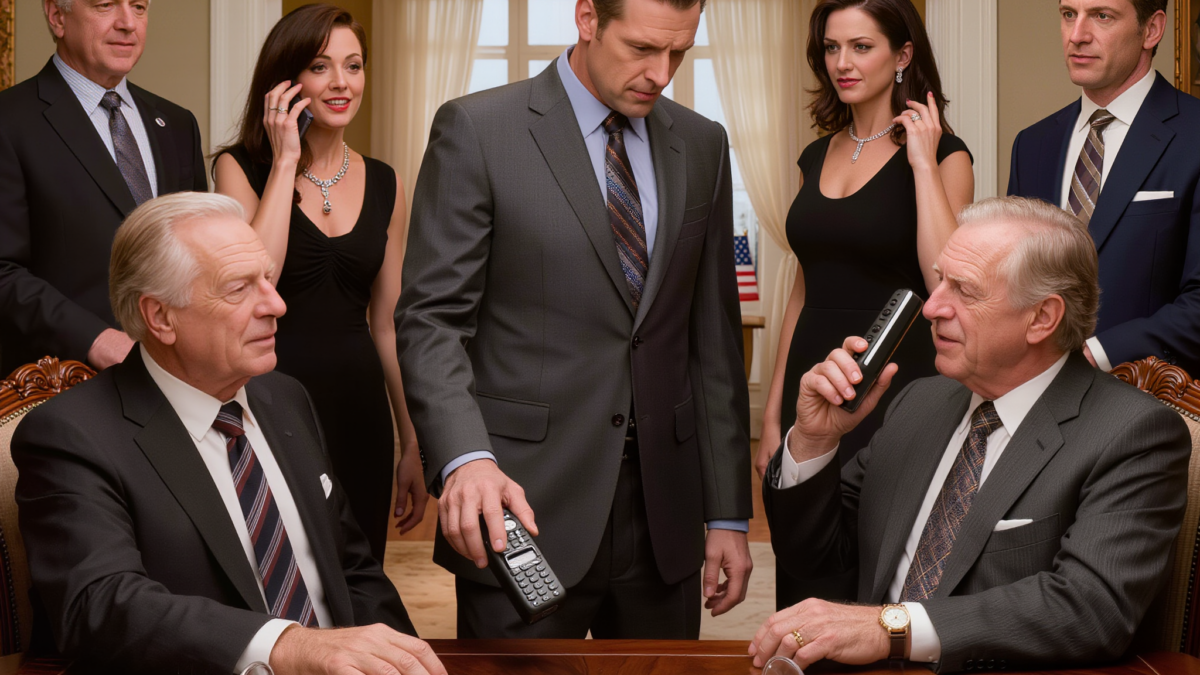
“Take the $2 million and sign the divorce papers, Ken. It’s a very generous severance package for a temporary husband, and certainly more money than a data analyst like you will ever see in your lifetime.”
My name is Ken. I’m 32 years old, and for three long years, I played the part of a struggling, low-income husband to test the true intentions of my wife and her incredibly arrogant family.
Tonight, that charade reached its breaking point.
I was sitting at their immaculate mahogany dining table, trying to maintain the peace for the woman I loved, when my father-in-law slid an envelope toward me. He looked down his nose at me and threatened to ruin my life if I didn’t walk away from his daughter.
They laughed at me. They actually laughed, humiliating me in front of their entire household staff.
But there was one thing they didn’t know.
The massive logistics empire they were so fiercely trying to protect was practically owned by me. I held the strings to their entire existence, and very soon, they would be the ones begging on their knees.
To understand what happened, I need to start with that envelope.
It slid across the polished mahogany table with a soft hissing sound that seemed to suck all the breathable air out of the dining room.
It was a thick, creamy-white envelope made from the kind of heavy stationery usually reserved for high-society wedding invitations or the funeral announcements of extremely wealthy people.
But I knew instinctively that it was neither an invitation nor a mourning notice.
This was a corporate execution disguised as a Tuesday night family dinner.
Inside that envelope was a certified cashier’s check for $2 million. Clipped neatly beneath it was a thick set of legal documents, with the words “Dissolution of Marriage” printed in bold, unforgiving black ink across the top.
I could see the edges of the pages. They had even taken the liberty of drafting a preemptive custody waiver, just in case Delaney and I had been secretly planning to start a family.
They wanted to make absolutely sure my bloodline would never have a legal claim to their precious inheritance or future family trusts.
It was a meticulously constructed legal barricade designed to erase my existence from their perfect, wealthy world.
I didn’t even need to open the folder to know exactly what it contained. The look on Garrison’s face told me everything I needed to know.
My father-in-law was smiling, but it wasn’t a smile of warmth, acceptance, or family affection. It was the tight, predatory expression of a man who had just swallowed a bitter pill but was determined to appear dignified and victorious while doing it.
He sat at the head of the table like a king holding court over his peasants.
My wife, Delaney, was sitting right next to me. I could feel the tension radiating from her body and the subtle, terrified tremors shaking her shoulders.
Her delicate hand gripped the imported linen tablecloth so tightly that her knuckles had turned completely white.
She hadn’t seen the check yet, but she recognized the atmosphere. She knew her parents better than anyone on earth.
She knew this lavish dinner, with its perfectly roasted beef and vintage wine, had never been about catching up.
It was a trap.
Garrison swirled his glass of expensive amber brandy, deliberately allowing the silence to stretch as he established his dominance over the room.
He was the chief executive officer of Merrick Global Logistics, a man who firmly believed that a person’s net worth was the only valid measure of their humanity.
“Go on, Kalan,” Garrison said, his voice smooth and cultivated, adopting the tone of a benevolent dictator. “Open it. Look inside. It’s a very generous offer. An unprecedented severance package, if you will. I had my personal lawyer draft it this morning.”
He leaned back in his chair.
“That piece of paper represents more money than a mid-level data analyst like you could earn in three lifetimes. You can finally pay off your little student loans. You can buy a decent house in a middle-class neighborhood. You can finally stop pretending you belong in our world.”
I looked at him. I mean, I really looked at him, analyzing every detail.
Garrison wore a bespoke charcoal suit that likely cost upward of $6,000. Outside in the massive circular driveway, his pristine, freshly detailed Porsche gleamed beneath the expensive security floodlights.
On his left wrist sat a heavy PC Philippe watch that constantly caught the light from the enormous crystal chandelier hanging above us.
He wanted to crush me visually with his wealth.
Slowly and deliberately, I looked down at my own wrist.
I was wearing a cheap knockoff watch I’d purchased in a bustling Chinatown alleyway for exactly 50 bucks.
It ticked a little too loudly in the quiet, cavernous room. Its faux-leather strap was fraying at the edges.
I wore it specifically for nights like this one.
It helped me play the part of the poor, unambitious, financially illiterate son-in-law they so deeply despised.
What Garrison didn’t know, what absolutely nobody in that suffocating room knew, was that his beloved Pek Philipe had been bought on credit.
His entire company, that massive, sprawling logistics empire he was so incredibly proud of, was bleeding cash at an uncontrollable, catastrophic rate.
He was leveraged up to his eyeballs in terrible commercial debt.
And there I was, the supposedly pathetic man he was trying to bribe out of his daughter’s life with a measly $2 million.
I checked the time on my fake watch.
It was exactly 7:14 in the evening.
At that very moment, across the Atlantic Ocean in a highly secure server room, my algorithms were processing automated trades that dwarfed his entire net worth in a matter of seconds.
I felt a strange, cold bubble of laughter rising deep in my chest.
It wasn’t hysteria. It was pure, dark, calculated amusement.
Two million dollars.
That was the literal price tag he’d placed on my marriage. That was the exact monetary value he’d assigned to his own daughter’s happiness and peace of mind.
He was trying to buy me off like a nuisance lawsuit.
“$2 million,” I said.
My voice was perfectly calm, steady, and entirely devoid of the intimidation he so desperately wanted to see.
I didn’t reach for the envelope. My hands remained comfortably on my lap.
“That’s a whole lot of zeros, Garrison. You must have had to liquidate a significant portion of your remaining portfolio just to put this meager amount together.”
“It’s freedom, Kalen,” Hadley, my mother-in-law, chimed in.
She was sitting at the opposite end of the long table, cutting her medium-rare steak with the surgical precision of a coroner.
She didn’t even bother looking up at me. Her attention remained fixed on the meat resting on her fine china plate.
“It’s a fresh start for you and, most importantly, for Delaney. You two were a fun little college rebellion, but the bohemian experiment is officially over. It’s time for adults to make adult decisions. She needs a provider, not a charity case.”
Delaney made a small, choked sound in the back of her throat.
She looked at her mother with absolute horror.
“Mom, stop it right now. Both of you, stop it.”
“We’re doing this for you, darling,” Hadley replied, finally raising her eyes.
Her gaze was completely devoid of maternal warmth. Her eyes looked like polished river stones, cold, gray, and unyielding.
“We’re simply correcting a terrible mistake, a momentary lapse in your judgment. You need someone who can provide a real lifestyle for you, not someone who relies on your salary just to pay the electric bill.”
I looked back at the thick envelope resting on the table.
If I genuinely wanted to, I could buy that entire sprawling estate in cash, burn it to the ground for my own amusement, and pay contractors twice their normal rate to rebuild it before the dessert plates were cleared away.
I could buy Hadley’s entire commercial real estate portfolio and turn it into a public parking lot.
But that wasn’t what they saw.
They looked across the table and saw a guy in an off-the-rack polyester suit who drove a rusted, seven-year-old Honda Civic with a failing transmission.
They saw a minor accounting error, a temporary problem that could be swiftly solved with a checkbook.
“And what exactly happens if I refuse your generous offer?” I asked, leaning back in my dining chair and feeling the expensive carved wood press against my spine.
Garrison stopped swirling his brandy.
He set the crystal glass down with a sharp clink and took a long, deliberate breath.
“Then things get ugly, Ken. Very, very ugly. And you simply don’t have the financial resources, legal representation, or stamina to fight ugly.”
His eyes narrowed.
“I’ll bury you in aggressive litigation. I’ll personally make sure you lose your little data entry job. I know people in your industry. You’re a relatively nice young man from a mediocre background. Don’t make this a war you can’t possibly win.”
He gestured toward the envelope.
“Just take the golden parachute. Sign the divorce papers today and land somewhere safe, somewhere very far away from my daughter.”
They thought this was the grand finale.
They truly believed they held every card in the deck, sitting comfortably atop their imaginary mountain of power.
But they didn’t know that I owned the casino.
I was the one who had manufactured the very deck they were playing with.
Their blinding arrogance concealed the reality that they were threatening a man who could erase their entire family legacy with a single phone call to his wealth management team.
I looked at Delaney.
A single silent tear was rolling down her cheek, ruining her carefully applied makeup.
She looked utterly broken by the very people who were supposed to protect her.
Seeing her pain flipped a heavy switch deep inside my chest.
The game of quiet observation was officially over.
It was time to pull back the curtain.
But to understand how we ended up at that explosive crossroads, I need to take you back to the beginning.
My grandfather was a mechanic.
He was a proud, hardworking, calloused man who spent 40 straight years with thick black grease permanently embedded beneath his fingernails and the heavy smell of motor oil clinging to his flannel clothes.
He lived in a modest, drafty house, drove a beat-up old truck, and never bought a single thing he couldn’t pay for in cash.
But beneath that blue-collar exterior, he was a quiet, methodical genius.
He taught me the most valuable lesson of my entire life.
He used to sit me down on his wooden porch, look me dead in the eye, and say:
“Rich screams for attention, Callen. But true wealth whispers.”
When he passed away quietly in his sleep, he left me a massive, almost unbelievable inheritance.
It was the stunning result of a lifetime of extreme frugality and brilliant, quiet investments in long-term blue-chip stocks.
I didn’t take that inheritance and blow it on flashy sports cars, designer clothes, or sprawling mansions.
I applied aggressive mathematics to it.
I went to school, learned everything I possibly could about global markets, and engineered complex predictive trading algorithms.
By the time I blew out the candles on my 25th birthday cake, I’d successfully transformed his impressive nest egg into a colossal financial war chest.
I established Thorn Capital, a highly secretive private equity firm registered overseas in London.
By the age of 30, I was a certified billionaire.
But I categorically refused to let the money change my daily lifestyle.
I’d seen exactly what sudden wealth could do to human beings. I’d watched money completely poison my own family.
Back during the devastating financial crash of 2008, my father lost everything.
He went completely bankrupt. His midsized construction business folded almost overnight.
The bank quickly foreclosed on our family home, and the immense stress broke his spirit.
And my mother?
She didn’t stay to help him rebuild.
She packed her expensive bags and left him for a wealthier real estate developer before the bank’s moving trucks even arrived to repossess our childhood home.
That particular trauma scarred me deeply.
It fundamentally altered the way I viewed human relationships and trust.
I made a silent, unbreakable vow that I would never, ever allow anyone to love me for my bank account.
I needed to know beyond a shadow of a doubt that if I lost every single dime tomorrow and was left with nothing but the clothes on my back, the person sleeping beside me would still be there.
So I became practically invisible.
I created the persona of Ken, a perfectly average, mildly ambitious data analyst earning a modest, unremarkable salary.
I rented a small apartment, bought my clothes off the rack at discount department stores, and drove a seven-year-old Honda Civic that rattled violently whenever I took it over 50 miles per hour on the highway.
That was exactly who I appeared to be when I met Delaney.
It happened three years ago, during a brutal Chicago snowstorm that had practically paralyzed the entire city.
I was driving my beat-up Honda down an icy highway when I spotted a car pulled over on the dangerous shoulder.
Its hazard lights blinked weakly against the blinding, swirling snow.
I pulled over to help.
There was Delaney.
She was soaked to the bone, her heavy winter coat ruined and her dark hair plastered against her freezing face.
She was furiously wrestling with a rusted lug nut on a flat tire, refusing to give up.
I rolled down my manual window, and the freezing wind immediately bit into my face.
“Need a hand out there?”
She looked up, shivering uncontrollably but still gripping the heavy steel tire iron like a weapon.
“I’ve called roadside assistance three times. They told me it’s a four-hour wait. My phone battery is dying in the cold, and I absolutely refuse to call my father.”
“Why not?” I asked, stepping out into the freezing slush.
My cheap shoes immediately soaked through.
“Because if I call him, he’ll send his private driver, and then for the rest of my natural life, I’ll never hear the end of how I’m completely incapable of surviving without his money,” she yelled over the howling wind.
She kicked the flat tire in sheer frustration.
I smiled right then and there, watching this stubborn woman fighting the winter.
I knew she was different.
She wasn’t looking for a savior with a platinum credit card to fix her life.
I changed her tire in the freezing temperatures. My hands went completely numb and were bleeding slightly by the time I finished, but I didn’t care.
Afterward, we went to a rundown late-night diner to warm up.
She told me she worked as a music therapist for autistic children.
She didn’t ask about my salary. She didn’t glance at my watch or ask what kind of luxury car I drove.
She just wanted to know whether I liked my job and whether I was happy with my life.
We fell in love quickly and deeply.
We married in a small, quiet, inexpensive ceremony that her parents flatly refused to attend because it wasn’t being held at their country club.
We moved into a tiny one-bedroom apartment that smelled like vanilla candles and old paperback books.
We ate cheap takeout on the floor, watched movies on a small television, and were incredibly, genuinely happy.
But dealing with her family was a completely different story.
Entering the Merrick family dynamic was like walking unarmed into a psychological war zone.
It wasn’t just one explosive event.
It was a thousand tiny, calculated, relentless cuts designed to remind me every single day that I was a worthless peasant trespassing in their royal court.
Take last Thanksgiving, for example.
Delaney had spent four exhausting hours meticulously baking a beautiful homemade pumpkin pie from scratch.
She was incredibly proud of its flaky crust.
When we arrived at the massive America estate, Hadley opened the heavy oak door.
She air-kissed Delaney, taking great care not to smudge her expensive makeup, then looked at the pie in my wife’s hands as though it were a dead raccoon dragged in from the gutter.
“Oh, how quaint,” Hadley said, her voice dripping with condescension. “Hand it to the kitchen staff, dear. The private chef has already prepared three gourmet desserts. But I’m sure the hired help will enjoy your little domestic project.”
Delaney’s proud smile shattered instantly.
But the real humiliation was waiting in the formal dining room.
The massive table was perfectly set for 24 people, complete with fine china, crystal goblets, and elegant calligraphy name cards.
I walked around the entire length of the table.
Garrison was seated at the head. Hadley was at the foot. Delaney had been placed near the middle, surrounded by wealthy corporate board members.
My name was nowhere to be found.
Finally, I spotted it.
My name card had been placed at a small, wobbly plastic folding table in the far corner of the room, right beside the swinging kitchen doors.
The kids’ table.
I was 32 years old, seated on a tiny chair between Delaney’s six-year-old nephew and the family’s exhausted teenage nanny.
Delaney froze.
“Mom, there must be a mistake. Callen is my husband. He sits with me.”
Hadley waved her hand dismissively, flashing a tight, artificial smile toward the wealthy guests watching the confrontation.
“Oh, darling, we simply ran out of space at the adult table. The board members brought unexpected guests. Ken doesn’t mind, do you? He’s so good with the children. Aren’t you, Ken?”
The entire room went silent.
Everyone was watching me.
It was a vicious, calculated power move.
I could have bought the catering company right then and there. I could have bought the entire house and evicted them on Thanksgiving Day.
But I looked at Delaney, who was physically fighting back tears of embarrassment.
If I made a scene, I would become the uncivilized brute.
I would prove their point that I lacked class.
So I swallowed my pride, forced a tight smile, and sat down in a chair so small that my knees hit the plastic table.
During the meal, Callaway, their snobbish head butler, deliberately skipped refilling my water glass while pouring expensive wine for everyone else.
Grover, the family driver, came in halfway through dinner and loudly demanded that I hand over my car keys so he could move my eyesore of a vehicle away from the luxury cars in the driveway.
He made sure to announce to the entire room that my car was leaking oil.
And then there was Barrett.
Barrett was Delaney’s older brother, the undeniable golden child of the Merrick family.
He arrived an hour late, smelling strongly of expensive cologne and cheap alcohol, twirling the keys to a brand-new Lamborghini around his finger.
He walked right past me at the kids’ table, patted my head like I was a golden retriever, and announced:
“Keep working hard at that cubicle, Callen. Maybe in 50 years you can afford the tires on my new ride.”
The final, unforgivable insult happened at Garrison’s highly publicized 60th birthday party.
I’d used my private wealth management connections to track down an extremely rare, pristine bottle of 1972 Macallen scotch.
It cost me exactly $5,000.
I’d told Delaney that I found a bottle with a damaged label at a discount liquor store for a hundred bucks so she wouldn’t suspect anything about my finances.
When I proudly handed the heavy box to Garrison in front of his wealthy country club friends, he tore away the wrapping paper, glanced at the slightly scuffed label, and sneered.
He didn’t even bother checking the vintage.
He simply saw an imperfect bottle from his poor, pathetic son-in-law.
He placed the $5,000 bottle on the floor beside his Italian leather shoes.
“Thank you, Ken,” he announced loudly to the watching crowd. “I’ll have the kitchen staff use this for deglazing pans, or perhaps for the cheap punch bowl at the company Christmas party.”
The crowd erupted in polite, cruel laughter.
Delaney grabbed my hand, dragged me into the coatroom, and sobbed against my chest, begging for my forgiveness.
I simply held her tightly and silently added every insult, every laugh, and every sneer to a mental ledger I fully intended to collect on.
The ultimate trigger came late one night while Delaney was sleeping.
I was working on my secure terminal when my private phone rang. It was Attekus, my chief legal counsel and wealth manager based in London.
“Sir,” Adekica said, his crisp British accent cutting through the silence of my dark apartment. “I’ve completed the deep-dive audit on Merrick Global Logistics. They’re facing a catastrophic lawsuit from international suppliers. They’re entirely leveraged. The company is weeks away from total, irreversible bankruptcy.”
I stared at the glowing screen.
The great Merrick empire was crumbling to dust.
And I knew Garrison would do anything, absolutely anything, to survive, including selling his own daughter to the highest bidder.
Financial desperation completely stripped away whatever thin veneer of politeness Garrison and Hadley had left.
They stopped being passive-aggressive and became actively, dangerously hostile.
The sinking ship of Merrick Global Logistics needed a massive infusion of cash to stay afloat, and Garrison believed he’d found his savior.
That was exactly when they brought in Benson.
Benson was the sole, spoiled heir to the Vance corporate empire, a massive shipping conglomerate that Garrison desperately needed to merge with to avoid financial ruin.
But Benson didn’t just want Merrick Global’s shipping routes.
He was an arrogant, possessive predator who wanted Delaney as a trophy wife to parade around his high-society events.
It was a medieval arrangement dressed up as modern corporate synergy.
Garrison needed Delaney to divorce me and marry Benson to secure the financial bailout.
I became the glitch in their perfect system, the obstacle they needed to eliminate by any means necessary.
One Saturday morning, I was home alone while Delaney was at the grocery store.
There was a loud, obnoxious pounding on our apartment door.
I opened it to find Benson standing in our narrow, dimly lit hallway.
He was wearing a ridiculously expensive designer polo shirt and holding an enormous bouquet of imported lilies.
He looked past me, scanning our small apartment with visible disgust, as though the very air inside our home was toxic and beneath him.
“Is Delaney here?” he demanded, without bothering to introduce himself or say hello.
“She’s out,” I replied, firmly blocking the doorway.
I’m significantly taller than him, and I don’t back down for anyone.
“Can I help you with something?”
Benson smirked and stepped forward aggressively, attempting to force his way inside.
I didn’t budge.
He bounced right off my chest as though he’d walked into a brick wall.
He took a step backward, his face flushing with immediate, entitled anger.
“Listen to me very carefully, buddy,” Benson sneered, looking me up and down like a piece of trash. “This little bohemian poverty simulation experiment Delaney is running with you? It’s cute, but it’s officially over.”
He adjusted his designer shirt.
“Garrison and my father are finalizing a massive corporate merger. Part of that deal involves uniting our families. You’re just a temporary placeholder, a financial liability keeping her from her true potential.”
I stared at him, feeling that familiar, cold calculation taking over my mind.
“You actually think you can purchase a human being like a piece of corporate real estate?”
“I can buy literally anything I want,” Benson replied, laughing loudly.
He tossed the expensive lilies onto the dirty hallway floor and crushed their petals beneath his expensive loafers.
“Look at this dump. You can’t give her the life she deserves. I can.”
He glanced back toward our apartment.
“By the way, I actually have a job opening in one of my regional warehouses. Entry-level box pushing. Fifteen bucks an hour. If you sign the divorce papers quietly and walk away, I’ll personally make sure you get an interview so you don’t starve on the streets.”
I looked at the crushed flowers on the floor, then back at Benson’s smug, highly punchable face.
“The only thing I’m going to regret about this conversation,” I said, my voice dropping into a dangerously low, quiet register, “is that I can’t send you an invoice for the two minutes of my time you just wasted. Get off my floor before I remove you myself.”
Benson backed away, momentarily terrified by the coldness in my eyes.
But he recovered quickly, forcing out a laugh to save face.
“You’re going to regret this, you broke loser. You’re playing out of your league.”
But Benson was only the obvious enemy.
The real betrayal, the one that truly sickened me and revealed how deeply the rot had spread, came from inside our own trusted circle.
Delaney had a best friend named Emory.
Emory was constantly at our apartment, drinking our coffee, eating our food, and crying on Delaney’s shoulder about her own failed relationships.
But recently, Emory’s advice had turned toxic.
Every time Delaney complained about the pressure from her parents, Emory would subtly twist the conversation to make me look like the problem.
“Maybe your dad is just stressed, Delaney. Maybe Ken should try harder to impress them. Honestly, don’t you get tired of struggling to pay the electric bill? Don’t you want a real house? A real future? Maybe Benson isn’t so bad.”
I’d never trusted Emory.
My instincts told me she was a parasite.
One afternoon, Emory left her designer handbag open on our kitchen counter while she went to the bathroom.
Her phone screen lit up with a new text notification.
I’m not the kind of man who snoops, but the name on the notification immediately caught my attention.
Hadley Merik.
I walked over and glanced at the glowing screen.
The message read:
“Did you plant the seed about his lack of ambition like we discussed? The transfer from the real estate trust for this month’s payment clears tomorrow. Keep pushing her.”
My blood ran cold.
I gripped the edge of the cheap laminate counter until my knuckles turned white.
Hadley was paying Delaney’s best friend.
She was using money from her real estate trust to finance a psychological campaign against her own daughter’s marriage.
It was a level of manipulation that almost impressed me in a twisted, horrifying way.
I quickly photographed the message with my own phone.
I didn’t tell Delaney right away.
I knew the revelation would completely break her heart, and I needed to gather all my evidence before making one final, decisive move.
As if the trouble at home wasn’t enough, my professional cover was also under attack.
To maintain my disguise, I worked as a senior analyst at a midsized insurance firm.
I did my work flawlessly and was being considered for a major promotion with a significant salary increase.
But I had a colleague named Dawson.
Dawson was a classic corporate snake, charming to upper management but absolutely ruthless and manipulative toward his peers.
We had worked together on a massive risk assessment project for six grueling months.
The day before the final presentation, Dawson intentionally locked me out of the shared network drive, put his own name on the final slide deck, and presented the entire project to the executive board as his sole creation.
When I confronted him in the break room later that afternoon, Dawson laughed in my face while casually stirring his coffee.
“What are you going to do about it, Ken? Go cry to HR? You don’t have the teeth for this industry. You’re a nice guy, and nice guys get eaten alive out here.”
He took another sip.
“You’re always going to be a loser at the bottom of the food chain. Accept your place.”
I stood there in the sterile break room, listening to the hum of the fluorescent lights.
Dawson thought he’d won.
He thought he’d successfully dominated a weak, powerless man.
He had no idea that my private equity firm actually owned the building we were standing in.
He didn’t know that my holding company was the majority shareholder of the insurance firm.
With a single text message, I could have had his entire department liquidated, his position terminated, and his 401(k) legally frozen pending a massive restructuring.
But I didn’t do it.
I simply gave him a genuine, terrifying smile and walked away.
Dawson’s betrayal was the final piece of the puzzle.
It confirmed everything my grandfather had warned me about.
Whether you’re dealing with wealthy, elite sociopaths in mansions or middle-class corporate climbers in cubicles, human greed is universal.
The weak are always preyed upon.
I was done playing the victim. I was done being the prey.
It was time to show them exactly what a predator looked like.
The moment I left the office that afternoon, I got into my rattling Honda Civic and rolled up the manual windows to block out the blaring city noise.
Then I dialed London.
“Attakus,” I said the moment he answered the highly secure satellite line. “Protocol Alpha. Execute it right now.”
“Sir,” Adakus replied, excitement barely contained in his usually stoic, professional voice. “Are you absolutely certain? This will require moving significant capital across multiple international borders. The financial regulators will notice the shock waves.”
“I want the Vance family debt,” I commanded, pulling out of the parking garage and merging into heavy Chicago traffic. “All of it. I want every single commercial loan, every line of credit, every mortgage on their shipping yards.”
I tightened my grip on the steering wheel.
“Buy it through our blind shell companies. Pay a massive premium if you have to. I want to own Benson’s entire future before the sun goes down today. I want to be the one who decides if he eats tomorrow.”
“Consider it done, Mr. Kalan.”
“And regarding Merrick Global, let them bleed,” I said coldly. “Don’t inject another dime of anonymous capital into Garrison’s accounts. Let the international lawsuit hit the public record. Let the panic set in at their board meetings. Let him feel the walls closing in.”
“Understood.”
I hung up the phone.
The wheels were finally in motion.
The trap had been meticulously set, but I needed one more crucial piece of leverage.
I needed the final nail in Garrison’s coffin.
I drove to a quiet, dimly lit diner on the far outskirts of the city.
Waiting for me in a dark back booth, nervously shredding a paper napkin into tiny pieces, was Fallon.
She’d been Garrison’s executive assistant for 15 miserable years.
She was a single mother who worked 60-hour weeks, and Garrison treated her like absolute garbage.
He constantly threatened her job, denied her raises, and forced her to miss her son’s school events.
I slid into the booth across from her.
I didn’t say a word.
I reached into my jacket pocket and placed a thick, sealed envelope on the sticky table.
Inside was a certified cashier’s check large enough to pay off her mortgage entirely, with enough additional money to fully fund her son’s college education.
Fallon stared at the envelope, then looked up at me, her hands trembling uncontrollably.
“Is… is it all there?”
“It is,” I said softly, making sure she felt safe. “You never have to walk into that toxic building again, Fallon. You never have to fetch his coffee or listen to him scream at you for his mistakes.”
I paused.
“Now, do you have what I asked for?”
She reached deep into her oversized tote bag, looked around the nearly empty diner to make sure we weren’t being watched, and pulled out a small, heavily encrypted flash drive.
She slid it across the table as though it were a live hand grenade.
“This is the Black Ledger,” Fallon whispered, her voice barely audible over the low hum of the diner’s music. “Garrison keeps claiming the company is failing because of the global supply chain, the bad economy, and the impending lawsuit.”
She leaned closer.
“It’s a lie, Callen. It’s Barrett.”
I raised an eyebrow, picking up the small drive.
“The golden child?”
Fallon nodded quickly, her eyes wide with lingering fear of her boss.
“Barrett has been systematically embezzling corporate funds for two solid years. He routes the money through fake vendor invoices and offshore shell accounts.”
She swallowed.
“That brand-new Lamborghini he bought last month? Paid for entirely by the company payroll account. He’s blown over $4 million on offshore casinos, luxury vacations, and high-end real estate leases.”
I watched her carefully.
“Garrison knows all about it,” she continued. “He’s known for months, but he’s covering it up to protect his precious heir. He’s willing to let the company die, lay off thousands of innocent workers, and sell Delaney to the Vance family just to keep Barrett out of a federal prison cell.”
I slipped the flash drive safely into my coat pocket.
A dark, terrifying clarity washed over me.
Garrison wasn’t simply an arrogant snob who hated poor people.
He was a criminal accomplice who was intentionally sacrificing his innocent daughter to protect his son’s vanity.
“Thank you, Fallon,” I said, standing up from the booth. “Go home. Hug your son. When the FBI raids that building next week, your name will be completely scrubbed from the records. You have my absolute word. You’re safe now.”
I left the diner and drove home to prepare for the fateful dinner.
Delaney was waiting for me in our apartment, wearing a simple, elegant black dress.
She looked completely exhausted, haunted by the relentless pressure her family had been placing on our lives.
“Kalen,” she said softly as we walked out to the Honda. “I have a terrible feeling about tonight. Mom sounded too efficient on the phone, like she was preparing for a hostile board meeting instead of a family dinner.”
She looked directly at me.
“If they say one single word about Benson, if they disrespect you one single time, we’re leaving. I mean it. I’ll walk out that door and never speak to them again.”
I reached over and squeezed her hand.
Her fingers were ice cold.
She was ready to throw away her entire family history, her entire inheritance, just to protect a broke data analyst.
That fierce loyalty was exactly why she deserved the world.
And it was exactly why I was going to give it to her.
“Don’t worry, Delaney,” I said softly, putting the car in gear and pulling out of the alley. “I can handle your father.”
She rested her head against the cold passenger window, watching the city lights blur past as we headed toward the affluent suburbs.
She thought this was going to be a battle of endurance.
She thought we were driving into a slaughterhouse to be carved up by her parents.
She didn’t know that I wasn’t walking into a trap.
I was the trap.
We pulled up to the massive iron gates of the America estate.
The high-tech security cameras tracked my rusty Honda as we slowly drove up the long, quarter-mile driveway.
I parked directly behind Garrison’s gleaming Porsche, ignoring the valet, who openly sneered at my vehicle.
I took a deep breath, feeling the heavy flash drive in my left pocket and the satellite phone connected directly to London in my right.
I looked at the enormous front doors of the mansion.
The storm wasn’t just coming anymore.
The storm had arrived.
We stepped out of the freezing Chicago wind and through the massive, custom-built solid mahogany doors of the Merrick family estate.
Instantly, the heavy, overpowering scent of imported white lilies assaulted my senses.
It was the exact same nauseating floral arrangement Benson had brought to our little apartment just days earlier.
I knew then, with absolute certainty, that Hadley had meticulously coordinated the entire evening with the Vance family.
The air conditioning in the cavernous foyer was turned down so low that it felt like walking into an industrial meat locker.
It was a physical tactic they often used to make guests feel uncomfortable and eager to leave.
Callaway, their longtime head butler, stood rigidly beside the entrance.
He wore his pristine uniform and an expression of permanent distaste.
He offered no warm greeting.
Instead, he extended a white-gloved hand toward Delaney, took her heavy winter coat with a slight bow, and then completely ignored my existence.
I had to drape my cheap, water-stained wool coat over a side chair myself.
Callaway gestured silently toward the formal dining room, his eyes firmly averted from mine.
I followed my wife down the long, echoing marble hallway.
Our footsteps created a hollow rhythm against the imported Italian stone.
The walls were lined with incredibly expensive, pretentious pieces of modern art that Garrison had purchased at high-society charity auctions.
He didn’t care about art.
He only cared about proving to his peers that he possessed enough disposable income to win the bidding wars.
Every step down that corridor felt like a slow, deliberate march toward a heavily fortified corporate boardroom rather than a family gathering.
When we finally entered the dining room, I realized the trap had already been set.
The enormous crystal chandelier cast harsh, unforgiving light over the room.
Garrison sat at the far end of the ridiculously long dining table, with Hadley immediately to his right and Barrett, the undeniable golden child, to his left.
Barrett was actually wearing a tailored dark navy suit that evening.
This was a remarkably rare occurrence.
Usually, if Barrett wore a suit to a family dinner, it meant he was preparing to ask his father for a substantial increase in his monthly allowance, or he needed a quiet bailout for another catastrophic gambling debt accumulated in some underground poker room.
Tonight, however, he wasn’t there to ask for money.
He was there for the pure entertainment.
He wanted a front-row VIP seat to watch the poor, pathetic data analyst finally get thrown out into the cold streets where he supposedly belonged.
“Sit down, Callen. Delaney, come sit over here next to your mother,” Garrison commanded, pointing his heavy crystal tumbler of amber brandy toward the chairs on the right side of the table.
His tone allowed no room for negotiation.
“I’m sitting next to my husband,” Delaney said firmly.
Her voice was remarkably steady, cutting through the heavy tension, though I could see the subtle, anxious trembling in her hands.
She pulled out a heavy wooden chair directly beside me, completely ignoring her mother’s loud, irritated sigh.
The first course was served almost immediately by the silent kitchen staff.
A rich, steaming lobster bisque.
Nobody touched it.
The polished silver spoons sat perfectly aligned beside the fine china bowls, reflecting the chandelier light.
The silence was dense, thick, and suffocating.
It was the sort of heavy silence that precedes a massive corporate layoff announcement or a devastating medical diagnosis.
“So,” Garrison began, skipping any pretense of polite family conversation.
He steepled his manicured fingers together, resting his elbows heavily on the imported white linen tablecloth.
He watched me with the unblinking intensity of a hungry hawk stalking a wounded field mouse.
“Let’s be adults here. Let’s put aside the emotional theater and look at the hard facts. Kalen, Delaney, we’re currently standing at a very critical, potentially fatal crossroads.”
He leaned forward.
“The global shipping market is shifting rapidly. The supply chain is fractured, and Merrick Global Logistics is facing significant, potentially catastrophic structural challenges. We desperately need strategic, powerful alliances to ensure the legacy of this family survives the coming economic winter. We can’t afford dead weight.”
“Dad, if this entire dinner is just another excuse to talk about the business or force Benson Vance into my life again, we’re leaving right now,” Delaney interrupted, her voice rising in protest.
She gripped the edge of the table.
“It’s about survival, Delaney!” Garrison snapped.
He suddenly slammed his palm against the table with such force that the silverware jumped and clattered against the china.
“This company is facing existential challenges you can’t possibly comprehend with your little music therapy background. We need real, tangible financial security. We need a corporate merger, and we need to align ourselves with families who truly understand the immense weight of legacy.”
He took a deep, aggressive breath, visibly composing himself and smoothing the lapels of his expensive suit before turning his icy, calculating gaze toward me.
“Callen, I’ve had my private investigators look deeply into your background again, just to make absolutely sure there were no hidden assets.”
He studied my face.
“You’re a smart enough kid. You got decent grades at a state university. You have absolutely no criminal record. You work relatively hard for your meager, pathetic little salary at that mid-level insurance firm.”
He paused.
“You’re perfectly average.”
“I genuinely appreciate the thorough background check,” I replied dryly, keeping my hands casually on my lap and my expression impassive.
“But let’s be completely honest with each other for once in three years,” Garrison continued, his voice dripping with deeply offensive, carefully practiced sympathy.
“You’re drowning in our world. You’re actively suffocating. You’re trying to swim in deep water with apex predators, and you’re nothing but a fragile minnow.”
He motioned toward his daughter.
“You can’t give Delaney the life she’s historically accustomed to. You can’t provide her with a diversified real estate portfolio. You can’t secure a proper college fund for your future children.”
His voice hardened.
“You can’t give her the one thing that matters in this world. Absolute security.”
“I give her genuine love,” I replied calmly, maintaining direct eye contact. “I pay our rent on time every single month. I support her career. I listen to her when she’s stressed. And most importantly, Garrison, I don’t treat her like a corporate asset to be traded.”
Barrett snorted loudly from across the table and took a massive, sloppy gulp of his vintage red wine.
“Love doesn’t pay the country club dues, Callen. Love doesn’t buy a house in a gated community. Love doesn’t get you a table at the best restaurants in the city.”
He leaned forward.
“You’re actively dragging her down into the mud with you. You’re a financial anchor around her neck, and you know it.”
Garrison raised his hand to silence his son, though a small, satisfied smirk played across his lips.
He clearly enjoyed the insult.
Then he reached beneath the heavy table and pulled out a thick, leather-bound legal folder.
He placed it carefully on the table and slid it across the polished mahogany.
It stopped exactly one inch from my dinner plate.
“We don’t want to be unnecessarily cruel about this transition,” Garrison said, his voice dropping into a low, persuasive whisper. “We want everyone to walk away from this table a winner.”
He gestured toward the folder.
“Callen, inside that folder is a permanent, elegant solution. A very lucrative, life-changing solution for a man in your precarious financial position.”
I reached out slowly and deliberately and flipped open the heavy leather cover.
There it was.
The thick, creamy-white envelope I’d anticipated.
The stack of legal documents.
The aggressive, ironclad custody waiver.
And sitting right on top, gleaming beneath the chandelier, was a certified cashier’s check for $2 million.
“$2 million,” Garrison announced, leaning back in his chair like an ancient king bestowing a rare blessing upon a starving beggar.
“Completely tax-free to you. I’ll personally handle the gift tax implications with my accountants tomorrow morning. That piece of paper is enough money to buy a modest, respectable house in the suburbs.”
He smiled.
“You could start a small retail business. Or you could simply travel the world. You could live like a local king in a much cheaper country, Mexico perhaps, or Thailand, wherever people of your social bracket go to retire early and pretend they made it.”
I looked closely at the divorce papers beneath the check.
They had been meticulously completed.
My full legal name.
Delaney’s full legal name.
The cited reason: irreconcilable differences.
Bright yellow sticky notes marked exactly where I needed to sign, date the documents, and have them notarized.
They had left absolutely nothing to chance.
“Sign the papers tonight,” Garrison said, gesturing toward an expensive silver Montblanc pen resting beside the leather folder.
“Take the check, put it in your pocket, and walk out that front door. An Uber Black is already waiting at the front gate, idling in the cold to take you back to your little apartment.”
He stared directly at me.
“You pack your cheap clothes tonight, and you never have to see us or speak to us again. And Delaney gets to save her family’s legacy by marrying a man who actually belongs in our tax bracket.”
“And if I refuse to take the money?” I asked, looking up from the documents and locking eyes with him.
My expression remained unreadable.
“Then I completely, systematically ruin you,” Garrison replied.
There was absolutely no hesitation in his voice.
He’d clearly rehearsed the threat.
“I’ll make sure you lose your little data job by Friday afternoon. I’ll personally blacklist you from every major corporation in this city. You won’t be able to get a job flipping burgers.”
He leaned toward me.
“I’ll drain your nonexistent bank accounts with frivolous, endless legal fees until you’re literally living in a cardboard box under a bridge. And eventually, the immense financial stress will break your marriage anyway.”
He spread his hands.
“Why not skip the inevitable suffering and take the massive payday?”
Hadley leaned forward, her heavy diamond necklace catching the light, her eyes shining with malicious intent.
“Think of it as a generous severance package, Callen. You did the husband job for three years. You failed to adapt to the corporate culture of this family. Now step aside and let the professionals take over. Let Benson take care of her.”
The room fell completely silent.
The only sound was the heavy, rhythmic ticking of the antique grandfather clock in the hallway.
Two million dollars.
To them, it was a massive fortune, a bribe so large that no sane middle-class man could possibly refuse it.
To me, it was a rounding error.
The silence stretched on, thick and suffocating.
They were waiting for me to break.
They expected the poor boy to see the shiny object, grab the cash, and run away with his tail between his legs.
Instead, I felt a cold, calculated rage settle deep in my stomach.
It wasn’t hot, chaotic, screaming anger.
It was icy.
It was the kind of rage that clears your mind, sharpens your vision, and slows time until you can see every moving piece on the chessboard.
“You honestly think,” I said slowly, emphasizing every syllable, “that my marriage to your daughter is worth exactly $2 million? That’s the market cap you place on her life?”
“I think that’s a very generous valuation,” Garrison replied with a smirk, glancing toward Barrett, who was grinning like an idiot, “considering the asset in question keeps rapidly depreciating the longer she stays attached to a sinking ship like you.”
He was casually discussing his own flesh and blood as though she were a used car losing Kelley Blue Book value with every passing mile.
I didn’t react.
Instead, I slowly turned my head toward my wife.
“Delaney,” I said, my voice gentle but firm. “What do you think about your father’s financial valuation?”
I fully expected Delaney to cry.
I expected her to shrink into her heavy wooden chair, cover her face with her hands, and beg her parents to stop their relentless cruelty.
I expected her to break.
I didn’t expect her to explode like a dormant volcano.
Delaney stood so suddenly and forcefully that her heavy dining chair toppled backward, crashing onto the hardwood floor.
She grabbed her crystal glass of red wine, a vintage 1998 Cabernet that Garrison prized above every other bottle in his cellar.
Then she hurled it with all her might.
She didn’t throw it at the wall.
She threw it directly at the open leather folder on the table.
The expensive crystal shattered on impact, sending shards of glass across the linen tablecloth.
Dark, blood-red wine immediately soaked into the pristine, perfectly typed divorce papers.
It pooled around the certified check, turning the crisp white paper into a soggy pink mess.
The ink began to bleed and run.
“You are monsters!” Delaney screamed.
Her voice wasn’t trembling anymore.
It was raw, guttural, and filled with a lifetime of repressed fury and disgust.
“You’re absolute, soulless monsters!”
“Delaney, behave yourself this instant! You’re ruining the linens!” Hadley shrieked, standing in shock, her hands flying toward her pearl necklace in an exaggerated gesture of offense.
“No! I’m completely done behaving. I’m done being your perfect little doll!”
Delaney pointed a shaking, furious finger directly at her father’s face.
“You honestly think you can buy him? You think you can sell me to the Vance family like a piece of meat to cover up your terrible business decisions?”
She drew a breath.
“I’m not a corporate merger. I’m your daughter!”
“I’m trying to save you from a miserable life of poverty!” Garrison roared back, his face turning an angry, mottled purple.
He slammed both fists onto the table, leaning forward aggressively.
“I’m trying to save this entire family! Do you have any idea how close we are to the absolute edge? If this Vance deal doesn’t happen this week, we lose this house. We lose the company. We lose everything we’ve built for four generations.”
“Good!” Delaney yelled, her voice echoing off the high ceilings.
“Lose it. Let it all burn to the ground. I don’t care. I’d rather live in a filthy dumpster in a back alley with Ken than spend another single day in a palace with you people!”
She turned toward me and grabbed my arm.
Her grip was incredibly strong, her fingernails pressing through the fabric of my suit jacket and bruising my skin.
“Come on, Ken. We’re leaving right now. Leave the ruined money. Leave them to their miserable lives. I never want to see their faces again as long as I live.”
Garrison rounded the table.
He moved shockingly fast for an older, out-of-shape man.
He grabbed Delaney’s other arm, his fingers digging viciously into her flesh and stopping her in her tracks.
“You’re not going anywhere,” he snarled, his breath heavy with expensive brandy and desperate panic.
“You’re going to sit back down in that chair. You’re going to sign those ruined papers right now, and you’re going to do your duty to this family!”
“Let go of me!”
Delaney struggled, twisting her body and trying to wrench her arm away from his grip.
Slap.
The sharp sound of skin striking skin echoed through the massive dining room like a gunshot.
Garrison had backhanded her.
It wasn’t a playful tap.
It was a full, forceful, open-handed strike across her face.
Delaney stumbled backward, her hand immediately flying toward her reddening cheek.
Absolute shock washed over her expression.
She stared at her father as though she’d never seen him before in her entire life.
Hadley gasped loudly, covering her mouth with both hands.
“Garrison, what have you done?”
Even Barrett stopped smirking.
His wineglass hovered halfway to his mouth, his eyes wide with genuine shock.
Garrison stood panting heavily, his chest heaving, his eyes wild and completely unhinged.
He looked down at his trembling hand, then back at Delaney, desperately trying to rationalize what he’d done.
“You… you made me do that, you ungrateful, spoiled little brat. You pushed me to the brink.”
Something deep inside my chest finally snapped.
But it wasn’t a chaotic, emotional break.
It was cold and mechanical, like a heavy industrial switch permanently flipping from passive observer to active destroyer.
The three years of pretending were officially over.
I stood up.
I didn’t rush. I didn’t shout. I didn’t posture or puff out my chest.
I simply reached down, buttoned my cheap suit jacket with slow precision, and squared my shoulders.
The submissive slouch I’d carefully maintained for three years completely disappeared.
I stood at my full height, towering over Garrison’s hunched form.
“Do not ever touch my wife again,” I said.
My voice was quiet.
Deadly, terrifyingly quiet.
It was the voice of a man who held the power of life and death in a corporate sense.
Garrison turned his wild eyes toward me, sneering, still riding the toxic adrenaline of his violence.
“Or what? What exactly are you going to do about it, data boy? Are you going to analyze me to death with a spreadsheet?”
He pointed toward the doorway.
“Get out of my house right now before I have the security team drag you out by your hair and throw you into the street.”
“You don’t have a security team anymore, Garrison,” I replied, stepping closer and forcing him to look up at me.
“You fired them last month to save money on payroll. Just like you fired the entire landscaping crew. Just like you haven’t paid the catering company for this exact dinner yet.”
Garrison froze.
The angry purple color rapidly drained from his face, replaced by sudden, sharp confusion.
“How? How could you possibly know about the catering bill?”
I reached into the inner pocket of my suit jacket and pulled out my phone.
But it wasn’t the cracked, outdated smartphone I always used around them to maintain the appearance of poverty.
It was my real phone.
A heavy, encrypted, highly secure satellite device connected directly to my servers in London.
“Because, Garrison,” I said, my voice dropping to a glacial calm that seemed to chill the entire room, “I know absolutely everything.”
I unlocked the satellite phone.
Its bright interface illuminated the dark dining room.
Then I looked toward my wife, who was still holding her bruised cheek and staring at me in total confusion, tears gathering in her eyes.
“Sit down, Delaney,” I instructed gently, pulling out a clean chair for her.
“Kalen, please, let’s just go home,” she sobbed softly, her voice breaking. “I don’t want to be here anymore. I’m scared.”
“No,” I replied firmly, keeping my eyes locked on Garrison’s terrified face. “We’re not going anywhere. Not until I officially finish this transaction.”
I looked around the table.
“They wanted a high-stakes business meeting. I’m giving them one.”
I pressed the speed-dial button for number one on the screen.
The phone rang once.
Twice.
“Mr. Ken.”
A crisp, highly professional British voice answered through the speaker.
It was Adakus, my chief legal counsel.
It was late evening in Chicago, which meant it was the middle of the night in London.
But Attekus had answered on the second ring.
That was exactly what I paid him millions of dollars a year for.
I placed the heavy satellite phone directly on the dining table, on top of the wine-soaked divorce papers.
Then I switched the audio to maximum speaker volume so every word would echo off the walls.
“Attakus,” I said, projecting my voice clearly across the silent room. “I’m officially activating Protocol Omega. We’re going live right now.”
Garrison looked completely baffled.
He glanced around the room as though a SWAT team might burst through the windows at any moment.
Then he looked at the phone and back at me.
“Who is that? Is that the police? Are you threatening me in my own home?”
“Attakus,” I continued, ignoring Garrison’s panic. “Could you please read the current, up-to-date shareholder structure of Meric Global Logistics for the room?”
I paused deliberately.
“Make it incredibly clear for the CEO.”
“Certainly, sir.”
Attakus’s voice filled the cavernous dining room.
It was the unmistakable voice of legal authority.
“As of the market close at 4 p.m. today, the official shareholder breakdown is as follows. Institutional investors hold exactly 30% of the voting stock. The Merrick family trust holds 18%. Individual retail investors hold 1%.”
“And the majority shareholder?” I asked, taking a slow step toward Garrison.
I watched the sweat begin to form on his forehead.
“The majority shareholder is Thorn Capital,” Adekus recited flawlessly. “Holding 47% of the voting stock directly. Additionally, through three subsidiary blind trusts that we manage, Thorn Capital legally controls the voting rights for another 4%.”
He paused.
“Total operational control: 51%.”
Garrison’s face went completely ghostly white.
All the blood seemed to drain from his head. He gripped the edge of the heavy table to support himself, his knuckles turning white.
“Thorn Capital,” he whispered. “That… that’s a massive offshore private equity firm. What does that have to do with you? You’re a data analyst. You make $60,000 a year.”
“Attakus,” I said, leaning directly over the table and staring into Garrison’s eyes. “For the official record, who is the sole owner, founder, and primary beneficiary of Thorn Capital?”
“You are, Mr. Kalan,” Attekus replied without missing a beat. “Total verified assets currently under our management: $10.8 billion.”
Hadley dropped her expensive silver fork.
It clattered loudly against her fine china plate, sounding like an alarm bell.
Barrett choked on his wine, coughing violently into his linen napkin as his face turned red.
“That’s a complete lie,” Garrison whispered.
He was hyperventilating, his eyes darting frantically around the room, searching for an escape from what was becoming his worst nightmare.
“That’s statistically, logically impossible. You… you drive a rusted Honda. You live in a cramped, smelly apartment in Wicker Park. You buy your clothes at discount stores.”
He stared at me in disbelief.
“You’re a nobody.”
“I’m a nobody who currently owns 51% of your entire life,” I replied coldly.
I turned my attention back to the phone.
“Attakus, what’s the current financial status of the Vance family shipping debt?”
“Thorn Capital aggressively acquired the entirety of the Vance shipping commercial debt portfolio exactly two hours ago,” Adakus stated. “We paid a slight premium to expedite the transfer, but we’re now effectively the primary secured creditor for both Merrick Global and the entire Vance family conglomerate.”
His voice remained perfectly controlled.
“We own all of their bank notes. We hold the mortgages on their shipping yards. We own them.”
“Thank you, Attekus. Prepare the official board notifications for both companies. I’ll see you in Chicago on Monday morning.”
“Understood, sir. Have a pleasant evening.”
I tapped the screen and ended the call.
The silence that followed was heavier than lead.
It was the devastating sound of an entire dynasty crumbling into dust in real time.
Garrison sank slowly and pathetically into his chair.
He looked like he’d aged 20 years in 20 seconds.
The arrogant, untouchable billionaire CEO was gone, replaced by a terrified, broken old man who realized he’d just threatened his executioner.
“You,” Garrison stammered, his hands shaking violently on the table. “You’re the anonymous investor. You’re Thorn Capital.”
He struggled to continue.
“The entity that kept quietly bailing us out of our logistics failures. The one who bought out the River North expansion project. The one who financed our new fleet of trucks.”
“Yes,” I replied, walking slowly around the table, watching the terror in his eyes. “I’ve been secretly keeping your pathetic, mismanaged company alive for three solid years, Garrison.”
I stopped beside him.
“Every single time you screwed up, every time you made a terrible, arrogant bet on the Asian markets, I was there to catch you.”
I glanced toward the others.
“I quietly injected capital through anonymous proxies because I didn’t want you to know it was me.”
“Why?”
Delaney’s voice was barely a whisper.
I turned to look at my wife.
She was staring at me with wide, completely shocked eyes.
She wasn’t looking at the wine-soaked check anymore.
She was looking at me as though I were a complete stranger who had broken into her home wearing her husband’s face.
“Because I wanted to see if you people could respect me without the money,” I replied, turning my attention back toward Garrison and allowing the disgust to enter my voice.
“I wanted to see if you were capable of treating a normal human being with basic dignity simply because they were human.”
I looked directly at him.
“I wanted to see if family meant anything to you. But you aren’t capable of that.”
My voice hardened.
“You’re a bully, Garrison, and bullies only respect one single thing.”
I reached down and picked up the wine-soaked $2 million cashier’s check.
“Force.”
I walked over to the heavy silver candelabra sitting in the center of the table.
Then I held the edge of the certified check directly above the open flame.
“No!” Hadley gasped, finally finding her voice.
She lunged forward across the table, reaching toward me.
“Callen, stop! Are you insane? That’s… that’s $2 million. That’s real cash!”
The heavy, wine-soaked paper caught fire almost instantly.
A bright orange flame curled upward, eating through the zeros, the authorized signature, and the disgusting bribe they’d used in their attempt to destroy my marriage.
I held it until the heat began to burn my fingertips.
Then I dropped the flaming paper directly onto Garrison’s empty dinner plate.
We all watched in complete silence as $2 million turned into black, useless ash.
“I make $2 million on a bad Tuesday while I’m drinking my morning coffee,” I said coldly, brushing the soot from my hands.
“I don’t need your money, Garrison. I never did.”
I looked down at him.
“In fact, I’ve spent about $300 million of my own personal wealth fixing your catastrophic management mistakes just to keep a roof over your head.”
Then I turned my attention toward Hadley.
She was shrinking into her large chair, clutching her pearls like a shield, trembling uncontrollably.
“And you?” I asked, my voice slicing through the room.
“Hadley. The woman who intentionally puts me at the kids’ table at Thanksgiving. The woman who sneers at my wife’s thrift-store clothes.”
I moved closer.
“Do you have any idea who actually paid for your massive kitchen renovation last year? Who funded that ridiculous luxury trip to the Maldives for your country club friends?”
Her mouth opened and closed soundlessly.
She couldn’t form a single word.
“Dividends,” I stated simply. “Quarterly dividends from Merrick Global.”
I let that sink in before continuing.
“Dividends that only existed because I artificially inflated the stock price by aggressively buying back shares through shell accounts.”
I looked at her expensive jewelry.
“I literally paid for your lavish lifestyle. I financed your arrogance.”
I paused.
“And worse, I know exactly what you did with that money. I know you used your real estate trust to pay Emory to emotionally manipulate your own daughter into a divorce.”
Delaney gasped and whipped her head toward her mother.
“You… you paid Emory?”
Hadley couldn’t even look at her daughter.
She just stared down at the table, a tear rolling across her heavily powdered cheek as she trembled with shame.
But I wasn’t finished.
I reached into my coat pocket and pulled out the encrypted flash drive Fallon had given me at the diner.
I tossed it onto the table.
It slid across the polished mahogany and stopped directly in front of Barrett.
“What is that?” Barrett asked, his voice cracking.
He backed away from the small device as though it were toxic.
For the first time that evening, he looked genuinely terrified.
“That,” I said, pointing toward it, “is the Black Ledger, provided directly by your father’s assistant, who is now fully under my legal protection.”
I watched his expression change.
“It details the $4 million you systematically embezzled from the corporate payroll to fund your Lamborghini and your offshore gambling habits.”
I continued without raising my voice.
“It details exactly how your father covered it up, effectively committing federal wire fraud to protect you. It has every wire transfer, every date, every IP address.”
Barrett looked toward his father in sheer panic.
Garrison simply closed his eyes.
Heavy tears began running down his wrinkled face.
They weren’t tears of remorse for hitting his daughter.
They weren’t tears of guilt over the fraud.
They were tears of absolute terror for his own survival.
He finally understood that the emperor had no clothes and that the executioner was standing in his dining room.
“Please,” Garrison croaked, his voice small, pathetic, and broken. “Kalen, I didn’t know it was you. We… we can work this out internally. We don’t need to involve the authorities.”
He looked up at me.
“We’re family. You married my daughter. I love my daughter.”
“Family?” I laughed.
It was a harsh, unforgiving sound that echoed throughout the large room.
“Ten minutes ago, you brutally slapped your own daughter across the face. Ten minutes ago, you tried to sell her to Benson Vance like a prize-winning broodmare to cover up your son’s felonies.”
I looked him directly in the eye.
“You don’t know the definition of the word family. You’re a parasite feeding off her loyalty.”
I leaned down, placing both hands flat on the table and bringing my face just inches from his tear-stained face.
“I sent a heavily encrypted email to the board of directors while we were eating the soup course,” I whispered, making sure he heard every word.
“Emergency meeting, Monday morning, 9:00 a.m. sharp.”
I paused.
“The only item on the agenda is a vote of no confidence in the CEO, backed by 51% of the voting shares.”
Then I straightened.
“You’re finished. Pack your office this weekend.”
Garrison began sobbing openly, burying his face in his hands.
“You can’t do this. You can’t take it from me. This is my company. My father built this empire from the ground up.”
“And you destroyed it,” I replied, standing upright and looking down at him without pity.
“I’m taking it from you. Not because I particularly want to run a logistics firm, but because you simply don’t deserve to have it.”
I turned away from the wreckage of the Merrick family and looked toward Delaney.
She was the only person in that massive, sickeningly opulent house who mattered to me in the slightest.
She stood beside the large bay window, her arms wrapped tightly around her own body, shivering violently despite the oppressive heat in the room.
Her beautiful face was marked by the angry red imprint of her father’s hand.
She looked devastated.
Her entire reality, everything she thought she knew about her family, her husband, and her life, had been shattered in the span of 15 minutes.
“Delaney,” I said, my voice instantly softening as the cold corporate aggression disappeared.
I took a slow step toward her.
“Let’s go home.”
“Who are you?” she asked.
Her voice shook so violently that I could barely hear her over Garrison’s sobbing.
She took a step backward, pressing herself against the window.
“Three years, Callen. Three entire years, you lied to my face every single day.”
Her eyes filled with tears.
“You watched me struggle to pay the utility bills. You watched me stress about making rent on time. You watched me cry in the bathroom because I couldn’t afford a new winter coat, and I didn’t want you to feel bad about your salary.”
She struggled to get the next words out.
“And you were… you were a billionaire the whole time.”
Her voice broke.
“You let me suffer.”
“I’m so deeply, truly sorry,” I replied, keeping my distance so I wouldn’t frighten her further.
And I meant every word.
The pain in her eyes was the one thing I hadn’t properly calculated.
“I was terrified, Delaney. I was terrified that if you knew about the money, you would eventually become exactly like them.”
I swallowed.
“I needed to know beyond a shadow of a doubt that someone loved me for me, not for my portfolio. I needed to know I wasn’t just a walking bank account.”
“I loved you for you!” she shouted.
Tears streamed down her face, washing away what remained of her makeup.
“I loved you when we had absolutely nothing. You didn’t trust me. You tested me like… like a lab rat in a sick psychological maze.”
She shook her head in disbelief.
“You let my family abuse you, and you let me fight them for you while you secretly own them.”
Her voice rose again.
“You let me panic over a $50 grocery bill while you were buying shipping conglomerates.”
“I know,” I said, holding my hands up in surrender and feeling the crushing weight of my deception.
“I was incredibly wrong. My past trauma blinded me to the reality of who you are. I see that clearly now.”
I kept my voice steady.
“I let my fear hurt you, but I’m completely done hiding from the world. Please, just let me take you out of this toxic house.”
I glanced toward the doorway.
“We can talk about everything at our apartment. You don’t have to stay here with them.”
She looked at her parents one last time.
Garrison was completely broken, staring blankly at the ashes of the $2 million check on his dinner plate.
His legacy was literally going up in smoke.
Hadley was catatonic, realizing that her socialite status, country club memberships, and entire identity were evaporating.
Barrett stared at the encrypted flash drive on the table as though it were a venomous snake about to strike, realizing he might be facing federal prison.
Then Delaney looked back at me.
She saw the genuine regret in my eyes.
She saw the same man who had changed her tire during a freezing snowstorm three years earlier.
The man who held her when she was stressed.
The man who loved her.
She walked slowly toward me.
She didn’t hug me.
Instead, she raised her hand, balled it into a fist, and struck me squarely in the center of my chest.
Hard.
“You represent absolutely everything I hate about corporate America,” she said, her voice thick with emotion, her chest heaving.
Then she grabbed my hand, intertwining her cold fingers tightly with mine.
“Take me home,” she commanded without looking back at her parents.
She paused.
“But you’re sleeping on that terrible IKEA couch for a very, very long time.”
The long drive back into the city was filled with a heavy, intense silence as we tried to process everything that had happened.
It wasn’t the fearful, anxious silence of the drive there.
This silence was different.
We pulled up to our apartment building in Wicker Park.
I parked the rusted, rattling Honda Civic beside the overflowing dumpster in the dark alleyway.
The scene suddenly felt utterly ridiculous.
A billionaire parking a junk car in an alley to maintain an elaborate, paranoid lie.
We went upstairs.
I unlocked the door.
The familiar smell of vanilla candles and old books greeted us.
It felt like stepping into another lifetime.
A life that had just permanently ended.
Over the next five hours, sitting on opposite sides of our small living room, I told Delaney absolutely everything.
I didn’t hold back a single detail.
I told her about my grandfather’s harsh lessons on wealth.
I told her about the predictive algorithms I’d built in college.
I told her about establishing Thorn Capital in London so I could remain anonymous.
I explained the exact mechanics of buying her father’s bad debt and how I’d ruthlessly purchased the Vance family’s debt that very afternoon to protect her from Benson.
I told her about the trauma of my mother leaving when the money ran out and how that fear had paralyzed my ability to trust.
“So, you legally own everything?” she asked, her eyes wide as she wrapped a thick fleece blanket around her shoulders in the armchair.
“Pretty much,” I admitted, looking down at my hands, still ashamed of my deception.
“And the Honda?” she asked, gesturing toward the window.
“I bought it off Craigslist for $2,000 cash. It genuinely does need a new transmission. I wasn’t lying about that part. It’s a terrible car.”
She stared at me for a very long time.
The silence stretched until I thought she might ask for a divorce anyway.
Then, unexpectedly, she began to laugh.
It started as a small, disbelieving giggle.
Then it rapidly escalated into a full-blown, tear-inducing belly laugh.
She laughed until she was gasping for air and clutching her stomach.
“What is so funny?” I asked, completely confused by her reaction.
“My dad,” she gasped, wiping her eyes with the sleeve of her sweatshirt. “My arrogant, snobbish dad trying to intimidate you with his leased Porsche.”
She laughed again.
“My mom bragging about her fake tax write-off charity galas and her kitchen renovation. And you… you could have literally bought the entire country club, fired the board, and turned it into a public park.”
She shook her head, letting out a long, heavy sigh that seemed to release years of tension.
“It’s twisted, Callen. It’s really, really deeply twisted and messed up.”
“But…”
“But what?”
“But you saved me tonight,” she said softly, the humor fading into genuine, raw gratitude.
She gently touched her bruised cheek.
“When he hit me, I felt so incredibly alone in that massive house. I felt like property, like an object they could trade.”
Her eyes met mine.
“And then you stood up. You didn’t look like a timid data analyst anymore. You looked like a titan. You burned his entire reality to the ground to protect me.”
She rose, walked over to the cheap armchair where I was sitting, and sat sideways on my lap, wrapping her arms around my neck.
“I’m still furious with you,” she said, resting her forehead against mine, her breath warm against my skin.
“I’m furious that you lied for three years. I’m furious that you let me worry about grocery bills.”
She paused.
“We’re going to have to go to intense couples therapy. Expensive therapy, which you can apparently afford to pay for in cash.”
“I can definitely afford it,” I replied with a smile, wrapping my arms tightly around her waist and burying my face in her hair.
“And,” she added, “you’re going to buy me a new car. A safe one with a working heater.”
“Anything you want,” I promised.
The weekend passed in a blur of honest conversations, tears, and healing.
By Monday morning, the emotional fallout had mostly settled.
But it was time to finalize the corporate destruction.
Monday morning.
The towering glass headquarters of Merrick Global Logistics rose above downtown Chicago.
I didn’t drive the Honda.
Instead, I had my private driver bring the vehicle I’d kept in secure, climate-controlled storage for the past three years.
A massive black Rolls-Royce Phantom.
We pulled up directly to the front entrance, blocking the executive drop-off lane.
The valet rushed forward, looking angry and ready to yell at me to move the car.
Then he saw me step out of the back seat.
I wasn’t wearing the baggy, off-the-rack polyester suit anymore.
I was wearing a perfectly tailored Tom Ford three-piece suit and a real, obscenely expensive watch.
“Excuse me, sir. You need a visitor pass to park here,” the head security guard said, stepping into my path with his hand raised.
“I own the building,” I replied without breaking my stride, walking straight past him.
Attakus was waiting for me at the VIP elevator bank.
He handed me a thick stack of legal files.
“Everything is perfectly ready, sir. The board of directors is fully assembled on the 45th floor. They’re highly anxious. The rumors have already started to circulate.”
We rode the elevator in silence.
When the heavy doors opened, we walked directly into the main boardroom.
The room was packed.
Twelve men and women wearing expensive suits sat around the enormous conference table.
Garrison sat at the head.
He looked like an actual corpse. His eyes were bloodshot, his skin was gray, and he looked incredibly small, practically drowning in his leather executive chair.
Beside him sat Benson Vance, looking incredibly smug and holding a thick folder containing the merger documents he believed they were about to sign.
When I confidently entered the room and stood at the front, nobody spoke.
The board members already knew.
Attekus had sent the briefing packets at dawn.
They’d seen the numbers.
They knew who I was.
“Gentlemen, ladies,” I said, my voice commanding the room. “Please sit down.”
Dalton, a highly respected senior board member who had completely ignored me at Thanksgiving, immediately stood, buttoned his suit jacket, and gave me a deep, respectful nod before sitting back down.
Power recognizes power.
“As the verified majority shareholder,” I began, looking directly at Garrison, who couldn’t even meet my eyes, “I’m officially calling this emergency meeting to order.”
I glanced around the table.
“First item on the agenda: the immediate removal of Garrison Merrick as chief executive officer. Effective this exact second.”
“Seconded,” Dalton said loudly.
They smelled blood in the water.
They knew exactly where the real power lay, and they were eager to align themselves with it.
“All in favor?” I asked.
Every single hand in the room went up.
Except Garrison’s.
“Motion carried,” I said coldly. “Garrison, please vacate the chair immediately. Security will escort you to your office to pack your personal belongings.”
Garrison stood on shaking legs.
He shuffled toward the side of the room, staring down at his shoes like a broken man.
I walked over and sat at the head of the table.
It felt incredibly comfortable.
“Now, regarding the proposed Vance merger,” I said, turning my attention toward Benson.
His smug smile had completely vanished, replaced by utter confusion.
“It’s officially canceled.”
I watched his expression.
“Instead, Thorn Capital is aggressively calling in the massive debt on Vance Shipping. We’re initiating a hostile, absolute takeover of all their assets.”
I leaned back in the chair.
“By this Friday afternoon, the entire Vance family conglomerate will be reduced to a minor subsidiary of Merrick Global.”
Benson jumped to his feet, his face turning red with rage.
He slammed both hands onto the table.
“You can’t do this! My father will sue you into the ground. We’ll tie you up in court for decades.”
“Your father doesn’t have the legal capital to afford a lawyer right now,” I replied with a thin smile, enjoying his panic. “I froze his accounts at 8:00 a.m. this morning.”
I reached into my folder, removed a single sheet of paper, and slid it across the table toward him.
“However, I believe we do have an opening in our regional warehouse.”
I paused deliberately.
“Entry-level box pushing. Fifteen dollars an hour.”
Benson stared at me.
“Fill out the application, Benson, and I’ll make sure human resources gives you a fair interview.”
Then I looked directly into his eyes.
“Now, get out of my boardroom.”
Three months later, the dust had finally settled.
The corporate transitions were complete.
We hadn’t moved out of the city yet.
Delaney and I were taking our time looking at houses, real, comfortable homes with big backyards and quiet streets, not cold, echoing, pretentious mansions.
For the time being, we were still living in our small Wicker Park apartment.
Although I had quietly purchased the entire building to fix the terrible heating problems and upgrade its security.
It was a quiet, rainy Sunday evening.
There was a hesitant, soft knock on our apartment door.
Delaney walked over, checked the peephole, and opened it.
Standing in the narrow hallway were Garrison and Hadley.
But they looked entirely different.
Their blinding arrogance had been systematically stripped away.
Garrison wore a simple, inexpensive cardigan sweater and khakis.
No tailored suit.
No Pekk Philipe watch.
Hadley wore plain blue jeans and a modest, unbranded blouse.
I’d never seen her wear jeans during the entire time I’d known her.
She looked exhausted, but somehow more human.
“Can we come in?” Garrison asked.
His voice was humble, quiet, and completely stripped of the booming bluster he’d once used to command boardrooms.
“Sure,” Delaney replied softly, stepping aside to let them enter.
There was still a cautious distance between them, but the open hostility was gone.
They walked into our apartment.
They didn’t make a single disparaging comment about the peeling paint in the hallway.
They didn’t wrinkle their noses at the smell of vanilla candles.
They didn’t look down on the cheap IKEA furniture or the small television.
“We brought dinner,” Hadley said awkwardly, holding up two large, greasy pizza boxes from the little restaurant on the corner. “The one you always liked, Delaney.”
We sat on the floor around the cheap coffee table.
We didn’t use plates.
We ate pizza directly from the cardboard boxes.
“This is actually very good pepperoni,” Garrison said, chewing thoughtfully.
He looked around our small living room as though seeing it for the first time without the lens of judgment.
“I haven’t had delivery pizza in maybe 25 years. It tastes real.”
“It’s $3 a slice, Dad,” Delaney replied, a small, genuine smile forming on her face.
Garrison put down his pizza crust and looked directly at me.
He looked older, certainly, but strangely healthier.
The immense, crushing stress of hiding a failing empire, managing crippling debt, and covering up for his criminal son was gone.
The worst had happened.
And he’d survived it.
“Callen,” Garrison said, clearing his throat and looking down at his hands before meeting my eyes.
“I… I’ve been closely reading the quarterly financial reports that Attekus sends me.”
He paused.
“The new executive management team you installed, they’re absolutely brilliant. Operational revenue is up 12% in just one quarter. The supply chain issues are resolved.”
“They know exactly what they’re doing,” I replied evenly, taking a sip of water.
“They focus on logistics, efficiency, and worker retention. Not country club politics and optics.”
“They do,” Garrison agreed with a slow nod.
He took a deep breath, clearly struggling with what he was about to say.
“I wanted to come here tonight to say thank you.”
His voice was quiet.
“For keeping me on the board as chairman emeritus. For letting me keep my face in front of the club members so I didn’t lose every shred of my dignity.”
He looked down again.
“For not pressing federal wire fraud charges against Barrett, even though you forced him to work the warehouse floor to pay back every dime of the embezzlement.”
He swallowed.
“You didn’t have to do any of that. You had every legal, financial, and moral right to crush us completely into the dirt.”
“I thought about it,” I admitted honestly, looking over at Delaney, who was watching me closely.
“I wanted to ruin you.”
I paused.
“But crushing you would have deeply hurt Delaney. And my ultimate goal is never to hurt her. It’s to protect her.”
I met his eyes.
“I set a firm boundary. You crossed it. There were severe consequences.”
My voice remained steady.
“But I don’t destroy family just for the sake of petty revenge. That makes me no better than Benson Vance.”
Hadley reached across the small table and gently touched my hand.
It was the first time she’d ever touched me with any genuine warmth or humility.
Her hand trembled slightly.
“We were so incredibly wrong, Ken,” she said. “We were blindingly, horribly wrong.”
She looked at me, her expression filled with regret.
“We judged you entirely by your wallet, not your character. We thought money was the only measure of a man.”
She paused.
“And it turns out your character was the richest, most valuable thing in the room the entire time.”
“And the $10 billion wallet isn’t so bad either,” Delaney joked gently, breaking the heavy emotional tension.
We all laughed.
It was the very first time we’d ever laughed together as a real family.
It wasn’t the forced, polite country club laughter designed to impress onlookers.
It was real, messy human laughter.
The kind that comes after a storm has passed.
Later that night, after her parents had left, Delaney and I stood on the small, rusted balcony, looking out at the glittering Chicago skyline through the rain.
The cold wind whipped around us, but we were warm, wrapped in each other’s arms.
“So,” Delaney said, resting her head comfortably against my shoulder as she listened to the traffic below, “are we ever actually going to move into that massive penthouse you bought downtown?”
“Maybe eventually,” I replied, kissing the top of her head. “Do you want to?”
“I don’t know,” she said softly, looking back toward our small, cozy living room.
“I kind of really like it here. Keeps us grounded.”
She smiled faintly.
“It reminds us of who we are when all the noise is stripped away.”
“We can keep this place forever,” I said. “As a permanent reminder.”
“A reminder of what?” she asked, looking up at me.
“That we absolutely don’t need the $10 billion to be happy,” I replied, meaning it with every fiber of my being.
“We were perfectly happy right here before the money was real to you. We’ll be happy anywhere, as long as the foundation is built on truth and trust.”
I thought about Garrison.
He was actively attending intense therapy to deal with his narcissism.
He was learning to play golf with a set of cheap clubs he’d bought at a sporting goods store, actually enjoying the game instead of using it for high-stakes networking.
He was genuinely much happier without the crushing pressure of running a failing empire built on lies and leverage.
I thought about Barrett, sweating in a warehouse for $15 an hour, learning the value of a hard-earned dollar without a safety net.
And I thought about Benson Vance, whose family had been completely dismantled by its own rampant greed.
He was now being forced to figure out how the real world worked without a trust fund to catch him.
I looked down at my wrist.
The fake Pekk Philippe was long gone.
I wasn’t wearing a watch at all anymore.
I didn’t need to keep track of time or impress anyone with a brand name.
I completely owned my time.
I owned my life.
“You know,” Delaney said, looking up at me, her eyes shining in the ambient city lights, “you’re still the exact same guy who changed my tire in the blizzard.”
“I really hope so,” I replied, pulling her closer.
“You are,” she said, drawing me in for a deep kiss, “just with significantly better suits.”
I hugged her tightly.
The wind blew through the narrow alley, carrying the gritty, familiar smell of the city.
It wasn’t the smell of money, influence, or corporate power.
It was the smell of absolute freedom.
I’d won the war.
But the true victory wasn’t the hostile corporate takeover.
It wasn’t the look of sheer terror on Garrison’s face when he saw the burning check.
It wasn’t the board vote or the complete collapse of the Vance family.
The ultimate victory was standing right there on a rusty balcony in Wicker Park.
Knowing that I didn’t have to hide behind a mask anymore.
Knowing that I was deeply, truly loved for the absolute truth, not the lie.
And knowing that I’d successfully protected my family from the rot of their own greed.
Some of my wealthy friends in London still say I should have let them rot in total bankruptcy after what they tried to do to me.
But I firmly believe that setting boundaries and offering mercy from a position of absolute power is the ultimate revenge.
It forces them to live with their own conscience.








