My dad demanded 80% of my $400,000-a-year salary—50% for my parents, 30% for my brother. I stopped paying their bills. Then they showed up in my new employer’s lobby, demanding money in front of the reception staff. Dad insisted on speaking to the CEO. She walked over, stood beside me, and said, “Horizon Tech did not just hire your son for a salary.”
I was 34 when I landed a position as a principal cloud architect with a base salary of $400,000 a year. My name is Victor, and that offer represented something I had spent most of my life trying to reach: enough money to stop being afraid of the next bill. I brought dinner from an expensive steakhouse to my childhood home, expecting to celebrate with my family.
Instead, my father looked across the dining room table and told me exactly how he intended to divide my income.
“50% for us, 30% for your brother. No excuses.”
He expected me to hand over eighty percent of my salary without an argument. To him, I was still the boy whose paycheck could be taken away simply because he held out his hand. What my family didn’t know was that I had already secured the rights to my intellectual property and retained a lawyer to protect my interests. There was more to my new job than the number I had shared over dinner.
The dining room had barely changed since the late ’90s. Floral wallpaper peeled at the corners, yellowed by the cigars my father had smoked indoors until a doctor finally made him stop. The beige carpet was worn flat in the places where we walked most, and the house carried a familiar smell of dust and repairs put off too long.
In the middle of that room, I had set out a meal from the most exclusive steakhouse in the downtown financial district. There were three thick, center-cut filets mignons, a double order of garlic mashed potatoes, roasted asparagus with shaved Parmesan, and an imported bottle of red wine. The wine alone cost more than my parents had once spent on a month’s groceries.
I had paid cash and carried the heavy, grease-stained paper bags into the house with my head up. For once, I wasn’t arriving because a refrigerator had stopped working or someone needed an overdue bill paid. I wanted to show them that the years of clipping newspaper coupons, shopping at discount warehouses, and worrying about every electric bill could finally be behind us.
That was how I still thought about it: us. I pictured a life in which a broken water heater or an unexpected medical bill wouldn’t send anyone into a panic. I had worked for this opportunity, but I wanted the people at that table to feel some of the relief I felt.
I thought my mother, Sylvia, might cry. I imagined her shoulders relaxing, the tension she always carried finally easing. I thought my father, Harrison, might shake my hand and say he was proud of me. I had been waiting for that moment since I was a little boy bringing home report cards.
I arranged the ceramic plates on the scarred wooden table and poured the wine into their mismatched glasses. The smell of steak, gravy, and roasted garlic filled the room. My younger brother, Julian, was already eating mashed potatoes with the serving spoon before I had pulled out my chair. He was 32 and still living rent-free in his childhood bedroom.
For the first ten minutes, we talked about ordinary things. Dad complained about his boss at the car dealership and the reasons he hadn’t moved further up. Mom discussed the neighbors across the street and their unkempt lawn. I waited for a break in the conversation, then set my fork on the edge of my plate.
I told them I had news. I explained that I had been interviewing for months, preparing for technical assessments and meetings that had pushed me harder than anything else in my career. Horizon Tech, one of the most respected technology firms in the country, had offered me a senior role.
“They offered me the job today,” I said. “The base salary is $400,000 a year.”
My voice shook a little with excitement. I expected questions, congratulations, perhaps even a hug. Instead, the forks stopped moving.
Julian dropped his dinner roll onto his plate. Mom dabbed her mouth with a paper napkin and looked straight at Dad. He stared at me without smiling, and I watched his attention settle on the money rather than anything I had said about the job.
He lifted his wineglass, took a slow sip, and put it down hard. Then he leaned forward with his forearms on the table. I knew that posture. It was how he sat when he had made a decision and expected everyone else to accept it.
“Four hundred thousand,” he said. “That’s a lot of money, Victor. It’s about time all those hours you spent staring at computer screens paid off for this family.”
“For this family?”
“Yes, for us. We’ve been struggling for years to keep this roof over your head. Your mother needs to retire. The house needs a new roof, and your brother needs capital to get his life together.”
He didn’t ask what my expenses would be, whether I had plans for the money, or what the job would require of me. He moved directly from naming their needs to assigning my responsibility.
“50% for us, 30% for your brother. You can keep the remaining 20%. No excuses.”
For a moment, I couldn’t speak. He was demanding $320,000 every year as though the money already belonged to him. It wasn’t a request for help with one repair or a temporary loan. It was an arrangement he expected to last for as long as I earned a paycheck.
Julian nodded along. He seemed to find nothing unusual about receiving almost a third of his brother’s salary. I looked at Mom, waiting for her to tell Dad he had gone too far, but she kept cutting her steak. She would not meet my eyes.
Money had always arrived in our house with an emergency attached to it. We lived in a modest three-bedroom home in a working-class neighborhood, and I grew up believing we were perpetually one unpaid bill away from losing everything. There was an anxiety in the house that never quite went away, even on days when no one mentioned it.
Dad wasn’t poorly paid. He was an experienced sales manager at a high-volume car dealership, with a good paycheck and monthly bonuses. The problem was what happened to that money after he brought it home.
Every other weekend, he drove across the state line to the riverboat casinos on the Mississippi River. He played blackjack and the slot machines with money we needed for groceries and utilities. He would leave on Friday with freshly cashed hundreds in his pocket and return Sunday morning smelling of cigarette smoke and whiskey, exhausted and angry because the money was gone.
Then the collection calls would start. I remember the rotary phone ringing and the way my stomach tightened before anyone answered. My parents fought when the notices arrived, but those arguments rarely ended with Dad changing anything. Eventually, Mom would turn her attention to the bills and the people she could persuade to help pay them.
She sat at the kitchen table late at night with pink and yellow past-due notices spread under the overhead light. When I came out for water, she would pull me close, rest her face against my shoulder, and tell me how much sacrifice a family required. I was young enough to believe that comforting her meant taking responsibility for whatever had gone wrong.
She taught me that I was the dependable one. I was supposed to fix things, make up the difference, and understand why my own needs could wait. There was no college fund waiting for me and no inheritance I could count on. I learned to plan around what I could earn and how much of it the household would need.
Julian grew up under a different set of rules. He was only two years younger than I was, but the expectations placed on us might as well have belonged to different families. If water came through the roof above my bedroom, I got a bucket and a lecture about building character. If he wanted expensive basketball shoes or a new video game console, the money appeared, even when paying for it meant ignoring the electric bill.
I wore oversized wool sweaters and secondhand clothes from the thrift store. I remember dreading winter, not just because of the cold but because of how uncomfortable those clothes felt all day at school. Julian wore new clothes from the mall. I was expected to be independent; he was described as sensitive and in need of protection.
The summer I turned fourteen, I persuaded the owner of a local diner to let me wash dishes. I stood in the heat of the kitchen scrubbing grease from heavy pots, working for minimum wage. My hands stayed wrinkled and sore, and the smell of degreaser followed me home. None of that mattered when I received my first paycheck.
It was for $326. I carried it through our front door as carefully as though it were an award. I wanted waterproof shoes for the school year, a pair that would keep my feet dry when the snow came.
Dad met me in the hallway before I had taken off my jacket. He didn’t ask about work. He held out his hand, and when I asked what he wanted, his expression hardened.
“Hand it over, Victor. Living under this roof costs money. It’s time you started paying your fair share.”
I told him I needed shoes. He stepped closer, using his size to end the argument before I could make it. Then he took the check from my hand. I never received any of that money back.
He said it was for an overdue water bill. Two days later, I watched him put his expensive golf clubs into the car for a weekend trip with his friends. I couldn’t reconcile the two things, but I knew what would happen if I challenged him. That check became the beginning of an arrangement I would spend years trying to justify.
By twenty, I was working two part-time jobs while taking a full course load at the local state university. I stocked heavy boxes at a grocery store until midnight and worked early mornings at the campus library. Without a car, I spent an hour on the bus each way.
Over a year and a half, I skipped meals, wore my shoes until the soles had holes, and saved $2,000 in a separate account I hadn’t told my family about. I had found a used Honda online that I thought I could afford. I was sleeping four hours a night, but the possibility of reliable transportation made the exhaustion feel temporary.
Then Mom called. She was crying so hard that I struggled to understand her at first. She said they had fallen behind on property taxes and that the county would put a lien on the house by the end of the week.
She talked about being homeless. She said she couldn’t bear the thought of Julian sleeping on the street. I felt the same responsibility I had felt standing beside her at the kitchen table as a child, and it crowded out every reason I had saved that money.
I went to the bank and transferred the full $2,000 into their account. That afternoon, I returned to the bus stop in the freezing rain. I told myself that a car could wait and that I had done the right thing. It was easier to say that than admit how disappointed I was.
Two months later, I came home for Thanksgiving, worn out from midterms. Julian was stretched out on the couch, scrolling through photographs on a new, top-of-the-line phone. He was telling an aunt about an all-inclusive spring break vacation he had booked in Florida.
I stopped in the doorway. He didn’t have a job, so I asked how he had paid for it. He laughed and said Mom and Dad had bought the trip as an early college graduation present, although he was failing half his classes.
The money I had saved for a car had become a beach vacation for my brother. I had continued taking the bus, skipping meals, and working both jobs while they treated him to a reward he hadn’t earned. When I confronted Dad in the garage that evening, he pressed a finger into my shoulder and told me to stop being selfish and jealous.
After that, the requests continued. A refrigerator needed replacing. Julian had bought more designer clothes than he could afford, and someone needed to cover his credit card balance before it damaged his credit score. Somehow, preserving his future always required me to spend part of mine.
As my career progressed, I finally met people who didn’t see that arrangement as normal. One of them was a senior developer named Marcus. He became my mentor, and he was the first person to look closely at my code and tell me that I was genuinely good at what I did.
Marcus taught me to understand my market value and negotiate without apologizing. When I eventually told him how much I sent home every year, he looked at me with a concern I wasn’t used to receiving.
“Victor, a healthy family builds you up,” he told me over coffee one morning. “They support you. They don’t treat you like a human 401(k). You’re letting them take your future to subsidize their present. You have to stop.”
His words stayed with me. With his encouragement, I applied for the principal cloud architect position at Horizon Tech. The company was well funded, highly competitive, and working on the kind of problems I wanted to spend my career solving.
The interview process included four demanding rounds of technical questions, whiteboard exercises, architectural design tests, and behavioral assessments with senior executives. For three weeks, I slept badly and used every spare hour to prepare. I wanted the role badly enough that the possibility of not getting it was difficult to think about.
When the recruiter finally called, I was driving. I pulled onto the shoulder of the highway as she walked me through the compensation package: $400,000 in base salary, stock options, and a substantial signing bonus. I listened from the driver’s seat of my ten-year-old sedan, gripping the wheel.
After the call, I cried. For the first time, I could imagine a financial future that wasn’t organized around the next emergency. I wanted my family to understand what that meant to me, and I wanted them to see the work behind it.
That was why I had bought the dinner. Even after everything that had happened, some part of me still believed this achievement might earn the approval I had spent so long wanting. Instead, I was sitting across from a father who had already decided how much of it I could keep.
“50% for us,” Dad repeated. “30% for your brother. You keep the remaining 20%. No excuses.”
I waited for him to laugh or tell me he was joking. His expression didn’t change. Julian wiped his chin with the back of his hand and leaned back in his chair, looking pleased.
“Honestly, Victor, it’s about time you acted like a real brother. I’ve been working on a business plan for a tech startup. I need seed capital to get it off the ground.”
He folded his arms as though he were describing an opportunity I ought to be grateful to finance.
“Thirty percent of your income is, what, about 120 grand a year? I can finally buy that Porsche 911 I’ve been looking at. You have to project success. An entrepreneur needs to look the part if he wants serious investors.”
He wanted a Porsche. My brother had never kept a legitimate job for more than six consecutive months, but he was explaining why my work should pay for his image as a businessman. I was putting in eighty-hour weeks designing cloud infrastructure. He saw those hours as a way to buy a sports car.
Mom was cutting a piece of asparagus. She didn’t look up when she joined the conversation, and her voice had the same gentle quality she used when she wanted an unreasonable request to sound inevitable.
“It really is the most sensible way forward, Victor. I ran the numbers this morning after you mentioned your announcement. In your new tax bracket, the government will take a large share anyway.”
She went on to claim that giving money to my parents and routing Julian’s portion through a trust would reduce my tax liability.
“You won’t even miss it. It’s the least you can do after everything we sacrificed to raise you.”
I stared at her. This was the woman who acted helpless whenever a utility bill needed explaining. Now she was discussing trusts, tax arrangements, and financial advice she had researched online before I even walked through the door.
Whatever her claims about taxes were worth, her preparation was unmistakable. She hadn’t simply agreed with Dad after he made a demand. She had helped design the arrangement, and she had done it before asking a single question about the job itself.
For years, I had treated her as another person trapped by my father’s choices. That explanation no longer fit the woman sitting across from me. She was protecting her comfort and Julian’s expectations by deciding what I could be persuaded to give up.
“Are you out of your minds?” I asked. “Eighty percent? Do you understand what that leaves me with?”
My face felt hot, but I kept looking at them.
“After taxes, I’d have less than I do now. I’d be living in a tiny apartment while Julian drove a new Porsche and you retired on my salary. What happened to the $2,000 I sent for property taxes? The money that somehow paid for his trip to Florida?”
Dad struck the table with his fist. The plates rattled, wine spilled over the edges of the glasses, and Mom flinched. He stood quickly, pushing his chair back.
“Watch your tone in my house.”
He towered over the table as he had towered over me in the hallway when I was fourteen. I recognized the expectation behind it: he would make himself bigger, and I would make myself smaller.
“We gave you life. We put a roof over your head. Everything you have comes from the foundation we gave you. This isn’t a negotiation. It’s your obligation.”
He leaned into the last words.
“You owe us your success. If you turn your back on this family, you’re nothing to us.”
I stood slowly. My body was reacting to him, but I didn’t lower my eyes. He had spent years making his own disappointments my responsibility, and I could finally see the difference between his anger and any authority he actually had over my life.
“I don’t owe you this,” I said. “You didn’t build my success. I built it despite you.”
My voice was calmer now.
“I built it while you were losing our grocery money at the blackjack tables. I built it while you took my wages and used my savings for Julian’s vacation. You want eighty percent of my salary? You won’t get another penny from me.”
Julian stood, his confidence giving way to anger.
“You’re greedy. You’ve always been selfish. Mom is going to lose her health insurance if you don’t help. What about my startup? You’re ruining my life.”
“Then I suggest you get a job at Walmart, Julian. The Bank of Victor is closed.”
I left the dinner on the table and walked out. Dad shouted after me down the driveway, saying I would fail without them and come back asking for forgiveness. I got into my car, locked the doors, and drove until I reached an empty parking lot behind a strip mall.
I parked under a flickering streetlight and switched off the engine. My hands shook as I opened the accounts on my phone. Over the years, my name and my money had become attached to more of their household than I wanted to admit.
It had started with a phone bill. Over time, my card had become the payment method for their family cell plan, high-speed internet, premium cable, and Julian’s car insurance. Each addition had been presented as a temporary favor. Together, they had become expenses I was expected to carry indefinitely.
I removed my payment information from the accounts. I called the utility companies and arranged to remove my name as the financial guarantor on their gas and electric bills. The confirmation emails appeared one after another, illuminating the inside of the dark car.
I knew they would be angry when they discovered the change. The loss of a familiar service would matter to them in a way my explanations never had. But with each confirmation, I felt a little more certain that leaving the table had been the beginning of a decision, not another argument I would later pay to end.
The next morning, the adrenaline was gone, but the decision remained. I knew my family well enough to understand what would happen after they discovered their bills were no longer being paid. First would come disbelief, then anger, then a campaign to make me feel responsible for everything that followed.
I couldn’t stay in my apartment. Dad knew the address and had a spare key. Years earlier, he had persuaded my previous landlord to give him one by claiming he needed it as my emergency contact. I didn’t want to spend the next few weeks wondering when he would use it.
I called out from my current job, citing a family emergency. By nine that morning, I was sitting in the leasing office of a high-rise downtown, miles from my old neighborhood. It was in a part of the city my parents rarely visited because Dad always complained about the cost of parking.
The building had a gated underground garage, elevators that required electronic key fobs, and a security desk staffed around the clock. Those features mattered more to me than the marble lobby or the view. I wanted a place where someone couldn’t reach my front door simply by claiming to be my father.
The leasing manager’s name was Clara. She was sharply dressed and professional, and she reviewed my offer letter from Horizon Tech across a glass desk. I gave her my recent bank statements as well. Her eyes paused on the salary figure before she moved quickly through the application.
“I need to move in today,” I told her.
I wrote a check covering the security deposit and the first and last months’ rent. While she prepared the lease, I explained the condition that mattered most.
“I need instructions on my file. No guests are to come upstairs unless I come down to escort them. If someone claiming to be family arrives, security needs to turn them away. If they refuse to leave, call the police.”
Clara looked at me for a moment. She could see that I wasn’t making an idle request, and she didn’t make me explain the whole history in order to be taken seriously.
“Consider it done, Victor. Our security team consists entirely of former law enforcement officers. You’re safe here.”
After leaving her office, I drove to a different bank on the other side of town. I opened a checking account and a high-yield savings account, then rented a safe-deposit box for my important legal documents. I went back to my old bank, closed the accounts there, and transferred every dollar to the new institution.
At a mobile carrier’s store in the mall, I bought a new phone and changed my number. I kept the old line active but silenced. It would allow me to preserve messages if I needed a record of what my family was doing, without letting every call interrupt my day.
By midafternoon, I had rented a moving truck and returned to my apartment. I packed books, clothes, computer monitors, and files into cardboard boxes. I worked steadily because stopping would have given me time to think about how much of my life I was changing in a single day.
I left the cheap particleboard furniture and the sagging mattress behind for the landlord to deal with. Those things could be replaced. My documents, work equipment, and personal belongings were what mattered, and I wanted them somewhere my family couldn’t enter without my permission.
Before taking the truck downtown, I drove to my parents’ house. I knew their Thursday schedules. Dad would be at his afternoon poker game, Mom at a bingo event at the community center, and Julian was likely at a friend’s house, sleeping off the night before.
The driveway was empty. I used my old brass key and stepped into a quiet house that still smelled faintly of the dinner I had brought. The smell made the previous evening feel close again, but I didn’t stop in the dining room.
My childhood bedroom had become a storage space for Julian’s discarded gym equipment and boxes of things no one wanted to sort. A few plastic totes of my belongings remained in the back of the closet. I pulled them out and found my high school diploma, family photographs from before Dad’s gambling had taken over so much of our lives, and the heavy silver pocket watch my grandfather had given me before his funeral.
I packed those things in a canvas duffel bag. Then I went into the kitchen and placed a printed letter on the center island. I had written it on my laptop, choosing words that left as little room for argument as possible.
The letter said my financial support was ending immediately. Their household bills were their responsibility, and I did not want them contacting me at home or appearing at my new workplace. I warned that attempts to pressure me there would be treated as harassment.
I didn’t sign it with love. I didn’t sign my name at all. I left the page on the counter and walked out with the bag.
As I drove toward the new apartment, my old phone buzzed on the passenger seat. The message was from my cousin Felix. He had always seemed a little separate from the louder, more demanding members of our family, and I had thought that made him trustworthy.
When I was struggling in college, he had occasionally slipped me a twenty-dollar bill. I remembered those moments because they were among the few times a relative had given me money without immediately expecting something in return. His name on the screen felt like a small relief.
“Hey, man,” his message began. “Heard about the blowup at dinner last night. Your dad is calling everyone in the family and saying he’s broke. I just want you to know I’m on your side.”
He congratulated me on the job and suggested getting a beer that weekend.
“Where are you working, anyway? It’s safe to tell me. I won’t tell Harrison or Sylvia.”
I was tired, lonely, and still shaken by how quickly the previous evening had turned. I wanted one person in the family to mean what he said. I replied before giving myself time to question why he needed the information.
“Thanks, Felix. It’s been a nightmare. I’m starting as a principal cloud architect at Horizon Tech next week. I’ll get in touch about that beer when things settle down.”
I put the phone back on the seat and felt briefly less alone. I had protected my home, changed my accounts, and explained my boundaries. I wanted to believe that the difficult part was behind me.
Felix passed the employer’s name to my father. Whatever sympathy he had offered me was not enough to keep him from seeking Harrison’s approval. The information I gave him became another way for my family to reach me.
During my first two weeks in the downtown apartment, the quiet was almost unfamiliar. No one could arrive at my door without going through security. My new phone wasn’t filled with demands about utility bills, and my evenings no longer belonged to whichever relative had decided his problem was urgent.
I spent time preparing for Horizon Tech while looking out through the floor-to-ceiling windows at the city below. The work was demanding, but it was work I had chosen. I mistook that early stretch of peace for proof that distance and a new address had solved the problem.
My first week at the company moved quickly. There were strategy meetings, architecture reviews, introductions to executives, and discussions with teams whose work would intersect with mine. The campus was an imposing arrangement of glass and steel, with controlled access and an experienced security staff.
I wasn’t placed in a cubicle and left to figure things out. I had a corner office with a mahogany desk, a private meeting area, and a team of junior developers assigned to my projects. People asked for my judgment and listened to the answer. After years of having my effort treated as something other people were entitled to spend, that respect took some getting used to.
Evelyn, the CEO, welcomed me personally on my first day. She was in her late fifties and had built Horizon Tech into a multibillion-dollar company. Her handshake was firm, her attention direct, and she spoke to me as someone whose contribution mattered.
I threw myself into a cloud migration project for a Fortune 500 client. The scope was substantial, the technical demands were real, and I liked having problems that could be addressed through expertise and careful decisions. At work, I didn’t have to defend my right to be in the room.
It was Tuesday, around ten in the morning, when the conference room phone rang. I was leading a whiteboard session with my core engineering team, sketching a multitiered database structure. I ignored the first ring because I was in the middle of explaining a design choice.
When it rang again, David, one of the senior engineers, answered. His expression changed as he listened. He covered the receiver, held it out to me, and mouthed one word: security.
I took the phone. The head of building security, a retired police captain, introduced the problem in a controlled voice that made the situation sound more serious, not less.
“Victor, I’m sorry to interrupt your meeting, but we have an escalating situation in the main lobby. Three people are demanding to see you. An older man, an older woman, and a younger man.”
My hand tightened around the receiver.
“They bypassed the visitor kiosk, and they’re harassing the reception staff. They say they’re your immediate family. They’re claiming a life-or-death emergency and insisting that our access procedures don’t apply.”
I gripped the edge of the conference table. For a moment, I could feel the eyes of the people around me without being able to look at them. My family had found a way into the place I had worked so hard to reach.
The danger wasn’t that they could take money from me there. It was that they could embarrass me badly enough to make paying them feel like the easier choice. They knew exactly how much I wanted this job and how afraid I had always been of drawing the wrong kind of attention.
“I’ll be right down, Captain. Don’t let them past the turnstiles.”
I excused myself and walked toward the executive elevators. I tried to keep my pace normal. My thoughts were moving much faster than my feet, going through everything my father might say before I reached the ground floor.
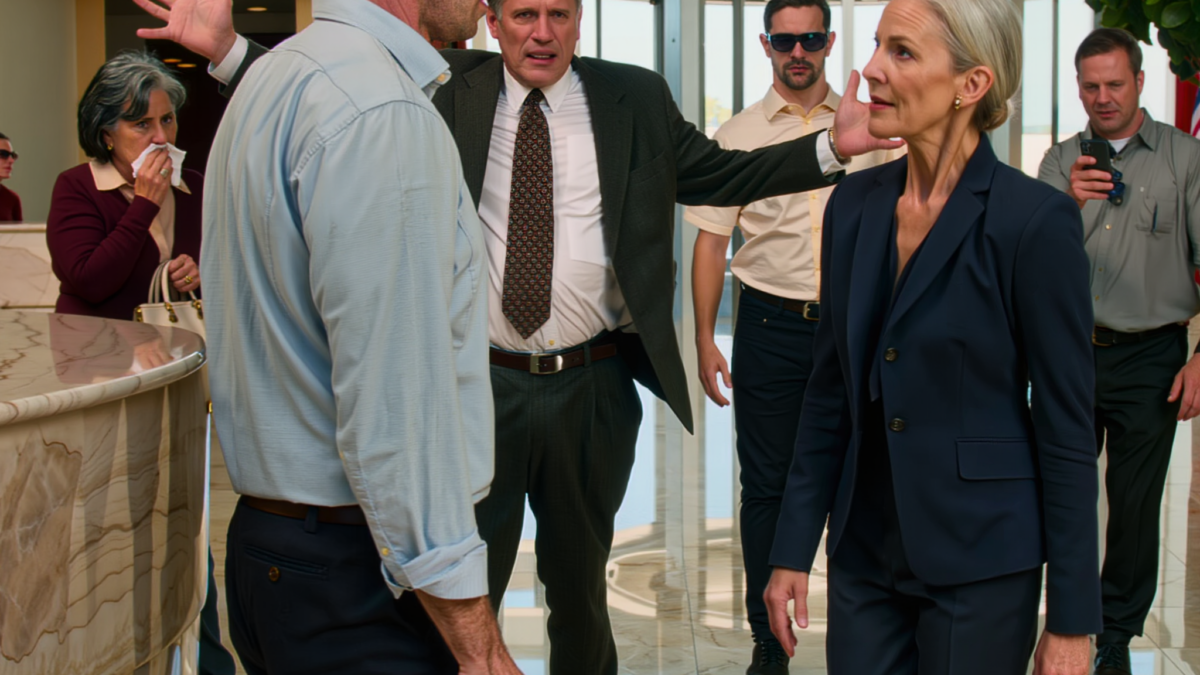
The glass elevator gave me a clear view of the lobby as I descended. It was a three-story space with a curved marble reception desk, visitors moving through security, and employees on their way to meetings. My family stood near the center of it, drawing attention from every direction.
Dad wore his best suit, which was outdated and didn’t fit him well. His face was red, and he was pointing a finger at the young receptionist. Even from the elevator, I could see how hard she was working to remain professional.
Mom stood behind him with a tissue near her face and her scuffed leather handbag clutched to her chest. Julian stood off to one side in designer sunglasses, chewing gum and looking around as though the company’s surroundings somehow reflected his own success.
Then I saw Gregory near a large potted plant beside the turnstiles. He was a senior developer who had wanted the principal architect position I had received. He had his phone raised and was recording.
I knew he resented my appointment. Now he was watching a scene that could give him something to take to human resources, and the expression on his face made his interest clear. My family had brought an audience with them without needing to invite one.
The elevator doors opened. Dad spotted me almost immediately, and his face changed from anger at the receptionist to satisfaction. He seemed certain that having witnesses would make me easier to control.
“There he is,” he called. “The ungrateful son who ran away. Get over here, Victor. We need to discuss your responsibilities to this family.”
People turned toward his voice.
“You don’t get to abandon your own flesh and blood, leave us with nothing, and expect to get away with it.”
I walked toward them and stopped about five feet from him, between my family and the reception staff. I could feel the old instinct to quiet him, to get him somewhere private before anyone heard more. I resisted it.
“You have one minute to turn around and leave,” I said. “After that, you’ll be escorted out by law enforcement.”
Mom began crying harder. She pressed the tissue to her face and shook her head as though I had said something incomprehensibly cruel.
“Victor, please. How can you do this to the woman who gave you life? We’re facing foreclosure. We’re going to lose the house next week.”
She said Julian was having panic attacks because of the stress I had caused. She said all they wanted was their family back together. Then she returned to the same demand.
“We just want you to do what’s fair and pay your share.”
Julian stepped closer and pulled his sunglasses down his nose.
“You’re embarrassing yourself in front of your coworkers. Just agree to the arrangement Mom proposed. Set up the trust for my company, and we’ll leave quietly.”
He looked around the lobby before continuing.
“Don’t ruin your career over a little money. You owe us this. Pay up and we leave.”
There it was, stated without any effort to disguise it. They were offering to stop the scene in exchange for my income. Mom’s claims about family unity and Dad’s speeches about responsibility all led to the same place.
Executives carrying briefcases had stopped walking. Employees lingered near the turnstiles. Gregory was still recording, and I was aware that every word I said might be replayed later.
For years, Dad’s raised voice had been enough to make me surrender whatever I was holding. Standing there, I remembered the check from the diner and the shoes I hadn’t bought. I wasn’t a child in his hallway anymore, even if my body still recognized the fear.
“I owe you nothing,” I said.
Dad’s face darkened. He had expected embarrassment to do what his demands at dinner hadn’t. When I didn’t give him what he wanted, he turned away from me and addressed the people watching.
“Is this the kind of man Horizon Tech hires for leadership? Someone who leaves his mother with nothing? Someone who takes money from his own family so he can live in a fancy apartment?”
He raised his voice further.
“I want the CEO. I want the head of human resources. You need to know who you’ve hired. He’s a liar, and he’ll take from this company the same way he took from us.”
The accusations were false, but hearing him make them in that room still hurt. I had spent so long hoping he would acknowledge what I had accomplished. Now he was trying to damage it because I wouldn’t let him claim the proceeds.
“That will be quite enough of that noise.”
The voice came from the executive elevators. Evelyn walked into the lobby in a tailored navy suit, her silver hair pulled back, with the director of security beside her. She didn’t raise her voice or hurry.
Gregory lowered his phone. The confidence he had shown while recording my family disappeared when he saw who was approaching. Around him, the lobby grew quieter.
Dad straightened and put on the expression he used with customers at the dealership. He seemed to assume that an older man presenting himself as a concerned father would be more credible than a new employee.
“Ma’am, are you in charge here? You need to know the character of the man you hired. Victor has abandoned his obligations to his family. Keeping someone like that on your payroll says something about your company.”
He continued, invoking corporate values and the stock price as though those words would make his grievance a business matter. Evelyn listened without encouraging him. Then she stopped beside me rather than across from me.
“Mr. Harrison, is it?” she asked. “Let me make this clear. Victor is not a standard probationary employee. He is not someone I will fire because a man is making demands in our lobby.”
Dad blinked. The smile he had arranged on his face became harder to hold.
“What are you talking about? He just started here. He’s a cloud architect. You pay him a salary. He works for you.”
“Horizon Tech did not just hire your son for a salary.”
She spoke clearly enough for the people nearest us to hear without making a performance of it.
“We spent the past eight months acquiring proprietary cloud architecture patents that Victor developed on his own time. We purchased his intellectual property for an undisclosed multimillion-dollar sum. His salary is the baseline compensation for his consulting work.”
Dad looked at me, then back at her.
“Your son is a strategic partner and a major voting shareholder in this company. You are standing in a building he partially owns. We work together as equals.”
Julian’s grin disappeared. Mom lowered the tissue from her face, and the crying stopped. For the first time since they had entered the lobby, none of them had an immediate demand ready.
I had not told them about the acquisition or my ownership position. The salary had been the part of my news I hoped we could celebrate, and even that had become a claim against me. Now they were discovering that the arrangement they had tried to control was much larger than they understood.
Dad’s eyes moved across the lobby as though he were reassessing where he stood. The receptionist he had intimidated, the employees he had addressed, and the executive he had tried to recruit were all still there. None of them was helping him make me pay.
Before he found another argument, the front doors opened and Valerie came in carrying a black leather briefcase. I had called her when security first contacted me. Her office was only two blocks away, and she had come directly over.
Valerie handled corporate litigation and asset protection, along with the legal measures I needed to keep my family from interfering with my life. She approached without raising her voice, handed a manila folder to the security director, and introduced herself to my parents.
“Harrison and Sylvia, I’m Valerie, Victor’s attorney. Security has the cease-and-desist paperwork and the trespass warning covering Horizon Tech’s properties. You are being instructed to leave. If you return, you risk arrest.”
Mom’s expression changed. The soft, pleading voice she had used with me gave way to anger.
“You can’t do this. We’re his parents. We’re entitled to our share. We’re going to lose our house because he refuses to help us.”
Valerie did not argue about what raising a child entitled someone to receive. She set her attention on the part of Mom’s statement that could be examined.
“The foreclosure,” she said. “Let’s discuss that. In preparing the request for a permanent restraining order, my investigative team reviewed your household’s finances and the pattern of demands being made against Victor.”
She opened her briefcase and removed a stack of bank-certified documents. Then she turned toward Julian. He took a step back, and his face lost the easy confidence he had carried into the building.
“You’ve been telling everyone here that Victor is responsible for your financial situation,” Valerie continued. “The banking records, credit reports, and a recently filed police report concerning identity theft indicate something different.”
Dad looked between her and Julian.
“According to those records, Julian took out a $50,000 secondary loan against your home to pay underground sports gambling debts.”
For a moment, Dad seemed unable to process the sentence. Then he turned fully toward my brother.
“What? What did she just say?”
Valerie continued before Julian could offer an explanation.
“The loan documents contain forged signatures, Harrison. Fifty thousand dollars was taken against the equity in your home. And the emails and transfers our team reviewed show that Sylvia discovered the transaction three months ago.”
Mom held her handbag tighter. Julian no longer looked like a man preparing to negotiate a business investment.
“Rather than holding him accountable, she helped conceal it,” Valerie said. “The plan to collect Victor’s salary would have provided the money to cover the debt and protect the house, with more left over for the Porsche Julian wanted.”
I thought of Mom cutting her asparagus. I thought of the explanation about taxes, the retirement plans, the roof, and the money needed to launch Julian’s company. She had discussed all of it in the same calm voice, as though assigning most of my salary to them was simply good planning.
She had known about the loan before that dinner. My father’s demand had been selfish enough on its own, but behind it was another arrangement he apparently hadn’t understood. Mom and Julian had expected me to rescue them from something they had deliberately kept hidden.
The people nearest us began murmuring. Dad’s attention was no longer on me or Evelyn. He moved toward Julian, seized the collar of his shirt, and shook him.
“You took money from me? You put a loan on my house?”
“Dad, wait. Mom said Victor would pay for it. She promised he would pay.”
Julian’s words came quickly. He looked toward Mom as though she could still make the explanation work, but she was already trying to pull Dad away from him. The three of them were arguing over who had promised what, no longer maintaining the version of the story they had brought into the lobby.
Evelyn looked at the security director.
“That’s enough. Get them out of the building.”
He spoke into his radio. Half a dozen guards moved in, separated my family, and escorted them toward the doors. Dad kept trying to turn toward Julian. Mom was crying again, and Julian was blaming her for telling him the money would be handled.
They were taken outside still arguing. I stood on the marble floor with my hands in my pockets and watched the doors close behind them. I had expected to feel anger, guilt, or some obligation to follow.
What I felt was distance. Their crisis was still happening, but for once I was not inside it, trying to find enough money to make everyone stop.
Evelyn put a hand on my shoulder and told me to take the rest of the day off. She assured me that the company would provide the security support I needed. Her manner was practical and kind, without making me feel that I had become another problem she needed to manage.
Gregory was called to human resources before lunch. His recording had violated the company’s privacy rules, and the matter was handled formally. The video and company material were removed from his phone, and he was placed on permanent probationary status.
His hopes of using the incident to advance his career ended there. He had watched my family try to undermine me and chosen to help himself rather than help the people dealing with the disruption. The company did not treat that as good judgment.
Outside the office, Valerie made the boundaries explicit. My family was not to approach the building or continue contacting me. She warned them that further harassment, attempts to interfere with my work, or defamatory statements could lead to civil action.
The paperwork did not erase the years that came before it. It did, however, mean I was no longer answering those demands alone. There was a written record, a lawyer prepared to respond, and a security staff that knew exactly who my family was and why they were not welcome.
Without my payments, the problems they had been postponing became harder to conceal. The $50,000 loan was coming due, and the lender’s concerns had nothing to do with which son my parents favored. Dad could no longer pretend that the pressure on the house was simply the result of my refusing to share a raise.
Reporting the forged loan also meant confronting Mom’s involvement. She had known what Julian had done and helped cover it up. Dad faced the possibility that trying to hold his son accountable would expose his wife’s actions as well.
For years, the family’s financial problems had been presented to me as obligations I could solve by sending money. This time, no transfer from my account arrived to make the immediate pressure disappear. They had to deal with the decisions that had created it.
Two months after the lobby confrontation, my aunt Beatatrice called from a blocked number. She had spent years encouraging Dad to ask me for more, often while presenting herself as someone trying to keep the family together. I let the call go to voicemail.
That evening, I listened from the leather couch in my apartment with a cup of freshly brewed coffee. Her voice was quieter than I was used to hearing it. She sounded worried, and she moved quickly through the information she wanted me to absorb.
The bank had initiated foreclosure proceedings on my parents’ house. According to her, the sheriff had posted an eviction notice on the front door. The situation my mother had invoked so often was no longer something she could use only as a warning.
Beatatrice said Dad had not coped well with the public embarrassment or the discovery of what Julian had done. He had lost his job at the dealership after arriving at the showroom intoxicated and shouting at customers. His complaints had ranged from stolen patents and ungrateful children to government conspiracies.
Julian’s expensive lifestyle had also fallen apart. My card was no longer paying for his insurance, phone service, or subscriptions, and our parents had no money left to keep covering the rest. His car had been repossessed from the driveway in the middle of the afternoon.
The last Beatatrice had heard, he was working overnight at a fast-food drive-through. He was sleeping on a stained couch in a friend’s damp basement and still receiving calls about his remaining gambling debts. The business plans and the Porsche were no longer part of the account she gave me.
I listened to the entire message. There had been a time when hearing any one of those details would have sent me straight to my banking app. Hearing them together made clear how much I had been expected to prevent without ever being allowed to question.
A week later, an email from Mom reached my inbox despite the filters I had put in place. The subject line was blank. I opened it expecting another accusation.
Instead, she had returned to the voice I knew from the kitchen table: sorrowful, apologetic without quite accepting responsibility, and focused on what I could do to ease the pain.
“Victor, I know you’re angry with us. I know terrible mistakes were made in the heat of the moment, but we are your family. Your father is very sick with stress. We’re losing the house next week.”
She wrote about packing my childhood belongings and remembering the boy she used to hold.
“I don’t care about myself anymore. I’m ready to accept what happens to me. But please, Victor, Julian needs help. He’s in a very dark place.”
Then the request appeared.
“If you could set up a small college fund or a monthly living allowance, just enough to help him get back on his feet, it could save his life. You have so much now. Please remember the mother who raised you. We can fix this if you open your heart.”
I sat with the email open for a long time. I recognized the parts meant to reach me: the house, my childhood, her tears, Julian’s future. She had arranged them in the same order she had used when I was twenty and saving for a car.
The old response was familiar enough that I could almost feel myself moving toward it. I would explain away what had happened. I would decide that holding the boundary was cruel. I would send enough money to quiet the situation and call the temporary relief forgiveness.
But I could also see what the email did not contain. It did not change the plan she had made for my salary or the promise Julian had repeated in the lobby. Even now, her proposed solution depended on my taking responsibility for him again.
I didn’t answer. I didn’t compose a long explanation of why I was hurt, offer a smaller payment, or negotiate an amount she might consider reasonable. I deleted the message and blocked the email address and associated IP address.
It was a small action compared with everything that had happened at the office. No one watched me do it. There was no argument to win, only a decision about whether I would reopen a door I had worked hard to close.
I was not responsible for making Julian’s consequences disappear. I was not required to keep proving that I loved my mother through payments she could distribute as she chose. My work and my future were mine to manage.
That understanding did not make recovery immediate. A new salary, a secure building, and a lawyer did not erase the habits I had developed over twenty years. I still reacted to an unexpected phone call as though someone might be calling to take away what I had earned.
Sometimes I worried that the money would vanish, despite having every reason to know it was protected. The fear was older than the accounts. It came from years of being told that anything I had could become someone else’s necessity without warning.
I knew I needed help with more than the legal and financial pieces. I began seeing Dr. Harper, a clinical psychologist who worked with family trauma, financial exploitation, and recovery from narcissistic abuse. Her office was quiet and filled with daylight, and I went back week after week.
There, I began examining the things I had accepted as facts about being a son. Being responsible did not mean I had to absorb every consequence of my father’s choices. Being capable did not make my needs less important. Refusing an unreasonable demand did not erase everything I had already done.
Dr. Harper helped me understand that leaving a harmful family dynamic was not the same as betraying a loving family. Care required mutual respect, not just a shared history and an expectation that one person would always give more. I had been taught to confuse obedience with belonging.
Much of the work involved grief. I wasn’t only grieving the family I had stepped away from. I was grieving the family I had wanted them to become, the parents I had imagined at that dinner, the handshake and the tears of pride I had hoped to receive.
I also had to forgive myself for the years I had participated in the arrangement. I had been a child when I learned to make myself useful in order to keep the peace. Continuing that habit as an adult did not mean I had deserved what happened.
We worked through the guilt I felt about refusing another fund for Julian. We worked through the fear that keeping my own salary made me selfish and the expectation that every attempt to protect my peace would lead to another battle over it. Those feelings did not disappear all at once, but they became things I could recognize instead of instructions I had to follow.
Six months after the confrontation at Horizon Tech, I stood on the wraparound balcony of a modern penthouse overlooking the city. It wasn’t a rental. I had purchased it outright, and for once a home was something I could enjoy rather than an emergency someone else could use to reach into my accounts.
I had diversified my investments and continued building my role at the company. The financial future I had once imagined from the driver’s seat of an old sedan was becoming an ordinary part of my life. It no longer needed to be announced at a family dinner to feel real.
I had also started dating a woman who was independent and successful in her own right. She valued my kindness, my character, and the effort I had made to build a different life. I wasn’t expected to prove affection by paying for hers.
That evening, I held a crystal glass of the same imported wine I had brought to my parents’ house. Below the balcony, the city lights stretched into the distance. I could remember the old dining room without feeling as though I still belonged at that table, waiting for permission to keep what I had earned.
The peace I felt was quieter than the relief of winning an argument. It was the knowledge that my next decision did not have to be organized around my father’s reaction or my mother’s disappointment. I could make plans and let them remain mine.
I had learned why setting boundaries had made my family so angry. They had benefited from my not having them. When that changed, they called me selfish and ungrateful because those were the words that had worked before.
They could be angry without my being wrong. They could tell their version of events without my paying to make them stop. Their disapproval no longer had to determine the shape of my life.
I did not owe anyone my future simply because we shared a last name or a childhood home. I did not owe them an inheritance, a permanent allowance, or access to everything I built. And I did not have to surrender my peace to prove that I was a good son.
Protect your peace. Know your worth. And never apologize for securing your own future.








