My brother called the biggest night of my career “garbage,” and my parents chose his VIP concert instead. I saved the family group-chat screenshot, replied with one word—“Okay”—and went to the ceremony alone. Hours later, their stadium suite TV cut to a national broadcast, and my mother suddenly stopped smiling.
I am Nolan, 32 years old. Exactly three weeks ago, my own family laughed directly in my face when I invited them to the single most important night of my professional career.
While I was working long hours in emergency rooms, giving everything I had to my patients, my parents told me to stop being selfish. My golden-child brother looked me dead in the eye and said he wouldn’t miss a single second of his pop concert for my, quote, “garbage.”
They mocked me in front of our extended family, choosing a rented VIP stadium suite over my lifetime of quiet, exhausting hard work.
But there was one thing they didn’t know.
The very event they called garbage was being broadcast live on a national news network, complete with a half-million-dollar grant with my name on it.
And now they were standing on my doorstep, realizing they had jeopardized their own future and severed ties with the only child they had always expected to rescue them.
To understand how we got there, you have to go back to where it all began.
Picture a luxury VIP suite at one of the biggest stadiums in Los Angeles, the kind of room that costs more than some people make in a year. Corporate executives rent places like that to impress high-value clients or close major real estate deals.
But if you looked closely, the illusion fell apart.
The room smelled faintly of stale popcorn, spilled domestic beer, and industrial cleaner. The fluorescent lighting was harsh, casting long, unflattering shadows against cheap corporate artwork on the walls.
And the people inside it were miserable.
That was my family, sitting in their overpriced box seats and waiting for a pop star to take the stage.
My brother, Preston, was 35 years old and still proudly calling himself an influencer while living rent-free in my parents’ basement.
He was arguing with our mother while holding his phone toward the ceiling, complaining that the lighting made his skin look orange on his livestream.
He wore an oversized silk jacket he had probably bought with my father’s credit card, posing for an audience that included more questionable followers than anyone in the family wanted to admit.
Preston had never held a conventional job.
He talked about his income as if he ran a Fortune 500 company, but most of it came from occasional brand deals for discount teeth-whitening products and energy drinks.
My father, Harrison, was slumped on a leather couch in the corner of the suite, staring at a crumpled receipt.
“Twelve dollars for a beer,” he complained. “And fifty bucks for cold nachos.”
He seemed completely oblivious to the irony that he was the one paying for Preston’s carefully manufactured lifestyle.
Dad was the kind of man who would argue with a local contractor for weeks over a slightly crooked backyard fence, then hand Preston thousands of dollars without asking a single serious question.
And then there was my mother, Beverly.
She had spent most of her adult life carefully maintaining the image of a flawless upper-middle-class family for neighborhood HOA meetings, church bake sales, holiday gatherings, and anyone else who might be watching.
She stood near the glass overlooking the stadium, drinking wine from a plastic cup and ignoring Dad’s complaints while Preston continued his tantrum about the lighting.
She had designed our family dynamic long before any of us were old enough to name it.
She created the golden child.
And by default, she created the scapegoat.
Me.
The opening act had finished, leaving them with nearly an hour before the main performer.
Dad grabbed the sticky remote and switched on the sixty-inch television mounted above the minibar. He flipped through channels, looking for sports scores or a reality show.
Then he stopped on Channel 5, the national news network.
“Turn it up,” Mom said.
She thought they were showing celebrity gossip. She probably hoped the anchor might mention the concert, giving her another piece of social currency to bring back to the HOA ladies.
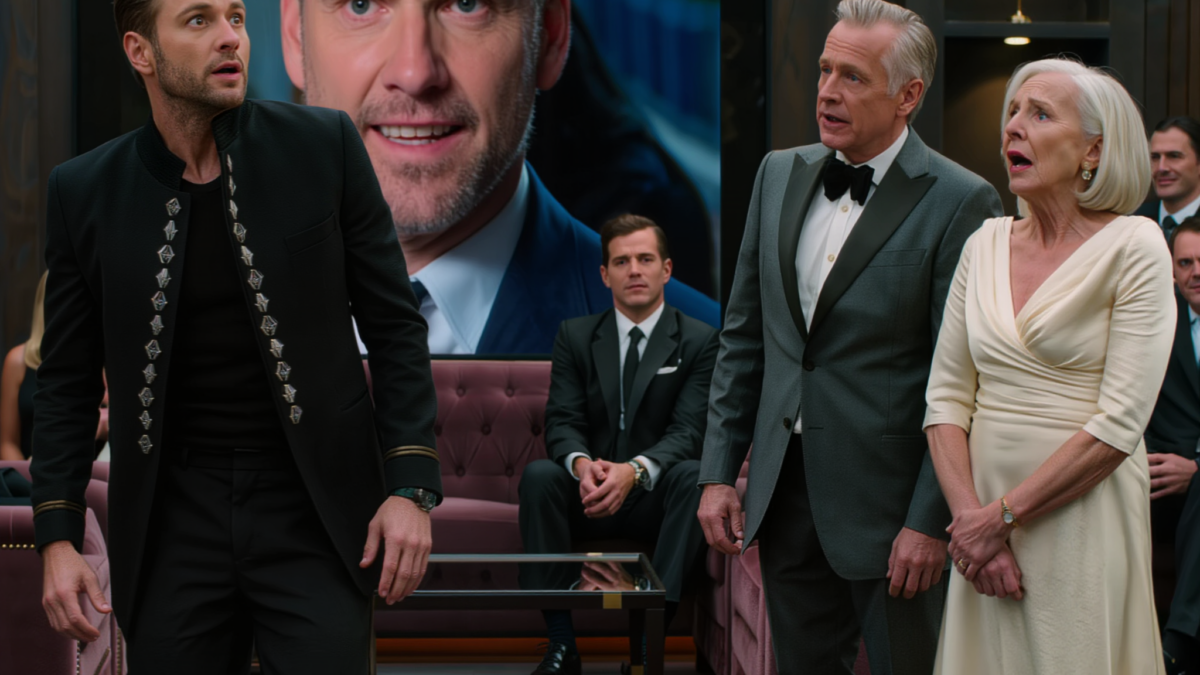
Instead, the television showed a glittering historic ballroom in downtown Los Angeles.
Crystal chandeliers hung from the ceiling. Men in tailored tuxedos and women in formal gowns sat at tables covered in crisp white linen.
The camera slowly moved across the front of the room.
Then it reached Table One.
The table reserved for some of the most respected people in the medical community.
The camera stopped.
It moved closer.
And there I was.
The son they had spent 32 years overlooking.
The son who usually wore inexpensive scrubs, drank terrible hospital coffee, and drove a ten-year-old sedan with a dented bumper.
I was sitting there in a custom-tailored emerald suit, surrounded by some of the top medical minds in the country, laughing with a legendary chief of surgery.
I know exactly what happened in that stadium suite because Preston’s phone was still livestreaming.
I watched the recording later.
I saw the color leave my father’s face.
I saw my mother drop her plastic cup, red wine splashing over her expensive shoes.
I saw Preston stare at the television as a gold graphic appeared across the bottom of the national broadcast.
NOLAN SHEFFIELD
INNOVATOR OF THE YEAR
GRANT AWARD: $500,000
Half a million dollars.
Tax-free, unrestricted grant money.
In that single moment, the reality of what they had dismissed finally reached them.
The son whose work they had called garbage was sitting on national television receiving an award worth more than they had ever imagined.
But to understand why I felt so little sympathy for their sudden shock, you have to understand what my life looked like before the cameras started rolling.
You have to understand what it means to be the invisible child.
The workhorse.
The backup plan.
For most of my life, I was expected to finance my own existence while my parents drained their accounts for Preston.
When it was time for college, they told me they couldn’t afford to help.
I watched the money that had supposedly been set aside for my education disappear after Preston got into legal trouble over damage to a rental property.
I took on student loans and worked three jobs just to stay afloat.
Meanwhile, my parents fully funded Preston’s gap year in Europe so he could “find himself.”
What he found was a taste for expensive wine and an even stronger sense that everyone else should pay for whatever he wanted.
Every holiday, every Thanksgiving, every birthday, the conversation revolved around Preston.
His latest business idea.
His new girlfriend.
His social-media numbers.
Even at our grandfather’s funeral reception, my mother spent most of her time introducing Preston to wealthier relatives while ignoring the fact that I had arranged the caterer and paid for the flowers.
I was the guy in the background.
For years, I accepted it.
I believed that if I worked harder, earned another promotion, or became successful enough, they would eventually have to see me.
I was wrong.
Three weeks earlier, on a Tuesday morning around 3:00 a.m., a massive storm system had settled over Southern California.
Rain hammered against the reinforced hospital windows like handfuls of gravel.
I was running down the corridor.
My sneakers squeaked against the linoleum floor, a sound that usually annoyed me, but that night I barely noticed it.
All I could hear was my own heartbeat and the transport team behind me.
I work as an organ transplant coordinator.
It’s a neat professional title for a job that often means negotiating with time under enormous pressure.
When a donor organ becomes available, I sometimes have minutes to coordinate logistics, prepare the recipient, organize surgical teams, and make sure the organ gets from one location to another within the required medical window.
That night, it was a liver for a six-year-old girl named Maya.
She had been on the waiting list for eight long months. Her skin had taken on a frightening yellow pallor, and her parents looked exhausted from weeks of uncertainty.
Then the call came.
We had a match from a neighboring state.
I didn’t walk.
I ran.
The storm had made flight conditions extremely difficult. Other hospitals had declined the organ because of transportation risks.
I refused to let weather be the reason Maya lost her chance.
For two years, I had been developing a logistics system called the Rapid Match Protocol. That night, we used it to coordinate a high-speed ground relay with a carefully planned helicopter transfer that moved along the edge of the storm system.
We secured the cooler.
The helicopter pilot, soaked from the rain and fighting the wind, gave me a thumbs-up.
I signed the final transfer documents on a clipboard, my hand trembling slightly from the adrenaline, and watched the heavy double doors to the operating room close behind Maya and the surgical team.
Only then did I lean against the cold tiled wall and slide down to the floor.
I took a breath.
The trauma wing always smelled the same: industrial antiseptic, coffee, and that unmistakable sterile metallic hospital scent.
I was exhausted.
I hadn’t eaten a proper meal in two days, surviving mostly on vending-machine crackers and black coffee.
But we had made it.
The organ was inside the operating room.
Maya had a chance.
My phone buzzed in my pocket.
For a second, panic hit me.
Was it the surgeon?
Had something gone wrong with the graft?
I pulled out my phone, fumbling with the cracked screen.
It wasn’t the hospital.
It was Preston.
I looked at the time.
3:05 a.m.
He knew I worked nights. He also knew I only wanted family calling me at that hour if something serious had happened.
His message read:
“Bro, you didn’t like my new post about my studio setup. Go like it and drop a comment right now. The algorithm is tanking my engagement. Do it fast before the post dies.”
I sat on the hospital floor staring at the screen.
Minutes earlier, I had been coordinating a medical transfer for a critically ill child.
My 35-year-old brother had contacted me at three in the morning because he wanted better social-media engagement.
I didn’t reply.
I locked the phone and rested my head gently against the wall behind me.
A moment later, Dr. Alden, the head of our transplant unit, walked past.
He was a stern, silver-haired man who intimidated most young residents, but he had always treated me with respect.
He stopped when he saw me sitting on the floor in scrubs stained with old coffee.
“Incredible work tonight, Nolan,” he said, his voice low and steady. “Most coordinators would have missed that transport window in this weather.”
He paused.
“Most would’ve given up when the first flight was grounded. You gave that girl a real chance tonight.”
“Thanks, Doctor. Just doing the job,” I said, forcing a tired smile and trying to push Preston’s message from my mind.
Dr. Alden adjusted his glasses and studied me.
“You’re doing significantly more than the job. The board is looking closely at your Rapid Match Protocol. The data you compiled is reducing transport time by eighteen percent statewide. That’s unprecedented.”
He gave me a meaningful look.
“Keep your schedule clear next month. A nomination is coming down the pipeline.”
A nomination.
Professional recognition.
Genuine respect.
Things I had spent most of my life fighting to earn.
The following Sunday, I drove two hours to my parents’ house in an affluent Southern California suburb for our mandatory family dinner.
I pulled my beat-up sedan into their wide driveway, parking carefully to the side so I wouldn’t get too close to the brand-new leased Porsche SUV sitting prominently in the center.
The Porsche belonged to Preston, naturally.
The smell of roasted chicken and garlic hit me when I walked inside.
It should have felt like home.
Instead, the house always felt like a stage for my mother’s performances.
“Hey, kid,” Dad grunted from his leather recliner without looking away from the football game.
Then he pointed toward the driveway.
“Move your car to the street. Preston’s buddy might come by later, and he doesn’t want your junker blocking the Porsche.”
I tightened my grip around my keys.
Then I walked back into the pouring rain, moved my car down the street, and returned soaked.
Nobody offered me a towel.
At dinner, I tried to tell them my news.
“I actually wanted to tell you guys something important,” I said, looking at the three people sitting around the polished oak table. “My boss told me the protocol I developed—the system for moving donor organs faster—is being nominated for a national award. It’s a huge deal in the medical community.”
For a moment, there was silence.
Only silverware touching plates.
“That’s nice, honey,” Mom said flatly, without making eye contact. “Pass the gravy, Harrison.”
Dad looked up.
Not at me.
“Speaking of winning,” he said, pointing his fork toward Preston, “Pre, tell your mother about the big deal you closed this week.”
Preston smirked and ran a hand through his carefully styled hair.
“I didn’t want to brag, but I secured the VIP suite for the Eras Tour next month. Four tickets, platinum package, private catering, open bar, private bathroom—the works. It’s going to be massive for my brand. I’m going to vlog the whole thing.”
Mom dropped her fork onto the plate.
“Oh, my baby. I’m so incredibly proud of you. Do you know how hard those tickets are to get? The HOA ladies are going to lose their minds when I post the pictures.”
“Can I come?” Dad asked, leaning forward with more energy than I had seen from him all evening.
“Of course,” Preston said. “It’s me, you, Mom, and my manager, Derek.”
Four tickets.
There were four family members sitting at the table, plus Derek.
I was the one left out.
Again.
Minutes earlier, I had shared the biggest professional milestone of my life.
Now I was chewing cold potatoes while my family celebrated a concert suite.
After dinner, the Wi-Fi router stopped working in the den.
Because I was apparently the household’s unpaid IT department, Dad sent me into his home office to fix it.
I crouched beneath his heavy mahogany desk, reconnecting cables, when my shoulder bumped an open filing cabinet.
A thick manila folder slid out.
Papers scattered across the floor.
I started gathering them.
Then I stopped.
The first page was a bank statement.
The next was an early-withdrawal notice from my father’s 401(k).
He had taken out $40,000.
Attached to the paperwork was the receipt for the Eras Tour VIP suite and the down-payment agreement for Preston’s leased Porsche.
I stared at the documents.
My father was draining retirement savings he and Mom would eventually need in order to finance Preston’s illusion of being wealthy.
I remembered Dad complaining about the rising price of his prescriptions.
I remembered arguments over grocery bills.
I remembered being told they couldn’t contribute a dollar toward college, leaving me with student debt I was still paying.
The money had existed.
They had simply chosen not to spend it on me.
I carefully returned every sheet to the folder and placed it back in the cabinet exactly where I had found it.
Then I left the house without saying goodbye.
Driving home through the rain, I finally understood something.
I wasn’t simply the overlooked son.
I was their insurance policy.
The stable one.
The responsible one.
The person they assumed would eventually step in when Preston’s lifestyle became unsustainable.
Two weeks later, I was sitting at my hospital desk, drinking lukewarm cafeteria coffee and reviewing patient charts when an email appeared in my inbox.
The sender was the National Board of Medicine.
The subject line read:
“Congratulations: 2026 National Healthcare Hero Award Recipient.”
My breath caught.
I opened it.
I hadn’t merely been nominated.
I had won.
The committee had unanimously selected me for Innovator of the Year for my work on the Rapid Match Protocol.
The award included a $500,000 research and personal-development grant.
Five hundred thousand dollars.
Half a million.
I read the figure three times.
Then I checked the sender, domain, and digital signatures because part of me was convinced it had to be some elaborate scam.
It was real.
The ceremony would be held at the Grand Historic Hotel in Los Angeles.
A well-known Hollywood actor would host it.
And it would be broadcast live on a national news network.
For my entire life, I had existed behind Preston’s loud, attention-seeking presence.
I had been the quiet worker.
The person who fixed things.
The one who paid his own way.
But this was impossible to dismiss.
National recognition.
A major grant.
Proof that my work mattered beyond the walls of my hospital.
And somewhere inside me, a small part of the kid who had always wanted his father to hang one of his drawings on the refrigerator woke up again.
Maybe this was it.
Maybe this was finally the thing that would make them see me.
If they watched me walk onto a nationally televised stage to accept an award, maybe for once they would be proud to call me their son.
I opened our family group chat.
It was filled with Preston sending links to expensive outfits he wanted Mom and Dad to buy for the concert.
I began typing.
“Hey everyone, I have some huge news. I actually won that medical award I mentioned at dinner last week. Innovator of the Year. It’s a major honor. The ceremony is downtown at the Grand Historic on the 12th next month.”
Then I stopped.
The 12th.
I looked at my calendar.
It was the same night as Preston’s concert.
My stomach dropped.
Then I checked the schedules.
The awards ceremony began with arrivals at 4:00 p.m.
The broadcast started at 5:00.
The concert didn’t begin until 8:00, and the main performer wasn’t expected onstage until around 9:00.
Both events were in Los Angeles, roughly twenty minutes apart under normal conditions.
I continued typing.
“I know that’s the night of the concert, but my ceremony is early. It would mean the world to me if you guys could stop by for just one hour before you head to the stadium. It’s being televised nationally. I’d love to have my family in the audience when they call my name.”
I hit send.
One by one, the read receipts appeared.
I sat back and waited.
Please.
Just once.
Choose me for one hour.
Preston responded first.
“Bro, are you serious right now?”
Another message appeared.
“Nolan, we have a tight schedule. Derek booked pre-concert drinks at a rooftop bar. Then we have a photo shoot by the VIP entrance for my Instagram. We can’t just detour to some boring, stuffy medical conference to watch you get a plastic trophy.”
My stomach tightened.
“It’s not a plastic trophy, Preston. It’s a national award for work that saves lives. It’s a major milestone in my career. It’s on live television.”
Dad joined the conversation.
“Don’t be difficult, Nolan. Your brother has been planning this night for months. This is a big networking event. Why do you always have to be so selfish and try to steal the spotlight when he has something good going on?”
Steal the spotlight?
I stared at the screen.
I had spent 32 years in the background.
I paid for my own education.
Bought my own used car.
Worked eighty-hour weeks helping coordinate lifesaving medical care while they drained retirement savings so Preston could rent a luxury suite.
And somehow I was the selfish one.
Then Mom added her message.
“We can look at your little certificate another time, sweetie. Maybe bring it to Thanksgiving dinner and we’ll put it on the mantel for a few hours. We don’t have time for your little hobbies when Preston has invested so much energy into this event.”
Another message followed.
“You’re being unrealistic if you think we’re changing our plans for a work party.”
My life’s work.
The sleepless nights.
The families in waiting rooms.
The patients.
The responsibility.
She called it a hobby.
Then Preston sent the message that ended something inside me for good.
“Face it, Nolan. Nobody cares. I won’t miss a single second of my concert for your garbage. Enjoy your little work party.”
I sat in the quiet hum of the hospital office, staring at the message.
I expected to feel devastated.
Instead, something became very clear.
The lifelong panic to please them disappeared.
The desperate need to earn their approval finally went quiet.
I took a screenshot of the entire conversation.
I saved it in a secure folder on my phone.
Then I typed one word into the family chat.
“Okay.”
I put down my phone.
Opened a new document on my computer.
And began writing my acceptance speech.
For the first time in my life, I knew exactly who I wasn’t going to thank.
Two days before the ceremony, I was at a high-end boutique downtown getting final alterations on a custom emerald-green suit.
I had paid $2,000 for it from my savings.
For once, I didn’t care about being practical.
I wanted to walk into that room looking like a man who respected himself.
The tailor was adjusting my cuffs when my phone rang.
Unknown number.
I answered.
“Nolan. Finally. Pick up your phone.”
Preston.
“Who is this?” I asked, staring at myself in the three-way mirror.
“Very funny. It’s Preston. Look, I need a huge favor.”
I waited.
“The dry cleaner messed up my silk jacket for the concert. It’s wrinkled, and Derek says it looks cheap on camera. You have that heavy-duty steamer you use for your suits, right? Bring it to my apartment and press the jacket for me. I need it perfect.”
I looked at myself in the mirror.
“No.”
Silence.
“What do you mean, no? This is an emergency. My brand deal depends on these photos.”
“I’m at the tailor, Preston. I’m getting ready for my awards ceremony. The one happening this weekend.”
He groaned.
“Oh my God, who cares? You’re just sitting in an audience clapping for old guys. I’m going to be in a VIP suite. Drive over, steam the jacket, and then go back to your boring stuff. It’ll take twenty minutes.”
He didn’t ask.
He assumed.
My time belonged to him.
My energy belonged to him.
My schedule existed to support whatever image he wanted to maintain.
“Buy a new steamer, Preston,” I said. “Or wear it wrinkled. I’m busy.”
“Are you serious? Dad said you’d do it. You owe me. Bring the steamer or I’m telling Mom.”
“I don’t owe you anything,” I said. “And you don’t ask the guy whose work you called garbage for favors.”
I ended the call.
Then I blocked Preston’s number.
Dad’s number.
Mom’s number.
And Derek’s, just to be safe.
The silence afterward was strange.
For a few seconds, it felt like stepping into unfamiliar territory.
Then it became peaceful.
The morning of the ceremony finally arrived.
The Los Angeles sky was clear and bright.
I went to the hospital for half a shift because sitting alone in my apartment watching the clock would have driven me crazy.
I needed routine.
I needed the grounding reality of work.
The hospital was buzzing.
News about my award had spread after administration sent a staff-wide email.
Nurses I barely knew stopped me in the hall to shake my hand.
Cafeteria staff gave me an extra scoop of food and refused to charge me for coffee.
For perhaps the first time in my life, I understood what it felt like to belong to a community that valued me.
At noon, I was standing at the nurses’ station reviewing an Oregon transit log when a woman came through the double doors.
She looked nervous and held a plastic food container tightly against her chest.
It took me a moment to recognize her.
Sylvia.
Maya’s mother.
“Nolan?” she said.
“Sylvia. Hi.”
I stepped around the desk.
“How is Maya? Is everything okay?”
Her eyes immediately filled with tears.
She hurried toward me and pressed the warm plastic container into my hands.
“She’s coloring,” Sylvia said, her voice trembling with relief. “She’s sitting up in bed right now, coloring a picture. Her skin is pink again.”
She took a breath.
“You did that, Nolan. The surgeon told us the helicopters were being grounded. He told us to prepare for the worst. But you kept looking for another way.”
She squeezed my hands.
“You fought for her chance. You saved my daughter.”
I stood there holding a box of homemade chocolate-chip cookies, unable to speak for a moment.
This woman owed me nothing.
She had baked cookies and driven forty minutes through Los Angeles traffic simply to say thank you.
My own mother wouldn’t drive twenty minutes to watch me receive the biggest award of my life.
Dr. Alden approached and rested a reassuring hand on my shoulder.
“Did you tell him, Sylvia?”
She wiped her eyes and smiled.
“My husband, Richard, is on the National Medical Council. When he saw what you did that night and how you handled the logistics when everyone else thought the transfer couldn’t happen, he submitted your data directly to the board.”
I stared at her.
“He nominated you,” she continued. “He told them you were exactly what the future of medicine should look like.”
For a moment, I felt as though the floor had shifted.
The person who had changed the direction of my career wasn’t some anonymous executive or computer system.
It was the grateful father of a little girl I had helped.
“Does your family understand the magnitude of what’s happening tonight?” Dr. Alden asked.
I looked down at the cookies.
“No,” I admitted. “They think I push paper. They aren’t coming. They have tickets to a pop concert, and they didn’t want to change their plans.”
Dr. Alden’s expression hardened.
He studied me for several seconds.
“Then they’re your relatives, Nolan,” he said. “Family is the people who show up when it matters.”
He paused.
“And we’re showing up.”
I looked at him.
“Nurse Fiona and I bought two corporate tables tonight. The entire transplant unit is coming to watch you take that stage.”
Two tables.
Twenty people.
Twenty physicians, nurses, coordinators, pilots, and medical professionals were willing to spend their own evening dressing up and coming downtown simply to support me.
At 3:00 p.m., I went home.
I showered, put on my emerald suit, fixed my tie, strapped on my watch, and stared at myself in the mirror.
For once, I didn’t see the invisible son.
I saw a man about to walk into a room where his work mattered.
As I reached for my keys, my phone rang.
I had blocked my family, but the number had a local area code I didn’t recognize.
I answered cautiously.
“Hello?”
“Nolan. Finally, you answer a call.”
Dad.
His voice echoed against the noise of a stadium concourse.
“Hi, Dad.”
“Listen. We got to the stadium early for the pre-show VIP stuff. Preston’s manager messed up the budget. The drinks here are ridiculous. Twelve dollars for a beer. And Preston’s card got declined at the merchandise stand.”
I said nothing.
“You got some kind of bonus with that medical thing tonight, right? Transfer $2,000 into my account. I’ll pay you back next month when I get my pension check.”
I closed my eyes.
They weren’t calling to wish me luck.
They weren’t calling to apologize.
They were calling from the event they had chosen over me and asking me to finance it.
“You want me to pay for your drinks and merchandise at the concert you chose instead of my award ceremony?” I asked.
“Don’t start the family drama again, Nolan. We’re family. You help your blood. Help your brother. His brand needs this. You’re just sitting in some hotel ballroom eating rubber chicken anyway. Transfer the money. We’re holding up the line.”
I picked up my keys and left my apartment.
“No, Dad.”
“What?”
“No. I’m not transferring you a single dollar. I’m not steaming Preston’s clothes. I’m going to accept my award.”
“You ungrateful little brat. I raised you.”
“And Dad?”
“What?”
“Turn on the television in your VIP suite. Channel 5 around six.”
I stepped into the elevator.
“You might actually learn something about the son you threw away.”
I ended the call.
A black town car waited outside.
As I slid into the leather back seat and the driver pulled away from my apartment building into evening Los Angeles traffic, I felt the last piece of guilt finally loosen its grip.
I was done.
For the first twenty minutes, I stared through the tinted window as city lights blurred past.
The quiet hum of the engine felt almost surreal after years of arguments whenever my family wanted something.
I poured sparkling water from the minibar.
My driver, an older man named James, glanced at me in the rearview mirror.
“Heading to a wedding?”
I smiled faintly.
“A graduation of sorts.”
He raised an eyebrow.
“From what?”
“Thirty-two years of being invisible.”
When the car finally pulled into the sweeping circular driveway of the Grand Historic Hotel, the scale of the event hit me.
This wasn’t a quiet banquet in some conference room.
Searchlights moved across the evening sky.
A red carpet covered the marble steps.
Photographers stood behind velvet ropes as dignitaries, public officials, researchers, and some of the most respected physicians in the country stepped out of black cars.
For a second, my hand hovered over the door handle.
The old version of me wanted to stay inside.
The kid in hand-me-down clothes.
The student who ate ramen because he had no money.
The son who had been told for years that he was too boring to matter.
I felt a wave of impostor syndrome.
Then the valet opened the door.
Cool evening air hit my face.
I stepped onto the red carpet.
At the top of the marble stairs, I saw them.
My real support system.
Dr. Alden stood in a classic black tuxedo.
Beside him was Nurse Fiona in a midnight-blue gown.
Even the helicopter pilot who had flown through that storm to deliver Maya’s liver was there, dressed in a suit and grinning.
Twenty members of my transplant unit stood together.
They held a small handmade sign that read:
TEAM NOLAN.
When I reached the top of the stairs, Dr. Alden didn’t offer me a formal handshake.
He pulled me into a brief embrace and clapped me on the shoulder.
“Ready to go inside, Innovator?”
His voice carried a kind of pride I had rarely heard from my own father.
I straightened my tie.
“I’m ready, Doctor.”
The ballroom was unlike anything I had experienced.
Expensive perfume mixed with the scent of roasted herbs and fresh lilies.
Crystal chandeliers hung beneath a high painted ceiling, casting warm light across hundreds of tables dressed in crisp white linen.
A hostess escorted us toward the front.
Table One.
The center of the medical community that night.
As I sat down, a waiter appeared and filled my glass with ice water.
To my right was the chief of surgery from a prestigious New York hospital, a physician whose textbooks I had studied in college.
He leaned toward me and extended his hand.
“Nolan Sheffield?”
“Yes.”
“I’m Dr. Vance. We implemented your rapid transport system in our cardiac wing last month.”
My eyes widened.
He continued.
“You saved us forty crucial minutes on a heart transfer last week. That patient is sitting up and talking to his wife today because the system worked.”
He shook my hand.
“It’s a genuine honor to sit at your table.”
An honor to sit at my table.
I repeated those words silently.
For most of my life, I had been Preston’s boring shadow.
Dad’s future financial safety net.
Mom’s disappointing son because I cared more about work than appearances.
In this room, my mind mattered.
My discipline mattered.
My work mattered.
Twenty miles away, the atmosphere in the stadium suite was deteriorating.
Preston’s manager, Derek, had failed to secure the backstage access he had promised.
That meant Preston couldn’t get the celebrity photographs he had planned for his social-media content.
Dad paced the suite, calculating the growing catering bill.
Mom sat on the couch refreshing her neighborhood Facebook group, waiting for people to react to her stadium photos.
They had spent thousands of dollars trying to create the perfect night.
None of them seemed to be enjoying it.
At 5:00, the opening DJ finished.
The stadium lights brightened during the break before the main performer.
Dad grabbed the remote.
Maybe he remembered what I had told him.
Maybe he wanted to prove that my ceremony was as boring as he imagined.
Either way, he switched the television to the National News Network.
The screen changed to the polished graphics of the National Healthcare Heroes Gala.
“Boring,” Preston said, dropping onto the couch. “Who watches this stuff? Put the game back on, Dad.”
“Wait,” Beverly said.
Her voice sounded different.
She stepped toward the screen.
“Harrison, turn it up.”
The broadcast camera moved across the Grand Historic ballroom, sweeping over prominent physicians, researchers, donors, and invited guests.
Then it moved toward Table One.
The camera stopped on my face.
I was laughing at something Dr. Alden had said.
On television, I looked calm.
Confident.
Comfortable in a world my family had never imagined belonged to me.
“Is that Nolan?” Dad asked.
Preston laughed nervously.
“No way. Nolan wears baggy scrubs and ugly hoodies. That guy’s wearing a custom suit.”
The camera stayed on me.
Then a gold caption appeared along the bottom of the screen.
NOMINEE: NOLAN SHEFFIELD.
The VIP suite fell silent.
The only sound was the muted roar of the stadium crowd beyond the glass.
On the broadcast, the evening’s host walked to the podium.
“And now, ladies and gentlemen, we arrive at our most prestigious honor of the evening: the Innovator of the Year Award.”
The ballroom quieted.
“This award recognizes a rare individual whose work has fundamentally changed modern medicine—someone who refuses to let bureaucracy, distance, or impossible conditions stand in the way of saving human life.”
The massive screen behind the host began playing a professionally produced video.
It showed emergency helicopters landing on rain-soaked hospital roofs.
Digital maps appeared with glowing routes between donor sites and recipients.
Then a narrator began speaking.
“Nolan Sheffield’s Rapid Match Protocol has reduced organ transport times dramatically across participating hospitals. Over the last twelve months, his work behind the scenes has contributed to successful outcomes for more than two hundred patients whose treatment depended on time-sensitive transport.”
The video changed.
Sylvia appeared on screen with Maya sitting beside her in a bright room.
Sylvia looked directly into the camera.
“When the storm grounded flights and other options disappeared, Nolan kept searching for another way. Without his dedication, my daughter might not be sitting here today. He gave our family another chance.”
In the stadium suite, Dad’s hand went still.
Mom covered her mouth.
Then the host opened a gold-embossed envelope.
“Ladies and gentlemen, please welcome your 2026 Innovator of the Year, Nolan Sheffield.”
The ballroom erupted.
Hundreds of people stood.
I rose from my chair, buttoned my emerald jacket, and walked toward the stage.
I accepted the glass trophy from the host.
Then the giant screen behind me changed.
A new graphic appeared.
AWARD GRANT: $500,000.
Back at the stadium, Dad stared at the screen.
“Five hundred thousand?”
Mom grabbed Preston’s sleeve.
“Did you see that number? Preston, look. That’s half a million dollars.”
Preston’s face changed.
He glanced down at his phone, then back at the television.
“He never told us there was money.”
“He said it was a national award,” Dad snapped. “You were the one who kept calling it garbage.”
“Shut up, Dad.”
Preston grabbed his phone and opened his social-media app.
“What are you doing?” Mom asked.
“I’m posting this. I’m his brother. This is great for my brand.”
He pointed his phone toward the television and typed a caption portraying himself as the proud older brother who had always believed in me.
Then he posted it.
He thought he could attach himself to my success as easily as he had attached himself to everything else.
At the same moment, I stepped toward the microphone.
The ballroom went quiet.
“Thank you,” I said.
My voice carried through the room.
“I wrote a very professional speech for tonight. I planned to talk about logistics, data, and protocol.”
A few people smiled.
“But after everything it took to reach this stage, I think I need to speak from the heart.”
The room became still.
“They often tell you to thank the people who got you here. Parents. Siblings. Family. We’re taught that family is the foundation behind every success.”
I paused.
Then I looked toward the red light on the main broadcast camera.
“But tonight, I want to dedicate this award to the invisible people. The children who grow up in the background of their own homes. The people who are constantly told their passions are boring, their work is meaningless, or their best efforts are never quite enough to earn a place at the table.”
A murmur moved through the ballroom.
“To those who are dismissed because they chose quiet service instead of loud attention, I want you to know something.”
I held the trophy.
“I’m standing here tonight not because I received endless support at home, but because I kept going without it.”
I took a breath.
“My family isn’t here tonight. They’re sitting in a rented VIP suite at a pop concert. When I asked them for one hour of their time, they told me they wouldn’t miss part of the concert for my ‘little plastic trophy.’”
The room went silent.
I raised the award slightly.
“But this trophy represents hundreds of beating hearts. It represents logistics, survival, teamwork, and people refusing to give up when time is running out.”
I looked toward Table One.
“So I’m accepting this for myself, and I’m dedicating it to my real family—the doctors, nurses, pilots, coordinators, and people sitting right there who actually showed up when it mattered.”
I smiled.
“Thank you.”
The applause that followed filled the ballroom.
People stood.
Dr. Alden was on his feet, wiping his eyes with a napkin.
I walked off the stage feeling lighter than I had in 32 years.
Back in the VIP suite, Dad sank onto the couch.
“He just talked about us on national television.”
Mom looked around as though the walls had suddenly become transparent.
“The HOA president watches this network. The church group watches this. Everyone knows we went to the concert.”
Preston stared at his phone.
“What?” Dad asked.
“My comments.”
His celebratory post about me had been online for only a few minutes, but viewers had already connected the dots.
People were asking why the brother who claimed to be proud of me had chosen a concert over my award ceremony.
Others pointed out that he had publicly called my work garbage.
Some announced they were unfollowing him.
Preston’s confidence disappeared.
“They’re turning on me. My sponsors are going to drop me.”
Dad stood.
“He didn’t create this problem. We did.”
Then his expression shifted again.
“We need to get to Nolan before he decides what to do with that grant money.”
Mom looked at him.
“That money is part of this family’s future.”
Outside, the main concert was about to begin.
“But the show is starting,” Preston said.
Dad grabbed his coat.
“I don’t care about the concert anymore. Your brother has half a million dollars attached to his name. Get in the car.”
By the time I returned to the quiet of my hired town car, my phone was vibrating across the leather seat.
Eighty-two missed calls.
One hundred forty text messages.
I poured another glass of sparkling water and opened the family group chat.
The first messages had arrived when the grant amount appeared on television.
Mom:
“Nolan, we see you on TV. You look so handsome. We are so proud of our successful boy.”
Dad:
“Son, is that grant money tax-free? We need to talk about setting up an LLC for you. I know a good lawyer. Call me before you sign anything.”
Preston:
“Bro, I posted you on my story. Tag me back so my followers see it. Let’s celebrate later. Drinks on you.”
Then came the messages sent after my speech.
Mom:
“How could you say those things? I raised you. I cooked for you. You embarrassed me in front of the whole neighborhood.”
Dad:
“You owe us an apology. We put a roof over your head for eighteen years. We need to discuss that grant and what it means for this family.”
Preston:
“Delete the speech video. People are flooding my comments. I already lost one sponsor. Fix this.”
I laughed.
Not because any of it was funny.
Because after everything that had happened, they were still calling me selfish.
Still demanding that I solve their problems.
Still acting as though my achievement belonged to them.
I opened the secure folder on my phone.
Then I attached one image.
The screenshot from three weeks earlier.
Preston’s message sat there exactly as he had written it:
“Face it, Nolan. Nobody cares. I won’t miss a single second of my concert for your garbage.”
I sent it.
Then I typed my final message.
“I’m just agreeing with you, Preston. You were right. You didn’t miss your concert, and I didn’t miss my moment. We both got exactly what we asked for.”
I placed my phone on Do Not Disturb, turned off location sharing, and looked through the window at the lights of Los Angeles passing by.
The guilt that had tied me to them for years was finally gone.
I barely slept that night.
I sat on the balcony of my apartment looking toward the skyline and thinking about what came next.
The grant funds hadn’t arrived yet, but the award had changed the direction of my career.
I made a mental list.
Pay off my student loans with my increased salary.
Hire a reputable financial adviser.
Eventually buy a house with better privacy.
Change my phone number.
At 8:00 the next morning, loud pounding rattled my front door.
I opened the security app connected to my video doorbell.
There they were.
Harrison.
Beverly.
Preston.
The whole family.
Preston’s expensive silk jacket was wrinkled and stained with what looked like mustard.
Dad looked as if he hadn’t slept.
Mom held a supermarket sheet cake with “Congratulations” written across it in smeared blue icing.
“Open the door, Nolan,” Dad called. “We know you’re in there.”
I walked to the intercom.
“Please leave my property.”
“Nolan,” Mom said, lifting the cake toward the camera. “Sweetie, we brought you a victory cake. Let us in. We need to talk as a family.”
“We don’t have anything to talk about.”
Preston moved closer to the camera.
“You need to issue a public statement. Tell people we had a private family emergency. Tell them I supported you financially. I lost my energy-drink sponsor this morning. That was $3,000 a month.”
I leaned against the wall inside my apartment.
“That sounds like your problem, Preston.”
Dad moved forward.
“Listen to me, young man. You embarrassed us, but we’re willing to forgive you. We’re your family. Open the door, and let’s discuss how to manage this new money.”
I stared at the screen.
“You don’t know anything about high-level investing or real estate,” he continued. “I can act as your financial manager. We need to protect this inheritance.”
Inheritance.
He was talking about an award connected to my work as though it were his personal investment account.
“Dad,” I said, “do you remember when I asked you to come to the ceremony for one hour?”
“That was different. We had non-refundable VIP tickets. We made a financial commitment.”
“And now I have a national award and a half-million-dollar grant,” I replied. “And you have tickets to a concert you walked out of. Go home.”
“I’m not leaving until we discuss my rightful share,” Dad said. “I raised you. I paid for your food. That money is family money. I’ll take this to court if I have to.”
I sighed.
Then I picked up my phone and called 911.
“Hello,” I told the dispatcher, speaking clearly enough for the intercom to carry my voice outside. “I have three people at my door who refuse to leave. They’re repeatedly pounding on the door and making financial demands. I’d like assistance having them removed from the property.”
Dad’s expression changed.
“He’s calling the police,” Preston said, stepping away from the camera.
“Dad, I can’t have this turn into some public incident. It’ll ruin everything.”
Dad looked toward Mom.
“He’s bluffing.”
“I’m not bluffing,” I said through the speaker. “The station is two blocks away.”
Mom dropped the supermarket cake onto the hallway carpet.
Preston glared at the door.
“You ruined my life.”
“You made your own choices, Preston.”
They finally left, arguing among themselves all the way down the hallway.
From my balcony, I watched them climb into Preston’s leased Porsche SUV and pull out of the parking lot.
Less than a minute later, a patrol car arrived.
I went downstairs, gave my statement to Officer Jenkins, and filed a trespassing report so there would be an official record of the harassment.
For the next two weeks, an online public-relations battle unfolded, and I barely had to participate.
Preston attempted damage control.
He posted a long video from his bedroom claiming I had abandoned our elderly parents the moment I became successful.
He said the screenshot of his “garbage” message had been manipulated by a PR team.
He claimed my college fund had actually been used for family medical expenses rather than his old legal problem.
Some followers believed him at first.
But online audiences are persistent.
Nurse Fiona saw the video.
She never asked me what she should do.
She recorded a response during her break at the hospital.
She didn’t shout.
She sat in her scrubs and spoke calmly.
“I work closely with Nolan Sheffield. He works long hours coordinating lifesaving care. In the five years I’ve known him, his family has never visited this hospital. Not when he was sick. Not when he was promoted. They used his college savings to cover his brother’s legal expenses. Nolan has always been the person who shows up for everyone else.”
Her video went viral.
Then high-definition footage of my acceptance speech spread across social media.
Millions of views.
The emotion in my voice resonated with people who had grown up as the scapegoat, the black sheep, or the invisible child in their own families.
I ignored most of Preston’s online drama.
I didn’t post responses.
I didn’t trade insults.
Instead, I accepted an interview with Time magazine for its annual Heroes of the Year coverage.
The journalist sat across from me in my new office at the hospital, a corner room overlooking the Los Angeles skyline that came with my recent promotion.
“Your brother has been very vocal online,” she said, holding her pen over a notebook. “He’s even mentioned the possibility of legal action. Do you have an official comment about your family situation?”
I folded my hands on the desk.
“I love the concept of family,” I said. “But I respect myself enough not to let people treat me like an option while demanding that I treat them like a priority.”
She kept writing.
“We simply have different values. I value saving lives and advancing medical science. They value outward appearances, social-media attention, and VIP concert tickets.”
I paused.
“I genuinely wish them well—from a distance.”
That line became the headline of the article.
Nolan Sheffield: “I Wish Them Well From a Distance.”
The phrase spread online.
People printed it on coffee mugs and shirts.
Preston’s comment section filled with variations of the same phrase:
“From a distance.”
His remaining sponsors gradually stepped away to avoid the negative attention.
Eventually, he deleted his public social-media accounts.
Financially, my parents’ situation also deteriorated.
Dad had withdrawn $40,000 from his 401(k) to pay for the concert suite and help with Preston’s Porsche down payment.
The early withdrawal created a substantial tax bill.
Then the monthly lease payments on the Porsche became impossible to maintain.
The dealership eventually repossessed the SUV from my parents’ driveway in broad daylight while neighbors watched from their porches.
For my mother, who had spent years trying to impress the HOA crowd, the humiliation was especially difficult.
They made one final legal attempt.
I received a certified letter from a small local law office they had hired on contingency.
The letter alleged emotional distress and suggested they might have some financial claim connected to my award because they had supported me during childhood.
I didn’t panic.
I carried the letter downstairs to the hospital’s corporate legal department.
Dr. Alden made sure the hospital attorneys reviewed it.
My attorney responded with a detailed cease-and-desist letter explaining that the proposed claims had no basis and that pursuing frivolous litigation could leave my parents responsible for significant legal costs.
Their attorney withdrew the matter the following day.
The final piece of information came a week later when my aunt Vivien called.
Vivien was my mother’s sister.
She had always played the friendly middleman in family disputes, although she also knew nearly every piece of gossip circulating through the family.
“Nolan, darling,” she said. “Your mother is devastated. She cries every day. She wants to send you a heartfelt apology letter. She says she just wants the family to heal. Can’t you forgive them?”
I leaned back in my office chair.
“Is that right, Vivien?”
“Yes,” she said.
Then her voice dropped.
“But between you and me, Harrison has missed two mortgage payments. The bank is discussing foreclosure. They’re out of cash.”
I said nothing.
“When the letter comes, you should understand they’re desperate. They’re hoping you might buy the house or help them get out of the financial mess. There are even rumors they’re arguing about separating because of the stress.”
That told me everything.
They weren’t reaching out because they had finally understood how much they had hurt me.
They were reaching out because they needed the reliable son again.
“Thank you for telling me, Vivien,” I said. “And please tell my mother not to waste the postage.”
I ended the call.
One year has passed since that night at the awards ceremony.
My life is almost unrecognizable now.
I used the half-million-dollar grant exactly as intended.
I funded a dedicated research team, and we expanded the Rapid Match Protocol into three neighboring states.
We are now helping improve outcomes for an average of roughly thirty additional patients each month.
My promotion came with a substantial salary increase and a corner office.
I finally paid off every cent of my student loans.
I bought a beautiful mid-century modern house in a quiet, wooded neighborhood outside Los Angeles.
And yes, there is a tall iron security gate at the end of the driveway.
But the most important thing I built wasn’t the house.
It wasn’t the protocol.
It wasn’t the bank account.
It was a family of my own choosing.
I haven’t spoken directly to my biological parents or Preston in twelve months.
I hear things through extended relatives.
Preston now works night shifts at a downtown bar and occasionally tells customers he used to be a well-known influencer.
He lives in a small studio apartment.
Dad eventually took a job as a greeter at a hardware store to help cover household expenses and keep the mortgage current.
Mom lost her place on the HOA board after falling behind on association dues, and many of the neighbors she had spent years trying to impress stopped inviting her to social events.
Last Tuesday, I walked to the secure mailbox at the end of my driveway and found a thick envelope.
There was no return address.
But I recognized the frantic, slanted handwriting.
Beverly.
I opened it in the warm afternoon sun.
Inside was a long card full of guilt, excuses, and familiar emotional pressure.
“Nolan, Dad’s health isn’t what it used to be. The roof is leaking badly, and we can’t afford a contractor. Preston is struggling emotionally. We miss our son. We forgive you for what happened on television. It was a misunderstanding. Please call us. We need our family back together. Blood comes first. We need your help.”
I stared at the heavy card stock.
Years earlier, words like those would have sent me spiraling into guilt.
I would have emptied my savings to repair their roof.
I would have apologized simply to restore peace.
I would have opened the door and allowed the old dynamic back into my life.
Blood comes first.
Maybe.
But they were the ones who had spent 32 years treating mine as though it mattered less.
I looked toward my backyard.
I could hear a barbecue sizzling and people laughing.
I walked through the security gate and around the house.
Dr. Alden was standing by the grill, playfully debating surgical techniques with Nurse Fiona, who was laughing with a cold drink in her hand.
At the wooden patio table sat Sylvia, her husband Richard, and Maya.
Maya was seven now.
Her cheeks were rosy, and she was running across the grass after my newly adopted rescue dog.
I looked at all of them.
The people who celebrated my victories without asking what they could take from them.
The people who respected my boundaries.
The people who showed up when it mattered without conditions or expectations.
That was my family.
I looked once more at my mother’s letter.
I didn’t feel the need to argue with it.
I didn’t need some dramatic final confrontation.
For the first time, I felt almost nothing.
Their words no longer controlled me.
I walked to the blue recycling bin beside the garage, lifted the lid, and dropped the letter inside beside the empty soda cans and junk mail.
Garbage belonged with garbage.
I am Nolan Sheffield.
I am an innovator.
I am a healthcare professional whose work helps save lives.
I am a man who ended a destructive family cycle, built financial stability on his own terms, and created a life far removed from the home that once made him feel invisible.
And for the first time in my life, I am completely, unapologetically free.








