My Brother Called Me Selfish for Attending My Daughter’s Concert Instead of Helping Mom
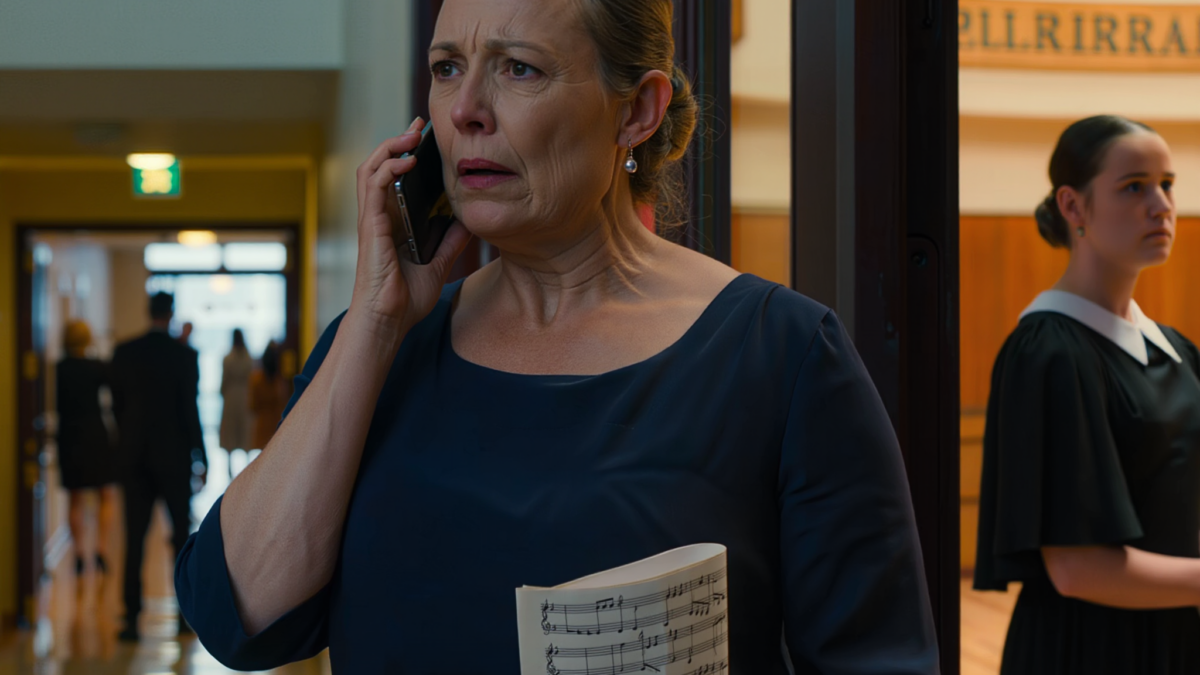
My brother called me selfish forty minutes before my daughter’s final high school choir concert because I refused to drive across town and buy groceries for our mother.
I was standing outside the auditorium, holding a folded concert program in one hand and my phone in the other. Parents were filing through the glass doors, and somewhere backstage, my eighteen-year-old daughter was getting ready for a solo she’d spent six weeks practicing.
“Mom needs groceries tonight,” Mark said. “I sent you the list.”
“Mark, I’m at Sophie’s concert.”
“Okay?”
“It’s her last one. She has a solo.”
“And Mom still needs food, Laura.”
I glanced at the auditorium doors. I’d promised Sophie I would be there for the entire performance. Not just the beginning, not just the part when she stepped forward to sing. All of it.
“I can take care of the groceries tomorrow morning,” I said. “Or you could stop on your way home.”
He gave a short, irritated laugh.
“I’ve been at the shop all day. You know how busy I’ve been.”
“You live ten minutes from her.”
“And you’re her daughter.”
Four words. As though I needed reminding that we shared the same mother. As though being someone’s daughter automatically meant my time belonged to everyone else.
“I’m staying for the concert,” I said.
Mark exhaled sharply.
“Unbelievable. You really are selfish sometimes.”
I felt the familiar guilt rise in my chest. For eighteen months, that feeling had been enough to make me abandon almost anything.
But through the auditorium doors, I could see Sophie waiting near the stage entrance.
I tightened my grip on the program.
“I’ll talk to you tomorrow.”
Then I ended the call.
My hands were shaking when I found my seat.
I thought the difficult part would be ignoring my brother for the next two hours. I didn’t know that the following morning, my mother would ask me a question that would force me to reconsider nearly everything that had happened in our family over the previous eighteen months.
My name is Laura Mitchell. I’m fifty, divorced, and I work in the administrative office of a public school in Lancaster, Pennsylvania.
My daughter, Sophie, was eighteen and about to graduate from high school.
For most of her childhood, it had been the two of us. We weren’t wealthy, and our lives weren’t particularly exciting, but we had routines that belonged to us. Friday dinners, occasional shopping trips, and long conversations in the kitchen when she was supposed to be doing homework.
We argued like any mother and daughter. Sometimes I worked too much. Sometimes she forgot that dirty dishes didn’t disappear by themselves.
But we were close.
At least we had been until my mother fell.
Mom was seventy-seven and had lived alone since my father died. Eighteen months earlier, she’d slipped in her kitchen. She recovered, but afterward, standing for long periods was difficult, and certain everyday tasks became harder.
She needed help getting to appointments, buying groceries, and keeping up with heavier chores around the house.
I never resented that.
She was my mother. She had spent years taking care of Mark and me, and I wanted to make sure she was comfortable and safe.
What I resented, although I was slow to admit it, was how quickly helping Mom became my responsibility alone.
My older brother, Mark, was fifty-four and owned a small auto repair shop. He worked hard. His business came with customers who needed their vehicles back, employees who occasionally called out, and deliveries that didn’t always arrive when promised.
I understood that running a business could be stressful.
What I didn’t understand was why his responsibilities always counted more than mine.
Mark lived ten minutes from Mom’s house.
I lived more than half an hour away, depending on traffic.
When Mom first came home after her fall, we agreed to divide the work. Mark would handle smaller errands near her house. I would help coordinate appointments around my school schedule and visit when I could.
It seemed fair.
For about three weeks, it even worked.
Then Mark had an especially busy afternoon and asked if I could stop for groceries.
Of course, I said yes.
The following week, he needed me to take Mom to an appointment because a customer had arrived late.
I agreed again.
After that, there was always something.
A prescription. A grocery list. A lightbulb Mom couldn’t reach. A package that needed bringing inside.
Each request seemed too small to argue about.
And every time I considered refusing, I pictured my mother sitting alone in her house, needing something and wondering why her children couldn’t be bothered.
So I went.
Eventually, Mark stopped asking whether I was available.
He simply told me what needed doing.
“Mom needs milk.”
“Can you pick up her prescription?”
“Check the kitchen light when you’re over there.”
I’d finish my workday, drive across town, take care of whatever he’d mentioned, and then drive home to Sophie.
Some nights, I didn’t walk through my own front door until long after dinner.
Mark never seemed to notice.
And I didn’t realize how much the arrangement was costing me until my daughter started expecting me to disappoint her.
It wasn’t one enormous betrayal.
It was a series of small absences.
I arrived late to a school awards ceremony because Mom had an appointment that took longer than expected.
I postponed taking Sophie shopping for her graduation dress because a delivery at Mom’s house needed attention.
During another choir performance, I spent half the evening watching my phone because Mark kept messaging me about an errand.
Then came the senior choir dinner.
Sophie had told me about it earlier that week. I’d promised to attend and help with the preparations.
But that afternoon, Mark called because Mom needed a ride to the grocery store.
I went.
By the time I got home, I’d forgotten the dinner entirely.
Sophie was sitting at the kitchen counter, eating leftover pasta.
“Did you see the pictures?” she asked.
“What pictures?”
“From the choir dinner.”
I stopped beside the refrigerator.
“Oh, honey.”
She looked down at her plate.
“I forgot. I’m so sorry.”
“It’s okay.”
But it wasn’t okay.
I knew from the way she said it.
I pulled out the chair beside her.
“Sophie, I should have been there.”
“I know.”
She pushed a piece of pasta around with her fork.
Then she asked, “Does Uncle Mark ever miss anything because Grandma needs help?”
I stared at her.
“What do you mean?”
“I mean, does he ever have to cancel something? Or is it always you?”
I started explaining that Mark had a business to run, that he worked long hours, and that taking care of Grandma was complicated.
Sophie listened.
Then she said, “So do you.”
I had no answer.
She wasn’t asking me to stop loving my mother. She wasn’t even asking me to stop helping her.
She wanted to know why everyone else’s commitments seemed permanent while ours were negotiable.
And I couldn’t explain it because, somewhere along the way, I’d stopped asking myself the same question.
The following week, Sophie left a concert program on the kitchen table.
Her final spring choir concert was scheduled for May. She’d been practicing a solo for six weeks, sometimes singing softly in her bedroom, sometimes asking me to listen while she stood in the living room.
I wasn’t particularly knowledgeable about music, but I loved hearing her sing.
She pointed to the program.
“My solo is near the end.”
I studied the page.
“I see it.”
She hesitated.
“Are you coming?”
“Of course.”
“All of it?”
That question hurt more than I wanted to admit.
I looked at my daughter, who had learned to ask whether her own mother intended to stay for an entire school performance.
“All of it,” I promised.
She studied me for a moment before smiling.
“Okay.”
I wrote the date on my calendar at work. I set reminders on my phone. I told Mark several days in advance that I wouldn’t be available that Thursday evening.
He sent back a thumbs-up.
I took that as an agreement.
I should have known better.
On the afternoon of the concert, I left work on time for once.
I drove home, changed into my navy blouse, and put on the small silver earrings Sophie had given me for Mother’s Day.
She was already dressed in her black choir clothes, her dark hair pinned back and her shoes waiting beside the door.
“How do I look?” she asked.
“Beautiful.”
“Mom.”
“What?”
“I mean, do I look like I’m ready?”
I laughed and straightened her collar.
“You look like someone who’s going to do an amazing job.”
She smiled, but I could see the nerves in her eyes.
We drove to the school together. When I stopped near the entrance for performers, Sophie gathered her things and reached for the door.
Then she hesitated.
“Mom?”
“Yeah?”
“Thanks for coming.”
I felt a sharp little ache in my chest.
“You don’t have to thank me for coming to your concert.”
She gave me a look that suggested she knew more about the situation than I wanted her to.
Then she stepped out and hurried inside.
I found a parking spot and sat in my car for a moment.
I thought about that dinner she’d eaten alone. The school events I’d missed. The times I’d promised to be home and arrived late because someone needed something.
I couldn’t change those evenings.
But I could be there for this one.
I walked toward the auditorium.
That’s when Mark called.
By the time I ended our conversation and found my seat, I could feel my heartbeat in my throat.
My phone vibrated again.
“Seriously?”
A second message arrived.
“Mom is going to be disappointed.”
Then a third.
“Hope the concert is worth it.”
I stared at the screen.
For a moment, I almost stood up.
I could still drive to the grocery store. I could get whatever Mom needed, leave the bags at her house, and possibly return before Sophie’s solo.
But I’d promised her the whole concert.
And I was tired of offering her whatever time remained after everyone else had finished with me.
I silenced my phone and slipped it into my purse.
The first half of the performance was difficult.
I clapped when the other parents clapped. I watched the students move on and off the stage. But every so often, my mind returned to Mom.
What if she was upset?
What if Mark was telling the truth and something really couldn’t wait?
What kind of daughter sat comfortably through a concert while her elderly mother needed help?
Then the choir director introduced the final group.
I heard Sophie’s name.
She stepped forward under the stage lights.
I knew how nervous she was because I’d heard her practicing that song dozens of times. I’d seen her stop halfway through when a note didn’t sound right. I’d watched her start again and again until she was satisfied.
Now she was standing in front of a room full of people.
She took a breath.
And she began to sing.
Her voice was quiet at first, then stronger as she reached the second verse.
I felt tears gathering before I understood why.
Halfway through the song, she lifted her eyes toward the audience.
For one brief moment, she found me.
I raised my hand just slightly.
Her face softened.
Then she continued singing.
When she finished, I stood with the other parents and applauded until my hands hurt.
I was proud of her voice, of course.
But I was just as proud that she’d walked onto that stage despite being nervous.
And I was grateful I’d been there to see it.
After the concert, I waited near the auditorium doors while students poured into the hallway, laughing and looking for their families.
Sophie spotted me.
“You stayed!”
She hurried toward me and wrapped her arms around my shoulders.
“Of course I stayed,” I said.
She leaned back.
“Even though your phone kept lighting up?”
I looked at her.
“You noticed?”
“I saw you turn it over.”
I told her Uncle Mark had called about groceries for Grandma.
Her expression changed immediately.
“Is Grandma okay?”
“As far as I know, yes. I’ll check on her tonight.”
Sophie nodded.
Then she said, quietly enough that I almost missed it, “I’m glad you didn’t leave.”
We went out for ice cream afterward.
She told me about the student who nearly missed his entrance, the teacher who cried during the final song, and how she’d been convinced her voice would crack during the solo.
I listened without looking at my phone.
I wasn’t watching the clock or planning the next errand.
For once, I was exactly where I wanted to be.
When we got home, I finally checked my messages.
The last one from Mark said:
“I went to the store. Don’t expect a medal.”
I read it twice.
He’d gone to the store.
Our mother had her groceries.
The problem had been handled.
And nobody had needed me to abandon my daughter’s concert.
I felt a strange mixture of relief and anger.
Relief because Mom was fine.
Anger because Mark had made it sound as though refusing him was the same as abandoning her.
I typed a short reply.
“Thanks for taking care of it.”
Then I called Mom.
She didn’t answer, which wasn’t unusual that late in the evening. Sometimes she’d leave her phone in another room while watching television.
I left a message asking her to call me in the morning.
Before bed, I stopped by Sophie’s room.
She was removing the pins from her hair.
“I was really proud of you tonight,” I said.
She smiled.
“Even the high note?”
“Especially the high note.”
I started toward the hallway.
“Mom?”
I turned.
“I’m glad you were there for the whole thing.”
I walked back and hugged her.
“So am I, sweetheart.”
That night, I fell asleep thinking I’d finally done something right.
The next morning, I was standing at my kitchen counter with a cup of coffee when Mom called.
It was just after nine.
“Morning, Mom.”
“Good morning, sweetheart.”
“Did Mark get your groceries?”
“Yes, he did.”
“Good. I was planning to come by tomorrow anyway.”
There was a pause.
Then she asked, “Laura, did I do something to upset you?”
I lowered my coffee cup.
“What? No. Why would you think that?”
She hesitated again.
“Well, Mark said you didn’t want to be bothered anymore.”
For a moment, I thought I’d misunderstood.
“He said what?”
“He told me you’ve been overwhelmed with all my little errands. That I should stop calling you so much because you’ve got enough going on.”
I pulled out a chair and sat down.
“Mom, when did he tell you that?”
“Oh, some time ago. I don’t remember exactly.”
“Have you been avoiding calling me because of something Mark said?”
“I didn’t want to make you feel guilty, honey.”
I pressed my hand against my forehead.
Mark had told Mom I didn’t want her calling.
But he had continued calling me himself, often several times a week, to tell me what she supposedly needed.
“Mom, I never said I didn’t want to hear from you.”
“I know you love me, sweetheart.”
“No. I mean I never told Mark to say that. I don’t want you thinking you’re a burden.”
She went quiet.
Then she said, “He told me it would be easier if I asked him for things first.”
I looked toward the window.
Suddenly, a dozen small moments from the past eighteen months began to make sense.
The way Mom sometimes seemed almost embarrassed when I arrived.
The way she’d apologize for taking up my evening, even when I insisted it was fine.
The Sunday lunches she’d stopped suggesting.
The conversations that had become shorter because I was always rushing to complete a task.
I had assumed she wanted less company.
Apparently, she’d believed I wanted less responsibility.
And Mark had positioned himself between us.
I took a breath.
“Mom, what groceries did you need last night?”
“Oh, just a quart of milk.”
I stared at the kitchen wall.
“Milk?”
“Yes. I’d run out for my coffee. Mark was coming by after work, so I asked if he could pick some up.”
“That was all?”
“Well, he offered to get the rest of the groceries while he was there. I told him tomorrow would be fine, but he said he could handle it.”
I closed my eyes.
He’d called me forty minutes before Sophie’s concert and insisted Mom needed groceries that evening.
He’d told me I was selfish.
He’d suggested our mother would be disappointed if I didn’t come.
All over a quart of milk that could have waited until morning.
“Mom,” I said carefully, “Mark told me you needed a whole grocery order immediately.”
“Immediately?”
“He made it sound urgent.”
“Oh, Laura. No. I had plenty of food.”
She sounded upset now.
“I wouldn’t have wanted you missing Sophie’s concert for that.”
I swallowed.
“He told me you’d be disappointed.”
“Disappointed? Honey, you told me she had a solo. I was hoping you’d get to see it.”
I stared at the table.
For months, I’d been making decisions based on what my brother said our mother needed.
Now I was beginning to wonder how much of that information had come from her at all.
“Mom, can I ask you something?”
“Of course.”
“Have there been other times you wanted to call me but didn’t?”
She sighed.
“Well, yes.”
I waited.
“I thought about asking whether you’d like to come for Sunday lunch a few times. But Mark said your weekends were full.”
I felt my throat tighten.
“And I wanted to go to that little garden store outside town. But he told me you needed your days off.”
I thought about all the Saturdays I’d spent at her house doing chores, barely sitting down long enough to drink a cup of coffee.
“I would have taken you,” I said.
“Oh, honey, I know you would. But I didn’t want you feeling obligated.”
There was something painful about hearing that.
My mother and I had spent eighteen months trying not to inconvenience each other.
Meanwhile, I’d been working myself to exhaustion on errands passed along by someone who rarely asked whether I had time.
“Why didn’t you tell me any of this?” I asked.
“I thought you already knew how I felt.”
I leaned back in my chair.
“I thought you were getting tired of having me around. Every time I came over, you told me not to stay too long.”
“Because you always looked so tired, sweetheart.”
Neither of us spoke for a moment.
Then Mom said, “I never wanted you to miss things with Sophie because of me.”
I wiped my eyes.
“I know that now.”
We talked for another few minutes.
For the first time in a long time, I asked Mom directly what she actually needed.
She told me she had a doctor’s appointment the following Thursday and would appreciate a ride.
She said it might be helpful to arrange grocery delivery more often.
And then, almost hesitantly, she asked whether Sophie might have time to visit before graduation.
“I haven’t seen much of her lately,” she said.
I looked toward the hallway, where Sophie’s bedroom door was still closed.
“I think she’d love that.”
Mom sounded relieved.
“That would be wonderful.”
After we hung up, I sat with my coffee until it went cold.
I was angry with Mark.
But I was also angry with myself.
Not because I’d refused the groceries. I’d done nothing wrong that evening.
I was angry because I’d allowed someone else to become the voice of my mother’s needs when the two of us could have spoken directly all along.
I’d been so busy making sure everything got done that I’d forgotten to ask whether those were the things Mom actually wanted.
That afternoon, Sophie and I drove to her house.
On the way, I told Sophie about the phone call.
She listened quietly.
“Grandma thought you didn’t want her calling?”
“That’s what Mark had told her.”
“But you went over there all the time.”
“I know.”
She looked out the window.
“That’s messed up.”
I couldn’t disagree.
Mom was waiting near the front window when we arrived.
She hugged Sophie first.
“Oh, I’ve missed you.”
“I’ve missed you too, Grandma.”
We sat at the kitchen table with iced tea and crackers.
Usually, the first thing I did when visiting was inspect the refrigerator or ask which chores needed doing.
That afternoon, I stayed in my chair.
Mom asked Sophie about the concert, and Sophie showed her pictures on her phone.
Then Mom asked whether anyone had recorded the solo.
Sophie played the video.
My mother watched with both hands folded in her lap.
When it ended, her eyes were shining.
“Oh, sweetheart. That was beautiful.”
Sophie smiled.
“I’m glad you liked it.”
“I’m sorry I missed it.”
“You can come to graduation,” Sophie said.
Mom glanced at me.
“I wouldn’t want anyone making a special trip just for me.”
Sophie leaned forward.
“Grandma, we want you there.”
My mother looked surprised.
Then she smiled.
“I’d like that very much.”
About twenty minutes later, Mark arrived.
He stepped into the kitchen carrying his baseball cap and stopped when he saw all three of us sitting together.
“Didn’t know we were having a family meeting.”
I took a breath.
“We need to talk about how we’ve been handling Mom’s errands.”
His expression changed.
“What’s wrong now?”
“Mom told me she only asked you for milk yesterday.”
Mark shrugged.
“She needed other things too.”
“Did she tell you that?”
He looked toward Mom.
She answered before he could.
“No, Mark. I asked for milk. You said you could get the rest of the groceries while you were there.”
He shifted his weight.
“Well, I figured she might as well have everything she needed.”
“That’s fine,” I said. “But why did you tell me it was urgent?”
“Because somebody needed to get it done.”
“You were already coming here.”
“I’d had a long day, Laura.”
“So had I.”
He looked at Sophie, then back at me.
“Are we really going to make a big deal out of groceries?”
That question would have worked on me a month earlier.
I would have felt embarrassed for arguing about something so ordinary.
But the groceries weren’t the point.
They never had been.
“Mark, you told Mom I didn’t want her calling me anymore.”
His expression shifted.
“I said you were overwhelmed.”
“You told her she should stop bothering me.”
“Because you were overwhelmed.”
“Then why did you keep sending everything to me?”
He opened his mouth.
For a moment, he seemed ready to argue.
Then he looked down at the cap in his hands.
Finally, he said, “You always knew what to do.”
I let those words settle between us.
There was no complicated explanation.
He’d grown comfortable depending on me.
He believed I was better at handling Mom’s needs, so he’d stopped considering whether I should have to handle all of them.
“That doesn’t mean I’m always available,” I said.
He sighed.
“Look, the shop has been a nightmare. I’m dealing with employees, customers, and problems all day. You don’t know what that’s like.”
“I believe you’re busy.”
He looked surprised.
“But I’m working full-time too. And I have Sophie. You can’t treat my time as available just because I don’t own a business.”
“I never said that.”
“You didn’t have to.”
Mom set down her glass.
“I think we’ve all forgotten that I’m sitting right here.”
Mark and I stopped talking.
She looked at him first.
“If I ask you for something and you can’t do it, tell me. Don’t turn it into an emergency for your sister.”
Then she turned toward me.
“And Laura, you don’t need to come running every time I mention something.”
“I know, Mom.”
“No, honey. I’m not sure you do.”
Her voice was gentle.
“I appreciate everything you’ve done. I really do. But I don’t want you missing Sophie’s life because you’re worried about mine.”
I looked at my daughter.
She was staring at her hands, trying to pretend she wasn’t listening.
Mom continued.
“I’m older, but I can still tell you what I need. And I’d like the chance to do that without everything going through Mark.”
I nodded.
“You’re right.”
Mark leaned back.
“So what are you suggesting?”
“That we make an actual plan,” Mom said. “One where everyone knows what they’re supposed to do.”
For the next hour, we talked about groceries, appointments, and the chores Mom needed help with.
It wasn’t a pleasant conversation.
Mark reminded us several times that his business schedule could change unexpectedly.
I reminded him that my workday ended at a predictable time, but that didn’t mean every evening belonged to the family.
Mom suggested trying grocery delivery.
We agreed that Mark would handle certain weekday errands and appointment trips when his schedule allowed.
I would visit on Tuesdays and Saturdays, along with other times when we wanted to spend time together.
If something unexpected came up, we’d discuss it instead of assuming I would solve it.
Most importantly, Mom would contact us directly.
At one point, Mark shook his head.
“We’ve managed fine until now.”
Sophie looked up.
“Mom hasn’t been managing fine.”
The room went quiet.
She seemed surprised she’d said it aloud.
I reached beneath the table and squeezed her hand.
“She’s right,” I told him.
Mark didn’t apologize that day.
He agreed to the plan, although I could tell he thought we were making things unnecessarily complicated.
For him, perhaps we were.
He’d had eighteen months of knowing someone else would handle nearly every inconvenient task.
Changing that was never going to feel comfortable.
The next few weeks weren’t perfect.
One afternoon, Mark called while I was preparing end-of-year records at work.
He’d forgotten an errand and wanted me to take Mom to the grocery store.
“I can’t get away from the shop,” he said.
I looked at my calendar.
“I can’t do it today.”
“Laura.”
“Have you called Mom?”
“No.”
“Then call her. She might not need to go today.”
He sighed.
“I don’t have time to keep rearranging things.”
“Neither do I. Ask her what she needs, and the two of you can figure it out.”
When we hung up, I felt guilty.
I wanted to call him back and offer to go after work.
The old habit was still there, waiting to take over.
But I didn’t call.
That evening, Mom phoned me.
“Mark took me shopping after he closed the shop,” she said.
“Good.”
“He even found the yogurt I like.”
I smiled.
“That’s progress.”
“Although he bought the wrong crackers.”
I laughed.
“Did you tell him?”
“Of course. How else will he learn?”
It was such a simple answer that I sat there smiling after the call ended.
My brother hadn’t known how to shop for Mom because he’d rarely needed to.
I’d handled it.
Now he was learning.
And our mother was perfectly capable of telling him when he’d bought the wrong crackers.
Mom adjusted to the new arrangement faster than either of us expected.
She enjoyed ordering groceries from her tablet, especially after Sophie showed her how to save her favorite items.
The two of them spent an entire afternoon comparing strawberries on the grocery app.
Once, Mom accidentally ordered three jars of peanut butter.
She called me laughing.
A few months earlier, I would have treated it like another problem to solve.
That afternoon, I laughed with her.
Then we talked about other things.
Her garden.
The weather.
Sophie’s plans after graduation.
I started realizing how much I’d missed just being her daughter.
For months, every visit had felt like a list of tasks. I’d arrive tired, complete as much as possible, then hurry home.
Now we sometimes sat on the porch without doing anything productive.
Mom told stories about her younger years.
I told her about Sophie.
Sometimes we simply drank iced tea and watched the afternoon pass.
Sophie began visiting when her school schedule allowed.
She and Mom grew closer, and I could see how much it meant to both of them.
Mom hadn’t needed more carefully organized errands nearly as much as she’d needed to feel included in our lives.
One Saturday, she asked me to bring down a box of old photographs from her bedroom closet.
We spread the albums across the kitchen table.
There were pictures of family birthdays, holidays, and ordinary afternoons from when Mark and I were children.
In one photograph, I was about twelve, holding a birthday cake I’d helped decorate.
Mark stood beside me, grinning at the camera.
Mom studied the picture.
“You were always the responsible one.”
I stiffened without meaning to.
She noticed.
“Oh, Laura. I didn’t mean that the way it sounded.”
“I know.”
She ran a finger along the edge of the picture.
“I think I got too used to it, though.”
“Used to what?”
“You taking care of things.”
She looked up at me.
“I should have checked whether you still wanted to.”
I felt my throat tighten.
It wasn’t a long apology, and she didn’t make a speech about all the mistakes she’d made.
She simply acknowledged something I’d been carrying for a long time.
“I wanted to help you, Mom,” I said. “I still do.”
“I know, sweetheart.”
“I just don’t want Sophie growing up thinking that loving someone means always canceling your own plans.”
Mom nodded slowly.
“Then don’t teach her that.”
I sat with those words for a while.
For eighteen months, I’d been trying to prove I was a good daughter.
But somewhere in the process, I’d started teaching my own daughter that being a good mother came second.
I didn’t want that to be the lesson she carried into adulthood.
In early June, Sophie graduated from high school.
The ceremony was moved indoors because the weather forecast called for rain.
I picked Mom up early.
She wore a pale blue blouse and had insisted on having her hair done that morning.
“I want to look nice for Sophie,” she said as I helped her toward the school entrance.
“You do look nice.”
“You’re supposed to say that.”
“I’m still right.”
She laughed.
We found seats near the aisle, where Mom could sit comfortably.
Mark arrived later and sat a few rows behind us.
Things between us were still awkward.
He’d started taking more responsibility, but old habits didn’t disappear in a few weeks. There were still occasions when he expected me to solve something without asking whether I had time.
At least now, he generally accepted it when I couldn’t.
That morning, he’d offered to take Mom home afterward if she got tired.
I appreciated the offer.
It didn’t erase the past, but it was something.
When the graduates began entering the gymnasium, Mom leaned toward me.
“Can you see her?”
“Not yet.”
She pointed.
“There!”
Sophie was walking with her classmates, adjusting her graduation cap as she moved.
Then she spotted us.
She raised her hand and waved.
Mom waved back so enthusiastically that I started laughing.
When Sophie’s name was called, we both stood.
I cheered.
Mom cheered louder.
My daughter crossed the stage, accepted her diploma, and turned toward the audience with a smile I will never forget.
And for those few moments, I wasn’t thinking about a grocery list.
I wasn’t calculating whether someone needed a ride home.
I wasn’t worrying that an ordinary errand might become another argument.
I was watching my daughter graduate.
Afterward, Sophie found us in the crowd.
She hugged her grandmother first.
“You came!”
Mom laughed.
“Of course I came. Did you think I’d miss this?”
Sophie smiled.
Then she hugged me.
“We did it, Mom.”
I held her close.
“Yes, we did.”
Someone nearby offered to take a picture of the three of us.
We stood together, Sophie in her cap and gown, Mom wearing her pale blue blouse, and me between them.
Sophie leaned her head against my shoulder.
The photograph wasn’t perfect.
Mom was looking slightly away from the camera, and my hair had fallen across one eye. Sophie was laughing, so her smile was crooked.
But I loved it.
All three of us were there.
Nobody had been forced to miss the moment.
Nobody was apologizing for needing something.
We were simply together.
That evening, after we’d taken Mom home and Sophie had gone out with her friends, I sat alone at my kitchen table.
Her graduation program lay beside my phone.
Mark called.
For a moment, I considered letting it go to voicemail.
Then I answered.
“Hey.”
“Hey,” he said. “Mom got home okay.”
“Good.”
There was a pause.
“She seemed happy today.”
“She was.”
Another pause followed.
Then he said, “Listen, about that night with the groceries.”
I waited.
“I shouldn’t have called you selfish.”
I looked down at the program.
“No,” I said. “You shouldn’t have.”
He cleared his throat.
“I guess I didn’t realize how much I’d started expecting you to handle things.”
It wasn’t a complete apology.
He didn’t mention everything he’d said to Mom or how often he’d made routine errands sound urgent.
But it was an acknowledgment.
And I was learning that I could appreciate an acknowledgment without pretending it fixed everything.
“Thanks for saying that,” I told him.
He asked whether I could take Mom to an appointment the following week.
I checked my calendar.
“I can’t do Thursday, but I can do Friday morning. Ask her whether that works.”
“Okay.”
That was it.
No argument.
No accusation.
No suggestion that I was a bad daughter because I already had something else scheduled.
After we hung up, I sat at the table for a while.
I thought about the woman I’d been standing outside the auditorium just a few weeks earlier, frightened that telling her brother no meant she was abandoning her mother.
I thought about how close I’d come to missing Sophie’s final solo.
And I thought about Mom sitting alone in her house, believing her daughter didn’t want to hear from her anymore.
For months, we’d allowed someone else to decide what each of us needed.
Mark had made assumptions, and I’d been too exhausted to question them.
Mom had tried not to be a burden.
Sophie had tried not to complain.
We’d all been protecting one another’s feelings so poorly that we’d almost stopped understanding one another.
I couldn’t get those months back.
I couldn’t attend the events I’d missed or recover every evening I’d spent rushing between two homes.
But I could make different choices now.
I carried Sophie’s graduation program into the living room and placed it beside the photograph of the three of us.
Then my phone buzzed.
A message from Sophie.
She’d sent a picture from after the ceremony.
Mom was sitting on a bench with Sophie’s graduation cap balanced crookedly on her head. Sophie stood beside her, laughing so hard she had one hand over her mouth.
Underneath, Sophie had written:
“Grandma says she’s keeping the cap until I visit next week. She also wants me to teach her how to order flowers online.”
I laughed.
Then I typed back:
“Tell her I’ll bring dessert.”
A moment later, Sophie replied.
“Only if you stay and eat with us.”
I looked at the photograph again.
For eighteen months, I’d spent so much time making sure everyone had what they needed that I’d nearly forgotten how to sit down and enjoy being with the people I loved.
This time, nobody was asking me to choose between being a daughter and being a mother.
There was room for both.
“I will,” I wrote.
And this time, I knew I would.








