Eleven days after my mother died, my father froze the $218,000 she had left in our joint accounts. My older brother told me to “respect the hierarchy” while they planned to sell the house where I’d spent 14 months caring for her. They wanted to give me just $1,000 a month from my own money. I drove straight to Mom’s estate attorney—and learned what she’d prepared…
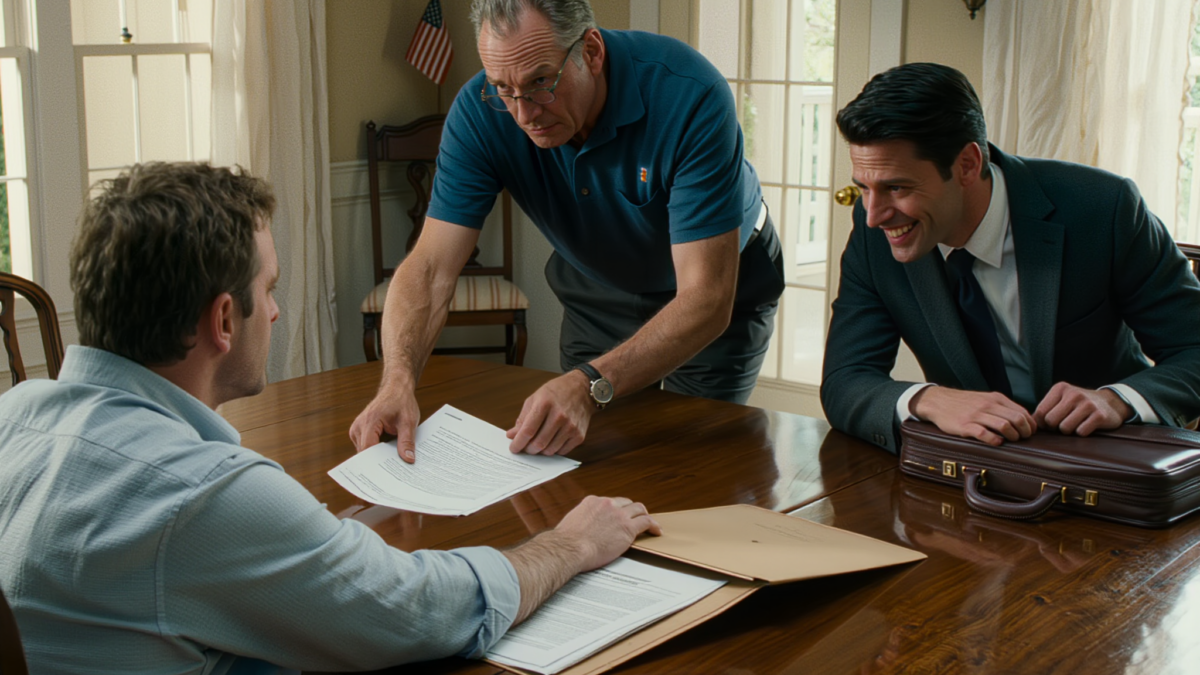
My name is Marcus. I’m 28 years old, and exactly eleven days after I watched my mother take her final breath, my father called to tell me he had frozen my inheritance.
I was sitting alone in a Walmart parking lot, too exhausted to walk inside and buy a can of soup. I had spent fourteen months caring for my mother as her health steadily deteriorated. My savings were depleted, my sleep had become a series of brief interruptions, and the house I had returned to was suddenly empty.
My father, Richard, didn’t ask how I was doing. He announced that he had contacted the bank and placed a hold on the accounts my mother had shared with me.
Then my older brother, Victor, joined the call.
“Just check with us before you touch a dime. We’re in charge now. You need to respect the hierarchy.”
They seemed entirely convinced that I would accept their decision. To them, I was still the younger brother who avoided confrontation and did whatever was necessary to keep the family peaceful.
What they didn’t understand was that my mother had spent the final months of her life preparing for precisely this kind of confrontation.
And the documents she left behind would eventually cost both men far more than they expected.
The afternoon sun was glaring off the dusty windshield of my old sedan. Heat rose from the asphalt, and the air inside the car smelled faintly of exhaust and stale upholstery.
I hadn’t slept more than three consecutive hours in over a year. Since the funeral, I had barely eaten anything substantial. I remembered standing at the reception in an uncomfortable suit, watching relatives offer condolences while Richard and Victor performed the roles of grieving husband and devoted son.
Now I was gripping the steering wheel, trying to persuade myself to walk through Walmart’s automatic doors for chicken noodle soup and Gatorade.
Outside, people pushed shopping carts between parked cars. Children complained about the heat. Drivers searched for empty spaces.
Everyone seemed to be continuing with ordinary life.
I couldn’t imagine how.
My phone vibrated against the loose change in the cup holder.
Richard’s name appeared on the screen.
He hadn’t called once since we buried Mom in the freezing rain. He hadn’t asked whether I was eating, sleeping, or managing the medical bills that continued arriving at the house.
Still, I answered.
A small part of me hoped that losing his wife of thirty years had finally made him want to speak to his son.
“I’ve spoken to the bank,” he said.
There was no greeting.
“The joint accounts your mother had with you. I’ve put a hold on them. You shouldn’t be moving money around right now.”
I stared through the windshield.
Richard continued explaining that someone my age shouldn’t be handling that amount of capital. He said everything needed to be locked down until the estate was evaluated.
“I’m taking the reins.”
I tried to explain that those accounts belonged to Mom and me jointly, but another voice interrupted.
“We just think it makes sense to coordinate, Marcus.”
Victor.
I hadn’t known he was listening.
“Mom had a lot of accounts,” he continued. “We want to make sure everything gets handled correctly and fairly.”
He spoke in the same carefully reasonable tone he used whenever he wanted to make a demand sound like a favor.
“You don’t have the real-world experience for this, little brother. Just check with us before you do anything.”
I looked out the window.
A woman was loading dog food into an SUV. A teenager rolled past on a skateboard.
Inside my car, my father and brother were trying to take control of the money Mom had specifically arranged for me.
“Hey,” I said.
My voice sounded flat.
Richard apparently mistook my lack of argument for agreement.
“Glad you understand. We’ll be in touch about selling the house next week. Start packing your things.”
I ended the call.
I didn’t call back. I didn’t try to persuade either of them that the money was supposed to cover medical expenses, household bills, and my living costs after more than a year of caregiving.
Instead, I started the car and drove across town to Harrington and Associates.
Ms. Harrington had been my mother’s estate attorney for seven years. She specialized in difficult family estates, divorce proceedings, and asset protection.
Her office occupied the fourth floor of a glass-and-steel building.
I arrived without an appointment.
The receptionist knew Mom well. She looked at my face, picked up her desk phone, and spoke quietly to someone.
Two minutes later, I was sitting across from Ms. Harrington’s polished oak desk.
“They froze the accounts,” I told her. “Dad called the bank this morning. He and Victor told me they’re in charge.”
She closed the file she had been reading.
“Your father called the bank?”
“Yes.”
“And he’s asserting authority over an account with right of survivorship, even though he’s never been named on it?”
I nodded.
“He told them to lock me out, and they listened.”
Ms. Harrington opened a locked drawer and removed a thick manila folder.
“Let me show you a few things, Marcus.”
Over the next two hours, we reviewed the banking documents, the estate arrangements, and the safeguards my mother had insisted on establishing.
My phone remained facedown on her desk.
It vibrated repeatedly.
When I finally checked it, the screen showed forty-seven missed calls.
Richard and Victor apparently expected me to call them begging for access to my money.
Instead, I was discovering how carefully Mom had prepared for them.
To understand why she had done it, you need to understand what the final fourteen months of her life were like.
My mother, Sylvia, had worked as a senior hospital administrator for nearly three decades.
She managed large departments, complicated budgets, real estate investments, and our family with remarkable precision. She was fiercely independent, organized, and accustomed to solving problems before anyone else recognized them.
Then she was diagnosed with a rapidly degenerating neurological illness.
The diagnosis changed everything.
We held a family meeting around the mahogany dining table. Richard sat at the head with an expensive glass of scotch and promised to hire the best private home aides available.
Victor announced that we would all share caregiving responsibilities equally.
He even opened his digital calendar and blocked off entire weekends.
For a moment, I believed them.
Within three weeks, their promises had disappeared.
Richard began spending more weekends at his country club. His business trips became longer. He said his company was going through a merger that required his attention.
The house increasingly smelled of antiseptic and medication.
He spent as little time there as possible.
Victor was no better.
He had leased a Porsche Cayenne that projected the successful image he wanted everyone to see, even though the payments were becoming difficult for him to manage.
He visited Mom roughly every two weeks.
He would arrive in a tailored suit, complain about work, take photographs holding her hand, and post long messages online about the importance of family.
Then he would leave.
Someone still had to manage her actual care.
That person was me.
I gave up my apartment in the city and negotiated a permanent remote position with my financial consulting firm.
I had recently been promoted to senior financial consultant, with a substantial salary increase. I didn’t tell Richard or Victor because neither had shown much interest in my career.
I moved back into my childhood bedroom.
For fourteen months, my days revolved around medications, blood pressure readings, oxygen equipment, and medical appointments.
I learned how to transfer Mom from her bed to her wheelchair without hurting her. I learned which hospice nurses paid attention to her pain and which ones needed reminding.
I bathed her, fed her, and stayed beside her when medication made her sick.
I watched a woman who had once directed entire hospital departments gradually lose the ability to hold a cup of water.
Her body was failing, but she remained remarkably observant.
She noticed Richard’s empty side of the bed.
She noticed Victor’s brief visits.
And she noticed me sitting beside her hospital bed at two in the morning, working on financial spreadsheets while listening for any change in her breathing.
One quiet evening in late October, we sat together in the living room.
The television was off. The oxygen concentrator hummed beside her.
“You haven’t talked about your firm or your promotion in months, Marcus,” she said.
“It’s just work, Mom. I’m handling it. Don’t worry about me.”
I adjusted the blanket over her legs.
She caught my wrist.
“I see exactly what’s happening here. I see who’s actually here doing the work, and I see who isn’t.”
I tried to reassure her.
“I didn’t give anything up, Mom. I’m exactly where I want to be.”
“I know,” she whispered.
A tear moved down her cheek.
“And that’s exactly why I’ve made sure you’ll never have to rely on them for anything.”
She explained that she had been speaking privately with Ms. Harrington.
“Things are arranged, Marcus. Don’t let them push you around when I’m gone. You take what’s yours.”
I didn’t ask what she meant.
At that point, money was the last thing I wanted to discuss.
I wanted her pain to stop.
But Mom had already taken important steps.
Eighteen months before her death, shortly after her diagnosis, she had brought me to her primary bank branch.
She asked the manager to add me as an equal joint account holder on her two main cash accounts.
Richard was not added.
Mom made her intentions clear in front of the bank employees.
“This is for my son Marcus to have immediate unrestricted access to funds if anything happens to me. Nobody else in my family is to touch a single dime of this money.”
The accounts contained more than $218,000.
They were structured with right of survivorship, meaning the surviving account holder would retain ownership without those funds passing through the ordinary probate process.
When Mom died, that money became mine under the account arrangement.
Richard had nevertheless convinced the bank to restrict my access.
At first, I thought he was simply trying to assert control.
Then I remembered something I had discovered a few days after the funeral.
I had returned to Mom’s house to organize the remaining medical supplies and arrange collection of her rented hospital bed.
While sorting through oxygen tubing and unused equipment, I found Richard’s silver iPad wedged between the couch cushions.
He frequently misplaced his electronics.
I picked it up to put it on the coffee table.
The screen lit up with a message notification.
It was from someone named Monica.
“Did you talk to Victor about liquidating the estate yet? The realtor needs the down payment for our new house by the 15th.”
Another sentence followed.
“You promised me this would be quick and easy once she was finally gone.”
I stood staring at the screen.
Richard had another woman in his life.
I unlocked the iPad using the PIN he had always used, my mother’s birth year, and opened the conversation.
There were months of messages.
Photographs from expensive restaurants. Real estate listings for large suburban houses. Complaints about how long Mom’s illness was lasting and how it affected Richard’s financial plans.
While I had been feeding Mom broth and managing her medication, he had been taking Monica out to dinner.
And now he was apparently planning to use Mom’s estate to finance their new house.
Victor’s sudden interest in the estate also began to make sense.
His executive position was largely commission-based, and business in his sector had been poor for two years.
He was struggling to maintain his expensive lifestyle, including the Porsche, country club expenses, and private school tuition for his children.
He needed money.
Richard needed money for Monica.
I believed they had decided to divide Mom’s assets between themselves while presenting the arrangement as responsible estate management.
The next morning, Aunt Brenda called.
Brenda was Richard’s older sister. She had always been skilled at turning family loyalty into an obligation.
“Marcus, honey,” she began. “Your dad tells me you’re being a little difficult about your mother’s accounts.”
I gripped the kitchen counter.
“I’m following the legal structure Mom set up. Those are joint accounts. They belong to me.”
“Now, now, let’s not get greedy.”
She explained that Richard was the family patriarch and insisted he had the right to manage his late wife’s assets.
According to Brenda, I was too young to understand probate, estate taxes, or real estate.
“Your dad and Victor just want to handle the heavy lifting so you can heal.”
I looked toward the empty space where Mom’s hospital bed had stood.
Richard hadn’t been there for most of her hardest days.
Yet Brenda wanted me to believe he was the one who had suffered most.
“Aunt Brenda,” I said, “did Richard happen to mention Monica?”
The line went quiet.
“I have absolutely no idea what you’re talking about,” she eventually replied.
Her voice had changed.
“Yes, you do. You all knew.”
I told her that Richard’s attorney could contact mine and asked her not to call again.
Then I blocked her number.
That brought me back to Ms. Harrington’s office and the phone call she was preparing to make.
She dialed Mr. Caldwell, the bank’s regional manager, and placed the call on speaker.
Caldwell sounded uncomfortable.
He explained that Richard had appeared at the branch that morning, identified himself as Sylvia’s surviving spouse, and threatened legal action.
“He caused quite a scene,” Caldwell said.
Richard had waved his marriage certificate at the employees and demanded control over the funds.
The bank had placed a temporary administrative hold on the accounts, supposedly to prevent fraud while the estate was reviewed.
Ms. Harrington listened.
Then she explained that the accounts carried explicit right of survivorship and that Richard had never been an authorized holder.
She challenged the bank’s decision to restrict my funds at the request of an unrelated account party.
Caldwell tried to defend the hold as a precaution.
Ms. Harrington informed him that unless it was lifted promptly, she would pursue legal action over the unauthorized restriction and any resulting financial damage.
She emailed the death certificate, account documents, and my identification.
We waited while Caldwell reviewed them.
Then his voice returned.
“Yes, I clearly see Marcus is the sole surviving joint holder. The administrative hold is being released immediately in our system.”
He confirmed that the funds were accessible.
Ms. Harrington thanked him and ended the call.
Just like that, the $218,000 was available to me again.
Richard and Victor could no longer use the bank freeze to pressure me into surrendering control.
I thought that might be the end of the immediate problem.
Ms. Harrington reached into her drawer again.
“Your mother anticipated all of this, Marcus.”
She removed a sealed envelope and opened it.
Inside was a photocopy of a withdrawal request from Mom’s primary retirement account.
The request was dated three months earlier, when her health had been at its worst.
The amount was $50,000.
At the bottom was a signature reading Sylvia.
But it didn’t look like hers.
Mom’s handwriting had always been elegant and distinctive. This signature was jagged and hurried.
Ms. Harrington explained that Victor had attempted to transfer $50,000 into his personal checking account.
He claimed to have emergency power of attorney and said the money was needed for specialized medical treatments.
The bank flagged the signature and contacted Mom.
She stopped the transfer.
According to Ms. Harrington, Mom chose not to pursue criminal charges at that time because she wanted to avoid a public family scandal.
But she instructed her attorney to preserve the documents.
If Victor ever attempted to take money from me, she wanted that evidence available.
I looked at the photocopy.
My brother had been posting photographs about family devotion while allegedly trying to move money from our dying mother’s retirement savings.
The thought made me feel sick.
My phone buzzed again.
Victor.
I rejected the call.
Ms. Harrington watched me carefully.
“What’s our next move?”
I put the photocopy back into the folder.
“We let them think they’re winning.”
I suggested a formal family meeting at Mom’s house the following afternoon.
Richard and Victor could present their demands.
Then I would show them the documents.
Ms. Harrington agreed.
The meeting was scheduled for two o’clock Thursday.
I arrived three hours early.
The house still carried traces of Mom everywhere.
Her favorite lavender scent lingered beneath the smell of medical supplies. The formal dining room held the heavy mahogany table she had polished every Sunday for thirty years.
I sat in her usual chair at the head of the table.
Ms. Harrington’s legal folder rested in front of me.
I didn’t need her sitting beside me to speak on my behalf.
I knew what the documents said.
At 2:10, Richard’s black SUV pulled into the driveway.
Victor arrived moments later in his Porsche Cayenne.
He parked so close to the garden that the tires crushed a row of Mom’s blue hydrangeas.
He didn’t look down.
Richard wore a golf polo and expensive slacks. Victor wore a tailored business suit.
They walked into the house without knocking.
When they entered the dining room, both stopped briefly at the sight of me sitting in Mom’s chair.
“Marcus,” Richard said. “You’re actually on time for once.”
He announced that he had a tee time at four and wanted the meeting finished quickly.
Victor dropped his leather briefcase onto the table.
“Glad you finally decided to act like an adult and stop ignoring our phone calls, little brother.”
I kept my hands beside the folder.
“I’m listening. Tell me your master plan.”
Richard produced a handwritten agenda.
His first item concerned the joint accounts.
He explained that Victor and he had decided the money should be transferred into a family trust managed entirely by Richard.
They would then provide me with a monthly stipend of $1,000 until I found a real job and moved out.
I looked at him.
He was offering me an allowance from money Mom had already made mine.
“What happens to the rest of the cash?” I asked.
Victor leaned forward.
“Dad needs it to cover his transition expenses. He’s exploring new living arrangements.”
I knew exactly what those arrangements involved.
Then Victor moved to the next subject.
The house.
He said maintaining the property was financially irresponsible and announced that he had already contacted a realtor.
They intended to list it the following Friday.
“Where am I supposed to go?” I asked.
Richard sighed.
He said I couldn’t afford the property taxes or maintenance on a four-bedroom house with what he assumed was my part-time remote salary.
He suggested I rent a studio apartment downtown.
Victor and Richard would take their portions of the house sale to cover estate expenses and their own investments.
I would receive whatever they considered a fair remainder.
Richard added that they were being generous by not charging me back rent for the fourteen months I had lived there.
“Generous,” I repeated.
I looked toward the living room where Mom’s hospital bed had stood.
Neither man had spent those months lifting her from bed, managing her medication, or sitting beside her through the night.
Yet they were treating my presence in the house as a debt I owed them.
I turned toward Victor.
“And your portion of the house sale? Is








