At Thanksgiving, my father ordered me out after saying, “Paying bills doesn’t make you family.” I quietly took my Porsche keys and left. By Monday, he was calling about lawyers and my inheritance—until I opened the mortgage file on my desk and told him there was one detail about that house he didn’t know.
My name is Victor. I am 32 years old.
For the last eight years of my life, I functioned as a human ATM for the people who shared my DNA. From the moment I got my first real paycheck, I spent nearly a quarter of a million dollars quietly funding my parents’ entire existence.
But everything came crashing down during a Thanksgiving dinner that I fully paid for, cooked, and served.
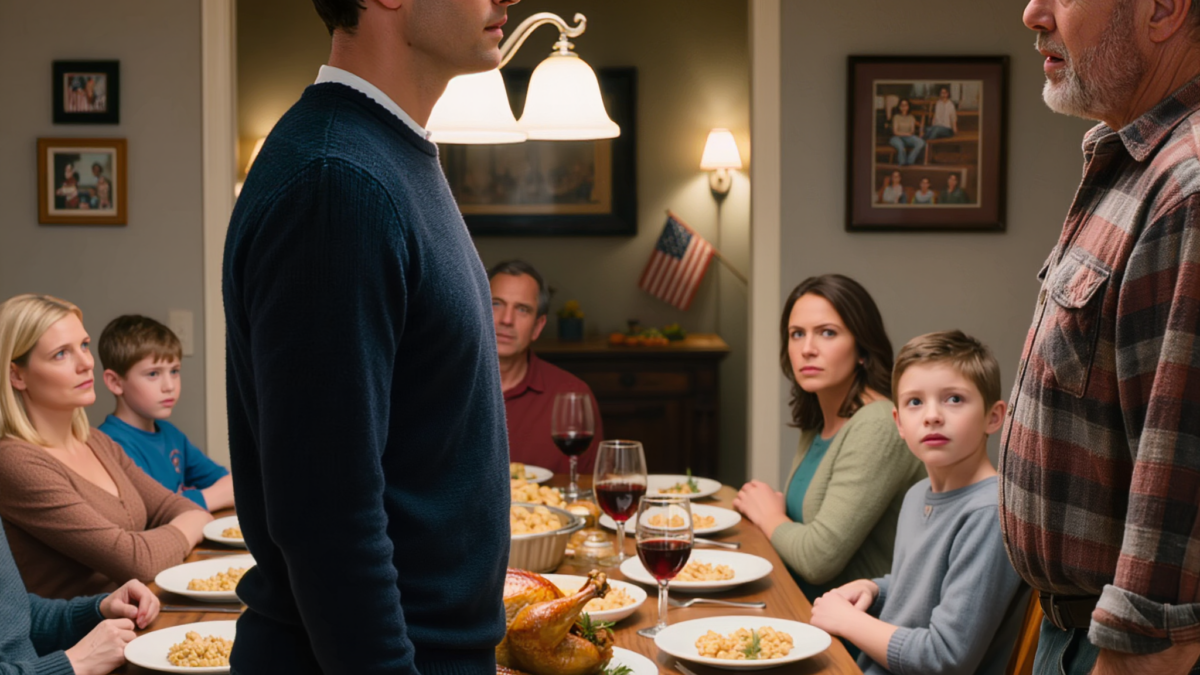
As I sat at the end of that table, my father looked me dead in the eye, his face twisted with absolute disgust, and told me to get out of his house.
He shouted that paying bills did not make me family.
While I stood there trying to process the sheer audacity of his rage, my mother leaned in close and whispered the cruelest words she could possibly find.
She told me I was just jealous of my younger, chronically unemployed brother.
They laughed at my so-called arrogance in front of our extended family, parading their golden child while discarding the son who actually kept a roof over their heads.
But there was one massive, life-altering thing they did not know.
The ultimate secret I had kept buried deep for months.
I wasn’t just paying their monthly utility bills and their auto insurance.
My tech company’s private asset management division had quietly bought up the secondary real estate mortgage they had secretly taken out to fund my brother’s endless string of failed business ventures.
They had leveraged their home to the absolute brink.
The morning after Thanksgiving, the silence in my downtown Detroit apartment was absolute and heavy.
It was a crisp, brutally cold Friday morning in Michigan. Outside my floor-to-ceiling windows, the city was slowly waking up under a thin layer of frost.
Most normal families were fighting over Black Friday deals at Walmart or waking up lazily to heat leftover turkey sandwiches.
I was sitting at my marble kitchen island, completely dressed in dark jeans and a sweater, staring down at a completely black phone screen.
The coffee in my mug had gone ice cold an hour ago.
I took a deep, steadying breath, picked up the phone, and held down the power button.
The screen glowed to life.
Then the floodgates of panic opened.
The notification sound didn’t just chime. It became a solid, continuous stream of alerts.
Thirty-seven missed calls.
Fifty-two text messages.
Seven urgent voicemails left in a span of three hours.
I opened the text threads, watching the digital manifestation of their world collapsing.
My mother’s messages told a story of rapidly escalating terror and confusion.
At 6:15 a.m., she sent a single question mark.
At 6:45 a.m., she texted:
“Victor, the power just went out in the whole house. Did you forget to pay the electric bill? Call the company and fix it.”
By 7:30 a.m., her tone had shifted entirely from entitlement to panic.
“The water is off. The smart thermostat is completely dead, and the house is freezing. Call me back right now. This isn’t funny.”
At 8:15 a.m., the desperation peaked.
“The security alarm is blasting through the whole house. The master code won’t work. Your father is having chest pains from the stress. How could you do this to us? Answer your phone.”
I slowly scrolled down to my brother Julian’s thread.
His texts were entirely different.
They lacked any fear or concern for our parents, replaced entirely by venom and self-centered rage.
“What the hell did you do? The repo guy just hooked up my car in the driveway. I have a massive investor meeting today for my app, and I am stranded at this freezing house. Fix this now.”
I didn’t reply to a single one of them.
I felt no urge to explain myself. No urge to soothe their anxiety.
Instead, I reached across the kitchen island and opened the smart-home security app on my tablet because the high-end cameras I had installed at their property operated on a backup cellular network that I personally paid for and controlled.
I had a front-row, high-definition seat to the chaos unfolding fifty miles away through the wide-angle lens of the front porch camera.
I watched Officer Hayes, a local beat cop I actually went to high school with, standing on my parents’ porch, shivering in his heavy winter uniform.
My father, Harrison, was standing in the open doorway wearing a thin bathrobe and winter boots, gesturing wildly with his arms. His face was a deep shade of red.
He was pointing frantically at the empty, oil-stained spot in the driveway where Julian’s car used to sit.
I turned the audio up on the tablet.
Harrison was shouting about a targeted cyber incident.
He was demanding that Officer Hayes immediately find whoever had supposedly targeted their family. He was threatening a massive lawsuit, insisting he would hire a lawyer and sue the police department if they didn’t get his son’s car back.
He had no idea that the person he blamed was his oldest son.
He had no idea that everything unfolding had been set in motion by the very person he had banished the night before.
For eight exhausting years, I had been the silent, invisible architect of their daily comfort.
I was the emergency fund.
The retirement plan.
The ultimate safety net.
I paid for the roof over their heads, the heat in their radiators, the insurance on their vehicles, and the very Wi-Fi network they were currently using to send me angry messages.
I did it all because I believed the fundamental lie that every child from a toxic home is programmed to believe from birth.
If you just give enough of yourself, if you just sacrifice enough of your own happiness and financial stability, they will eventually see your worth and love you.
I watched my father pace aggressively on that frosty porch, his breath pluming from his mouth in the freezing November air.
The man who had disowned me twelve hours earlier, who told me my money meant nothing to him, was now experiencing the immediate reality of my complete absence.
My chest felt tight.
But for the first time in my entire adult life, it wasn’t from the crushing weight of guilt.
It was the strange, terrifying, intoxicating sensation of absolute freedom.
I thought turning off the money tap would just make them incredibly angry.
I thought they would yell, send a few nasty texts, threaten to cut me off, and eventually figure it out on their own.
I was so incredibly wrong.
Shutting down their accounts didn’t just cause a temporary inconvenience or a bad weekend.
It completely unraveled a decade of carefully constructed lies, serious financial misconduct, and a level of betrayal I could never have imagined.
The real storm hadn’t even started yet, and I was holding the only umbrella.
To truly understand how a family ends up with the police on their front porch the morning after a holiday of gratitude, you have to look deeply into the toxic soil we grew in.
We lived in a solid middle-class neighborhood in Grand Rapids, Michigan.
It was a picturesque street lined with towering oak trees, perfectly manicured lawns, and shiny minivans parked in every driveway.
It was the kind of place where neighbors aggressively competed over lawn care, where property values were discussed like religion, and where local HOA meetings were treated like high-stakes Supreme Court hearings.
In that neighborhood, outward appearances meant absolutely everything.
Behind closed doors, it was a completely different reality.
My father, Harrison, was a fiercely proud, aggressively stubborn man.
He worked at the local auto manufacturing plant, a union job he held over our heads like a heavy iron crown.
He firmly believed that going to work, hating your life, and coming home angry was the very definition of being a good father.
He didn’t believe in emotional support.
He believed in authority.
My mother, Margaret, worked part-time as a receptionist at a high-end dental clinic.
She lived entirely for neighborhood gossip, collecting the secrets of others while frantically working to maintain the flawless illusion of our perfect, happy family.
And then there was Julian.
Julian is exactly five years younger than me.
From the exact moment he drew his first breath in the hospital delivery room, he was the undisputed, untouchable golden child of the family.
The imbalance between us was so blatant, so aggressively visible, it was almost comical to anyone outside the house.
I vividly remember a specific Tuesday afternoon when I was ten years old.
I came running into the kitchen, breathless and practically glowing with pride, holding a report card with straight A’s.
I had studied for weeks for a brutal state math exam, giving up my weekends to make sure I was perfect.
My father was sitting at the kitchen table, reading the newspaper and drinking black coffee.
I slid the crisp report card directly in front of him, waiting for a smile, a pat on the back, anything.
He didn’t even put his coffee mug down.
He barely glanced at the paper, grunted, and said:
“That is what you are supposed to do, Victor. You go to school to learn. Don’t expect a parade for simply doing your job.”
I swallowed hard, took my report card, and went to my room.
Two weeks later, Julian brought home a spelling test.
He had scored a solid C-minus.
The word “ocean” was spelled with an “sh.”
My parents completely lost their minds with joy.
They threw a pizza party that night.
My father drove to the sporting goods store and bought him a brand-new bright red Schwinn bicycle.
When I stood in the hallway and quietly asked my mother why Julian got a new bike for a C-minus, she knelt down, grabbed my arms tightly, and hissed directly into my face:
“Because he tried his best, Victor. Why do you always have to be so fiercely competitive and mean to your little brother? Let him have his moment.”
I learned early on to make myself completely invisible.
I became the reliable, silent ghost of the house.
I was the one who fixed the leaky sink under the bathroom counter, mowed the front and back lawn without ever being asked, and never caused a single ounce of trouble.
I thought being flawlessly useful would eventually make me lovable.
I thought if I just solved all their problems, they would have no choice but to see me.
The entire foundation of our heavily mortgaged lives collapsed when I turned eighteen.
The auto plant announced massive corporate downsizing.
Despite his twenty years of union seniority, my father was handed a cardboard box, stripped of his badge, and escorted off the property by security.
His severance package vanished in a matter of months, swallowed by car payments and my mother’s shopping habits.
Our family finances took a catastrophic nosedive.
The 401(k) was rapidly drained just to keep the electricity on and the cars in the driveway.
And then came the ultimate betrayal of my youth.
My college fund.
It wasn’t much to begin with, just a few thousand dollars saved over a decade, but it was quietly absorbed into the household checking account to pay off my mother’s staggering credit card debt.
They didn’t even ask me.
They just took it.
I was heading into my freshman year of college.
I sat at the kitchen table, terrified of the future, and asked my parents how we were going to handle my tuition now that the fund was gone.
My father looked at the blank wall, his jaw tight, and said:
“You’re a smart kid, Victor. Figure it out yourself. We have bigger problems.”
So I figured it out entirely on my own.
I took out massive, suffocating student loans that felt like a boulder on my chest.
I worked three separate part-time jobs simultaneously just to survive.
I flipped burgers at a greasy twenty-four-hour diner at 5:00 a.m., the smell of old frying oil seeping permanently into my skin and clothes.
I shelved heavy textbooks at the campus library in the afternoon, my eyes burning constantly from a lack of sleep.
And I did freelance data entry and basic coding from my cramped dorm room late into the night.
I survived on generic instant ramen noodles, stale break-room coffee, and pure stubborn adrenaline.
I rarely slept more than four hours a night, and I never went home for the holidays because I simply couldn’t afford the gas money.
Meanwhile, Julian stayed in high school, living comfortably in the large master bedroom they had newly renovated specifically for him.
And when it was his turn to go to college three years later, my parents suddenly, miraculously found the money.
They took out a brutal second mortgage on the house to pay for his out-of-state university tuition in full.
Julian didn’t have to work a single shift anywhere.
He pledged a notorious fraternity, partied heavily for three years, failed half his classes, and eventually dropped out without a degree.
My parents didn’t yell.
They didn’t express disappointment.
They called him a creative, free spirit who was just taking time to find his true path in life.
Against all odds, and fueled by a quiet, burning rage that I kept locked deep inside, I graduated near the top of my university class with a highly specialized degree in computer science.
I aggressively hunted for a job and landed a junior developer role at a rapidly rising tech firm in downtown Detroit.
I worked insane eighty-hour weeks, wrote flawless code, climbed the corporate ladder with ruthless efficiency, and by the time I was twenty-four, my base salary was well into six figures.
I was finally breathing.
The crushing weight of poverty was off my chest.
I rented a beautiful, modern apartment.
I bought decent, healthy groceries.
I bought clothes that actually fit.
That was exactly when the phone calls started.
They started small, disguised as maternal concern.
Margaret would call on a Sunday evening, her voice trembling and pathetic, crying about how the winter heating bill was just too high that month, or how the local property taxes were going to force them out of the only home they had ever known.
The guilt gnawed at me like a physical parasite in my stomach.
I was sitting in a warm, nice apartment ordering expensive sushi takeout while the people who physically raised me were allegedly shivering in the dark, rationing their food.
So I offered to help.
Just this once, I told myself.
Just this once quickly mutated into a permanent, non-negotiable monthly subscription to my bank account.
Within two years, I was paying their $800 monthly mortgage directly to the bank, $400 in various utilities, and the $600 lease on my father’s brand-new truck.
They never officially asked me to take over these bills permanently.
They never sat me down and said thank you.
They just conveniently stopped paying them, and the bright pink late notices would somehow find their way to my email inbox, forwarded by my mother with a sad-face emoji.
It became an unspoken, ironclad obligation.
If I didn’t pay, they would lose everything, and it would somehow be my fault.
While I was fully funding their basic survival, Julian was busy embarking on a series of catastrophic, embarrassing entrepreneurial ventures.
First, it was a dropshipping business selling cheap, defective imported electronics from overseas.
He burned through thousands of dollars of their savings before abandoning it entirely when customers demanded refunds.
Then came the food-truck idea.
He never even bought a physical truck.
He just spent massive amounts of money on branding consultants, custom logos, and graphic design.
The crown jewel of his failures, however, was a highly volatile cryptocurrency investment scheme.
He convinced my parents to give him $15,000 of their remaining retirement savings, promising them a guaranteed return.
The market crashed, the scheme vanished overnight, and the money was gone.
Through every single financial disaster, Harrison and Margaret remained his biggest, loudest cheerleaders.
My father would proudly stand in the driveway holding a beer, telling the neighbors that Julian was a venture capitalist and an aggressive entrepreneur.
They never once mentioned to anyone that my steady, boring tech career was literally keeping the roof over their heads and the food in their refrigerator.
My best friend, Sylvia, saw right through the madness long before I had the courage to admit it.
Sylvia and I met in college working at that awful, greasy diner.
She is sharp, fiercely protective, deeply cynical, and takes absolutely zero nonsense from anyone on Earth.
We were having drinks at my apartment one evening when I casually mentioned I had to cancel our planned weekend trip to Chicago because I needed to cover my parents’ unexpected car repair bill.
Sylvia slammed her cocktail glass down on the marble table, the liquid splashing over the rim.
She looked at me with a mixture of profound pity and absolute rage.
“Victor, they are actively using you. You do realize that, right? You are bleeding yourself dry for people who treat you like a walking ATM. You are subsidizing your brother’s delusions.”
I immediately got defensive.
The old, deep-rooted family programming kicked in.
“They’re my family, Sylvia. What am I supposed to do? Let them lose their home? Let them end up on the street? They raised me. I owe them.”
She shook her head, her dark eyes flashing with anger.
“There is a massive fundamental difference between helping family out of a tough spot and being extorted by them for a decade. Tell me right now, Victor, when was the last time they thanked you? When was the last time your mother asked how your day was without following it up five minutes later with a request for a wire transfer?”
I sat there in silence.
I had no answer because the brutal truth was they never did.
I had a massive glass jar sitting on my kitchen counter.
I literally labeled it the emergency fund, but Sylvia always called it my guilt jar.
I threw loose cash in there, but mostly it was a mental jar.
A massive, exhausting space in my brain solely dedicated to constantly anticipating their next financial disaster, their next demand for a bailout.
I kept paying month after month, year after year.
I kept waiting for the day my father would put his heavy hand on my shoulder, look me in the eye with genuine respect, and say:
“Son, I am proud of the man you have become. Thank you for keeping us safe.”
I genuinely, foolishly thought if I just bought them enough time, enough comfort, they would finally see my worth.
I kept telling myself it was just money.
It was just numbers on a banking screen.
But then came the massive corporate promotion at work, the new sports car, and the Thanksgiving dinner that finally shattered the glass completely, forcing me to look at the ugly, unforgiving truth.
By early November, my life took a massive, unprecedented swing upward.
My tech firm acquired a smaller, highly profitable competitor.
And because I had personally architected the entire complex software integration process over six grueling months, the CEO, Mr. Lancaster, called me into his massive glass-walled office.
He poured me a glass of scotch and personally handed me a promotion to senior director of engineering.
It came with a base-salary increase that made my head spin, stock options, and a holiday cash bonus that was more money in a single direct deposit than my father had ever made in a full year at the auto plant.
For the first time in my entire life, I felt truly, undeniably untouchable.
I didn’t have to look at price tags at the grocery store anymore.
I didn’t have to calculate my rent against my utility bills.
I decided to do something completely out of character.
Something just for me.
I bought a Porsche.
It was a sleek midnight-blue 911 Carrera.
I didn’t buy it to show off to anyone or to stroke my ego.
I bought it because I loved the pure engineering of high-performance cars.
And for thirty-two years, I had denied myself every single luxury.
I wore cheap, scuffed shoes so my brother could wear designer sneakers.
I drove a beat-up, terrifyingly unreliable Honda for years so my dad could drive a brand-new truck.
I earned this car with my own blood, sweat, and endless lines of code.
Riding the incredible high of the promotion and the new car, I called my mother and generously offered to host Thanksgiving.
I had a beautiful, spacious apartment overlooking the Detroit skyline with a massive chef’s kitchen.
I told her I would cater the whole thing, buy the best wine, and take care of every single detail so she could just sit back, relax, and enjoy the holiday for once.
Margaret’s response over the phone was immediate, calculated, and ice cold.
“Oh, Victor, I don’t know. Your apartment is always so sterile, so cold. It doesn’t feel like a real family home. It feels like a hotel lobby. Plus, Julian gets terrible anxiety dealing with city parking and traffic. Why don’t you just buy everything, pack it up, and bring it to our house? I’ll do the actual cooking so it tastes right. You know how your father is about tradition. He won’t eat food cooked in a city apartment.”
It was a sharp, stinging slap in the face.
A clear rejection of my space and my success.
But the familiar heavy blanket of lifelong obligation fell over me.
I swallowed my pride, pushed down the hurt, and agreed.
I spent over $500 at a premium organic grocery store.
I bought a massive heritage turkey, imported European cheeses, artisan breads, and three bottles of very expensive, highly rated red wine.
I meticulously packed everything into coolers.
The drive to Grand Rapids on Thanksgiving morning took exactly forty-five minutes.
I pulled the midnight-blue Porsche into the driveway, incredibly careful to avoid the cracked concrete near the edge that I had paid a contractor to patch two years ago.
I grabbed two heavy grocery bags, my breath clearly visible in the frigid morning air, and walked up to the front door.
I didn’t even get a chance to knock before the door swung open.
Harrison stood there in his faded flannel shirt and worn jeans.
He didn’t say hello.
He didn’t say happy Thanksgiving.
He didn’t offer to take a single heavy bag from my freezing hands.
He looked right past me, his eyes locking instantly onto the driveway.
“What the hell is that?” he demanded, pointing a thick, calloused finger at the gleaming Porsche.
“It’s my new car, Dad. I got a massive promotion at work.”
I smiled, desperately waiting for even a flicker of pride, a nod of acknowledgment, a simple good job.
Harrison scoffed loudly, crossing his arms over his chest in absolute disgust.
“Must be nice throwing money around on a flashy, useless sports car while regular people are out here struggling to survive in this terrible economy. Julian is going to have to park on the street now because you’re taking up the whole driveway with that ridiculous toy. Move it to the curb.”
My jaw tightened so hard my teeth ached, sending a sharp pain up to my temples.
I squeezed past him without a word and carried the heavy bags into the kitchen.
Margaret was standing at the sink, chopping celery.
She barely glanced at the premium ingredients I meticulously unpacked onto the counter.
She immediately complained that the turkey wasn’t the specific frozen Butterball brand she liked and that the artisan bread looked too tough for her teeth.
I needed a moment to breathe before I exploded and ruined the holiday.
I walked back out toward the hallway to grab the second load of groceries from the car.
That’s when I heard Harrison’s voice coming from the living room.
He was on the phone with his brother, Uncle Winston, who was on his way over.
“Yeah, Victor is here,” Harrison said, his tone dripping with absolute disdain and bitterness. “Drove up in some ridiculous Porsche. Honestly, Winston, he never does enough for us considering how much money he’s hoarding in the city. He throws us a few bucks a month to pay the electric bill and thinks he’s a saint, holding his money over our heads like a tyrant. Julian is the only one who actually understands what family values mean. Victor just cares about his bank account.”
I froze in the shadowy hallway.
The floorboards beneath my feet felt like they were literally dissolving into nothing.
He throws us a few bucks a month.
I was paying almost $1,000 a week to keep them afloat.
I was the only reason he had a roof over his head to complain under.
My hands shook uncontrollably.
I gripped the wooden doorframe until my knuckles turned stark white, trying to ground myself in reality.
Before I could process the suffocating betrayal of his words, the front door burst open.
Julian had arrived.
He strutted into the house like a conquering general returning from a victorious war, wearing a designer leather jacket that I knew, for an absolute fact, he couldn’t afford on his retail salary.
Margaret rushed out of the kitchen, wiping her hands frantically on her apron, her face lighting up with genuine, radiant joy as if she hadn’t seen him in years, even though he lived in their basement for free.
Harrison hung up the phone instantly and clapped Julian on the shoulder, pulling him into a massive bear hug.
“There he is, the entrepreneur, the man of the hour,” Harrison beamed, his loud voice echoing in the small house.
Julian smirked, tossing his keys onto the console table.
He looked out the front window and whistled loudly.
“Who brought the Porsche? Did someone rent a car for the weekend to impress the neighbors?”
“It’s mine,” I said, stepping out of the shadows of the hallway into the light of the living room.
My voice was tight.
Julian’s smile faltered for a fraction of a second, his eyes flashing with raw envy before mutating into a condescending sneer.
“Right. The corporate drone gets a midlife-crisis toy. Hey, let me get the keys. I want to take it for a spin around the block right now. Show the neighbors what real speed looks like.”
“No,” I said flatly, my voice dangerously calm and unwavering. “Nobody drives it but me.”
Julian rolled his eyes aggressively and looked at our mother like a petulant toddler denied a toy.
“Mom, tell him to stop being so incredibly selfish. It’s Thanksgiving. Family shares.”
“Victor, share with your brother,” Margaret scolded instantly, walking back into the kitchen without even looking at me to see my reaction. “It’s just a car. Don’t be so materialistic and greedy.”
I didn’t argue.
I didn’t yell.
I just reached into my coat pocket, pulled out my smartphone, opened the vehicle security app, tapped a specific sequence, and remotely engaged the valet lock and full ignition security.
He could argue all he wanted, but that car wasn’t moving an inch without my authorization.
Shortly after that agonizing exchange, Aunt Beatatrice and Uncle Winston arrived.
They were my mother’s sister and brother-in-law, and they were entirely different breeds of people.
They walked in carrying a humble store-bought pumpkin pie, radiating genuine warmth.
Beatatrice hugged me tightly, her eyes kind and observant.
Winston shook my hand strongly, pulled me aside, and genuinely asked me about my job, congratulating me heavily on the senior director promotion.
The stark, undeniable contrast between their genuine warmth and my own parents’ toxic hostility was blinding.
It made the reality of my situation impossible to ignore any longer.
I walked into the dining room carrying the massive feast I had fully funded, prepared, and served to feed the very family that actively despised me.
I set the heavy golden turkey in the center of the table.
I poured the expensive wine into their crystal glasses.
I sat down at the far end of the rectangular table, physically isolated from the core family unit, watching them laugh and celebrate Julian’s mere existence.
I gripped my linen napkin tightly under the table.
The real explosion was still minutes away, and I had no idea that the words spoken during this meal were going to force me to burn this entire family dynamic to the ground once and for all.
The dining room table groaned heavily under the weight of the extravagant food I had completely funded, prepared, and meticulously served.
The air in the room was incredibly thick, heavy with the rich smell of roasted turkey, homemade sage stuffing, and the bitter, suffocating undercurrent of decades of unacknowledged resentment.
I sat quietly at the far end of the table, methodically cutting my meat into small pieces, watching the grotesque theater unfold before me as if I were a stranger observing a bizarre cult ritual.
Julian was holding court, exactly as he always did at every family gathering.
He had a glass of my $70 cabernet in one hand and a turkey drumstick in the other, waving the meat around aggressively as he spoke loudly about his newest, grandest vision.
“The tech market is absolutely ripe for major disruption right now,” Julian announced to the entire table, looking specifically at Aunt Beatatrice and Uncle Winston to ensure they were captivated by his supposed brilliance. “I’m launching a revolutionary new fitness app. It utilizes deep-learning AI to track muscle fatigue in real time through your smartphone camera. It’s going to completely destroy Peloton within a year. Mark my words.”
Uncle Winston raised a bushy, graying eyebrow, pausing thoughtfully with his fork halfway to his mouth.
“Sounds incredibly complicated, Julian. Do you have a team of software developers building this artificial intelligence? That sounds incredibly expensive.”
Julian scoffed loudly, taking a massive, unappreciative gulp of the expensive wine.
“Developers are just code monkeys, Uncle Winston. They are a dime a dozen. No offense, Victor. The real value is in the idea, the grand vision. I just need the initial seed money to hire some cheap freelancers overseas to build the working prototype. I’ve got a guy, Marcus, who’s setting up the offshore investment structure for me. He’s a genius at securing capital.”
I took a slow, deliberate sip of my wine.
The expensive liquid tasted like dry ash in my mouth.
I managed teams of elite, highly paid software developers for a living.
I dealt with AI integration daily.
I knew exactly what Julian was describing.
It was complete vaporware, a buzzword-heavy scheme designed to separate overly trusting people from their savings.
“How much seed money do you need to get this started, Julian?” Aunt Beatatrice asked, her voice laced with polite Midwestern skepticism that my parents were entirely immune to.
“$40,000,” Julian said without blinking, as casually as if he were asking someone to pass the salt shaker. “It’s a steal. Really, a bargain. The ROI will be massive within six months. Guarantee it.”
Harrison leaned back heavily in his wooden dining chair, puffing out his chest with immense, unearned pride.
He looked at Julian with an expression of pure, unadulterated reverence.
An expression I had spent thirty-two years bleeding for, working myself to the absolute bone for, and had never once received in my entire life.
“Your mother and I have been talking for the last few weeks,” Harrison declared loudly, making absolutely sure his booming voice carried down the table so I could hear every single word. “We’re going to liquidate the remainder of our retirement accounts. We’ve got about $35,000 left in the 401(k). We’re giving it to Julian as an angel investment. Real family supports family. We believe in his future.”
The table went completely, terrifyingly silent.
The lively chatter ceased instantly.
Even Aunt Beatatrice stopped chewing her food, her eyes widening in absolute horror.
Margaret smiled a sickeningly sweet smile, reaching over the table to pat Julian’s hand affectionately.
“We believe in you, sweetheart. You’re going to be a CEO. You have the brilliant mind for it.”
I set my heavy silver fork down.
The metal clinked sharply against the porcelain plate.
A sharp, echoing sound in the suddenly quiet room.
I looked directly across the length of the table at my father, feeling my heart rate steady into a cold, hard rhythm.
“Dad, you cannot be serious,” I said, my voice eerily, unnaturally calm. “You absolutely cannot give him your retirement money. That app does not exist. AI muscle tracking via a standard smartphone camera lens without external sensors is currently impossible for a freelance budget. It is a textbook scam.”
Julian slammed his hand flat on the table.
The wine glasses rattled, spilling red drops onto the white tablecloth.
“Shut up, Victor. You’re just a corporate slave. You don’t know the first thing about being a visionary founder. You just take orders.”
“I know that most startups fail,” I fired back, the intense heat finally rising in my chest. “I know that Marcus, whoever the hell he is, could take that $35,000 and disappear overnight. And when he does, Dad, what are you going to live on? How are you going to pay the mortgage when you have absolutely nothing left in the bank?”
Margaret let out a dramatic, long-suffering sigh.
She looked at Aunt Beatatrice with sad, victimized eyes, playing her role perfectly.
“He always does this, Beatatrice. Victor is so incredibly pessimistic and cruel. He just can’t stand to see his own brother succeed at anything. He’s so bitter.”
“Succeed at what exactly?” I demanded.
The dam inside me finally broke apart completely.
The floodwaters of truth rushed out.
“The dropshipping website? The food truck that never existed? The crypto scheme that cost you fifteen grand last year? I am trying to protect you from losing your home.”
Harrison stood up so fast his chair scraped against the hardwood floor, tipping backward and crashing to the ground.
His face was a mask of pure rage.
He pointed his thick finger directly at my face, leaning aggressively over the roasted turkey.
“I do not need your damn protection,” Harrison roared, the veins in his thick neck bulging against his skin. “You walk in here in your fancy city clothes, driving your fancy sports car, acting like you own the place. You think because you pay a couple of bills around here, you get to dictate how this entire family operates. You are arrogant and disrespectful.”
A couple of bills.
The words hung heavy and toxic in the suffocating air of the dining room.
Aunt Beatatrice gasped softly, her hand flying to cover her mouth.
Uncle Winston looked frantically between me and my furious father, his face pale with absolute shock.
They didn’t know.
Nobody in the extended family knew I was keeping them alive.
They thought Julian was the successful one.
I stood up slowly.
I didn’t shout.
I didn’t have to.
The truth was far louder than his screaming.
“A couple of bills, Dad? I pay the entire mortgage. I pay the electricity, the water, the gas. I pay the insurance on the car Julian is currently driving. I pay your cell phone bills. I have given you $9,600 a year for eight years. Nearly $30,000 a year if you count the emergencies. I am the only reason you aren’t living in a homeless shelter right now.”
The silence that followed was absolute and crushing.
Julian stared at me, his mouth slightly open, the wine glass frozen midair in his hand.
Harrison’s face went from red to a dark, mottled purple.
He stepped toward me, his fists clenched tight at his sides.
“Get out!”
“Excuse me?” I whispered.
“Get out!” Harrison shouted, his voice echoing off the dining room walls. “Paying bills does not make you family. You have no respect. You have no loyalty. No one asked you to pay those damn bills. We got along just fine before you started throwing your dirty tech money at us. And we will get along fine when you stop.”
I looked at my mother.
I looked desperately for a single shred of maternal instinct.
A plea for peace.
A recognition of my sacrifice.
Margaret looked me right in the eye.
Her voice was a venomous quiet hiss that cut deeper than any shout could ever reach.
“You’re just jealous of your brother, Victor. You always have been. You will never be half the man he is.”
I felt something inside my chest snap completely.
It wasn’t a violent, painful break.
It was a clean, sharp, beautiful severance.
The heavy, suffocating chain of obligation that had dragged behind me for my entire life simply fell away.
I felt incredibly, dangerously light.
I looked at Julian, who was smirking again, emboldened by my parents’ aggressive, blind defense of him.
I smiled.
A genuine, unsettling smile that I didn’t even recognize as my own.
“Okay,” I said quietly.
I picked up my heavy wool coat from the back of the chair.
I looked directly at Harrison.
“You’re absolutely right. Paying bills doesn’t make me family. So let Julian pay the $9,600.”
Julian looked confused, his smug smirk faltering.
Harrison sneered, leaning heavily on the table.
“Don’t threaten me, boy. Leave the keys to the car you supposedly pay for on the counter on your way out.”
“No,” I said, turning my back and walking toward the front door, my firm footsteps echoing in the silent, tense house. “I pay for it. I’m keeping it. Good luck with the app, Julian. You’re going to need it.”
I walked out the front door into the freezing, biting night air.
I got into the Porsche, started the engine, and drove away without looking back in the rearview mirror once.
As I merged onto the dark highway, heading back to the cold but peaceful sanctuary of Detroit, I pulled over onto the gravel shoulder.
The hazard lights blinked rhythmically in the pitch black.
I took out my laptop, tethered it to my phone’s cellular network, and logged directly into my master financial dashboard.
It was time to legally and methodically cut the financial ties.
Sitting in the driver’s seat of the midnight-blue Porsche on the gravel shoulder of the freezing Michigan highway, the only illumination in the pitch-black night was the harsh, sterile blue glow of my laptop screen reflecting off the premium leather interior.
The engine hummed with a low, steady, powerful vibration, keeping the cabin incredibly warm against the biting, unforgiving November cold outside.
My hands, resting lightly on the steering wheel, were perfectly, eerily steady.
For eight long, agonizing years, I had operated my entire adult life out of a deep-seated, paralyzing fear.
It was the constant, suffocating fear of their disapproval.
It was the fear of losing the fragile, pathetic illusion of our family unit.
It was the overwhelming fear of forever being labeled the bad, ungrateful son in their twisted, heavily edited narrative of reality.
But sitting right there on the side of that desolate road, listening to the rhythmic mechanical clicking of the hazard lights echoing in the quiet cabin, all of that ingrained childhood fear had entirely evaporated.
It was completely gone.
Ripped away by the sheer audacity of what had just transpired at that dining room table.
It was replaced by a cold, calculating, surgical clarity.
I wasn’t just angry.
Anger is hot, reckless, and temporary.
Anger makes you yell and throw things.
I was profoundly, deeply finished.
I had reached the absolute bottom of my well of empathy, and it was bone dry.
I tethered my high-end laptop to my smartphone’s cellular network, watching the connection bars light up green.
I opened my encrypted browser and logged directly into my master financial dashboard.
This was the central digital hub where I managed the entire financial life-support system of Harrison and Margaret’s suburban existence.
For years, I had logged into this portal on the first of every month with a heavy sense of dread, watching the numbers drain rapidly from my checking account to keep their lights on, their water running, and their pristine image intact.
Tonight, I logged in with a very different purpose.
I didn’t hesitate.
They had made their position perfectly clear, and they had demanded that I get out of their house.
Now I was finally going to stop financing the lifestyle they claimed they could manage without me.
First, I navigated straight to the municipal utility accounts.
The electricity.
The municipal water.
The natural gas that kept their heavily mortgaged, overpriced house warm during brutal Midwest winters.
Every single account was securely in my name, linked directly to my primary high-limit credit card because they had destroyed their own credit scores years ago.
I canceled the automatic payments and began removing myself from accounts I had spent years maintaining on their behalf.
Next was the comprehensive auto insurance policy.
The massive, expensive policy that covered the gas-guzzling truck Harrison loved so much to show off to the neighborhood men and the sleek sedan Julian was currently driving around to pretend he was a successful self-made tech CEO.
I remembered clearly the time Julian recklessly backed that sedan into a concrete light pole at a grocery-store parking lot while distracted.
He didn’t have a single dime to his name, so I had to quietly pay the $1,000 deductible out of pocket just to keep the situation from becoming another crisis my parents expected me to solve.
Never again.
I selected the policy and removed my financial responsibility from it.
Then came the massive digital entertainment ecosystem I had built and funded for them.
I changed the master passwords for their high-speed fiber-optic Wi-Fi network, the premium cable television package that allowed Harrison to watch his exclusive sports channels, and every streaming service they used to binge-watch television all day while I worked grueling eighty-hour weeks in the city to pay for it all.
I logged out of all connected devices remotely.
Their televisions would turn into useless black mirrors.
Finally, I logged into the smart-home security portal.
I had personally installed the state-of-the-art system myself two years earlier, spending thousands of dollars on hardware and monthly monitoring fees after a minor string of burglaries in their upscale neighborhood.
I secured the administrative settings and removed their access to the services tied directly to my accounts.
But I strategically kept the high-definition security cameras active on a separate dedicated cellular backup line that I solely paid for and controlled.
I wanted to see the fallout.
I needed to see the exact moment they realized they had completely driven away the person keeping everything together.
I closed the laptop, placed it carefully on the passenger seat, put the Porsche back into drive, and drove the rest of the way back to downtown Detroit.
I slept that night in my quiet, secure apartment with my phone turned entirely off and placed inside a heavy kitchen drawer.
It was the absolute first time in eight long years I had truly, deeply rested, completely undisturbed by the crushing, familiar anxiety of anticipating their next catastrophic financial disaster.
When I finally woke up late the next morning and turned my phone on, the digital avalanche of pure chaos was waiting for me.
You already know about the initial thirty-seven missed calls and the hysterical, demanding voicemails.
You know about Julian’s car being removed from the driveway after the financing situation caught up with him.
But what happened later that Friday afternoon was an absolute masterclass in toxic psychological manipulation, and it perfectly illustrated the dangerous trap of complacency they had built for themselves over the years.
They genuinely, deeply believed they still held all the power in our dynamic.
They believed that I was just throwing a temporary dramatic temper tantrum because my feelings were hurt at dinner.
They assumed that if they pushed the right emotional buttons, if they manufactured a crisis large enough, I would eventually come crawling back to them, my wallet wide open, practically begging for their forgiveness for causing a scene and disrupting their perfect lives.
At exactly 1:00 p.m., a text message came through from my mother.
It wasn’t an angry message.
It wasn’t demanding money or demanding that I fix the Wi-Fi.
It was strategically designed to induce sheer panic and immediate compliance.
“Victor, please,” the text read. “Your father collapsed in the front hallway. The extreme stress of what you did to the house and the cars caused a massive spike in his blood pressure. He is having a serious medical emergency. I am calling an ambulance right now. If something happens to him today, this will be on your conscience. Come to the hospital immediately. We need you.”
Five years ago, that single weaponized text message would have sent me into a blind, hyperventilating panic.
I would have dropped everything, run to my car without grabbing a coat, and broken every single speed limit on the highway to get to that hospital waiting room.
I would have paid every single medical bill without looking at the itemized charges.
I would have apologized profusely for causing the stress, taking full ownership of a biological event I had nothing to do with.
I would have probably bought them an expensive vacation to Florida to help them recover from the trauma I supposedly inflicted upon them.
I would have assumed the crippling guilt without a single critical question.
But I wasn’t that naive, traumatized, desperate kid anymore.
I was a senior director of engineering.
I dealt with complex systems, rigorous verification processes, and objective data sets every single day of my professional life.
I did not operate on blind panic anymore.
I didn’t jump in the car.
I didn’t even put my shoes on.
Instead, I poured myself a fresh cup of dark-roast coffee, sat down at my marble kitchen island, opened the security application on my tablet, and pulled up the live high-definition feed of the interior living-room camera.
The house looked incredibly cold due to the inactive thermostat, but the bright afternoon sun was streaming beautifully through the large bay windows, illuminating the room perfectly.
And right there, sitting incredibly comfortably on the expensive leather living-room sofa that I bought for them three Christmases ago, was my father.
He wasn’t clutching his chest in agonizing pain.
He wasn’t lying unconscious on the hardwood floor of the hallway waiting for paramedics.
He was happily eating a massive leftover turkey sandwich and arguing with Julian.
Julian was pacing furiously back and forth across the expensive Persian rug, yelling into his cell phone about his ruined car and his supposedly ruined investor meeting.
My mother, Margaret, was sitting in the floral armchair across from them, looking the picture of perfect, vibrant health.
She was calmly sipping a cup of hot tea she had presumably heated up on the small propane camping stove I saw sitting directly on the glass coffee table.
She was typing furiously on her smartphone.
Exactly three seconds later, my phone buzzed on the granite counter.
“The paramedics are here,” her new text read. “He is barely breathing. Victor, please. He wants to see you before they take him to the ambulance. Have some compassion.”
I sat perfectly still at my kitchen island and watched the live high-definition feed of my supposedly gravely ill father take another massive, hearty bite of his turkey sandwich.
He chewed loudly while pointing a scolding, authoritative finger at Julian, clearly lecturing him about something.
The sheer audacity of the lie was breathtaking.
It was a level of psychological manipulation that actually impressed me from a purely clinical standpoint.
They were willing to invent a serious medical emergency just to push the deepest emotional button they knew I had.
They wanted to force me back into financial compliance so they could get their Wi-Fi turned back on and their comfortable lives restored.
I didn’t yell at the screen.
I didn’t throw my coffee mug against the wall.
I just took a high-resolution screenshot of the live video feed.
I made absolutely sure the digital time and date stamp was clearly visible in the bottom-right corner of the image, proving beyond a shadow of a doubt that it was taken at that exact minute on that exact day.
I attached the image file to a text message and sent it directly to my mother’s phone with a single devastating sentence.
“Miraculous recovery. Enjoy the turkey sandwich, Dad. Do not contact me again.”
I kept my eyes glued to the live high-definition feed on the tablet.
I watched as Margaret’s phone buzzed in her hand.
She looked down at the glowing screen.
Her posture instantly stiffened, freezing in place.
The color completely drained from her face, leaving her looking pale, hollow, and terrified.
She slowly turned the screen around and showed the image to Harrison.
Harrison stopped chewing mid-bite.
He stared blankly at the phone screen.
He looked around the living room, his eyes darting frantically until they locked directly onto the small black dome of the security camera mounted high in the upper corner of the ceiling.
The arrogant, untouchable patriarch vanished, replaced instantly by deeply humiliated rage.
He realized the cameras were still rolling.
He realized the curtain had been pulled back permanently, exposing the ugly machinery of their manipulation.
A moment later, the camera feed disappeared.
That was the absolute last time I ever saw the inside of that house.
The elaborate, carefully constructed trap of their complacency had snapped shut loudly on completely empty air.
They realized in that exact humiliating moment that the old Victor was truly gone.
The emotional guilt buttons they had pressed so effectively for decades were permanently disconnected.
But the financial reckoning, the true legal consequence of their actions, was only just beginning to surface.
The rest of the holiday weekend passed in a tense, completely silent standoff.
I didn’t receive another text message about a fake ambulance, a fake medical crisis, or another manufactured emergency.
I spent my Saturday morning sitting at a bright, bustling downtown Detroit coffee shop with my best friend, Sylvia.
She had been the only person in my life who consistently told me the truth about my family.
When I slid my phone across the table and showed her the time-stamped screenshot of my father happily eating the sandwich while supposedly in a medical emergency, she nearly choked on her iced latte.
She spit her drink back into her cup, and we laughed together until our ribs physically ached.
It was a deep, guttural, cathartic release of years of built-up tension and anxiety.
For the very first time in my life, I wasn’t desperately trying to hide the ugly, embarrassing reality of my family from the world.
I was shining a massive, blinding floodlight on it, exposing it to the fresh air.
But Monday morning was when the real corporate machinery I had quietly set in motion months ago finally engaged its heavy gears.
I was sitting in my spacious, glass-walled office at the tech firm.
The rich smell of fresh espresso filled the room, and the low, energetic hum of city traffic vibrated through the floor-to-ceiling windows.
I was reviewing some complex architectural software code on my dual monitors when, at exactly 10:00 a.m., my personal cell phone rang loudly.
It was an unknown number, but the area code was unmistakably Grand Rapids.
I knew they were calling from a borrowed phone.
I answered the call, pressing the button to put it on the high-fidelity speakerphone sitting on my massive mahogany desk, and leaned back deeply into my ergonomic chair.
Harrison’s voice barked sharply through the speaker.
He was trying his absolute best to sound authoritative, commanding, and intimidating.
But I could clearly hear the faint, undeniable tremor of actual fear underneath the manufactured bravado.
He was obviously calling from a neighbor’s borrowed landline, likely standing in their kitchen trying to look tough.
“This pathetic little temper tantrum of yours ends today. Do you hear me? I just got off the phone with a lawyer, a very aggressive, very expensive lawyer. He says what you are doing to your own parents constitutes severe elder financial abuse. We have a massive lawsuit fully drafted and ready to file at the courthouse this afternoon.”
I didn’t say a single word.
I didn’t defend myself.
I just looked out over the sprawling Detroit skyline, watching the tiny cars move like ants on the highway below, completely unaffected by his noise.
“If you don’t instantly reinstate every single auto payment you canceled, and if you don’t get Julian’s car returned to this driveway by noon today, we are taking you to court,” Harrison continued, his voice rising in volume, desperate for a reaction that wasn’t coming. “We will completely destroy your precious career. We will subpoena your company. We will take your massive salary. We will take your fancy city apartment. We will completely ruin you, Victor. You will have absolutely nothing left when we are done with you.”
I let the heavy silence hang in the air for five full seconds, letting his desperate, empty words echo off the glass walls of my office.
“And furthermore,” Harrison added, clearly emboldened by my silence, falsely assuming he had finally intimidated me into submission, “if you don’t fix this mess you created immediately, you are completely written out of the family will. I will call the estate lawyer myself. I will make sure you do not see a single dime of inheritance from the real estate of this house. It all goes entirely to Julian. You will get nothing for the rest of your life.”
I actually smiled.
It was a cold, sharp smile that felt completely foreign on my face.
“An inheritance, Dad,” I said, my voice incredibly smooth, completely devoid of the fear and panic he was expecting to hear. “That’s incredibly generous of you. I appreciate the thought, but there is a massive fatal flaw in your aggressive legal strategy.”
“What flaw?” he snapped back, the confusion evident in his sharp tone.
“To leave an inheritance in real estate, you actually have to own the real estate,” I explained slowly, articulating every single syllable so he couldn’t possibly misunderstand me. “And you don’t really control that house the way you think you do, Dad. The bank owns a major interest in it. Or rather, my firm controls part of that debt.”
There was a dead, suffocating, completely empty silence on the line.
I could hear him breathing heavily.
The sound of his panic amplified by the expensive speakerphone on my desk.
“What the hell are you talking about, Victor?” Harrison stammered.
The authoritative patriarch persona was completely vanishing, replaced by genuine panic.
“We have a primary mortgage with First National Bank. We’ve had it for years. You’ve been paying it every month. The deed is in my name.”
“I have been paying the primary mortgage. Yes,” I corrected him, my voice cold and hard as ice. “But exactly three years ago, when you and Mom secretly decided to fund Julian’s embarrassing dropshipping business and his completely fake food-truck venture, you took out a massive secondary mortgage against the remaining equity of the house. You thought you were so incredibly clever. You thought you could easily hide the paperwork from me. You genuinely thought Julian’s ridiculous businesses would take off and he would quietly pay the loan back before I ever found out.”
“How? How do you know about that?” Harrison whispered, his voice cracking, the reality of his massive secret being exposed finally hitting him.
“Because Julian’s businesses failed instantly, exactly like I knew they would,” I explained, driving the final point home with absolute methodical precision. “And because neither of you have an actual income, you couldn’t make the required monthly payments on that secondary loan. You defaulted entirely. First National Bank bundled that distressed debt and sold it off to a corporate asset-management firm on the secondary market to quickly recoup their financial losses.”
I paused, letting the heavy, undeniable reality of the situation stretch out over the phone line.
“My tech firm,” I continued, speaking clearly and deliberately, “has a very aggressive, highly lucrative private wealth-management division. I personally run the engineering side of their financial-tracking software. When I saw your names pop up on a secure ledger of distressed local debt two years ago, I didn’t just quietly bail you out with a check like a good little ATM. I didn’t write off your bad decisions. I used a private LLC to purchase the rights to that secondary mortgage for pennies on the dollar. I own the debt, Dad. I hold the paper.”
“You… you bought our debt?” he breathed, the absolute horror fully dawning on him.
“I protected my financial investment,” I corrected him sharply. “I was paying the massive primary mortgage every month to keep a roof over your heads. But you were recklessly gambling the very foundation of the property away on a golden child who can’t even hold down a basic retail job. As long as I was voluntarily paying the primary mortgage, the LLC held the secondary debt in a deferred status. But when you looked me in the eye on Thanksgiving, when you told me to get out of your house, when you explicitly told me that paying bills didn’t make me family, I officially stopped paying the primary mortgage.”
“Victor, please.”
Harrison’s voice broke completely.
The arrogant man who had shouted at me to get out of his house was completely gone.
He was practically begging, his voice small and pathetic.
“I triggered a formal review of the secondary debt on Friday morning,” I said, my voice hard as steel. “The LLC is legally demanding that the outstanding balance be addressed.”
“You have almost no usable equity left in that property. You have no secret college fund to raid. You have almost no retirement savings left because you were about to blindly give the last $35,000 to Julian for a fake fitness app.”
I leaned closer to the speaker.
“By the way, since we are laying all the cards on the table, how exactly did that massive investor meeting go for Julian on Friday afternoon?”
Harrison didn’t answer.
All I could hear was a shaky, terrified intake of breath.
“Let me guess,” I said. “Marcus never showed up to the meeting. The money he already squeezed out of you and Mom for his supposed consulting fees and legal retainers is completely gone. The app is a scam. It was always a scam designed specifically to take money from desperate, gullible people who think they can buy their way into being a CEO.”
“He took it,” Harrison finally admitted, his voice a pathetic, hollow whisper. “Julian’s friend. He took the retainer fee and completely disconnected his cell phone. Julian doesn’t know what to do. The money is gone. We have nothing.”
“Julian is a twenty-seven-year-old man who needs to get a real job and stop playing pretend,” I said flatly, refusing to offer a single word of comfort. “You aggressively threatened me with a lawyer, Dad. You threatened a lawsuit and tried to intimidate me with my own career. So let me give you some completely free legal advice. You cannot afford a lawyer. You cannot afford a lawsuit. You are facing serious financial consequences from a corporate entity that does not care about your feelings, your legacy, or your pride. I strongly suggest you stop calling me, stop threatening me, and start dealing with the situation you created.”
I paused.
“You wanted me entirely out of your family. Congratulations. You finally got your wish.”
I reached forward and pressed the button to end the call.
I didn’t block the neighbor’s number.
I simply knew with absolute certainty they would never use it to call me again.
The massive twist wasn’t just that I stopped paying their bills.
It was that I had strategically, legally protected myself using the exact financial mechanisms they had tried so hard to hide from me.
They thought they were playing checkers behind my back, hiding their financial mistakes to protect their precious Julian.
They didn’t realize I had been watching the board the entire time, mapping out every possible move years in advance.
The ugly truth was finally exposed to the harsh, unforgiving light of day.
There was no grand inheritance to threaten me with.
There was absolutely no leverage left for them to pull.
The fragile house of cards hadn’t just fallen over.
It had collapsed completely, leaving nothing but regret.
The ultimate downfall of my parents and my brother was not a loud, cinematic explosion.
It was a painfully slow, incredibly agonizing, and deeply humiliating public deflation.
When you build your entire family identity on the false illusion of suburban superiority and the hidden, uncredited labor of the child you actively despise, the eventual collapse is incredibly thorough and impossible to hide from the people you spend your life trying to impress.
Aunt Beatatrice and Uncle Winston were the ones who reluctantly kept me updated on the wreckage over the next few long, brutal months.
Beatatrice called me a few weeks before Christmas.
She was absolutely furious, but not at me.
She had driven to their house that weekend to directly confront them about the disgusting Thanksgiving dinner disaster.
Under the immense pressure of her relentless questioning and the undeniable reality of a household in financial distress, the entire ugly truth had finally spilled out onto the floor.
With the primary mortgage completely unpaid for months and my LLC legally pursuing the secondary debt, the banking institutions moved with ruthless corporate efficiency.
The real estate market in Grand Rapids was incredibly hot, and the bank had absolutely zero financial interest in negotiating terms with a family that had zero verifiable income, zero liquid assets, and a documented history of defaulted loans and financial mismanagement.
Foreclosure notices were eventually posted at the property for all the judgmental, gossiping neighbors in the tight-knit HOA to see perfectly from the sidewalk.
It was the absolute, undeniable funeral of their perfectly crafted, pristine suburban image.
They could no longer pretend they were better than anyone else.
The illusion was dead.
The crushing, suffocating stress of the impending, unavoidable financial ruin completely fractured my parents’ already fragile marriage.
Without my money acting as a silent, invisible buffer to smooth over their deep resentments and fund their distractions, they were forced to actually look at each other.
They were forced to acknowledge the monster they had created in Julian.
According to Beatatrice, the vicious screaming matches in the house were constant, deafening, and completely toxic.
Margaret bitterly blamed Harrison for losing his union job all those years ago and never recovering his pride enough to find decent work.
She screamed that he had failed as a provider.
Harrison blamed Margaret for constantly spoiling Julian, enabling his grand delusions, funding his schemes, and pushing them into taking out the secondary mortgage in the first place behind my back.
At one particularly explosive point, Harrison even threatened a messy divorce, shouting loudly enough for the neighbors to hear that he wanted full custody of whatever dignity he had left.
But a divorce required thousands of dollars for legal fees, court filings, and attorneys.
And they didn’t have a single solitary dollar to spare.
They were financially and legally trapped in a miserable, suffocating prison of their own making, forced to endure each other’s misery.
In late January, the bank officially took possession of the house.
The grand, heavily mortgaged suburban home that I had paid for with my blood, sweat, and tears for eight long years was gone.
They were required to leave and forced to downsize drastically.
They moved into a cramped, poorly maintained two-bedroom apartment in a much older, significantly less desirable part of town, miles away from their wealthy country-club neighbors.
Harrison, the fiercely proud, stubborn union man who flatly refused to take orders from anyone, was finally forced to swallow his massive, inflated ego.
At sixty-two years old, with no modern skills and a huge gap in his résumé, he had to put on a cheap, poorly fitting polyester uniform and take a grueling job as a night-shift security guard at a local distribution warehouse just to pay the basic rent.
Margaret, who absolutely loved to play the wealthy lady of leisure for the neighborhood HOA meetings, was forced to increase her hours at the dental clinic to full time, working the front desk, answering phones, and dealing with angry, complaining patients all day long until her feet throbbed and her back ached.
And then, of course, there was the golden child.
Julian.
Without my parents’ massive house to live in entirely for free, and without my money secretly funding his car, his insurance, his clothes, and his lavish lifestyle, Julian hit a brutal, unforgiving, solid brick wall called reality.
The AI fitness-app scheme was completely dead.
Marcus was long gone with the retainer cash.
Julian had no college degree, no actual verifiable work experience, and a résumé full of easily disproven claims about being a founder and a CEO.
He was finally forced to take a minimum-wage job working retail at a local sporting-goods store.
Aunt Beatatrice told me she actually saw him there one Saturday afternoon, sweating profusely while stocking heavy boxes on shelves in the back of the shoe department.
He was wearing an ugly bright-green company polo shirt and a cheap plastic name tag, looking completely exhausted, defeated, and miserable.
He actually tried to hide behind a large cardboard display rack when he saw her walking down the aisle, deeply, profoundly ashamed that the visionary tech CEO was now kneeling on the floor, measuring people’s feet for running shoes.
He lived permanently in the tiny second bedroom of my parents’ cramped apartment, forced to contribute his meager retail salary to the family grocery budget just so they could eat.
The entire family dynamic had completely, permanently inverted.
The precious golden child was now a massive, undeniable financial burden, trapped in a dead-end job with no future.
And the invisible, unappreciated workhorse they had verbally abused and financially exploited for a decade was thriving in the city, entirely unreachable and completely untouchable.
They had lost the massive house.
They had lost their fake social status.
And they had permanently lost the only person in the world who actually cared enough to keep them afloat.
The downfall was absolute, complete, and incredibly poetic.
Six months later, the air in downtown Detroit was incredibly warm and vibrant with the welcome arrival of summer.
The city was alive, and for the first time in my life, I felt truly alive with it.
My entire life had transformed in beautiful, profound ways I could never have possibly imagined when I was sitting silently absorbing abuse at that toxic Thanksgiving dining-room table.
My hard-earned promotion to senior director of engineering was going incredibly well.
I was managing larger, highly talented teams across the globe, executing incredibly complex software projects, and my base salary had naturally increased again due to my stellar performance reviews.
I finally moved out of my sterile, practical apartment and purchased a beautiful, massive historic loft in the absolute heart of the city.
It had gorgeous exposed brick walls, massive industrial windows that let in the morning light, and, for the first time in my life, it finally felt like a real home.
A home that I owned completely free and clear of any emotional extortion, guilt trips, or uninvited guests demanding my resources.
But far more importantly than the money, the title, or the real estate, I was actively healing my mind and my spirit.
The massive glass jar of cash that used to sit on my kitchen counter—the infamous guilt jar that Sylvia hated so much—was completely, permanently gone.
I threw it in the recycling bin the day I moved.
In its place, I had contacted the financial-aid office at my old university and officially set up a private college scholarship in my name.
It was specifically and meticulously aimed at computer-science students who were working multiple part-time jobs to pay their own tuition entirely without family support.
I took the thousands of dollars I used to burn every month on my parents’ ungrateful existence and used it to directly change the lives of hardworking kids who actually deserved a break.
The profound feeling of reading those scholarship application essays and signing those checks was better than any corporate promotion I had ever received.
I also started actively dating again, allowing myself to be vulnerable for the first time in years.
Her name is Elena.
She’s a brilliant commercial architect, fiercely intelligent, wildly independent, and incredibly kind.
When I finally felt safe enough to tell her the entire ugly story of my family—the Thanksgiving disaster, the financial exploitation, the LLC, and the brutal cutoff—she didn’t judge me.
She didn’t offer toxic platitudes.
She didn’t tell me that family is family no matter what, or that I needed to forgive them for my own peace of mind.
She just reached across the restaurant table, held my hand tightly, looked me directly in the eye with complete understanding, and said:
“You survived a hostile family situation, Victor. You have every right in the world to lock the door behind you and throw away the key.”
I hadn’t spoken a single word to Harrison, Margaret, or Julian since that final, devastating phone call in November.
I maintained strict, impenetrable, ironclad boundaries.
I changed my personal phone number, blocked their email addresses at the server level, and ensured my building had top-tier security that would never let them up to my floor.
But highly toxic families rarely give up their favorite targets easily.
In late April, long past the actual holiday season, I received a piece of physical mail forwarded from my old apartment address.
It was a cheap, generic, store-bought Christmas card featuring a cartoon reindeer.
There was no return address on the envelope, but I instantly recognized Margaret’s frantic, looping cursive handwriting.
I opened it slowly, sitting safely at my kitchen island in the loft, the morning sun warming my back.
Inside, there was absolutely no apology.
There was no acknowledgment of the horrific, cruel things they had screamed at me.
There was zero ownership of the massive financial deception, the lies, or the manipulation.
It simply read in her neat handwriting:
“Victor, the past is in the past. Family needs to stick together when times are hard, and times are very hard right now. Your father and I are expecting you for Sunday dinner this weekend at the new apartment. We will make your favorite. Julian wants to show you his new business plan for a logistics company. Don’t be a stranger. We are family. Love, Mom.”
It was the ultimate pathetic trap of complacency, a desperate attempt to reset the chessboard as if nothing traumatic had ever happened.
They genuinely, deeply believed that enough time had passed, that my anger had naturally cooled, and that the ingrained guilt would inevitably force me to resume my role as the obedient, silent ATM.
They wanted me to fund Julian’s next scheme.
They wanted to pretend they were still in charge.
I didn’t feel angry reading those words.
I didn’t feel a massive spike of adrenaline or a tight chest.
I didn’t feel the old, familiar weight of guilt pulling me down.
I just felt a profound, overwhelming, incredibly heavy sense of pity.
They had lost absolutely everything.
Their home.
Their status.
Their comfort.
And their son.
Yet they had learned absolutely nothing from the experience.
They were still trapped in the exact same delusion.
I took a thick black permanent marker, wrote “RETURN TO SENDER — NO LONGER AT THIS ADDRESS” in large, bold letters directly across the front of the envelope, and calmly dropped it back into the outgoing mail slot in my building’s lobby.
I was officially taking full, permanent custody of my own life, my own peace, and my own future.
Looking back on that freezing Thanksgiving night, I realize now that when my father stood up, pointed his finger at my face, and screamed at me to get out of his house, he wasn’t actually cursing me.
He was giving me the absolute greatest gift of my entire life.
He was handing me the heavy iron key to my own prison cell by formally disowning me over a perceived lack of financial loyalty.
He finally explicitly gave me the exact permission I desperately needed to disown them right back without an ounce of regret.
The most profound, hard-earned lesson I have learned on this grueling journey is that blind loyalty is incredibly expensive, and it should never be freely given to people who treat your massive sacrifices like a basic entitlement.
You do not owe your life, your hard-earned salary, your real estate, or your peace of mind to people simply because you happen to share a random genetic code.
Real family is built entirely on mutual respect, deep appreciation, and unconditional love.
If you are sitting at a dining-room table where you are only valued for what financial resources you provide and mocked for who you actually are, it is not a family dinner.
It is a cold, calculated transaction.
And you have every legal and moral right to close the account, stand up from the table, and walk away forever.








