At 17, I came home from my grocery-store shift to an empty house. My parents had moved two states away, leaving one yellow Post-it: “You’ll figure it out.” I finished high school sleeping in a freezing storage unit. Twelve years later, Mom saw my Chicago tech company in a business journal and asked to reconnect. I deleted her email. Then my brother requested one coffee—and his apology unraveled at a single question.
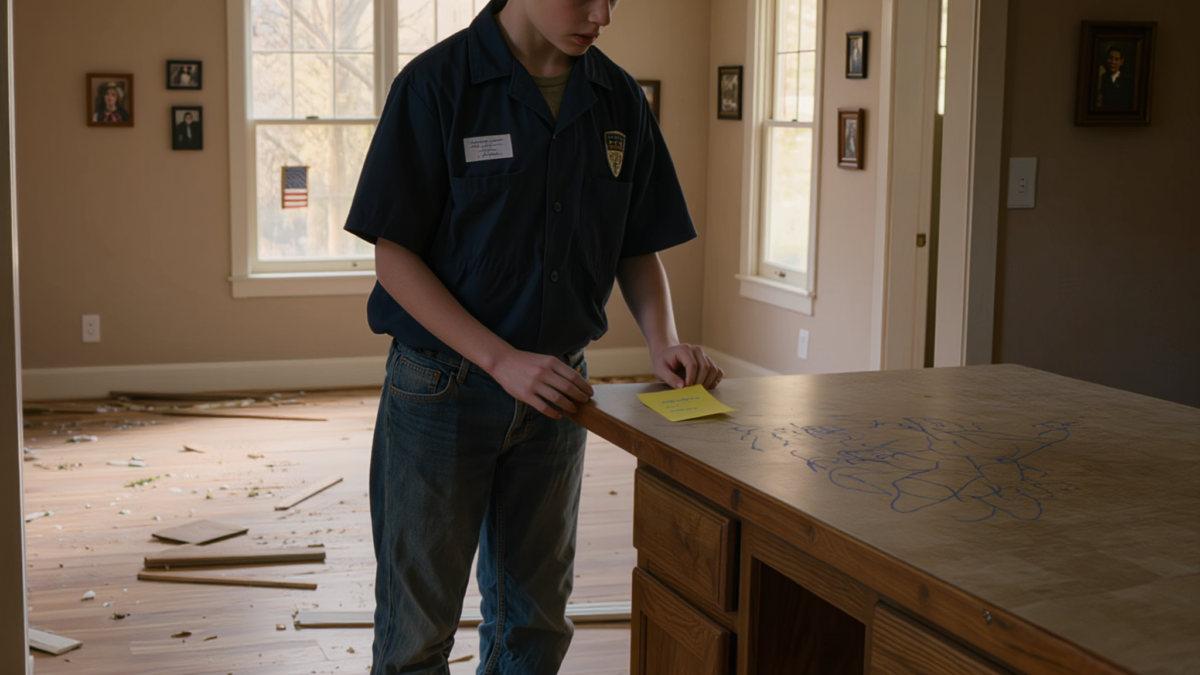
My name is Ethan. I’m 29 years old, and exactly twelve years ago, my parents packed up our entire house, loaded their lives into a moving truck, and moved two states away without saying a single word to me.
They did it while I was working a minimum-wage evening shift at a local grocery store.
When I came home, all they left me was an empty, echoing living room and a single yellow Post-it note stuck to the kitchen counter.
It read, “You’ll figure it out.”
While I was freezing in a rented concrete storage unit, eating straight from a jar of generic peanut butter just to survive my senior year of high school, they were telling our extended family that I’d stolen their life savings and run away.
They smeared my name at every Thanksgiving dinner, every family reunion, and every neighborhood block party. They portrayed themselves as the heartbroken, suffering victims of a delinquent, ungrateful son.
But there was something they didn’t know.
They didn’t know that I would eventually have evidence proving they’d committed a massive financial crime against me. A crime involving a college fund and an inheritance left by my late grandmother.
And now, after seeing my face featured in a prominent business magazine, they’re begging to become part of the empire they once tried to destroy.
To understand what happened, I need to go back to the day my childhood ended.
I remember the exact sound my key made as it turned in the front door lock that afternoon.
It was a bleak Tuesday in late November. I was seventeen years old, wearing a stiff polyester uniform that smelled permanently of floor wax, bleach, and rotting produce from the grocery store where I worked after school.
I was exhausted. My feet ached inside my cheap sneakers, and all I wanted was to grab a Hot Pocket from the freezer and collapse onto the sofa.
I pushed the front door open, expecting the usual chaos of my household.
I expected to hear my mother’s daytime talk shows blaring from the television. I expected my older brother Oliver shouting at his video games in the den. I expected my father to yell at me to take out the trash the second I walked through the door.
Instead, there was nothing.
Just a hollow, echoing silence that made the hair on the back of my neck stand up.
It was the kind of heavy, suffocating quiet that immediately told me something was terribly wrong.
I walked into the living room.
The floral couch was gone. The heavy oak coffee table was gone. The television, the rugs, and the framed family photographs on the mantel were missing.
Everything was gone.
The only things left were pale outlines of dust on the hardwood floor where the furniture used to stand.
Panic began clawing at my throat.
I ran down the hallway to my parents’ master bedroom.
Empty.
The closet doors were wide open, stripped of every hanger, every piece of clothing, and every shoebox.
I ran to Oliver’s room.
Empty.
Even his posters had been peeled off the walls, leaving behind little squares of torn drywall.
My chest tightened. My lungs suddenly seemed unable to draw in air.
I stumbled backward into the kitchen, my work shoes squeaking against the linoleum as I struggled to make sense of what I was seeing.
Had we been robbed?
But burglars didn’t take family photo albums and old winter coats.
And that was when I saw it.
Sitting alone on the bare kitchen island was a single bright yellow square of paper.
I walked toward it, my hands shaking uncontrollably.
The message was written in my mother’s distinctive looping handwriting, in blue ink.
Four words that would remain burned into my memory for the rest of my life.
“You’ll figure it out.”
I didn’t scream.
I didn’t cry right away.
My teenage brain simply couldn’t process the calculated cruelty of it.
I slowly slid down against the kitchen cabinets until I was sitting on the freezing floor.
As the sun went down and the house grew completely dark and cold, the reality settled into my bones.
My family hadn’t simply left.
They’d planned their departure meticulously.
They’d quietly boxed up their lives, hired a moving truck, coordinated their schedules, and driven away.
All while I was bagging groceries for minimum wage.
They’d looked me in the eye that morning, knowing they were leaving me behind, and said absolutely nothing.
Twelve years later, that freezing kitchen floor was a distant memory.
I was standing in a massive corner office on the fortieth floor of a luxury commercial real estate building in downtown Chicago.
I was the CEO and founder of a technology consulting firm I’d built entirely from scratch.
I had a salary that would have made my old high school guidance counselor choke on his coffee.
I had a substantial 401(k), a beautiful penthouse apartment, and a life that was secure, orderly, and peaceful.
I’d fought through hell to get there.
For the first time, I finally felt safe.
Then that peace shattered.
My custom-built computer chimed.
An email notification appeared in the bottom-right corner of my monitor.
The sender’s name made my blood run cold.
Susan.
My mother.
For a long moment, I just stared at her name.
My heart hammered against my ribs, bringing back the panic I’d felt at seventeen.
I took a deep breath, clicked the mouse, and opened the message.
It was incredibly brief, completely lacking warmth or remorse.
“Ethan, we saw the feature article about your company in the business journal. We are so incredibly proud of the man you have become. You are still our son, and family belongs together. Let’s put the past behind us and meet.”
I read it three times.
There was no apology for abandoning a minor.
No explanation for twelve years of absolute silence.
No inquiry about how I’d survived, whether I’d gone hungry, or whether I’d even graduated from high school.
Just a casual, entitled invitation, written as though we’d simply lost touch during a busy summer vacation.
They’d seen my success.
They’d seen the valuation of my company.
Now they thought they could stroll back into the business I’d sacrificed so much to build and claim their seats at the table.
They said they wanted to reconnect.
But I knew why they were suddenly reaching out.
To understand the audacity of that email, you need to understand what happened in the weeks and months after they left that yellow note.
Three days after I discovered the empty house, the landlord showed up.
When he learned that my parents had broken the lease, stopped paying rent, and skipped town, he didn’t offer me sympathy.
He gave me exactly forty-eight hours to vacate the property.
Otherwise, he said, he’d call the police and have me arrested for trespassing.
I had no legal rights to remain there.
I was still a minor.
I packed the few clothes my parents had left behind, mostly threadbare T-shirts and worn-out jeans, into three black plastic garbage bags.
Then I walked out of my childhood home and never looked back.
For the first week, I couch-surfed.
I rotated between the homes of a few high school friends.
But you can only sleep on someone’s floor for so long before their parents start asking uncomfortable questions.
When I ran out of friends willing to hide me, I took my very last grocery store paycheck and rented a windowless concrete storage unit on the industrial edge of town.
It became my home.
Winter hit hard that year.
I slept on a pile of discarded winter coats I’d found at a thrift store.
Every morning, I woke at dawn with my breath forming clouds in the freezing air of that metal box.
Then I’d sneak into the local YMCA.
I used their facilities to shower, shave, and brush my teeth so I wouldn’t smell like a homeless teenager when I sat in my high school classrooms.
My diet consisted almost entirely of generic-brand peanut butter eaten with a plastic spoon, tap water from public fountains, and whatever leftover bruised fruit the grocery store let me take home.
Every night, as the freezing wind rattled the corrugated metal door of my storage unit, I replayed my parents’ words in my head.
My father used to look at me across the dinner table, his eyes full of contempt, and call me a useless burden.
He said I was a drain on his finances.
Meanwhile, my older brother Oliver was the undisputed golden child.
When Oliver turned sixteen, our father bought him a brand-new car with a red bow on it.
When I turned sixteen, Dad handed me a toolbox and told me it was my responsibility to fix the leaking roof before winter.
Oliver received expensive sports equipment, private tutors, and endless praise.
I was expected to scrub the floors, mow the lawn, and keep my mouth shut.
The only saving grace I found during those desperate days came from a woman named Sarah.
Sarah owned a small, twenty-four-hour diner a few blocks from my storage facility.
I used to go there late at night just to sit in a warm booth, order a fifty-cent black coffee, and do my homework under the fluorescent lights.
I tried to be invisible.
But one freezing Tuesday night, Sarah noticed that I was shivering violently.
She noticed how loosely my clothes hung from my malnourished frame.
She didn’t ask invasive questions.
She didn’t call child services.
She simply walked over to my booth, took away my coffee cup, and set down a massive steaming plate of roasted turkey, mashed potatoes, and thick brown gravy.
Then she slid a job application across the table, tapped it with her pen, and told me to show up for the dishwashing shift the next day after school.
She paid me cash under the table so I could afford to eat.
Sarah gave me dignity when my own blood relatives had thrown me away like garbage.
She was the mother I actually needed.
She saved my life.
Remembering Sarah’s kindness made me look back at the email from my biological mother on my computer screen.
A wave of disgust washed over me.
I moved my mouse and deleted the message.
Straight to the trash.
I wasn’t going to participate in their twisted game.
But a week later, another email arrived.
This one was from Oliver.
“Ethan, I miss you. Please, can we just talk? Can we fix this? I am coming to Chicago next Thursday for a sales conference. Just one coffee. Please give me a chance to explain.”
I stared at the screen for a long time.
Oliver had been the golden child, yes.
But he’d also been young when our parents left.
He was nineteen, in his first year of college.
Part of me, the broken, lonely seventeen-year-old who still lived somewhere deep inside my chest, wondered whether Oliver had been a victim, too.
Maybe our parents had manipulated him.
Maybe they’d forced him to leave.
I replied with a time and the address of a busy, upscale coffee shop directly across the street from my office building.
When I walked into the cafe that Thursday afternoon, I recognized him immediately.
He looked older, slightly heavier around the middle, wearing a mid-range, off-the-rack suit that seemed a little out of place among the tailored clothing of the financial district crowd.
He stood up nervously and awkwardly extended his arms for a hug.
I kept my hands firmly in my pockets and offered a curt nod.
We sat across from each other.
Oliver immediately launched into what sounded like a heavily rehearsed script.
He pressed a paper napkin to his eyes, wiping away tears that didn’t quite seem to fall.
“Ethan, I am so incredibly sorry,” Oliver said, his voice cracking. “I was just a stupid kid. Mom and Dad told me you wanted to stay behind. They told me you had a solid plan to live with a friend’s family so you could finish your senior year at your own high school.”
“I did not know you were out on the streets. I swear to you on my life, Ethan. I did not know they left you with nothing.”
I sat perfectly still.
I watched his face, studying every tiny change in his expression.
I let the silence stretch until he began shifting uncomfortably in his leather chair.
“Twelve years, Oliver,” I finally said, my voice completely flat. “In twelve long years, you never once picked up a phone. You never once sent a letter to my old high school. You never once tried to find out if I was dead or alive.”
Oliver leaned forward, lowering his voice and glancing around as though someone might overhear us.
“That is not true. I swear, Ethan, I thought about you every single day. I worried about you constantly. I even found your LinkedIn profile about five years ago. I saw that you were living in Chicago and starting your own consulting business. I was so proud of you, man. I really was.”
He stopped talking.
He was waiting for me to smile.
Waiting for absolution.
But the damage was already done.
He’d just handed me the contradiction that destroyed his entire explanation.
“You found my LinkedIn five years ago?” I asked slowly, leaning back in my chair while keeping my eyes fixed on his.
Oliver blinked, realizing his mistake a second too late.
“Well, yes, but—”
“But you didn’t message me,” I interrupted, my voice dropping. “You knew exactly where I was. You knew what city I lived in, what company I ran, and that I was alive. You were twenty-four years old. You were a grown man with a job and a life.”
“Why didn’t you reach out then?”
Oliver looked down at his half-empty coffee mug.
His jaw tightened.
The facade of the heartbroken brother began to disappear.
“Mom and Dad, they still help me out financially, Ethan,” he mumbled, refusing to make eye contact. “They still pay for my housing. They help cover my car lease. If they found out I contacted you behind their backs, they would have cut me off entirely.”
“You know how Dad gets. He would have ruined my life. I couldn’t risk my lifestyle.”
There it was.
The ugly, unvarnished truth.
He’d known I was alive. He’d known I was building a company from the ground up.
But keeping his monthly allowance and leased car had been more important than checking on his homeless brother.
I stood up and buttoned my suit jacket.
I didn’t shout.
I didn’t make a scene.
I looked down at the man who shared my DNA and felt almost nothing.
No anger. No sadness.
Just pity.
“Have a safe flight back home, Oliver,” I said, dropping a crisp twenty-dollar bill on the table to cover my coffee.
I turned and walked out into the bitter Chicago wind.
I knew that meeting hadn’t really been a family reunion.
It had been a reconnaissance mission.
They were testing the waters, and I’d shown them I wasn’t the same naive kid they’d abandoned.
I thought the worst was over.
I thought walking away would be the end of it.
I was terribly wrong.
Two days after my deeply disappointing meeting with Oliver, the real barrage began.
The reconnaissance mission was over. My parents were now declaring open warfare.
I was sitting at my desk reviewing a quarterly financial report when my personal cell phone buzzed. The call came from an unknown out-of-state number.
Against my better judgment, I answered it.
“Ethan, it’s Mom.”
Susan’s voice trembled through the speaker, dripping with the practiced theatrical sorrow she used to get her way at neighborhood HOA meetings and church bake sales.
“Oliver called us. He told us you walked out on him at the coffee shop. Ethan, why are you being so cruel and heartless? We are your family. We love you.”
“You lost the right to use the word family twelve years ago,” I replied firmly. “Do not call this number again.”
Before I could hang up, I heard a scuffling sound on the other end.
My father snatched the phone.
Robert’s voice was loud, aggressive, and demanding. It was exactly the tone that used to make me cower in my bedroom as a child.
“Listen to me, you ungrateful little brat,” Robert barked. “We raised you. We put clothes on your back for seventeen years. You owe us for that.”
“We are facing some extreme financial hardships right now. Your brother Oliver’s son, your nephew, needs emergency surgery, and our health insurance will not cover it.”
“You are sitting in a glass tower making millions. You owe your family. Transfer $50,000 to our bank account by Friday, or I will personally come down to Chicago and teach you some respect in front of your employees.”
I ended the call immediately and blocked the number.
My hands were shaking, not from fear, but from rage.
They were using a supposed surgery for a nephew I’d never even met to demand money from me.
They thought they could still bully me the way they had when I was a helpless teenager.
I immediately picked up my office phone and called the lobby.
I asked to speak to Brenda, the head of building security.
Brenda was a tough, no-nonsense woman in her fifties who treated the building like her personal fortress.
I gave her detailed physical descriptions of both my parents and made my instructions absolutely clear.
If anyone matching those descriptions appeared at the building, they weren’t to be allowed beyond the lobby doors under any circumstances.
If they caused a scene, she was authorized to call the police immediately.
That Friday, I was in the middle of a highly sensitive board meeting with potential investors when my executive assistant, Maria, entered the conference room.
She looked pale and visibly shaken.
She bypassed everyone else and handed me a folded note.
It read, “Your parents are in the lobby. Your mother is lying on the floor. They are calling an ambulance.”
I calmly excused myself from the investors, walked into my private office, and pulled up the building’s live security camera feed.
Down in the pristine marble lobby of my luxury high-rise, there was absolute chaos.
Susan was lying flat on her back on the polished stone floor, clutching her chest with her eyes squeezed shut in apparent agony.
It was quite a performance.
Robert stood over her, screaming at Brenda and the other security guards. He demanded that they let him take the elevators up to my penthouse office because his wife was supposedly dying of a broken heart caused by their vicious, negligent son.
I stood there watching the screen.
I didn’t go downstairs.
Instead, I watched paramedics rush through the revolving glass doors with a stretcher.
They knelt beside my mother, checked her vital signs, connected her to an EKG machine, and appeared confused when her heart rate, blood pressure, and oxygen levels showed nothing wrong.
It looked like a manufactured panic attack staged for an audience.
They loaded her onto the stretcher anyway and transported her to the hospital for observation.
As they wheeled her out, Robert stopped.
He turned around and glared directly into the security camera mounted in the corner of the ceiling.
Then he pointed one threatening finger straight at the lens.
He knew I was watching.
That evening, I poured myself a generous glass of expensive bourbon and stood beside the floor-to-ceiling windows of my apartment, staring at the glittering Chicago skyline.
The silence felt heavy.
Then my phone rang again.
This time, the caller ID showed Uncle Mark.
Mark was my father’s younger brother and the only relative I still occasionally communicated with.
Over the years, I’d sent him Christmas cards and sometimes replied to his text messages because I genuinely believed he had nothing to do with my parents’ betrayal.
I thought he was innocent.
I answered the call.
“Ethan, my boy,” Mark said in his usual smooth, warm, diplomatic voice. “I heard about the terrible misunderstanding in your lobby today. Your mother is in the hospital, Ethan. She is very distressed. Your father is beside himself.”
“She faked a heart attack to bypass my security and cause a scene, Mark,” I said, taking a sip of bourbon. “They tried to extort $50,000 from me.”
“Listen to me, Ethan,” Mark continued.
His voice gradually lost its warmth.
“You are a highly successful CEO now. You have a corporate reputation to uphold. Your company’s brand is built on trust and integrity.”
“It would look absolutely terrible for your corporate image if a story leaked to the press about you abandoning your sick, elderly parents out in the cold. Just give them the money, Ethan. Protect your brand. It is just the cost of doing business.”
I froze.
That wasn’t a request from a concerned uncle.
It was a thinly veiled threat of corporate blackmail.
I hung up without another word.
The betrayal cut deep.
The web was bigger than I’d thought.
The following night, I had to attend a high-profile industry networking gala at a luxury hotel downtown.
It was a mandatory appearance connected to securing a massive merger I was planning for the next quarter.
I was standing near the open bar, trying to keep a low profile, when Sophia approached me.
Sophia was the CEO of a rival technology consulting firm.
She was a ruthless, quiet businesswoman who had spent the previous two years actively trying to undercut my company.
She wore a stunning red designer dress and held her champagne glass delicately by the stem.
A wicked, knowing smile spread across her face.
“Ethan, darling,” she purred, stepping into my personal space. “You look tense.”
“I was having the most fascinating conversation the other day. Some people from out of state reached out to me.”
“They had some very interesting, very tragic stories about your unethical family values. Stories about how you treat the people who raised you.”
She took a slow sip of champagne, keeping her eyes fixed on mine.
“It would be an absolute shame if those heartbreaking stories made it to the trade publications right before your big merger next quarter. Investors hate scandals, don’t they?”
Suddenly, the pieces fell into place.
My parents hadn’t simply shown up at my building to throw a tantrum.
They’d researched my industry.
They’d identified my competitors.
Now they appeared to be working with Sophia to organize a campaign against my reputation.
They were threatening to destroy my livelihood, my professional credibility, and everything I’d built unless I paid their demands.
They were trying to hold my entire life hostage.
I didn’t say a word to Sophia.
I turned around, walked straight out of the gala, handed my valet ticket to the attendant, and got into my Porsche.
I locked the doors, connected my phone to Bluetooth, and called my lawyer, David.
David was a shark.
He wore tailored suits, worked eighty-hour weeks, and was the kind of attorney who genuinely seemed to enjoy dismantling people in court.
“David,” I said, gripping the leather steering wheel so tightly my knuckles ached. “I need you to run a full background check, an asset search, and a complete financial history on my parents, Robert and Susan.”
“Pull every public record, every tax lien, every real estate transaction, every bank loan from the last fifteen years. Leave no stone unturned. They are trying to extort me.”
“Consider it done, Ethan,” David replied, excitement evident in his voice. “I will tear their lives down to the studs.”
I was preparing myself for a brutal, drawn-out war.
But the very next morning, someone completely unexpected arrived at my front door, carrying a secret that would change the direction of my life.
I opened the heavy mahogany door to my penthouse apartment, expecting a courier delivering legal documents from David.
Instead, I found a young woman standing in the hallway, looking utterly exhausted and terrified.
She had dark circles under her eyes. Her hair was disheveled, and she held a sleeping toddler tightly against her chest.
When she shifted her weight, her jacket sleeve slipped up, revealing a dark purple bruise forming on her left forearm.
“Ethan?” she asked softly, her voice barely above a whisper. “I am Chloe. I am Oliver’s wife. This is your nephew, Leo.”
I was stunned.
But I immediately stepped aside and invited her in.
I locked the door behind her, guided her to the soft velvet sofa in my living room, and brought her a glass of cold water.
Chloe looked around the expansive apartment, taking in the floor-to-ceiling windows and modern art on the walls.
Her eyes reflected a mixture of awe and desperation.
She took a trembling sip of water before looking back at me.
“Oliver does not know I am here,” she said.
Her hands shook so badly that the ice clinked against the glass.
“I had to come. I drove straight here from the suburbs. I couldn’t carry this burden anymore. Your parents, Ethan, they are monsters.”
I sat in the armchair across from her, keeping my voice calm and gentle so I wouldn’t wake the sleeping child.
“Take your time, Chloe. Tell me exactly what happened.”
She took a deep, shuddering breath.
“For twelve years, Robert and Susan told our entire extended family and me that you were a severe drug addict.”
“They said you stole $80,000 in cash from a safe in their bedroom, emptied their checking accounts, and ran away in the middle of the night to buy drugs.”
“They cried at every family gathering. They said they spent years hiring expensive private investigators to track you down, but that you were a lost cause and didn’t want to be found.”
My jaw tightened until my teeth ached.
They hadn’t simply abandoned me to freeze in a storage unit.
They’d systematically destroyed my reputation for more than a decade to justify their own actions.
They’d made themselves the martyrs.
“A few weeks ago, when they saw that feature magazine article about your consulting company, they went completely crazy,” Chloe continued, wiping a tear from her cheek.
“They realized you had real money. They told Oliver they were going to go to Chicago and get what you owed them.”
“Yesterday, when I found out they went to your office building and your mother faked a medical emergency in the lobby, I couldn’t take it anymore.”
“I confronted them in my own kitchen. I told Robert that I was going to call you, tell you the truth about their lies, and apologize on behalf of the family.”
Khloe subconsciously reached over and touched the dark bruise on her arm.
She squeezed her eyes shut.
“Robert grabbed me. He squeezed my arm so hard I thought the bone would snap, and he threw me against the kitchen counter.”
“He leaned in and told me that if I ruined their payday, he would make sure Oliver filed for divorce immediately.”
“He said they would hire the best lawyers and take full custody of Leo, and I would never see my son again.”
“When Oliver just stood there and said nothing to defend me, I packed a bag, grabbed my son, and drove straight here.”
I looked down at the sleeping toddler.
My nephew.
The innocent boy they’d used as an excuse to demand $50,000 for a surgery that apparently didn’t exist.
A cold, overwhelming fury settled deep in my chest.
This was no longer just about me.
It wasn’t only about the seventeen-year-old boy who’d been left behind.
They were now terrorizing a mother, physically assaulting a woman, and threatening a child.
“You are safe here, Chloe,” I said, my voice firm. “They will never touch you or Leo again. I promise you that on my life.”
While Chloe and Leo slept safely in my secure guest room, my phone rang.
It was Detective Hayes from the Chicago Police Department.
“Mr. Ethan, we are responding to a reported break-in at your brother Oliver’s residence in the suburbs.”
“The place was completely ransacked, drawers emptied, files destroyed. Oliver claims it was a random burglary, but several neighbors reported seeing a vehicle perfectly matching your father’s car speeding away from the scene.”
It appeared my parents had broken into their own son’s house to steal documents, passports, and other personal belongings, hoping to intimidate Oliver and Khloe into remaining silent.
I gave Detective Hayes my address and asked him to send an officer to my apartment immediately to take Khloe’s official statement regarding the physical assault and domestic violence.
I was going to build a fortress around her.
An hour later, David arrived.
He didn’t bother greeting me.
He walked straight into my kitchen and dropped a thick, heavy manila folder onto the marble island.
“I pulled their financial records just like you asked,” David said, a victorious grin spreading across his face.
“You were right to be suspicious, Ethan. Your parents didn’t flee the state twelve years ago because they were broke or facing bankruptcy.”
“They fled because they were hiding a massive, undeniable felony.”
I opened the folder.
Inside were dozens of copies of bank statements from a high-yield trust account.
“When your grandmother passed away, she left a substantial college fund specifically in your name,” David explained.
“Because you were a minor, your parents were the legal custodians of that account.”
He pointed to a highlighted line of numbers on the paperwork.
“Two months before they abandoned you, they forged legal documents and liquidated the entire account. Exactly $80,000.”
“They used it to pay off illegal gambling debts your father had racked up and used the rest to buy an investment property out of state under a shell corporation.”
“Then they vanished before you turned eighteen and could legally demand an audit of the funds.”
I stared at the paperwork.
The black ink on those pages seemed to validate every ounce of suffering I’d endured.
Every freezing night.
Every hunger pang.
They hadn’t simply left me to starve.
They’d stolen the money intended for my future to fund their own reckless decisions.
Then they’d told everyone I was the thief to cover their tracks.
“But that is not even the best part,” David said, tapping a second document with a freshly manicured finger.
“Look at the notary signature on the withdrawal forms.”
I looked closely.
The signature was sloppy, but entirely recognizable.
It belonged to Uncle Mark.
He’d facilitated the fraud.
He was the one who’d authorized the illegal transfer.
That was why he’d called me, trying to force me to pay my parents.
He was protecting himself.
I looked up at David as the reality settled in.
I finally had proof.
And I knew exactly where and when I wanted to use it.
“David,” I said, my voice calm and steady, “next Thursday is the annual charity gala for the Children’s Foundation. Victor, the CEO of my biggest client, is hosting it.”
“It is the biggest corporate event of the year. My parents know I will be there. Sophia knows I will be there.”
“I guarantee you they will try to crash it to cause a massive public scene and force a settlement.”
David nodded slowly, understanding what I was suggesting.
“And what do you want to do when they show up at the door?”
“We are not going to call security,” I said. “We are going to let them in.”
“We are going to let them take the stage. And then, David, we are going to execute them in front of everyone.”
The Monday morning of our court date arrived with a bitter, biting chill in the Chicago air.
It was the kind of cold that seemed to seep directly into your bones.
I stood in front of the floor-to-ceiling mirror in my penthouse bedroom, carefully buttoning a bespoke charcoal-gray suit.
I wasn’t dressing to impress my parents.
I was dressing for war.
I wanted to project absolute, impenetrable authority.
Beside me on the bed lay the thick, heavy legal binder David had prepared over the weekend.
It contained every piece of evidence, every police report, and every financial record we needed to secure a permanent restraining order against the people who’d brought me into this world.
I took a deep breath and adjusted my tie.
I looked at the man in the mirror.
He was a long way from the terrified seventeen-year-old boy who’d shivered in a concrete storage unit.
Today, that boy was finally going to get justice.
I met Khloe, Oliver, and David outside the imposing stone steps of the county courthouse.
The sky was a flat, unforgiving gray.
Khloe looked exhausted but determined, holding tightly to Oliver’s arm.
She wore a simple black dress, her posture carrying the fierce determination of a mother who refused to let anyone use her child as a weapon.
Oliver, on the other hand, looked like a man walking toward his own execution.
For his entire twenty-seven years, he’d been the undisputed golden child, dependent on Robert and Susan’s approval and financial support.
Today, he was going to enter a courtroom, raise his right hand, and testify against them.
“Are you ready for this, Oliver?” David asked, his voice sharp and unsentimental as it cut through the morning wind.
“Once we step through those doors, there is no going back. If they try to corner you, you do not speak to them. You let me do the talking.”
“We are establishing an airtight legal boundary today.”
Oliver swallowed hard.
His Adam’s apple bobbed nervously as he looked at Chloe, then at me.
“I am ready. I have to protect my family. I can’t let him threaten Khloe with a custody battle ever again.”
We passed through the heavy metal detectors and took our seats on the hard wooden benches outside the courtroom.
The hallway smelled of stale coffee and harsh lemon floor polish.
That scent instantly brought me back to my teenage years, scrubbing floors at the grocery store while my family was busy packing their belongings to abandon me.
Fifteen minutes later, the elevator doors at the end of the hallway chimed.
They walked out.
Robert and Susan strode toward us with an air of sickening entitlement.
My mother wore an expensive-looking, conservative navy dress.
She clutched a designer handbag in one hand and a tissue in the other, already preparing the props for her victim performance.
My father walked with his chest puffed out and an arrogant, dismissive smirk on his face.
Uncle Mark followed closely behind them, playing the role of concerned and supportive family patriarch.
They didn’t have a lawyer.
Robert’s ego was so enormous that he genuinely seemed to believe he could walk into a courtroom, charm a judge into forcing a family reconciliation, and guilt me into dropping the case to avoid public embarrassment.
When my father’s eyes met mine across the hallway, he didn’t look ashamed.
He looked furious.
He glared at Khloe, silently renewing the threat he’d made in her kitchen about a vicious divorce and custody battle.
But when his eyes moved to David, standing casually beside me with a predatory smile, I saw a brief flicker of uncertainty cross Robert’s face.
The heavy wooden doors opened.
The bailiff called our case.
We filed into the courtroom.
The wood-paneled room was silent except for the clicking of the court reporter’s keyboard.
The judge was a no-nonsense woman in her late fifties, with sharp eyes and a stern jaw.
She looked over her reading glasses at my parents, then down at the extensive, meticulously tabbed file David had submitted to the clerk.
Robert stood immediately, without waiting to be acknowledged.
He rested his hands on the defense table and leaned forward as though he were addressing a room full of subordinate employees.
“Your Honor,” Robert began, his voice booming with fake warmth and practiced charisma. “This entire proceeding is a massive misunderstanding.”
“It is simply a family squabble blown entirely out of proportion by my youngest son. We love our boys. We are simply trying to reconnect with Ethan after a very long, tragic estrangement.”
“We haven’t broken any laws. My wife has a fragile heart condition, and the stress these boys are putting her through is absolutely unconscionable.”
The judge stared at him for a long, painfully quiet moment.
She didn’t blink.
“Mr. Robert, you will sit down,” she commanded, her voice cutting sharply through the courtroom.
“You will speak when spoken to. And according to the certified medical records subpoenaed from the paramedics who treated your wife in the lobby of the plaintiff’s building last week, her heart condition is entirely nonexistent.”
“You orchestrated a fraudulent medical emergency to bypass private security and harassed the plaintiff at his place of business.”
Susan let out a dramatic, muffled sob into her tissue.
Her shoulders shook conspicuously, as though she wanted to ensure everyone noticed her distress.
Twelve years earlier, that performance would have made me feel immensely guilty.
Now it only made me sick.
David stood smoothly and buttoned his suit jacket.
“Your Honor, we are requesting a strict multi-year restraining order protecting my client, Ethan, as well as his sister-in-law, Chloe, and her minor child, Leo.”
“We have submitted timestamped security footage of the defendants aggressively trespassing.”
“We have submitted photographic evidence of the physical bruising left on Khloe’s arm after Robert physically assaulted her in her own home.”
“And we have police reports documenting a forced-entry break-in at Oliver and Khloe’s residence, where the defendant stole personal identification documents in a blatant attempt at witness intimidation.”
The judge turned her piercing gaze toward Oliver, who sat rigidly beside Khloe.
“Sir, you are the biological son of the defendants. Are you testifying under oath that you feel your wife and child are in physical danger from your own parents?”
Oliver stood.
His hands shook so violently that he had to grip the edge of the heavy wooden table to steady himself.
He looked across the aisle at the people who’d raised him.
Robert was glaring at him, his face twisted in silent rage.
He silently mouthed one word.
“Don’t.”
Susan held her breath, waiting for the golden child to protect them as he always had.
“Yes, Your Honor,” Oliver said.
His voice cracked on the first syllable, but he took a deep breath and found his strength.
“They broke into my home. My father physically assaulted my wife because she threatened to expose their lies to my brother.”
“They have used money, guilt, and fear to control me my entire life. I am terrified of what they will do next to my son.”
The silence in the courtroom was deafening.
The golden child had shattered the illusion.
The perfect family facade was broken.
The judge didn’t need to hear another word.
She looked at Robert and Susan with pure disgust, picked up her wooden gavel, and brought it down with a sharp, final crack.
“Based on the overwhelming evidence of harassment, the documented physical assault, and the pattern of extreme intimidation, I am granting a full three-year restraining order,” she declared.
“Robert and Susan, you are to remain 500 feet away from Ethan, Oliver, Kloe, and the minor child at all times.”
“You are prohibited from contacting them directly, electronically, or through any third parties.”
“If you violate this order in any capacity, you will be immediately arrested and jailed without bail. We are adjourned.”
My parents looked absolutely stunned.
The color drained from Robert’s face, making him look suddenly pale and old.
Not once in their privileged lives had they faced real legal consequences for their actions.
As we left the courtroom and returned to the harsh fluorescent lighting of the hallway, Uncle Mark attempted to approach me.
He raised his hands in a placating, diplomatic gesture, forcing a smile.
“Ethan, please be reasonable. This is a disaster for the family reputation. You don’t want this on the public record.”
“Mark,” David interrupted, stepping firmly between us.
“If you take one single step toward my client, I will personally call the bailiff and have you arrested right here in this hallway for violating the third-party contact clause of the order we just secured. Back off.”
Mark went pale.
He swallowed hard and scurried back to stand behind my parents.
We’d won the battle.
We had legal protection.
But as I watched my father glare at me from down the hallway, his eyes burning with humiliation and rage, I knew the war was far from over.
Restraining orders were just pieces of paper to people like Robert, who believed society’s rules didn’t apply to them.
I knew his enormous ego couldn’t tolerate being publicly humiliated and legally restrained by the son he’d always treated as worthless.
He was going to retaliate.
And I knew exactly how he was going to do it.
Thursday night was the annual charity gala for the Children’s Foundation.
It was the most prestigious and exclusive corporate event of the year in Chicago.
Every major CEO, real estate developer, and technology mogul in the Midwest would be there.
Among them was Victor, the billionaire CEO of my firm’s largest client.
Victor had been a mentor to me for years, practically the surrogate father I’d never had.
My parents knew about the gala because it had been heavily publicized in business journals.
Sophia, my bitter corporate rival, also knew I’d be attending.
I had a cold, unwavering feeling that Sophia had reached out to my parents immediately after the court ruling.
I was certain they were plotting to crash the event.
They believed that if they ambushed me in front of the wealthiest and most powerful people in the city, screaming about how ungrateful and cruel I was to my supposedly sick mother, I’d fold under the pressure.
They thought I’d write them a massive check just to end the public embarrassment and protect my salary and corporate reputation.
They thought they were walking into my worst nightmare.
But they were actually walking into a carefully prepared trap.
Late Wednesday night, I sat in my penthouse living room with David, finalizing our plan over a glass of bourbon.
We had the manila folder.
We had the certified bank records.
We had the evidence of the financial crime my parents had committed twelve years earlier.
“Are you absolutely sure you want to do this, Ethan?” David asked, sipping his drink while examining the documents.
“If we execute this publicly, it is going to be explosive. The press will cover it. Your personal life, the abandonment, everything will be front-page news. It will be messy.”
“I have spent twelve years hiding from the shame they forced onto me,” I said, staring out at the glittering city lights as a profound calm settled over me.
“They stole my grandmother’s college fund. They stole my inheritance. They left me in a freezing storage unit to starve.”
“And now they are trying to destroy the empire I built.”
I looked at David.
“I am not hiding anymore, David. Tomorrow night, we open the doors and we let them dig their own graves.”
The trap was set.
The bait was ready.
My parents’ own arrogance was about to become their undoing.
The grand ballroom of the Ritz-Carlton was a breathtaking sea of crystal chandeliers, bespoke tuxedos, and designer evening gowns.
The air carried the scents of expensive champagne and roasted truffles.
A string quartet played softly in one corner, providing an elegant backdrop to the quiet conversations of corporate executives negotiating deals worth millions.
I stood near the main stage wearing a perfectly tailored black tuxedo and holding a glass of sparkling water.
Victor stood to my right.
His presence commanded respect throughout the room.
David stood to my left, holding a sleek black leather briefcase close to his side.
“You have had a phenomenal year, Ethan,” Victor said, placing a heavy, fatherly hand on my shoulder.
“That massive promotion you secured for your executive team last quarter, the aggressive new real estate acquisitions your firm managed. You are building a real legacy here in Chicago.”
“Your grandmother would be incredibly proud of the man you have become.”
“Thank you, Victor,” I replied calmly, though my heart was beating with steady anticipation.
“But building a lasting legacy requires cleaning out the rot first.”
Victor gave me a curious, analytical look.
His brow furrowed slightly.
Before he could ask what I meant, the heavy, ornate mahogany doors at the back of the ballroom burst open, crashing loudly against the walls.
The low hum of elegant conversation died instantly.
The string quartet stopped abruptly.
Hundreds of heads turned toward the entrance in shock.
Standing in the doorway, looking completely out of place in cheap, off-the-rack formal wear, were Robert and Susan.
Uncle Mark stood beside them, visibly nervous and sweating profusely.
Slightly behind them stood Sophia, wearing a stunning emerald gown and a smug, triumphant smile.
It was clear that Sophia had used her VIP access and corporate influence to bypass hotel security and bring my parents into the private event.
Robert wasted no time.
He spotted me near the stage and began marching through the crowd of elite guests, shouting at the top of his lungs.
The evening’s carefully maintained decorum vanished.
“There he is!” Robert bellowed, his face turning a dangerous mottled shade of purple.
“The great CEO, the self-made man! Look at him, ladies and gentlemen!”
“Look at him living in absolute luxury while the mother who gave him life is facing eviction.”
“He is a fraud. He is a cruel, ungrateful, vicious son who abandoned his family when we needed him most.”
Susan immediately began her theatrical weeping.
She leaned against Uncle Mark’s shoulder, burying her face in her hands and making certain every wealthy investor in the room could see her tears.
Guests stepped backward, murmuring in shock and disgust, creating a wide, empty circle near the front of the stage.
Sophia stood near the back of the crowd and pulled out her smartphone.
She was clearly preparing to record my public humiliation and leak it to the trade press the following morning.
Victor stepped forward, his eyes narrowing with anger and authority.
He reached into his jacket pocket.
“Security! Remove these people from my event immediately.”
“No, Victor,” I said, my voice cutting through the tension.
I gently placed my hand over his to stop him.
“Let him speak.”
The security guards hesitated, hovering uncertainly at the edges of the crowd.
Robert mistook my response for surrender.
Believing I was terrified of public embarrassment, he stepped directly to the edge of the stage.
He pointed a trembling, furious finger at my face.
“You think you are better than us because you have money in the bank?” Robert spat, his voice echoing through the silent ballroom.
“You owe us your life. We fed you. We clothed you. We raised you for seventeen years.”
“And when we hit a little financial trouble, you turn your back on us. You file a bogus restraining order against your own sick mother.”
“You are human garbage, Ethan. If these prestigious people knew the real you, they would never do business with your firm again.”
He leaned forward.
“Now you are going to write us a check for $50,000 tonight to help your family, or I will stand here and tell every single person in this room exactly what a monster you are.”
He crossed his arms over his chest, breathing heavily, looking immensely satisfied with his attempt to pressure me.
He thought he’d won.
He thought the fear of corporate embarrassment and losing my salary had paralyzed me.
He thought I was still that helpless seventeen-year-old boy.
I didn’t flinch.
I didn’t yell.
I didn’t attempt to defend myself.
I simply turned my head and looked at David.
David smiled.
It was a cold, calculating smile.
He placed the black leather briefcase flat on a high-top cocktail table, unclipped its brass locks, and pulled out a thick stack of legally certified, watermarked financial documents.
He didn’t hand them to me.
He handed them directly to Victor.
“What is this?” Victor asked, frowning as he adjusted his glasses and looked at the top page.
“That, Victor,” David said, his voice projecting clearly across the silent ballroom so every CEO and investor could hear, “is the documented, irrefutable proof of a Class 2 federal felony.”
I stepped to the very edge of the stage and looked down at my father.
The arrogant smirk on Robert’s face began to disappear, replaced by a creeping expression of confusion.
“Twelve years ago,” I began, my voice echoing beneath the crystal chandeliers, “when I was seventeen years old, working for minimum wage at a local grocery store, you didn’t just pack up the house and move two states away.”
“You didn’t leave because you were facing bankruptcy or hard times.”
I pointed steadily toward the documents in Victor’s hands.
“Shortly after my grandmother’s funeral, she left a substantial inheritance and a massive college fund strictly in my name.”
“Because I was a minor, you and Susan were the legal custodians of that trust.”
“Two months before you abandoned me in an empty house with a yellow Post-it note telling me to figure it out, you forged legal documents and liquidated the entire account.”
“Exactly $80,000 in cash.”
A collective gasp traveled through the ballroom.
“You stole your own son’s future,” I continued, my voice rising slightly.
“You stole it to pay off your illegal gambling debts and buy a commercial real estate property out of state.”
“You left me to sleep in a freezing concrete storage unit and eat peanut butter out of the garbage while you bought a new house with my inheritance.”
Sophia’s smug smile vanished instantly.
She lowered her phone, panic replacing her confidence as she realized she’d publicly associated herself with people being accused of serious financial crimes in front of some of the most influential figures in her industry.
“That’s a lie!” Robert screamed, though his voice cracked badly.
Sweat poured down his forehead.
“Those documents are fake. He’s lying to save his reputation!”
“They are certified bank records subpoenaed directly from the Federal Reserve just yesterday, Robert,” David stated loudly, crossing his arms.
“And the absolute best part is the notary signature authorizing the fraudulent transfer.”
“The signature that proves the conspiracy belongs to your brother Mark.”
Uncle Mark let out a choked gasp.
He stumbled backward, his face draining of color, and dropped his crystal champagne glass.
It shattered against the marble floor.
The sharp sound rang through the silent ballroom.
Mark knew the law.
He knew the statute of limitations on federal bank fraud involving a minor hadn’t expired.
And he knew he was facing the possibility of federal prison.
Susan stopped crying immediately.
She dropped her tissue and stared at Robert in terror.
The performance was over.
The victim narrative they’d spent twelve years carefully constructing had collapsed in less than a minute.
Their lies were exposed in front of the very people they’d hoped to turn against me.
Victor finished reading the final page.
When he looked up, his usually warm expression had hardened into one of disgust and fury.
He stared at Robert.
“In my world,” Victor said, his voice low and commanding, “we play hardball. We fight for market share. We are ruthless in business.”
“But a man who steals his own child’s college fund, a man who leaves his teenage son homeless to cover a gambling debt, that is not a man.”
“That is a parasite.”
“And I do not allow parasites in my ballroom.”
Victor snapped his fingers.
The head of hotel security, accompanied by three uniformed Chicago police officers, pushed through the crowd.
David had called them thirty minutes before my parents arrived.
“Officers,” David said smoothly, pulling a folded piece of paper from his inner jacket pocket.
“These three individuals are currently in direct, intentional violation of a court-mandated three-year restraining order protecting my client.”
“They were legally served the paperwork on Monday. Furthermore, they are attempting to extort money. I demand their immediate arrest.”
“No, wait, Ethan! Please!” Susan shrieked as a police officer firmly grabbed her arm, turned her around, and pulled her hands behind her back.
“We’re your parents. You can’t do this. We love you, Ethan. Stop them!”
“You love the money, Susan,” I said, looking down at her from the stage as the metal handcuffs clicked around her wrists.
“You never loved me.”
Robert tried to pull away from the officers.
He swore violently and kicked at the air, his face bright red.
It took two heavily built police officers to wrestle him to the floor and place him in handcuffs.
He looked like a wild, desperate man.
Uncle Mark didn’t fight at all.
He simply held out his hands and wept silently, realizing that his comfortable life had been destroyed by his own greed.
The crowd watched in stunned silence as my biological parents and my uncle were escorted out of the Ritz-Carlton ballroom in handcuffs.
Their cheap evening clothes were rumpled, and whatever dignity they’d hoped to preserve was gone.
I turned my attention to Sophia, who was quietly trying to slip out through a side door.
“Sophia,” I called.
She froze, her back stiffening.
“I have already forwarded the security footage of you smuggling them in here to the ethics board of your parent company.”
“Expect a massive lawsuit for corporate sabotage, harassment, and defamation on your desk by Monday morning.”
Sophia looked physically ill.
She practically ran from the room, her career seemingly in ruins.
I turned back to Victor.
He returned the documents to David, then looked at me with newfound respect.
He picked up two fresh glasses of champagne from a passing waiter and handed one to me.
“To taking out the trash,” Victor said quietly.
“To taking out the trash,” I replied, clinking my crystal glass against his.
I took a slow sip.
It tasted like absolute freedom.
The fallout from the charity gala was swift, brutal, and merciless.
By Tuesday morning, the corporate world had completely turned on Sophia.
Her parent company, terrified of the massive defamation and corporate sabotage lawsuit David had drafted over the weekend, immediately terminated her contract.
She was stripped of her CEO title, lost her golden parachute severance package, and was essentially blacklisted from the technology consulting industry throughout the Midwest.
She packed her office belongings into a cardboard box and disappeared.
Uncle Mark’s fate was even worse.
He was facing severe federal charges for notary fraud, wire fraud, and financial conspiracy against a minor.
Terrified of spending the rest of his life in a federal penitentiary, he immediately accepted a plea deal and agreed to cooperate with the prosecution against my parents.
He handed over every email, every text message, and every bank receipt detailing exactly how they’d planned the theft of my inheritance twelve years earlier.
His cooperation provided the prosecution with the evidence that would seal my parents’ fate.
Robert and Susan spent the entire weekend in county jail for violating the restraining order.
Meanwhile, they were facing massive civil litigation as I sought to recover the stolen $80,000, along with a decade of compound interest, legal fees, and punitive damages.
Their bank accounts were frozen.
They couldn’t post bail.
They spent the weekend in a cold cell, still wearing their formal clothes, until Monday morning, when they were finally released on their own recognizance pending trial.
When they returned to their home state, an even bigger nightmare was waiting.
The IRS, tipped off by David’s aggressive forensic accounting, had audited their shell corporation and placed a massive tax lien on their investment real estate.
The bank foreclosed on their primary residence.
They lost their house.
They lost their leased cars.
They were forced to pack whatever they could carry into garbage bags, a bitterly poetic reversal of what I’d endured at seventeen.
Then they moved into a crumbling low-income apartment complex on the industrial outskirts of their town.
For twelve years, they’d pretended to be wealthy, heartbroken victims of an ungrateful son.
Now they were broke, exposed, and facing the possibility of federal prison.
I didn’t feel a single drop of pity for them.
They were finally facing the consequences of what they’d done.
A week after the gala, I was sitting in my penthouse apartment.
The fireplace crackled, casting a warm orange glow over the hardwood floors.
Then the doorbell rang.
It was Oliver.
He walked in looking completely exhausted, carrying an expensive bottle of whiskey in a paper bag.
He took off his winter coat, draped it over a chair, and slumped onto my velvet sofa.
I went to the kitchen, grabbed two heavy crystal glasses, and sat down across from him.
He poured the amber liquid in silence and handed me a glass.
“Chloe filed the final paperwork for full custody today just to establish a legal barrier to protect Leo from them,” Oliver said, staring blankly into his drink.
“My parents called me yesterday from a prepaid burner phone.”
“They were crying. They begged me to send them money for groceries. They told me I was their only hope, that they were going to starve.”
I took a slow sip of whiskey.
It burned pleasantly down my throat, grounding me in the present moment.
“And what did you say to them?”
Oliver looked up at me.
His eyes were red-rimmed and filled with a deep, lingering grief.
“I hung up. I didn’t say a word. I blocked the number. I finally changed my phone plan so they can’t track it.”
“I cut the cord, Ethan. Completely.”
He leaned forward, resting his elbows on his knees and burying his face in his hands.
He took a shuddering breath.
“Ethan, I am so deeply, incredibly sorry for all of it.”
“For being a coward when we were kids, for letting Dad bully me into submission. For finding your LinkedIn and being too terrified of losing my allowance and my comfortable salary to send you a simple message asking if you were alive.”
“I sat in a warm dorm room eating pizza while you were sleeping in a freezing storage unit.”
“I will never, ever forgive myself for that weakness.”
I looked at my older brother.
For twelve long years, I’d carried a burning resentment toward him.
I’d viewed him as the golden child, the complicit partner in my suffering, the one who benefited from the money stolen from my college fund.
But looking at him now, I saw a man desperately trying to break free from decades of psychological abuse.
A father terrified of repeating the same cycle of manipulation with his own son.
And I realized something important.
Oliver had been a victim, too.
Robert and Susan hadn’t only abused me through neglect and financial betrayal.
They’d abused Oliver by turning his comfort into a means of controlling him.
They tied his financial security to complete obedience.
They’d made him a hostage inside a gilded cage.
He’d been weak, yes.
He’d been cowardly, absolutely.
But he wasn’t evil.
He’d been a traumatized young man who had finally found the courage to break the cycle and protect his own child.
“Ol,” I said softly, setting my glass down on the heavy oak coffee table.
He looked up, his face streaked with tears.
“You were fifteen when the psychological abuse really started. You were nineteen when they left.”
“You were a kid trying to survive a toxic, volatile household just like I was.”
“You chose the path of least resistance because you were terrified of the consequences. I get it.”
I leaned forward and looked directly into his eyes.
“I don’t need you to live in guilt for the rest of your life. That doesn’t serve either of us.”
“I need you to be a good husband to Chloe.”
“I need you to be a good father to Leo so he never has to know what it feels like to be afraid of the people who are supposed to protect him.”
“Do you understand me?”
Oliver nodded rapidly, wiping his eyes with the back of his hand.
He let out a long, shuddering breath that sounded like years of pressure finally leaving his chest.
“I will. I swear to God, Ethan, I will.”
“Good,” I said, picking up my glass and raising it slightly. “Then we are done talking about the past.”
“Welcome to the family, Oliver.”
We sat together for hours, drinking whiskey as snow began to fall outside the massive windows.
We talked about his new job prospects.
We talked about Leo’s upcoming birthday.
We talked about everything except the two people who’d tried to destroy us.
For the first time in my entire life, I actually had a brother.
Six months passed.
The brutal Chicago winter slowly melted into a bright, vibrant spring.
The civil lawsuit against my parents was finalized.
David relentlessly pursued their remaining assets, recovering the $80,000 they’d stolen from my college fund, along with significant interest.
I didn’t need the money.
I had a substantial salary and a thriving business.
So I donated every penny of the recovered money to a local Chicago charity that provided emergency housing and scholarships for homeless teenagers.
It felt like the perfect closing of a deeply painful circle.
I’d taken the very thing my parents used to destroy my youth and turned it into something that could save someone else’s.
One Tuesday afternoon, David’s office forwarded a piece of physical mail to my apartment.
It was an ordinary, cheap white envelope.
The return address was a PO box in the run-down, impoverished town where my parents were now living.
I sat at my large kitchen island, holding the envelope in my hands.
A year earlier, seeing my mother’s handwriting would have triggered a severe panic attack.
My chest would have tightened.
My hands would have shaken.
But that afternoon, my heart rate didn’t even rise.
I slid a butter knife beneath the flap and pulled out a single sheet of lined notebook paper.
It was from Susan.
“Ethan, we have absolutely nothing left. Your father’s health is failing, and we are struggling to survive every single day.”
“I know you hate us. I know you will never speak to us again.”
“But I need you to know that in the quiet moments when the anger fades, I finally realize what we did.”
“We were drowning in debt, and we made a horrific choice to sacrifice you to save ourselves.”
“We failed as parents. We failed as human beings.”
“We will not contact you again. I am sorry.”
There were no demands for money this time.
No manipulative guilt trips about family obligations.
No empty threats of lawsuits or public embarrassment.
It was simply the hollow confession of a woman who had finally reached rock bottom and realized that the story she’d told for twelve years had permanently collapsed.
I read the letter twice, studying every word.
I didn’t feel anger.
I didn’t feel sadness.
And I certainly didn’t feel the urge to call her and offer forgiveness.
Forgiveness is for people who are actively trying to repair the damage they’ve caused, not people who apologize only when they’ve run out of ammunition and options.
What I felt was profound indifference.
They were ghosts to me now.
Strangers I’d known in another lifetime.
Characters in a horror story I’d already survived and closed the book on.
I walked over to the kitchen trash can, tore the letter in half, and dropped the pieces among the coffee grounds and eggshells.
Then I washed my hands with warm water, dried them on a towel, and walked into my living room, where the real world was waiting for me.
My apartment was a chaotic, beautiful explosion of color and noise.
Helium balloons in bright primary colors floated against the high ceiling.
A massive banner reading “Happy 4th Birthday, Elio” was stretched across the floor-to-ceiling windows, framing the Chicago skyline.
On the velvet sofa, Chloe was laughing as she helped Leo unwrap a huge box of wooden building blocks.
Oliver was in the kitchen, attempting to slice a massive chocolate dinosaur cake without making a mess.
He was arguing playfully with Sarah, the diner owner who’d saved my life twelve years earlier.
I’d flown her to Chicago in first class specifically for the party.
David, my ruthless, shark-like lawyer, sat in a corner armchair, surprisingly allowing Leo to stick a bright green dinosaur sticker directly onto the lapel of his expensive custom-tailored suit.
I stood in the hallway, leaning against the doorframe, watching them.
I thought about that freezing Tuesday afternoon twelve years earlier.
I thought about the empty, echoing house.
I thought about the yellow Post-it note sitting on the bare kitchen counter.
“You’ll figure it out.”
My parents had meant those words as a harsh dismissal.
They’d meant them as a cruel joke aimed at a boy they assumed would fail, end up in jail, or suffer something worse.
They’d thrown me to the wolves, hoping the wolves would take care of the problem so they could live comfortably on my stolen inheritance.
But they’d been wrong.
I did figure it out.
I figured out how to survive on generic peanut butter and pure determination, fueled by anger and spite.
I figured out how to build a corporate empire from nothing.
But more importantly, through all the pain and betrayal, I figured out that blood doesn’t make a family.
Sharing DNA with someone doesn’t give them a lifelong, irrevocable license to abuse you, steal from you, or manipulate your emotions.
Family isn’t a biological obligation you’re forced to endure.
Family is a choice.
Family is the woman in a diner who feeds a starving teenager at two o’clock in the morning.
Family is the brother who finally finds the courage to stand up to his abusers and break the cycle of generational trauma.
Family is the sister-in-law who risks everything, including her own safety, to bring you the truth.
Family is the people who choose to sit in your living room and celebrate life with you simply because they love you, without conditions or hidden agendas.
I walked into the living room.
Leo saw me, dropped his blocks, and sprinted across the hardwood floor, his little feet slapping against the wood.
“Uncle Ethan!” he yelled, crashing into my legs.
I scooped him up and spun him around until he squealed with pure, unfiltered laughter.
Kloe smiled at me from the sofa, a warm, genuine smile filled with peace and gratitude.
Oliver walked over and handed me a massive slice of chocolate cake.
I was twenty-nine years old.
I was a self-made man.
I’d survived the absolute worst my family could throw at me.
And for the first time in my life, standing in a room full of noise, laughter, and love, I was exactly where I belonged.
I was home.








