8. My own father said: “We wish you’d never been born.” I looked him in the eye and replied: “Wish granted. Live your lives as though your son, Chris, never existed.” The entire restaurant went silent.
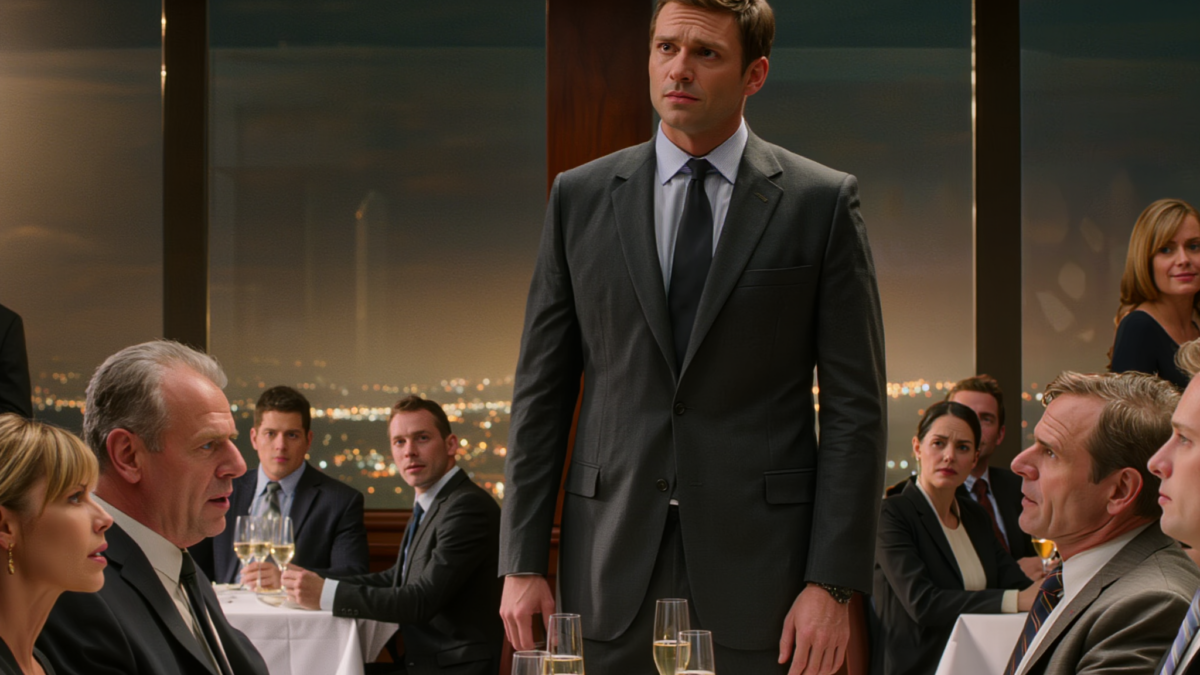
I’m Chris. I’m twenty-seven years old, and at the dinner celebrating my Stanford MBA graduation, my own father looked me directly in the eye and told me he wished I had never been born.
The clinking of silverware against porcelain sounded like thunder in the sudden silence. My mother’s wineglass froze halfway to her lips. Across the table, my thesis adviser, Professor Miller, looked as though he had swallowed a wasp.
The entire private dining room at Del Monaco’s—an elegant Italian restaurant in downtown Seattle that I had chosen and paid for myself—seemed to hold its breath. My friends, my mentors, and the managers from my new consulting firm were all staring at my father, Robert Adams, whose face had hardened into a mask of cold disappointment.
Then they looked at me.
“We wish you’d never been born.”
The words did not simply hang in the air. They landed with enough force to take the breath from my lungs. This was not something shouted carelessly during a heated argument. It was a declaration, a verdict on my entire existence, delivered with the casual cruelty of a man brushing away an inconvenience.
For a moment, the room went blurry. I felt the familiar sting behind my eyes and the hot shame creeping up my neck. The old version of me—the little boy who had spent his entire life desperate for a scrap of approval—wanted to shrink into his chair.
He wanted to apologize.
For what?
For breathing? For succeeding? For daring to celebrate the milestone he had once believed would finally make his parents proud?
Then something inside me broke. It did not happen with a dramatic crack. It was quiet and clean, like the last thread holding a frayed rope finally giving way.
It was the end of the hope that had kept me sending money home, surrendering opportunities, and biting my tongue for twenty-seven years.
I looked from my father’s stony face to my mother’s. Susan Adams was carefully avoiding my eyes, wearing that familiar expression of passive agreement mixed with practiced helplessness.
I stood.
My chair did not scrape across the floor. The movement was slow and deliberate. A strange calm washed over me—the kind of clarity that arrives only after the worst part of a storm has passed.
I looked my father in the eye.
“Wish granted,” I said.
My voice was even, without the tremor I had expected.
“Live your lives as though your son, Chris, never existed.”
I let the words settle over the table. A flicker of shock appeared in my father’s eyes, the first visible crack in his arrogant certainty.
He had expected me to cry, beg, or collapse.
He had not expected me to grant his wish.
The silence that followed was absolute.
To understand how we reached that moment, you have to understand what it was like to grow up as the wrong son.
There were two boys in the Adams household, but only one of us ever seemed to matter. My younger brother, Alex, was the son around whom my parents’ world revolved. I was the quiet satellite orbiting his brilliance, useful when something needed to be repaired, paid for, or quietly sacrificed.
Alex was going to be a doctor.
That was the family mantra, repeated at every holiday, family gathering, and parent-teacher conference.
“Alex is so gifted,” my mother would say, beaming. “He’s going to save lives.”
I was good at math. I was dependable. I was the son who learned to patch a leaking roof at fourteen because hiring a professional was too expensive and my father believed I needed to learn the value of real work.
I remember that October afternoon vividly. Rainwater dripped into a bucket in the living room, making a steady, maddening rhythm.
Thump. Thump. Thump.
I spent six hours on the roof in the cold drizzle. My fingers went numb, and my clothes were soaked through. When I finally climbed down, shivering and streaked with tar, I found my parents and Alex celebrating in the kitchen.
Alex had earned a B-plus on a biology midterm.
“We’re so proud of you, champ,” my father boomed, ruffling Alex’s hair.
A brand-new, top-of-the-line computer sat on the kitchen table. It was his reward.
I stood in the doorway, dripping rainwater onto the linoleum. My mother glanced at me and wrinkled her nose.
“Chris, don’t track that mess in here. Go take a shower.”
There was no thank-you. No good job. Just another instruction.
The roof no longer leaked, but it was as though the work had been done by a ghost.
That became the pattern of my childhood.
When I was sixteen, I bought my first car, a battered 1998 Honda Civic that I paid for with two years of savings from bagging groceries. It backfired at traffic lights and smelled like burning oil, but it was mine.
Six months later, for Alex’s sixteenth birthday, my parents bought him a brand-new Toyota Camry.
“A future doctor needs reliable transportation,” my father explained, as though it were the most reasonable thing in the world.
I never complained. Complaining would have been labeled jealousy or ingratitude. Instead, I worked harder. I earned straight A’s, became captain of the debate team, and won a state-level scholarship for college.
Every achievement was another silent plea.
See me.
See what I can do.
Am I enough yet?
The response was always lukewarm.
“Oh, that’s nice, Chris,” my mother would say before changing the subject. “Did you hear that Alex’s volunteer work at the hospital was mentioned in the local newsletter?”
Christmas was the annual showcase of my secondary status.
When I was seventeen, I took a miserable seasonal job at a shipping warehouse. For weeks, I listened carefully whenever my parents mentioned something they wanted. My mother complained about their old, grainy television. My father said his favorite leather recliner was falling apart.
I saved every penny I earned and bought them a new flat-screen television and a plush recliner. I was so proud that I could barely sleep on Christmas Eve.
I imagined their surprise when they opened the gifts. I imagined pride on my father’s face and the kind of hug that was more than a quick, obligatory pat on the back.
On Christmas morning, I watched as they unwrapped my presents.
“Oh, Chris,” my mother said, her voice strained. “You shouldn’t have. This is too much.”
My father grunted and pressed one hand against the recliner’s cushion. There was no joy in either of them, only awkwardness, as though my gesture had somehow inconvenienced them.
Then it was Alex’s turn.
He handed them one clumsily wrapped package. Inside was a framed photograph of himself wearing a lab coat at a high school science fair. On the back, he had written, To the best parents, from your future doctor.
My mother burst into tears—real, happy tears.
“Oh, Alex, this is the most thoughtful thing I’ve ever seen,” she cried, clutching the frame to her chest.
My father stood and pulled Alex into a bear hug.
“That’s my boy,” he said, his voice thick with emotion. “That’s my son.”
I sat beside nearly a thousand dollars’ worth of gifts I had worked myself to exhaustion to buy, and I had never felt more invisible.
The television and recliner were only things. Alex’s photograph was a symbol, proof of the son they truly valued.
It taught me a brutal lesson: no amount of effort from me would ever outweigh the simple fact of his existence.
I learned to survive on crumbs of affection. A rare nod of approval from my father felt like a feast that could sustain me for weeks. But the main course—the unconditional pride and love—was always reserved for Alex.
I told myself it was because his path was nobler. He was going to be a doctor. He would save lives. What was a business degree compared to that?
I swallowed the unfairness and promised myself that one day I would accomplish something so undeniably impressive that my parents would have no choice but to see me.
It was a foolish hope, but for years it was the only thing keeping me moving forward.
College was my escape, but it was also where my role as the family’s financial support system became permanent.
I attended a state university on a partial scholarship and worked thirty hours a week waiting tables at a greasy-spoon diner to cover the rest. The place smelled of stale coffee and bacon grease. The customers were often impatient, but the tips were decent if you moved fast.
I shared a cramped dorm room with three other guys. My diet consisted mostly of ramen and the occasional free burger from work.
I did not mind. It was the price of freedom.
But the calls from home never stopped.
They rarely began with a direct request. My mother was more subtle than that.
“Hi, honey,” she would chirp through the phone. “How are your little business classes going?”
The condescension was quiet but unmistakable. After a few minutes of small talk about the weather or a neighbor’s dog, the true purpose of the call would emerge.
“You know, Alex is working so hard in premed. The textbooks alone cost a fortune, and his organic chemistry lab has all these unexpected fees.”
Her sentence would trail away, a baited hook left dangling in the water.
I always took it.
“How much does he need, Mom?”
The first time, it was two hundred dollars. I had just received my paycheck and planned to buy a proper winter coat. The zipper on my old one was broken, and its lining was nearly as thin as paper.
Instead, I went to the bank and transferred the money.
I told myself it was a one-time emergency. For the rest of that winter, I wore two sweatshirts under my old coat.
It was not a one-time emergency.
The calls became a monthly ritual of guilt and pressure.
“The car needs new tires, and your father needs it to get to the plant, but we have to keep the savings available for Alex’s MCAT preparation course.”
Or:
“The electricity bill is unusually high this month. Alex has to keep his study lamp on all night.”
It was always about Alex or some family expense that somehow benefited him. My parents never asked about my expenses or struggles. They simply assumed that studying business meant I had money to spare.
They did not see the double shifts, the missed social events, or the nights I studied until three in the morning after spending hours on my feet at the diner.
One of my coworkers, a tough older waitress named Flo, noticed.
“Kid, you work more than anyone I know,” she said one night as she poured me a cup of coffee. “You saving up for something special?”
“Just helping my family,” I mumbled, too embarrassed to explain.
She gave me a long, searching look.
“Family’s supposed to help you too. Don’t you forget that.”
The greatest sacrifice came during my junior year.
I was accepted into a study-abroad program in London. It was my dream: a chance to see the world, learn somewhere new, and discover who I was outside the role of Alex’s older brother.
The program fee was steep, but I had saved meticulously for more than a year. I finally had enough.
I pinned the brochure to the corkboard over my desk. The cover showed Tower Bridge against a bright blue sky, representing an entire world beyond my cramped dorm room and narrow life.
Two weeks before the nonrefundable deposit was due, my mother called in tears.
It was different from her usual strategic sniffles. This time she sounded panicked.
“Chris, I don’t know what we’re going to do,” she sobbed. “Your father and I had a terrible fight.”
“What happened?”
“He’s threatening divorce. It’s the financial stress. Alex’s tuition installment is due, and your father’s hours at the plant have been cut. We’re going to be short.”
The word divorce struck me hard. It was the ultimate pressure point.
“What about the college fund you set up for him?” I asked. “The one you always talked about?”
There was a pause.
“Oh, that ran out a long time ago, honey.”
Then her voice took on that familiar layer of guilt.
“Medical school is different. It’s another league. We can’t lose the house over this, Chris. If your father leaves, what happens to Alex’s future? What happens to the inheritance he may need one day if we lose everything now?”
She was comparing my dream of spending a semester in Europe with the collapse of our entire family and the destruction of Alex’s future.
How was I supposed to say no?
I looked at the London brochure over my desk. Tower Bridge seemed to be mocking me. Resentment swept through me so strongly that I felt dizzy, but a lifetime of conditioning quickly drowned it out.
Family comes first.
Be the good son.
Be reliable.
Fix this.
“I’ll send it, Mom,” I said, my voice hollow.
I walked to the bank in a daze. The teller was a friendly woman who knew me by name.
“Big withdrawal today, Chris,” she said with a smile. “Going somewhere fun?”
“No,” I said, unable to meet her eyes. “Just taking care of some things at home.”
I never told my parents about the study-abroad program. I never explained that the money they took for Alex’s tuition was the price of my dream.
I quietly withdrew from the program and told my adviser that a family matter had come up. In my family, something always came up, and I was always expected to fix it.
That night, I took the London brochure from my wall, tore it into tiny pieces, and watched them fall into the trash like confetti at a farewell no one else knew was happening.
Getting into Stanford for my MBA felt like a miracle.
It was the validation I had spent my entire life chasing. This was not just the state university anymore. This was Stanford.
The name carried a weight I believed even my parents would have to acknowledge.
For two years, I worked harder than I ever had. It was a world filled with brilliant minds and fierce competition, but for the first time in my life, I felt that I belonged somewhere.
My professors recognized my potential. My classmates respected my work ethic. I landed a dream internship that developed into a six-figure job offer from a leading consulting firm in Seattle six months before I graduated.
My life was finally taking shape—a shape I had built with my own hands, on my own terms.
As graduation approached, that old, foolish hope stirred again.
This will be it, I told myself.
An MBA from Stanford. A prestigious job. Undeniable success.
This will finally make them proud.
I decided to host a graduation dinner. Not a small gathering, but a genuine celebration. I booked the private dining room at Del Monaco’s, chose the menu and wine, and invited everyone who had supported me along the way: my favorite professors, my study group, my new boss, several colleagues, my closest friends, and, of course, my family.
My hand trembled slightly as I called my mother. I rehearsed my opening line, trying to sound casual and confident.
“Hi, Mom. Graduation is in a few weeks, and I’m having a dinner to celebrate. I’d love for you, Dad, and Alex to come.”
“Oh,” she said.
Her voice was flat. There was no excitement and no congratulations.
“A dinner? Isn’t that a little extravagant, Chris?”
“It’s a big occasion, Mom. I want to celebrate it. I’ve already taken care of everything. You only have to show up.”
“Well, I don’t know. Your father has been working a lot, and Alex is overwhelmed with his hospital rotations. Seattle is a long drive. You know, the gas alone…”
Every word was a pinprick deflating my excitement. She did not ask about my classes, my job, or my plans. She was already making excuses.
She was turning my success into an inconvenience.
“It would mean a lot to me if you were there,” I said.
The desperation in my own voice embarrassed me. I sounded like the same little boy asking to be noticed.
My mother released a long sigh.
“All right, Chris. I’ll see what we can do. No promises.”
A few days later, my closest friend from my undergraduate years, Michelle, called to confirm she would attend. She was one of the only people who understood the full extent of my family’s dysfunction.
“Del Monaco’s?” she said warmly. “That’s fancy. I’m absolutely coming. You deserve to celebrate in style.”
Then her voice softened.
“Are you sure about inviting them? You know how they can be.”
“I have to, Mich,” I insisted as I paced around my small student apartment. “This time will be different. It has to be. How can they not be proud of this? It’s Stanford.”
I could almost hear the sadness in her smile.
“Because it isn’t about you. It’s about them. Their approval isn’t a prize you can win by becoming successful enough. It’s not a competition, Chris. Please don’t set yourself up for another fall.”
“You’re wrong,” I said, more to convince myself than her. “They’ll see. They’ll finally see me.”
On the night of the dinner, I stood in front of my mirror and adjusted my tie while allowing myself to dream.
I pictured my father placing a hand on my shoulder with a real smile on his face. I imagined my mother telling her friends, “That’s my son, the Stanford graduate.”
I imagined an evening of healing and acknowledgment, a night when I would finally take my place in the family not as a shadow, but as an equal.
I clung to that belief like a life raft.
When I entered Del Monaco’s in my best suit, wearing a smile that felt both genuine and fragile, I truly believed the evening would mark the beginning of a new chapter.
The night my family finally saw me.
I could not have been more wrong.
The celebration was already in full swing when they arrived. The room buzzed with laughter and happy conversation. Glasses clinked softly beneath the warm pendant lights.
My boss, Mr. Davidson, a man I respected immensely, was telling a story that had several of my colleagues laughing. Professor Miller was engaged in a thoughtful conversation with some of my classmates. Michelle stood near me, steady and smiling.
For a few minutes, everything was perfect. I was surrounded by people who saw and valued me, and I almost forgot the anxiety gnawing at the edge of my happiness.
Then my family walked in.
My parents, Robert and Susan Adams, were accompanied by my mother’s sister, Aunt Carol.
Alex was predictably absent.
“He was called in for an emergency shift,” my mother announced to no one in particular, her voice carrying an air of importance. “Saving lives, you know. He feels terrible about missing this.”
They were more than an hour late. They had brought no card, no gift, not even a single flower.
My father’s expression was sour, as though he had just smelled something unpleasant. He scanned the elegant room suspiciously, almost as if he were inspecting a place where he did not trust anyone. My mother wore a tight smile that never reached her eyes.
I excused myself from my conversation with Mr. Davidson.
“Excuse me for a moment, sir. My family has arrived.”
He nodded kindly.
“Of course, Chris. Go ahead.”
I crossed the room, forcing my smile to remain in place.
“Mom, Dad, Aunt Carol. I’m so glad you could make it.”
“Well, we’re here,” my father grunted.
He removed his coat and handed it to me as though I were an attendant. My mother brushed the air near my cheek instead of actually kissing me.
“It’s very loud in here, Chris,” she said. “A bit much, don’t you think?”
Aunt Carol had mastered the art of disguising an insult as a compliment. She looked slowly around the private dining room.
“My, my. You must be earning quite a salary to afford all this. I hope you’re remembering to be responsible. Young people can get carried away so easily.”
I tried to guide them toward the people who had come to celebrate with me.
“I’d like you to meet my boss, Mr. Davidson.”
Mr. Davidson rose and extended his hand with a warm smile.
“Robert, Susan, it’s a pleasure to meet you. You must be incredibly proud of Chris. He’s a real star.”
My father gave his hand one limp shake.
“He does all right,” he muttered before turning away to examine a painting on the wall.
My mother offered that same empty smile.
The conversation died instantly.
It was painfully awkward, but I tried again with Professor Miller.
“Professor, this is my family.”
“A pleasure,” Professor Miller said warmly.
Before he could continue, my mother interrupted him.
“Oh, look, Robert,” she said, pulling a photograph from her purse. “I have to show Carol this picture of Alex in his new scrubs. Doesn’t he look like a real doctor?”
They chose a corner table and sat there like judges, observing the celebration with detached disapproval. They spoke only to one another and Aunt Carol, their voices low and conspiratorial.
A familiar knot tightened in my stomach.
The joy that had filled the room moments earlier now felt fragile and contaminated by their presence.
Michelle came over and squeezed my arm.
“You okay?” she whispered.
“I’m fine,” I lied, forcing another smile. “They just need time to warm up.”
They never did.
They redirected every conversation toward Alex. My achievements—the entire reason everyone had gathered—were treated like an inconvenient footnote.
Aunt Carol cornered me near the bar.
“Christopher, dear,” she said, patting my arm in a way intended to seem affectionate but that made my skin crawl. “It’s wonderful that you have this business sense. But you must be so proud of your brother. He has a real calling. It’s so much more meaningful than simply chasing dollars, don’t you think?”
I nodded, my jaw tight.
There was no point in arguing. I tried to ignore them. I circulated among my guests, talked, and laughed, but I remained painfully conscious of the cloud of negativity hanging over that corner table.
They were draining the happiness from my celebration.
I sensed that the evening was heading toward a collision. I simply did not know how painful it would become.
The tipping point arrived during the toasts.
Michelle stood first, her champagne glass catching the light.
“To Chris,” she said, her voice clear and strong. “I’ve known him since we were freshmen, living on instant noodles and cramming for exams. I watched him work two jobs while carrying a full course load. I’ve seen him sacrifice, struggle, and refuse to give up. He is the most determined and deserving person I know.”
She turned toward me.
“Chris, I am incredibly proud of you.”
The room erupted in applause, and genuine warmth spread through my chest.
I looked toward my parents’ table.
My mother offered a few slow, measured claps. My father sat with his arms folded and did not clap at all.
Next, Mr. Davidson stood. He was a man of few words, but when he spoke, people listened.
“I don’t give praise lightly,” he said, his voice commanding the room. “But in the short time Chris has been with our firm, he has demonstrated an intellect and work ethic that are second to none. We are fortunate to have him.”
He raised his glass.
“To Chris.”
More applause filled the room. Pride swelled in my chest, and I risked another glance at my father.
He was studying his fork as though it were the most fascinating object he had ever seen.
Finally, Professor Miller stood. He was an older man with a brilliant mind and a gentle spirit.
“I have taught many students during my forty years in education,” he began, his voice warm and almost grandfatherly. “Chris stands out not only because of his considerable intellect, but because of his tenacity and resilience. He sees problems from unexpected angles and has the courage to pursue unconventional solutions.”
He smiled at me with a pride that felt more paternal than anything I had ever received from my own father.
Then he turned to my parents.
“Robert, Susan, you must be incredibly proud.”
It was a simple and generous statement. All they had to do was smile and agree. They could have accepted the compliment on behalf of their son and allowed the moment to pass.
They did not.
My mother lifted her wineglass, took a slow sip, and set it down with a soft click.
“Of course we’re proud of both our sons,” she said loudly enough for the entire room to hear. Her voice had a brittle, defensive edge. “But, as we always say, Alex is the one truly making a difference in the world. He’s saving lives. It’s a noble calling.”
An uncomfortable silence moved through the room.
My friends looked at me with concern. Michelle’s expression hardened. Professor Miller’s smile faltered, and for a moment he looked as though he feared he had somehow caused offense.
My father decided to push the insult further.
He released a short, humorless laugh.
“An MBA is fine for making money,” he said, waving one hand dismissively. “But you can’t compare that to the importance of being a doctor. It’s a different league entirely.”
Humiliation spread over me in hot, prickling waves.
He had not only insulted me. He had diminished my professors, my colleagues, and my entire field of work. He had taken my proudest moment and discarded it in front of everyone who mattered to me.
I looked at my cousin Leo, who was seated at a nearby table.
We had been close as children, building forts and riding our bikes through the neighborhood. He knew the family history. He knew about the favoritism and many of the sacrifices I had made.
I met his eyes, silently pleading for some sign of support.
A nod. A word. Anything.
Leo looked at me with pure pity before lowering his gaze to the half-eaten roll on his plate.
It was a small betrayal, but it cut deeply. He had chosen silence. He had chosen not to create conflict. In that moment, silence felt like choosing their side.
Something shifted inside me.
The lifelong ache for my parents’ approval began hardening into anger. I had worked. I had sacrificed. I had achieved everything they said should matter.
It was still not enough.
It would never be enough.
My father saw the expression on my face and interpreted the room’s shocked silence not as a response to his behavior, but as a challenge to his authority.
“What’s that look for?” he demanded, gripping his water glass so tightly that his knuckles turned white. “You think you’re better than us now because you have a fancy degree and a big-city job?”
He leaned forward.
“Let me tell you something. We sacrificed for you too. We put a roof over your head.”
The audacity of that claim left me momentarily speechless.
Sacrificed?
They had taken from me. They had treated me like their private bank account, their reliable problem solver, and the son expected to absorb every disappointment without complaint.
The room was so quiet that I could hear the faint fizz of champagne bubbles.
When my voice finally came, it was hoarse from years of suppressed pain.
“Sacrificed?” I repeated. “When did you sacrifice for me?”
My question hung in the air, sharp and dangerous.
“Was it when I spent six hours on the roof in the rain fixing your leak while you bought Alex a new computer? Or was it when I gave you the money for my semester in London so you could pay Alex’s extra fees?”
My mother gasped and pressed one hand to her chest as though I had injured her.
“Christopher, how dare you bring that up here? This is neither the time nor the place.”
She was trying to shame me back into silence.
“No,” I said, my voice becoming stronger with every word. “This is exactly the time and place. This was supposed to be the one night that wasn’t about him. The one night when you were supposed to be proud of me.”
I looked from her to my father.
“But you couldn’t even give me that. You couldn’t let me have one evening without comparing me to Alex, diminishing everything I’ve done, and reminding me that I will always be second.”
My father’s face darkened. He stood so abruptly that his chair shifted backward.
“We gave you life,” he thundered, his voice echoing through the private dining room. “And this is the thanks we get? You’re ungrateful. After everything we’ve done, you’re nothing but a selfish, ungrateful boy.”
He leaned over the table and pointed at me.
Then came the words that ended everything.
“We wish you’d never been born.”
That was the moment when the old Chris ceased to exist.
A strange calm settled over me. I rose and felt taller than I ever had before. I looked at my father, my mother, and Aunt Carol, and for the first time I saw them clearly.
They were not powerful. They were bitter people incapable of giving the kind of love I had spent my life trying to earn.
“Wish granted,” I said, my voice clear and steady. “Live your lives as though your son, Chris, never existed.”
I removed my wallet from my jacket, took out my credit card, and placed it firmly in the center of the table.
“For the meal,” I said to no one in particular.
It was my final payment, the last thing I would ever give them.
Then I turned and walked out of the restaurant without looking back.
I passed the shocked faces of my friends and colleagues. Michelle started to follow, but I gave her a slight shake of my head.
I needed to do this alone.
I stepped into the cool Seattle night, leaving behind the wreckage of what had once been my family. I did not know where I was going, but I knew one thing with absolute certainty.
I was finally—and terrifyingly—free.
The days that followed passed in a blur of numb efficiency.
I did not break down. I did not cry. I simply kept moving. It felt as though my emotions had been sealed inside a block of ice, and all I could do was function around them.
First, I found a new apartment.
My student housing had been rented month to month. I moved into a small one-bedroom apartment in Bellevue, across Lake Washington from Seattle.
It was the first place that felt like it belonged entirely to me.
I spent a weekend touring sterile, cookie-cutter apartment complexes before finding a unit in an older brick building with wide windows and real character. The landlord, a kind woman in her seventies named Mrs. Gable, had a warm smile that reminded me of my grandmother.
“You’ve got a good, honest face,” she said while I completed the application.
That simple kindness, offered without expectation, nearly broke through the wall I had built around myself.
On the day I received the keys, I entered the empty apartment alone. Afternoon sunlight streamed through the windows, illuminating dust motes in the air. The rooms smelled of old wood and fresh paint.
It was quiet.
There were no ghosts of expectation hiding in the corners. I stood in the center of the living room and, for the first time in years, felt able to breathe.
Next, I dealt with communication.
I went through my phone and deleted every number connected to that part of my life: my father, my mother, Aunt Carol, and even Alex.
Then I blocked them.
I rarely used social media, but I signed into every account and blocked them there as well. Finally, I wrote one short email to Leo and several extended family members who had attended the dinner.
As you witnessed, my parents and I have had a complete and final falling-out. I am taking them at their word and removing myself from their lives as they requested. I ask that you respect my decision. I wish you all the best.
It sounded harsh, but it was necessary.
I needed a clean separation. There could be no room for negotiation, guilt, or another campaign to pull me back into the same role.
Then I immersed myself in work.
My new job should have been a source of excitement. Instead, it became my sanctuary.
Financial models, market analysis, and client presentations followed rules. Effort produced measurable results. It was everything my family life had never been.
Mr. Davidson, who had witnessed the entire scene at the restaurant, offered quiet support. He never asked me to explain or discuss the dinner.
Instead, he assigned me the most demanding project in the firm’s pipeline, a high-stakes account that a senior consultant had struggled to stabilize.
“I think you can handle it,” he said.
That was all.
It was a vote of confidence, and I held on to it like someone who had finally been given solid ground.
Michelle became my anchor.
She called every day but never pressured me to talk. She checked in, told me something funny about her day, and reminded me to eat.
One Saturday, she appeared at my nearly empty apartment carrying a pizza and a six-pack of beer. We sat on the floor and ate in comfortable silence.
“It’s okay not to be okay,” she said softly after a while.
“I know. But right now, not being okay feels like a luxury I can’t afford. If I let myself feel everything, I’m afraid I’ll fall apart. It’s easier to keep moving.”
She nodded.
“Okay. Then we move. What’s first on the list for this new bachelor pad?”
“A couch,” I said. “And maybe a lamp.”
We spent the rest of the weekend exploring thrift stores and IKEA, buying mismatched but comfortable furniture. While we assembled a complicated bookshelf and laughed over the Swedish instructions, I felt a flicker of something I had not experienced in a long time.
Simple, uncomplicated happiness.
Later that week, while unpacking the last boxes from college, I found an old accordion file filled with financial records.
Inside was a folder labeled FAMILY SUPPORT.
Out of grim curiosity, I opened it.
It contained old bank statements and records of wire transfers. Then I found a printout documenting a large five-figure transfer from three years earlier.
In the memo line, I had written: For Alex’s supplementary college fund.
The memory returned all at once—my mother’s tearful voice, the threatened divorce, and the London brochure hanging over my desk.
I stared at the paper, a relic from a life that no longer felt like mine. At the time, I returned it to the folder.
I had no idea that the ordinary bank record would soon become the most important piece of evidence I possessed.
For nearly a month, my family remained silent.
Then the whispers began.
They reached me indirectly through the well-oiled network of gossip and judgment that Aunt Carol seemed to control. The first call came from my great-aunt Martha on a Sunday morning.
“Christopher, it’s Aunt Martha,” she said, her voice coated in syrupy disappointment. “I just got off the phone with your mother. She’s heartbroken. Absolutely beside herself. How could you abandon your family after everything they’ve done for you? It’s sinful. That’s what it is.”
I did not argue or defend myself.
“Thank you for your concern, Aunt Martha. This is a private matter between my parents and me. I have to go now.”
I ended the call before she could answer.
The family narrative had already been established. I was the villain—the cold, ungrateful son who had earned a prestigious degree and decided he was too good for his simple, loving family.
Aunt Carol was the chief architect of that story.
She described my parents as confused victims who had made one careless remark under stress, only to have their cruel son use it as an excuse to cut them off. Her version conveniently erased the years of emotional and financial exploitation that had come before it.
It hurt, but it did not surprise me.
Labeling me a monster was easier than examining their own behavior.
I kept my head down and focused on work, allowing the whispers to fade into background noise.
The real revelation came from Michelle.
We had developed a weekly ritual of having dinner at a quiet Thai restaurant near my apartment. One evening, she was unusually silent, pushing her pad thai around the plate with a troubled expression.
“There’s something I need to tell you, Chris,” she finally said. “I’ve kept it to myself for years because I didn’t want to hurt you, and I didn’t think it was my place. But after everything that’s happened, I think you need to know.”
I braced myself.
“What is it?”
She took a slow breath.
“During our sophomore year of college, I went on a few dates with Alex.”
I stared at her.
“You and Alex? You never told me.”
“It was brief, and it was a huge mistake,” she said quickly. “He was charming at first. You know how he can be. But I saw a different side of him almost immediately.”
She lowered her voice.
“He was always broke and always asking to borrow money. I thought it was strange because your parents seemed to give him everything. One night, we were supposed to see a movie, but he said he needed to make a stop first.”
I waited.
“He drove us to an industrial part of town and parked near a dark alley. He told me to stay in the car. I was nervous, so after a few minutes, I got out and looked through the dirty window of a warehouse.”
Her expression tightened.
“There was an underground poker game inside.”
My stomach turned cold.
“Poker?”
“It was serious, Chris. There were stacks of cash on the table and men who looked angry. The whole room was filled with smoke and desperation. I watched Alex lose a large amount of money—money I knew he didn’t have.”
She looked down at her hands.
“He became agitated and started arguing with the dealer. It frightened me. I returned to the car before he saw me. I ended things soon afterward.”
“Did he know what you saw?”
“He called and begged me not to tell anyone, especially you. He said you wouldn’t understand. He claimed you were always judging him. Then he gave me a long story about pressure and needing an outlet.”
The pieces fell into place with sickening finality.
The urgent demands for money. The vague fees. My mother’s desperate calls. The fights with my father. The threat of divorce.
It had not been about tuition.
It had not been about medical school.
It had been about feeding an addiction.
“He has a gambling problem,” I said, the words tasting like ash.
“A serious one,” Michelle confirmed. “Chris, all that money you sent for his college fund and those family emergencies—I don’t think it ever went to the school.”
The world seemed to tilt beneath me.
My torn winter coat. The diner shifts. The semester in London. Every dream I had postponed or abandoned.
None of it had funded Alex’s education.
I had been financing my brother’s addiction.
My parents had to have known. There was no other explanation. They had not simply enabled him. They had used me to do it.
They had lied directly to my face, manipulated my loyalty, and taken pieces of my future to clean up the consequences of their favored son’s behavior.
The numbness around my heart shattered.
For the first time since the dinner, I felt something other than emptiness.
I felt a cold, clear anger.
Three months after the graduation celebration, I had begun finding my footing. The project Mr. Davidson assigned me consumed my energy, and I was thriving under the pressure.
I was earning a reputation within the firm. Brick by painful brick, I was building a life of my own.
That was when my parents attempted to pull me back into theirs.
I was walking through the sleek, glass-walled lobby of my office building after buying coffee, mentally rehearsing an afternoon presentation, when the automatic doors opened.
My heart stopped.
My parents stood in the middle of the corporate lobby like figures from a past life.
They looked out of place. My father’s jacket was too tight. My mother’s bright floral dress clashed with the sea of gray and navy business suits moving around them.
They also looked smaller than I remembered.
Weaker.
Desperate.
My first instinct was to turn around, enter the elevator, and disappear. Then I stopped myself.
This was my workplace. My territory. My new life.
I would not let them make me run.
I walked toward them with a carefully neutral expression. My heart pounded, but my hands remained steady.
“What are you doing here?”
My mother hurried forward, her hands fluttering nervously.
“Christopher, we need to talk. We’ve been calling.”
“I know. I blocked your numbers.”
My father stepped forward. His face held the familiar arrogant lines I knew so well, but beneath them I saw something new.
Fear.
“We’re not here to play games, boy,” he said, although his voice lacked its usual force. “This is serious.”
Several colleagues had begun noticing the confrontation. Among them was Mark Landon, an ambitious coworker who considered me his rival. People slowed as they passed, pretending to look at their phones while clearly listening.
“My office is not the place for this,” I said quietly. “You need to leave.”
“We’re not leaving until you listen,” my mother pleaded, her voice taking on its familiar manipulative edge. “It’s about Alex.”
Of course it was.
It was always about Alex.
“He’s in trouble,” my father said. “A financial bind. He made a mistake—a miscalculation involving his student loans. He needs help clearing it up, or he may not be able to finish his residency.”
A miscalculation.
After Michelle’s revelation, the lie was so transparent and insulting that I nearly laughed.
They were still protecting him. They had come into the center of my new life and expected me to become their accomplice again.
“How much?” I asked.
My father named a figure.
It was staggering—enough for the down payment on a house and enough to overwhelm someone just beginning a career.
“He needs it, Chris,” my mother insisted, her voice rising. “He’s so close to becoming a doctor. You wouldn’t want to be the person standing in the way of that, would you? This family has invested so much in him.”
The word family sounded poisonous coming from her.
“No,” I said.
The word was quiet, but it landed with the force of a door closing.
My father narrowed his eyes.
“What did you say?”
“I said no.”
This time, I spoke loudly enough for everyone nearby to hear.
Mark Landon was openly watching now, wearing a faint, curious smirk.
“I will not give you a single cent.”
My father’s fear vanished beneath familiar fury.
“You ungrateful brat. After everything we’ve done for you, you have a moral obligation. You have a duty to your brother. With the salary you’re earning in this ridiculous place, that amount is nothing.”
He was shouting now.
The lobby fell silent. The receptionist stared at us with wide eyes.
That was when I decided the truth I had been carrying was ready to be released.
This was no longer only about protecting myself.
It was time to expose what they had done.
“A moral obligation?” I asked, my voice carrying across the lobby.
I stepped closer. For the first time, I saw genuine fear flicker in my mother’s eyes.
They were accustomed to watching me surrender.
They had not prepared for resistance.
“Let’s talk about moral obligations,” I continued. “Let’s talk about the obligation parents have not to lie to their son. Let’s talk about a brother’s obligation not to take money from his own family to pay for his secret habits.”
“We have no idea what you’re talking about,” my mother stammered, pressing her purse against her chest like a shield. “Alex would never steal.”
“Oh, I think you know exactly what I mean.”
I reached into the briefcase I had fortunately carried with me on my coffee run. My fingers closed around the folded bank statement I had placed there that morning.
I held it up.
“I’m not talking about student loans, and you know it. I’m talking about a gambling addiction.”
The color drained from my mother’s face.
My father’s jaw fell open. They looked like two people caught in a lie beneath unforgiving light.
“I know everything,” I said.
I let the bank statement fall onto the polished marble between us. It landed with a quiet finality.
“I know about the poker games. I know about the debts. And I know that for years, every dollar I sent home for Alex’s college fund, tuition, and laboratory fees disappeared into a hole created by his gambling.”
My father finally found his voice, but it was a weak imitation of his usual bluster.
“That’s a lie. Who told you this nonsense? It was that girl, wasn’t it? Michelle—”
“Stop.”
The authority in my own voice surprised me.
“Just once in your life, stop lying. Stop protecting him. You enabled Alex, and you used me to do it. You used my love for this family and my sense of duty as tools against me.”
I pointed toward the statement on the floor.
“You allowed me to sacrifice my own dreams so he could throw the money away on a losing hand.”
At that moment, the elevator chimed.
The doors opened, and Mr. Davidson, the company’s chief executive, entered the lobby.
He stopped when he saw us: me standing upright and furious, my parents pale and cornered, and the bank statement resting on the marble like an indictment.
His arrival immediately raised the stakes.
My father recognized my boss and made one desperate attempt to regain control.
“This is a private family matter,” he said, pointing an unsteady finger at me. “It has nothing to do with his job. We’re discussing an inheritance issue.”
The lie was painfully transparent.
“I believe it has everything to do with character,” Mr. Davidson said.
His voice remained calm, but it carried undeniable authority.
He walked over and stood beside me without acknowledging my parents. Then he looked directly at me with unmistakable respect.
“I heard enough. It takes a strong person to stand against that kind of manipulation.”
My parents froze.
The public judgment of someone powerful and respected was their worst nightmare. Mr. Davidson was exactly the kind of man whose approval they would normally have sought, and he had chosen to stand beside the son they had always dismissed.
Mark’s smirk disappeared and was replaced by genuine shock.
The fight seemed to leave my parents all at once. Their arrogance collapsed into raw shame. My father could no longer meet my eyes. My mother stared at the floor, her shoulders slumped.
Their carefully constructed world had fallen apart in the middle of my office lobby.
Their perfect favored son was not the person they had pretended he was, and their invisible son was finally the one with control over his own life.
Without another word, my parents turned and walked out.
The automatic doors closed behind them, sealing them outside my life.
The lobby remained silent.
Mark stared at me, his usual expression gone. The receptionist peered over her monitor with her mouth slightly open.
Mr. Davidson placed a reassuring hand on my shoulder.
“The character and integrity you just showed can’t be taught,” he said quietly, for my ears alone. “That’s who you are. Come on. Walk with me.”
He guided me toward the elevator, away from the watching crowd.
“I’m sorry you had to deal with that in our lobby,” he said as the doors closed.
“I’m sorry you had to witness it.”
The adrenaline was fading, leaving my hands slightly unsteady.
“Don’t be,” he said. “What I witnessed told me more about you than any résumé ever could.”
He paused.
“My own father was a difficult man. Not in the same way, but he was hard and demanding. I learned a long time ago that sometimes the most courageous business decision you can make is knowing when to cut your losses—even when it’s personal.”
He looked at me directly.
“You handled that with grace under pressure.”
We reached the executive floor, and he led me into his spacious corner office. The Seattle skyline spread behind him through the floor-to-ceiling windows.
“The work you’ve done on the Peterson account has been exceptional,” he continued, shifting naturally back to business. “You took a failing project and turned it around. We’re giving you responsibility for the full rollout.”
He allowed the words to settle.
“It will come with a promotion to senior consultant and a substantial raise. You’ve earned it, Chris.”
I was speechless.
In the span of ten minutes, I had permanently separated myself from my family and received the respect I had spent my life chasing—but from a source I never expected.
It was not based on blood.
It was based on merit.
It was real.
Later that day, Mark came to my desk. He stood awkwardly for a moment, shifting his weight.
“Hey, Adams. Look, I’m sorry you had to go through that.”
“Thanks,” I said, surprised.
He released a short, uncomfortable laugh.
“You know, I’ve been competing with you since your first day. I was jealous. I assumed you were one of those people who had everything—great school, money, a supportive family, all of it handed to you.”
He shook his head and finally met my eyes.
“I was completely wrong. What I saw today… that was something else. You have my respect.”
He extended his hand, and I shook it.
It was not a complete apology for the way he had behaved, but it was acknowledgment. A truce.
In its own way, it mattered.
The world I had built around competence and character was becoming solid beneath my feet.
It was real, and it belonged to me.
Several weeks passed.
The promotion became official, and I was buried in work, but it was a constructive kind of pressure. For the first time, my future felt entirely my own.
I had moved forward.
I assumed my parents had too.
Then one evening, my phone rang from an unknown number. I almost ignored it, but some instinct made me answer.
“Hello?”
“Chris.”
It was my mother.
Her voice sounded thin and broken, stripped of its familiar artificial cheerfulness.
“How did you get this number?” I asked.
I had changed it after the incident at the office.
“I got it from your cousin Leo. He felt sorry for me. Please don’t hang up.”
She began to cry, making the soft, uneven sounds I knew so well.
Those tears had once been my weakness. They had been capable of activating my guilt and the compulsion to fix every problem.
Now they were only sound.
“What do you want, Susan?” I asked.
Using her first name felt like a monumental act. It established the new relationship between us.
I was no longer a frightened child speaking to his mother. I was an adult speaking to another adult who had knowingly harmed him.
“Your father and I are so sorry, Chris,” she sobbed. “We made a terrible mistake. We were only trying to protect your brother. We didn’t know what else to do. He’s our son.”
“And what am I?”
The question was cold and direct.
She faltered.
“You’re our son too. We love you.”
The apology I had waited my entire life to hear had finally arrived, and I felt nothing.
It was hollow.
It had not been born from genuine remorse over the way they had treated me. It had come from the shame of being publicly exposed.
It was the apology of someone who had been caught.
“You didn’t know what else to do?” I said calmly. “You could have told the truth. You could have helped Alex seek treatment. You could have stopped lying.”
I took a breath.
“You could have been parents to both your sons instead of sacrificing one to protect the other.”
“We can fix this,” she pleaded. “We can be a family again. We can go to counseling. Alex has agreed to attend meetings. He’s trying to change.”
Her voice grew more desperate.
“Please, son. We miss you. The holidays are coming. I can’t bear the thought of an empty chair at the table.”
There it was—the appeal to tradition and sentiment, to the ghost of the family we had never truly been.
The old Chris would have surrendered. He would have mistaken the smallest glimmer of hope for proof that everything could finally change.
But I was no longer that person.
“I forgive you,” I said.
The words surprised me, but I meant them.
A small gasp of hope came through the phone.
“I forgive you for my own sake, not yours. I can’t carry the anger anymore. It’s too heavy, and I won’t let it poison the life I’m building.”
I continued before she could interrupt.
“But forgiveness does not mean reconciliation. That door is closed. I have to protect myself now. You taught me that your version of family is not a safe place for me.”
“Chris—”
“You can’t be part of my life anymore. I need peace, and you and Dad are the opposite of peace.”
I heard my father shouting in the background.
“Give me that phone.”
She must have put the call on speaker, because his voice suddenly came through clearly.
“After everything, you’re still choosing this path? Fine. Don’t come crawling back when you need a lawyer for some mess you’ve made or when you’re facing a family funeral alone.”
The threat sounded empty.
“Goodbye, Susan,” I said, ignoring him.
Then I ended the call.
I did not feel sad. I did not feel angry.
I felt quiet.
The conflict was finally over. I had not won by defeating them. I had won by refusing to remain on the battlefield.
A year can change everything.
My once-empty apartment had become a home filled with books, plants, and the warm, comforting clutter of a life being lived.
More importantly, it was filled with love.
Michelle and I began dating about six months after what I privately called my liberation. Our friendship, built on years of respect and understanding, had quietly developed into something deeper.
With her, there were no games or hidden motives—only honesty, laughter, and the profound comfort of being seen exactly as I was.
She never tried to repair me.
She loved me, scars included.
It was Thanksgiving, and the aroma of roasted turkey and cinnamon filled the apartment.
A year earlier, the thought of the holiday would have produced dread and obligation. Now it filled me with joy.
We were not hosting a formal dinner. We had invited the people who had become our chosen family.
Tom and Jessica from my Stanford study group were there. They had witnessed the beginning of the end at Del Monaco’s.
Several close colleagues had joined us, including Mark, who, after an awkward beginning, had become a surprisingly good friend.
Mrs. Gable sat in the most comfortable armchair, entertaining everyone with stories about Bellevue in the 1960s.
I stood in the kitchen carving the turkey while Michelle directed traffic. Mark struggled with a stubborn wine cork, and everyone laughed as he insisted the opener was defective.
I looked around the room.
I saw genuine smiles and heard effortless laughter. There was no hidden tension, no resentment beneath the surface, and no one keeping score.
There were only people who genuinely cared for one another, gathered to share food and gratitude.
This was family.
It was not defined by blood or obligation. It was defined by choice, support, and the willingness to show up for one another in both difficult and joyful moments.
These people had seen me at my lowest and celebrated me at my highest. They brought pizza when I was too overwhelmed to cook. They listened when I needed to speak. They celebrated my promotion as though it were their own achievement.
Later that evening, after dinner was finished, we gathered in the living room to watch a football game. Everyone was full, relaxed, and happy.
Michelle sat beside me on the couch and rested her head on my shoulder.
“This is nice,” she said softly. “Look at what you built, Chris.”
I knew she did not mean only the meal or the apartment.
She meant the life, the community, and the peace.
A year earlier, I had stood in the wreckage of my past believing I was completely alone. Now I was surrounded by more love than I had ever experienced.
I had spent my entire life trying to earn a seat at a table where I was never truly welcome. I had to walk away from that cold, formal dining room before realizing I could build my own table and fill it with people who genuinely wanted me there.
My definition of success had changed.
It was no longer a title or a salary large enough to impress people determined never to be impressed.
Success was the warmth in that room, the easy laughter, and the feeling of belonging—not because I was obligated to be there, but because I was wanted.
I no longer needed my parents’ approval to feel worthy. I did not need their permission to be happy.
My sense of self-worth was no longer tied to their validation. It had been forged through resilience, confirmed by my achievements, and reflected in the eyes of people who loved me.
It was a quiet, unshakable foundation.
And it was mine.
Just when I believed the past had finally gone silent, an echo from my old life appeared.
It did not arrive as a call or unexpected visit. It appeared as an email with a subject line that made my stomach tighten.
Thinking of you.
It was from Alex.
I had not heard from him in more than a year.
For a long moment, my finger hovered over the delete button. Michelle noticed the change in my expression and looked over my shoulder.
“You don’t have to read it,” she said.
“I know. But I think I need to.”
Curiosity overcame me, and I opened the message.
It was long and rambling, filled with self-pity and blame shifting. It began with a halfhearted apology.
Hey Chris,
I know things got really messed up with Mom and Dad. I’m sorry for my part in all of it. I was going through a lot back then—more pressure than you probably understood.
There was no real ownership. He never used the word gambling. He did not acknowledge the lies or the money I had sacrificed.
There were only vague excuses.
He continued by describing his life. He had completed his residency but was struggling beneath a mountain of debt—real student-loan debt this time.
He hated his hospital job. It was not the noble, heroic life he had imagined. It consisted of long hours, bureaucracy, and less money than he believed he deserved.
He was miserable, and he blamed everyone except himself.
He blamed the health care system, his mentors, and our parents for pressuring him. He even found a way to blame me, suggesting that the family’s financial instability after I left had made his situation worse.
I read the entire message without anger or even pity.
What I felt was a distant sadness, as though I were reading about a character in a book I had stopped reading long ago.
His problems belonged to him. They existed in a world far removed from the life I had carefully built.
He was still the boy in the framed photograph, expecting applause simply for existing.
Then I reached the final paragraph and discovered the true reason for the email.
Anyway, I’m trying to get my finances under control. I might even open a small practice someday. The banks won’t approve a loan because of my current debt-to-income ratio. Since you’re doing well, I wondered whether you’d consider co-signing for me. It would only be a formality to help me get started. It would mean a lot. After all, we’re still brothers.
I stared at the screen and released one short laugh of pure disbelief.
After everything, and after more than a year of silence, this was why he had contacted me.
Not to reconnect honestly.
Not to accept responsibility.
To ask for something.
Some things had not changed.
The old Chris would have agonized over the decision. He would have felt the weight of the word brother and wondered whether this was his only chance to have a relationship with Alex.
But that version of me was gone.
I clicked Reply and typed a brief response.
Alex,
I’m sorry to hear that you’re having a difficult time. I genuinely hope you find your way forward and receive the professional support you need for your addiction.
However, I am not able to co-sign a loan or provide financial assistance.
I wish you the best.
Chris
I pressed Send without hesitation.
There was no guilt and no regret, only the clean, quiet sense of a final door closing.
When I shut my laptop, I felt an extraordinary peace.
The echo faded.
The past no longer had power over me.
My apartment has a small balcony overlooking the city. It is my favorite place.
Tonight, I am standing beside the railing, watching streams of headlights flow through the streets below like rivers of light. The Pacific Northwest air is cool and crisp.
Michelle is inside making tea. I can hear the quiet murmur of the television and the faint sound of her moving around the kitchen.
It is a peaceful, ordinary night.
To me, it is the most beautiful thing in the world.
A year and a half ago, this kind of quiet stability felt impossible. My life had been defined by a desperate struggle to earn love that was never truly available.
I believed my value was something my parents had to grant me. I thought I had to earn it, prove it, and achieve enough to deserve it.
I was wrong.
The pain of that night at Del Monaco’s—the cruelty of my father’s words—was one of the most devastating experiences of my life.
It was also the moment that freed me.
It burned away the lies I had been telling myself. It forced me to understand that I could not keep sacrificing myself to preserve the comfort of people who would never do the same for me.
My father’s wish that I had never been born came true in a way he could not have anticipated.
The son he knew—the son who lived for his approval, surrendered his dreams, and repaired every problem—ceased to exist that night.
In his place was a man who understood his own worth.
A man who learned that boundaries are not acts of hostility. They are acts of self-preservation.
A man who understood that sometimes the most loving thing you can do for yourself is walk away.
I learned that family is not merely a noun.
It is a verb.
It is what people do, how they show up, and the love they give and receive. It is not defined by a shared last name or biological connection.
My real family is inside right now, debating which movie we should watch.
My life is richer and filled with more love than I once believed possible.
Losing the family I was born into was the only way I could finally find the family where I belonged.








