12. I didn’t get an invitation to my sister’s wedding, so I went on a trip. “Sorry, dear, this event is only for the closest people,” my mother said. When the wedding was canceled because of a debt, the whole family started begging me, but it was too late…
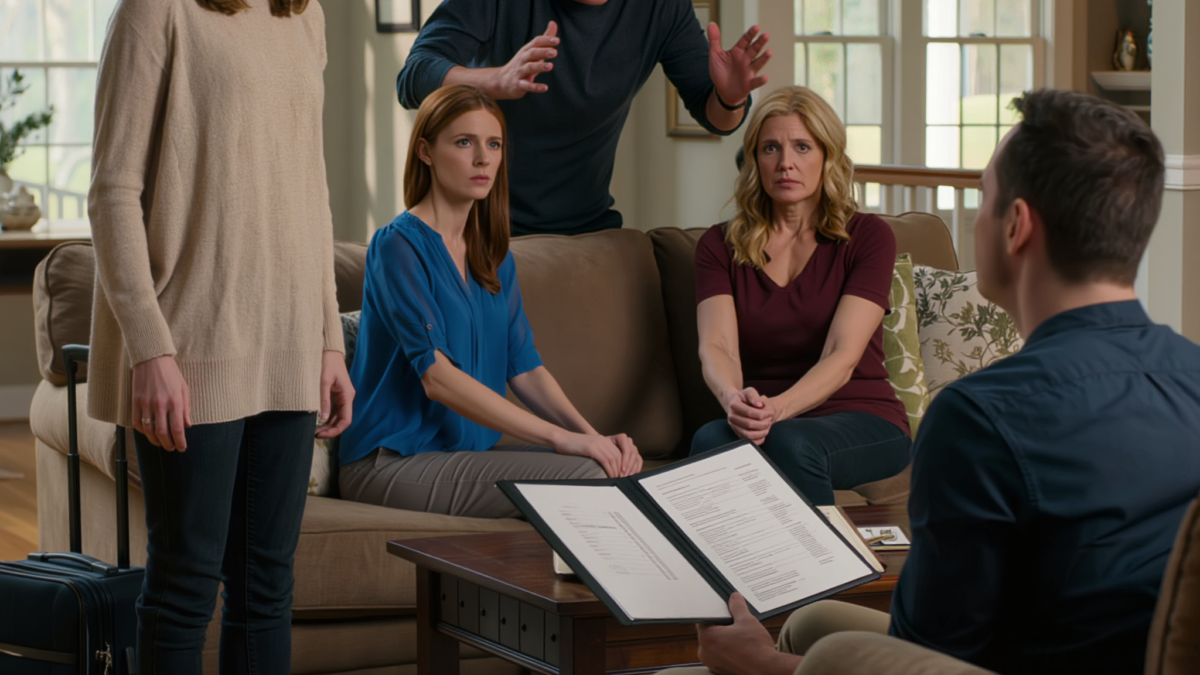
I had let my brother-in-law use my pool every summer for his children’s parties. When I asked to borrow his camping tent for five days, he sneered and said, “Get your own stuff. You’re pathetic.”
My father-in-law laughed.
“Beggars can’t be choosers.”
Then my wife looked at me and added, “Stop being such a mooch.”
When we returned from our trip, I found my $40,000 pool drained and badly damaged. A note had been left on the patio.
“Pool parties are over. Maybe this will teach you not to be such a worthless leech.”
I didn’t call my brother-in-law. I didn’t argue with my wife or her parents. I simply stood there, read the note three times, and realized that the people who had mistaken my patience for weakness had finally given me everything I needed to hold them accountable.
I stood perfectly still at the edge of the concrete patio.
The evening sun cast long shadows across the backyard, but I barely felt the July heat. The sound of my breathing seemed far away, swallowed by the silence of what had once been the most peaceful place in my life.
My eyes moved slowly over the destruction.
The heavy, custom-fitted vinyl liner of my $40,000 in-ground pool had been torn open. Long gashes ran down the sides, exposing concrete and raw earth beneath it. All 41,000 gallons of water were gone.
At the bottom of the deep end, resting in a shallow puddle of muddy sludge, lay my automatic pool vacuum. It had been broken into three pieces, its internal components exposed and ruined.
Around the deck, my cedar planters had been overturned. Dark potting soil and crushed geraniums were scattered across the stamped concrete. One of the large metal patio umbrellas had been snapped in half, its torn canvas hanging from the frame.
A sharp ache moved through my jaw. I realized I had been grinding my teeth so hard that my head hurt.
My hands were clenched at my sides.
I didn’t shout. I didn’t throw anything. I just stared.
My wife, Sarah, stood several feet behind me with both hands covering her mouth. Small, broken sounds came from her throat, but I barely registered them.
I walked toward the glass patio table.
A stone had been placed in the center. Beneath it was a piece of heavy card stock.
I pulled the note free.
The handwriting was unmistakable—messy, sharp, and arrogant. It belonged to Sarah’s brother, Carter.
I read the message.
“Matthew, pool parties are over. Maybe this will teach you not to be such a worthless leech. You want to use people and never give anything back. Well, now you know how it feels to have something you care about taken away. Don’t bother calling me. I’m done pretending to like you.
“Carter.
“P.S. The pool pump accidentally got unplugged while the kids were playing. Oops.”
I read it again.
Then I read it a third time.
The sheer nerve of it burned through me.
A worthless leech.
Carter had called me a worthless leech after treating my home like his private country club for four years without paying a single dollar.
“Matthew,” Sarah finally said, her voice trembling. “Oh my God. Call him. Call Carter right now. He needs to explain this. I can’t believe he would do something like this.”
I didn’t reach for my phone to call Carter.
I didn’t look at Sarah.
I folded the note in half, folded it again, and slipped it into the front pocket of my jeans. I could feel the stiff edges of the paper against my leg.
It was no longer merely an insulting note.
It was evidence.
“I’m not calling your brother,” I said.
My voice sounded unfamiliar—flat, calm, and stripped of panic.
“What do you mean you’re not calling him?” Sarah demanded. “Look at our yard. He ruined everything. You need to confront him. You need to call my parents.”
I turned and looked at her.
Sarah and I had been married for eight years. For eight years, I had swallowed my pride, chosen my words carefully, and played the role of the accommodating husband because she insisted that keeping the peace with her family mattered more than confronting their behavior.
Now, looking into her frightened eyes, I felt the last of that patience disappear.
“I am not calling him,” I repeated. “And you are not calling him either. You will not call your mother or your father. You will not post anything about this online. If you pick up your phone to warn your family before the authorities document what happened, Sarah, then our marriage is over.”
She recoiled.
“Then what are you going to do?”
I pulled out my phone and dialed a number I knew by heart.
“I’m calling the police,” I said. “After that, I’m going to make sure Carter faces every legal and financial consequence he created for himself.”
I had been quiet for too long.
When a man finally decides to stop protecting the people who repeatedly disrespect him, he doesn’t need to shout. He needs facts, evidence, and a plan.
Twenty minutes later, a police cruiser pulled into my driveway.
Red and blue lights reflected across the front windows of our suburban home. Two officers stepped out, their boots crunching over the gravel as they followed me through the side gate.
When they saw the empty pool, both men stopped.
Officer Higgins, an older man with a thick mustache, let out a low whistle.
“That is one terrible mess.”
“Intentional destruction of property,” I said calmly.
I handed him the folded note.
“The person responsible left a written admission.”
Higgins read it, and his eyebrows lifted. He passed it to his younger partner, who began taking notes.
“Your brother-in-law wrote this?” Higgins asked.
“Yes, sir. He admitted that he interfered with the pump and drained the pool. The damage to the liner and equipment is extensive. I’ve contacted the company that installed it for an official assessment, but the loss will easily exceed $15,000.”
“That could make this felony-level property damage,” the younger officer said.
“I understand. I want a complete report filed, and I want everything documented.”
Sarah stood near the back door with her arms wrapped around her stomach. She wasn’t afraid of the officers. She was afraid of what would happen when her family realized I was no longer willing to solve everything privately.
For years, I had been the man who smiled and let things go. I paid restaurant bills when Joseph, my father-in-law, conveniently forgot his wallet. I ignored Carter’s muddy pickup in my clean driveway. I cleaned up after parties I had never agreed to host.
Sarah expected me to back down and say we should handle the matter within the family.
I didn’t.
I gave the officers a full statement. I watched them photograph the broken vacuum, the torn liner, the damaged umbrella, the overturned planters, and the exact location where Carter had left the note.
When they finally drove away, I stood in the driveway holding a small white card with the case number printed on it.
The reality of the situation settled over the house like fog.
“You really filed a police report against my brother,” Sarah whispered when I walked into the kitchen.
“He destroyed our property and admitted it in writing. The police are the appropriate people to contact when someone deliberately damages property.”
I went to the sink and poured a glass of water. My hands were perfectly steady.
“My parents are going to lose their minds,” she said. “You know how my dad gets. He’s going to say you’re tearing the family apart over money.”
I took a slow drink.
The first time I understood how deeply Joseph controlled his family was at my grandfather-in-law’s funeral. Joseph dictated the seating arrangements, criticized the cost of the flowers, and made certain that everyone understood he considered himself the head of the extended family.
He controlled people with money, intimidation, and the promise of future favors. Sarah had been conditioned to fear his disapproval.
Carter was a younger, less disciplined version of him.
“Your father can say whatever he wants,” I told Sarah. “He is not saving Carter this time. No one is.”
I walked down the hall to my home office and locked the door.
I sat in my leather chair, opened my laptop, and stared at the blank screen. Anger was still burning in my chest, but I wasn’t going to let it control me.
I wasn’t merely going to repair the pool.
I was going to make certain Carter paid for every damaged piece of equipment, every gallon of wasted water, and every boundary he had ignored during the previous four years.
I created a new encrypted file and titled it “Carter.”
People like Carter believe they are untouchable because they depend on decent people not wanting to create conflict. They use phrases like “but he’s family” as protection from consequences.
That protection ended the moment he entered my property and deliberately destroyed what I had built.
Four years earlier, our house had been an ordinary home with a large, empty backyard covered mostly in stubborn weeds and dry soil.
I had seen possibilities in it.
I worked as a financial investigator for the state. My job required patience, focus, and long hours reviewing bank statements, tax filings, corporate records, and ledgers. I spent my days searching for discrepancies, interviewing people suspected of financial misconduct, and helping build cases that sometimes took months or years to complete.
When I came home, I wanted quiet.
I wanted a sanctuary.
I saved for three years to create one. I didn’t buy a luxury car. I didn’t take expensive vacations. I packed my lunch every day and put my promotion bonus toward landscaping.
When I finally signed the contract for the pool, it was one of the proudest moments of my adult life.
I spent $40,000 on a custom-designed in-ground pool with a deep blue liner that made the water resemble the ocean. The stamped concrete deck looked like natural stone, and underwater LED lights made the entire backyard glow after sunset.
During the first summer, it was everything I had imagined.
I could come home after a difficult day at the office, step into the cool water, and feel the pressure leave my shoulders. It was my reward for working hard and living responsibly.
The peace lasted only a few weeks.
Carter was three years older than I was, but he behaved like an entitled teenager. He moved from job to job, always chasing some get-rich-quick idea and always claiming that his next major opportunity was just around the corner.
At the time, he lived in a cramped two-bedroom apartment downtown with his wife and their two sons, Nathan, who was nine, and Luke, who was seven.
The first weekend after the pool was completed, Carter appeared without warning.
He didn’t knock on the front door. He walked through the side gate carrying a plastic cooler, followed by Nathan and Luke, who were already wearing their swimsuits.
“Hey, man,” Carter called, dropping the cooler onto my new deck. “Heard the rich guy finally got his pond finished. Figured we’d come break it in.”
I had been sitting in a lounge chair reading a book. I looked up, surprised and immediately irritated by the intrusion.
Before I could respond, Sarah hurried outside. Her face lit up when she saw her nephews.
“Carter, you didn’t tell us you were coming,” she said as she grabbed towels for the boys.
“Family doesn’t need an invitation, right, Matty?”
Carter smirked at me as he opened a beer from his cooler. He didn’t offer me one.
I forced a smile.
“Fine. Just make sure the boys don’t run on the wet concrete.”
That was my first mistake.
I gave an inch to a man who never stopped at an inch.
That single visit established the pattern for the next four years. My backyard stopped being my private retreat and became Carter’s personal summer resort.
He never asked whether it was a convenient time. On Friday afternoons, he would send Sarah a text that wasn’t a request.
“Pool party tomorrow at one. Nathan is bringing three friends from school. Make sure the filter is running.”
He treated us like employees at a country club.
He arrived with groups of loud children, took over my gas grill, burned cheap hot dogs, and left the grates covered in grease for me to clean. He played music through a portable speaker and acted as though my home belonged to him.
The worst part was the mess.
When the sun went down and Carter decided he had enjoyed enough free entertainment, he packed his cooler and left. He never offered to help clean.
The backyard would be covered with wet towels, empty soda cans, food wrappers, and plastic pool toys.
One Sunday evening, after spending two hours removing pieces of water balloons from the filtration system, I finally confronted Sarah.
She was loading the dishwasher when I walked into the kitchen and dropped a handful of broken plastic into the trash.
“This has to stop,” I said. “Carter cannot continue treating our house like a public park. I want one weekend to myself. I want to use my own pool without twelve children screaming in the backyard.”
Sarah sighed and gave me the tired, pleading expression she always used when she wanted to avoid confronting her family.
“Matthew, please. You know how much the boys love it. They don’t have a yard at their apartment. It’s only a few months each year.”
“I paid $40,000 for that pool. I worked for it. Carter doesn’t respect our property, and he doesn’t respect me. Tell him he must ask permission before coming over.”
Sarah promised she would speak to him.
She never did.
Instead, the situation grew worse, encouraged by the two people who had created Carter’s sense of entitlement: Joseph and Martha, my father-in-law and mother-in-law.
Dealing with Carter was exhausting. Dealing with his parents was suffocating.
They treated Carter like a misunderstood genius and treated me like an arrogant outsider who didn’t understand family loyalty.
Joseph was a retired car salesman who wore too much cologne, spoke too loudly, and seemed to believe that a man’s worth depended on how aggressively he advertised it.
He constantly praised Carter’s imaginary income from whatever sales job he was failing at that month.
Joseph also acted as if he controlled a massive future inheritance. He demanded obedience in exchange for vague promises about money that might someday be distributed from the family trust.
Martha enabled him. Any criticism of Carter was met with guilt, excuses, and accusations of selfishness.
Two weeks after I asked Sarah to establish boundaries, we attended Sunday dinner at Joseph and Martha’s house.
I sat at the dining table cutting my steak while Carter entertained everyone with a story about a manager he had challenged at work.
“Good for you, son,” Joseph boomed from the head of the table. “You never let anyone disrespect you. A man has to demand what he’s worth.”
Carter smirked at me.
“Exactly. Some guys let people walk all over them because they’re too afraid to make waves. Right, Matthew?”
I placed my knife carefully beside my plate.
“I think there’s a difference between standing up for yourself and behaving unprofessionally.”
The table went silent.
Martha dropped her fork.
Joseph’s expression darkened.
“Unprofessional?”
He pointed his butter knife at me.
“Listen here, Matthew. You sit in a government cubicle all day pushing papers. You don’t understand the real business world. Carter is a hustler. He’s out there making things happen.”
“He makes a mess in my backyard every weekend,” I replied. “That’s what he makes happen.”
I looked at Martha.
“He brings half the neighborhood to my house, leaves garbage everywhere, and expects me to clean it. I want it to stop.”
Martha stared at me as though I had personally insulted her.
“How can you be so selfish? You have that huge, beautiful house and that expensive pool. You don’t have children of your own to provide for. Carter is struggling. The least you can do is share what you have with your own family.”
“I’m not his babysitter.”
“You are family,” Joseph shouted, striking the table hard enough to make the glasses rattle. “Family shares. You think that because you earn a decent government salary, you’re better than us? Carter is trying to put food on the table, and you’re complaining about a few wet towels. Grow up, Matthew.”
I looked at Sarah.
I waited for her to defend me.
I waited for her to say that I worked hard, that Carter had been disrespectful, and that my home was not public property.
My wife looked down at her lap. Her face turned red as she picked at the edge of her napkin.
She said nothing.
Her silence hurt more than Joseph’s insults.
Across the table, Carter smiled. He knew the family dynamic protected him.
“Don’t worry about it, Dad,” he said after taking a drink of beer. “Matthew is just possessive about his things. He doesn’t understand what it means to be a provider. I’ll bring my own trash bags next time so the princess doesn’t have to clean up.”
I stood, placed my napkin on the table, and walked out.
Sarah followed me five minutes later. During the drive home, she repeatedly apologized and asked me to understand that her parents were old-fashioned.
The damage had already been done.
That evening, I realized I was alone inside my own marriage.
To her family, I was a wallet, a host, and a convenience. I wasn’t treated like a respected member of the family.
For the next three years, I retreated.
I worked longer hours. When Carter brought another crowd to my home on Saturdays, I went into my office, closed the door, and wore noise-canceling headphones.
I stopped arguing because every argument ended the same way.
The resentment accumulated slowly, layer after layer, until it became something hard and permanent.
Then came July.
The relentless heat, the pressure of a large corporate fraud investigation at work, and the presence of my in-laws every weekend had pushed me toward complete burnout.
I needed to get away from the city, my phone, and most of all, Carter.
I booked a five-day camping trip to Yellowstone National Park for Sarah and me. It would be our first real vacation in two years.
I mapped hiking trails, reserved a secluded campsite, and bought plane tickets.
The only thing we still needed was a high-quality tent.
Carter owned one.
Two years earlier, during one of his brief obsessions with outdoor living, he had acquired a top-of-the-line four-person, all-weather tent that cost roughly $400.
He had taken his family camping once, complained about insects the entire time, and stored the tent in a closet afterward.
“Ask him if we can borrow it,” Sarah suggested while we were packing. “He hasn’t used it in years. After all the times he has used our pool, he owes us at least that.”
It seemed reasonable.
I didn’t want to call him, but spending another $400 on equipment we might use only once seemed wasteful.
I dialed Carter’s number.
He answered on the fourth ring. Loud music played behind him.
“What’s up, Matty? Make it quick. I’m busy.”
“Sarah and I are going to Yellowstone next week. I remembered that four-person tent you bought a couple of years ago. We were wondering whether we could borrow it for five days. I’ll clean it and air it out before returning it.”
The music suddenly became quieter, as though he had stepped into another room.
“Are you serious?” he asked.
“Yes. We only need it for a few days.”
“You want to borrow my expensive camping gear? Do you have any idea what that tent cost me? Four hundred dollars. That is professional equipment.”
“I know what it cost. We’ll take care of it. If anything happens, I’ll replace it.”
“No,” Carter said sharply. “The answer is no.”
I waited.
He continued.
“Honestly, Matthew, you have a huge house, a $40,000 pool, and a comfortable state job, but you’re calling me to beg for camping gear. Get your own stuff. You’re pathetic.”
My grip tightened around the phone.
“Pathetic? You have used my pool, my grill, and my backyard nearly every weekend for four summers. You don’t pay for anything, and you leave a mess every time. Now you’re calling me pathetic because I asked to borrow a tent you haven’t used in years?”
“A pool just sits there,” Carter snapped. “It’s water in a hole. It’s not like you’re giving me anything. My tent is valuable property. It could get damaged or stolen. I’m not running a charity for tight-fisted bureaucrats. Buy your own tent.”
The line went dead.
He had hung up.
I stood in the kitchen staring at my phone.
The hypocrisy of his words made it difficult to breathe.
A pool just sits there.
Sarah entered carrying a stack of hiking socks.
“What did he say? Is he bringing it over, or do we have to pick it up?”
“He said no.”
I placed the phone on the counter.
“He called me pathetic for asking. He said the pool is only water in a hole, but his tent is valuable property.”
Sarah stopped moving.
She held the socks against her chest and shifted her weight.
I waited for her to become angry. I waited for her to call her brother and demand an apology.
Instead, she sighed.
“Well, Matthew, you do earn much more than he does. Maybe it embarrassed him that you were asking him for something. You know how proud he is. We should just buy our own.”
I stared at her.
“He insulted me. After everything we have given him, he treated me like garbage.”
“Stop making such a big deal out of everything,” Sarah snapped. “You always do this. You hold grudges over the smallest things. Stop being such a mooch, go to the sporting goods store, and buy a tent. I’m tired of being caught in the middle.”
Stop being such a mooch.
My own wife had looked directly at me and called me a mooch for asking to borrow a tent from a man who had spent four years taking advantage of my home.
I didn’t shout.
I didn’t slam anything.
I felt something cold settle between us.
I looked at Sarah and realized I no longer recognized the person standing in my kitchen. At that moment, she did not feel like my partner. She felt like an extension of Joseph, Martha, and Carter.
“I’ll go buy the tent,” I said quietly.
I drove to the store in silence and purchased a high-quality tent for $400.
While standing at the checkout, a thought occurred to me.
Carter was constantly broke. He avoided calls from collection agencies and had recently complained that he couldn’t afford to repair the brakes on his truck.
How had he paid for a $400 tent two years earlier?
When I returned home, Sarah was in the shower.
I went into our home office and opened the filing cabinet where we stored financial records.
As an investigator, I was trained to notice inconsistencies. I pulled the credit card statements from two summers earlier and began reviewing them.
There it was.
A $435.50 charge from an outdoor sporting goods store appeared on Sarah’s personal credit card.
I logged into our joint banking account and traced the payment.
Sarah had paid that credit card balance using money transferred from our joint checking account—money deposited primarily from my salary.
I leaned back in my chair.
The tent had never belonged to Carter in the way he claimed.
He hadn’t paid for it.
When Sarah came out of the shower wearing a robe and drying her hair, I was waiting in the bedroom with the statement in my hand.
“You bought the tent.”
It wasn’t a question.
Sarah froze. The towel stopped moving through her hair.
Her eyes dropped to the paper, and the color left her face.
“Matthew, I—”
“You bought that tent two years ago with money from our account. Why does Carter have it?”
“Dad asked me to,” she said quickly. “His credit card was at its limit, and Carter wanted to take the boys camping to prove he could be a good father. Dad asked me to put it on my card. He promised he would pay me back.”
“Did he?”
Sarah looked at the floor.
“No. But it’s family. I couldn’t say no to Dad.”
I spoke slowly so there could be no misunderstanding.
“Your father convinced you to buy a $400 tent for your brother. You used money from our household account. Then, when I asked to borrow the tent that we paid for, Carter called me pathetic. Your father called me a beggar, and you called me a mooch.”
Tears rolled down Sarah’s cheeks.
“I didn’t want to start a fight. If I had told you, you would have been angry with my father. I was trying to keep the peace.”
“You didn’t keep the peace. You chose a side, and it wasn’t mine.”
I placed the statement on the bed.
As I packed my duffel bag for Yellowstone, I wondered whether divorce had become inevitable.
The foundation of our marriage no longer felt stable. I felt like a visitor in my own home.
The next morning, while we loaded the car for the airport, my phone rang.
It was Joseph.
I answered and put him on speaker so Sarah could hear.
“Matthew,” his booming voice filled the garage. “Martha tells me you were harassing Carter about his camping equipment last night.”
“I asked to borrow a tent.”
“Well, beggars can’t be choosers.”
Joseph laughed, the sound harsh and grating.
“You need to learn to stand on your own two feet, son. Carter works hard for what he has. He takes pride in ownership. You shouldn’t be trying to take advantage of his success. Have a good trip. Try not to ask any park rangers for free food.”
He hung up.
I looked at Sarah.
She wouldn’t meet my eyes.
I reversed out of the driveway.
I didn’t know it then, but leaving the house that morning would lead to the greatest destruction—and the most necessary rebuilding—of my life.
Yellowstone was beautiful.
It was vast, untamed, and intensely quiet. For five days, I hiked through pine forests, stood near enormous waterfalls, and watched geysers rise into the clear blue sky.
Physically, it was the escape I needed.
Mentally, I remained trapped.
Sarah tried to behave as though nothing had happened. She held my hand on hiking trails, pointed out wildlife with forced enthusiasm, and made small talk beside the campfire.
Every time I looked at her, I saw the credit card statement.
Every time she spoke, I heard her telling me to stop being a mooch.
We shared a tent and meals, but emotionally, we were miles apart.
During the quiet hours on the trail, I thought about the previous eight years.
I was tired of being angry. Anger consumed energy without solving anything.
I wanted resolution.
Joseph, Martha, and Carter had created a system in which they took whatever they wanted. Whenever I objected, I became the selfish outsider.
Sarah had participated because sacrificing my comfort felt safer than challenging her father.
On the third night, I sat beside the campfire watching the embers fade and made a decision.
When we returned home, everything would change.
There would be no more unannounced visits. No more free access to the pool. No more financial favors or insults disguised as family loyalty.
If Sarah could not accept those boundaries, I would contact an attorney and end the marriage.
I had finally accepted that losing the marriage might be necessary to preserve my dignity.
During the drive back to the airport, a strange calm settled over me—the calm that comes after making a difficult but permanent decision.
I was ready to go home and take control of my life.
I had underestimated Carter.
Our flight landed late Thursday evening. We collected our luggage, called an Uber, and rode through the dark streets of our suburban neighborhood.
The house looked exactly as we had left it.
The lawn was neatly maintained. The porch light glowed beside the front door. From the street, it appeared to be a peaceful American home at the end of an ordinary summer day.
I unlocked the door, carried our bags into the hallway, and placed them on the floor.
After stretching my back, I walked through the kitchen to check the yard.
I turned on the outdoor floodlights.
Brilliant white light filled the backyard.
That was when I saw the empty space where the pool had been.
The torn liner, broken equipment, and overturned planters looked like the remains of a deliberate campaign against everything I valued.
The calm I had built during our trip disappeared.
After finding Carter’s note, after Sarah panicked, and after the police documented the property damage, I called the professionals.
The officers left shortly before midnight.
At seven the next morning, I stood in the backyard with Elijah, the contractor whose company had installed the pool.
Elijah had worked in the industry for thirty years. He wore heavy work boots and a faded baseball cap. For nearly five minutes, he said nothing.
He walked the perimeter, climbed into the empty deep end, and inspected the tears in the blue liner. Then he knelt beside the pump station to examine the exposed wiring and open drainage valves.
When he climbed out, his expression was grim.
“Matthew,” he said, removing his cap, “I’ve seen pools damaged by storms. I’ve seen them ruined through neglect. I have never seen someone deliberately damage a pool this thoroughly.”
“How bad is it?”
“The liner is a total loss. Whoever did this didn’t make one accidental tear. They used a sharp tool and opened the liner in four different places. Once the water began draining, the pressure change made the damage worse.”
He pointed toward the equipment.
“The automatic vacuum is destroyed. It looks like something heavy was thrown onto it. They also bypassed the safety systems, disconnected the circulation pump, and opened the main waste valve. The water probably drained into the storm system behind your fence over two days.”
Elijah pulled out a clipboard and began writing numbers.
“You need a new custom liner. The concrete shell must be cleaned, treated, and resealed after being exposed to air and dirt. You need a new vacuum and filters. The underground plumbing must be pressure-tested to make sure the sudden drainage did not damage the PVC lines.”
He tore the estimate from his clipboard and handed it to me.
“Twenty-eight thousand dollars,” he said. “And that is conservative. I’m sorry. This wasn’t an accident.”
I stared at the number.
The loss wasn’t merely financial.
Carter had entered my property, stood on the deck I had paid for, and systematically damaged the place that gave me peace—all because I had asked to borrow a tent.
“Prepare an official invoice,” I told Elijah. “Include a written statement explaining why you believe the damage was intentional. I’ll need it for the insurance company and my attorney.”
While I was outside with him, Sarah was inside falling apart.
I entered the kitchen and found her sitting on the floor with her phone in her hand. Mascara streaked her face.
“He isn’t answering,” she said. “Carter’s phone goes directly to voicemail. Dad hung up on me. I finally reached Mom.”
I leaned against the counter.
“What did Martha say about her son deliberately destroying our pool?”
Sarah swallowed.
“She said we’re overreacting. She said Carter had a party here on Saturday while we were gone. Nathan and Luke brought friends. According to her, the children were playing roughly and someone accidentally disconnected the pump. She said the liner probably tore because it was old.”
I laughed once, without humor.
“The liner was four years old and commercial grade. A child does not accidentally open a high-pressure waste valve that requires a tool. A child does not make four separate cuts in heavy vinyl. And a child didn’t write that note.”
“I know,” Sarah said, burying her face in her hands. “I read the note to Mom. She said Carter was angry because you had insulted him about the tent. She said that if we make him pay, we will ruin his life and she will never forgive me.”
There it was.
The shield her family always used.
Carter could cause the damage, but if I demanded accountability, I would become the person ruining his life.
“Martha is right about one thing,” I said. “Carter’s life is about to change. But he did this to himself.”
“Matthew, please.”
Sarah reached toward me.
“Don’t push the criminal complaint. I’ll get a second job. I’ll pay for the repairs myself. Just don’t let my brother go to jail. My father will lose control.”
I looked down at the woman I had married.
She was willing to take a second job to protect the man who had intentionally destroyed property we both owned.
The conditioning ran deeper than I had understood.
“I am not stopping this, Sarah. I am going to pursue every lawful option available. If you choose to keep shielding him, that is your decision. But I will not protect you from the consequences of that choice.”
I stepped away and left her sitting on the kitchen floor.
Before meeting my attorney, I needed to document everything.
I walked through the house checking whether Carter had entered any rooms. The doors and windows appeared secure.
In the sunroom overlooking the patio, I noticed something beneath a decorative pillow on the wicker sofa.
It was a small spiral notebook with a bright pink cover and a cartoon unicorn.
I recognized it as Sarah’s. She used it for gardening schedules, grocery lists, and household reminders.
I opened it.
The first pages contained ordinary notes: groceries, an appointment, a reminder to call the plumber.
Halfway through, the handwriting changed.
It wasn’t Sarah’s neat cursive. It was Carter’s careless scrawl.
I studied columns of names and numbers.
“July 12—Nathan’s birthday bash.
“Jackson, $50, paid through Venmo.
“Liam, $50, cash.
“Sophia, $50, pending.
“Oliver, $50, Venmo.”
The list continued for twenty names.
On the next page was another entry.
“July 19—Summer kickoff party. Fifteen children at $50 each. Total: $750.
“Expenses: Hot dogs, $30. Soda, $20.
“Net: $700.”
My heart began pounding.
Carter had not simply been inviting his children’s friends to swim.
He had been operating an unlicensed commercial activity from my backyard.
He charged parents $50 per child to use my pool, water, electricity, grill, and property. He collected hundreds of dollars each weekend while drinking my beer and leaving the cleanup to me.
The notebook belonged to Sarah.
I carried it into the kitchen.
She sat at the table staring into a cold cup of coffee.
I placed the notebook in front of her. It struck the wood with a sharp sound.
Sarah looked at the open page, and the remaining color left her face.
“What is this?” I asked.
“Matthew, I can explain.”
“Explain how your brother has been charging parents $50 per child to use my backyard. Then explain why his business records are in your notebook.”
She drew back in her chair.
“He started doing it last summer. He said Nathan’s friends wanted to come over, but their parents felt uncomfortable sending them for free. Carter told them he was running a weekend summer program.”
“And you knew?”
“I found out accidentally,” she said. “Last August, I saw a mother give him cash. I confronted him. I swear I did. He said he was behind on rent and this was the only way he could earn extra money. He promised he would do it only a few times.”
“He used our home to run a business.”
My voice sounded heavy and cold.
“If one of those children had been seriously injured, who do you think the parents would have sued? They wouldn’t have sued Carter. He owns nothing. They would have sued us. We could have lost this house.”
“I didn’t think of it that way.”
“You didn’t think about me at all.”
For the first time, my control slipped.
“You let him disrespect me. You used our money to buy his tent. You allowed him to operate an unauthorized business on our property. Then you stood in this kitchen and called me a mooch.”
Sarah covered her face and sobbed.
This time, the crying did not feel performative. It sounded like the grief of someone finally understanding how much damage she had caused.
I didn’t comfort her.
I didn’t continue shouting.
The anger had burned down into clarity—the same kind of clarity I relied on when building a case involving corporate fraud.
I no longer saw Carter as merely an irritating relative.
I saw a documented pattern of misconduct.
And I saw Sarah as someone whose loyalty could not yet be trusted.
I went into the bedroom, took a blanket and pillow, and returned to the living room.
“What are you doing?” Sarah asked.
“I’m sleeping on the couch. Tomorrow I’m changing the locks and installing cameras at the front and back gates. If Carter enters this property again, I will report him for trespassing.”
“Matthew—”
“We are not debating it. You chose to protect him. Now you will have to watch what happens when the evidence is reviewed.”
I lay on the couch and stared at the ceiling.
The house remained silent all night.
I didn’t sleep.
My mind organized the facts.
Carter’s weekend operation violated city ordinances and homeowners association rules. If he hadn’t reported the income—and I was almost certain he had not—it also created serious tax problems.
By destroying the pool, Carter had handed a state financial investigator a ledger of unreported income and a signed note admitting responsibility for major property damage.
The next morning, the house felt cold and empty.
Sarah left early for work with swollen eyes, avoiding my gaze.
I took the day off.
At nine o’clock, I sat in the polished conference room of Aaron Miller’s law office.
Aaron was not only my attorney but also a close friend. We played golf together, and for years he had told me that I needed to establish firm boundaries with Carter.
I placed the police report, Elijah’s $28,000 estimate, Carter’s note, and photographs of the ledger on the table.
Aaron picked up the note and read it.
His eyes narrowed.
“Please tell me he actually left this at the scene.”
“Pinned beneath a stone.”
Aaron shook his head.
“That is remarkably careless.”
He reviewed the estimate and the photographs.
“You have several options. We can file a civil lawsuit for the property damage. But given Carter’s financial history, collecting a judgment could be difficult. We might win $30,000 and still spend years trying to recover it.”
“I don’t want an empty judgment. I want every legitimate system involved. I want him to experience the consequences from every direction.”
Aaron nodded.
“First, file a homeowners insurance claim. Provide the police report, estimate, and note. This is an open-and-shut case of intentional damage by an identified third party. Your insurer should pay for repairs and then pursue Carter for reimbursement.”
“Subrogation.”
“Exactly. The insurance company has more resources than either of us. Its attorneys can seek wage garnishment, place liens on eligible assets, and pursue recovery until the balance is paid.”
“That handles the pool. What about the business?”
Aaron tapped the photograph of the notebook.
“This changes the nature of the gatherings. He wasn’t simply holding family barbecues. He was charging admission to a commercial recreational activity on residential property.”
He wrote down two names.
“Call Gabriel, your HOA president, and Wyatt at city code enforcement.”
I spent the rest of the day following the legal process.
The insurance adjuster arrived before noon.
When I showed him Carter’s note, he stared at it and almost smiled.
“Mr. Mason, people responsible for property damage usually try to avoid leaving evidence. Your brother-in-law signed his own explanation. We should be able to approve the repair claim quickly. Our recovery department will handle Carter.”
Next, I met with Gabriel, the HOA president.
Gabriel was a retired military officer who had little patience for repeated noise complaints. When I showed him evidence that Carter had charged admission for the Saturday parties, his face tightened.
“Commercial activity is prohibited under the bylaws. Based on this ledger, I can issue retroactive fines of $500 for each documented event.”
He counted the entries.
“That is $4,000 in HOA penalties.”
“Send the notices to Carter’s apartment. He operated the events.”
Finally, I called Wyatt at the city code enforcement office.
Wyatt confirmed that running an unlicensed recreational business in a residential area could result in municipal penalties. He opened a file that afternoon.
The pressure was building, but one question remained.
Where had Carter sent the money?
That evening, I locked myself in my office and began reviewing public records.
Carter had spent years calling me a paper pusher. He had no understanding of how much information an experienced investigator could gather legally from publicly available financial and business records.
Sarah’s notebook showed that roughly half the parents had paid through Venmo.
Carter’s profile was public because he enjoyed displaying his transactions. I reviewed two summers of visible payment history.
There were dozens of payments from parents.
The descriptions included phrases such as “Nathan’s VIP pool bash,” “summer camp fee,” and “water park access.”
What caught my attention was not the money coming in.
It was where some of it went afterward.
Carter regularly transferred larger, even amounts—$1,500 here, $1,000 there—to an account associated with Apex Solutions LLC.
I leaned closer to the screen.
Why was a man who complained constantly about being broke transferring money to a limited liability company?
I searched the state business registry.
Apex Solutions was registered to a downtown post office box. Its registered agent was David Vance.
My body went still.
I knew the name.
David Vance was the central target of a multimillion-dollar tax evasion and money-laundering investigation my department had been developing for six months.
Vance operated a network of shell companies and used small contractors and intermediaries to move money.
After documenting the public information I had found, I followed agency protocol and reviewed the relevant case records through authorized channels.
The connection was clear.
Carter had been acting as a low-level collector for Vance.
Vance had probably offered him a percentage or promised to help conceal money from creditors. Carter collected cash from the pool parties, combined it with other funds he handled for Vance, and transferred it into the company network.
I sat back in my chair.
Carter’s petty revenge against me had linked his private side business to a major financial investigation.
If I reported only the unreported pool income, he would face taxes and penalties.
If I formally submitted the Venmo records, ledger, and connection to Apex Solutions, he could become part of a far more serious investigation involving conspiracy, hidden assets, and money laundering.
The consequences would affect every part of his life.
I didn’t want the information handled as family gossip. I wanted it presented properly, with witnesses and a complete record.
I also wanted Joseph—the man who had mocked my work for years—to understand exactly what that work meant.
At eleven that night, I called Charles.
Charles was Sarah’s uncle and Joseph’s older brother. He had retired after a long career as a state court judge.
Unlike Joseph, Charles possessed quiet authority and little patience for manipulation. He was the only member of the family Joseph genuinely feared.
Charles was also the trustee responsible for managing the family inheritance Joseph had spent years treating as his future fortune.
“Matthew,” Charles answered in a rough, calm voice. “It’s late. Is Sarah all right?”
“Sarah is physically fine, but everything else is not. I need your help. I need you to call a mandatory family meeting at your house on Sunday.”
“A family meeting? Why?”
“Because Carter deliberately caused $28,000 in damage to my pool and left a signed note admitting what he did. I also found evidence of an unauthorized business and financial activity connected to a state investigation. I want Joseph and Martha to see the evidence before the authorities begin contacting people.”
There was a long silence.
Then Charles exhaled.
“Bring everything. Sunday at two. I’ll make sure they attend.”
When the call ended, the meeting was set.
Sunday morning felt unlike any other Sunday of my life.
The house was quiet, but not with the suffocating silence of a damaged marriage. It was the focused quiet of preparation.
I woke early, showered, and put on a crisp button-down shirt with dress slacks.
I didn’t dress as though I were attending a family barbecue.
I dressed as though I were presenting a case.
I packed my leather briefcase carefully.
Inside were the police report, Elijah’s official estimate, Carter’s note, Sarah’s pink notebook, photographs of the ledger, HOA notices, Venmo records, and public state business filings connecting Carter to David Vance.
Each document supported another part of the story Carter had created.
Sarah stood in the hallway watching me close the brass latches.
She looked exhausted. Neither of us had slept properly in days.
The possibility of divorce hung between us.
“We’re really doing this?” she whispered.
“I am doing this. You are attending as a witness. You can stand beside me while the truth comes out, or you can continue protecting them. There is no middle ground anymore.”
Tears formed in her eyes, but she nodded.
We drove to Charles’s house without speaking.
Charles lived in a large stone estate in one of the city’s wealthiest suburbs. During his career, he had developed a formidable reputation and accumulated considerable wealth.
Joseph had spent his adult life flattering Charles and waiting for what he assumed would be a generous inheritance.
He treated Charles with the same nervous respect he demanded from everyone else.
That was why I chose Charles to oversee the meeting.
When we entered the circular driveway, Joseph’s leased Cadillac and Carter’s muddy pickup were already parked near the front steps.
“They’re here,” Sarah said. Her hands trembled as she released her seat belt.
“Good.”
I picked up the briefcase.
A housekeeper led us through the wide stone entry and into the formal living room.
The room had high ceilings, dark wood paneling, leather furniture, and shelves filled with legal books. It was not designed for casual conversation. It reminded visitors that Charles had spent decades listening to people explain themselves under pressure.
Carter sat on a leather sofa with his boots resting on the mahogany coffee table. He drank from a bottle of beer as though he had been invited to a party.
Joseph stood near the fireplace holding a glass of scotch. Martha sat on the edge of a wingback chair, twisting her wedding ring.
The atmosphere changed when I entered.
Carter smirked.
“Look who finally arrived. The mooch. I thought you were too busy filing police reports against family members to attend Sunday dinner.”
I didn’t respond.
I crossed the room, placed my briefcase on the large oak table, and waited.
Joseph laughed, the ice rattling in his glass.
“Matthew, I heard about your little performance with the police. You earn a decent salary working for the state, but you have no idea how loyalty works. A man protects his family. He doesn’t run to the police because a pool liner has a small tear.”
Before I could respond, the heavy study doors opened.
Charles entered wearing a dark, tailored suit. His expression was severe.
He walked into the center of the room and looked directly at Carter’s boots.
“Take your feet off my furniture.”
Carter dropped them immediately.
“Sorry, Uncle Charles.”
Charles offered no drinks and made no small talk. He gestured toward the chairs arranged in a semicircle.
“Sit down. All of you. We have a serious matter to address, and no one is leaving until I am satisfied that everyone understands it.”
The smiles disappeared from Joseph’s and Carter’s faces.
They sat.
The antique grandfather clock ticked in the corner.
I stood beside Charles while Sarah chose a seat as far from her parents as possible.
Charles walked to my briefcase. I opened it and handed him the first manila folder.
He removed the police report and Elijah’s certified estimate.
“Carter,” he began in the measured tone of a judge, “I have reviewed a police report filed Thursday night and a contractor’s assessment. The evidence indicates that you entered Matthew and Sarah’s property and deliberately damaged their swimming pool.”
Carter rolled his eyes, though a muscle in his jaw began twitching.
“It’s a misunderstanding. The children were playing. Someone probably disconnected the pump. It’s just a pool. Matthew is trying to make me pay for a $28,000 renovation.”
Martha leaned forward.
“Charles, you know how boys are. Matthew insulted Carter over a camping tent. Now he’s trying to ruin my son’s life over an accident. It’s vindictive.”
Charles raised one hand.
Martha stopped speaking.
He reached into the folder and removed Carter’s note.
“An accident?”
His voice was flat.
“I spent thirty years hearing excuses in criminal cases. It is unusual for someone responsible for serious property damage to leave a signed explanation at the scene.”
Charles read the note aloud.
“Pool parties are over. Maybe this will teach you not to be such a worthless leech.”
As he continued, Joseph’s face turned dark red.
Even he understood how damaging the note was.
“You wrote this?” Charles asked.
Carter swallowed.
“I was angry. Matthew was disrespecting me. I only wanted to drain the water and teach him a lesson. I didn’t know the liner would tear. I’m not paying twenty-eight thousand dollars for one mistake.”
“It was not an accident,” Charles replied. “It was intentional property damage. In a courtroom, the written admission and contractor’s findings would be taken very seriously. Matthew has already filed a homeowners insurance claim. The insurer will repair the pool and then seek reimbursement from you.”
Carter looked at Joseph.
“Dad, tell him. Tell him they can’t do this.”
Joseph straightened his shoulders and tried to recover control.
“Now listen, Charles. We keep these matters in the family. Matthew needs to cancel the claim. We’ll patch the pool ourselves. You don’t drag relatives into court.”
“I’m not taking Carter to court,” I said. “The insurance company will decide how to recover its money. And the pool damage is the smallest of Carter’s problems.”
Carter sneered, trying to revive his confidence.
“What are you talking about, you paper-pushing loser? You think you scare me?”
I opened the briefcase again.
I removed Sarah’s pink notebook, the Venmo records, and a sealed manila envelope marked for official submission.
I placed the notebook on the coffee table in front of Carter.
“Let’s discuss the business you operated on my property.”
Carter looked at the notebook.
The color left his face.
“You charged parents $50 per child to hold parties in my backyard. You collected admission fees and operated a recreational business in a residential neighborhood without permission or permits.”
I placed the HOA notice beside the notebook.
“The homeowners association has assessed $4,000 in fines based on the documented events. Those notices are being sent to your apartment. City code enforcement has also opened a case.”
Martha pressed both hands against her chest.
“Carter, you were charging people?”
“I was only covering food,” he said. His eyes moved rapidly around the room. “It wasn’t a real business.”
“It produced hundreds of dollars in profit each weekend,” I said. “That makes it real enough for the city, the HOA, and the tax authorities.”
I lifted the sealed envelope.
“But those local penalties are not your greatest concern.”
Carter stared at it.
“You and your father have spent four years mocking my state job and calling me a paper pusher because I don’t brag about my work at the dinner table.”
I reached into my jacket and removed my state credentials, placing them beside the note.
“I am a senior financial fraud investigator for the state department of revenue. I investigate corporate embezzlement, tax evasion, hidden assets, and organized financial crime.”
Joseph stopped moving.
He stared at the credentials as though he had never seen me before.
I looked at Carter.
“When I reviewed the public Venmo activity connected to your pool parties, I found repeated transfers to Apex Solutions LLC. That company is registered through a man named David Vance.”
Carter pressed himself deeper into the sofa.
His hands began to shake.
“How do you know that name?”
“David Vance is the principal target of a multimillion-dollar money-laundering and tax-evasion investigation my department has been building for six months.”
I leaned closer, keeping my voice quiet.
“You weren’t simply running an unauthorized summer program. You were moving money through a company associated with a major financial case. The cash you collected at my property was combined with other funds and transferred into Vance’s network.”
The room became completely silent.
Carter’s confidence vanished.
“You’re lying,” he said, but his voice broke. “I didn’t know what Vance was doing. He said he could help me keep some money where my ex-wife couldn’t find it for child support. I didn’t know it was illegal.”
Charles looked at him with open disgust.
“You intentionally concealed assets to avoid supporting your own children. Whether you understood every part of Vance’s operation will be determined by investigators, not by this family.”
I tapped the envelope.
“This contains the Venmo activity, the party ledger, public business records, and the transaction links to Apex Solutions. Tomorrow morning at eight, I will submit it to my director through the proper channels. It will be shared with the appropriate state and federal authorities handling the Vance investigation.”
Carter stood so quickly that he nearly stumbled, then dropped to his knees on the Persian rug.
The arrogance was gone.
“Matthew, please. I could go to prison. I’ll pay for the pool. I’ll do anything. Don’t submit that file.”
I looked down at him.
For years, he had insulted me, used my home, left his garbage for me to clean, and called me a mooch, a beggar, and a leech.
Now he was asking me to protect him from consequences he had created.
“You wrote that you wanted to teach me a lesson,” I said. “You wanted me to understand what it felt like to lose something I cared about. I learned the lesson, Carter.”
I picked up the envelope.
“Now you will learn that other people’s property, finances, and trust are not yours to exploit. The file goes to my director tomorrow. You should find a qualified defense attorney.”
I turned toward Joseph.
My father-in-law had gone pale. Sweat darkened the collar of his golf shirt.
The man who had spent years bullying everyone around him suddenly had no control.
“Sarah,” he said, his voice trembling. “Honey, speak to your husband. He can’t do this to your brother. We’re family. We can fix it. Put the pool repairs on your credit card. We’ll pay you back. I promise. We only need to keep the authorities out of this.”
I reached into the briefcase one final time and removed the credit card statement showing the $435.50 sporting goods purchase.
I walked to Joseph and held it in front of him.
“You mean you’ll repay her exactly as you repaid her for this?”
He stared at the page.
“The camping tent you pressured your daughter to buy with money from our household account so you could give it to Carter—the same tent you mocked me for asking to borrow.”
Joseph stepped backward.
“That was different. I was short on cash that month.”
Charles rose from his chair.
He looked at his younger brother with anger and contempt.
“You took advantage of your own daughter. You persuaded her to hide a financial decision from her husband so Carter could maintain the appearance of success.”
“Charles, please,” Martha said, covering her face. “Don’t say these things. We are still a family.”
“Not in the way you have defined family.”
Charles pointed toward Joseph.
“Listen carefully. You have spent years assuming you would receive a large distribution when our mother’s trust is settled next year. As trustee, I am reviewing the structure immediately.”
Joseph stared at him.
Charles continued.
“Any funds that might have benefited you or Carter will instead be placed into a protected trust for Nathan and Luke, subject to legal review and the terms of the existing estate documents. Neither of you will control that money.”
Joseph released a strangled sound and pressed a hand against his chest.
The inheritance he had used as leverage over his family had disappeared from his reach in seconds.
I closed my briefcase.
“This meeting is over.”
I looked at Joseph, Martha, and Carter.
“None of you is permitted on my property. Any threatening or repeated unwanted contact will be documented. If you enter my home or yard without permission, I will report it as trespassing.”
I walked out of the study without checking whether Sarah followed.
I crossed the foyer, descended the stone steps, and stopped beside my car.
A minute later, the front door opened.
Sarah ran outside crying so hard she struggled to speak. She reached the car and gripped my arm.
“Matthew, I am so sorry. I didn’t understand how far this had gone. I was blind. Please don’t leave me. I’ll go to counseling. I’ll stop letting them control me. I’ll cut off contact if that is what it takes. Please don’t file for divorce.”
I looked at her.
For the first time in our eight-year marriage, she had remained beside me while her family faced the truth. The fear Joseph had used to control her was beginning to weaken.
“Get in the car, Sarah,” I said. “We have a great deal to discuss.”
Three months later, the suffocating July heat had given way to the cool air of October.
My backyard had been rebuilt.
The insurance company approved the claim quickly after reviewing Carter’s note and Elijah’s report. I hired Elijah to complete the repairs and used part of my savings for several upgrades.
The new vinyl liner was a deep midnight blue. The deck had been expanded, the planters replaced, and a modern security system now covered the gates and perimeter.
The backyard was peaceful again.
It was finally mine.
The consequences of the Sunday meeting were extensive.
As promised, I delivered the records to my director.
State investigators and the IRS began reviewing Carter’s finances. When investigators contacted the logistics company where he had recently begun working, the company terminated him rather than risk being connected to a federal financial inquiry.
His bank accounts were restricted during the audit of his unreported income. Without access to his money, he fell behind on rent and his truck payments.
His oversized pickup was repossessed.
He eventually moved into a small studio apartment in a neglected part of town.
The most serious personal consequence came from his former wife.
When she learned that Carter could face felony charges related to Apex Solutions, she hired a family-law attorney and filed an emergency petition regarding Nathan and Luke.
The court granted her primary custody and limited Carter to supervised visitation because of his unstable finances and pending legal problems.
Much of the money he had earned from the pool parties—money that could have helped his sons—was consumed by legal fees.
The social consequences spread quickly through the neighborhood.
News travels fast in American suburbs, especially when an HOA is involved.
Gabriel, the association president, and Samuel, a neighbor who had attended several of Carter’s parties, learned about the investigation. They also discovered what I actually did for a living.
Suddenly, people who had ignored me were unusually friendly.
One Saturday afternoon, Samuel appeared at my fence carrying an expensive bottle of wine.
“Hey, Matthew,” he called with an overly enthusiastic smile. “I heard what happened with Carter. I always knew that guy was trouble. Good thing you finally got rid of him.”
I remembered Samuel laughing the previous summer when Carter called me possessive.
“I’m hosting a barbecue next weekend,” Samuel continued. “A few high-end clients will be there. I’d love to have a state investigator of your caliber stop by. We could discuss business.”
I remained in my lounge chair.
“I don’t drink wine, Samuel. And I’m not interested in socializing with people who knowingly attended an unauthorized commercial operation in my backyard.”
His smile disappeared.
“Have a good barbecue.”
He stepped away from the fence.
For the first time, my boundaries were being respected.
But there was one consequence I hadn’t fully considered.
On a Tuesday evening, my phone rang from a number I didn’t recognize.
I answered.
“Hello, Uncle Matthew.”
The voice was small and unsteady.
I sat upright.
“Nathan?”
“Yeah. It’s me.”
My nine-year-old nephew sounded as though he had been crying.
“Mom said I could call you. Dad says we can never swim at your house again. He says you’re angry and that you ruined his life. Are you mad at me and Luke? Did we do something wrong?”
My chest tightened.
Nathan and Luke were innocent. They were children caught in a conflict created by the adults around them.
They didn’t understand taxes, insurance claims, property damage, or financial investigations.
They only understood that their favorite summer activity had disappeared and that their father blamed me.
“Nathan, listen carefully,” I said, softening my voice. “You and Luke did nothing wrong. You were good boys. Your father and I had a serious disagreement about how adults should treat other people and their property. He made choices, and adults sometimes have to face consequences for their choices.”
I paused.
“But I am not angry with you. I will never blame you or Luke for any of this.”
“So we can’t ever swim again?” he asked.
His voice cracked.
I closed my eyes.
Carter deserved the legal and financial consequences of his actions.
His sons did not deserve to be punished for them.
“Let me speak to your mother.”
Carter’s former wife came to the phone.
We spoke for twenty minutes. I explained that Carter was permanently banned from my property, but I did not want Nathan and Luke to suffer.
I made an offer.
That Saturday, I drove my SUV to Carter’s apartment building.
Under the custody agreement, he had supervised visitation for two hours on Saturday mornings. His former wife arranged the pickup during that window so he would see the boys leaving with me.
Nathan and Luke ran through the front entrance wearing swim trunks and carrying brightly colored towels.
They wrapped their arms around my legs.
“Ready?” I asked.
“We’re going to the large indoor community pool across town—the one with the water slides.”
The boys cheered and climbed into the back seat.
After closing their doors, I looked up.
Carter stood on the second-floor balcony.
He looked exhausted. His face was unshaven, his T-shirt stained, and his eyes sunken.
He gripped the metal railing and stared down at me.
He couldn’t create a scene without risking further restrictions on his visitation.
I didn’t celebrate his condition.
I didn’t smile.
I met his eyes, gave him one slow nod, and got into the SUV.
Then I drove Nathan and Luke away for a safe, happy afternoon—something they still deserved despite everything their father had done.
It is late evening now, and I am sitting on the patio.
The underwater lights send soft blue patterns across the side of the house. The surface of the pool is perfectly still.
The sliding glass door opens.
Sarah steps outside carrying two mugs of coffee. She hands one to me and sits in the chair beside mine.
She is different now.
The Sunday meeting, the evidence of her father’s manipulation, and the reality of her brother’s conduct finally broke through the fear she had lived with since childhood.
She began attending therapy twice a week. She changed her phone number so Joseph and Martha could no longer reach her with constant accusations and guilt.
For the first time, she understands that marriage requires two people to protect each other. It cannot survive when one spouse is repeatedly sacrificed to maintain a false peace with relatives.
Repairing our relationship has not been easy.
We still have work to do.
But for the first time in eight years, I feel as though my wife is standing beside me.
We survived because the destructive pattern was finally confronted.
I take a sip of coffee and look across the water.
In the garage, packed neatly in its carrying case, is the $400 camping tent.
The tent that began the entire chain of events.
We have used it three times since Yellowstone.
Now Sarah and I go camping together, far from entitled relatives, financial secrets, and family drama.
The tent has become a symbol of independence.
It reminds me that I do not need anyone’s permission to live peacefully or protect what I have earned.
People often mistake kindness for weakness. They assume that a quiet man with a steady job—someone who pays his bills, avoids arguments, and gives relatives more chances than they deserve—will accept anything.
Carter believed I would always give in.
Joseph believed I was afraid of him.
They didn’t understand that quiet people are often building strong foundations. When those foundations are challenged, patience can become resolve.
I used to believe that being the bigger person meant allowing every insult to pass without consequence. I thought cleaning up the mess and keeping everyone comfortable was noble.
That summer taught me something different.
Being a good man does not mean allowing people to use you.
Protecting your home, marriage, finances, and peace requires clear boundaries. You do not need to attack everyone who crosses you, but you must be willing to say no, document the truth, and let consequences follow.
Carter tried to teach me a lesson about being a leech.
Instead, he taught me what happens when generosity is offered without boundaries for too long.
My yard is clean.
My pool is peaceful.
And my life finally belongs to me again.








