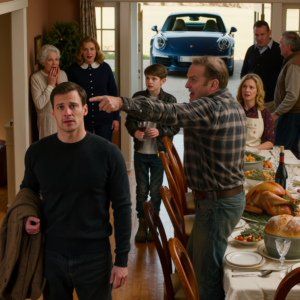
At Thanksgiving, my dad snapped, “Paying bills doesn’t make you family,” after I reminded him I covered the mortgage, utilities, insurance, and $9,600 a year. Mom said I was just jealous of Julian. I picked up my coat and said, “Then let him pay it.” That night, I stopped covering the bills. By morning, my phone showed 37 missed calls—and my parents were finally learning what my money had been holding together.
My name is Victor. I’m 32 years old, and for the last eight years of my life, I functioned as a human ATM for the people who shared my DNA.
From the moment I received my first real paycheck, I spent nearly a quarter of a million dollars quietly funding my parents’ lives. I covered bills, emergencies, vehicles, repairs, and expenses they had gradually stopped treating as their responsibility.
Everything finally collapsed during a Thanksgiving dinner I had paid for, helped prepare, and served.
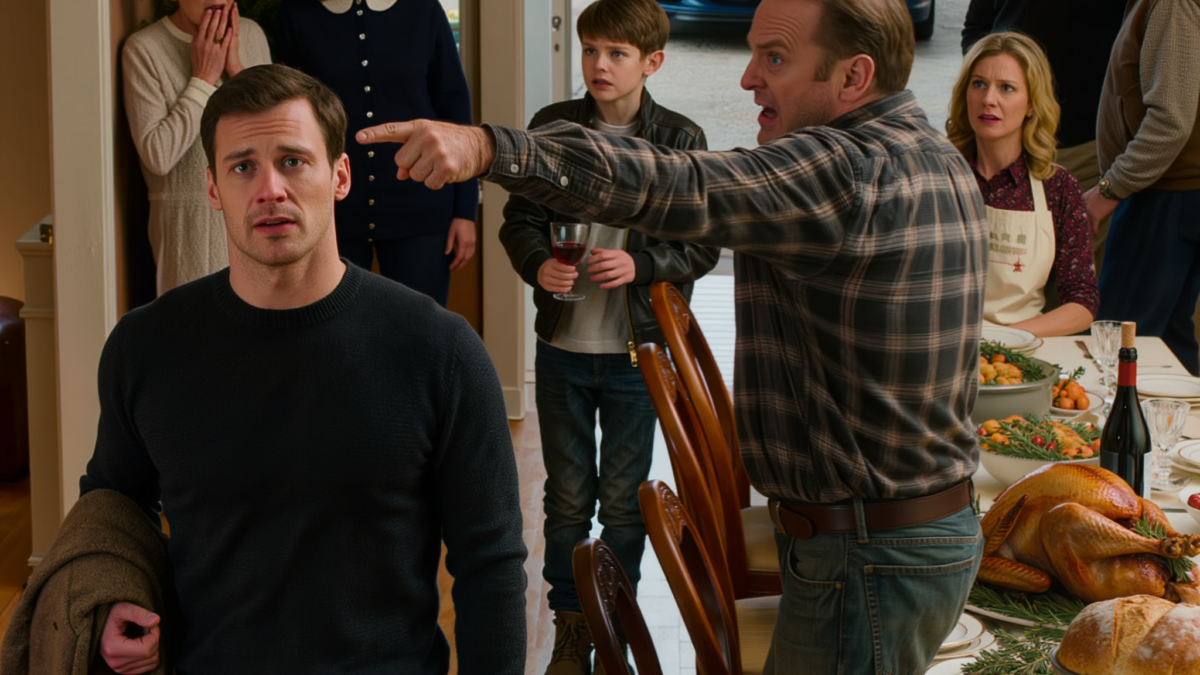
I was sitting at the far end of the table when my father looked straight at me, his face twisted with anger, and told me to get out of his house.
“Paying bills does not make you family.”
My mother leaned toward me and added the words that cut even deeper.
“You’re just jealous of your brother, Victor. You always have been.”
Around us sat members of our extended family. For years, most of them had believed Julian, my younger brother, was the ambitious one, the entrepreneur, the son destined for something impressive. They had no idea that the supposedly selfish older son sitting at the end of the table was the person keeping the lights on, the mortgage paid, and the cars insured.
They also didn’t know about the second mortgage my parents had taken against their home to finance Julian’s failed business ventures.
And they definitely didn’t know where that debt had eventually ended up.
By the morning after Thanksgiving, my phone was overflowing with missed calls.
The silence inside my downtown Detroit apartment was almost unnatural. Outside the floor-to-ceiling windows, a thin layer of frost covered the city. It was a bitterly cold Friday morning in Michigan, the kind of morning when most families were sleeping late after Thanksgiving or preparing to chase Black Friday deals.
I sat at my marble kitchen island in dark jeans and a sweater, staring at my powered-off phone.
My coffee had gone cold.
Eventually, I picked up the phone and held down the power button.
The screen came alive.
Then the notifications started.
Thirty-seven missed calls.
Fifty-two text messages.
Seven urgent voicemails.
All within a few hours.
My mother’s texts told the story in stages.
At 6:15 a.m., she had sent a single question mark.
At 6:45, the tone was still commanding.
“Victor, the power just went out in the whole house. Did you forget to pay the electric bill? Call the company and fix it.”
By 7:30, the confidence had disappeared.
“The water is off. The smart thermostat is completely dead, and the house is freezing. Call me back right now. This isn’t funny.”
By 8:15, she was in full panic.
“The security alarm is blasting through the whole house. The master code won’t work. Your father is having chest pains from the stress. How could you do this to us? Answer your phone.”
Then I opened Julian’s messages.
His were different.
There was no concern for our parents. Only anger.
“What the hell did you do? The repo guy just hooked up my car in the driveway. I have a massive investor meeting today for my app, and I am stranded at this freezing house. Fix this now.”
I didn’t answer.
Instead, I reached for the tablet sitting on the kitchen island and opened the smart-home security application.
I had installed the camera system at my parents’ property and paid for the separate cellular backup line. Even with the normal network disrupted, the cameras were still online.
The front porch feed appeared.
About fifty miles away, Officer Hayes, a local police officer I had gone to high school with, stood on my parents’ porch bundled against the November cold.
My father, Harrison, was in the doorway wearing a thin bathrobe and winter boots. He was waving his arms and pointing toward the empty space in the driveway where Julian’s car had been.
I turned up the audio.
Dad was insisting that the family had been targeted by some kind of cyberattack. He wanted Officer Hayes to find whoever was responsible. He talked about lawyers and lawsuits and demanded that someone get Julian’s car back.
For eight years, I had been the invisible machinery behind their comfortable life.
I was their emergency fund.
Their insurance policy.
Their backup plan.
I paid for the roof over their heads, the utilities, the vehicles, and even the Wi-Fi network they used to complain about me.
For most of my adult life, I had believed one simple idea: if I gave enough, sacrificed enough, and solved enough of their problems, eventually they would see my value.
Watching my father pace on that frozen porch, I finally understood how wrong I had been.
Twelve hours earlier, he had told me my financial support meant nothing.
Now he was discovering what his life looked like without it.
I had expected anger.
I had expected insults and accusations.
What I hadn’t expected was how quickly the withdrawal of my support would expose years of bad financial decisions and family secrets.
To understand how we reached that point, you have to understand the family I grew up in.
We lived in a solidly middle-class neighborhood in Grand Rapids, Michigan. The street was lined with mature oak trees, carefully maintained lawns, and family vehicles polished on weekends.
Appearances mattered.
Neighbors compared landscaping. Property values came up in casual conversation. HOA meetings were taken surprisingly seriously.
My parents cared deeply about looking stable and successful.
Inside our house, things were different.
My father, Harrison, was a proud, stubborn man who had spent years working at a local auto manufacturing plant. It was a union job, and he treated his role as provider almost like a title of authority.
Dad wasn’t interested in emotional conversations. He believed fathers worked, children obeyed, and respect flowed in one direction.
My mother, Margaret, worked part-time as a receptionist at a high-end dental clinic. She loved neighborhood gossip and cared intensely about what other people thought of our family.
Then there was Julian.
He was five years younger than me.
From the beginning, the difference in how my parents treated us was impossible to miss.
I remember coming home when I was ten with a report card full of straight A’s. I had spent weeks preparing for a difficult state math exam, sacrificing weekends because I desperately wanted to do well.
Dad was sitting at the kitchen table drinking black coffee and reading the newspaper.
I placed the report card in front of him.
He barely looked at it.
“That is what you are supposed to do, Victor. You go to school to learn. Don’t expect a parade for simply doing your job.”
I picked up the paper and went to my room.
Two weeks later, Julian brought home a spelling test.
He had earned a C-minus.
My parents celebrated.
They ordered pizza, and Dad drove to a sporting goods store and bought Julian a bright red Schwinn bicycle.
I asked Mom why Julian received a new bike for a C-minus when nobody had even congratulated me.
She grabbed my arms and looked directly at me.
“Because he tried his best, Victor. Why do you always have to be so competitive with your little brother? Let him have his moment.”
I learned the lesson early.
Achievement didn’t make me special.
Being useful was safer.
So I became useful.
I fixed things around the house. I mowed the lawn without being asked. I stayed out of trouble. I handled my responsibilities.
Somewhere along the way, I convinced myself that if I became dependable enough, my parents would eventually have no choice but to appreciate me.
When I turned eighteen, our financial situation collapsed.
The auto plant announced major downsizing. Despite Dad’s years of seniority, he lost his job.
His severance disappeared quickly.
Car payments, household expenses, and my mother’s credit card balances consumed what little cushion they had. Retirement savings began disappearing as well.
Then I learned my college fund was gone.
It wasn’t a fortune, but a few thousand dollars had been saved for years. Without asking me, my parents moved the money into the household accounts to cover debt.
I was about to start college.
One night, I sat at the kitchen table and asked Dad how I was supposed to pay tuition.
He stared at the wall.
“You’re a smart kid, Victor. Figure it out yourself. We have bigger problems.”
So I did.
I took out student loans.
I worked three part-time jobs.
Early in the morning, I flipped burgers at a twenty-four-hour diner. In the afternoon, I shelved textbooks at the campus library. Late at night, I handled freelance data entry and basic coding from my cramped dorm room.
I lived on cheap ramen, break-room coffee, and very little sleep.
Some nights I managed only four hours.
I rarely went home for holidays because even gas money mattered.
Meanwhile, Julian remained at home in the large bedroom my parents had renovated for him.
Three years later, when it was his turn to attend college, money somehow appeared.
My parents took out a second mortgage against the house to pay his out-of-state tuition.
Julian didn’t work.
He joined a fraternity, spent heavily, failed classes, and eventually dropped out without earning a degree.
My parents didn’t call him irresponsible.
They called him a creative free spirit who was still finding his path.
I graduated near the top of my class with a specialized computer science degree.
After college, I landed a junior developer position at a fast-growing tech company in downtown Detroit.
I worked constantly.
Eighty-hour weeks were not unusual.
I wrote code, took on difficult projects, and moved steadily upward. By the time I was twenty-four, my base salary was already well into six figures.
For the first time, I could breathe financially.
I rented a good apartment.
I bought decent groceries.
I replaced worn-out clothes.
That was when my mother’s calls started.
At first, they sounded like ordinary conversations.
Then, somewhere in the middle, she would mention the heating bill.
Or property taxes.
Or a car repair.
She would explain how difficult things were and how frightened she was that they might lose the house.
I would look around my warm apartment and feel guilty.
These were the people who had raised me.
How could I enjoy a comfortable life while they struggled?
So I helped.
Just once, I told myself.
Then again.
Eventually, helping became automatic.
Within two years, I was paying their $800 monthly mortgage directly to the bank, around $400 in utilities, and the $600 lease on Dad’s new truck.
Nobody formally asked me to take responsibility for everything.
They simply stopped paying.
Late notices arrived in my mother’s email and were forwarded to me, sometimes with nothing more than a sad-face emoji.
The arrangement hardened into an expectation.
If I didn’t pay, they might lose something.
If they lost something, somehow I would be responsible.
At the same time, Julian moved from one business idea to another.
First came a dropshipping operation selling cheap imported electronics.
It failed when customers began demanding refunds.
Then he announced plans for a food truck.
He never actually bought a truck. He spent money on branding, logos, and design instead.
Later, he convinced my parents to put $15,000 of their remaining retirement savings into a cryptocurrency venture he promised would produce guaranteed returns.
The market crashed.
The money disappeared.
Through every failure, Mom and Dad remained his biggest supporters.
Dad would tell neighbors that Julian was an entrepreneur or a venture capitalist.
Nobody heard about the boring older son in Detroit whose salary was paying the mortgage.
My best friend Sylvia understood the situation before I did.
We had met in college while working at the same diner. She was blunt, fiercely protective, and almost impossible to intimidate.
One evening, we were having drinks at my apartment when I mentioned that I needed to cancel a weekend trip to Chicago because my parents had an unexpected car repair.
Sylvia set her glass down hard enough to splash liquid over the rim.
“Victor, they are using you. You do realize that, right?”
I immediately became defensive.
“They’re my family, Sylvia. What am I supposed to do? Let them lose their home? Let them end up on the street? They raised me. I owe them.”
She shook her head.
“There is a difference between helping your family through a bad period and funding people who refuse to take responsibility. When was the last time they thanked you?”
I didn’t answer.
“When was the last time your mother called to ask how your day was without asking for money five minutes later?”
Again, I had no answer.
On my kitchen counter, I kept a large glass jar labeled “Emergency Fund.”
Sylvia called it my guilt jar.
I tossed loose cash into it, but the jar also represented something bigger. A section of my brain was always reserved for my family’s next crisis.
Every month, I waited for the next bill.
The next repair.
The next bailout.
And every month, I paid.
I still believed that someday my father would put a hand on my shoulder and say, “Son, I’m proud of you. Thank you for keeping us safe.”
That day never came.
Then, in early November, my professional life changed dramatically.
My company acquired a smaller, profitable competitor. I had spent six difficult months designing much of the software integration strategy.
One afternoon, our CEO, Mr. Lancaster, called me into his glass-walled office.
He poured me a scotch and offered me a promotion to senior director of engineering.
The new position came with a significant raise, stock options, and a holiday cash bonus larger than anything I had ever received in a single deposit.
For the first time in my life, I stopped calculating every purchase against the possibility that my parents might need money.
I bought something for myself.
A Porsche.
A midnight blue 911 Carrera.
I loved the engineering of high-performance cars, and after years of denying myself almost every luxury, I decided I had earned one.
For years, I had worn cheap shoes while Julian bought designer sneakers.
I had driven an unreliable old Honda while Dad enjoyed a newer truck.
The Porsche wasn’t about impressing anyone.
It was mine.
Riding the excitement of the promotion, I called Mom and offered to host Thanksgiving at my apartment.
I had plenty of room, a large kitchen, and a view of downtown Detroit. I told her I would handle the food, wine, and everything else so she could relax.
Her answer came immediately.
“Oh, Victor, I don’t know. Your apartment is always so sterile. So cold. It doesn’t feel like a real family home. It feels like a hotel lobby.”
Then she mentioned Julian.
“Julian gets terrible anxiety with city traffic and parking. Why don’t you just buy everything and bring it here? I’ll do the actual cooking so it tastes right. You know how your father is about tradition.”
It hurt.
Even my home wasn’t acceptable.
Still, I agreed.
I spent more than $500 at a premium grocery store.
I bought a heritage turkey, imported cheeses, artisan bread, and three bottles of highly rated red wine. I packed everything into coolers and drove to Grand Rapids on Thanksgiving morning.
The trip took about forty-five minutes.
When I pulled into my parents’ driveway, I carefully avoided a cracked section of concrete I had paid a contractor to repair two years earlier.
I lifted two heavy grocery bags from the Porsche and walked toward the front door.
Before I could knock, Dad opened it.
He was wearing a faded flannel shirt and worn jeans.
He didn’t say hello.
He didn’t wish me a happy Thanksgiving.
He didn’t offer to take a bag.
Instead, he looked past me toward the driveway.
“What the hell is that?”
He pointed toward the Porsche.
“It’s my new car, Dad. I got a big promotion at work.”
I waited.
For a second, I still hoped to hear something simple.
Congratulations.
Good job.
I’m proud of you.
Dad scoffed.
“Must be nice throwing money around on a flashy sports car while regular people are struggling in this economy. Julian is going to have to park on the street now because you’re taking up the whole driveway with that ridiculous toy. Move it to the curb.”
My jaw tightened.
I carried the bags into the kitchen.
Mom was chopping celery.
She glanced at the groceries and immediately complained that the turkey wasn’t the frozen brand she preferred and that the artisan bread looked too hard.
I walked back toward the hallway to get the second load.
That was when I heard Dad talking on the phone to Uncle Winston.
“Yeah, Victor’s here,” Dad said. “Drove up in some ridiculous Porsche.”
I stopped.
“Honestly, Winston, he never does enough for us considering how much money he’s hoarding in the city. He throws us a few bucks a month to pay the electric bill and thinks he’s a saint. Julian is the one who understands what family values mean. Victor just cares about his bank account.”
A few bucks.
At that point I was spending close to a thousand dollars a week on them once regular bills and repeated emergencies were considered.
I gripped the doorframe.
Before I had time to process what I had heard, Julian arrived.
He came through the front door wearing a designer leather jacket I knew he couldn’t reasonably afford on his retail income.
Mom rushed out to greet him.
Her face lit up.
Dad ended his phone call and pulled Julian into a hug.
“There he is,” Dad announced. “The entrepreneur. The man of the hour.”
Julian tossed his keys onto the console table and looked outside.
“Who brought the Porsche? Did somebody rent a car for the weekend to impress the neighbors?”
“It’s mine.”
He turned toward me.
For an instant, the smile disappeared.
Then it came back as a sneer.
“Right. The corporate drone gets a midlife-crisis toy.”
He held out his hand.
“Give me the keys. I want to take it around the block. Show the neighbors what real speed looks like.”
“No.”
Julian stared at me.
“Nobody drives it but me.”
He immediately appealed to Mom.
“Tell him to stop being selfish. It’s Thanksgiving. Family shares.”
Mom barely looked at me.
“Victor, share with your brother. It’s just a car. Don’t be so materialistic.”
I took out my phone and activated the vehicle’s security settings.
The car wasn’t going anywhere without me.
A short time later, Aunt Beatatrice and Uncle Winston arrived carrying a store-bought pumpkin pie.
Their behavior toward me was noticeably different.
Beatatrice hugged me warmly.
Winston shook my hand and asked about my job. When I told him about the promotion, he congratulated me sincerely.
That simple kindness made the contrast inside the house even harder to ignore.
Eventually, we moved into the dining room.
The table was covered with food I had funded.
I carried in the turkey.
I poured the wine.
Then I took a seat at the far end of the table.
Julian quickly became the center of attention.
He held a glass of my $70 cabernet in one hand and talked loudly about his newest idea.
“The tech market is ripe for disruption right now,” he announced. “I’m launching a revolutionary fitness app. It uses deep-learning AI to track muscle fatigue in real time through your smartphone camera. It’s going to destroy Peloton within a year. Mark my words.”
Uncle Winston raised an eyebrow.
“That sounds complicated. Do you already have software developers building it?”
Julian scoffed.
“Developers are just code monkeys. They’re a dime a dozen. No offense, Victor. The value is in the idea. The vision.”
I took a sip of wine.
I managed software developers for a living.
I worked with AI systems.
I knew exactly how unrealistic Julian’s pitch was.
He continued.
“I just need seed money to hire cheap freelancers overseas for a working prototype. I’ve got a guy named Marcus setting up the offshore investment structure. He’s a genius at securing capital.”
Aunt Beatatrice asked the obvious question.
“How much money do you need?”
“Forty thousand.”
He said it casually.
“It’s a steal. The return will be massive within six months. Guaranteed.”
Dad leaned back in his chair with pride.
“Your mother and I have been talking.”
The room quieted.
“We’re going to liquidate the rest of our retirement account. We have about $35,000 left in the 401(k). We’re giving it to Julian as an angel investment.”
My fork stopped.
Dad continued.
“Real family supports family. We believe in his future.”
Beatatrice stared at him.
Mom reached across the table and patted Julian’s hand.
“We believe in you, sweetheart. You’re going to be a CEO. You have the mind for it.”
I set my fork down.
“Dad, you cannot be serious.”
Everyone looked toward me.
“You cannot give him your retirement money. That app does not exist. What he is describing cannot be built on the freelance budget he’s talking about.”
Julian slapped his hand against the table.
The wineglasses shook.
“Shut up, Victor. You’re just a corporate slave. You don’t know the first thing about being a visionary founder. You take orders.”
My patience broke.
“I know Marcus, whoever he is, is asking you for money around a project that doesn’t make sense. And when that money is gone, what are you going to live on? How are you going to pay the mortgage?”
Mom sighed heavily and looked toward Beatatrice.
“He always does this. Victor is so pessimistic. He can’t stand seeing his own brother succeed.”
“Succeed at what?”
My voice rose.
“The dropshipping business? The food truck that never existed? The crypto investment that cost you fifteen thousand dollars?”
Dad stood so quickly that his chair scraped backward and fell.
“I do not need your protection.”
He pointed at me across the Thanksgiving table.
“You walk in here in your fancy city clothes, driving your fancy sports car, acting like you own the place. You think because you pay a couple of bills around here, you get to dictate how this family operates.”
A couple of bills.
Beatatrice’s hand went to her mouth.
Winston looked from Dad to me.
They genuinely didn’t know.
So I told them.
“A couple of bills? Dad, I pay the mortgage. I pay the electricity, water, and gas. I pay the insurance on the car Julian is driving. I pay your cell phone bills.”
Julian stopped moving.
“I have given you $9,600 a year for eight years. Nearly $30,000 a year if you count emergencies.”
Nobody at the table spoke.
Dad’s face reddened.
Then he pointed toward the door.
“Get out.”
I stared at him.
“What?”
“Get out!”
His voice echoed through the dining room.
“Paying bills does not make you family. No one asked you to pay those bills. We got along fine before you started throwing your tech money at us, and we will get along fine when you stop.”
I looked at Mom.
Even then, some part of me expected her to intervene.
She didn’t.
She met my eyes.
“You’re just jealous of your brother, Victor. You always have been. You’ll never be half the man he is.”
Something inside me finally let go.
I looked at Julian.
He was still sitting there, protected by the same people who had protected him his whole life.
Then I looked back at Dad.
“Okay.”
I stood and picked up my wool coat.
“You’re right. Paying bills doesn’t make me family.”
I put on the coat.
“So let Julian pay the $9,600.”
Julian’s expression changed.
Dad leaned against the table.
“Don’t threaten me, boy. Leave the keys to the car you supposedly pay for on the counter when you leave.”
“No.”
I headed for the front door.
“I pay for it. I’m keeping it.”
Then I looked toward Julian.
“Good luck with the app. You’re going to need it.”
I walked outside.
The November air was bitterly cold.
I got into the Porsche and drove toward Detroit.
For several miles, I didn’t look back.
Then I pulled onto the gravel shoulder of the highway and switched on the hazard lights.
I took out my laptop and connected it through my phone.
For years, I had managed the financial support for my parents through online accounts. I knew every payment because I had been making almost all of them.
That night, I stopped.
The utility accounts were in my name because my parents’ credit had deteriorated years earlier. I canceled my automatic payments and initiated the account changes necessary to end my responsibility for services I was no longer going to provide.
I ended the insurance arrangements I had been paying for.
I changed passwords on the digital services I funded.
I removed my payment information from the systems I had maintained.
I also changed the administrative access for the smart-home equipment I had purchased and installed, while leaving the separately funded camera connection active.
After years of running their financial lives as if they were another department at work, I was done.
Then I closed the laptop and drove home.
For the first time in years, I turned off my phone, placed it in a kitchen drawer, and went to sleep without waiting for someone else’s financial emergency.
The calls waiting for me the next morning were the result.
Thirty-seven missed calls.
Fifty-two texts.
Seven voicemails.
Julian’s car had been removed.
The house had lost services I had been paying for.
My parents were furious.
But later that Friday, their strategy changed.
At exactly 1:00 p.m., Mom sent a message.
“Victor, please. Your father collapsed in the front hallway. The stress from what you did caused a massive spike in his blood pressure. He is having a severe heart attack. I am calling the ambulance right now. Come to the hospital immediately. We need you.”
Five years earlier, I would have panicked.
I would have driven to Grand Rapids without thinking.
I would have apologized.
I would have assumed responsibility before asking a single question.
This time, I checked.
I poured coffee, opened my tablet, and pulled up the living-room security camera.
The afternoon sun was shining through the windows.
Dad was sitting comfortably on the leather sofa.
He was eating a leftover turkey sandwich.
Julian was pacing across the rug, arguing into his phone.
Mom was sitting in an armchair drinking tea.
She was typing on her phone.
Three seconds later, my phone buzzed.
“The paramedics are here. He is barely breathing. Victor, please. He wants to see you before they put him in the ambulance.”
I looked back at the tablet.
Dad took another bite of his sandwich.
For a moment, I simply stared.
Then I captured a screenshot of the camera feed with the date and time visible.
I sent the image to Mom.
“Miraculous recovery. Enjoy the turkey sandwich, Dad. Do not contact me again.”
On the live feed, Mom looked down at her phone.
Her posture stiffened.
She turned the screen toward Dad.
Dad stopped chewing.
Then he slowly looked around the room until his eyes found the camera in the upper corner.
He stood, walked toward it, grabbed a broom handle, and struck the camera.
My screen dissolved into gray static.
That was the last time I ever saw the inside of that house.
The rest of the holiday weekend passed quietly.
No more emergency texts arrived.
On Saturday morning, I met Sylvia at a coffee shop in downtown Detroit.
I showed her the screenshot.
She nearly choked on her iced latte.
For once, instead of protecting my family’s image, I told someone exactly what had happened.
We laughed, partly because the situation was absurd and partly because I had spent years carrying tension I no longer knew how to hold.
Monday morning brought the next confrontation.
I was in my office reviewing software architecture on my monitors when my personal phone rang at exactly 10:00 a.m.
The number was unfamiliar, but the area code was Grand Rapids.
I answered and switched the call to speaker.
“Victor.”
It was Dad.
He was trying to sound authoritative, but I could hear strain underneath his voice.
“This little tantrum ends today. Do you hear me? I spoke to a lawyer.”
I waited.
“He says what you’re doing is elder financial abuse. We have a lawsuit ready to file.”
I still said nothing.
“If you don’t reinstate those payments and get Julian’s car returned, we are taking you to court. We’ll subpoena your company. We’ll come after your salary. Your apartment. Everything.”
I looked out through the glass wall of my office at the Detroit skyline.
Dad interpreted my silence as fear.
Then he reached for what he believed was his strongest weapon.
“And if you don’t fix this, you’re out of the family will. I’ll make sure you don’t receive a single dime from this house. Everything goes to Julian.”
That finally made me smile.
“An inheritance, Dad?”
“What?”
“That’s generous. But there’s a problem with your legal strategy.”
“What problem?”
“To leave someone real estate, you actually have to own the real estate.”
Silence.
Then Dad laughed nervously.
“What the hell are you talking about? We have a mortgage with First National Bank. You’ve been paying it every month. The deed is in my name.”
“You’re right about the primary mortgage.”
He stopped.
“But three years ago, you and Mom took out another loan against the remaining equity.”
The line went quiet.
“You did it while you were funding Julian’s dropshipping business and that food-truck idea.”
Dad’s voice dropped.
“How do you know about that?”
Because the loan had failed.
Julian’s businesses had produced no meaningful income, and my parents had eventually stopped making payments on the secondary debt.
The bank later bundled that distressed loan with other debt and sold it.
My company had a private asset-management division that handled financial portfolios. I worked on the engineering side of its tracking systems.
Two years earlier, I saw my parents’ names in a ledger of distressed local debt.
For once, I hadn’t simply written them another check.
I used a private LLC to purchase the rights to that secondary mortgage at a discount.
“I own the debt, Dad.”
His breathing changed.
“You bought our debt?”
“I protected the money I was already putting into that property.”
I had continued paying the primary mortgage every month because I didn’t want my parents to lose their home.
But behind my back, they had borrowed against the same property to finance Julian.
As long as I continued keeping the main mortgage current, I had allowed the secondary debt held by the LLC to remain inactive under its existing arrangement.
Thanksgiving changed that.
“When you told me to get out of your house and told me my money didn’t make me family, I stopped paying the primary mortgage.”
Dad’s voice softened.
“Victor, please.”
It was the first time I had heard fear replace authority.
“I also triggered the provisions on the secondary debt. The balance is being called.”
Dad didn’t answer.
“You have almost no room left in that property, Dad. You were preparing to hand the last $35,000 of your retirement money to Julian.”
Then I asked him another question.
“How did Julian’s investor meeting go Friday?”
Silence.
“Marcus didn’t show up, did he?”
Dad inhaled.
“The consulting fees are gone too, aren’t they?”
Finally, he answered.
“He took it.”
“Who?”
“Julian’s friend. Marcus. He took the retainer money and disconnected his phone. Julian doesn’t know what to do. The money is gone.”
There it was.
The revolutionary app had collapsed before it had ever existed.
“Julian is twenty-seven years old,” I said. “He needs a real job.”
Dad tried to return to the lawsuit.
I stopped him.
“You called me threatening legal action. You threatened my career. You tried to scare me with an inheritance tied to a house you had already borrowed against.”
He was silent.
“You cannot afford the kind of lawsuit you’re threatening. You need to stop calling me and start dealing with your financial situation.”
Then I said the one thing I knew he would remember.
“You wanted me out of the family. You got your wish.”
I ended the call.
The consequences unfolded over the next few months.
Aunt Beatatrice and Uncle Winston were the people who occasionally told me what was happening.
Beatatrice called me a few weeks before Christmas.
She was furious at my parents.
After Thanksgiving, she had gone back to confront them. With the household bills falling behind and the financial situation becoming impossible to hide, my parents finally admitted how much money they had borrowed and how much support I had actually been providing.
The mortgage situation deteriorated quickly.
The primary mortgage was no longer being paid by me. The secondary debt was being enforced through the LLC. My parents had almost no verifiable income, little cash, depleted retirement accounts, and a history of missed obligations.
Foreclosure notices eventually appeared on the front door.
For two people who had spent years protecting their image in a status-conscious neighborhood, the public nature of the situation was humiliating.
Their marriage also began to crack under the pressure.
Without my money absorbing every crisis, Mom and Dad started blaming each other.
According to Beatatrice, Mom blamed Dad for never rebuilding his career after losing the plant job.
Dad blamed Mom for spoiling Julian and agreeing to fund one bad venture after another.
He blamed her for supporting the second mortgage.
She blamed him for failing as a provider.
At one point, Dad threatened divorce.
But even that required money they didn’t have.
By late January, the house was gone.
My parents moved into a cramped two-bedroom apartment in an older part of town.
Dad was sixty-two by then. With a long gap in his work history and few modern skills, he took a night-shift security job at a distribution warehouse to help pay the rent.
Mom increased her hours at the dental clinic and began working full-time.
Julian finally faced his own reality.
Without free housing in my parents’ suburban home and without my money quietly supporting the vehicle, insurance, and other expenses around him, he had very few options.
The AI fitness app was dead.
Marcus was gone with the retainer money.
Julian had no college degree and no significant professional experience.
He eventually took a retail job at a sporting goods store.
One Saturday, Aunt Beatatrice saw him there.
He was wearing a bright green company polo and a plastic name badge, stocking shoe boxes in the back of the department.
When he noticed her, he tried to disappear behind a display.
The man my parents had spent years introducing as an entrepreneur was now earning a regular paycheck and contributing part of it to the grocery budget in their small apartment.
For the first time, the family was living on money they actually earned.
Six months after Thanksgiving, summer settled over Detroit.
My life had changed too.
The senior director position was going well. I managed larger teams, worked on increasingly complex projects, and received another increase in compensation after strong performance reviews.
Eventually, I moved out of my apartment and bought a historic loft in the city.
It had exposed brick walls and tall industrial windows that filled the rooms with morning light.
For the first time, a place truly felt like mine.
Not because it was expensive.
Because nobody else had a claim on it.
The glass jar Sylvia used to call my guilt jar disappeared during the move.
I threw it into the recycling bin.
Then I did something different with part of the money I was no longer sending to my parents.
I contacted the financial aid office at my old university and established a scholarship fund for computer science students working multiple part-time jobs while trying to pay tuition without family support.
I knew exactly what that life felt like.
Reading the applications and helping those students gave me more satisfaction than paying another emergency bill ever had.
I also started dating again.
Her name was Elena.
She was a commercial architect, smart, independent, and kind.
Eventually, I told her about my family.
The years of financial support.
Thanksgiving.
The second mortgage.
The cutoff.
The fake medical emergency.
The foreclosure.
I expected her to tell me I should reconcile.
She didn’t.
She reached across the restaurant table and held my hand.
“You survived a hostile hostage situation, Victor. You have every right to lock the door behind you and throw away the key.”
I hadn’t spoken directly to Harrison, Margaret, or Julian since the final phone call in November.
I changed my number.
I blocked their email addresses.
My new building had security that prevented unexpected visitors from reaching my floor.
Then, in late April, a piece of mail was forwarded from my old apartment.
It was a cheap store-bought Christmas card with a cartoon reindeer on the front.
There was no return address.
I recognized Mom’s handwriting immediately.
I opened it at the kitchen island in my loft.
There was no apology inside.
No acknowledgment of Thanksgiving.
No admission that lying about Dad’s medical condition had been wrong.
No recognition of the years of money I had spent supporting them.
Instead, Mom had written:
“Victor, the past is in the past. Family needs to stick together when times are hard, and times are very hard right now. Your father and I are expecting you for Sunday dinner this weekend at the new apartment. We will make your favorite. Julian wants to show you his new business plan for a logistics company. Don’t be a stranger.
“We are family.
“Love, Mom.”
I read it twice.
Then I sat there for a while.
Months earlier, a message like that would have filled me with anger or guilt.
This time, I mostly felt tired.
They had lost their house.
They had lost the lifestyle they spent years protecting.
They had been forced to work and live within their actual means.
And somehow, Julian already had another business plan he apparently wanted to show me.
Nothing fundamental had changed.
I took a thick black permanent marker.
Across the envelope, I wrote:
“RETURN TO SENDER. NO LONGER AT THIS ADDRESS.”
Then I carried it downstairs and placed it in the outgoing mail.
As I walked back toward the elevator, I thought about that Thanksgiving night.
For years, I had treated my father’s approval as something I might eventually earn if I worked hard enough, gave enough, and solved enough problems.
Then he had stood across from me and said the one sentence that finally destroyed that belief.
“Paying bills does not make you family.”
He had meant it as an insult.
In the end, it became permission.
If the money I provided did not make me family, then family could no longer be used as the reason I was required to provide it.
I had spent most of my adult life confusing loyalty with obligation.
I no longer did.
Real family could ask for help.
Real family could struggle.
Real family could disagree.
But support without respect had become nothing more than a transaction, and I was finally willing to close the account.