My brother sneered, “I’m not missing a concert for your garbage.” Dad called me selfish for asking them to spare one hour for my medical award ceremony. I said, “Okay.” That night, while they sat in a rented VIP suite waiting for the concert, Channel 5 cut to the National Healthcare Heroes Gala. The camera stopped on me—and the gold graphic beneath my name made their entire suite go silent.
Chapter 1: The unexpected success
My name is Nolan Sheffield. I’m 32 years old, and three weeks ago, my own family laughed in my face when I invited them to the most important night of my professional life.
While I was spending my nights coordinating emergency transplant cases, my parents told me to stop being selfish. My older brother, Preston, looked at me and said he wouldn’t miss a single second of his concert for my “garbage.”
They chose a rented VIP stadium suite over an event that represented years of exhausting work.
What they didn’t understand was that the ceremony they had dismissed as a boring work function was being broadcast live on national television. They also didn’t know that the award came with a $500,000 grant.
By the time they finally understood what they had skipped, there was no way to undo what they had said.
To explain how we got there, I have to go back much further.
Chapter 2: Toxic family dynamics
That night, my family was sitting inside a luxury VIP suite at one of the biggest stadiums in the city.
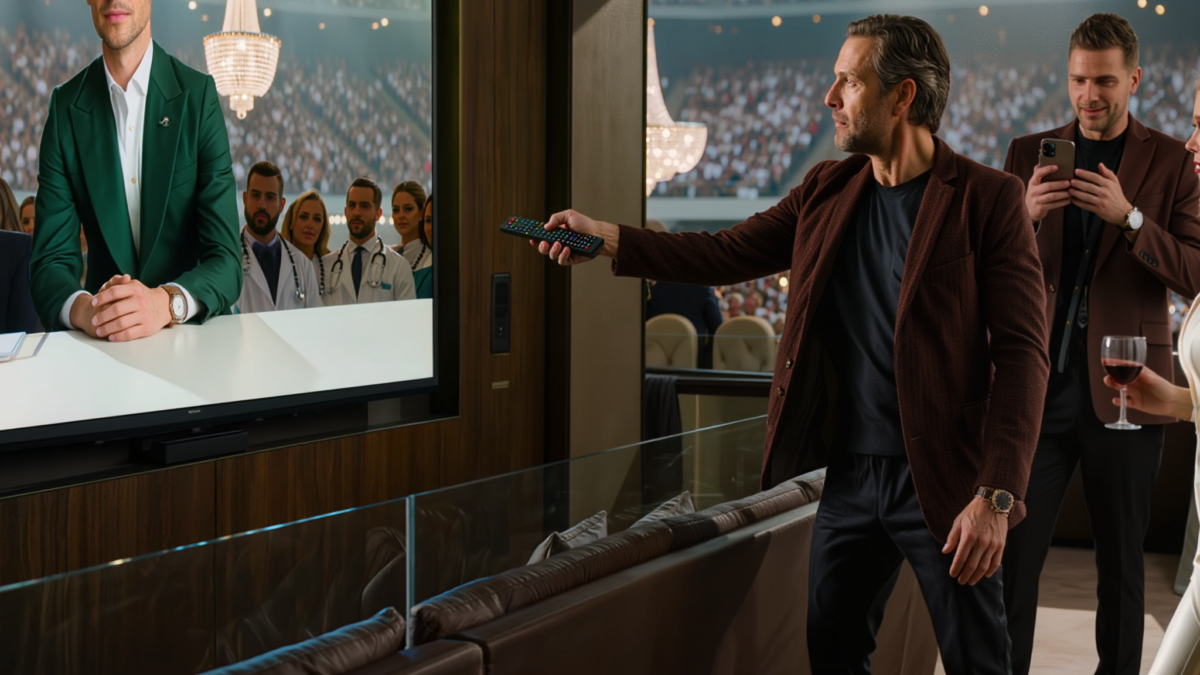
The suite was supposed to look impressive. It had leather couches, a private restroom, catering, an open bar, and a wall-mounted television above the mini bar. It was the kind of space companies rented for clients or wealthy people used to make an ordinary concert feel exclusive.
Up close, it was much less glamorous.
The room smelled faintly of stale popcorn, spilled beer, and industrial cleaner. Harsh lights reflected off the glass separating the suite from the stadium. Half-eaten food sat on trays while the crowd outside waited for the main act.
My brother Preston, 35, was holding his phone toward the ceiling and complaining that the lighting made his skin look orange on his livestream.
He wore an oversized silk jacket and spent most of the evening worrying about how everything looked on camera.
Preston called himself an influencer. He had never held a stable job for long. Most of his income came from occasional brand deals involving things like teeth-whitening products and energy drinks, but he talked about his “career” as if he were running a major corporation.
My parents encouraged every bit of it.
My father, Harrison, was sitting on one of the couches studying a crumpled receipt.
“Twelve dollars for a beer,” he complained. “And fifty bucks for those nachos?”
The irony would have been funny if it hadn’t been so familiar.
Dad could argue for weeks with a contractor over a small home repair, but when Preston wanted something expensive, money somehow became available.
Then there was my mother, Beverly.
Mom cared deeply about appearances. She loved her neighborhood social circle, HOA meetings, church events, and anything that gave her something impressive to tell other people.
That night, she stood near the glass with a plastic cup of wine, watching Preston complain about his livestream while Dad complained about the bill.
That was our family dynamic in one room.
Preston was the golden child.
I was the one expected to manage myself.
The opening act had already finished, and there was a long break before the main performer came onstage. With nothing else to do, Dad picked up the remote and started flipping through channels on the television.
He stopped on Channel 5.
Mom told him to turn it up because she thought the station might mention the concert.
Instead, the television showed a historic ballroom.
Crystal chandeliers hung over hundreds of formally dressed guests. Men in tuxedos and women in evening gowns sat around tables covered in white linen. The broadcast camera moved slowly across the front of the room.
Then it reached Table One.
The camera stopped.
And there I was.
The son they had spent years treating like the boring one was sitting at the front of a nationally televised medical gala in a custom-tailored emerald suit.
I was surrounded by some of the most respected people in medicine.
Preston happened to be livestreaming at the time, which is how I later learned exactly what happened inside that suite.
Dad went still.
Mom lowered her wine.
Preston stared at the screen.
Then the broadcast graphic appeared with my name.
Nolan Sheffield.
Innovator of the Year.
Grant award: $500,000.
The same people who had called my event garbage were suddenly looking at a number they had never bothered to ask about.
But the money wasn’t the reason their reaction mattered to me.
To understand that, you have to understand what it had been like to grow up as the invisible child in my family.
Chapter 3: The breaking point
For most of my life, I was expected to pay my own way while my parents spent freely on Preston.
When college came around, my parents told me they couldn’t afford to help.
There had once been money set aside for my education, but much of it disappeared after Preston got into legal trouble involving a rental property. My parents used the money to help him.
I took out student loans and worked multiple jobs.
Meanwhile, they paid for Preston to take a gap year in Europe.
That pattern never really changed.
Every holiday revolved around him. Thanksgiving conversations became updates about his latest business idea. Birthdays became opportunities for him to talk about followers, girlfriends, or whatever project he had started that month.
Even at our grandfather’s funeral, Mom spent much of the reception introducing Preston to relatives she thought might be useful to him.
I had arranged the caterer and paid for the flowers.
Nobody mentioned it.
For years, I convinced myself that if I worked hard enough, eventually my parents would have no choice but to respect me.
I thought success would fix the problem.
I was wrong.
Three weeks before the gala, I was working an overnight shift during a severe storm.
Rain hammered the hospital windows while I ran through the hallway with a transport team behind me.
I work as an organ transplant coordinator.
The title sounds administrative until you understand what the job involves.
When a donor organ becomes available, everything becomes a race against time. Transportation has to be arranged. Surgical teams have to be coordinated. The recipient has to be prepared. Every delay matters.
That night, we were trying to get a liver to a six-year-old girl named Maya.
She had been waiting for eight months.
The donor organ was coming from another state, but the storm had made transportation extremely difficult. Flights were being grounded, and some hospitals had declined to accept the risk involved in moving the organ through the weather.
I had spent two years developing a logistics system we called the Rapid Match Protocol.
It was designed to reduce delays by coordinating ground and air transportation more efficiently.
That night, we used it.
A ground relay moved the organ to a helicopter route that could skirt the worst part of the storm. Teams were waiting at each handoff point. Every minute had been planned.
When the cooler finally reached us, the helicopter pilot was soaked from the rain.
He gave me a quick thumbs-up.
I signed the transfer paperwork and watched the operating room doors close behind Maya’s surgical team.
Only then did I let myself stop moving.
I leaned against the hallway wall and slid down until I was sitting on the floor.
I had barely eaten for two days. I was living on vending-machine snacks and coffee, but we had done what we needed to do.
Maya had a chance.
Then my phone buzzed.
For one terrible second, I thought something had gone wrong in surgery.
Instead, it was Preston.
It was 3:05 in the morning.
His message said:
“Bro, you didn’t like my new post about my studio setup. Go like it and drop a comment right now. The algorithm is tanking my engagement.”
I stared at the screen.
I had just spent hours trying to move an organ through a storm, and my brother had contacted me in the middle of the night because he wanted social-media engagement.
I locked my phone without answering.
A few minutes later, Dr. Alden, the head of our transplant unit, walked past.
He stopped when he saw me sitting on the floor.
“Incredible work tonight, Nolan,” he said.
I tried to brush it off.
“Just doing the job.”
Dr. Alden adjusted his glasses.
“You’re doing significantly more than the job.”
He told me the board had been reviewing the Rapid Match Protocol. According to the data, it was reducing transport times across the system.
“Keep your schedule open next month,” he said. “A nomination is coming.”
A nomination.
Professional recognition.
Respect.
All the things I had spent years hoping my own family would eventually give me.
A few days later, I drove two hours to my parents’ house for our regular Sunday dinner.
When I arrived, Preston’s leased Porsche SUV was parked prominently in the driveway.
I pulled my ten-year-old sedan to one side.
Dad barely looked away from the television when I walked in.
“Move your car to the street,” he said. “Preston’s buddy might come over later. He doesn’t want your junker blocking the Porsche.”
So I went back outside in the rain and moved it.
When I returned, nobody offered me a towel.
At dinner, I finally tried to tell them about work.
“I actually wanted to tell you guys something important,” I said.
Nobody looked particularly interested.
“My boss told me the transport protocol I developed is being nominated for a national award. It’s a major deal in the medical community.”
Mom barely glanced at me.
“That’s nice, honey.”
Then she reached for the gravy.
Dad immediately changed the subject.
“Speaking of winning,” he said, turning toward Preston. “Tell your mother about the big deal you closed this week.”
Preston leaned back with a grin.
“I got the VIP suite for the Eras Tour next month.”
Mom’s entire expression changed.
Suddenly she was interested.
Preston explained that there would be private catering, a bar, a private restroom, and premium seating.
“It’s going to be huge for my brand,” he said. “I’m vlogging the whole thing.”
Mom nearly dropped her fork.
“Oh, my baby. Do you know how hard those tickets are to get?”
Dad wanted to know if he was invited.
“Of course,” Preston said. “You, Mom, me, and Derek.”
Four tickets.
There were four members of our immediate family sitting at that table.
But Preston’s manager, Derek, got the fourth spot.
I didn’t.
My biggest professional milestone had received less than a minute of attention.
A concert became the center of dinner.
Afterward, the Wi-Fi stopped working.
Because I had always been the unpaid technical support in the family, Dad sent me into his office to fix the router.
While reconnecting cables under his desk, I bumped an open filing cabinet.
A thick folder fell out.
Papers scattered across the floor.
I started putting them back when one document caught my attention.
It was a withdrawal notice from Dad’s 401(k).
He had taken out $40,000.
Attached to the paperwork were receipts connected to the VIP concert suite and the down payment for Preston’s leased Porsche.
I stared at the papers.
My parents had always claimed they couldn’t help me with college.
They had complained constantly about bills.
But Dad was willing to take money out of his retirement account to finance Preston’s image.
I put everything back exactly where I found it.
Then I left.
Driving home that night, I finally understood something I had avoided admitting for years.
They weren’t simply overlooking me.
They expected me to remain stable enough to rescue them when Preston eventually became too expensive.
I was their backup plan.
Chapter 4: A betrayal of trust
Two weeks later, I was sitting at my desk in the hospital when an email appeared.
The sender was the National Board of Medicine.
The subject line read:
“Congratulations, 2026 National Healthcare Hero Award recipient.”
I opened it immediately.
I hadn’t just been nominated.
I had won.
The committee had selected me as Innovator of the Year for my work on the Rapid Match Protocol.
The award also included a $500,000 research and personal development grant.
I read the amount several times.
Then I checked the sender address, the domain, and the digital signature because part of me was convinced it had to be some kind of scam.
It wasn’t.
The ceremony would take place at the Grand Historic Hotel in Los Angeles. A well-known actor would host the gala, and the National News Network would broadcast it live.
For the first time in my career, recognition had arrived on a scale my family couldn’t easily dismiss.
And embarrassingly, one small part of me still hoped it would make them proud.
I thought about the kid I had once been.
The boy who wanted his father to put his drawing on the refrigerator.
The teenager who wanted his mother to care about graduation.
Maybe this would finally be enough.
I opened our family group chat.
Preston had filled it with links to expensive clothing he wanted Mom and Dad to buy him for the concert.
I typed:
“Hey everyone, I have some massive news. I actually won that medical award I mentioned at dinner last week. Innovator of the Year. It’s a huge honor. The ceremony is at the Grand Historic on the 12th next month.”
Then I noticed the date.
The 12th.
The same night as Preston’s concert.
My stomach dropped.
But when I checked the schedule, I realized there was still a chance.
The gala began early. Red-carpet arrivals started at 4:00 p.m., and the broadcast began at 5:00. Preston’s concert wasn’t scheduled to begin until 8:00, and the main performer wasn’t expected until around 9:00.
The two venues were only about twenty minutes apart.
So I sent another message.
“I know that’s the night of the concert, but my ceremony is early. It would mean the world to me if you guys could stop by for one hour before you head to the stadium. It’s being televised nationally. I’d love to have my family in the audience when they call my name.”
I sent it.
Then I waited.
The read receipts appeared.
Preston replied first.
“Lmao, are you serious right now?”
Then another message appeared.
“Nolan, we have a tight schedule. Derek booked pre-concert drinks at a rooftop bar, then we have a photo shoot by the VIP entrance for my Instagram. We can’t just detour to some boring medical conference to watch you get a plastic trophy.”
I answered.
“It’s not a plastic trophy, Preston. It’s a national award for saving lives. It’s a massive milestone in my career. It’s on live television.”
Dad responded next.
“Don’t be difficult, Nolan. Your brother has been planning this night for months. This is a big networking event. Why do you always have to be so selfish and try to steal the spotlight when he has something good going on?”
I stared at that message.
Steal the spotlight?
I had spent most of my life avoiding it.
Mom joined the conversation.
“We can look at your little certificate another time, sweetie. Maybe bring it to Thanksgiving dinner and we’ll put it on the mantle for a few hours.”
Then she added:
“We don’t have time for your little hobbies when Preston has invested so much energy into this event. You’re being unreasonable if you think we’re changing our plans for a work party.”
My hobby.
That was what she called it.
Then Preston sent the message that ended whatever loyalty I still felt toward them.
“Face it, Nolan. Nobody cares. I won’t miss a single second of my concert for your garbage. Enjoy your little work party.”
I sat at my desk listening to the quiet hum of the hospital around me.
I expected to feel crushed.
Instead, I felt strangely calm.
I took a screenshot of the entire conversation and saved it.
Then I typed one word.
“Okay.”
I put the phone down.
I had an acceptance speech to write.
For the first time in my life, I knew exactly who I wasn’t going to thank.
Chapter 5: The invitation rejected
Two days before the ceremony, I was downtown at a high-end tailor for the final fitting of an emerald-green suit.
I had paid $2,000 for it from my own savings.
Normally, spending that much on clothing would have made me uncomfortable, but this night mattered to me.
While the tailor adjusted the cuffs, my phone rang from an unfamiliar number.
I answered.
“Nolan. Finally.”
It was Preston.
“Pick up your damn phone. I need a favor.”
I looked at myself in the three-way mirror.
“What do you need?”
“The dry cleaner messed up my silk jacket. It looks terrible on camera. You have that heavy-duty steamer, right? Bring it over and fix this.”
I actually laughed under my breath.
“I’m at the tailor.”
“So?”
“I’m getting ready for my awards ceremony.”
Preston groaned.
“Oh my God, who cares? You’re going to sit in a room clapping for old guys. I’m going to be in a VIP suite. Just come steam the jacket and then go back to your boring stuff.”
“No.”
There was a pause.
“What do you mean, no?”
“I mean no.”
“Dad said you’d do it.”
That sentence told me everything.
Nobody had even asked me.
They had simply assumed I would come running.
“Buy a steamer, Preston,” I said. “Or wear it wrinkled. I’m busy.”
He became angry immediately.
“You owe me. Bring the steamer.”
“I don’t owe you anything.”
Then I added, “And you don’t ask the garbage man for favors.”
I hung up.
I blocked Preston’s number.
Then Dad’s.
Then Mom’s.
I blocked Derek too.
For a few seconds, the silence felt terrifying.
I had spent my entire life believing that saying no to my family was dangerous.
Standing there in that suit, I realized it was peaceful.
Chapter 6: Choosing his real family
On the morning of the ceremony, I went into the hospital for half a shift.
Sitting alone at home waiting for the gala would have made me restless. Work was familiar. It grounded me.
By then, everyone at the hospital knew about the award.
The administration had sent an announcement. Nurses I barely knew congratulated me in the hallway. Cafeteria workers refused to charge me for coffee.
For once, I felt like I belonged somewhere.
Around noon, I was standing at the nurses’ station reviewing a transport log when a woman walked through the double doors holding a plastic container.
It took me a second to recognize her.
Then I realized it was Sylvia.
Maya’s mother.
“Nolan?”
I stepped around the counter.
“Sylvia. Hi. How is Maya?”
Her eyes filled with tears.
“She’s coloring.”
She pushed the container into my hands.
“She’s sitting up in bed coloring a picture. Her skin is pink again.”
Inside the container were homemade chocolate-chip cookies.
Sylvia told me the surgeon had warned them how difficult the transport would be that night. She said they had prepared themselves for the worst.
“But you kept going,” she said. “You fought for her.”
I stood there holding those cookies with a lump in my throat.
A woman who owed me nothing had driven across the city to thank me.
My own mother wouldn’t drive twenty minutes to watch me receive an award.
Dr. Alden walked over and rested a hand on my shoulder.
“Did you tell him?” he asked Sylvia.
She wiped her eyes.
“My husband Richard is on the National Medical Council,” she said. “When he saw what you did that night and reviewed the logistics, he sent your data directly to the board. He nominated you.”
I stared at her.
I had assumed the nomination came through hospital administration.
Instead, Maya’s father had been the person who brought my work to the board’s attention.
Dr. Alden studied my face.
“Does your family understand what’s happening tonight?”
I looked down at the cookies.
“No.”
I hated how embarrassed I felt saying it.
“They think I push paper. They aren’t coming. They have concert tickets.”
Dr. Alden went quiet.
Then he said, “They’re your relatives, Nolan. Family is the people who show up when it matters.”
He paused.
“And we’re showing up.”
Nurse Fiona and Dr. Alden had purchased two tables at the gala.
Twenty members of the transplant unit were coming.
That afternoon, I went home and put on the emerald suit.
I tied my tie, fastened my watch, and stood in front of the mirror.
Then my phone rang.
I had blocked my family’s numbers, but this one was unfamiliar.
I answered cautiously.
“Hello?”
“Nolan. Finally.”
Dad.
His voice echoed over the noise of the stadium concourse.
“We got here early for the VIP stuff. Preston’s manager messed up the budget. The drinks are outrageous, and Preston’s card got declined at the merchandise tent.”
I waited.
Dad continued.
“You got a bonus or something with that medical thing tonight, right? Transfer $2,000 to my account. I’ll pay you back next month.”
I closed my eyes.
They weren’t calling to apologize.
They weren’t calling to wish me luck.
They were calling from the event they had chosen over me to ask me to help pay for it.
“You want me to pay for the concert you chose instead of my ceremony?”
“Don’t start the family drama again,” Dad said. “We’re family. You help your brother. His brand needs this.”
“No.”
“What?”
“I’m not transferring you money.”
His voice hardened.
“You ungrateful little brat. I raised you.”
I picked up my keys and headed for the elevator.
“Dad?”
“What?”
“Turn on the television in your VIP suite. Channel 5 around six.”
I paused.
“You might actually learn something about the son you threw away.”
Then I hung up.
A black town car was waiting outside.
I climbed into the back seat and watched my apartment building disappear behind me as we entered Los Angeles traffic.
For the first time, I wasn’t heading toward my family hoping to impress them.
I was going somewhere I had already earned the right to be.
Chapter 7: The awards ceremony
For the first twenty minutes of the drive, I barely spoke.
My driver, an older man named James, glanced at me in the mirror.
“Wedding?” he asked.
“Something like that.”
I looked out the window.
“More like a graduation.”
When we reached the Grand Historic Hotel, the scale of the event caught me off guard.
Searchlights moved across the evening sky. A red carpet covered the marble steps. Photographers stood behind ropes as guests arrived.
For a second, I almost stayed in the car.
A familiar voice in my head told me I didn’t belong there.
That voice had been trained into me over decades.
Then the valet opened the door.
I stepped out.
At the top of the stairs, I saw Dr. Alden.
He wore a black tuxedo.
Nurse Fiona stood beside him in a midnight-blue gown.
Behind them were members of our transplant unit.
Even the helicopter pilot from Maya’s storm-night transfer was there.
They were holding a handmade sign.
“Team Nolan.”
Dr. Alden walked down a few steps and pulled me into a brief hug.
“Ready, innovator?”
I nodded.
“I’m ready, Doctor.”
Inside, the ballroom was brighter and larger than I had imagined.
Crystal chandeliers hung from the ceiling. Massive floral centerpieces filled the room. Hundreds of guests sat at formal tables.
Our group was escorted to Table One.
To my right sat Dr. Vance, a chief of surgery from a prestigious hospital in New York.
I recognized his name immediately.
I had studied his work in college.
He offered his hand.
“Nolan Sheffield?”
“Yes.”
“I’m Dr. Vance. We implemented your rapid transport system last month in our cardiac wing.”
He leaned closer.
“You saved us about forty minutes on a heart transfer last week. That patient is awake and talking to his wife today.”
Then he said something I had never expected to hear.
“It’s an honor to sit at your table.”
For years, I had been the boring son.
The backup plan.
The person expected to fix things quietly.
In that ballroom, nobody needed me to prove that my work mattered.
Across the city, the mood inside my family’s VIP suite was deteriorating.
Derek had failed to secure the backstage access he had promised Preston.
Preston was furious because he wouldn’t get the celebrity photos he wanted.
Dad was pacing and worrying about the catering bill.
Mom kept refreshing social media, waiting for people in her neighborhood to react to her stadium pictures.
Then the opening DJ finished.
The stadium lights came up during intermission.
Dad remembered what I had told him.
He grabbed the remote and turned the suite television to Channel 5.
The National Healthcare Heroes Gala appeared.
Preston immediately complained.
“Who actually watches this garbage? Change it back.”
Then Mom stepped closer to the television.
“Wait.”
The broadcast camera moved across the ballroom.
“Harrison, turn it up.”
The camera passed rows of guests.
Then it reached Table One.
And stopped on me.
I was talking to Dr. Alden when the shot tightened.
Dad stared at the screen.
“Is that Nolan?”
Preston laughed nervously.
“No way. Nolan wears baggy scrubs and ugly hoodies.”
But the camera stayed on me.
Then the lower-third graphic appeared.
Nolan Sheffield.
Innovator of the Year nominee.
Nobody in the suite laughed.
The host walked to the podium and began introducing the evening’s most prestigious award.
He described an individual whose work had changed organ transportation and who had found ways to reduce critical delays.
Then a video package began.
Footage showed emergency helicopters landing in bad weather.
Digital maps traced donor routes.
A voiceover explained that the Rapid Match Protocol had reduced transport times by approximately 40 percent.
It also said the system had contributed to more than 200 successful cases over the previous year.
Then Sylvia appeared onscreen with Maya.
She described the night of the storm.
“When the flights were grounded and everything looked impossible, Nolan refused to give up,” she said.
She looked directly into the camera.
“He gave me my family back.”
Back in the stadium suite, Dad had stopped pacing.
Mom had both hands near her face.
Preston was silent.
Then the host opened the envelope.
“Ladies and gentlemen, your 2026 Innovator of the Year, Nolan Sheffield.”
The ballroom rose.
I stood, buttoned my jacket, and walked toward the stage.
The applause was louder than anything I had prepared myself for.
I accepted the crystal award.
Then the massive screen behind me changed.
A new graphic appeared.
Award grant: $500,000.
Chapter 8: A public reclamation
Dad nearly dropped his beer.
“Five hundred thousand?”
Mom grabbed Preston’s arm.
“Did you see that number?”
Preston stared at the screen.
Then he looked at his phone.
“He never told us there was money.”
Dad turned toward him.
“He told us it was a national award.”
Preston’s expression changed.
Dad’s did too.
For the first time all night, the concert no longer seemed important.
“You told him it was garbage,” Dad said.
Preston snapped back at him, then immediately grabbed his phone.
“What are you doing?” Mom asked.
“I’m posting him.”
He opened his social-media app and pointed his camera at the television.
“I’m his brother. This is great for my brand.”
He posted a message congratulating me and presenting himself as the proud older brother.
While he was doing that, I walked to the microphone.
I had written a formal acceptance speech about logistics, data, and hospital systems.
Standing there, I realized I didn’t want to give it.
“Thank you,” I said.
The ballroom quieted.
“I wrote a very professional speech for tonight. I was going to talk about logistics, data, and protocol.”
I looked across the room.
“But after everything it took to get here, I think I need to speak from the heart.”
I took a breath.
“They often tell you to thank the people who got you here. Your parents. Your siblings. Your family.”
I looked toward the broadcast camera.
“But tonight I want to dedicate this award to the invisible people.”
The room became completely still.
“To the children who grow up in the background of their own homes. To the people who are told their passions are boring, their jobs are meaningless, and their efforts will never be enough.”
I paused.
“To the people whose work is called garbage because they chose service over attention.”
A murmur moved through the room.
I continued.
“My family isn’t here tonight. They’re sitting in a rented VIP suite at a pop concert.”
I could feel my heartbeat in my chest.
“When I asked them for one hour, they told me they wouldn’t miss part of the concert for my little work event.”
I lifted the crystal award slightly.
“This represents more than a trophy. It represents the doctors, nurses, pilots, coordinators, and families who refuse to give up when every minute matters.”
I looked toward Table One.
“So I’m accepting this for myself, and I’m dedicating it to the people who actually showed up.”
Dr. Alden stood first.
Then Fiona.
Then the rest of the transplant team.
The applause spread across the ballroom.
By the time I left the stage, I felt lighter than I had in years.
Inside the stadium suite, the mood was very different.
Chapter 9: The fallout of greed
Dad sank onto the couch.
“He just humiliated us on national television.”
Mom looked panicked.
People she knew watched that network. Her church friends watched it. Members of the HOA watched it.
Preston barely heard her.
He was staring at his phone.
His proud-brother post had only been online for a few minutes, but people had already connected it to my speech.
Comments started appearing.
Some pointed out that he was attending the concert I had mentioned.
Others accused him of trying to attach himself to my success after dismissing my work.
Preston’s expression turned from shock to panic.
“My sponsors are going to see this.”
Dad stood.
“We need to fix this.”
Then his attention returned to the money.
“That grant belongs to this family.”
Preston looked toward the stadium.
“But the concert’s about to start.”
Dad grabbed his coat.
“I don’t care about the concert.”
That sentence would have been funny under different circumstances.
A few hours earlier, my ceremony had been too unimportant to interrupt Preston’s night.
Now the same people were willing to leave the concert because they had seen the number on the screen.
By the time I returned to the town car, my phone was vibrating continuously.
I checked it.
Eighty-two missed calls.
One hundred forty text messages.
I opened the family group chat.
The first messages had been sent when they saw me on television.
Mom wrote:
“Nolan, we see you on TV. You look so handsome. We are so proud of our successful boy.”
Dad wrote:
“Son, is that grant money tax-free? We need to talk about setting up an LLC for you. Don’t sign anything.”
Preston wrote:
“Bro, I posted you on my story. Tag me back so my followers see it. Drinks on you later.”
Then I reached the messages sent after my speech.
The tone had changed completely.
Mom accused me of embarrassing her.
Dad said I owed them an apology and claimed they deserved part of the grant because they had raised me.
Preston demanded that I somehow fix the reaction he was getting online.
I sat back in the limo and laughed.
Not because any of it was especially funny.
Because after thirty-two years, the pattern was finally impossible to miss.
When they thought I had nothing they wanted, I was selfish for asking for an hour.
When they saw $500,000 on television, suddenly I was their successful son.
I reopened the screenshot from our old group chat.
Then I sent it.
Preston’s message appeared on their screens again.
“Nobody cares. I won’t miss a single second of my concert for your garbage.”
Underneath it, I typed:
“I’m just agreeing with you, Preston. You were right. You didn’t miss your concert, and I didn’t miss my moment. We both got exactly what we asked for.”
Then I turned on Do Not Disturb.
I disabled location sharing.
And I watched the city lights pass outside the window.
That night, I sat on the balcony of my apartment thinking about what I wanted to do next.
The grant hadn’t been transferred yet.
I thought about paying off my student loans, getting professional financial advice, changing my phone number, and eventually buying a home with more privacy.
The next morning, pounding on my front door woke me at 8:00.
Chapter 10: Refusing to be exploited
I opened the video-doorbell app.
Dad, Mom, and Preston were standing in the hallway.
Preston’s silk jacket was wrinkled and stained.
Dad looked exhausted.
Mom was holding a supermarket sheet cake with “Congratulations” written across it in blue icing.
Dad hit the door again.
“Open the door, Nolan. We know you’re in there.”
I walked to the intercom.
“Get off my property.”
Mom lifted the cake toward the camera.
“Sweetie, we brought you something. Let us in. We need to talk as a family.”
“We don’t have anything to talk about.”
Preston pushed closer to the camera.
“You have to make a public statement.”
“For what?”
“Tell people we had a private family emergency. Tell them I supported you financially.”
He sounded frantic.
“I lost an energy-drink sponsor this morning. That was $3,000 a month.”
I leaned against the wall.
“That sounds like your problem, Preston.”
Dad pushed in front of him.
“Listen to me. You embarrassed us, but we’re willing to forgive you.”
I almost couldn’t believe the sentence.
He continued.
“We’re your blood. Open the door and let’s discuss how to manage this money. You don’t understand high-level investments or real estate. I can manage it for you.”
“Manage what?”
“The inheritance.”
I stared at the intercom.
“My grant?”
“It’s family money.”
I thought back to the conversation where they couldn’t spare one hour.
“Dad, do you remember when I asked you to come to the ceremony?”
“That was different. We had non-refundable tickets.”
“And now I have a national award and a grant,” I said. “You have concert tickets you walked out on.”
His patience disappeared.
“I’m not leaving until we discuss my rightful share.”
There it was.
Not pride.
Not regret.
Not an apology.
A share.
I told them to leave again.
Dad threatened to take me to court.
I picked up my phone and called 911.
I spoke loudly enough for them to hear me through the intercom.
I told the dispatcher that three people were outside my apartment, refusing to leave and pounding on the door.
The effect was immediate.
Preston backed away.
“Dad, he’s actually calling the police.”
Dad tried to insist I was bluffing.
“I’m not,” I said.
Mom dropped the cake as they started moving toward the elevator.
Preston shouted back that I had ruined his life.
I answered through the speaker.
“You decided my life was garbage.”
They left.
A patrol car arrived shortly afterward.
I gave a statement and filed a trespassing report.
For the first time, the boundary wasn’t emotional.
It was documented.
Chapter 11: The public truth revealed
Over the next two weeks, the argument moved online.
I mostly stayed out of it.
Preston didn’t.
He posted a long video portraying himself as the victim. He claimed I had abandoned our elderly parents as soon as I became successful.
He also claimed the screenshot of his “garbage” message had been manipulated.
He said my college money had gone toward family needs rather than helping him.
For a short time, some people believed him.
Then Nurse Fiona saw the video.
She posted a response from the hospital break room.
She didn’t shout.
She simply described the Nolan she knew.
She said I worked long shifts coordinating transplant cases.
She said my family had never visited the hospital during the five years she had known me.
She also repeated what she knew about the money my parents had redirected while I was in school.
Her video spread quickly.
Then clips from my acceptance speech began circulating.
People who had grown up as the ignored child in their own families seemed to connect with it.
I still didn’t post about Preston.
I didn’t argue with strangers.
Instead, I accepted an interview with Time magazine for its Heroes of the Year issue.
By then, I had been promoted and moved into a corner office overlooking the city.
The journalist asked about my family.
“Your brother has talked about a defamation lawsuit,” she said. “Do you have an official response?”
I folded my hands on the desk.
“I love the concept of family,” I said. “But I respect myself enough not to let people treat me like an option while demanding that I treat them like a priority.”
I paused.
“We have fundamentally different values. I value saving lives and advancing medical science. They care deeply about appearances, social-media status, and things like VIP concert tickets.”
Then I added:
“I genuinely wish them well from a distance.”
That final phrase became the headline people remembered.
From a distance.
Preston’s online situation deteriorated further.
His remaining sponsors pulled away.
Eventually, he deleted his social-media accounts.
Meanwhile, the financial decisions Dad had made for Preston caught up with him.
He had withdrawn $40,000 from his 401(k) to help pay for the concert and the Porsche arrangement.
There were tax consequences.
The Porsche payments became difficult to maintain.
Eventually, the vehicle was repossessed from my parents’ driveway.
Their attempt to claim part of my grant also continued.
A certified letter arrived from an attorney threatening a lawsuit for emotional distress and claiming my parents had some kind of right to the money because they had supported me during childhood.
I took the letter to the hospital’s legal department.
Dr. Alden made sure the matter was reviewed.
An attorney responded with a detailed cease-and-desist letter explaining the consequences of pursuing a meritless claim and the possibility that my parents could become responsible for additional legal costs.
Their lawyer withdrew soon afterward.
About a week later, my aunt Vivien called.
She was Mom’s sister and usually positioned herself as the family peacemaker.
“Nolan, darling,” she said. “Your mother is devastated.”
I waited.
“She wants to send you an apology. She wants to heal the family. Can’t you forgive them?”
“Is that right?”
Vivien lowered her voice.
“Well, between you and me, Harrison has missed two mortgage payments.”
There it was.
“The bank is threatening foreclosure,” she continued. “They’re almost out of money.”
She told me there were arguments at home and rumors that the financial pressure was damaging my parents’ marriage.
Then she said something even more revealing.
“When the letter comes, understand that they’re desperate. They need help with the house.”
I leaned back in my chair.
They weren’t reaching out because they finally understood what they had done.
They needed another bailout.
“Thank you for telling me,” I said.
Then I added, “Please tell Mom not to waste the postage.”
I hung up.
Chapter 12: Finding true peace
A full year passed.
My life looked completely different.
The $500,000 grant was used the way it was intended.
I helped fund a dedicated research team, and we expanded the Rapid Match Protocol into three neighboring states.
According to our ongoing results, the expanded system was helping save roughly thirty additional lives each month.
I received a significant salary increase.
I paid off my student loans.
Eventually, I bought a mid-century modern home in a quiet wooded neighborhood.
It had something I had specifically wanted.
A tall security gate at the end of the driveway.
But the house wasn’t the most important thing I gained.
Neither was the money.
The biggest change was the people around me.
I had not spoken directly to my parents or Preston in twelve months.
I still heard things through relatives.
Preston was working night shifts at a downtown bar and occasionally telling customers about the influencer career he once had.
Dad had taken a job as a greeter at a hardware store to help cover expenses.
Mom was no longer serving on the HOA board she had cared so much about.
I didn’t celebrate any of that.
Their lives were no longer my responsibility.
One afternoon, I walked to the secure mailbox at the end of my driveway and found a thick envelope.
There was no return address.
I recognized Mom’s handwriting immediately.
I opened it outside.
The card was long.
She wrote that Dad’s health was getting worse.
She said the roof needed repairs they couldn’t afford.
She said Preston was struggling.
Then came the familiar language.
“We miss our son.”
“We forgive you for what you did on TV.”
“It was a misunderstanding.”
“Blood comes first.”
“We need your help.”
Years earlier, those words would have worked.
I would have felt guilty before reaching the second paragraph.
I would have started calculating how much money I could send.
I would have apologized even if I didn’t understand what I was apologizing for.
This time, I simply stood there holding the letter.
Blood comes first.
Maybe.
But they had been the ones who taught me that sharing blood did not automatically mean showing up.
I looked toward the backyard.
I could hear people laughing.
Dr. Alden was standing near the grill arguing playfully with Fiona about some surgical issue.
Sylvia and Richard were sitting at the patio table.
Maya was seven now.
She was running across the grass with my rescue dog, healthy enough to make the adults repeatedly tell her to slow down.
I watched her for a moment.
Then I looked around at everyone else.
These were people who celebrated my victories without asking for a percentage.
They respected my boundaries.
They showed up when it mattered.
That was family.
I looked back at Mom’s letter.
I didn’t tear it apart.
I didn’t burn it.
I didn’t call anyone.
I walked to the recycling bin beside the garage, lifted the lid, and dropped the envelope inside with the junk mail and empty cans.
A year earlier, Preston had called my life’s work garbage.
For years, my parents had treated me like the person who would always be waiting when everyone else’s choices fell apart.
They were wrong about both things.
I’m Nolan Sheffield.
I’m an organ transplant coordinator.
I’m an innovator.
And after spending most of my life trying to earn a place in a family that only valued me when I was useful, I finally stopped asking them for one.
For the first time in my life, I was free.








