My uncle threw me out with a few hundred dollars and let his son take my business idea. Two years later, an anonymous email landed in my inbox with their company’s financial records attached. I stayed quiet. By 4:32 that afternoon, my cousin was calling me—and his voice sounded nothing like I remembered.
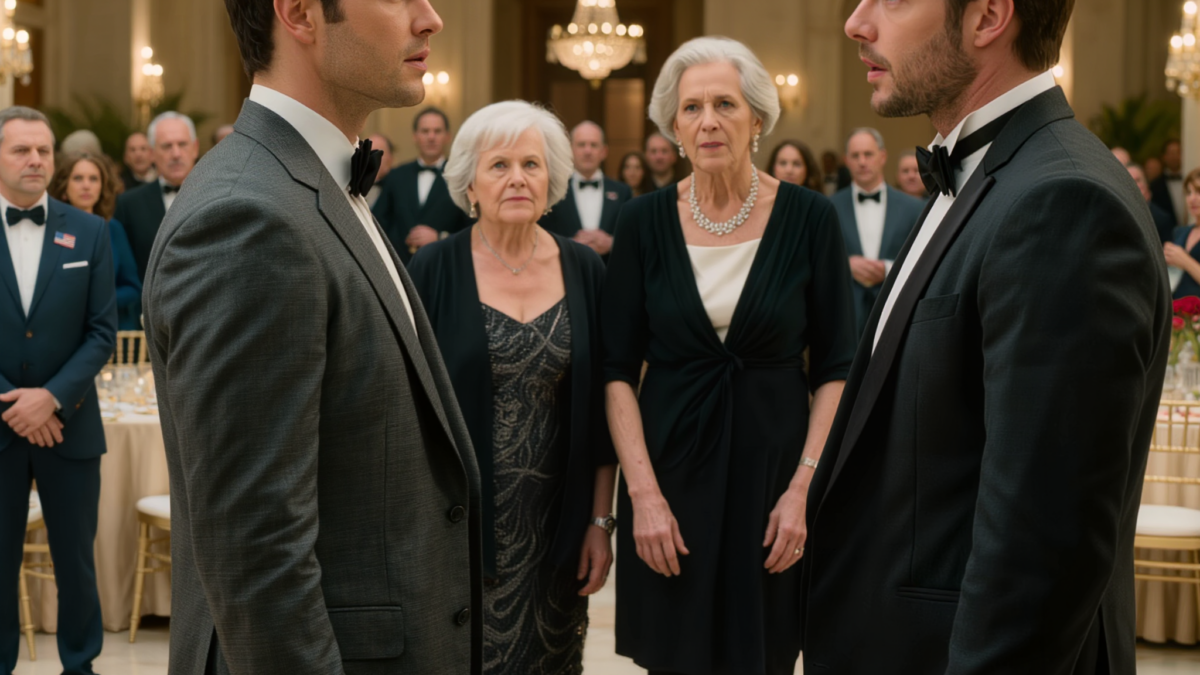
Chapter 1: The Unexpected Confrontation
My name is Justin Sterling. I’m 32 years old, and I was thrown out of my family home with nothing but the clothes on my back, only to return years later and own the very building my family lived in.
It all started on a crisp autumn evening, the kind when the air in the city feels electric. I stepped out of the private elevator, the doors opening with a soft chime that echoed through the cavernous, marble-floored lobby of the penthouse suite.
My penthouse suite.
But they didn’t know that yet.
The sound of laughter and clinking glasses hit me first. The party was in full swing, and right in the middle of it all was my cousin, Leo Vance.
He was holding a champagne flute, regaling a circle of friends with some story, his voice booming with the unearned confidence of someone who had never had to work for anything a day in his life.
His eyes found mine across the room.
The laughter died in his throat, replaced by a sneer I knew all too well. It was the same sneer he had given me the day my uncle—his father—had shown me the door.
He raised his voice, making sure everyone could hear.
“Well, look what the cat dragged in. Who let him in?”
He laughed, a short, barking sound.
“He’s like a bad smell. Keeps lingering no matter how many times you try to air the place out.”
His friends snickered.
A few years earlier, those words would have felt like a physical blow. They would have sent me shrinking back into the shadows, my face burning with shame.
But not tonight.
Tonight was different.
I said nothing. I just held his gaze, my expression calm and unreadable. I let the silence hang in the air, thick and uncomfortable.
I saw a flicker of confusion in his eyes.
He expected me to lash out, defend myself, show that he had gotten under my skin.
I gave him nothing.
Instead, I turned my attention to the two uniformed security guards standing discreetly by the entrance. I gave them a subtle, almost imperceptible nod.
That was the signal.
They immediately straightened, their faces serious and professional, and started walking purposefully across the lobby.
Leo’s smirk widened.
He thought they were coming for me.
He gestured toward me with his champagne flute.
“About time. Get him out of here.”
But they didn’t stop at me.
They walked right past me, their polished shoes clicking against the marble, and stopped directly in front of Leo and his bewildered friends.
“Sir,” the taller guard said, his voice firm but respectful. “You and your guests will have to leave. Immediately.”
The confusion on Leo’s face was a sight to behold. It was a slow-motion cascade of emotions: arrogance turning to disbelief, then to sputtering indignation.
“What are you talking about? Do you know who I am? My father owns this place.”
The guard didn’t flinch.
“No, sir. Your father used to own this place. We’re under new management, and our orders are to escort all unauthorized personnel from the premises.”
Leo was speechless, his mouth opening and closing as he tried to process what he had just heard.
Finally, he turned to me, his eyes widening with dawning horror.
“You. What did you do?”
I finally allowed myself a small, cold smile.
I walked calmly toward him, stopping just a few feet away. I looked around the opulent lobby at the floor-to-ceiling windows showcasing the glittering city skyline.
“It’s a nice place, isn’t it?” I said, my voice quiet but carrying in the sudden silence. “That’s why I bought it.”
I met his gaze again.
“I don’t just own the penthouse, Leo. I own the building.”
The color drained from his face.
As the guards began firmly guiding him and his stunned friends toward the elevator, I didn’t feel the rush of vengeful pleasure I had once imagined I would.
I just felt a quiet, profound sense of finality.
That chapter was over.
But to understand how we got there, we have to go back to the day it all fell apart.
Chapter 2: Betrayal and Displacement
Two years earlier, that was where the real story began.
It wasn’t in a penthouse lobby, but in a stuffy, wood-paneled office that smelled of old leather and disappointment.
My uncle Arthur’s office.
He sat behind a desk large enough to land a helicopter on, his face set in a mask of stern disapproval.
My aunt Eleanor, his wife, stood beside him, a portrait of quiet, passive agreement.
And Leo, of course, was lounging in a leather armchair in the corner, looking bored.
It had been six months since my parents’ funeral.
The grief was still a raw, open wound. They were gone, taken in a sudden car accident, and in the chaotic aftermath, my uncle had been named executor of their estate.
My estate, really.
I was 29, but according to him, I was still a child who couldn’t be trusted.
“Justin,” he began, his voice devoid of warmth, “we need to talk about your future. Or rather, your lack of one.”
I had come to him that day with a business plan.
It was a tech startup idea, something I had been working on with my dad before he passed. It was my passion, my one hope for a future that felt like my own.
I needed a small loan from the inheritance my parents had left me to get it off the ground.
Arthur pushed the proposal across the desk with the back of his hand as if it were contaminated.
“This is a joke. A fantasy. You have a responsibility to your family name, and this is a disgrace.”
“It’s a solid plan, Uncle Arthur,” I said, my voice tight. “Dad believed in it.”
“Your father was a dreamer,” he snapped. “And look where it got him. This family built its fortune on real estate, on tangible assets, not on clicks and clouds.”
Aunt Eleanor placed a delicate hand on his shoulder.
“What your uncle means, dear,” she said, her voice syrupy sweet, “is that we’re worried about you. We think it’s time you took a more traditional path. Arthur has offered you an entry-level position at Vance Holdings. A proper job. A steady salary.”
An entry-level position.
I had a degree in computer science and had helped my dad manage his own small firm for five years.
It was an insult, and we all knew it.
It was a way to control me, to keep me under his thumb.
“I don’t want a job at your company,” I said, trying to keep my voice even. “I want to build my own. All I’m asking for is access to my own money. The money Mom and Dad set aside, the inheritance they left for me.”
Arthur leaned forward, his eyes like chips of ice.
“That money,” he said slowly, “is being managed. Placed in a trust for your own good. We can’t have you squandering your inheritance on some childish whim. A lawyer has arranged everything.”
A lawyer?
His lawyer?
I felt the trap closing around me.
“So you’re just going to take it?” I asked, disbelief warring with anger.
“We are protecting it,” he corrected me. “And protecting our family from the embarrassment of your inevitable failure.”
He stood up, the movement a clear dismissal.
“The decision is final. You can either accept the job offer, or you can find your own way. But as long as you pursue this foolishness, you are no longer welcome in this house.”
I looked at him.
Then at my aunt, whose face was a blank canvas of feigned sympathy.
Then at Leo, who was now smirking openly, enjoying the show.
In that moment, I saw them for what they were.
They weren’t family.
They were people who wanted control more than they wanted what was best for me.
The silence stretched.
I felt something inside me break, but then something else hardened in its place.
A cold, quiet resolve.
“Fine,” I said.
The word was barely a whisper, but it echoed through the silent room.
I stood up, my chair scraping against the floor.
I didn’t look at them again.
I walked out of the office, down the grand staircase, past the portraits of ancestors I no longer felt connected to.
I walked out the front door and didn’t look back.
The heavy oak door clicked shut behind me, sealing off my past.
I was alone with nothing but a few hundred dollars in my bank account and a burning sense of injustice that would become the fuel for everything that came next.
Family, I realized, isn’t always the people you’re born to.
Sometimes it’s a word for the people who hurt you the most.
And I would never forget it.
Chapter 3: Struggle for Survival
The city that had once felt like home suddenly became a hostile, unforgiving landscape.
The first few weeks were a blur of cheap motels and dwindling funds. My fancy degree meant nothing without connections, and my uncle had made sure to sever every last one I had.
The world I knew had vanished overnight.
Reality hit hard.
I ended up in a tiny, run-down apartment on the industrial side of town, the kind of place where the pipes groaned all night and you could hear your neighbors arguing through paper-thin walls.
To pay the rent, I took the only job I could find: a night shift at a massive refrigerated warehouse.
Every night from 10:00 p.m. to 6:00 a.m., I was a ghost in a frozen world.
I put on a heavy thermal suit and spent eight hours driving a forklift through icy corridors, stacking pallets of frozen vegetables and processed food.
The cold was relentless.
It seeped into my bones, a constant physical reminder of the coldness I had been shown by my own family.
My hands were always raw.
My face was numb.
During my thirty-minute break, I would sit in a sterile break room under flickering fluorescent lights, drinking burnt coffee from a vending machine and sketching algorithms and business models on greasy napkins.
My dream wasn’t dead.
It was just hibernating.
In those dark, lonely months, I clung to the few connections I had left.
One of them was Chloe, a friend from college.
We had been part of the same coding club, and I thought we shared a bond.
I was naive.
I confided in her, telling her about my situation and even showing her the refined business plan for my startup.
I needed someone to believe in me.
One day, I called her, excited about a breakthrough I had made.
“Chloe, you won’t believe this. I figured out the core problem with the user interface.”
She cut me off.
Her voice was strange. Distant.
“Justin, I can’t talk right now.”
“Is everything okay?” I asked.
“Yeah. Fine. I’m just at a lunch meeting.”
I could hear music and laughter in the background.
It sounded expensive.
Then I heard a familiar voice, loud and obnoxious.
Leo.
My blood ran cold, colder than the warehouse.
“You’re with my cousin?”
There was a long pause.
“It’s not what you think,” she said, but her voice was laced with guilt. “He just… he made me an offer.”
“An offer?” I repeated, my throat suddenly tight.
“He liked that idea you had,” she confessed, her words tumbling out in a rush. “The one about the integrated platform. He bought the preliminary code from me. Paid me $5,000.”
Five thousand dollars.
She had sold my dream, my one lifeline, for the price of a used car.
She had sold me out to the very people who had cast me aside.
The betrayal was so profound, so absolute, it left me breathless.
It wasn’t just about the code.
It was about the trust.
She was the last person I thought I could count on.
“I’m sorry, Justin,” she whispered. “I needed the money.”
I didn’t say anything.
I just hung up the phone.
I stood there in my tiny apartment, the silence pressing in on me.
That was the day I learned the second hard lesson.
Desperation makes people do ugly things.
And it was the day I truly understood that I was on my own.
If I was going to climb out of this hole, I would have to do it myself, one frozen pallet at a time.
The anger and hurt solidified into something else.
That night, it wasn’t a desire for revenge.
It was a need for survival.
I wasn’t going to let them win.
For another six months, my life was a monotonous cycle of work and exhaustion.
I saved every penny.
I ate instant noodles and slept on a mattress on the floor.
But during every waking moment when I wasn’t at the warehouse, I was at the public library using their free computers to rebuild my project from scratch.
I rewrote every line of code, making it better, stronger, and more secure.
The betrayal had forced me to innovate.
I knew I couldn’t do it all alone forever.
I needed a partner, someone with a different skill set, someone who understood the world of finance and business—a world that was still foreign to me.
I started attending small local tech meetups, the kind held in the back of coffee shops rather than fancy conference rooms.
That was where I met Amelia Hayes.
Chapter 4: The Road to Partnership
Amelia wasn’t what I expected.
She was sharp, impeccably dressed even in a casual setting, and had an intensity in her eyes that was both intimidating and magnetic.
She was a junior financial analyst at a mid-tier firm, and she was bored out of her mind.
She was looking for something real to sink her teeth into.
I gave my two-minute pitch to the small crowd.
I was nervous. My hands were sweating, and my voice probably cracked.
Most people nodded politely and went back to their coffee.
But Amelia stayed.
She walked up to me afterward with a skeptical look on her face.
“Your presentation was a mess,” she said, her tone blunt. “But the idea? The idea has potential.”
We talked for two hours that night.
I laid out everything: the code, the market analysis I had cobbled together, my vision for the future.
I even told her about my family, about Leo and Chloe.
I didn’t want any more secrets.
She listened patiently, her sharp eyes never leaving my face.
When I was done, she was quiet for a long time.
I thought she was going to walk away just like everyone else.
Instead, she looked at me and said, “You need help. You’re a brilliant coder, Justin, but you’re a terrible businessman.”
I bristled.
“Thanks.”
“It’s not an insult. It’s an observation,” she said, a small smile playing on her lips. “You need a partner. Someone to handle the strategy, the funding pitches, the stuff you hate. You need me.”
I laughed, a bitter sound.
“I can’t even afford to pay myself. My company headquarters is a public library computer. What could I possibly offer you?”
She leaned forward, her gaze unwavering.
“Equity. Partnership. A chance to build something from the ground up.”
She paused, then took a deep breath.
“Look, I have some money saved. It’s not much, just over $20,000. It was supposed to be a down payment on a condo.”
I stared at her, stunned.
“You’re not serious.”
“I’ve never been more serious in my life,” she said. “I’ve been analyzing companies for three years, and I’ve seen a dozen startups with a hundred times your funding and one-tenth of your potential fail. I know a winner when I see one.”
Then she asked the question that mattered.
“Are you willing to trust someone again?”
Trust.
That was the real question.
It was a commodity I had run out of.
But looking at Amelia, at the fierce intelligence and unmistakable sincerity in her eyes, I felt a flicker of something I hadn’t felt in a long time.
Hope.
“Okay,” I said, the word feeling foreign on my tongue. “Okay. Let’s do it.”
That was the beginning of Sterling Corporation.
We incorporated the next week.
Our first office was a tiny, windowless room we rented by the month.
She became my first employee, my partner, and my most trusted ally.
It turned out that $20,000 wasn’t just a down payment on a condo.
It was a down payment on our future.
It was the first real investment anyone had ever made in me, and I was determined to make it the best investment she had ever made in her life.
The next year was a whirlwind.
We worked eighteen-hour days fueled by cheap pizza and an unshakable belief in what we were building.
Amelia was a force of nature.
She refined my business plan, created financial models that were works of art, and had a knack for getting into rooms with people who were way out of our league.
I focused on the technology, perfecting our platform until it was faster, more intuitive, and more secure than anything else on the market.
We landed our first small contract.
Then a bigger one.
Word started to spread.
Sterling Corp was no longer just an idea sketched on a napkin. It was a real, growing business with a reputation for excellence.
We moved out of the tiny office and into a respectable space downtown.
I could finally afford to pay myself a decent salary, and I made sure Amelia’s was even better.
I tried not to think about my family.
I funneled all my energy, all my anger, into my work.
I remembered my mother telling me once that the best revenge is the kind they can’t undo.
Then, one rainy Tuesday afternoon, an email landed in my inbox.
Chapter 5: Masterminding the Takeover
It was from an encrypted, anonymous address.
The subject line was a single word.
Vindication.
My heart started pounding.
I opened it.
There was no text, just a single password-protected attachment.
Below it was a clue, a reference to a childhood memory only a few people would know.
A family secret.
I typed in the password.
A folder opened, filled with scanned documents, internal memos, and spreadsheets.
It was the complete financial record of Vance Holdings for the past three years.
And it was a disaster.
I called Amelia into my office immediately.
“Lock the door,” I said, my voice low.
We spent the next six hours poring over the documents.
It was worse than I could have imagined.
Under my uncle’s aging leadership and Leo’s reckless management, the company was drowning.
They had made a series of terrible real estate investments, leveraged the company to the hilt, and were bleeding money.
Leo had apparently received a huge promotion he didn’t deserve, and his first major project had been a catastrophic failure, which they had tried to bury in the books.
They were months away from defaulting on their loans.
From total collapse.
“Who sent this?” Amelia asked, her eyes wide as she scanned a profit-and-loss statement drenched in red ink.
“I don’t know for sure,” I said, thinking about the password clue. “But I have a pretty good idea. It has to be Sarah.”
Sarah was my younger cousin, Leo’s sister.
She had always been the quiet one, the overlooked one.
She had always been kind to me, and I knew she hated the way her parents and brother treated… well, everyone.
She was working in the accounting department at Vance Holdings, a position her father considered beneath her.
But it meant she had access to everything.
She had seen the rot from the inside and decided to do something about it.
Amelia looked up from her screen, her analyst brain already working a hundred miles an hour.
“Justin, this is more than information. This is a road map.”
“A road map to what?” I asked, though I already knew the answer.
“To a hostile takeover,” she said, her voice barely a whisper. “Their biggest creditors are a handful of investment banks. Their debt is trading for pennies on the dollar. If we move quickly and quietly, we could buy up a controlling interest in their debt before they even know what’s happening.”
The idea was audacious.
It was terrifying.
Sterling Corp was successful, but we weren’t a corporate raiding firm.
It would take every bit of capital we had, and we would have to take out a significant loan ourselves.
We would be betting the entire company.
“It’s risky,” I said, thinking out loud.
“It’s the riskiest thing we’ve ever done,” she agreed. “But look at this.”
She pointed to a line item.
Montgomery Estates.
It was a subsidiary of Vance Holdings, a luxury property management firm.
It was the one part of the company that was actually profitable, but it was being used as a cash cow to prop up all their failing ventures.
And it managed a portfolio of high-end buildings, including one very specific penthouse.
The one my aunt and uncle lived in.
The one Leo was using as his personal party palace.
A cold, hard knot formed in my stomach.
It wasn’t about revenge.
Not anymore.
This was about justice.
This was about business.
They had built their empire on a foundation of arrogance and cruelty.
Now that foundation was crumbling, and I had a chance to buy the land it was sitting on.
“We’ll need to talk to a lawyer,” I said, my voice steady. “The best corporate lawyer in the city. Find out just how possible this is.”
Amelia grinned, a fierce, focused light in her eyes.
“I’ve already got a list.”
The game had changed.
For two years, I had been on the defensive, just trying to survive.
Now, for the first time, I was making the next move.
And they would never see me coming.
The next two months were a blur of private meetings, encrypted phone calls, and high-stakes negotiations.
We were playing in a league we had no business being in, but Amelia was a genius, and our lawyer, a shrewd man named Marcus Thorne, was relentless.
We set up a shell corporation to act as a blind, buying up Vance Holdings’ debt from creditors who were more than happy to unload the toxic assets.
It was a precise operation executed quietly.
All my savings.
All the company’s profits.
Everything was on the line.
The final piece fell into place on a Thursday.
Marcus called.
“It’s done,” he said, his voice calm. “As of 9:00 a.m. this morning, your corporation is the primary lien holder for Vance Holdings. You effectively control them, Justin. Congratulations.”
I hung up the phone, a strange feeling washing over me.
It wasn’t triumph.
Not yet.
It was the quiet, heavy feeling of holding someone else’s entire world in your hands.
Chapter 6: The Power Shift
The official notification letters went out that afternoon.
I knew it wouldn’t take long.
My phone rang at 4:32 p.m.
The caller ID simply said: Leo.
I let it ring three times before picking up.
I leaned back in my chair, looked out my office window at the downtown skyline, and answered calmly.
“Justin Sterling.”
The voice on the other end came sharp and strained.
“What did you do? We just got a letter from some holding company. It says they’ve acquired our debt. Says they’re restructuring. This has your name written all over it.”
“Hello, Leo,” I said, my voice cool. “It’s been a while. How are you?”
“Don’t play games with me,” he snapped. “My father is going to sue you into oblivion. We’ll have every lawyer in the city on this. You can’t just steal a company.”
“I didn’t steal anything, Leo,” I replied, my tone even. “I bought it. All perfectly legal. Your creditors were desperate to sell, and I was happy to buy.”
I paused.
“It’s called capitalism. You should read about it sometime. It’s the system that’s allowed you to fail upward your entire life.”
There was a strained sound on the other end.
I could practically hear the gears in his mind grinding as he tried to process a reality he couldn’t comprehend.
The powerless, pathetic cousin he had kicked to the curb was now his boss, his landlord, and his banker.
He couldn’t make it make sense.
“You’re bluffing,” he finally managed to say, but there was no conviction in his voice. “This is some twisted joke.”
“Is it?” I asked.
I let the silence sit for a moment.
“Let me be very specific so there’s no confusion. The shell corporation that holds your debt is a wholly owned subsidiary of Sterling Corporation, which means that, as of this morning, I own the company that holds the lease on your office. I own the company that signs your paycheck.”
I paused.
“And yes, Leo, I own the company that holds the deed to that lovely penthouse you’ve been living in. So think very carefully about your next words.”
Silence.
A long, heavy, beautiful silence.
I could hear his ragged breathing.
The bully had lost his power, and he didn’t know what to do.
“Why?” he finally whispered, the anger gone, replaced by raw confusion. “Why would you do this?”
I thought about his sneer in my uncle’s office.
I thought about the cold of the warehouse.
I thought about Chloe’s betrayal, which he had orchestrated.
I thought about all of it.
“Because you taught me a very valuable lesson, Leo,” I said, my voice hardening. “You and your father taught me that, in this world, you either build your own house or someone else will tear yours down.”
I paused.
“So I decided to build. And as it turns out, my foundation was a little more solid than yours.”
I didn’t wait for a reply.
I ended the call.
A few minutes later, an email popped up on my screen.
It was an invitation to the annual Montgomery Estates Charity Gala, one of the city’s premier social events.
It was an event my family attended every year.
An event I had always been excluded from.
This year, however, the invitation was addressed directly to me.
Mr. Justin Sterling, Distinguished Guest.
Amelia walked in holding an identical invitation.
“You got one too?” she asked.
I nodded, a slow smile spreading across my face.
“It seems we’re on the guest list this year.”
She smiled back, understanding immediately.
“So I guess we’re going to a party.”
“Oh, yeah,” I said, looking at the invitation. “It’s time to formally introduce the new management.”
The week leading up to the gala was the calm before the inevitable storm.
The city’s financial news outlets were buzzing with rumors about the sudden and mysterious acquisition of Vance Holdings.
The stories were all the same.
An unknown entity had swooped in and saved the legacy firm from certain bankruptcy.
No one knew it was me.
Not yet.
Chapter 7: The Gala Reckoning
For my part, I tried to focus on work, but the gala loomed large in my mind.
It felt like the final act of a play that had been two years in the making.
This wasn’t just a party.
It was a reckoning.
The night of the event, I stood in front of the mirror in my apartment, a place infinitely larger and more comfortable than the hovel where I had started, but not yet the penthouse.
Amelia had insisted I get a custom-tailored suit.
“You’re not the kid in the warehouse anymore, Justin,” she had said. “You’re the CEO of Sterling Corporation. You need to look the part.”
She was right.
The man looking back at me in the mirror was someone I barely recognized.
The suit was sharp, a deep charcoal gray that fit perfectly.
The haunted, tired look in my eyes had been replaced by quiet confidence.
The scars were still there, of course, but they were no longer open wounds.
They were simply part of who I was.
Amelia arrived to pick me up, looking stunning in a dark emerald gown.
She gave me a once-over and whistled softly.
“Well, well. You clean up nicely.”
“You’re not so bad yourself,” I said with a genuine smile.
“Ready for this?”
“I was born ready,” she said, though I could see a hint of nervousness in her eyes too. “Just remember the plan. We let them make the first move. We stay calm. We stay professional. Tonight is not about gloating. It’s about solidifying your position, right?”
“No gloating,” I repeated, though a small part of me desperately wanted to.
On the car ride over, my mind drifted back to something my mother used to tell me.
We were not a wealthy family when I was growing up, but we were proud.
She would always say, “Justin, there will be people in this life who will try to make you feel small. They’ll use their money or their status to look down on you. Don’t ever let them. Don’t ever sink to their level. Don’t chase revenge, son. Just rise so high they can’t reach you anymore.”
Tonight, I felt like I was finally reaching that altitude.
But I knew they would still try to pull me down.
The ballroom was even more opulent than I had imagined.
Crystal chandeliers hung from the ceiling.
Champagne flowed freely, and the city’s elite were all there, dressed in their finest.
A sea of tuxedos and gowns.
As Amelia and I entered, a ripple of whispers went through the room.
People recognized me from the few business articles that had been written about Sterling Corporation.
They knew I was a rising name in the tech world, but they couldn’t understand what I was doing at an old-money real estate gala.
I was an outsider.
An anomaly.
We hadn’t been there for more than five minutes when I saw them.
My family.
Uncle Arthur.
Aunt Eleanor.
Leo.
They were standing in a tight, defensive circle.
Their faces looked strained.
They appeared to have aged a decade in the past week.
Then they saw me.
For a moment, all three of them froze.
It was as if they had seen a ghost.
A ghost from their past they thought they had successfully exorcised.
Aunt Eleanor recovered first.
She pasted on a brittle, plastic smile and began gliding toward us, her husband and son trailing reluctantly in her wake.
The storm had arrived.
“Justin, darling,” she cooed, her voice loud enough for everyone nearby to hear. “What a surprise to see you here. We were so worried when we heard you were… invited.”
The final word was layered with insinuation, as if my very presence were a clerical error.
“Aunt Eleanor,” I said, my voice neutral. “Uncle Arthur. Leo.”
I nodded to each of them in turn.
Leo sneered, having regained a sliver of his usual arrogance.
“Enjoying your one night out with the grown-ups, cousin? I’m surprised you could afford the ticket. Or did you have to sell that little computer company of yours?”
This was it.
The opening salvo, just as Amelia had predicted.
I held his gaze.
“Sterling Corp is doing just fine, thank you.”
“Oh, I’m sure it is,” he said with a dismissive wave. “Well, try not to embarrass yourself. The adults have business to discuss.”
He turned to a group of investors standing nearby, men he and his father had been trying to court for months.
“Gentlemen,” Leo said loudly, “don’t mind my cousin. He’s just a bit out of his depth here.”
I stood my ground, my hands relaxed at my sides.
I remembered my mother’s words.
Rise so high they can’t reach you.
I was about to find out if I had risen high enough.
The host of the evening, the CEO of Montgomery Estates himself, was walking toward the stage with a microphone in his hand.
The show was about to begin.
The low hum of conversation in the ballroom began to fade as Mr. Thompson, the distinguished silver-haired CEO of Montgomery Estates, tapped the microphone.
He was an old-guard figure in the city, a man whose reputation for integrity was unshakable.
Everyone respected him.
“Good evening, everyone,” he began, his warm voice filling the room. “Thank you all for coming and for your generous support of this wonderful cause.”
He spoke for a few minutes about the charity, but I wasn’t really listening.
I was watching my family.
They had positioned themselves near the front, trying to project an image of stability and importance.
Despite the nervous energy radiating from them, Leo was still shooting smug, condescending glances in my direction, whispering to his friends and pointing subtly at me.
He was painting me as a court jester who had somehow wandered into the king’s throne room.
My uncle Arthur looked more grim.
He understood the gravity of their financial situation.
He was trying to catch the eyes of important bankers in the room, offering tight, forced smiles.
He was a man on a sinking ship, desperately trying to convince everyone that the band was simply playing a new tune.
Aunt Eleanor, however, was the most dangerous.
She was working the crowd with practiced ease, her voice a gentle murmur of poison.
I could see her leaning in to talk to the wife of a major city developer, her expression one of deep, feigned concern.
I didn’t need to hear the words to know what she was saying.
Oh, that’s my poor nephew Justin. He’s had such a difficult time since his parents passed. A bit unstable, you know. We try to help, but he’s so ambitious in a desperate sort of way.
She was trying to discredit me before I even had a chance to speak.
To frame me as a pathetic, grasping upstart.
It was a classic Eleanor move.
Character assassination with a smile.
After the pleasantries, Mr. Thompson’s tone grew more serious.
“Now, as some of you may have read in the financial pages, the parent company of Montgomery Estates, Vance Holdings, has recently undergone a significant transition.”
A nervous cough rippled through the audience.
This was the gossip everyone had been waiting for.
Arthur Vance’s back went rigid.
Leo’s smirk finally faltered.
“For a time,” Mr. Thompson continued, “the future of this great company was in jeopardy. Poor management and a series of ill-advised ventures had brought it to the brink of collapse.”
Every eye in the room darted toward my uncle and cousin.
The public embarrassment was palpable.
Leo, unable to stand the scrutiny, decided to deflect.
He took a step toward me, his voice a loud theatrical whisper designed to be overheard.
“See?” he hissed. “This is what happens when outsiders try to meddle in things they don’t understand. My father has been working day and night to fix this mess.”
Aunt Eleanor joined in, placing a hand on Leo’s arm.
“Hush, dear. Let’s not air our family troubles in public.”
Then she looked directly at me, her eyes filled with cold fury.
“Some people have no sense of loyalty. No gratitude for the family that raised them.”
The implication was clear.
They were trying to frame me as the outsider who had somehow caused this.
The ungrateful orphan who had betrayed them.
They were using my history, my grief, as a weapon against me.
For a split second, the old anger, the raw hurt from two years earlier, flared inside me.
I wanted to list every one of their wrongs, from the inheritance they had controlled to the day they dismissed me from my home.
But then I met Amelia’s eyes across the small space separating us.
She gave me a tiny, almost imperceptible shake of her head.
Not yet, her look said.
Wait for it.
I took a deep breath.
I smoothed the front of my jacket.
I held their furious gazes with unnerving calm.
The stage was set.
They had played their hand.
Now it was Mr. Thompson’s turn.
And I knew exactly what he was going to say next.
Mr. Thompson let the tension build for a moment longer before continuing, his voice ringing with authority.
“But that is the past. Tonight, we are here to celebrate a new chapter. Vance Holdings and all its subsidiaries, including Montgomery Estates, were saved from bankruptcy by a single visionary investor—a man who saw the underlying value and potential that others had overlooked.”
The room was dead silent.
Arthur looked as though he was about to be sick.
Leo was pale, a sheen of sweat appearing across his forehead.
They were waiting for the name of a rival developer.
A Wall Street firm.
Anyone but me.
“This gentleman did not simply acquire the company’s debt,” Mr. Thompson declared, his eyes scanning the crowd. “He has personally invested his own capital and his considerable expertise to ensure its future. He has laid out a bold new vision, one that will not only restore Vance Holdings but propel it into the future.”
He paused, building the suspense.
“It is my distinct honor and profound pleasure to introduce the man who made this possible, the new owner and chairman of the board of Vance Holdings, Mr. Justin Sterling.”
My name hit the room like a thunderclap.
For three full seconds, there was absolute silence.
Then a spotlight found me in the crowd, and a wave of gasps and murmurs spread through the ballroom.
Heads turned.
People stared at me, then at the Vances, then back at me.
The pieces were clicking into place in everyone’s mind, and the picture they formed was staggering.
The looks on my family’s faces would stay with me forever.
Aunt Eleanor’s carefully painted smile cracked and disappeared, revealing pure disbelief.
Uncle Arthur staggered back a step, his face ashen.
And Leo…
Leo simply stared.
His mouth hung open.
His eyes widened with the dawning realization that the world he understood had just changed.
Mr. Thompson gestured for me to join him onstage.
As I walked forward, the crowd parted.
Whispers followed me.
“Sterling?”
“That’s Justin Sterling.”
“Arthur Vance’s nephew?”
“I thought he was a failure.”
I reached the stage and shook Mr. Thompson’s hand.
He gave me a supportive squeeze.
Then I turned to face the audience.
My audience now.
I stood at the podium and looked out at the sea of shocked faces.
My gaze finally settled on my family.
They looked small.
Powerless.
For the first time in my life, they were the ones looking up at me.
“Thank you, Mr. Thompson,” I began, my voice clear and steady through the microphone.
“Some of you may know me. For those who don’t, my name is Justin Sterling. And yes, Arthur and Eleanor Vance are my aunt and uncle.”
I let that sink in.
“A few years ago, I was told by my family that I lacked vision. That my ideas were foolish. That I would amount to nothing.”
I paused, looking directly at my uncle.
“They shut a door in my face, believing it was the last I would ever see of them.”
The room was silent.
“But this city taught me a valuable lesson. Sometimes the people who shut doors on you are simply making space for you to build your own.”
I looked out at the crowd, my voice rising with conviction.
“And when you do, you don’t have to waste your time knocking on their door ever again.”
I paused.
“You can just buy the whole building.”
Applause started, tentative at first, then growing into a roar.
It was recognition of the sheer audacity of the moment.
I had not only beaten them.
I had done it on my own terms, in the most public way imaginable.
I hadn’t just risen so high they couldn’t reach me.
I had reached down and taken the very ground from beneath their feet.
The rest of the gala was a blur.
After my speech, I was surrounded.
The same bankers who had ignored my uncle were now pressing business cards into my hand.
The investors Leo had tried to impress were clapping me on the shoulder, congratulating me on the strategic move.
The power in the room had shifted decisively and irreversibly.
To me, my family had vanished.
Sometime during the applause, they had slipped out through a side exit, unable to endure the embarrassment.
But the shock waves of their downfall echoed throughout the ballroom.
Chapter 8: Final Boundary Setting
Amelia found me near the terrace with a triumphant grin on her face.
“I’d say that went well,” she said, handing me a glass of water.
“You think?” I said, a real smile finally breaking through my composure.
“The look on your aunt’s face,” she said with a laugh. “I think I’m going to frame a picture of it for our office.”
We stayed for another hour, making the necessary connections and laying the groundwork for the future of the company.
My company.
But my mind was elsewhere.
There was one final conversation that needed to happen.
I found them in the private parking garage, huddled beside their expensive car while waiting for the valet.
They looked defeated.
The fight was gone, replaced by stunned, hollow silence.
They saw me approaching, and my uncle straightened, trying to muster the last remnants of his patriarchal authority.
“Justin,” he said, his voice raspy. “We need to talk in private. This… this public spectacle was unnecessary.”
“Was it?” I asked, stopping a few feet from them. “After you publicly dismissed me, after you told everyone who would listen that I was a failure, I think it was perfectly appropriate.”
Aunt Eleanor stepped forward, her tactics shifting from aggression to pleading.
“Justin, we’re family. Whatever has happened, we can work this out. Your uncle… he was only trying to protect you.”
I almost laughed.
“Protect me? You didn’t protect me. You abandoned me. You left me with nothing because you couldn’t stand the thought of me succeeding on my own terms, outside your control.”
“That’s not true,” she insisted.
“Isn’t it?” I countered, my voice dangerously quiet. “You took control of my inheritance. You let your son take my intellectual property. You turned your back on me when I had lost my parents and needed you most. That’s not protection, Eleanor. That’s betrayal.”
For the first time, she had no answer.
She looked away, her face crumbling.
Finally, I turned to Arthur.
He looked like an old man.
“What do you want, Justin?” he asked, his voice weary. “Do you want to destroy us? Is that it? You want to take everything?”
I looked at him, at the man who had caused me so much pain, and I felt nothing.
Not anger.
Not hatred.
Just a profound sense of distance.
“No,” I said. “I don’t want to destroy you. That was never the point.”
I paused, letting my words sink in.
“I am going to run this company properly. I’m going to honor the employees who depend on it, and I’m going to build it into something you never could.”
I looked directly at him.
“Your positions on the board are terminated effective immediately. Leo’s employment is also terminated. You will be allowed to stay in the penthouse for one month to get your affairs in order. After that, you will have to find somewhere else to live.”
Arthur stared at me.
“You’re kicking us out.”
“I’m setting a boundary,” I corrected him. “You are no longer part of my business, and you are no longer part of my life.”
I held his gaze.
“I won’t take everything from you, Uncle. I’m not you. But the access you once had to my life, the power you held over me—that is gone forever.”
I made sure he understood.
Finally, he nodded.
A slow, defeated gesture.
The fight was over.
I turned and walked away without another word.
As I headed back toward the lights of the gala, I felt a weight lift from my shoulders that I hadn’t even realized I had been carrying for two long years.
The past was finally where it belonged.
The next six months were a stark contrast to the turbulent years that had preceded them.
Chapter 9: Rebuilding a Legacy
Taking the helm of Vance Holdings, which I promptly restructured and brought under the Sterling Corp umbrella, was like steering a massive ship out of a storm and into calm waters.
The work was intense, but it was a different kind of challenge.
It was about building, not simply surviving.
My first act as chairman was to call an all-hands meeting.
The employees of Vance Holdings were terrified.
They had heard the rumors, and they expected me to be a ruthless corporate raider who would gut the company and lay everyone off.
I walked into the auditorium and saw hundreds of anxious faces staring back at me.
I stepped up to the microphone.
“Good morning,” I said. “My name is Justin Sterling. I know there’s a lot of uncertainty in this room right now, so let’s clear the air.”
I looked across the crowd.
“I’m not here to dismantle this company. I’m here to rebuild it.”
I spent the next hour laying out my vision.
A vision based on innovation, transparency, and respect.
I announced an immediate review of all salaries to ensure fair pay, a new promotion structure based on merit rather than nepotism, and a companywide policy encouraging new ideas from every level.
I made it clear that the old way of doing business—the top-down, fear-based culture my uncle had cultivated—was over.
I ended the meeting by taking questions for thirty minutes, answering everything honestly, from concerns about pensions to questions about the company’s new direction.
When I left the stage, the tentative, fearful applause had been replaced by genuine, hopeful applause.
For the first time in years, these employees had a leader they could believe in.
We worked hard.
Amelia, whom I promoted to chief operating officer, was instrumental.
She helped streamline operations, cut the waste Leo and Arthur had allowed to fester, and identify the real talent within the company.
People like my cousin Sarah, whom I immediately promoted to head of the entire finance department.
She had earned it.
I, on the other hand, focused on the future.
I poured resources into the technology division, integrating Sterling Corp’s innovations with the real estate assets of Vance Holdings.
We created smart buildings and a streamlined digital experience for our tenants.
It was a fusion of the old world and the new.
And it was incredibly successful.
Meanwhile, the Vance family faded from the headlines.
As promised, they moved out of the penthouse after a month.
I heard through the grapevine that they had to sell their summer home and downsize significantly to a modest condo in the suburbs.
Arthur was forced into retirement.
His reputation in the business community was shattered.
Eleanor, stripped of much of her social standing, became increasingly private.
They were no longer titans of industry.
They were simply another wealthy family that had lost its fortune.
I took no joy in their fall, but I felt it was a just and natural consequence of their own actions.
Life had a way of balancing the books.
One afternoon, I was reviewing a major acquisition proposal.
It was a deal that would make us the largest commercial landlord in the state, a hugely profitable opportunity.
But as I read the fine print, I saw that it involved forcing the tenants of a low-income housing property to relocate so the buildings could be converted into luxury condos.
I thought about my first apartment.
The one with the groaning pipes.
I thought about the people who lived in places like that, people who were one missed paycheck away from losing their homes.
I picked up the phone and called Amelia.
“Scrap the deal,” I said.
“What? Justin, this is a huge opportunity,” she argued.
“I know,” I said. “But it’s not who we are. Find another way. A better way.”
We did.
We found a way to acquire the property while relocating the tenants to newer, better housing at the company’s expense.
It cost us more upfront.
But it was the right thing to do.
That was the legacy I wanted to build.
Not one defined by profit at any cost, but by principle.
I wasn’t simply building a company.
I was building something my parents would have been proud of.
Life settled into a new, productive rhythm.
The company was thriving.
Our employees were happy.
And for the first time since my parents died, I felt a sense of peace.
The past was a scar.
But it no longer ached.
Then one evening, as I was packing up to leave the office, my private line rang.
Chapter 10: Finding Peace at Home
The number was blocked.
I hesitated, then answered.
“Hello?”
There was silence on the other end.
Just the sound of someone breathing.
“Justin.”
I froze.
I knew that voice.
It was Leo.
But he sounded different.
All the arrogance, all the bluster, was gone.
His voice sounded small.
Hollowed out.
“Leo,” I said cautiously. “What do you want?”
“I… I know I’m the last person you want to hear from,” he began, his words hesitant. “And you have every right to hang up on me.”
I didn’t say anything.
I just listened.
“I just… I wanted to say I’m sorry.”
The words sounded as though they had taken everything he had to say.
“For what I did in Dad’s office. For Chloe. For all of it.”
I was stunned into silence.
An apology was the last thing I had ever expected from him.
“Why are you calling me now, Leo?” I finally asked.
He let out a shaky breath.
“Because I’ve lost everything. My job. My money. The respect of my father. He looks at me now, and all he sees is a failure.”
He gave a short, bitter laugh.
“Turns out that’s what I was all along. I just had his money to hide it.”
He continued, his voice beginning to crack.
“You know, all those years I was so jealous of you. You were smart. You were creative. Dad always saw you as a threat. Another son who might outshine his own.”
I stayed silent.
“He put so much pressure on me to be better, to be the golden boy. But I wasn’t. I took shortcuts. I got into trouble. Huge gambling debts. That’s why I was so desperate for your idea, why I paid Chloe. I thought I could pass it off as my own and fix the mess I’d made.”
It all suddenly made sense.
His cruelty hadn’t been born from strength.
It had come from profound weakness and fear.
He had spent years lashing out at anyone he thought was weaker than him.
It didn’t excuse his actions.
But for the first time, it explained them.
“I spent my whole life trying to live up to an image that wasn’t me,” he said, his voice thick with emotion. “And you… you got thrown out with nothing, and you built a real empire. Something that was yours.”
He paused.
“You became the man my father always wanted me to be.”
I didn’t know what to say.
The anger I had held toward him for so long had evaporated, replaced by a strange, hollow feeling that was almost pity.
“I never wanted to take what was yours, Leo,” I finally said, and I was surprised to find that I meant it. “I just wanted to build something that was mine.”
“I know that now,” he said quietly. “Anyway, I just… I had to say it. For what it’s worth.”
He hung up before I could reply.
I stood there in my silent office, the phone still pressed to my ear, looking out at the city lights.
The final ghosts of my past had been laid to rest.
The conflict was truly over.
A few weeks after that phone call, I finally moved into the penthouse.
It had been professionally cleaned and cleared of all the Vances’ belongings.
It was a blank canvas.
The space was magnificent, of course.
The views were breathtaking.
A 360-degree panorama of the city I now felt a part of.
But as I stood there that first night, surrounded by unpacked boxes, I didn’t feel the triumphant thrill I had anticipated.
The acquisition of this place had been the symbol of my victory.
The ultimate goal.
But now that I was here, it felt quiet.
It was simply a place.
A beautiful, empty place.
I walked over to the massive floor-to-ceiling windows and looked down at the glittering grid of streets below.
I thought about my journey.
The cold warehouse.
The tiny apartment.
The windowless office.
Each of those places had felt more like home than this empty palace did at that moment.
Because in those places, I had been fighting for something.
I had been building.
That was when I realized the truth.
The goal had never been the penthouse.
The goal was the person I had to become to get here.
The penthouse wasn’t the prize.
It was simply a byproduct.
The real prize was the self-respect I had earned.
The resilience I had discovered.
The integrity I had fought to maintain.
My phone buzzed.
It was a picture message from Amelia.
A selfie of her, Sarah, and a few other key team members out for drinks, celebrating a successful quarter.
They were all laughing, raising their glasses toward the camera.
The caption read, “Wish you were here, boss. The real work gets done down here.”
I smiled.
A real, genuine smile.
That was my family now.
The one I had built.
Lying on the marble countertop near the entrance was a single piece of mail that had been forwarded to me.
It was a simple, elegant card.
Inside were only five words written in a familiar, neat script.
It was from Sarah.
You earned this. Be proud.
I held the card in my hand and looked around the vast, empty space one more time.
And for the first time, it didn’t feel empty.
I realized I was finally home.
Not because I owned the penthouse.
But because, after everything, I had finally owned myself.








