On my 18th birthday, my wealthy parents took my car keys, emptied my savings, and told me never to come crawling back. I disappeared without another word. Twelve years later, my phone lit up with 99 missed calls from my mother—and this time, she was the one asking me for $50,000.
I am Logan. I am 30 years old. 12 years ago, on the exact morning of my 18th birthday, my incredibly wealthy, status obsessed parents kicked me out of their multi-million dollar Connecticut mansion with absolutely nothing but the clothes on my back.
They did this because I completely refused to be their perfect, obedient corporate puppet. While I was standing there in our freezing marble foyer, stripped of my dignity, my entire college fund, and every shred of security I had ever known, my own mother looked me dead in the eyes and said the words that would haunt my nightmares for over a decade. She told me not to come crawling back when I inevitably failed.
My father laughed a cold, calculated corporate laugh as they snatched my car keys away from my trembling hands, locked their heavy custom-made oak door directly in my face, and left me with nowhere to go in the brutal winter cold. They humiliated me. They discarded me with less emotion than they would use to dump a bad stock in their vast real estate portfolio.
They did it proudly, and they laughed as they watched me drag my bags down the driveway. But there is one major thing they didn’t know. The very passion they called a worthless, pathetic hobby, the art they claimed would leave me broke and desperate, would eventually build an absolute empire.
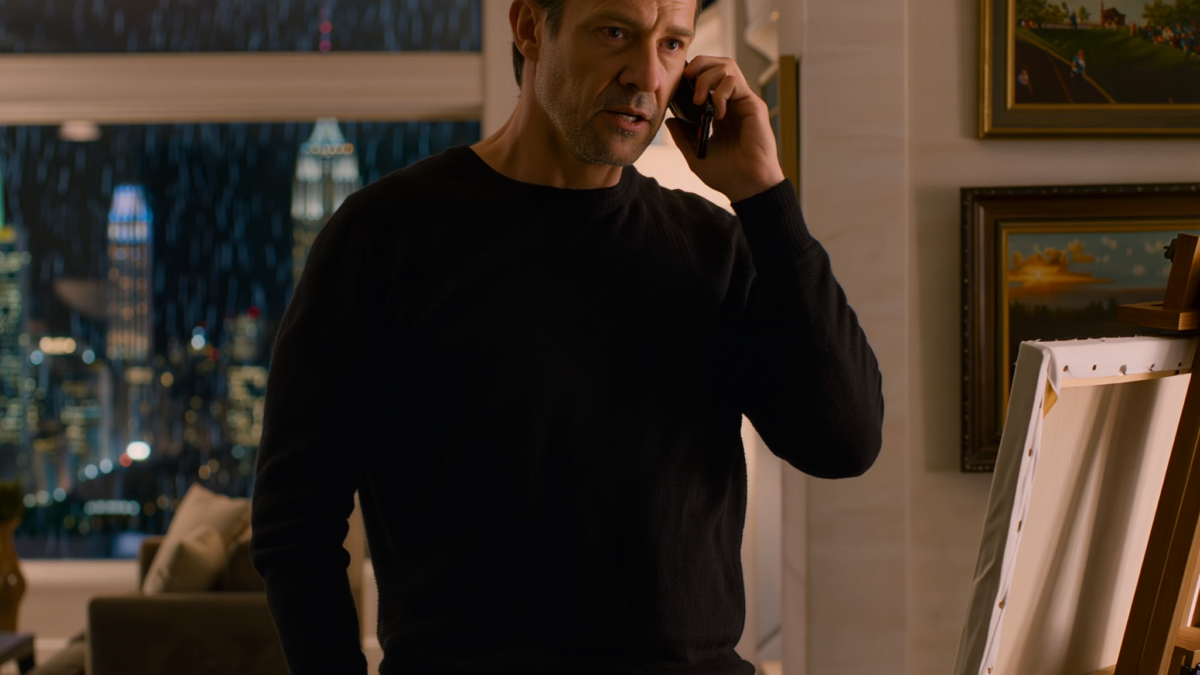
And right now, as I stand in the middle of my Manhattan penthouse, my phone is lighting up. 99 missed calls. My mother is on the other end.
She is crying. She is begging. She is the one crawling for my help.
Now, let’s go back to where this incredible nightmare and my ultimate victory truly began. It is a Tuesday night, and a massive storm is battering New York City. Rain lashes against the floor-to-ceiling windows of my penthouse apartment. Down below, the city looks like a blurry sea of red tail lights and slick wet asphalt. The thunder is rattling the thick glass, but inside I am completely safe.
I am standing at my custom-built easel, working on a massive canvas. The smell of oil paint and turpentine fills the air. It is a scent that brings me an incredible amount of peace.
A scent that reminds me of my own grueling survival. I bought this piece of prime real estate with my own money earned through years of work and relentless determination. Up here in this fortress of glass and steel overlooking the skyline, the world cannot touch me.
The ghosts of my past cannot reach me. Then the phone sitting on my side table starts to buzz. I ignore it at first.
I am deeply in the zone, blending a complex shade of midnight blue for a turbulent ocean scene. I am trying to capture the exact feeling of a storm breaking against an immovable object. But it buzzes again and then again.
The harsh vibration rattles loudly against the thick glass of the table, cutting through the quiet classical music I have playing in the background. I finally sigh, lower my brush, and wipe my hands on a paint-stained rag. I glance over.
It is an unknown number. My personal number is highly guarded. Only my agent, my lawyer, and a handful of close friends have it.
If someone is calling this number, it means they bypassed a lot of security cordons. By the 10th consecutive call, I am mildly annoyed. I figure it is a relentless telemarketer, an aggressive journalist, or an overly ambitious gallery owner trying to poach me for an upcoming exhibition.
I let it ring. By the 50th call, a strange creeping cold dread starts to wrap tightly around my spine. The phone simply will not stop.
It vibrates, goes dark for 2 seconds, and then immediately lights up again like a desperate warning beacon. By the 99th call, the screen is just a frantic, blinding blur of harsh white light in the dim room. Notifications start popping up, stacking rapidly on top of each other.
Text messages. Urgent voicemails. Please pick up.
Emergency. It’s mom. Logan, please.
I put my palette down on the wooden cart. My hands actually stop moving. The silence in my massive apartment suddenly feels incredibly heavy, almost suffocating.
My mother, Evelyn Foster, the woman who wears authentic pearls to eat a piece of dry toast for breakfast. The woman who treats waitstaff, retail workers, and anyone making under a six-figure salary like invisible stepping stones. The woman who cares more about the opinions of the country club board members and her neighborhood HOA meetings than she ever cared about her own flesh and blood.
She hasn’t spoken a single word to me in 12 long years. Not since the day the deadbolt clicked shut behind me. I slowly pick up the phone.
Feels incredibly heavy in my hand, like a weight I had avoided for years. I swipe the screen and press the device to my ear. I don’t say hello.
I don’t give her the satisfaction of hearing panic or concern in my voice. I just listen to the dead air waiting for her to speak. The voice on the other end is entirely unrecognizable.
It is cracked, weak, panicked, and absolutely terrified. It doesn’t sound anything like the proud, untouchable socialite I remember from my childhood. It sounds like a broken, desperate old woman.
She is sobbing uncontrollably, her breath hitching wildly as she struggles to form complete sentences. She tells me they are at the hospital. She is begging for $50,000.
She says, “Your father, Richard, is in critical condition after a severe cardiac emergency. The hospital has stabilized him, but the surgery, specialist care, and recovery costs are far beyond what we can cover. We need $50,000 immediately.” She tells me they are utterly bankrupt.
They have nothing. No premium health insurance. No wealthy friends left to bail them out.
No secret offshore accounts. Nothing. The massive financial empire he built on ruthlessness has completely crumbled to dust, destroyed by his own arrogance and endless corporate lawsuits.
She struggles through tears as she explains that the doctors are preparing him for the bypass he urgently needs, but the uncovered specialist and recovery costs are more than they can manage. She says his condition is critical and the next several hours matter. She says I am her only hope.
She is pleading with me, calling me her sweet boy, using warm words she never once uttered when I actually lived under her roof. As I listen to her hyperventilate, begging me to help her husband, pleading for me to save the very man who systematically tried to break me. I don’t feel a sudden rush of familial panic.
I don’t feel the urge to instantly grab my checkbook and play the role of the forgiving savior. I don’t feel love and I don’t feel pity. Instead, I am transported instantly back in time.
The storm outside my window fades away entirely, replaced by the vivid, stinging memory of a crisp, freezing, unforgiving morning in Connecticut. To understand why I hold their future in my hand with zero hesitation and absolute, terrifying coldness, you need to understand the people they had chosen to become. You need to know what they did to me on the very day I became a legal adult.
You need to understand the depths of their cruelty, the calculated malice they used to try and break my spirit just to prove a point. I thought the worst day of my life was just beginning back then. I was so incredibly wrong.
The worst was yet to come and they were the meticulous architects of my suffering. Let me take you back to that morning. I remember waking up that morning with a strange nervous fluttering in my chest. It was my 18th birthday.
For most kids, this is a day of incredible celebration, a milestone of freedom, a time when parents take pictures and talk about the bright future ahead. Maybe discuss college plans or an upcoming promotion at their part-time job. I showered quickly, throwing on my favorite worn-in jeans and a t-shirt splattered with dried acrylic paint.
I had spent the last four years building an art portfolio in complete secret, hiding canvases under my bed and sketching in the dead of night with a small flashlight so the light wouldn’t shine under my bedroom door. Today was the day I was going to finally tell them the truth. I was going to proudly tell them I got accepted into one of the most prestigious art schools in the entire country on a partial merit scholarship.
I foolishly thought surely on my 18th birthday they would at least try to be happy for my success. I walked downstairs. The Foster household was always dead quiet.
It was a massive sprawling estate at the end of a long manicured driveway in a gated community, but it felt exactly like a sterile mausoleum. My parents didn’t do loud noises. They didn’t do spontaneous joy, messy emotions, or warm Thanksgiving dinners filled with laughter.
Everything in our house was heavily curated, silent, and obscenely expensive. The marble floors were always freezing cold, no matter the season. The artwork on the walls was chosen by a high-end corporate consultant to project an image of old money and sophisticated taste, not because anyone actually liked looking at it.
I walked into the formal dining room with a genuine smile on my face, holding my thick acceptance letter hidden carefully behind my back. The smell of freshly brewed, incredibly expensive coffee filled the room.
“Good morning,” I said, my voice breaking the heavy, oppressive silence of the room.
My father, Richard, a ruthless and highly successful wealth manager, didn’t even bother to look up from his financial newspaper. He was wearing his immaculate charcoal gray suit, the exact one he wore for board meetings where he orchestrated hostile takeovers and fired hundreds of people without blinking an eye. My mother, Evelyn, was sitting opposite him at the incredibly long mahogany table, delicately sipping Earl Grey tea from a bone china cup.
She looked flawless, her hair sprayed into a rigid helmet of blonde perfection, her posture stiff and unyielding. Neither of them said happy birthday. They didn’t even acknowledge the date or the fact that I had just entered the room.
Instead, my eyes were immediately drawn to the front entryway. Sitting there on the polished stone floor, looking completely out of place in our perfect spotless house were two large black suitcases. My stomach dropped instantly to the floor.
The smile vanished from my face. I looked back and forth between them, a sickening feeling rising rapidly in my throat. I asked if we were going on a trip.
Evelyn finally set her china cup down on the matching saucer. The sharp clinking sound echoed through the massive room. She looked at me with the exact expression she used when she was thoroughly disgusted by someone holding up the line at a store.
It was a look of pure unadulterated contempt. She told me that as of 7:00 that morning, their parental obligations to me had officially and legally ended. She spoke with a calm, measured tone, exactly like she was reading a legal brief at a deposition for a nasty divorce.
She said they had provided me with food, premium shelter, and a private education for 18 years, and that the contract was now officially complete. I stared at her, completely confused, my mind struggling to process the words. I told her I was her son, not a business contract.
I reminded her it was my birthday. I thought it was some kind of twisted, cruel joke. Richard finally folded his newspaper.
He set it down sharply on the table. He looked at me with dead, calculating gray eyes. He told me I was an investment that had failed to yield any acceptable returns.
He laid it all out with chilling precision. They had a strict, unbending plan for me. I was supposed to do pre-law.
I was supposed to get a sensible corporate job at a top tier firm, secure a massive salary, marry someone from an equally prominent family, and live a life that reflected well on the Foster name. Instead, I chose to paint. He called it a hobby for weak-minded parasites.
He said they did not fund hobbies. They did not support mediocrity. And they absolutely did not harbor leeches in their home.
They weren’t screaming. They weren’t throwing things. And that was the most terrifying part of it all.
They were completely calm. They were entirely business-like. It wasn’t an emotional argument.
It was a calculated eviction. It felt exactly like a corporate downsizing and I was the redundant employee being escorted off the premises. I tried to reason with them.
I told them I was accepted into a great school. I pulled the acceptance letter out and placed it on the table. I told them I had my own savings.
I had over $3,000 from birthdays, holidays, and odd jobs stashed in a bank account over the years. I told them I would use my college fund to pay for my tuition, and they wouldn’t have to worry about supporting me financially. I just needed a few weeks to figure out the logistics of moving to the city.
Evelyn smiled the sickening, cruel, razor-thin smile. She informed me that the college fund was entirely revoked as of that morning, reallocated to my brother’s future inheritance. Then she delivered the crushing blow.
She told me that Richard had legally emptied my personal custodial savings account before I even woke up. They claimed it was a minor reimbursement for the incidental expenses of raising me over the last 18 years. They literally stole my money.
My own parents robbed me blind to ensure I had absolutely nothing to fall back on. Then Richard stood up. He towered over me, holding out his large, heavy hand.
He demanded the keys to the Porsche. It was the car they gave me for my 16th birthday, a shiny symbol of their wealth they loved to show off to the neighbors. But the title was carefully kept in his name for this exact kind of leverage.
I felt hot, humiliating tears pricking my eyes. My hands were shaking uncontrollably. I reached into my pocket, pulled out the heavy set of keys, and slammed them onto the pristine mahogany table.
The metal scratched the expensive wood finish deeply. I looked them both in the eyes and called them monsters. Richard didn’t flinch.
He told me the world eats weak people. He said they were doing me a massive favor by teaching me a harsh lesson about reality. He pointed a thick finger directly at my chest and told me I would be back on my knees within a month, begging for money, begging for a warm bed, completely broken by the real world.
I grabbed the heavy handles of my suitcases and dragged them toward the front door. Just as I reached for the brass knob, my hand trembling so hard I could barely grip it, Evelyn called out from the dining room.
Her voice was dripping with absolute freezing venom.
“When you realize you have made a colossal mistake, when you are hungry and cold, don’t come back here crying. We don’t like noise, and do not come crawling back.”
I opened the door and stepped out into the biting winter air. The heavy oak door slammed shut behind me with a sickening final thud.
Then I heard the distinct metallic sound of the deadbolt sliding firmly into place. I dragged those suitcases for three agonizing hours down the rough asphalt of our gated community and into the main town. My hands were raw and heavily blistered.
My shoulders screamed in pain. I finally collapsed onto a wooden bench outside the public library. I pulled out my phone.
I had exactly $42 in cash in my pocket. I was terrified, but I thought I still had a safety net. I called my best friend since middle school, Dylan Harrison.
I explained exactly what happened, panic leaking into my voice. I asked if I could crash on his couch for just a few days to figure things out, just until I could get a job and find a cheap room. Dylan sounded incredibly sympathetic at first.
He told me to hang on and put me on hold to ask his parents. I could hear muffled voices in the background. His mother was shouting something about a potential lawsuit.
When he came back on the line, his voice was completely different. It was distant, cold, calculating. He told me his dad did major commercial real estate business with Richard Foster.
He said his parents couldn’t risk a massive lawsuit or getting on my father’s bad side. He said his mother specifically told him not to get involved in the Foster family drama because it could ruin their country club standing and jeopardize an upcoming promotion his father was aiming for. He muttered a quick apology and hung up on me.
That was the exact moment I realized the true terrifying reach of Richard Foster. His influence wasn’t just money. It was sheer intimidation and fear.
It was like carbon monoxide. Invisible, silent, but completely suffocating. Nobody in our wealthy Connecticut town was ever going to cross him to help a homeless 18-year-old kid.
That night, I had absolutely nowhere to go. I ended up in a local public park near the train station. There was a concrete tunnel underneath a children’s playground slide.
It smelled intensely of damp earth, stale urine, and rotting leaves. I shoved my heavy suitcases in first to block the freezing wind, and then I crawled inside, curling up into a tight ball in the dirt. The cold seeped directly through my thin jacket and settled deep into my bones.
Every time a twig snapped, every time a car drove by in the distance, my heart pounded wildly out of my chest. My stomach tightened with a hollow, aching pain. I was completely alone in the dark, clutching my sketchbook against my chest like a physical shield.
I stared out into the pitch black park, shivering uncontrollably, my teeth chattering so hard they ached. I made a silent, unbreakable vow to the freezing night sky.
I would rather stay in this dirt. I would rather go hungry on the pavement than ever give them the satisfaction of my defeat.
But I knew surviving Connecticut was impossible. I knew I had to run to a place where my father’s massive shadow couldn’t reach me.
I thought the worst was over. I thought the bottom couldn’t get any deeper. I was so incredibly wrong.
It takes exactly 3 months to turn a vibrant, healthy human being into a complete and utter ghost.
I managed to scrape together just enough cash by selling every single piece of my expensive designer clothing to a shady thrift store for absolute pennies on the dollar. I traded Italian leather jackets, silk shirts, and designer belts for enough crumpled bills to survive a few weeks.
I took that small handful of cash and bought a one-way bus ticket to New York City. New York was where the art was. It was also the only place massive and chaotic enough for me to completely disappear in plain sight without being tracked by my father’s connections.
I walked into the financial aid office at the art school the very day after I arrived, desperate, exhausted, and running entirely on fumes. The student adviser, a tired woman with sympathetic eyes, looked at my FAFSA paperwork and slowly shook her head because I couldn’t provide my parents’ tax returns, and because I had no expensive lawyer to prove legal emancipation and independence, which she told me could take years of complicated litigation and custody-style battles.
They flatly denied my student loans.
The tuition was astronomical, over $60,000 a year. I couldn’t officially enroll. I was completely locked out of my dream before it even began.
So I became a squatter.
I audited classes by sneaking into the back rows of huge lecture halls. Keeping my head down, writing furious notes on scraps of discarded paper I found in the recycling bins, I slept in the 24-hour study lounge, hiding behind humming vending machines until campus security started cracking down heavily on transients.
Eventually, I found a tiny, forgotten janitor’s closet in the damp basement of the sculpture building. It smelled overwhelmingly like strong industrial bleach and sour wet mops. But it was out of the biting wind and away from the freezing streets.
Hunger became a constant, heavy physical presence in my life. It wasn’t just an appetite. It was a sharp blinding pain behind my eyes that made the world spin every time I stood up too fast.
I learned to completely swallow my pride. I would stand near the cafeteria trash cans watching the wealthy kids. Kids exactly like I used to be.
They would take one single bite of a massive bagel or a gourmet sandwich and throw the rest directly into the garbage without a second thought. I learned to be incredibly quick and utterly shameless. I would snatch the leftovers, wrap them in a dirty napkin, and shove them into my pockets to eat in the pitch black closet later.
This was my brutal daily reality.
One rainy Tuesday night in late October, my luck completely ran out. A new, highly aggressive campus security guard named Arthur Coleman caught me sleeping in the closet.
He kicked the door open, shining a blinding, high-powered flashlight directly into my eyes, screaming that I was trespassing and that he was calling the cops. I grabbed my sketchbook and ran out into the freezing torrential rain.
I was soaking wet, utterly exhausted and hungry, and my energy was crashing so quickly, my hands were shaking badly.
I ended up wandering into Washington Square Park, huddled desperately under a leaking canvas awning of a closed food cart to make a few dollars to buy a single slice of cheap pizza. I was doing rapid charcoal portraits for tourists. The wind was brutal, cutting right through my thin clothes.
I hadn’t eaten a solid meal in 2 days. I was packing up my supplies, completely defeated, my fingers numb and raw from the cold, having made only $5 all day.
That’s when a guy wearing a huge, heavily worn wool coat walked up to my bench.
His name was Connor Hayes. He was a senior in the painting department. He didn’t ask for a nice, flattering portrait to take home as a souvenir.
He looked deeply at my shaking hands, at my hollow, sunken eyes, and told me to draw exactly what I was feeling in that precise moment. He placed two crisp $20 bills on the wet wooden bench.
$40.
It was an absolute fortune.
I took the thick stick of black charcoal and let all the immense rage, the gnawing hunger, the absolute betrayal of my parents pour directly onto the heavy paper. I drew a face that was half human, half swallowed by shadow, screaming silently into a dark void.
The lines were jagged, intense, and incredibly messy. I handed it to him, expecting him to hate it, expecting him to ask for his money back.
Connor looked at it for a very long time.
The wind howled around us, but he didn’t move. He finally smiled a genuine, crooked smile and told me it was the most beautifully honest, raw thing he had seen all year.
He bought me a massive greasy cheeseburger that night and offered me the lumpy, paint-stained couch in his chaotic studio.
Connor became my absolute lifeline. He didn’t just give me a warm place to sleep. He gave me intense purpose.
He taught me the advanced techniques the expensive professors were teaching him. We became brothers in the deep trenches of the brutal art world.
A full year passed.
I was finally somewhat stable, though barely surviving. I was working three absolutely grueling jobs to keep myself afloat.
I was a waiter at a busy diner during the day, taking abuse from angry customers.
I was a nighttime bartender, wiping down sticky counters until 3:00 in the morning.
And I was a grocery store stocker on the weekends, lifting heavy boxes until my back screamed.
I was exhausted to the bone, running on 3 hours of sleep a night, but I was painting furiously every single free second I had.
I was finally breathing on my own.
Then out of nowhere, I got a direct message on social media.
It was from my older brother, Brandon Collins.
Brandon was the undisputed golden child of the Foster family. He went to Ivy League schools, wore expensive cashmere sweaters tied casually around his neck, and always did exactly what Richard commanded.
He was perfectly in line for the massive family inheritance.
But growing up, he had occasionally been kind to me. He messaged me saying he was in the city for a highly lucrative corporate internship and desperately wanted to take me to lunch.
He said he heard exactly what Richard and Evelyn did. He called them insane and cruel and said he wanted to help me out.
I hesitated.
My gut told me to ignore it, but I was so incredibly lonely.
I craved real family. I missed the idea of having someone from my own bloodline actually care about my existence. I wanted to believe that someone in that house loved me.
So I met him at a ridiculously high-end, pretentious bistro in Soho.
Brandon looked incredibly expensive, wearing a tailored suit and a watch that cost more than I made in an entire year. He hugged me tightly, acting so deeply concerned about how thin and exhausted I looked.
I let my guard down completely over plates of overpriced steak and wine that I ate with the urgency of someone who had missed too many meals.
I told him everything.
I told him about my brutal struggles, my intense dedication to my art, and exactly where I was working to survive.
I specifically mentioned the exact name of the diner run by a guy named Trevor Sullivan on Fourth Street and the grocery store I worked at on weekends.
Brandon squeezed my hand across the table. Told me how incredibly proud he was of my resilience, paid for the expensive lunch, and discreetly slipped a crisp $100 bill into my jacket pocket before he left.
I actually cried on the crowded subway ride home. I held that $100 bill tightly in my fist.
I genuinely believed that maybe, just maybe, my family wasn’t entirely rotten to the core.
I thought I finally had a powerful ally on the inside.
I thought the worst of the brutal storm was finally over.
I thought the universe was finally giving me a break.
I was so incredibly foolishly wrong.
Exactly 3 days after that seemingly heartfelt lunch with Brandon, I walked into the diner for my grueling 12-hour shift.
The owner, Trevor Sullivan, a usually loud, boisterous, and cheerful man who treated his employees like family, was standing rigidly by the front door.
He wouldn’t even look me in the eye.
He held my final paycheck in his visibly trembling hand.
He told me, his voice barely a whisper, that he had to let me go immediately.
I was completely stunned.
I dropped my apron on a nearby table.
I asked him why.
I was never late. I picked up every single extra shift nobody else wanted.
I worked harder than anyone in that entire building, scrubbing floors, taking the worst tables, doing whatever it took to keep that job so I could afford paint and food.
Trevor looked around nervously, wiping sweat from his forehead.
He leaned in close and told me the terrifying truth.
The owner of the restaurant group had received a direct phone call earlier that morning from a major, incredibly aggressive investment firm.
The firm flatly threatened to completely pull all their critical funding and initiate a targeted, devastating financial blockade against all of their restaurant locations if they didn’t fire me on the spot.
They made it clear that employing me was a massive financial liability and that they would completely destroy Trevor’s business if I stayed.
My blood ran instantly ice cold. My heart pounded so hard in my ears it drowned out the noise of the busy diner.
I demanded to know the exact name of the firm.
Trevor swallowed hard, looking genuinely terrified.
“Foster Capital,” he whispered. “My father’s firm.”
I walked out of that diner feeling like the concrete sidewalk was literally crumbling beneath my feet.
I couldn’t breathe.
The air felt thick and heavy.
The very next day, the manager at the grocery store pulled me aside and fired me, too, vaguely and nervously citing sudden background-check issues that had miraculously just appeared out of nowhere.
I stood on a busy street corner in Manhattan, clutching my cheap prepaid phone, and the horrifying, sickening truth hit me like a runaway freight train.
Brandon didn’t come to New York City to check on his little brother.
He didn’t care about my well-being.
He wasn’t trying to help me at all.
He was acting as an informant.
Richard had sent him as an inside messenger, to play on my desperate need for family, to collect detailed intelligence, and to find out exactly where I was making my meager salary so he could execute a targeted financial strike.
They didn’t just want me out of their perfect Connecticut house.
They wanted me completely broken.
They were actively hunting me down across state lines.
They were systematically suffocating my tiny income, trying to cut off every way I had to support myself so I would eventually break down and crawl back on my knees, begging for a handout, just like Richard arrogantly predicted on the day he kicked me out.
They wanted to prove that without their money, I was nothing.
I pulled out my phone, my fingers shaking with an anger so profound it blurred my vision.
I typed out a text to Brandon:
“How much of a corporate bonus did Richard pay you to sell out your own brother?”
I watched the screen intently.
It buzzed.
Read at 4:02 p.m.
He never replied.
The absolute coward just read it and ignored it.
He was probably sitting comfortably in his Ivy League dorm room, counting his reward for selling me out.
I didn’t cry.
The sadness, the longing for family, the grief over losing my brother, it was all completely gone.
It had burned away instantly, replaced by a rage much hotter than the sun.
I walked all the way back to Connor’s studio.
The walk took 2 hours, but I didn’t feel my legs.
I didn’t say a single word when I walked through the door.
I felt something deep inside my chest finally snap.
Like a heavy bone breaking under immense pressure.
But when it set back into place, it wasn’t fragile bone anymore.
It was made of solid, unbreakable steel.
I walked right past Connor, ignoring his confused look.
I grabbed the largest, most expensive 6-foot canvas we had saved up for months to buy and hauled it onto the main easel in the center of the room.
“What the hell are you doing?” Connor asked, dropping his brush as he saw the intensity in my eyes.
“Get the red paint,” I told him, my voice dead calm. “Get all of it. Every single tube we own.”
“Logan, what’s going on?” Connor pressed, stepping closer.
“I am done hiding,” I said, staring at the massive blank canvas. “They want to play corporate games. They want a reaction.”
I am going to give them a spectacular show they will never ever forget.
They tried to cut off every way I had to support myself, Connor.
Now I am going to make them face exactly what they did.
I spent the next several months operating on absolutely nothing but cheap black coffee, toxic turpentine fumes, and pure, unfiltered, explosive rage.
I was going to use my senior thesis not to paint pretty, abstract landscapes to please the wealthy professors and donors.
I was going to use it to make an undeniable public statement about the pristine, carefully curated Foster family legacy.
I called the project The Cannibals, and I was about to show the entire world exactly what kind of people Richard and Evelyn Foster truly were.
I was going to make sure their perfectly manicured mask was ripped off permanently.
I was setting the stage for the greatest confrontation of my life, and I was going to make sure they paid in full.
The senior thesis exhibition was held in a massive sprawling industrial-style gallery right in the beating heart of Chelsea.
It was exactly the kind of pristine, high-end, heavily curated space where the air always smelled faintly of expensive champagne, rare imported perfumes, and pretentious academic critique.
For the vast majority of the graduating class, this incredibly important night was merely a fun stepping stone.
It was a lavish party to celebrate the end of their expensive education, paid for entirely by their parents’ massive college funds and trust accounts.
For them, it was a night of taking selfies, drinking free wine, and hoping a minor gallery owner might glance at their abstract watercolor pieces.
For me, it was something entirely different.
It was a meticulously planned, highly calculated public reckoning.
I had spent the last four agonizing years surviving on absolutely nothing.
I had scraped by on a pathetic minimum wage salary, dodging the relentless corporate sabotage orchestrated by my own blood family.
Every single ounce of that profound suffering, every freezing night in that concrete tunnel, every discarded bagel I had to eat out of a cafeteria trash can had been poured directly into three massive 6-foot-tall canvases.
I arrived at the gallery hours early.
Connor was right by my side, acting as my anchor, just as he had been since the night he found me freezing in Washington Square Park.
He had seen the agonizing, borderline obsessive process of creating The Cannibals day in and day out in our freezing studio.
He knew the exact shade of deep red I used throughout the canvases.
He knew exactly what was about to happen tonight, and he was ready for the inevitable fallout.
The gallery started filling up incredibly quickly.
By 8:00, the cavernous room was packed shoulder-to-shoulder with wealthy donors, influential art critics from major publications, and incredibly proud parents who were busy taking photographs and bragging about their children’s bright futures.
The ambient noise was a loud buzzing hum of sophisticated chatter and clinking glassware.
And then the entire atmosphere in the room suddenly shifted.
It didn’t happen all at once.
It happened like a sudden freezing draft sweeping through a warm, comfortable house in the dead of winter.
I was standing near the back wall holding a plastic cup of cheap sparkling water, actively avoiding the networking crowds when I finally saw them.
Richard and Evelyn Foster.
They hadn’t been formally invited, of course.
I had explicitly made sure their names were nowhere near the guest list.
But people like my parents, people with that level of extreme wealth and social standing, always had eyes and ears everywhere in the city.
They had extensive, deeply rooted connections in the high-society art world.
Likely through some wealthy commercial real estate developer or high-powered corporate lawyer they played golf with on the weekends.
Someone had tipped them off.
Someone had told them that the son they threw away was having a public showing.
They had come, I realized with absolute crystalline clarity, to see me completely and utterly fail.
They fully expected to walk right into that prestigious gallery and see their disgraced, formerly homeless son standing nervously next to some clumsy, amateur finger paintings.
They fully expected to see me looking ragged, broken, desperate, and starved of success.
They probably brought their heavy leather checkbook, completely ready to pull me aside and offer me a humiliatingly small amount of money in exchange for a groveling public apology.
They were expecting me to finally break down, admit they were right all along, and crawl back to their pristine Connecticut mansion.
They wanted to gloat.
They wanted to firmly establish their absolute, unquestionable superiority in front of an audience of their peers.
I watched them closely from the shadows.
Richard was wearing a bespoke midnight blue suit that probably cost more than my entire year’s salary.
He walked with his chest puffed out, exuding an aura of complete dominance, looking down his nose at the surrounding artwork as if it were a collection of childish scribbles.
Evelyn walked half a step behind him, wrapped in a designer trench coat, her authentic pearls gleaming under the harsh gallery track lighting.
She had a tight, polite, entirely fake smile plastered across her face as she scanned the room, actively looking for the pathetic version of me she had created in her mind.
But as they confidently parted the crowd, forcing people to step aside to make way for them, their smug expressions began to visibly falter.
They didn’t see a broken, homeless kid cowering in a corner.
They saw me.
I was 22 years old, standing tall, my shoulders squared, wearing a sharp, tailored black suit I had bought with my own hard-earned money.
I wasn’t shivering in a concrete tunnel anymore.
I was standing firmly on my own turf in my own domain, surrounded by people who actively respected my talent and vision.
I watched Evelyn’s eyes frantically scan the room until they finally inevitably locked onto my massive display.
The centerpiece of the entire gallery.
The title, The Cannibals, was printed in bold, unforgiving, stark black letters right on the pristine white wall above the paintings.
I watched the color completely and totally drain from my mother’s perfectly manicured face.
It was instantaneous, like someone had pulled a plug.
She went as pale as a fresh sheet of paper.
Her hand instinctively flew up to clutch her authentic pearls, a nervous, desperate habit she only exhibited when she felt she was rapidly losing control of a public narrative.
Richard stopped dead in his tracks.
His broad, imposing shoulders stiffened unnaturally, and his face quickly turned a dangerous, deep, mottled shade of purple that I had never witnessed before in my entire life.
They were staring directly at the hyperrealistic triptych I had poured onto the canvas for the last 8 months.
The first massive panel depicted a formal dining room that looked exactly, terrifyingly like the one in their sprawling Connecticut estate.
Every single detail was meticulously and flawlessly rendered.
The heavy cascading crystal chandelier.
The polished, gleaming mahogany table.
The freezing unforgiving marble floors.
In the painting, Richard and Evelyn sat proudly at the extreme ends of the long table, dressed in their absolute finest evening clothes, smiling warmly, their teeth stark white, holding heavy antique silver forks and knives.
But on the expensive porcelain plates directly in front of them, there wasn’t a prime cut of steak or a delicate lobster tail.
There were fragmented symbols of a young life: a small pale hand clutching a broken paintbrush, torn sketches, and a glowing pink heart motif.
The metaphor was brutally clear, utterly devoid of any polite subtlety.
They were symbolically consuming their own child’s future to sustain their own flawless, wealthy image.
They were consuming my future, my dreams, and my very life to feed their massive, insatiable corporate egos.
The second panel depicted them standing like towering, distorted, imposing giants in the middle of the Manhattan financial district.
They were looming ominously over the city skyline, clutching massive, overflowing bags of money, but their mouths were symbolically sealed with thick, glittering gold thread, their expressions strained with panic.
Their eyes were wide, filled with suffocating panic as they realized they were being overwhelmed by the very wealth they had spent their lives chasing.
It was a direct, unapologetic indictment of the ruthless corporate greed that fueled their entire empire.
It was a dark premonition of the endless lawsuits, the inevitable bankruptcy, and the financial ruin that their extreme arrogance would inevitably invite.
The third and final panel was a hyperrealistic self-portrait.
I stood completely alone on the perfectly manicured, incredibly green lawn of their sprawling estate.
I was holding a blazing torch in my right hand.
The massive, beautiful house was engulfed in painted orange and red flames behind me.
The bright orange and deep red colors filled the night sky.
Dark painted smoke billowed into the atmosphere.
But in the painting, I wasn’t looking back at the painted fire.
I wasn’t looking at the ruin of my childhood home.
I was looking directly out at the viewer, straight out of the canvas.
My face was heavily streaked with dark, oily soot, but my eyes held a look of absolute, terrifying, unshakable peace.
Professor James Holloway, the highly respected, incredibly stern head of the painting department, had stood in front of this exact series for 20 solid minutes in complete, heavy silence earlier that week during grading.
He had slowly adjusted his thick glasses, looked at me with a mixture of profound awe and genuine fear, and said words I would never forget.
“Logan, this isn’t just a piece of fine art. This is a highly calculated, devastating statement. It is visceral. It makes me want to look away, but I physically cannot. If you display this publicly tonight with the press in the room, there is absolutely no going back. You understand that, right? This is a formal public declaration against your own family.”
I had looked him dead in the eye, my voice entirely steady.
“They started this conflict the day they stole my savings, canceled my college fund, and locked me out in the freezing cold. I am simply finishing it.”
Now, standing in the crowded gallery, watching my parents completely and publicly unravel in real time, I knew Professor Holloway was absolutely right.
The trap had been perfectly, flawlessly sprung.
They had walked right into it, completely blinded by their own incredible arrogance and their desperate need to see me fail.
They marched aggressively toward me.
The surrounding crowd of wealthy patrons naturally parted around them.
The ambient chatter in the gallery died down to a nervous echoing whisper.
The room went dead silent.
Everyone could physically feel the immense, suffocating tension radiating from Richard Foster as he closed the distance between us.
“What is the meaning of this absolute garbage?” Richard boomed.
His deep, authoritative voice echoed off the high concrete walls, ignoring every rule of polite gallery etiquette.
“What the hell is this supposed to be?”
“It is my senior thesis,” I said, stepping forward smoothly to meet him face to face.
I didn’t flinch.
I didn’t look down at my shoes.
I wasn’t the terrified, shivering 18-year-old kid begging for a place to sleep anymore.
I was a grown man entirely forged in the brutal fires of their cruelty.
And I was holding all the cards.
“Take it down immediately,” Evelyn hissed, her voice trembling with a mixture of profound, soul-crushing embarrassment and furious rage.
She looked frantically around at the wealthy patrons, the influential critics, and the students who were now blatantly staring at them, whispering behind their hands, pointing at the paintings, and then back at her.
“You are deliberately embarrassing us in front of these important people. You are publicly slandering this family. You are ruining our reputation.”
“Slander implies that the statement is legally false, Mother,” I said coolly, my voice carrying clearly through the silent room. “This is simply a hyperrealistic interpretation of my lived reality. This is who you are behind closed doors. I just put it on canvas for the world to see.”
“You ungrateful, pathetic little brat,” Richard shouted, entirely losing his carefully crafted corporate composure.
The mask completely slipped.
He lunged forward, his heavy hands reaching out aggressively to grab the canvas of the first painting, intending to rip it right off the gallery wall and tear it apart.
Connor instantly stepped in to block him, throwing his body between Richard and the artwork, but Richard shoved him aside with sudden force, sending Connor stumbling into a nearby podium.
“Do not touch that painting,” I shouted.
My voice cut through the noise with undeniable authority.
It was a tone I had never used with him before.
Richard froze, his hands hovering mere inches from the painted surface of the canvas.
“That specific piece you are about to damage is currently priced at $15,000,” I stated loudly, making sure the entire room could hear the exact figures.
“The entire triptych is formally priced at $45,000. You touch it, you damage it, you buy it. It’s a binding gallery contract.”
I let the silence settle for half a beat.
“And knowing the current highly volatile state of your investment portfolio, Richard, combined with the recent rumors of a pending SEC investigation into your real estate holdings, I am genuinely not sure you have the liquid assets to cover that kind of spontaneous expense without triggering a massive corporate audit.”
That stopped him cold.
It wasn’t the approaching campus security guards that halted Richard Foster.
It was the sharp, incredibly public insult to his finances.
It was the loud, undeniable implication in front of a room full of high-net-worth individuals and potential clients that he might not have the immense cash flow he constantly projected.
He slowly lowered his hands, turning to look at me with a hatred so pure, so concentrated, it practically burned the oxygen out of the air between us.
“You think this is some kind of funny game?” he said, his finger shaking inches from my face. “You think you can humiliate me? You are completely gone to us. Do you hear me? As far as I am concerned, I don’t have a son.”
I didn’t blink.
I leaned in slightly, lowering my voice so only they and the people in the immediate vicinity could hear the absolute chilling finality in my tone.
“I was gone to you four years ago when you kicked me out onto the street on my 18th birthday,” I said, my words measured and precise. “I was gone to you when you stole my college fund, emptied my personal bank account, and forced my friends to abandon me through intimidation. I was gone to you when you explicitly sent Brandon to find out where I worked and intentionally get me fired from a minimum-wage diner just so I would have no way to support myself. You gave up on me a long time ago, Richard.”
I gestured to the massive, unsettling paintings behind me.
“This is just the public reckoning, and everyone is invited.”
A collective audible gasp rippled through the immediate crowd.
Several people instinctively pulled out their phones, pressing record.
“We are leaving this instant,” Evelyn said, grabbing Richard’s arm.
Her perfectly manicured nails dug into his expensive suit jacket.
She was visibly shaking.
Her flawless, untouchable facade had completely shattered.
“Everyone is looking at us. This is unbearable. We are leaving.”
“Let them look,” I said, offering her a cold, controlled smile. “Smile for the cameras, Mother. You always wanted to be famous in the city society pages. You finally got your wish.”
As they turned and stormed out of the gallery, pushing past the crowd of stunned onlookers and whispering critics, a professional photographer from a prominent New York arts publication snapped a rapid series of pictures.
One specific photo captured the exact perfect moment.
It caught Richard’s furious, flushed face as he pushed past a waiter, and it captured Evelyn’s sheer, unadulterated terror as she tried to hide her face behind her designer purse.
And looming directly over their shoulders in the immediate background was the massive, hyperrealistic painting of them coldly seated before the shattered symbols of their child’s dreams.
It was an absolute masterpiece of journalistic timing.
The very next morning, I didn’t just wake up successful.
I woke up utterly phenomenally infamous.
That specific photograph went incredibly viral before I even finished my morning coffee.
The main headline in the digital arts and culture section read, “The Art of Revenge: Wealthy Socialite Parents Confront Artist Son at Senior Gallery Opening.”
The internet immediately did exactly what the internet does best.
They dug relentlessly and they showed absolutely no mercy.
They found out exactly who Richard Foster was.
They uncovered his aggressive corporate business practices, his long history of hostile takeovers, his shady real estate dealings, and his complete lack of empathy for his employees.
Former assistants, burned clients, and ruined competitors started coming out of the woodwork on every social media platform, sharing their own painful, detailed stories of being aggressively bullied, intimidated, and financially ruined by him.
The public narrative surrounding the great, untouchable Foster empire completely flipped overnight.
Then the true professional twist happened, the one that cemented my complete victory.
At exactly 9 in the morning, while Connor and I were sitting in our messy studio drinking cheap diner coffee and watching the internet explode on our phones, my phone rang.
It was Marcus Chandler, one of the most prominent, ruthless, and wealthy art collectors in Manhattan.
He didn’t mince words.
He didn’t offer fake pleasantries.
He had seen the viral photo, read the extensive backstory, and recognized the raw, unbridled power and cultural relevance in the work.
He bought the entire Cannibals series over the phone.
He wired $45,000 directly into my newly established bank account within the hour.
No negotiations.
No payment plans.
Just cold, hard cash for the exact series I used to confront my parents.
But the real absolute karma was currently happening to Richard and Evelyn.
Richard was a wealth manager.
His entire massive empire was precariously built on implicit trust, total discretion, and the carefully cultivated image of a stable, morally upright, traditional family man.
The viral video footage of him completely losing his composure at a college art gallery, combined with the incredibly dark, believable allegations presented in my artwork, shattered that fragile image into unfixable shards.
His ultra-wealthy clients started to panic.
They aggressively and rapidly pulled their money from his firm.
“If the man treats his own flesh and blood like a disposable, worthless asset, how is he treating my retirement fund and my children’s inheritance?”
One major client was quoted saying that in a devastating front-page follow-up article in a major financial magazine.
The mass exodus of capital triggered a massive internal liquidity crisis at Foster Capital.
Richard was suddenly facing a mountain of potential lawsuits from angry, powerful investors who wanted their money out immediately, and he didn’t have the cash to pay them.
Evelyn’s vibrant social life evaporated overnight.
She was unceremoniously kicked off the prestigious board of the botanical garden charity.
The official reason given in the polite, legally vetted email was undue distraction.
But everyone in their elite, cut-throat circle knew it was because she had instantly become a highly toxic social pariah.
Nobody wanted to be photographed near the wealthy woman who intentionally cut off her own son.
There were even loud, persistent rumors circulating in the country club locker rooms that she was consulting a high-powered divorce lawyer, threatening a messy, incredibly public divorce if Richard couldn’t magically fix their rapidly sinking financial ship.
I sat in my studio with Connor, staring blankly at the banking app on my cracked phone screen.
The account balance read exactly $45,000.
It was more money than I had ever seen in my entire life.
It was absolute, undeniable freedom.
“How does it feel?” Connor asked, looking at me carefully from across the room as he wiped a brush on a rag.
I looked at the glowing screen and then out the dirty window at the busy city street below.
I wanted to say I felt completely ecstatic.
I wanted to say I felt a burning triumphant joy, a massive rush of vindication, but honestly, there was just a cold, hollow spot in my chest that wouldn’t entirely go away.
The massive adrenaline rush of the confrontation was rapidly fading, leaving behind a strange exhaustion.
“I feel like I can finally breathe without my lungs burning,” I said softly, locking my phone. “But Connor, I don’t want to be known as the angry kid who hates his parents for the rest of my career. I don’t want my entire identity wrapped up in their cruelty. I don’t want to paint revenge forever.”
“Then paint something else,” Connor said simply, picking up a fresh brush and tossing it to me. “You won this fight, Logan. They are done. Now you actually get to live.”
I took Connor’s advice to heart.
I took that massive check, secured my total financial independence, and I ran as far away from their toxic orbit as I possibly could.
I officially left the heavy, suffocating gravity of my family’s endless drama behind.
Connor and I packed up our meager belongings, bought plane tickets, and moved to Paris for two full years.
I completely washed the dark, bitter anger out of my brushes.
I painted sprawling, breathtaking landscapes, vibrant abstracts, and the incredibly expressive faces of fascinating strangers I met on the metro.
I poured my soul into the beauty of survival rather than the ugliness of betrayal.
My professional career absolutely exploded on a global scale.
I wasn’t just a viral internet gimmick or a one-hit wonder driven by a scandalous family feud.
I actually had profound, undeniable talent.
I secured highly successful, incredibly lucrative solo exhibitions in Tokyo, London, and Berlin.
I commanded a salary equivalent that completely dwarfed what most top corporate executives made in a decade of grinding.
I made my first million dollars in liquid assets by the time I was 25.
I aggressively invested in commercial real estate, completely mastering the very game my father thought I was too weak to play.
I bought my massive penthouse in New York City by 28, paying entirely in cash.
Connor and I remained brothers—chosen family.
We celebrated holidays together, entirely replacing the tense, toxic Thanksgiving dinners of my youth with genuine warmth, actual loyalty, and loud laughter.
But despite my incredible, undeniable success, I still kept silent tabs on the Foster family.
Couldn’t help it.
It was exactly like picking at a deep, ugly, old scab that refused to fully heal.
I had a silent Google alert securely set up on my phone for Richard Foster and Foster Capital.
Over the years, the news steadily progressed from bad to catastrophic.
It was a slow, agonizing descent into complete ruin.
Year five, Richard Foster was officially sued for massive corporate fraud and gross mismanagement of funds.
In a desperate, frantic attempt to cover his massive client losses after the gallery incident, he had made incredibly risky, highly leveraged bets in the commercial real estate market.
Those bets failed spectacularly, wiping out millions of dollars of his clients’ money.
Year seven, the sprawling multi-million-dollar Foster estate in Connecticut was formally listed for bank foreclosure.
The exact property they had kicked me out of, the marble floors I had stood on when they stole my college fund, was unceremoniously seized by the bank and sold at a public auction to a tech billionaire who completely gutted the interior, erasing every trace of their existence.
Year 9, Richard and Evelyn Foster officially filed for Chapter 11 bankruptcy.
The persistent rumors of a brutal divorce had faded entirely, likely because there were absolutely no assets left for a divorce lawyer to fight over.
The well was completely dry.
They were completely and utterly ruined.
I watched their pristine, arrogant world completely crumble into dust from the absolute safety of my Manhattan ivory tower.
I watched them lose their prestigious country club memberships, their fleet of luxury cars, their authentic pearls, and their carefully hoarded social status.
I thought I would feel a deep, overwhelming sense of glee.
I thought I would throw a massive party and pop champagne.
Instead, as I read the articles detailing their downfall, I just felt a dull, aching, profound pity.
They were losing every single material thing they worshipped.
They were rapidly becoming the very people they had once looked down on.
Two years ago, a physical letter arrived at my main gallery in Chelsea.
It had no return address.
The handwriting on the envelope was instantly familiar, looping, pretentious, and slightly desperate.
It was from my older brother, Brandon, the former golden child.
I almost threw it directly into the industrial shredder.
Brandon had been dead to me since the day he sold me out at the diner to secure his precious inheritance and a corporate promotion.
But reluctant curiosity won out.
I sliced the envelope open and read it standing in my pristine modern kitchen.
Logan,
I don’t expect you to reply to this letter. I know I don’t deserve it. I just thought morally you should know the reality of the situation.
I saw our parents last week.
They are living in a filthy, run-down weekly-rate motel off the highway in New Jersey.
Dad is showing severe early signs of aggressive dementia. He gets highly confused, wandering the parking lot, talking to himself about corporate market corrections and hostile takeovers that happened in the 1980s.
Mom has a severe heart condition and angina. I think they can’t afford the premium meds half the time because they have zero health insurance and no income.
My inheritance is completely gone, wiped out in the bankruptcy. I’m drowning in my own massive debt.
They look so incredibly old, Logan. They are completely broken.
I know they were unimaginably cruel to you. I know I was a pathetic coward for not standing up for you, for selling you out for a paycheck.
But they are suffering immensely.
They have absolutely nothing left.
I just thought you should know.
Brandon
I stood in my modern spotless kitchen, the cheap lined paper trembling slightly in my hand.
Connor walked in, took one look at my expression, and gently took the letter from my fingers.
He read it quickly, his face remaining entirely unreadable.
“What do you want to do about this?” he asked quietly.
I looked out the massive floor-to-ceiling window at the glittering, endless city lights of New York.
I remembered the intense, sickening smell of damp earth in that freezing concrete tunnel.
I remembered the agonizing, hollow pain in my stomach as I dug through the cafeteria trash for a half-eaten bagel, hoping security wouldn’t see me.
I remembered the absolute coldness in Richard’s eyes when he stole my savings and told me I would be back on my knees.
“Nothing,” I said, my voice completely devoid of any emotion.
I took the letter back from Connor and crumpled it into a tight, hard ball.
They explicitly told me to sink or swim.
I swam.
They sank.
That is simply the gravity of their own choices.
I threw the letter directly into the trash can right on top of the wet coffee grounds.
But that night, I couldn’t sleep.
I tossed and turned in my expensive sheets.
I kept involuntarily imagining Evelyn, the incredibly proud woman who wore authentic pearls to breakfast, sitting on a stained, lumpy mattress in a cheap motel room with peeling wallpaper, shivering in the cold, waiting for a husband who didn’t remember who he was.
It was a haunting, pathetic image.
Which brings me entirely back to tonight.
Back to the raging storm outside my penthouse window.
Back to the 99 missed calls glowing on my phone screen.
It is my 30th birthday, exactly 12 years to the day since I was brutally evicted.
Stripped of my dignity and told to never ever come crawling back.
I hold the phone tightly to my ear.
The hospital machines are beeping rhythmically.
A sharp clinical sound in the background.
My mother is hyperventilating on the other end of the line, begging me, sobbing for $50,000 to help the man who had tried to systematically break mine.
She is telling me that Brandon won’t pick up the phone, that his phone is disconnected.
She is telling me that every single one of their wealthy friends, the people they played golf with and hosted at Thanksgiving dinners, abandoned them the second the lawsuit started.
She is telling me I am the only one left on earth who can help them.
“Why are you calling me, Evelyn?” I ask, letting the coldness seep deeply into my tone.
I refuse to call her Mom.
She lost that title 12 years ago.
“Because your father is in critical condition,” she says, her voice breaking with fear. “The hospital stabilized him, but we cannot cover the surgery, specialist care, and recovery costs on our own. Logan, please. You have so much money now. I read about your real estate acquisitions in the paper. Please, I know you have it.”
“$50,000 is a massive amount of money,” I repeat slowly, letting the words hang heavily in the air, forcing her to sit in the uncomfortable silence.
“We have absolutely no one else,” Evelyn weeps, the sound raw, completely devoid of her former arrogance.
“I see,” I say calmly.
I walk slowly over to the window, looking down at the slick, rain-soaked streets below.
I imagine the people rushing through the rain, seeking shelter, just like I had to do.
“Do you remember my 18th birthday, Evelyn? Do you remember the exact words you said to me as I dragged my suitcases out the door?”
There is a sudden, heavy silence on the line, broken only by her ragged breathing and the steady beep of the heart monitor beside my father.
“Logan, please, not right now,” she begs, trying desperately to deflect, trying to avoid the ghosts of her own actions.
“No, we are going to talk about it right now,” I say, my voice hardening. “You stood in that freezing marble foyer wearing your expensive pearls, and you told me I would be back on my knees within a single month. You specifically told me not to come crawling back when I failed. Do you remember?”
I hear her take a sharp, shuddering breath.
“I remember.”
“And here we are,” I say, the vindication finally washing over me. “Twelve years later, let me ask you a question, Evelyn. Who is crawling now?”
“We are,” she whispers.
The humiliation in her voice is unmistakable.
“We are crawling, Logan. I am begging you. I am physically on my knees in this hospital waiting room. Please help him. Please.”
I stand there holding the phone, feeling the immense weight of the moment.
I hold their future in my hands.
I could easily refuse them.
I could simply hang up the phone, block the number, and leave them to face the consequences alone.
It would be poetic justice.
It would feel like exactly what they deserved.
They would have left me hungry and alone in that concrete tunnel without a second thought.
They tried to orchestrate my ruin.
But then I look back at my easel.
I look at the painting of the storm at sea I was working on in the middle of the crashing, chaotic waves.
I had painted a small, sturdy boat holding its ground, refusing to sink.
I am not the storm.
I am the boat.
I refuse to become as cold as they had been to me.
I refuse to let their darkness shape the rest of my life.
“Put the hospital administrator on the phone,” I say firmly.
“What?” Evelyn gasps, confusion and hope warring in her voice.
“Put the billing administrator on the phone right now, before I change my mind.”
I hear frantic rustling, footsteps, a muffled conversation, and then a crisp, professional female voice comes on the line.
“This is Mrs. Evans, head of hospital billing and administration.”
“This is Logan Foster,” I say, shifting seamlessly into the same commanding business tone my father used to use. “I am authorizing an immediate wire transfer of $200,000 to the hospital account right now. I want Richard Foster to receive the treatment his doctors recommend and a private room for his recovery period.”
I hear Evelyn let out a gasp of pure relief in the background.
“Oh, thank God, Logan. Thank you. Thank you so much.”
“I am not finished,” I say, cutting her off. “Mrs. Evans, are you listening carefully?”
“Yes, Mr. Foster.”
“This payment comes with one non-negotiable condition. Tell my parents that the bill is paid in full, but also make it clear that I am not coming to visit. I will not be answering their phone calls again. Tomorrow morning, my lawyer will send formal no-contact instructions and a cease-and-desist. The payment goes directly to the hospital and does not give them access to my address, my number, or my life. I want complete control of my own life, free of them. Do you understand?”
There is a brief stunned pause.
“Yes, I understand completely, sir. I will relay the message exactly as stated.”
“Good.”
“Logan!” Evelyn shouts from the background, panic returning to her voice as she realizes what is happening. “Please let us see you. Let us properly apologize for everything we did.”
“You just did,” I say coldly, staring at my reflection in the dark glass of the window. “You crawled. That is all I ever wanted.”
I press the red button and end the call.
I stand in the middle of my penthouse for a very long time.
The silence in the room feels entirely different now.
It isn’t empty and it isn’t oppressive.
It is profoundly, beautifully peaceful.
I had just paid $200,000.
It wasn’t a gift of love.
It was the absolute final price of my permanent freedom.
I hadn’t saved their lives because I suddenly loved them again or forgave them for their sins.
I saved them because I completely refused to be anything like them.
They would have left me hungry and alone to protect their pride.
I chose to let them live with the daily knowledge that their discarded, hated son was their ultimate savior.
That was the true ultimate victory.
They have to wake up every single day in that cheap motel knowing they owe their continued existence to the boy they threw away.
I walk back over to my easel.
I pick up my brush, load it with bright, vibrant paint, and turn back to the canvas.
I don’t feel angry anymore.
I don’t feel vengeful.
I just feel done.
The ghost of my past is finally gone.








