I never told my family I was a probate attorney. After Grandpa died, they forced me to sign a waiver giving up my inheritance rights. My brother said I wouldn’t understand the paperwork, but one paragraph revealed the commercial property they wanted me to surrender — and why Grandpa called me six months earlier.
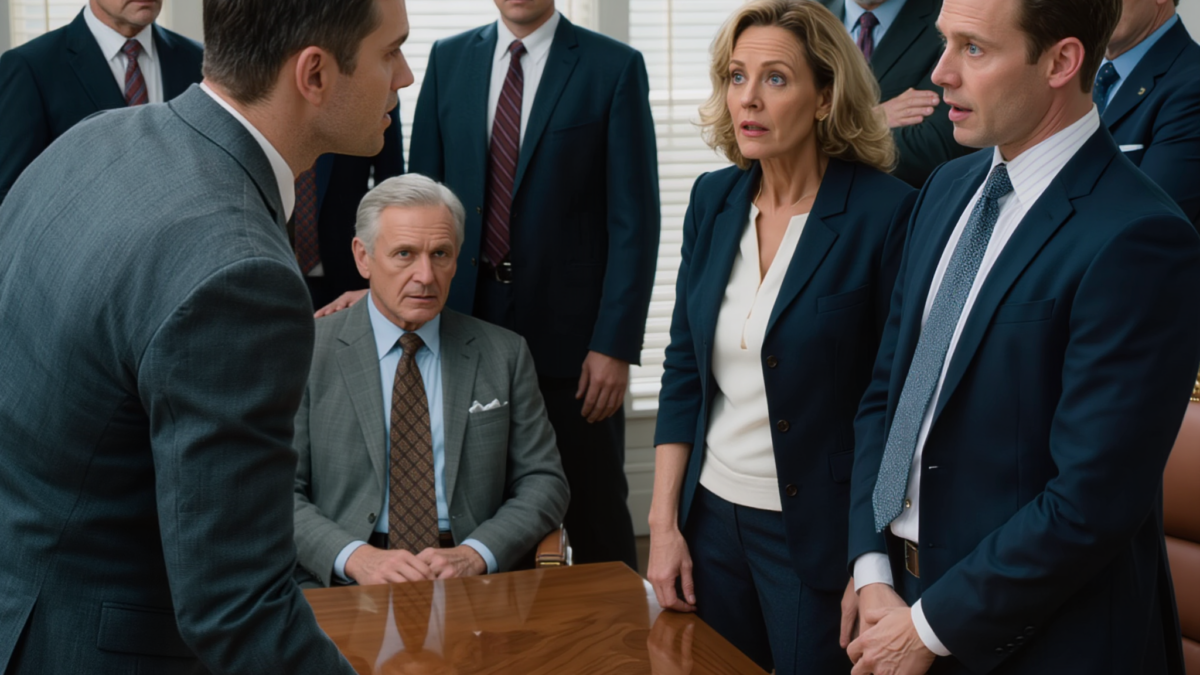
My name is Nolan Wallace. I’m thirty-two years old, and four days after my grandfather’s funeral, my mother tried to make me sign away my inheritance.
We were sitting around the dining room table in our family home, the same place where Grandpa Thaddeus had spent every Thanksgiving with us.
My mother, Beatrice, pushed a six-page document toward me.
“Sign it and leave, Nolan. You have no business being here.”
My older brother, Desmond, laughed from across the table.
“You don’t need to understand any of this. Just sign the last page and stop wasting our time.”
My father, Harrison, stared silently into his water glass.
They thought I was an unsuccessful office worker who handled paperwork downtown. What none of them understood was that I was a licensed probate attorney who had spent years handling inheritance disputes, contested wills, and estate fraud.
And the document they wanted me to sign contained something deeply suspicious.
I picked it up and began reading.
Buried on the second page was a clause requiring me to waive my right to challenge the transfer of a commercial property worth nearly $1.5 million.
The property belonged to my grandfather. Under the proposed agreement, it would pass directly to Desmond.
“I need time to review this,” I said.
My mother slammed her hand against the table.
“Everyone else has agreed. Why do you always have to make everything difficult?”
Desmond leaned forward.
“Our lawyer prepared it. You don’t understand these things, Nolan. Just sign.”
I closed the document.
“Did Grandpa ever tell you he called me six months ago?”
Desmond stopped smiling.
My father finally looked up.
My mother’s face turned pale.
“What did he call you about?” she whispered.
I slid the papers back across the table.
“I’m not signing this. Not today. Not ever.”
Then I walked out.
Growing up, I had always been the invisible son.
Desmond was the golden child.
When he received a B in high school, our parents celebrated with an expensive dinner. When I earned straight A’s, my mother warned me against showing off.
At sixteen, Desmond received a brand-new car. I received a bus schedule and instructions to find a part-time job.
The worst betrayal came when I discovered my college fund was empty.
Desmond had spent his savings partying at a private university. When he dropped out to travel through Europe, my parents used my portion to finance his lifestyle.
I worked night shifts, attended community college, transferred to a state university, and eventually completed law school with student loans.
Even after I passed the bar exam, my parents showed little interest.
But Grandpa Thaddeus was different.
He owned a successful hardware business and several commercial properties. He respected hard work, and he knew exactly what I had accomplished.
Six months before his death, he called while I was sitting outside the county courthouse.
“Nolan, can someone legally witness a signature if they weren’t present when the document was signed?”
I immediately became concerned.
“Grandpa, is someone asking you to sign paperwork you don’t understand?”
He hesitated.
“Maybe. I don’t want to accuse anyone unfairly.”
I told him to hire an independent estate attorney, someone without family connections who could protect his interests.
A week later, he texted me.
Went with Montgomery. Thanks.
I never asked what happened afterward.
Following the confrontation at my mother’s house, relatives began calling and accusing me of destroying the family.
Aunt Fiona demanded an apology. Uncle Gideon warned that my father’s health could not withstand a lawsuit.
Then an email arrived from Montgomery’s law firm.
Attached was my grandfather’s newest will.
The document my family wanted to enforce was three years old.
Grandpa had signed a new will and established a trust arrangement four months before his death.
Everything had changed.
The following morning, I received a threatening letter from an attorney named Thorne, demanding that I sign the waiver or face legal action.
I knew the claims were questionable, so I arranged to meet Montgomery.
His office occupied the top floor of a glass tower downtown.
Waiting with him was Victor, an independent fiduciary and forensic accountant.
“Your grandfather became concerned about financial transactions involving Desmond,” Montgomery explained.
Victor opened a ledger.
“Over three years, approximately $250,000 moved from your grandfather’s accounts to your brother.”
Some transfers were legitimate loans. Others were unexplained withdrawals.
Grandpa had suspected that documents were being presented for his signature without accurately explaining their contents.
He had therefore removed my father and brother from positions of authority over his estate.
Then Montgomery told me something unexpected.
“Your grandfather appointed you to supervise the administration of his trust.”
I stared at him.
“Me?”
Montgomery nodded.
“He said you were the only person in the family who didn’t need his money and understood the law.”
For the first time since the funeral, I felt that Grandpa had understood the danger long before anyone else.
Over the next two weeks, Victor, my assistant Penelope, and I examined the financial records.
Desmond’s supposedly successful logistics company was collapsing beneath enormous debts.
My parents had emptied their retirement accounts and mortgaged their home to support him.
When their money ran out, they turned to Grandpa’s estate.
Penelope discovered a suspicious $50,000 withdrawal made shortly before Grandpa fell unconscious. The signature looked noticeably different from his usual handwriting.
Then we examined the commercial property deed.
It supposedly transferred Grandpa’s $1.5 million lot to Desmond.
My father had signed as a witness.
A notary named Silas Vance had stamped the document on October 14 at 4:30 p.m.
But Grandpa’s hospital records told a different story.
He had been admitted to intensive care at 8:00 that morning. By noon, he was unconscious and receiving mechanical ventilation.
He never regained consciousness.
There was no possible way he could have personally signed that document at 4:30 p.m.
I located Silas at a check-cashing business in a strip mall.
When I confronted him with the discrepancy, he became visibly frightened.
“Attorney Thorne brought the paperwork,” he admitted. “Desmond was with him. They said everything had already been signed.”
He looked down.
“They paid me five hundred dollars to notarize it.”
With independent legal advice, Silas provided a sworn statement and cooperated with the authorities.
We finally had evidence that could expose the property-transfer scheme.
There was another betrayal.
Penelope discovered a $10,000 transfer from an account connected to Desmond’s business to Aunt Fiona, labeled “Consulting.”
Fiona, who had pretended to act as a peacemaker, had apparently been passing information about my conversations back to my parents.
By then, I understood that this was no longer simply a disagreement over inheritance.
It was an organized attempt to protect Desmond’s failing business.
The mediation took place at Montgomery’s law firm.
My mother arrived wearing an expensive navy suit, followed by my nervous father, a confident Desmond, and Attorney Thorne.
“Nolan’s greed has brought us here,” my mother announced. “Your grandfather would be ashamed.”
Thorne presented the old will and demanded my signature.
Desmond smiled.
“Just sign, little brother. Leave the business decisions to the adults.”
I opened my briefcase.
“Mr. Thorne, the will you’re relying on was revoked four months before my grandfather died.”
Montgomery produced the new estate documents.
My mother went pale.
Desmond stopped smiling.
Victor explained that an independent forensic audit was underway and that neither Desmond nor my father retained authority over the disputed assets.
Thorne hurriedly presented the property deed.
“This was signed and notarized before Mr. Wallace died,” he insisted.
I placed Grandpa’s hospital admission record beside it.
“October 14. Eight a.m. Intensive care.”
Then I placed the sedation record on the table.
“By noon, he was unconscious.”
I pointed to the deed.
“Your notary certified the signature at 4:30 p.m.”
The conference room fell silent.
“How did an unconscious man appear before a notary and sign this document?”
My father lowered his head.
My mother turned toward him.
“Harrison, you said everything was legitimate.”
I removed the final document.
“This is Silas Vance’s sworn statement. He admits notarizing the deed without Grandpa being present.”
Thorne immediately began gathering his papers, announcing that he could no longer represent my family in light of the allegations.
Then he left.
Desmond stared at me.
“My company is bankrupt, Nolan. Without that property, I lose everything.”
“You made those financial decisions,” I replied. “You can’t take Grandpa’s property to cover them.”
My mother suddenly reached across the table.
“Please, sweetheart. We’ll give you your share. Just stop the investigation.”
It was the first time in years she had called me sweetheart.
But I understood why.
“I can’t do that, Mom.”
Montgomery explained that the trust had to be administered according to Grandpa’s instructions and that evidence of wrongdoing could not simply be ignored.
The audit continued.
Desmond eventually entered a restitution agreement and liquidated his failing business to repay improperly transferred funds. His luxury vehicles were repossessed, his condominium entered foreclosure, and his marriage ended in a bitter divorce.
My parents lost their retirement savings and were forced to sell our childhood home.
They moved into a small apartment outside the city.
The relatives who had defended Desmond began distancing themselves.
Aunt Fiona even visited my office carrying a basket of expensive muffins, pretending she wanted to support me.
I asked whether she had come to collect another $10,000 consulting fee.
She left without answering.
I used part of my inheritance to establish my own law practice specializing in elder protection and estate disputes.
I also began therapy to work through the years of family favoritism and emotional neglect.
One year after the funeral, my father appeared at my office.
He looked older, thinner, and exhausted.
“Your mother and I are struggling,” he said. “We have almost nothing left.”
I listened quietly.
Then he apologized for the waiver and his witness signature.
“I was only trying to help your brother.”
“You were willing to sacrifice my inheritance to protect him,” I replied. “And you knowingly supported a false document.”
He lowered his eyes.
“I know. I’m sorry.”
I thought about the father who had taught me to ride a bicycle and the man who had sat silently while my mother ordered me out of her home.
“I forgive you, Dad,” I said. “But forgiveness doesn’t mean I can trust you again.”
He nodded through tears and quietly left.
Ten minutes later, my next client arrived.
Mrs. Higgins was a widow in her seventies, carrying a Walmart grocery bag filled with bank statements and confusing legal documents.
“My son keeps asking me to sign these,” she whispered. “He says it’s for my own good, but I don’t understand any of it.”
Her hands were trembling.
Immediately, I remembered Grandpa’s frightened phone call.
I smiled.
“Then we’re going to read every page together, Mrs. Higgins. Nobody should pressure you into signing something you don’t understand.”
Relief spread across her face.
In that moment, I knew I had chosen the right direction for my life.
On the first anniversary of Grandpa’s passing, I visited his grave beneath the autumn trees.
I brought a photocopy of a note Montgomery had found among his private papers.
Grandpa had written it the day after our phone call.
Called Nolan today. He told me not to sign anything I don’t completely understand. Good advice. I wish I’d taken it sooner.
That boy is a good lawyer. He’s a good man.
I stood beside his headstone for a long time.
For years, I had wanted my parents to acknowledge what I had accomplished.
But the person whose respect mattered most had already given it to me.
“Thank you, Grandpa,” I whispered.
Then I folded his note and placed it inside my jacket.
My family had not underestimated me because I had hidden who I was.
They had underestimated me because they had never cared enough to find out.
And I was finished making myself smaller to keep them comfortable.
I walked away from the cemetery knowing that my grandfather had left me something more valuable than money.
He had taught me that protecting your peace sometimes begins with a simple decision.
Never sign away your rights just because someone you love tells you to.








