My billionaire father disowned me for marrying a mechanic, but six months later he froze when my wife walked onto his biggest stage as the founder of Meridian Aviation Group.
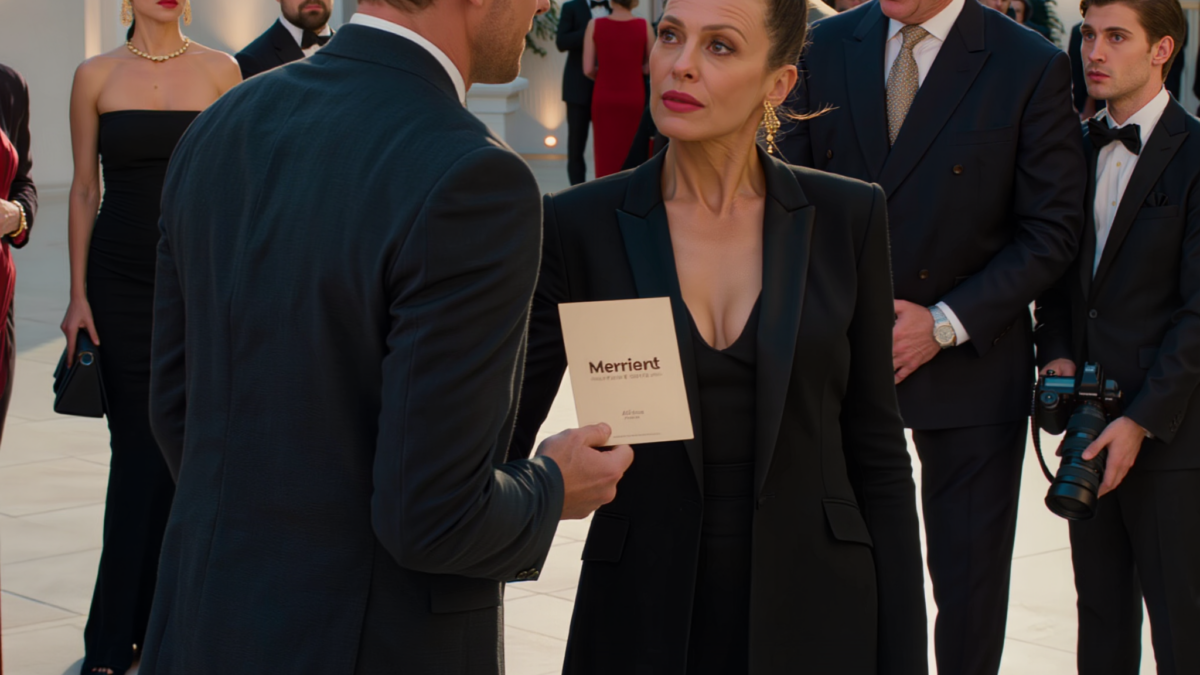
My name is Harrison Porter. I am twenty-nine years old. A little over a year ago, my father stood up at my wedding reception and tried to destroy my life in front of 200 of the wealthiest, most powerful people in North Carolina. As I sat beside the woman I loved, my parents watched the room fall silent while my father took the microphone and declared that I was a complete disgrace to the family bloodline. He looked right at my beautiful bride and told the crowd I was throwing away my bright future for a mechanic. He cut me off right there on the spot, promising me no inheritance, no trust fund, and no future in his world. But there is one massive earth-shattering thing they did not know.
The woman they humiliated was actually the very person holding the keys to the deal on which my father had staked his entire real estate empire. And now he is desperately seeking a meeting she has no intention of granting.
To understand what happened that night, you have to understand the family I was born into—and the woman my father never bothered to know.
Growing up as a billionaire’s son looked like a fairy tale to anyone who saw our family from the outside.
People watched movies and television shows and thought that sort of childhood must be magical. They picture endless college funds safely tucked away in high-yield accounts, private jets waiting on the tarmac for weekend getaways, luxury vacations to Europe every summer, and heavy mahogany doors opening for you before you even have to lift a finger to knock.
From the inside, the reality was very different. It could feel like a suffocating trap.
My father, Richard, owned half the luxury coastline along the Carolina coast. He was the kind of man who bought local politicians the way normal people buy groceries at Walmart. He wore a custom watch worth more than most people’s retirement 401(k) accounts.
To him, human beings were not people with feelings, dreams, or independent thoughts. They were strategic assets, leverage points, and inventory to be aggressively managed. That philosophy extended to his own children. We were never sons or daughters to him. We were pawns on a chessboard, moved to protect the king.
My wedding day was supposed to be a small, quiet, and profoundly personal affair. Sylvia and I had booked a modest, beautiful little chapel overlooking the water. It had weathered wooden pews and simple stained glass. We only wanted fifty chairs. We wanted the people who actually cared about us, the people who knew our hearts and supported our journey.
But my father hijacked the entire event.
He could not stand the idea of a Porter family event not being splashed across the society pages of the local and national papers. He swooped in and invited two hundred of his most influential business associates. To him, my marriage was another corporate networking event. He had the local catering changed to a high-end culinary team that served food nobody actually wanted to eat. The flowers were swapped out for imported orchids that cost more than a reliable car. And worst of all, he personally designed a seating chart that banished my bride’s few guests to the absolute darkest corners of the room. They sat beside the kitchen doors and the emergency exits. I can still remember the smell of that room.
It was an overwhelming, nauseating mix of expensive perfume, aged scotch, and quiet, suffocating contempt. Everywhere I looked, I saw people I did not know. People who were only there to kiss my father’s ring.
I should have seen it coming. My father had a long history of ruining anything he cannot completely control. I remember Thanksgiving dinners from my childhood where he would intentionally humiliate my cousins for choosing lower-paying careers like teaching or social work just to make himself feel powerful. He would mock their salaries right over the turkey. But this was my wedding day. I thought naively that he would grant me one single day of peace.
The ceremony itself was beautiful only because Sylvia and I focused entirely on each other. We tuned out the flashing cameras, the whispers, and the judgmental stares from people I had never even met. We held hands, exchanged our vows, and ignored the heavy, oppressive atmosphere. But the exact moment the reception started, the nightmare began.
I heard the sharp, bright sound of a silver knife tapping against a crystal champagne flute. It is a sound that still haunts me.
The entire room fell silent. That was the kind of unquestioning obedience a man like my father commanded. People seemed to stop breathing when he demanded their attention. He rose from the head table, buttoned his perfectly tailored suit, and smiled. It was the same predatory, lifeless smile he used right before he initiated a hostile corporate takeover or ruined a rival’s career in the boardroom.
He started with a toast to his own legacy, as though he had forgotten it was supposed to be my wedding. He talked about building his real estate empire from a single run-down motel. He paced the floor, holding his glass high, making sure the local governor and the wealthy investors were watching his every single move. He spoke about his wealth as if it were a religion, as if money was the only metric of human worth.
Then he turned to me. The fake warmth in his voice completely vanished, replaced by a cold, calculated cruelty that chilled the entire room.
He pointed his glass at Sylvia, who was sitting beside me wearing a beautiful, simple, unbranded white dress. He called her a grease stain on the family name. He actually used those exact words into a microphone in front of two hundred people. According to him, I had chosen a woman who smelled of motor oil and failure over the prestigious, untouchable legacy of the Porter family.
I felt my fists clench so hard my fingernails dug deep into my palms, nearly drawing blood. I looked over at my brother, Sebastian. He was the golden child of the family, the one who never questioned an order. He was sitting at the front table with his phone raised high, recording the entire spectacle for his social media followers. A smug, infuriating smile was plastered across his face. He enjoyed every second of my embarrassment.
Then I looked at my mother, Victoria. She sat there dabbing a perfectly dry eye with a lace handkerchief, performing her highly practiced role as the deeply disappointed matriarch who just wanted the best for her ruined son. She looked like she was attending a funeral, not a wedding. She did not intervene. She did not defend me. She just let the humiliation continue.
My father raised his voice so the people in the very back could hear every syllable. He announced that, as of that moment, I was no longer a Porter. He publicly stripped me of my advisory salary from the family foundation. He announced that there would be absolutely no inheritance, no trust fund, and no financial safety net of any kind. He said I was now a mechanic’s husband and that I could go enjoy the pathetic, impoverished life I had stubbornly chosen.
The room seemed to hold its breath. You could hear a pin drop on the hardwood floor. Two hundred sets of eyes were locked on me. They were waiting for me to break. They were waiting for me to apologize, to beg for my trust fund back, to humiliate myself the way my father demanded. It was a public execution of my independence, designed to break my spirit in front of an audience.
Instead, Sylvia stood up. She did not yell or tremble. Her posture remained steady. She looked at my father with a calm patience that I had never seen before. She smiled. It was the quiet, assured smile of a woman who knows exactly what she is worth. Then she spoke four words that seemed to reach every corner of the room.
“We don’t need it.” My father responded with a harsh, mocking laugh. He leaned into the microphone.
“How does a woman who rents a hangar to repair regional jets expect to support a man raised with luxury real estate and fine dining?” Sylvia just nodded slowly, refusing to take the bait. She told him that he would understand her work soon enough.
Then she sat down, took my hand under the table, and squeezed it once. It was a silent, powerful promise that we were going to survive this together.
I stood up next. I looked at the crowd, at the people who had spent their entire lives kissing my father’s shoes and participating in his toxic, abusive games. I pointed straight to the heavy double exit doors at the back of the hall. I told them that if they came to watch a family tragedy unfold, they were going to be severely disappointed. I told them this was a wedding and they could either stay and celebrate the love in the room or they could get out immediately. Around thirty people gathered their coats, whispered insults, and walked out highly offended by my tone. But the rest stayed, suddenly unsure of where the true power in the room really lay.
That night, as Sylvia and I danced in the half-empty hall, I felt a strange, intoxicating sense of freedom. I had finally cut the cord. I was free from the Porter family poison. But I had absolutely no idea that the real storm was just gathering momentum.
To understand that wedding day—and the extraordinary secret Sylvia kept beneath her work coveralls—I have to go back six months.
That was when my father tried to bargain away my future for a business merger. Six months before the wedding, I was summoned to a private dinner at the flagship resort my father owned. The dining room was a massive, intimidating space built with floor-to-ceiling glass overlooking the very ocean he loved to claim he controlled.
I arrived straight from a construction site. I was wearing my heavy work boots and a decent but worn button-down shirt. I am a structural engineer. I build things that hold actual physical weight. I do not trade imaginary numbers on glowing screens, and I do not manipulate people for a living. That fact had always been a massive disappointment to my father, who viewed physical labor, even engineering, as something meant only for the lower classes. He wanted me in a suit, lying to investors. I wanted to build bridges that didn’t collapse.
When I walked into the dining room, my father was sitting at the head of a long mahogany table. Next to him was a woman named Penelope. She had just pulled up outside the resort in a bright red Ferrari, tossing her keys to the valet without even looking at him, as if he were a piece of furniture. Penelope was the daughter of a massive hospitality conglomerate. She looked exactly like the kind of woman you would see fighting over millions in a messy, high-profile divorce settlement five years down the line. She spent the first ten minutes of the dinner completely ignoring me, loudly complaining about a custody battle her friend was going through, just to brag about the expensive lawyers involved.
Everything about her was perfectly calculated, from her designer dress to the way she looked right past me like I was a member of the waitstaff holding a dirty plate.
My father did not waste time with pleasantries. He poured a glass of expensive wine and casually mentioned that the corporate merger with Penelope’s family business was nearly closed. He said it would be highly beneficial for the stock price if Penelope and I were seen together in public. He wanted us attending charity gallas, hosting dinners, and smiling for the paparazzi. He was not asking me on a date. He was giving me an assignment. He was negotiating a contract where I was the primary asset to be traded.
I sat down, refusing the glass of wine he pushed toward me. I met his eyes.
“I am already seeing someone,” I said. “And it is serious.”
The atmosphere in the room completely froze. The clinking of silverware stopped. Penelope rolled her eyes, picked up her phone, and started texting, clearly bored by my rebellion. My mother, who had been sitting quietly at the edge of the table, tightened her grip on her linen napkin until her knuckles turned bright white. My father set his glass down very slowly.
“What family is she from?” he demanded. “What private school did she attend? What does her father do for a living?”
“You do not know her,” I replied. “She makes a living with her own two hands.”
My father leaned forward looking at me the way he looked at a piece of worthless contaminated land.
“In this family, marriage is a merger,” he told me.
“Sentiment is for weak people who cannot afford strategy.” I pushed my chair back, stood up, and left the dinner before the appetizers even arrived. I walked out to my truck feeling disgusted, but I knew my father would not just let it go. The Porter family way was to destroy anything they could not control.
Three days later, the retaliation began. I was called into his corporate office. It was a massive room on the top floor designed specifically to make anyone standing in front of the oak desk feel tiny and insignificant.
When I walked in, my father tossed a thin manila folder onto the desk. He had hired a private investigator to look into Sylvia. He read her name with absolute disgust as if the syllables tasted bad in his mouth. He listed her so-called failures, reading directly from the investigator’s report. “Aircraft mechanic. Rents an aging hangar at a regional airfield. No real estate assets. No influential family connections worth mentioning.” He threw the folder back onto the desk.
Photographs spilled out: pictures of Sylvia in her coveralls, wiping sweat from her brow. He asked whether I was really throwing away a billion-dollar merger for a woman who got her hands dirty repairing other people’s engines. I told him Sylvia was a good person. I told him she had more integrity in her little finger than anyone sitting in his boardroom. My father stood up and walked to the massive glass window, placing his hands behind his back. He told me that good people do not build legacies. He said they just get hired by the ruthless people who do. Then he turned around and delivered his final cold warning.
“Porters do not marry mechanics.” The insult was directed at Sylvia.
But what really made my blood boil was that he was insulting my late grandfather. My grandfather Henry started out as a mechanic in a tiny cinder block machine shop. He built his wealth with grease under his nails and sweat on his brow. I remember standing at his funeral watching my father rush through the service just so he could get back to a board meeting. My father had spent his entire adult life trying to erase that history, pretending we came from old aristocratic money.
I left that office knowing a war had just started and I was prepared to stand my ground.
Let me tell you how I actually met Sylvia because it was nothing like the shallow high-society garbage my family valued.
I met her four months before that disastrous dinner. My engineering firm had been hired to assess the structural integrity of an old aviation hangar at a regional field before they expanded it. I was crawling around the massive steel trusses with a heavy flashlight, checking for severe corrosion. The whole building vibrated intensely with the sound of a jet engine spooling up a few bays over. It was the kind of sound you felt in your chest before you recognized it with your ears. I climbed down the scaffolding and saw a woman in dark blue coveralls wiping thick oil off her hands with a shop rag. She had a smudge of grease on her cheek and she was watching me measure a rusted support beam.
The name tag on her chest read TIDEWATER. She walked over and said the beam had been giving safety inspectors misleading readings for a decade. We started talking not about money, not about status, but about load-bearing limits, tensile strength, shear forces, and structural failures. We argued about the support brackets. She was brilliant. She challenged me intellectually in a way no one ever had.
We talked for two straight hours while standing on that cold concrete floor, ignoring the noise of the airfield around us. She asked me something nobody in my family had ever asked: “What would you build if money did not matter and nobody was watching?” She paid for our terrible coffee from a vending machine with a crumpled dollar bill. I noticed the way the older seasoned pilots walking by nodded to her with a level of deep respect that you do not normally give to an ordinary line mechanic. I filed that detail away in my mind, but I was too captivated by her brain and her smile to overthink it. I fell in love with her because she was completely real.
When I asked her to marry me, I did it right there in that same noisy, oil-scented hangar. There was no rooftop restaurant, no string quartet, no expensive diamond picked out by a personal shopper. She had already machined the ring herself on a lathe in the back of the shop. It was simple titanium, incredibly strong, slightly imperfect at the seam, and perfectly unpretentious. She looked at me and said she could not give me the luxury life my family had meticulously planned for me, but she promised she would never make me feel small. I told her I wanted no other life.
When I finally told my family about the engagement, I knew it would be like setting off a bomb, but I vastly underestimated just how vicious my father could be.
I thought he would just yell. I thought he would throw a tantrum and cut a check to make her leave.
I did not realize he was going to enlist my so-called best friend to stab me in the back.
Julian had been my friend since college. We rushed the same fraternity. We took road trips together. I trusted him more than almost anyone.
A week after the disastrous meeting in my father’s office, Julian invited me out for a beer at our usual spot downtown. I poured my heart out. I told him everything. I told him about the proposal, about Sylvia, about her titanium ring, and about my dad’s ultimatum. Julian nodded, bought the next round of drinks, patted my shoulder, and told me he had my back no matter what.
Two days later, my father called me. He quoted word for word the exact conversation I had with Julian at the bar. He knew about the titanium ring. He knew about the hangar. Julian had gone straight to my father’s corporate office and sold every piece of my personal life in exchange for a massive promotion at my father’s primary holding company. My own best friend traded my trust for a corner office, a fat salary bump, and a company car.
That was the trigger. That was the moment I realized I was not just fighting my father’s massive ego. I was fighting a deeply corrupt system that poisoned everyone it touched. And I was about to find out just how cold that system could get when it decided to starve you out completely.
The financial cutoff happened incredibly fast. It was brutal, efficient, and completely silent. My father treated my life the same way he treated a failing subsidiary. He liquidated it without a second thought. It started on a Tuesday morning. I went to a local hardware store to buy some basic supplies for a home project. I grabbed some lumber, drywall screws, and paint and walked up to the register. I swiped my primary credit card. The machine beeped twice. DECLINED appeared on the screen. I laughed it off, assuming it was a simple bank error or a fraud alert. I pulled out my backup card and swiped it. Declined again. The cashier gave me that look, the one of pity mixed with annoyance because there was a line forming behind me.
I left the cart beside the register and walked out.
By the time I walked out to the parking lot and got into my truck, my phone was buzzing aggressively with banking alerts.
Every single account tied to the Porter family name had been frozen tight. My advisory salary from the family foundation stopped without warning. The college fund my grandfather had supposedly set up for my future children was locked behind a complex legal trust that my father had his corporate lawyers amend. Even my access to the family’s private real estate properties, places I had keys to since I was a teenager, had the locks changed overnight. I was completely cut off from the only financial reality I had ever known.
My father was actively trying to starve me out. He believed that if he cut off my oxygen, I would panic, come crawling back on my knees, apologize for embarrassing him, and marry the Ferrari girl. He genuinely believed money was the only thing keeping me upright.
I did not panic. I am an engineer. I calculate the load before reacting to stress. I went home, opened my laptop, and created a strict budget: rent, utilities, groceries, insurance. I had some modest personal savings from my own freelance work. And I could aggressively chase independent consulting contracts that had absolutely nothing to do with the Porter empire. The math was tight, but the structure held.
Sylvia found me at the kitchen table late that night, staring blankly at the spreadsheets glowing in the dark. She placed a warm hand on my shoulder and gently offered to cover all our expenses. She said she had savings set aside and that we would be fine. I looked at her tired eyes and the grease stains permanently worked into the calluses on her hands. I told her no. I told her I needed to stand on my own two feet first. I told her I would not let my father turn me into someone who could no longer make his own choices. She did not argue. She just kissed my forehead, poured me another cup of coffee, and trusted me to handle it.
But my father was far from done. When the financial cut off didn’t work, he sent his best emotional weapon next.
Two days later, I heard a sharp knock at the door of my small apartment.
It was my mother, Victoria. She stepped into my living room looking like she had just stepped off a runway in Milan, clutching her designer purse tightly against her chest like my apartment was infected with a disease. She did not ask how I was doing. She did not ask how I was going to pay my rent or buy food.
She immediately began to cry. It was the same manipulative performance she used at every HOA meeting, every charity gala, and every family dispute when she did not get her way. She begged me to apologize to my father. She said I was tearing the family apart. She told me I was deeply embarrassing them in front of their wealthy friends and that people were starting to talk at the country club. She even complained that the stress of my rebellion was ruining her upcoming luxury cruise to the Mediterranean.
I stood there feeling absolutely nothing for the tears rolling down her cheeks.
“Do you care whether I am happy?” I asked. “Do you even want to meet Sylvia—the woman I am going to spend the rest of my life with?” My mother recoiled in disbelief. She said she would never willingly sit in the same room as a woman who works in a dirty garage. She fixed me with a look and repeated the line she had used my entire life to control me.
“Don’t make me choose, Harrison.” I felt a cold clarity wash over me. I realized she was not there to save me. She was there to protect her own comfortable life.
She did not want the society gossip to ruin her week. She wanted me to fall in line so she could keep taking luxury vacations without my father yelling at her.
I looked at the woman who raised me and I established my boundary right then and there.
“You already chose, Mom,” I said calmly.
“You chose his money over your son a long time ago. The door is right behind you.” She stopped crying instantly. Her practiced expression vanished. She glared at me, turned on her heel, and walked out without another word.
I did not realize it at the time, but my mother was hiding a secret of her own. A secret so vile it would eventually shatter whatever tiny remaining respect I had for her. The ultimate betrayal culminated on my wedding day, which brings me back to the moment my father took the microphone.
When my father stood up, publicly disowned me, and called my wife a grease stain, he expected us to surrender. He expected Sylvia to run out of the room crying in shame. He expected me to beg for my inheritance back. He expected the sheer fear of poverty to bring me to my knees in front of everyone.
He had miscalculated. As we walked out of the reception hall, leaving the whispers and shocked faces behind, my phone buzzed in my pocket. It was a text from Julian, my former best friend. It read, “I tried to warn you, man. You should have just played the game. Nothing personal, just business.” I blocked his number, dropped the phone back into my pocket, and opened the car door for my wife. We drove away from the billion-dollar resort, away from the toxic inheritance, away from the fake friends, and away from the people who measured human worth entirely by bank balances.
We moved into a small, drafty, clapboard house near the airfield. The kitchen was tiny, the porch sagged, and the plumbing made a terrible noise every time you turned on the tap. It was the greatest place I had ever lived.
For the first two weeks, it was just Sylvia and me, building a life from scratch. But I started noticing things about my wife that I could not explain.
Late at night, I would hear her out on the porch speaking in a low, highly authoritative voice on her phone. She used words and phrases that line mechanics absolutely do not use. I heard her say things like, “Push the maintenance window and do not loop in the legal team until the board signs off on the acquisition.” A line mechanic does not usually consult a legal team about a major acquisition. A mechanic does not have a board of directors.
One morning, I found a glossy trade magazine sitting on our kitchen counter. It had been left there by one of her pilot friends. The cover story was about a reclusive billionaire who had just bought out a major aviation competitor. The headline read, “The Billionaire Who Still Turns Her Own Wrenches.” There was no face in the photo, only a high-resolution picture of a gloved hand resting on a massive turbine blade.
I stared at that magazine for a very long time. I looked closely at the grease stains on the gloves. I looked at the distinctive way the thumb rested against the metal. It looked exactly like Sylvia’s hand.
When Sylvia walked into the kitchen, she saw me looking intently at the magazine. She froze. She did not say a word. She just watched me, waiting to see if I was going to put the massive puzzle pieces together. But my mind could not make the leap. The idea was simply too massive. I just smiled, tossed the magazine aside, and told her I needed to head to a job site.
I did not press her for answers. We had promised each other that trust would be earned with time and honesty. But the truth was coming, and it was going to hit my family like a runaway freight train.
Two weeks after the wedding, my phone rang.
It was an unfamiliar number. The voice on the other end belonged to Beatrice, a senior partner at a very old, very intimidating law firm located right in the heart of the financial district. Beatrice had been the personal lawyer for my late grandfather Henry for over thirty years before he passed.
“Please come to my office as soon as you can,” she said. “It concerns your grandfather’s estate, and it is urgent.”
I drove downtown in my beat-up truck, parked between a row of luxury sedans, and walked into a massive lobby that smelled of expensive leather, lemon polish, and old money.
Beatrice was a sharp, no-nonsense woman in her late sixties. She did not offer me coffee or small talk. She just slid a heavy sealed manila envelope across her polished mahogany desk. She looked at me over her reading glasses and explained that my grandfather had left specific, confidential instructions before his death. He had directed that a confidential addendum to his estate plan was to take effect only after I married a woman of my own choosing and specifically only if I did so without my father’s approval. I stared at the envelope, confused. I asked her why I was only hearing about this now. My grandfather had died over a year ago. Beatrice’s jaw tightened. She leaned back in her heavy leather chair.
“Your grandfather entrusted this envelope to your mother, Victoria,” Beatrice said. “He asked her to give it to you when the time was right. Instead, she brought it here eleven months ago, still sealed. She demanded I lock it away and pretend it did not exist. I could not simply erase his instructions, Harrison. Your mother tried to hide your inheritance from you. She wanted you dependent on your father’s money.”
I felt the air leave my lungs. My own mother, she had sat in my living room, crying fake tears, emotionally manipulating me, knowing full well she had aggressively buried my grandfather’s final wishes just to keep me under their thumb. The betrayal was so deep, so profoundly sickening, it bypassed anger entirely and settled into a cold, hard knot in my stomach. She was willing to watch me struggle and lose access to the family accounts, just to maintain the family image and her own comfort.
I tore open the envelope. Inside was the property deed to my grandfather’s original cinder block machine shop, the exact place my father hated so much.
But that was not all. There was a legal document transferring a 12 percent ownership stake in a highly lucrative structural tech company. The company, it turned out, had spent six years using a patented damping bracket I had sketched in high school and almost completely forgotten about. My grandfather had secretly taken my sketch, funded the patent, and invested it for me. I looked at Beatrice, my hands shaking slightly. I asked her if the patent had been generating any real revenue. She gave me a thin, deeply satisfied smile.
“The royalties and dividends have been building for six years,” Beatrice said. “Harrison, you are financially independent. You have been for a long time. Your family simply made sure you did not know it.”
I walked out of that lawyer’s office holding the heavy brass calipers my grandfather had left for me in the envelope. The metal felt warm in my hand. My family had tried to ruin me, but my grandfather had reached from beyond the grave to give me both a refuge and a chance to start again. I did not tell Sylvia about the money right away, not because I did not trust her, but because I wanted to prove to myself that I could build my own foundation first.
I reached out to a former colleague, Nora. Nora was a brilliant architect who had been unfairly sidelined by corporate politics at a major firm.
Together, we launched our own independent engineering firm right from my living room. Because we were entirely outside the Porter family’s toxic sphere of influence, our reputation grew incredibly fast. We did not bribe local officials. We did not take dangerous shortcuts on materials to maximize real estate profits. We did the hard math. We checked the loads meticulously. And we did honest, careful work.
Within months, we were booking massive commercial contracts based purely on word of mouth.
Then an opportunity arrived, wrapped in the most unlikely irony. My father was weeks away from opening his crown jewel, a billion-dollar ultraluxury resort built right on the coastline. The entire marketing campaign, which was plastered all over the state, was built around one massive promise, an exclusive partnership with a private aviation company that would fly billionaires directly onto the resort’s private runway. My father had been desperately trying to close the deal with the aviation company for two long years. He had practically begged them for a meeting. The name of that company was Meridian Aviation Group.
One afternoon, I was at a construction site when a foreman named Greg approached me. Greg was a no-nonsense contractor who only cared about structural integrity and keeping his crew alive. He told me he was managing the construction of the signature overwater glass pavilion for a new luxury resort farther up the coast. The original engineers had completely screwed up the load calculations for the cantilevered floor. Greg refused to let his guys continue working until an independent, highly respected structural engineer signed off on the corrected blueprints.
He handed me the heavy roll of blueprints. I unrolled them on the hood of my truck and looked at the project name. It was my father’s billion-dollar resort.
Greg had absolutely no idea who I was. He did not care about my last name. He just knew my firm had the best safety record in the county. Without my legal engineering stamp, the most photographed, expensive room in my father’s legacy project, could not legally open to the public. I held the absolute power to delay his grand opening by months, costing him millions in penalties, investor panic, and potential lawsuits.
I took the job not for revenge, but because a building designed to hold hundreds of people forty feet above the crashing ocean did not care about family arguments. It obeyed gravity.
That night, I went back to our little clapboard house. Sylvia was sitting on the porch in the twilight. She had two cups of coffee waiting. She looked nervous, twisting a paper napkin in her hands. She reached into her jacket and handed me a thick envelope. It was heavy cream colored card stock with gold embossing.
It was an invitation to the grand opening of my father’s resort, but it was not sent by my father. The host named on the invitation was Meridian Aviation Group.
Sylvia looked me in the eyes. She said she had never lied about what she did for a living; she simply had not explained the size of the business behind it. She wanted a man who loved her before learning what she was worth on paper. She asked me to attend the opening with her so I could finally see the whole picture.
I did not sleep that night. I sat at my laptop in the dark and aggressively searched for the founder of Meridian Aviation Group.
The search results were a wall of articles describing a fiercely private billionaire who refused to be photographed or give interviews. And there at the top of the search was the same photo I had seen on the magazine cover, the gloved hand resting on the massive turbine blade. I looked at the coveralls in our laundry basket. The logo said Tidewater. I looked up Tidewater. It was a regional subsidiary entirely owned by Meridian Aviation.
I sat back in my chair in the dark and I started to laugh. I laughed until my chest hurt and tears formed in my eyes. For two years, my arrogant, manipulative father had been begging for a meeting with the CEO of Meridian Aviation. He had been desperately chasing a signature from the very woman he had called a grease stain at my wedding. My father was about to walk straight into a buzzsaw of his own making, and I was going to be standing right there in the front row holding my grandfather’s calipers when it happened.
The night of the grand opening arrived with a heavy electric tension in the air. For two long, grueling weeks, I had carried the absolute certainty of my father’s impending doom in my chest. It sat right alongside the heavy brass calipers my grandfather had left me safely tucked into the inner breast pocket of my suit.
Sylvia and I did not say much on the drive up the coastline. We honestly did not need to. We were driving my old reliable battered work truck. The worn tires hummed against the dark asphalt as we left the small clapboard house and the grease-stained airfield far behind us. We were heading straight into the belly of the absolute beast.
Sylvia looked absolutely incredible. She had finally traded her dark blue, oil-stained coveralls for a razor-sharp, perfectly tailored black evening suit. There was no flashy jewelry, no ostentatious displays of inherited wealth. No desperate cry for attention. She wore her quiet confidence like an impenetrable suit of armor. I wore a simple, clean, dark suit. I felt the comforting weight of the calipers on my left side and on my right side I carried a sealed leather engineering folder. Inside that folder was the final set of load calculations and my final structural verification and registered engineering seal for the overwater pavilion.
We pulled up to the massive valet stand at the flagship resort. The sprawling circular driveway was an absolute sea of extreme luxury vehicles. I saw a perfectly aligned row of black armored SUVs, several imported sports cars, and right near the front, Penelope’s obnoxious bright red Ferrari. The valet, a young kid in a crisp white uniform with gold epaulets, looked at my heavily dented truck with a mixture of profound confusion and genuine panic. He clearly did not know if he was supposed to park it, hide it behind the dumpsters, or call a tow truck to have it forcibly removed from the prestigious real estate. I rolled down the window, handed him the keys, gave him a very generous cash tip, and looked him dead in the eye.
I told him to keep the truck close because we might need to leave in a hurry. Sylvia linked her arm firmly through mine, and we began the long walk up the massive imported stone steps toward the grand entrance.
The resort itself was a towering, arrogant monument to my father’s massive ego. It was built directly into the fragile coastal dunes, an imposing, brutalist structure of cold steel, tinted glass, and imported Italian marble. But my eyes immediately went to the signature overwater pavilion. It jutted out forty feet over the crashing surf, glowing like a massive, fragile lantern against the pitch black ocean. It was a structural marvel. The cantilevered floor was built with reinforced glass panels designed specifically to give the wealthy guests the terrifying illusion of floating directly above the churning water while they drank thousand-dollar champagne and gossiped about the latest corporate lawsuit.
I knew every single inch of that massive steel framework. I knew the exact tensile strength of the heavy industrial bolts holding the entire structure to the coastal bedrock. I knew it was safe, but only because I had personally meticulously ensured it was safe after the original firm botched the job. But legally, at this exact second, that glowing room was a massive multimillion-dollar liability.
We walked through the heavy, oversized mahogany doors and stepped into the main ballroom. The sheer suffocating scale of the wealth in the room hit me like a physical wall.
At least five hundred guests were in attendance. I saw corrupt local politicians, massive commercial real estate developers, and ruthless international investors who controlled billions in liquid capital. Waiters and pristine tailored tuxedos glided effortlessly through the dense crowd, carrying heavy silver trays loaded with beluga caviar and vintage champagne. And right by the grand entrance, exactly as I expected, was a massive hand-calligraphed seating chart mounted on a ridiculous solid gold easel. My father simply could not throw a party or even host a simple dinner without assigning every single person in the room their exact rank and social value.
I scanned the incredibly detailed chart and easily found the center table. It was officially designated as the chairman’s table. The placard read Meridian Aviation Group. There were four heavy ornate velvet-lined chairs surrounding that massive table and they were completely empty. My father had placed the Meridian table dead center, practically creating a religious shrine to the reclusive aviation partner he was so desperately trying to lock down. He was treating empty wooden chairs with vastly more respect and reverence than he had ever shown his own flesh and blood. Within 60 seconds of us entering the crowded room, my toxic family spotted us.
My mother, Victoria, was the very first to approach. She wore a heavy blinding diamond necklace that could have easily funded a small city’s public school district for an entire year. When she saw me, she immediately plastered on her fake camera-ready society smile. It was the smile she used when she was plotting something terrible. She clearly genuinely thought I had finally broken under the financial pressure. She thought I had come crawling back to beg for forgiveness, a warm meal, and a total reinstatement of my foundation salary. She reached out to touch my arm, her voice dripping with an artificial sweetness that made my skin crawl. She told me she was so incredibly relieved I had finally come to my senses and abandoned my ridiculous rebellion.
She leaned in close, her expensive perfume burning my nose, and said my father was actually willing to forget the entire embarrassing wedding fiasco if I just apologized publicly and quietly divorced Sylvia. She actually used the word divorce as casually, as if she were suggesting I return a slightly defective sweater to a department store. She patted my arm and said the family lawyer could easily make the messy paperwork disappear. Ensure Sylvia got absolutely nothing in the settlement and my massive inheritance could be fully restored within the week. She promised me that the trust fund and the college fund for my future acceptable children would be unlocked the second the ink dried on the legal documents.
I looked at the woman who had intentionally maliciously hidden my grandfather’s final will in a dark vault for eleven months just to keep me financially hostage. I did not raise my voice. I did not cause a scene for the wealthy onlookers. I just looked at her manicured hand resting on my suit sleeve and told her to step back immediately. The sheer freezing coldness in my voice made her flinch as if she had been physically struck. I told her I was absolutely not there to beg and I was definitely not there to apologize to the ruthless man who treated human beings like disposable inventory. Her fake practice smile completely shattered. Instantly replaced by a look of genuine confusion and rapidly rising panic.
She suddenly realized she had zero leverage.
Before she could even attempt to respond, my brother Sebastian sauntered over. He had a professional-grade stabilized camera rig in one hand, actively vlogging the entire prestigious event for his massive brain-dead online audience.
He pointed the wide-angle lens right at my face and smirked. He asked his eager followers to warmly welcome the prodigal son, who had stupidly traded a massive trust fund and a guaranteed promotion for a greasy, unheated garage. He laughed, a high, incredibly irritating sound, and looked at Sylvia. He asked her loudly if she had managed to vigorously scrub the thick motor oil out from under her dirty fingernails before handling the expensive catering.
Sylvia did not even blink. She did not shrink away from the camera. She looked Sebastian dead in his empty eyes and told him that real honest work leaves a mark. While completely empty, useless people leave absolutely nothing behind when they are gone. Sebastian’s arrogant smirk violently faltered. He lowered the heavy camera rig slightly, clearly deeply unsettled by her complete, unwavering lack of intimidation. He was used to people cowering from his lens.
Then the sea of wealthy guests parted, and my father walked toward us. Richard Porter was entirely in his element. He was surrounded by a pathetic small entourage of yes-men, sycophants, and terrified minor executives. He looked at me, then looked at Sylvia, and his expression hardened into a rigid mask of contempt. He demanded to know what the hell I was doing crashing his most important corporate event of the decade. He said he had already publicly disowned me, completely severed my salary, and he absolutely did not want my embarrassing presence ruining the pristine optics of the night. He puffed out his chest and proudly loudly announced that tonight was about securing the final binding signature for a massive exclusive contract that would permanently cement his legacy in the commercial real estate world.
He pointed a manicured aggressive finger at the empty chairman’s table. He boasted that the elusive, brilliant founder of Meridian Aviation Group was arriving at any moment. He demanded that I take my mechanic wife and stay entirely out of sight near the service elevators so I would not accidentally embarrass him in front of people who wielded real power.
I stood my ground. I looked around the massive room, taking in the sheer staggering arrogance of the man who had raised me. I told him he should be very, very careful about who he dismisses as unimportant and worthless.
“Real power does not always announce itself with a raised voice, threats of a lawsuit, and an expensive watch,” I told him.
My father laughed. It was a harsh, wildly dismissive sound that carried over the ambient buzzing noise of the crowded room. He leaned in close, his breath smelling heavily of aged scotch and strong mints. He whispered that I was a complete monumental failure. He said I was a mechanic’s husband living in a drafty shack and that my pathetic, desperate attempt to build an independent engineering firm would inevitably crash and burn without his financial backing and political protection. He told me to go stand in the dark corner with the catering staff exactly where I belonged.
I did not move a single inch. I just smiled. It was the same calm, patient, deeply unsettling smile Sylvia had given him at our ruined wedding. I told him I would not miss the main event for the entire world. Right at that exact moment, the blinding overhead lights in the massive ballroom began to dim. A low, powerful, highly rhythmic sound began to aggressively pump through the state-of-the-art multimillion-dollar sound system. It was the distinct climbing, bone-rattling whine of a massive jet turbine spooling up for takeoff. It was a sound I knew deep in my bones. It was the sound of the airfield. It was the sound of my wife’s true, undeniable element. The crowd went completely, deathly silent, their attention snapping immediately to the brilliantly lit stage at the front of the room.
The master of ceremonies, a highly polished executive named Vincent, stepped up to the microphone. The energy in the room was electric, crackling with anticipation. The trap was perfectly set. The steel jaws were wide open, and my father, completely blinded by his own towering ego and desperate greed, was eagerly, happily walking right into it.
The recorded jet turbine swelled to a deafening crescendo that made the crystal glasses tremble on their tables. Then it cut to pin-drop silence. The massive highdefinition screens behind the wooden podium flared to life with blinding intensity. A single line of crisp, elegant white text resolved against a pitch black background. MERIDIAN AVIATION GROUP — FOUNDER AND CHAIR.
Vincent, the master of ceremonies, leaned heavily into the microphone. His deep, trained voice echoed through the breathless waiting room. He announced with profound reverence that for the first time in the company’s highly secretive history, the notoriously private founder and chairman of Meridian Aviation Group would be addressing the public and their future partners in person.
My father seemed to vibrate with raw anticipation. He took a massive step forward, completely turning his back on me, his face hungry and desperate for the ultimate corporate victory. He was ready to shake the hand of the billionaire who would make his flagship resort a global untouchable phenomenon. He was ready to secure the contract that would double his net worth.
Beside me, Sylvia gently let go of my hand. She gave me one small, incredibly private, deeply loving look. It was the look of a tired woman who was finally taking off a heavy, suffocating disguise. She calmly adjusted the lapels of her black evening suit, stepped gracefully around my father’s rigid form, and began walking calmly and deliberately down the center aisle toward the brilliantly lit stage.
For a few long, agonizing seconds, absolutely nobody understood what was happening. My father snapped his fingers aggressively at a nearby security guard, angrily, pointing at Sylvia’s retreating back, demanding loudly that the crazy woman be stopped immediately before she ruined the multi-billion dollar presentation. But the massive security guard, who was actually a Meridian corporate employee, cross-contracted specifically for the events security detail, immediately tepped back, crossed his hands over his belt, and bowed his head deeply and respectfully as Sylvia passed him.
Sylvia effortlessly climbed the short carpeted stairs to the stage. She walked right up to the wooden podium.
The master of ceremonies smiled warmly and stepped back in deference, and gestured toward her with an open hand. He spoke into the microphone, officially introducing her to the five hundred wealthiest, most powerful people in the state.
“Ladies and gentlemen, please welcome the visionary founder and chair of Meridian Aviation Group, Sylvia Hail.” The silence that fell over the ballroom was not just quiet. It was a heavy, suffocating physical weight. It was the terrifying sound of a massive, unstoppable structural collapse happening in real time.
I watched my father’s face. It was the exact moment I had waited my entire adult life to see. The arrogant, untouchable CEO did not yell. He did not scream. He simply totally emptied out. The color drained from his face, leaving him a sickening translucent shade of gray. His rigid jaw went completely slack. The expensive crystal champagne flute he was holding tilted in his suddenly numb fingers, spilling the vintage wine down his custom-tailored cuff, pooling on his expensive shoes, and he did not even notice the wetness.
My mother let out a sharp, genuine, horrified gasp. Her manicured hand flew up to cover her mouth, and her diamond necklace caught the light as she trembled. She looked like she had just seen a terrifying ghost emerge from the floorboards.
Sebastian, who was still livestreaming the event to thousands of eagerly watching people, literally dropped his expensive camera rig. It hit the imported marble floor with a loud, sickening crack, shattering the lens. But he did not move a single muscle to pick it up. He was entirely paralyzed by the sheer magnitude of his own catastrophic mistake.
The entire room suddenly erupted into a deafening, overwhelming wave of applause. Five hundred wealthy people rose to their feet in a massive standing ovation, desperately clapping for the famously invisible billionaire who had finally miraculously revealed herself. And standing right in the dead center of all that chaotic noise, my father stood entirely alone and motionless. He was completely, hopelessly trapped in a nightmare entirely of his own making. The woman he had publicly, viciously humiliated, the woman he had called a grease stain and a pathetic peasant at my wedding, the woman he had demanded I divorce, was an undisputed leader of the aviation industry.
Sylvia leaned into the microphone. Her voice was steady, deeply professional, and commanded absolute, unquestionable authority. She did not gloat. She did not stoop to mentioning our ruined wedding. She did not demand an apology. She simply thanked the crowd for their time, spoke briefly and passionately about the incredible dedication of the blue-collar line mechanics who actually kept the massive commercial fleets in the air and expertly outlined her brilliant vision for the future of regional aviation. She was brilliant. She was untouchable. She was a queen holding court.
When she concluded her brief speech and stepped away from the podium, a frantic swarm of desperate investors, state senators, and media editors immediately rushed the stage, practically trampling each other, desperate to shake her hand and beg for a moment of her time.
My father suddenly snapped out of his deep paralysis. Desperation is a very, very fast emotion. He violently shoved his way through the thick crowd of billionaires, pushing past an elected official to reach the front edge of the stage. He reached out his shaking hand, his voice pitching upward into a frantic, pathetic, pleading tone. He called out to her over the noise. He said this was a wonderful, hilarious surprise. He tried to force a jovial laugh, loudly claiming to anyone who would listen that he had always known Harrison had impeccable taste in brilliant women. He begged her, practically whining, to finalize the partnership terms for the resort tonight. He desperately used the word family.
“We are family now,” he declared.
“Together, we could dominate the entire coastline’s real estate market.”
Sylvia stopped walking. The greedy crowd around them instantly quieted down, sensing the massive, dangerous tension radiating from the stage. She looked down at my father’s desperately extended hand. She did not take it. She did not even flinch. She spoke clearly enough for the people around her—and the nearby microphones—to hear every word. She told my father she had received his final aggressive contract proposal months ago, and she told him flatly and coldly that she had officially declined it. My father’s face went a dangerous dark red. He stumbled over the question, asking why. He yelled that it was the most obvious lucrative real estate deal of the decade.
He began rambling about the profits they would share, stock options, and the advantages of controlling the market together.
Sylvia looked at him without a trace of uncertainty. “Meridian Aviation does not partner with people who treat their own family like disposable inventory,” she said, her voice clear across the room. “You had a chance to welcome me into your life as a human being. Instead, you humiliated me at my wedding. The deal is permanently off the table.” The investors surrounding them collectively gasped. A reporter from a major financial network frantically started typing on his phone, already drafting the headline that investors would remember when Porter Resorts stock began trading again. The entire foundation of my father’s billion-dollar legacy project had just been publicly, effortlessly vaporized.
Without Meridian’s massive private fleet and exclusive airfield access, his glorious resort was just another incredibly overpriced isolated hotel. He had aggressively presold the exclusive aviation experience to a massive waiting list of billionaires. And now he had absolutely nothing to deliver but broken promises and impending breach of contract lawsuits.
My father realized the sheer unmitigated scale of the disaster. He slowly turned away from Sylvia and looked wildly across the massive room until his manic eyes locked onto me. The desperate pleading businessman vanished and the abusive tyrant returned in full force.
He marched aggressively through the crowd toward me. His face twisted in pure, unrestrained violent fury.
He pointed a shaking, accusing finger directly at my chest. He accused me of planning the entire humiliation from the start. He yelled that I had deliberately maliciously set him up to be humiliated in front of his board of directors. He screamed that I was actively trying to ruin the Porter legacy and that he would bury me in a massive lawsuit for corporate sabotage.
This was it. This was the exact defining moment my entire life had been building toward. I had promised myself and I had promised Sylvia that I would meet his chaotic fury with a steady voice and a clear mind. The loudest person in the room is always the one rapidly losing control. I was absolutely not going to lose control.
I reached calmly into the inner pocket of my suit jacket. I did not pull out a legal threat. I did not pull out a retaliatory lawsuit. I slowly pulled out my grandfather’s heavy brass calipers. The cold metal was worn beautifully smooth from forty years of honest, hard, exhausting work.
I held them up right in front of his red, sweating face, letting the bright ballroom chandeliers catch the polished brass. I asked him, my voice dangerously quiet, if he remembered what they were. I told him they belonged to his father, the man who had started everything our family owned in a dirty, unheated machine shop with thick grease permanently wedged under his fingernails. I aggressively reminded my father that he had stood up at my wedding and proudly declared that Porters do not marry mechanics. I let the calipers turn slowly, hypnotically in my fingers. I told him that the first porter who ever actually mattered to the world was a mechanic and that he had spent his entire pathetic hollow life pretending he wasn’t that great man’s son.
The wealthy crowd around us had gone completely deathly silent. The reporter’s digital recording device was pointed right at us, picking up every single devastating word.
I kept my voice perfectly even and entirely unhurried. I reminded him that he had publicly stripped me of my inheritance and my salary. I smiled, a genuine smile of pure freedom. I told him that was perfectly fine because I was never ever going to inherit his corrupt rotten empire anyway. I was going to outbuild him.
Then I delivered the final structural blow because it was the absolute truth and because he desperately needed to hear it from the son he had repeatedly dismissed as a worthless disappointment.
I pointed past him toward the massive glass windows overlooking the dark churning ocean. I pointed directly at the glowing cantilevered overwater pavilion.
“By the way, Richard,” I said, deliberately leaving out the word Dad, “that glass pavilion your marketing campaign is built around—the one filled with your guests tonight—cannot legally open to the public without my registered engineering seal on the corrected plans. Your original engineering firm got the load calculations wrong. The general contractor hired an independent firm to verify the structural design and protect everyone who would use it.” I paused, letting the terrifying reality sink deep into his panicked brain.
“I own that independent firm. I signed the final safety verification this afternoon. You are welcome, Richard. I do careful, honest work. I always did.”
The silence that followed was absolute and crushing. I had not threatened to withhold the signature. I had not stooped to his pathetic level of blackmail or extortion. I had simply done my job perfectly, proving beyond any shadow of a doubt that I held the absolute legal power over his most prized possession. And I had earned that immense power with my own two hands and my own training and professional license. My father stood there completely and utterly broken. The billionaire tyrant, the man who controlled politicians and ruined lives for sport, had absolutely nothing left to say.
The fallout from that catastrophic night moved vastly faster than my father’s incredibly expensive public relations team could ever hope to contain. The internet is a ruthless, unforgiving, highly efficient machine.
By the time the terrified valet was bringing our battered truck around to the front entrance, Sebastian’s disastrous live stream had already been clipped, copied, and shared across every major social media platform globally. The irony was deeply, wonderfully poetic. The golden child, who had spent years aggressively mocking me online for clout, had accidentally broadcast the absolute, undeniable destruction of his own family’s financial empire.
The viral footage showed my father begging like a desperate child. It showed Sylvia’s cold, devastating, deeply professional rejection. And crucially, the internet sleuths immediately provided the brutal context by digging up the wedding video Sebastian had arrogantly posted six months earlier. The public narrative shifted instantly and violently. My father was no longer seen as a powerful, commanding, visionary CEO. He was totally exposed as a petty, arrogant, abusive bully who had called a self-made billionaire a grease stain.
Before Sylvia and I even reached the interstate highway, the massive financial dominoes began to fall. Two of my father’s primary institutional investors found immediate panicked reasons to leave the party early. I saw one of them, a notoriously ruthless hedge fund manager, whispering urgently and angrily into his phone as he rushed toward his armored town car. He was already aggressively pulling his capital out of Porter Resorts before the market opened.
The governor’s official photographer, who had been heavily instructed to document the historic partnership, quietly packed up his expensive gear and physically redirected the governor away from my father. Being associated with Richard Porter was suddenly a massive career-ending political liability.
As we walked out through the grand lobby, my mother tried one last incredibly desperate attempt to salvage her comfortable, luxurious life. She intercepted me near the marble coat check. Her grand performance was running on absolute fumes. She grabbed my arm, her eyes wide and panicked, frantically whispering that she had always secretly been on my side. She desperately claimed she had deeply wanted to speak up at the wedding. But I knew how difficult and abusive my father could be. She said with tears welling in her eyes that she had to protect herself from his wrath.
I stopped walking. I did not raise my voice.
I looked at the woman who had birthed me, the woman who had prioritized her country club status over her own child. And I felt nothing but a profound, incredibly hollow pity. I told her about Beatrice. I told her I knew exactly what she had done with my grandfather’s will. I watched her perfectly made up eyes widen in absolute naked terror as I recounted how she had marched into that prestigious law firm and coldly ordered the lawyer to lock my rightful inheritance in a dark vault for nearly a year. I told her she had deliberately, maliciously tried to break me financially just to keep me hopelessly dependent on my father’s toxic approval. Her mouth opened and closed silently like a fish suffocating on dry land.
She tried to formulate a lie, an excuse, a justification for her cruelty. She had absolutely no script for this harsh reality. I reminded her of her absolute favorite manipulative, controlling phrase, “Don’t make me choose.” I held her terrified gaze and told her that she had already made her choice the day she maliciously sealed that envelope in a dark drawer. I turned my back and walked away, leaving her standing entirely alone by the coat check, completely stripped of her lies and illusions.
A few feet away, hovering near the exit, I saw Julian, my former best friend, the traitor who had cowardly sold my deepest secrets for a corner office and a corporate promotion. He was standing near a group of panicking executives, looking incredibly pale and deeply anxious. He tried desperately to catch my eye, giving me a weak, pleading, apologetic nod. I looked right through him as if he were made of glass. He had eagerly tied his entire career and reputation to my father’s rising star. And now that the star was collapsing into a black hole, Julian was going to get sucked down into the terrifying void with it. Corporate loyalty only lasts exactly as long as the money flows, and the Porter money was about to dry up fast.
We stepped out into the cool, salty night air. The valet cautiously brought my battered truck around. It looked completely out of place among the remaining luxury vehicles, and I had never ever been prouder to own it. Sylvia slid gracefully into the passenger seat, kicked off her expensive designer heels, and let out a long, exhausted, incredibly heavy exhale.
As I drove away from the glowing billion-dollar resort, watching it shrink in the rearview mirror, I did not feel the toxic urge to gloat. I did not feel the need to scream in victory or pump my fist. I just felt an incredible sweeping permanent sense of peace.
I looked over at Sylvia in the dim green light of the dashboard. I thought about the frozen credit cards, the hidden will, the canceled trust funds, the lost salary, and the massive room my father had built specifically to watch me break. I smiled. I leaned over and quietly softly repeated the same four words Sylvia had spoken at our disastrous wedding. We don’t need it.
Only this time, it was not a desperate defense mechanism against a brutal attack. It was just a simple, undeniable, beautiful fact. It was the truest thing I owned.
Because somewhere in the relentless, exhausting grind of the last 6 months, the numbers in my life had finally begun to make sense. My grandfather’s 12 percent equity stake, my forgotten damping bracket patent generating massive compounding revenue, and the highly successful independent engineering firm I had built from scratch using nothing but honest work and word of mouth. I had completely secured my own financial independence before I ever even learned who Sylvia truly was. And that absolute fact, vastly more than any dramatic reveal on a brightly lit stage, was the one thing my father would never ever be able to disinherit. He could not take back a power he never had the wisdom or the grace to grant me in the first place.
The flagship resort eventually opened two agonizing months behind schedule. It had lost the private aviation promise it had been heavily expensively marketed around without Meridian’s massive fleet. The waiting list of billionaires quietly demanded their massive deposits back and found other more exclusive coastlines to visit. The project aggressively hemorrhaged money.
Porter Resorts survived but barely. My father was far too stubborn and has too many hidden assets to fail overnight. But the corporate board of directors finally stepped in. They asked difficult, legally significant questions he had never been forced to answer before. They stripped him of his unilateral decision-making power, treating him like a liability. A man who had spent thirty years being the loudest, most feared voice in every single room suddenly found rooms going deathly quiet when he entered, and it had absolutely nothing to do with respect. It was pure unadulterated pity and disgust.
Six months have passed since the chaotic night the Porter empire violently cracked. The dust has finally settled and the entire landscape of my life looks entirely different. Rebuilt on a foundation of absolute truth.
I kept working. I did not retire on my grandfather’s massive patent money. And I certainly did not retire on my brilliant wife’s wealth. Nora and I aggressively expanded our independent engineering firm. We hired two more incredibly talented junior engineers, then a third. We deliberately take on projects that truly matter to the community. Retrofitting older, dangerous bridges, designing safer community centers, doing work that leaves a positive, lasting structural impact on the physical world. We build things that protect people rather than exploit them for real estate profits.
Sylvia is still the determined, visionary chair of Meridian, but she still drives out to the regional hangar most weekends. She still puts on those dark blue oil-stained coveralls, turns her own heavy wrenches, and comes home smelling exactly like the day I first met her.
We still live in the small, drafty, clapboard house near the airfield. We fixed the sagging front porch and we finally repaired the loud hammering plumbing, but we absolutely did not upgrade to a sprawling mansion in a gated community. We genuinely like the way the afternoon light hits the tiny kitchen table where we first budgeted our survival.
My mother sends careful, highly sanitized, emotionally distant greeting cards for holidays now. Constantly testing the distance between us, hoping I will invite her back into my life so she can brag to her country club friends. I read them, but I do not reply.
Sebastian’s lucrative social media career took a massive, fatal hit when the truth came out. His followers rapidly realized his luxurious, enviable lifestyle was entirely funded by a toxic, failing, abusive corporation. We exchanged short, very basic text messages every few months. We are two cautious strangers slowly trying to figure out if it is even possible to be brothers without a camera constantly recording the interaction for clout.
But the most surprising profound change came from my father. One quiet evening near dusk, I was working alone in my grandfather’s old cinder block machine shop. The heavy metal door was rolled up, letting in the cool, salty coastal breeze. A car slowly pulled up into the gravel driveway. It was not a chauffeured armored town car. It was a standard mid-range incredibly unremarkable sedan.
My father stepped out. He was completely alone. He was not wearing a bespoke Italian suit and he was not wearing his custom, obscenely expensive watch. He looked significantly older. He looked incredibly deeply tired. He stood at the edge of the gravel looking at the machine shop with a highly complex mixture of deep regret and heavy hesitation.
He slowly walked up to the open door and stopped. He did not barge in and aggressively demand my attention like he used to. He waited patiently. His voice caught roughly in his throat before he finally managed to speak.
“May I apologize?” he asked.
I stopped wiping down the heavy lathe. I let him stand there for a long heavy moment. I was not trying to be cruel. I was just being ruthlessly honest with my own established boundaries. I looked at the man who had actively tried to erase my existence and I spoke my absolute truth. I told him I did not need the apology anymore. I told him I had desperately needed it a long time ago when I was a vulnerable kid wanting my dad to be proud of me, but he did not have the emotional capacity to give it back then.
My father nodded slowly, painfully, accepting the heavy, crushing weight of that consequence. He looked down at his empty, trembling hands. I told him that what I needed now was for him to actually mean the next 10 years of his life rather than just delivering one single rehearsed sentence of an apology to clear his own guilty conscience.
I pointed to a worn wooden stool in the corner of the shop. I told him that he did not know how to be a father because he had spent his entire adult life frantically trying to be a CEO. I told him that if he wanted to be in my life, he had to learn how to build something real with his hands. That was how his father had taught him, before he decided he was too important for the dirt and grease of his own beginnings.
I did not slam the heavy metal door in his face. But I also did not fling my arms open and forgive thirty years of severe emotional abuse in a single tearful Hollywood moment. I left the door exactly where it belonged, slightly ajar with the terms and boundaries made explicitly plain. He could be in my life as a father if he put in the agonizing, ego-crushing work to learn how to be one. But he could never ever again enter my life as the man who held the purse strings and confused financial control with actual love.
Real damage does not repair quickly. I am an engineer. I know structural integrity. I do not trust a joint that bonds too quickly under immense stress.
Now he comes by on occasional Sunday afternoons. He sits on that wooden stool in my grandfather’s shop while I work. He stays mostly silent, just watching my hands carefully measure and cut the heavy metal. Once in a while, he asks me what a specific tool does, and I calmly explain it to him. For the first time in my life, he genuinely listens.
It is not a perfect fairy tale. It is something vastly better. It is the raw, unvarnished truth. It is a structure being repaired slowly, meticulously by people who are finally willing to do the incredibly hard work with absolutely no one keeping a financial tab.
These days, you can find me most evenings right here in my grandfather’s machine shop. It was the very place my mother had tried to keep from me, a legacy I had struggled to reclaim. Henry’s heavy brass calipers hang proudly on the wall directly above my workbench now catching the very last rays of the evening light.
Out across the water, I can hear a massive jet turbine spool up at the airfield. That low, climbing whine that once sounded like a terrifying countdown to a war now just sounds like my beautiful, brilliant wife coming home.
My father had spent much of my life calling me a disappointment. My mother treated me like a public relations problem to be aggressively managed. They were both trying to measure my worth with the completely wrong instrument the entire time. If I learned anything from it all, it was this: It is the profound truth my grandfather built into my hands before anyone else got the chance to ruin them.
Inheritance is simply what someone hands to you. But your actual undeniable worth is what you build with your own two hands when they violently refuse to give you anything. And absolutely no one, no matter how much money, lawyers, or power they have, can ever disown a thing you made yourself.
That was my story: a frozen bank account, a borrowed aviation hangar, a hidden legal letter, and a family name I finally stopped needing in order to survive.








