My mother called my video game a childish joke and kicked me out of our family home, but the world saw what she missed when my “toy” became a $38 million deal and brought me back to the table she abandoned me from.
My name is Julian. I am 28 years old. For 25 years of my life, I was the absolute undeniable disappointment of the Whitfield family. While I was pouring my absolute soul into building a beautiful interactive digital world in the dead of night, my mother, a highly respected federal appellate judge, stood in our kitchen, looked at my laptop screen, and told me I was a complete joke.
She threw me out on the street in the middle of the freezing night with nothing but a broken suitcase, $6,000 to my name, and a threat that I was completely dead to the family if I walked out that door.
But there was something they did not know. That little toy they mercilessly mocked just sold to a major publisher for $38 million. And right now they are sitting on the back terrace of my $4 million Savannah real estate property, drinking my sweet tea and desperately begging me for a bridge loan before I tell you exactly how I tore their perfect pristine facade apart and expose the financial and moral rot underneath.
Now, let us go back to where the nightmare really began. It was exactly 11:47 on a Thursday night in late October. I will never forget that exact time. I remember the red digital numbers glowing intensely on the microwave display because that was the only light source in the massive kitchen. The rest of the Upper East Side townhouse was buried in absolute suffocating darkness.
I was sitting at the massive granite kitchen island, hunched over my screen. My spine ached from sitting on the rigid wooden bar stool. My eyes were burning, practically stinging from staring at the bright display for six straight hours. I had been working on a prototype for an independent video game for six grueling months.
I kept the entire project hidden deep inside a nested desktop folder deceptively labeled tax documents 2019. I knew the strict, unforgiving rules of my house. I knew the brutal laws of the Whitfield ecosystem. If my mother or father found out I was writing thousands of lines of code instead of reading centuries of case law, it would be a complete and utter disaster.
I was a second-year law student at Columbia University. I was supposed to be reading about complex property rights, corporate liability, and tort law. I was supposed to be preparing to fight someone else’s high-stakes lawsuit in a sterile courtroom. Instead, I was building an entirely new universe from scratch.
My mother walked in. Judge Beatrice Whitfield did not just enter a room. She presided over it. She commanded the oxygen in the space. She had just come back from a late upscale dinner with some appellate court colleagues. She still wore her signature tailored cream blazer, completely unrinkled despite the late hour. Her heels clicked sharply against the imported hardwood floor.
It was the exact sound of a judge’s gavel coming down on a wooden block. She walked up behind me, intending to get a glass of sparkling water from the stainless steel refrigerator. Before I could slam the laptop screen down, before my exhausted fingers could hit the keyboard shortcut to hide the active window, she saw it. She stopped dead in her tracks.
She stepped closer, invading my physical space. She snatched the 13-inch laptop right out of my hands. The bright screen illuminated her sharp aristocratic features. She looked down at the procedurally generated wind swaying through the digital trees I had painstakingly hand-coded line by line over weeks of sleepless nights. She saw the main character I had designed moving slowly through a twilight sky that dynamically shifted through 47 different mathematically calculated shades of purple and gold.
Six entire months of my soul, my passion, and my unexpressed grief were glowing right there on that small screen. She did not look impressed. She did not ask a single curious question. She looked physically repulsed. She looked exactly like she had caught me hiding something toxic, illegal, and profoundly shameful in her immaculate home.
She turned the laptop toward me, gripping the thin edges so hard I thought the casing would snap. She asked what it was. Her voice was flat, measured, and incredibly dangerous. It was the exact chilling tone she used when delivering a harsh, life-altering sentence from the bench to a convicted defendant. I swallowed hard.
My throat felt like dry sandpaper. I told her it was mine. I told her it was a video game. She set the laptop down on the marble counter with a sharp, violent crack that echoed through the empty kitchen. I flinched, terrified. the fragile screen would shatter into a thousand pieces. She looked at me like I had just confessed to a horrific, unforgivable crime against our bloodline.
She reminded me in agonizing detail that I was in my second year at Columbia Law School. She reminded me of the brutal, astronomical tuition costs they were covering. She reminded me of the massive college fund they had supposedly drained to get me there. Even though I knew perfectly well that my late grandfather’s generous inheritance covered almost every single penny of my education, she told me I was wasting my absolute potential, my brain, and my future on childish, pathetic toys.
I tried to defend myself. My hands were shaking violently under the granite counter, but I forced myself to speak up. I told her it was not a toy. I told her it was interactive design. I explained that it was a real thriving career. I told her that brilliant people made a massive life-changing salary doing this, that the gaming industry was financially larger than the global movie box office and the music industry combined.
She cut me off instantly. She slammed her hand flat on the counter. She told me that mediocre people make excuses. She said, “Whitfields do not make excuses. Whitfields are serious.”
She used that specific word like a physical weapon aimed directly at my chest.
Serious.
In our house, being serious meant you were worthy of breathing the same air as them. Being creative, being emotional, being artistic meant you were defective. It meant you were a severe liability to the family brand. She folded her arms tightly across her chest. She delivered her final binding verdict. She told me to delete the files immediately right there in front of her.
She said she would not fund a childish fantasy. She said she would not watch her youngest son become a public joke in their elite social circles. She looked me dead in the eyes and said that if I walked away from law school, I walked away from the family. I walked away from the townhouse.
I walked away from the financial safety net, the connections, and everything the Whitfield name had painstakingly built over decades. I sat there in the deafening, suffocating silence of the high-end kitchen. I looked at the cold woman who had birthed me. She had never, not once in 25 years, asked me what actually made me happy.
She had never asked me what I wanted to do with my one life on this earth. She had mapped out my entire existence like a ruthless, airtight legal strategy. Elite high school, pre-law, undergraduate degree, Columbia Law, federal clerkship, junior partner, senior partner, judgeship. I was just a line item on her impressive resume.
I was a well-dressed prop in her perfect, carefully curated narrative. I felt something inside my chest finally snap. It was not a loud, dramatic break. It was a quiet, permanent, irreversible fracture. The immense psychological pressure had been building for 25 agonizing years, and the fault line finally gave way completely. I looked her dead in the eye.
I felt my breathing miraculously slow down. I said a single word. “No.” She blinked rapidly. I genuinely do not think anyone had ever told Judge Beatrice Whitfield the word no in her own kitchen. In 25 years, I had never defied her so blatantly. She went ice cold. Her eyes narrowed into tiny slits.
She told me to get out of her house. She told me if I was not going to be a serious person. I did not belong under her prestigious roof. I did not argue. I did not raise my voice to match hers. I did not shed a single tear, though my eyes burned. I simply stood up from the wooden stool.
I picked up my laptop very carefully. I walked upstairs to my pristine, perfectly decorated, soulless bedroom. I pulled my one rolling suitcase from the back of the walk-in closet. I packed two changes of casual clothes, a heavy sweater, my phone charger, and my laptop. Nothing else. I checked my mobile banking app. I had exactly $6,200 in my checking account, meticulously saved from a miserable, mind-numbing summer research assistant job at the law library.
I walked down the curved mahogany staircase for the very last time, I walked out the heavy oak front door into the biting New York night. I pulled the door shut behind me. The heavy brass latch clicked with absolute finality. It was exactly 12:30 in the morning. The harsh October air bit sharply through my thin jacket.
I dragged my suitcase with the wobbly plastic wheel down the concrete sidewalk toward the distant subway station. The sound of the plastic wheel scraping against the quiet pavement echoed in the empty wealthy street. I did not look back at the towering townhouse. I thought the worst part of my life was finally over.
I thought the hardest thing I would ever have to endure was leaving that house. I was so incredibly dangerously wrong. To truly understand why I walked out that massive oak door without a single word of protest, without begging for a second chance, you have to deeply understand the invisible, suffocating courtroom I grew up in. Everything in the Whitfield house was a calculated transaction.
Love was strictly conditional upon your academic and professional performance. Affection was a rare currency you had to violently earn through flawless report cards and ruthless ambition. My older brother, Preston, was the undisputed golden child of the family. He was four years older than me, and he was an absolute shark from the very day he was born.
By the time he was 32 years old, he made partner at a massive, cutthroat corporate litigation firm downtown. He was the youngest partner in the firm’s prestigious history. He was my mother’s exact mirror image. He had a sharp chiseled jaw, wore excessively expensive tailored suits, and possessed a cruel surgical sense of humor that he used to dissect people for sport.
He was the kind of guy who would cross-examine you over a simple Thanksgiving dinner just to watch you squirm, sweat, and eventually contradict yourself. Every single time Preston got a major promotion, every time he won a high-profile, multi-million dollar lawsuit, my parents threw a lavish catered dinner party. These events felt more like press conferences than family gatherings. They paraded him around their wealthy friends.
Openly boasting about his astronomical billable hours and his ruthless courtroom efficiency. My father Winston was a managing partner at a different equally prestigious firm. He was a silent, physically imposing man who lived his entire life by the numbers. He measured his intrinsic self-worth by his vast stock portfolio, his swelling 401(k), the massive square footage of his corner office, and the Swiss brand of his heavy watch.
I vividly remember a specific morning when I was 12 years old. I had spent three grueling, exhausting months teaching myself how to write code from free, blurry videos online. I stayed up until 3:00 in the morning every single night, typing furiously away on a heavy, outdated, hand-me-down laptop. I built a tiny, pixelated digital world.
It was a crude castle with a blue moat and a green dragon that you could actually feed by clicking your mouse on it. It was incredibly basic, but to a 12-year-old kid, it was pure unadulterated magic. I was so immensely proud that my hands physically shook. I brought the heavy laptop down to the breakfast table.
My father was sipping black coffee and reading the financial section of the daily newspaper. I pushed the laptop gently toward him and showed him the little dragon moving across the screen. I explained how the code worked. He lowered his paper just an inch. He looked at the glowing screen for exactly 2 seconds.
He did not smile. He did not ask how I made it. He did not ask what language I used. He looked back at his newspaper, took a sip of coffee, and told me it was cute. Then he strictly told me to finish my dry cereal immediately because my SAT prep tutor was arriving in exactly 10 minutes, and I could not afford to be distracted from things that actually mattered.
I slowly closed the laptop lid. I swallowed the massive, painful lump forming in my throat. I did not show anyone my code again for 14 years.
That was the established unbreakable dynamic of our family. Preston was the reliable blue-chip stock. I was the volatile, risky asset they were constantly trying to hedge against. They forced me into the high school debate club. They forced me into a pre-law undergraduate program. They forced me to take the LSATs three separate times until my score was high enough to please their absurd standards.
They pushed me into Columbia Law School. I hated every single agonizing second of it. I sat in massive echoing lecture halls, feeling like my soul was slowly being drained out of my physical body, replaced by dry statutes and corporate loopholes.
Now I was finally free. But freedom in New York City is remarkably unforgiving and brutally relentlessly expensive. I took the subway train all the way out to Brooklyn. I called my college friend Nadia at 1:00 in the morning. She did not ask any probing questions. She did not judge my rolling suitcase. She just told me to come over immediately.
Nadia lived in a tiny, cramped fourth-floor walkup apartment in Bushwick. I crashed on her lumpy, spring-filled futon. I slept there for two agonizing weeks. I woke up every single morning with a sore back, a stiff neck, and a hollow aching feeling in my stomach. But I also woke up without my mother’s sharp voice meticulously analyzing my flaws.
I breathed air that did not feel like it was filtered through a sterile courtroom HVAC system. After 2 weeks of frantically searching desperate online listings and shady message boards, I finally found a room in Ridgewood, Queens. The rent was $500 a month. It was a literal uninsulated shoebox. There was a stained mattress on the bare hardwood floor, a single drafty window facing a solid brick wall and an ancient iron radiator that clanked loudly like a dying metal animal every 30 minutes.
I got a job at a loud, incredibly pretentious indie coffee shop in Williamsburg. I made exactly $11 an hour plus whatever spare change people threw into the tip jar. The sheer irony of my situation was physically painful to process. I was a Columbia Law dropout, the intelligent son of a federal judge, standing behind a sticky espresso machine for 8 hours a day.
I was steaming oat milk, pulling bitter espresso shots, and wiping down counters for tech guys in expensive fleece vests. These were guys who were building exactly the kind of software and applications my mother had dismissed as useless toys. They would sit at the wooden tables for hours, loudly typing on their sleek silver laptops, discussing venture capital, seed rounds, and equity splits while I emptied the foul-smelling trash cans and mopped the floors around their feet. I worked the brutal opening shift.
I stood on my feet until my calves burned and my lower back screamed in pain. I would take the subway home smelling like roasted coffee beans, stale almond croissants, and sour milk. I ate cheap instant ramen almost every single night. I skipped meals to save a few dollars.
But the nights, the nights belonged entirely to me. The darkness of that freezing queen’s room was my absolute sanctuary. From 9:00 at night until 3:00 in the morning, every single night, without fail, I built my world. I did not just tinker with the old flawed prototype my mother had seen. I completely burned it down and rewrote the entire thing from scratch.
I poured every ounce of repressed rage, every dismissive glance, every cold dinner table silence, and every ounce of humiliation into the complex code. I called the video game Glass Houses. It was a deep narrative-driven psychological experience about a protagonist trapped inside a massive transparent tower. The character could vividly see the beautiful, vibrant, living outside world, but could never physically touch it.
The glass was entirely impenetrable. The only way to escape the tower was to literally construct a winding staircase out of painful, fractured memories. The bad, traumatic memories crumbled upon touch and had to be reshaped with immense care and emotional labor. The good, rare memories formed solid, glowing bricks. As the character climbed higher and higher toward the top of the tower, the structure actively tried to sabotage the progress, throwing intense self-doubt, visual distortions, and auditory hallucinations of judgmental voices directly at the player.
It was a direct, unfiltered metaphor for my toxic family. It was a metaphor for anyone who had been told they were not good enough, not serious enough, by the exact people who were supposed to protect and nurture them. I worked until my eyes burned and my vision literally blurred. I worked until my fingers cramped and locked up on the cheap keyboard.
I was deeply, profoundly lonely. I was physically exhausted to the point of collapse. And then just when I thought I was going to break under the pressure of poverty and isolation, I met Cameron. Cameron came into the coffee shop every Tuesday afternoon. He always sat in the exact same corner booth, slowly sipping a black coffee, typing away on a thick laptop, completely covered in obscure, colorful developer stickers.
We started talking one incredibly slow, rainy afternoon when the shop was empty. He told me he was an independent programmer working on a physics engine. He seemed to deeply understand the brutal, soul-crushing grind of solo development. He listened to me vent about the state of the industry, the struggle of debugging alone, and the sheer terror of running out of rent money.
He offered to look at some of my code to help me debug a complex mathematical physics issue I was having with the memory building mechanics. I was so incredibly desperate for a human connection. I was starving for someone in the tech industry to look at my life’s work and tell me I was not insane. I showed him the core gameplay loop of Glass Houses.
Cameron smiled warmly. He told me it was absolutely brilliant. He bought me a cheap draft beer at the dive bar next door after my shift ended. He told me we should collaborate, share resources, and bounce ideas off each other. I felt a massive, overwhelming surge of hope. I thought I was finally finding my people.
I thought I was building my own chosen family. But in the real unforgiving world, vicious predators do not always wear tailored Italian suits like my brother Preston. Sometimes they wear vintage band shirts, smile warmly, and buy you cheap beer while they systematically plot to steal everything you have ever loved. I let Cameron completely into the project.
I made the absolute biggest, most devastating mistake a solo developer can make when they are lonely, exhausted, and desperate for validation. I shared my private encrypted repository access with him. We started working together out of my freezing, cramped apartment in Queens. He would sit casually on the edge of my stained mattress with his laptop while I sat in the single, uncomfortable folding chair I had scavenged from the alley.
He helped me optimize the memory usage scripts. He helped smooth out the severe frame rate drops during the intense memory building sequences. I genuinely thought we were building a solid partnership. I thought I had found a true brother in arms who understood the artistic vision and the pain behind the code.
One freezing night in January, my phone rang at 1:00 a.m. It was Nadia. She works in high-level cybersecurity for a mid-sized tech firm over in Manhattan. Since I moved out of her place, she had been incredibly generous, helping me set up a basic, robust firewall and a secure server architecture for the game’s eventual hopeful launch. Her voice on the phone was tight, breathless, and incredibly urgent.
She didn’t even say hello. She told me I needed to open my laptop, log into the admin dashboard, and look at the server access logs immediately. I opened the logs. My heart violently dropped into my stomach. The blood drained entirely from my face.
Cameron had systematically copied the entire core architecture of Glass Houses. He had secretly cloned the narrative engine. He had downloaded the massive proprietary procedural generation code I had spent eight agonizing months building from absolute scratch. He had taken the art assets, the dialogue trees, the physics mechanics, everything that made the game unique, emotional, and functional.
I confronted him the very next day at the coffee shop. I did not scream. I did not make a massive public scene. I took off my stained barista apron, walked right up to his table in the corner, placed both of my hands flat on the wooden surface, leaned in close, and looked him dead in the eye.
I told him I knew exactly what he did. I listed the exact file paths he had downloaded. Cameron did not flinch. He did not stutter. He did not even have the basic human decency to look ashamed or apologetic. He leaned back in his wooden chair, crossed his arms, and smirked. It was the exact same arrogant, condescending smirk my brother Preston gave me whenever he won a brutal argument at the dinner table.
Cameron looked at me like I was a bug on the windshield. He told me that ideas are incredibly cheap in this city. He said, “Execution and capital are the only things that matter in this industry,” and that a broke, desperate barista living in a Queens closet could never secure the massive funding required to launch a game like this.
Anyway, he told me he was taking the code to a mid-tier development studio in Manhattan. He boasted that they were going to pay him a massive six-figure salary to develop my mechanics under a different title. He told me to go back to steaming milk and accept defeat. My blood ran absolutely cold. He was right about one critical terrifying thing.
I was completely broke. I could not afford a lawyer to draft a massive lawsuit. I could not afford the retainer to file an emergency injunction to stop him. My family had ruthless, high-priced corporate lawyers on speed dial for the slightest inconvenience. I had $11 an hour, a jar of greasy tip money, and exactly zero legal leverage.
The old Julian, the 12-year-old kid who sat at the breakfast table and quietly closed his laptop when his father dismissed him, would have folded completely. The old Julian would have believed he was a loser, accepted the crushing defeat, and let Cameron walk away with his very soul.
But I was not the old Julian anymore. I had survived the psychological warfare of Judge Beatrice Whitfield. I had survived the freezing nights, the hunger, and the grueling physical labor. A small-time arrogant code thief was absolutely nothing compared to my mother’s towering expectations and crushing disappointment. I left the coffee shop right in the middle of the busiest morning shift.
I walked out the door and went straight home. I locked my apartment door and bolted it shut. I stayed awake for 48 straight, agonizing hours. I drank pot after pot of cheap, bitter coffee until my hands shook uncontrollably. I went through the massive codebase line by single line. I rewrote the entire security protocol from the ground up.
I encrypted the core narrative engine with a cryptographic lock so incredibly complex it would take a supercomputer a decade to brute force crack it. I revoked every single access token and API key Cameron had ever touched. I locked him out permanently and aggressively, but I knew deep down that was not enough. He still had the downloaded unencrypted files on his local hard drive.
The only way to protect my game, the only way to establish undeniable, legally binding prior art and public ownership was to claim it publicly before he could even pitch it to that Manhattan studio.
At exactly 2 in the morning on a Tuesday, my eyes bloodshot and my head pounding, I uploaded a massive, fully playable slice of Glass Houses to the largest, most critical independent gaming forum on the internet. I did not have a massive marketing budget. I did not have a slick PR team or a fancy trailer. I just wrote a single raw bleeding sentence in the description box.
I built this to survive my toxic family. Maybe it can help you survive yours. I hit the publish button. I watched the progress bar hit 100%. I closed the laptop. I collapsed onto my stained mattress and passed out face first, completely utterly exhausted.
I woke up 14 hours later. The sun was setting outside my single window, casting long shadows across the brick wall. My phone was vibrating so violently on the floor, it was loudly buzzing against the hardwood boards. It was burning hot to the touch. I picked it up and unlocked the cracked screen. I had over 2,000 individual notifications.
The forum post had completely exploded.
The demo had gone massively, unstoppably viral. I do not mean a few hundred polite likes. I mean mainstream industry shaking front page of the internet viral. People were writing massive, deeply personal paragraphs in the comments section. They were not just talking about the innovative gameplay mechanics, the physics engine, or the art style.
They were talking about their own toxic parents. They were talking about their brutal divorces, their agonizing, drawn out custody battles over their children. The suffocating Thanksgiving dinners they dreaded every year, the tense funerals where they had to pretend their deeply flawed families were perfect and loving. Glass Houses had given thousands of strangers a profound interactive language for their deeply buried pain.
It validated their specific trauma in a way no therapist or book ever had. One of the direct messages in my overflowing inbox caught my eye immediately. It was from a man named Silas. Silas was an absolute undisputed legend in the independent game development scene. He had built, scaled, and successfully sold two massive studios for tens of millions of dollars.
He was fiercely respected and known for spotting raw, unpolished talent before anyone else. His direct message was exactly three sentences long. He told me this was not just a video game. He told me it was a psychological mirror. He told me to call him immediately, giving me his personal cell number. I called him.
My voice was shaking so badly I could barely form words. We spoke for four straight hours. Silas understood every single microscopic nuance of what I was trying to do. He understood the procedural wind algorithms, the psychological weight of the memory mechanics, the subtle audio cues I had hidden in the background. He saw the massive, undeniable commercial and artistic potential.
Two days later, Silas flew from Seattle to New York on his own dime. He took a cab straight to Ridgewood, Queens. He walked right into my tiny, freezing, messy apartment. He did not care about the peeling paint on the ceiling, the mattress on the floor, or the clanking, dying radiator. He sat cross-legged on the hard floor, played the demo all the way to the end in total, uninterrupted silence, and then looked at me.
He told me we were going to build an independent studio together. He told me we were going to take this game to the moon. But he also warned me. He looked at me very seriously, his eyes dark, and said the corporate vultures were going to circle very, very fast. He said, “When a product has this much undeniable emotional resonance, the massive corporate publishing machines will either try to crush you with endless litigation, steal your ideas outright, or aggressively buy you out for absolute pennies on the dollar.”
He was absolutely right. The storm was just gathering speed, and I was standing right in the dead center of it, entirely unprotected. Silas did not just bring sage advice. He brought heavy, undeniable artillery. He had deep, decades-long connections in the elite venture capital world.
Within a week of our meeting, he arranged a high-stakes, exclusive pitch meeting with Valyria. She ran one of the most elite, forward-thinking, and fiercely competitive venture capital firms in San Francisco. Valyria did not invest in standard, boring tech startups or mindless predatory mobile games. She invested in visionary companies that sat perfectly at the bleeding edge intersection of high art and interactive technology.
Silas and I flew out to California. I was wearing a cheap, slightly wrinkled thrift store button-down shirt and a pair of worn out denim jeans. We walked into a sleek, imposing, entirely glass-walled conference room located high above the sprawling city skyline. The furniture was imported leather. The table was a massive slab of polished marble.
It was the exact kind of intimidating room my father, Winston, would have felt right at home in while discussing a massive corporate lawsuit. I felt entirely painfully out of place, but Silas gripped my shoulder tightly and told me to just breathe and let the game do the talking. Valyria sat at the head of the marble table. She was incredibly sharp, composed, and intimidating.
She played the extended demo in complete, deafening silence. I nervously watched her face, terrified she would find the narrative boring, overly dramatic, or technically flawed. Halfway through the most difficult climbing sequence, where the protagonist is violently forced to sacrifice a beautiful, comforting lie in order to build a solid, ugly bridge over a terrifying chasm of anxiety. Valyria stopped moving the mouse.
She took a slow, deep, shuddering breath. A single tear ran down her cheek, catching the bright California light from the massive window. She wiped it away swiftly, composed her posture, looked directly into my eyes, and asked exactly how much money I needed to finish this masterpiece.
I walked out of that skyscraper with a signed, legally binding term sheet for $2.8 million in seed funding. It felt completely, utterly surreal. We immediately moved the entire operation to Austin, Texas, where the tech development costs were substantially lower and the creative talent pool was massive. I rented a warehouse and hired a brilliant, hungry team of nine people.
We brought on local artists, expert software developers, and an incredible composer from a top art school. I worked 18-hour days for an entire grueling year. I lived on pure adrenaline, cheap takeout food, and the burning obsessive desire to prove my mother and father absolutely wrong. I did not take a single dime of salary for the first 6 months.
I poured every cent of the venture funding into the game’s production quality. We polished every single visual frame. We perfected every note of the haunting orchestral soundtrack. We made sure every single mechanic felt flawless, responsive, and emotionally heavy.
We officially launched Glass Houses globally on a rainy Tuesday in late November. By Friday evening, we hit 1 million paid downloads across all platforms.
By the end of the following month, we crossed 8 million. The global financial press picked the story up. Massive gaming magazines and mainstream publications reviewed it with perfect scores. They boldly called it the most emotionally intelligent, groundbreaking software release of the entire decade. I was sitting at my cluttered desk in Austin, literally watching my bank account add zeros in real time.
But the money was entirely secondary. The real validation, the real earth-shattering triumph was the emails. I received tens of thousands of messages from people all over the world telling me the game helped them heal, helped them set hard boundaries, help them finally pack their bags and leave toxic situations.
And then, just as Silas had grimly predicted, the heavy aggressive knock on the door came. Nexus Interactive, one of the top three biggest gaming publishers in the entire world. They wanted to aggressively acquire our studio, The Glass Houses IP, the proprietary procedural technology, and the entire development team.
Silas and I flew back to New York City for the high-stakes negotiations. We sat in a freezing, overly air-conditioned glass conference room across from a small army of expensive corporate lawyers in dark, tailored suits. Their lead corporate counsel was a guy named Declan. Declan was a complete chilling carbon copy of my brother Preston.
Arrogant, slick, leaning back in his expensive leather chair, treating me like a naive, uneducated child who just got incredibly lucky with a trendy app. Declan confidently slid a thick legal folder across the mahogany table. He casually offered $12 million for total ownership. He gave a long, condescending, highly rehearsed speech about market volatility, the immense financial risk of independent IPs, and how I should be incredibly grateful to cash out now before my luck ran dry and the public lost interest.
He even chuckled, adjusted his expensive tie, and joked about how his recent messy divorce settlements and massive custody battle legal fees were costing him more than my little indie game was actually worth. I did not flinch. I did not get angry. I did not let my heart rate rise. I let him finish his entire pathetic little performance.
Then I channeled 25 years of surviving the Whitfield dinner table cross-examinations. I leaned forward, resting my forearms firmly on the table. I systematically dismantled his entire valuation model line by single line. I cited specific undeniable long-tail user retention metrics. I cited their own recent quarterly earnings report, which clearly showed a massive, bleeding financial gap in their narrative portfolio that only Glass Houses could realistically fill.
I used every brutal, surgical, cold-blooded debate tactic my mother, Judge Beatrice Whitfield, had ever used to make me feel small. I watched the smug, confident smirk completely vanish from Declan’s face. He sat up straight, his face turning pale. He realized he was not dealing with a lucky, easily intimidated programmer. He was dealing with a Columbia Law-trained survivor who knew exactly what his leverage was and who was not afraid to walk away from the table.
We did not accept $12 million. We fought viciously for 4 weeks. Four months later, the final binding wire transfer hit my bank account, $38 million. After all the brutal capital gains taxes, the complex equity splits, paying back Valyria and the investors with a massive return, and giving Silas his generous well-deserved cut, I personally netted 11.6 million in pure liquid cash.
I did not buy a Lamborghini or a Ferrari. I did not throw a lavish champagne-fueled party or buy a ridiculous penthouse in Manhattan to show off.
I packed my bags, left the noise of the industry behind, and flew south to Savannah, Georgia. I wanted absolute peace. I wanted history, quiet, and space to breathe. I found a stunning, meticulously restored 1840s estate situated right on the river. It was 12 acres of ancient, massive live oaks covered in weeping Spanish moss.
It had a massive main house with original heart-pine hardwood floors, 14-foot ceilings, and a giant carriage house that I immediately converted into a state-of-the-art new development studio. I bought the real estate entirely in cash for $4.2 million without blinking an eye. I walked through the empty, echoing halls of my massive new mansion, listening to the floorboards creak under my feet. I thought I had finally won the long, exhausting war.
I thought the toxic past could not touch me anymore. I thought I was untouchable. But immense money leaves a very bright, very visible trail. Forbes magazine decided to run a massive feature on the acquisition. They put my face on the digital cover. They boldly printed the $38 million figure for the whole world to see.
They posted high-resolution photos of the sprawling Savannah estate, the high-tech studio, and the beautiful river view. Exactly 3 weeks after that article dropped, I was standing in my massive chef’s kitchen pouring a cup of coffee when my phone buzzed on the granite counter. It was an unknown New York area code. I hesitated for a long time, watching the screen light up, but I finally answered it.
It was my mother.
Her voice sounded strained, falsely sweet, and dripping with a hidden, desperate agenda. The trap was setting itself, and for the very first time in my entire life, I was the one holding the trigger. I was standing in the absolute center of my massive, sun-drenched chef’s kitchen when my personal cell phone began to vibrate violently against the polished granite countertop. The low, aggressive buzzing sound echoed loudly in the quiet, cavernous space of the restored house.
I set my coffee mug down slowly. I stared down at the glowing digital screen. The caller ID simply displayed a New York area code. I did not have the number saved in my contacts anymore. I had permanently deleted all of their numbers from my life the exact same night I walked out of that suffocating Upper East Side townhouse with my broken suitcase.
But I did not need a saved contact name to know exactly who was waiting on the other end of that cellular line. The massive Forbes magazine article detailing my $38 million corporate acquisition. The high-profile launch of my new independent development studio and my rapidly expanding commercial real estate portfolio had been actively circulating online and in print for exactly 3 weeks. It was only a matter of time before the undeniable heavy scent of massive liquid wealth reached the desperate sharks swimming in Manhattan.
I let the phone ring for distinct agonizing times. I focused entirely on my breathing, slowing my heart rate down, channeling the absolute unshakable calm I had fought so incredibly hard to build over the last 2 years of isolation and grinding work. I swiped the green button on the fifth ring and lifted the cold metal of the phone to my ear. I did not say hello.
I did not offer a polite expected greeting. I just waited in the heavy pregnant silence, forcing them to make the first move. Julian. The voice was carefully modulated, dripping with a manufactured synthetic warmth that immediately made the hair on the back of my neck stand straight up in primal warning. It was my mother, Judge Beatrice Whitfield.
I had not heard that precise, commanding voice since the freezing October night she threw me out onto the street, completely stripped me of my dignity, and confidently told me my life’s absolute passion was a pathetic, childish joke. Julian, it is your mother. I saw the massive feature in the business magazine. We all did.
Your father actually brought a physical printed copy home from his office. The Savannah real estate looks absolutely beautiful in the professional photographs. You have done quite well for yourself considering the highly unconventional path you abruptly chose. I kept my voice completely flat, utterly devoid of any emotional fluctuation or seeking tone. I did not give her a single inch of the desperate validation starved kid who used to literally beg for her approval at the silent dinner table.
It is a comfortable property, I replied simply, giving her absolutely nothing to work with. There was a slight, highly calculating pause on the line. I could practically hear the gears turning in her head. She was actively recalibrating her psychological approach. She was a woman entirely used to people bending over backward in fear the very second she spoke. “Your father and Preston and I were talking over dinner last night,” she continued, her tone expertly shifting into something closely resembling deep maternal concern. “We feel terrible about the immense unfortunate distance that has grown between us over the last 2 years. Family is family, Julian. We were hoping we could fly down to Savannah this coming weekend just to reconnect to see your beautiful new home in person and catch up on everything we have missed in your life. We recently attended a funeral for the Sterling family back in the city and it truly made us realize how short and fragile life actually is. We want to bridge this gap between us.”
Reconnect. The word hit my ears like toxic radioactive sludge. They did not want to reconnect when I was making a minimum wage salary, desperately steaming milk and scrubbing filthy toilets in a Brooklyn coffee shop just to survive. They did not want to reconnect when I was living in a freezing, uninsulated Queens apartment, eating cheap instant ramen every single night and desperately trying to avoid a ruinous intellectual property lawsuit from a treacherous code thief.
They did not care if I was dead or alive back then. They only wanted to reconnect now that my public net worth had eight massive digits attached to it.
I knew exactly what this phone call was.
It was a calculated predatory deposition masked as a family reunion. But for the very first time in my entire 28 years of existence, I was the one holding all the undeniable hard evidence. “Sure,” I said, my voice remaining steady, cold, and entirely measured.
This weekend works perfectly for my schedule. I will have my private security team leave the front iron gate code active for your arrival on Saturday morning. I hung up the phone without waiting for her to say goodbye. I did not feel a sense of dread. I felt a deep terrifying absolute sense of calm clarity.
I immediately called Silas, my brilliant business partner, and then I called my former college friend, Nadia, who was now running my charitable foundation’s daily operations. I told them the Whitfields were officially coming south to Georgia. Silas just laughed to dark, deeply knowing laugh over the phone and strictly told me to keep my psychological armor bolted on tight because people like that never change their true nature.
Saturday morning arrived with the thick, suffocating, heavy humidity that only coastal Georgia in the late summer can successfully produce. The air felt physically heavy, pressing down on the lush green lawns and the ancient sprawling live oaks draped in thick gray Spanish moss. I was standing perfectly still on the wraparound wooden porch of my meticulously restored 1840s mansion when I heard the aggressive heavy crunch of expensive tires rolling up my long gravel driveway. It was not a modest standard rental car from the airport.
It was a brand new gleaming black Porsche SUV. Even when traveling entirely out of state to gravel and beg for money, the Whitfields absolutely had to project an aura of total financial dominance and superiority. I watched closely as the heavy tinted car doors opened. My older brother, Preston, stepped out of the driver’s seat first.
He was wearing a lightweight tailored designer suit, his hair perfectly styled, looking exactly like the ruthless corporate lawyer he was supposed to be. My father, Winston, emerged slowly from the passenger side, looking remarkably older, noticeably thinner, and deeply uncomfortable in the oppressive southern heat. And then my mother stepped out of the spacious back seat. She was wearing a tailored navy blue dress, clutching an excessively expensive leather handbag in front of her chest like a physical shield.
They looked incredibly stiff and out of place. They looked like three aggressive Manhattan executives who had taken a wrong turn and ended up stranded in a completely different century. I walked slowly down the wide wooden steps to greet them on the gravel driveway. My mother attempted a physical hug. It was the most awkward, rigid, loveless physical interaction of my entire life.
Her stiff arms barely grazed my shoulders before she pulled back rapidly, her calculating eyes immediately darting past my face to assess the massive towering white columns of the main house behind me. “Julian,” she said, her eyes actively doing the mental math on the square footage and the local property taxes. “This is quite the impressive piece of real estate. The market down here must be fascinating to navigate.” “It is a home, Mother, not a portfolio asset,” I said quietly, keeping my hands resting firmly in my pockets, refusing to play her corporate game.
Preston snorted loudly, aggressively adjusting his expensive designer sunglasses to block the Georgia glare. “Right. Well, it is massive. Who cleans it? You must have a massive staff on the payroll to maintain this level of upkeep,” he asked, his tone dripping with his usual, insufferable condescension.
I ignored his bait entirely. I led them on a slow, deliberate, agonizing tour of the massive grounds. I showed them the sprawling library filled from floor to ceiling with art books and rare graphic novels. I showed them the modern chef’s kitchen with the fully restored original brick hearth. I took them outside across the manicured lawn to the massive carriage house that I had completely gutted and transformed into my new state-of-the-art game development studio.
Dozens of high-end monitors glowed warmly in the dim, climate-controlled light. Stunning concept art lined the exposed brick walls. I watched my father’s eyes dart rapidly around the room. Winston was a man who intimately understood corporate infrastructure and capital investment. He was silently calculating the immense cost of the private servers, the customized lighting, the ergonomic chairs, and the sheer financial scale of the independent operation I had built from absolutely nothing.
He looked at me and for a split second I genuinely thought I saw a flicker of actual respect in his tired, aged eyes. But he quickly buried it, clearing his throat loudly and looking away toward the river.
We settled on the shaded back terrace for a lavish catered lunch. The wide savannah river rolled lazily by at the very edge of the property, glittering brightly in the afternoon sun. The local caterers had laid out an incredible spread of black and red fish, shrimp and grits, and fresh summer salads. It should have been a beautiful, healing family reunion.
Instead, the unspoken tension was so thick it felt like trying to physically breathe underwater. My mother aggressively dominated the conversation from the moment we sat down, steering it strictly towards safe, superficial upper class topics. She talked at length about the weather, the local historical architecture, and the terrible traffic in Manhattan. She casually brought up a recent messy divorce among their elite social circle, dissecting the failure of the marriage and the subsequent alimony battle with clinical terrifying precision.
Preston ate his food aggressively, occasionally checking his phone and sighing loudly, acting as if his precious time was infinitely more valuable than mine. He mentioned a brutal custody battle he was supposedly handling for a high-profile client, intentionally dropping heavy legal jargon just to prove he was still the smartest person in the room. He spoke about his supposed massive salary bonuses and his upcoming promotions. My father mostly stared out at the moving water in total silence, barely touching his expensive fish.
I sat back in my comfortable chair, slowly sipping my iced sweet tea, just watching them perform their practiced, transparent roles. I knew the script by heart. I knew the intricate choreography of the Whitfield family better than anyone alive. They were buttering me up. They were establishing their dominance in small, subtle, psychological ways.
Preston was critiquing the wine selection. My mother was offering unsolicited passive aggressive advice on the landscaping and the window treatments. They were actively trying to put me back into my designated inferior box. They desperately wanted me to be the flawed, insecure younger brother who desperately needed their sophisticated guidance. But I was not playing my assigned role anymore.
I let the meaningless small talk drag on for 45 agonizing minutes. I let them eat my catered food. I let them enjoy the cool shade of my ancient trees. I waited patiently for the inevitable pivot. I knew the ambush was coming and I was entirely ready for it.
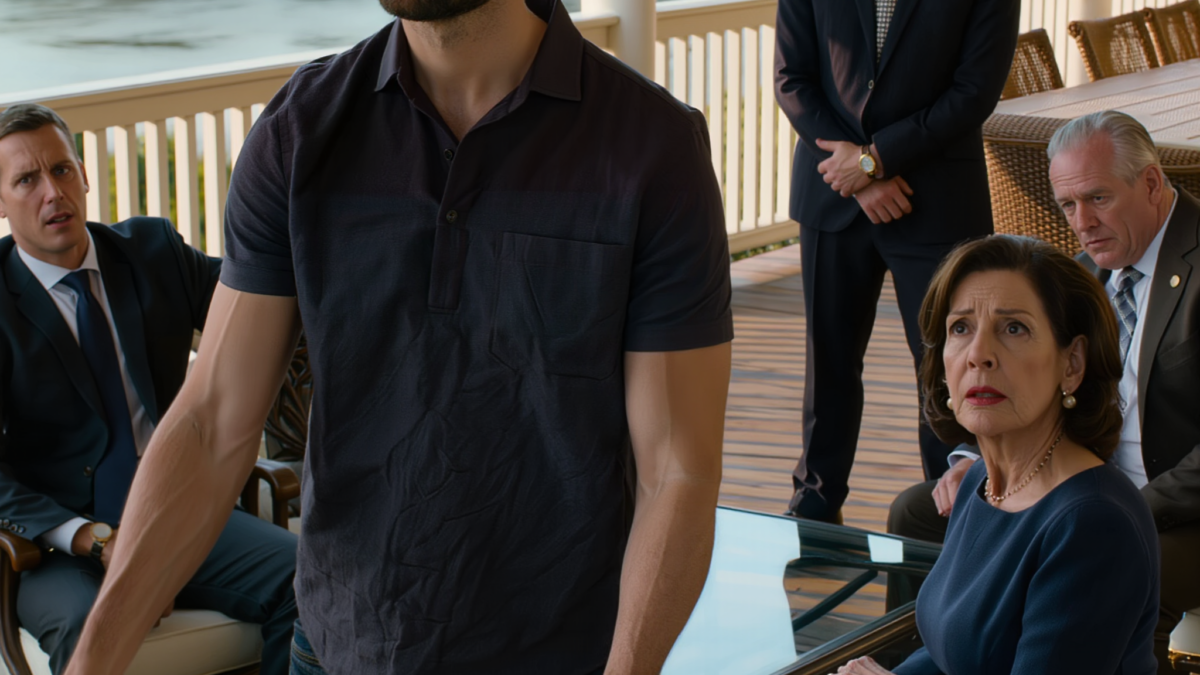
Finally, as the catering staff quietly cleared the empty plates and poured fresh black coffee, the atmosphere on the terrace shifted drastically. The temperature seemed to drop 10°. My mother set her white linen napkin delicately on the glass table. She sat up perfectly straight, automatically adopting her intimidating, authoritative bench posture. She looked directly at my father, who rigidly avoided my gaze and stared intensely at his coffee cup.
She looked at Preston, who finally put his cell phone face down on the table and leaned forward, clasping his hands together. The trap was officially springing. “Julian,” my mother began, her voice dropping into that serious, measured authoritative register. “We did not just fly all the way down here to admire your new house and the river. We need to have a very adult, very serious family conversation about the future.”
I leaned forward slightly in my chair, resting my forearms casually on the wrought-iron table. I looked directly into my mother’s cold, calculating eyes without blinking. “I am listening, Mother. Please tell me exactly why you are really here.”
She cleared her throat. A tiny microexpression of discomfort flashed across her perfectly manicured face. “As you likely know, the economic climate in New York has been incredibly volatile and unpredictable lately. Your father’s law firm is currently going through a complex internal restructuring phase. The market is shifting rapidly and some of his legacy corporate clients have unfortunately moved their business elsewhere due to unforeseen conflicts of interest. It is a temporary, highly manageable cash-flow issue, nothing more—a brief hiccup in a long, illustrious career.”
She did not miss a single beat. She seamlessly pivoted her attention to my brother. “And Preston is currently navigating a highly sensitive internal partnership dispute at his firm. It is a fundamental disagreement over equity distribution and the strategic direction of the litigation department. He was in line for a massive promotion, but he has decided to step away temporarily while his personal lawyers sort out his exit package and his substantial severance pay.”
Preston crossed his arms defensively over his chest, looking out at the river, trying desperately to project an aura of unbothered wealthy arrogance. “It is a standard corporate standoff,” he muttered, aggressively adjusting his silk tie. “They are trying to lowball my buyout offer, and I am simply refusing to settle for less than my billable worth. I am not going to let them strip away my hard-earned equity without a vicious fight.”
My mother reached across the wide table, attempting to place her cold, ring-covered hand affectionately over mine. I smoothly, deliberately pulled my hand back, reaching for my coffee cup instead. She retracted her hand, her jaw tightening visibly for a fraction of a second before she regained her rigid composure and continued her practiced monologue. “What we are trying to say, Julian, is that the family needs to stick together during these transitional challenging periods. You have obviously done very well for yourself with this computer venture of yours. The Forbes article was very flattering. We are incredibly proud of your unexpected success, of course, but right now the family requires a substantial bridge loan to stabilize our asset portfolio until your father’s firm finalizes its restructuring and Preston launches his new independent solo practice in Manhattan.”
She looked me dead in the eyes, her expression completely chillingly devoid of any genuine shame or remorse. She felt entirely entitled to my money. “We are looking for an immediate investment of $2 million. It is a mere fraction of your recent windfall from the corporate acquisition, and it would ensure the prestigious Whitfield Legacy remains entirely intact. We would, of course, draw up formal paperwork outlining the repayment terms once our respective liquid assets are freed up.” “$2 million,” she said the massive number as casually as if she were asking me to cover the check for a cheap diner lunch.
I looked at the three of them sitting at my table. I let the heavy silence stretch out over the terrace for a long, unbearable time. The only sound was the cicadas humming loudly in the massive oak trees and the gentle rhythmic lapping of the river against the wooden dock. I thought about the freezing night she kicked me out, telling me I was dead to her.
I thought about the miserable uninsulated apartment in Queens. I thought about the days I survived on cheap ramen. The days I thought I was going crazy from isolation. The days I desperately wished my family would just call and ask if I was okay. They never called, not once. But now they wanted $2 million of my hard-earned money to save their pristine, fraudulent reputation. “A bridge loan?”
I said slowly, testing the absurd words on my tongue, letting them hang in the humid air. “To help with Dad’s corporate restructuring and Preston’s prestigious partnership dispute to preserve the family legacy.” “Exactly,” Preston snapped, his natural impatience flaring up. “It is a simple, straightforward wire transfer, Julian. We can have our lawyers draft up the promissory paperwork by Monday morning. You will get it back with a generous interest rate once my massive settlement clears. It is purely business.”
I slowly reached down into the heavy leather satchel resting on the stone floor by my feet. I pulled out a thick, heavy manila envelope secured with a red string. I tossed it casually onto the center of the glass table. It landed with a heavy, deeply satisfying thud that made the coffee cups rattle slightly. “That is fascinating,” I said, my voice dropping to a terrifyingly calm, absolute whisper because I actually had my own legal team do a little bit of deep due diligence before this lovely family reunion.
My mother frowned deeply, staring at the brown envelope as if it were an active explosive device. “Julian, what exactly is this?”
I reached over, untied the string closure, and pulled out a massive stack of heavily redacted court documents, official bank statements, and public financial disclosures. I had acquired them entirely legally through Marcus. Marcus was a brilliant former legal assistant who used to work at the federal courthouse directly under my mother. Marcus hated her guts for how she verbally abused her staff for years.
And when he saw my name attached to a $38 million buyout in the news, he reached out to me with a massive treasure trove of public filings that the Whitfields had desperately tried to bury, seal, and hide from their elite social circles. “Let us start with Dad’s prestigious law firm,” I said, sliding the first thick document across the glass table directly toward my father.
Winston’s face went completely, shockingly ash white. “There is no corporate restructuring phase. There is no temporary cash-flow issue. Your firm went completely bankrupt 8 months ago. You have been quietly entirely liquidated. Your personal stock portfolio, the one you bragged about my entire life, was wiped out in a massive margin call you could not cover. And your beloved Upper East Side Townhouse, currently has two aggressive liens against it. The bank is officially initiating foreclosure proceedings on the 14th of next month. You are completely broke.”
My father opened his mouth to speak, to defend himself, to summon some fraction of his old terrifying authority, but absolutely no sound came out. He looked like a man who had just been shot in the chest. He stared at the foreclosure notice with wide, terrified eyes.
I turned my cold, unblinking gaze to my perfect golden child brother. I slid a different, equally thick stack of legal papers toward him. “And then there is Preston, a complex partnership dispute over equity. Is that what we are calling it now to save face at the country club? According to these official disciplinary board filings, you were not involved in a strategic disagreement over equity. You were unceremoniously fired and escorted out of the building by armed security because you were caught actively embezzling client funds from a massive corporate trust account. You were draining a college fund set up for a deceased client’s children to pay off your own massive personal gambling debts.”
Preston’s arrogant, untouchable mask shattered completely into a million jagged pieces. His mouth fell open. His hands began to shake visibly on the table. The color drained entirely from his face, leaving him looking sickly and weak. “You are currently under intense investigation by the State Bar Association,” I continued relentlessly, my voice a hammer striking a nail, “and you are facing a massive civil lawsuit from your former partners for extreme breach of fiduciary duty. You aren’t getting a buyout, Preston. You are looking at serious jail time.” “Where? How the hell did you get those?”
Preston stammered, his voice cracking, entirely devoid of his usual commanding courtroom bravado. I did not answer him. I finally turned the full crushing, suffocating weight of my attention to my mother. Judge Beatrice Whitfield sat completely frozen in her comfortable chair. Her face, a rigid mask of absolute, unadulterated horror. The perfectly curated, flawless reality she had maintained for decades had just been violently ripped away in the span of three short minutes. “There is no legacy to protect, Mother,” I said, my voice echoing loudly off the brick walls of the carriage house. “You are entirely broke. You are drowning in insurmountable debt, and your golden child is facing permanent disbarment and a very likely federal criminal indictment. You didn’t come down here to reconnect with your son. You didn’t come down here because a funeral reminded you of family values. You came down here to extract money from the exact same kid you threw out into the freezing street because you have absolutely no one else left in the world to manipulate.”
The silence that followed was absolute. It was the heaviest, most beautiful, most profoundly satisfying silence of my entire 28 years of existence. I sat back in my chair, crossed my arms, and watched their kingdom burn to the ground for a long, agonizing, suffocating minute. Nobody at the table moved a single muscle. The intense southern heat pressed down on us, but the air around the table felt like absolute freezing ice.
I watched the devastating realization wash over my mother’s face in slow motion. She was a woman who had spent her entire professional and personal life holding absolutely all the cards. She was the one who delivered the final life-altering verdicts. She was the one who controlled the family narrative with an iron fist. And now she was sitting on my expensive property, drinking my catered tea, completely and utterly exposed as a desperate fraud. “Julian,” she finally whispered.
It was the weakest, smallest, most pathetic sound I had ever heard her make. Her voice trembled, completely stripped of all its commanding judicial authority. “Julian, you have to understand the context of these filings, the immense pressure, the societal expectations we were under to maintain our position.” “Do not dare talk to me about expectations.”
I cut her off instantly, my voice sharp, commanding, and absolute. I did not raise my volume to a shout, but the sheer compressed force of my words made her physically flinch backward in her chair as if I had struck her. “I spent my entire childhood twisting my personality into knots, trying to meet your impossible, constantly moving expectations. I starved myself of everything I genuinely loved just to get a brief nod of approval at the Thanksgiving dinner table. I let you dictate my college fund, my major, my entire future. And the very second I stepped out of your rigid line, the second I decided to pursue a passion that didn’t fit into your neat little elite portfolio, you threw me away. You discarded me like a toxic asset. You told me I was not serious.”
I stood up slowly from the table. I looked down at the three of them. Stripped of their money, their status, and their elaborate lies. They looked so incredibly pathetically small. “You built this entire family exclusively on transactions,” I continued, pacing slowly behind my chair, feeling the solid wood of the deck beneath my boots. “Love was strictly conditional. Support was a high-interest loan with predatory terms. You looked at Preston and saw a blue-chip stock you could brag about at country club dinners and prestigious galas. You looked at me and saw a massive liability. Well, mother, the free market has finally corrected itself. The liability you threw out just cashed out for $38 million and your precious blue-chip stock is a terrified criminal facing a massive career-ending lawsuit.”
Preston stood up aggressively, his chair scraping loudly and violently against the stone terrace. His face was bright red with intense humiliation and uncontrollable rage. The polished lawyer facade was gone, replaced by a desperate cornered animal. “You arrogant little punk,” he spat, pointing a violently shaking finger directly at my chest. “You got incredibly lucky with a stupid, childish video game. You think that makes you better than us? You think a lucky app makes you a real man? You think you can talk to us like this after everything we gave you? I am a partner at a real firm. You make digital toys.” “I think,” I said, stepping right up to him, closing the physical distance, looking him dead in the eye without blinking or backing down a single inch. “That I am the only person standing on this terrace who isn’t lying about who they are. And I think you are officially trespassing on my private real estate.”
Preston’s fists clenched tightly at his sides. He looked like he desperately wanted to swing at me, but he looked at my face and saw absolutely zero fear. He saw a man who had built himself from the absolute ground up in the dark. He saw a man who had survived their relentless psychological warfare, survived the freezing nights and the hunger, and won the ultimate war.
He saw someone he could no longer intimidate. He slowly backed down, dropping his shaking hand, the aggressive fight completely draining out of his posture. I turned my attention back to my parents. My father was staring blankly at the pile of foreclosure documents on the table. His shoulders slumped in absolute crushing defeat. He could not even summon the courage to look me in the eye.
He was a broken man. “I am not giving you $2 million,” I said with absolute chilling finality. “I am not giving you a single solitary dime to save a legacy built entirely on emotional abuse and financial lies. You are not getting a bridge loan. You are not getting an inheritance advance. You are going to have to sell the Upper East Side townhouse. You are going to have to face the absolute humiliation of a public bankruptcy filing. And Preston, you are going to have to hire a very, very good criminal defense lawyer to keep you out of a federal penitentiary because I am certainly not paying your legal fees.”
My mother stood up slowly, her knees visibly shaking. She looked incredibly fragile, her carefully constructed, decades-old armor completely shattered on the stone floor. Tears welled up in her eyes, but I knew they were tears of self-pity, not genuine remorse. “Julian, please. I am begging you. We are your family. We are your blood. You cannot do this to us. Think of the public scandal.” “No,” I replied smoothly, feeling absolutely nothing for her tears. “You are just people I used to know. Family are the people who actively support you when you have absolutely nothing to offer them. Family is the friend who lets you sleep on their lumpy couch when you are homeless. Family is the mentor who flies across the entire country to tell you your art matters. You are not my family, mother. You are a biological technicality.”
I pointed a firm, unwavering finger toward the long winding gravel driveway. “The rental Porsche is parked exactly where you left it. I want you off my property in exactly 5 minutes. If you ever contact me again, if you ever try to leverage my name in the press, or if you ever come anywhere near my studio, I will hand every single one of these unredacted documents directly over to the New York Times. I will completely destroy whatever tiny shred of reputation you have left in this world. Do you understand me?”
My mother opened her mouth to argue, to plead one last time, but the sheer unforgiving coldness in my eyes stopped her cold. She nodded slowly, utterly defeated, she picked up her designer handbag with trembling hands. My father stood up silently, looking like a hollow ghost of the man who used to terrify me. Preston stormed off toward the luxury car without another word, his head down.
I stood on the edge of the terrace and watched them walk down the sweeping driveway. I watched them climb silently into the rented Porsche. I watched the heavy car kick up a massive cloud of dust as it drove through the iron security gates and disappeared down the road forever. As the sound of the expensive engine faded completely into the humid afternoon air, I felt a massive physical weight lift entirely off my chest.
The invisible choking chain that had been wrapped tightly around my neck for 28 years snapped loudly and dissolved into nothing.
I was finally truly permanently free.
Five incredibly fast, productive months later, the oppressive air in Savannah had finally cooled down, bringing a crisp, beautiful, rejuvenating autumn breeze off the moving river. I was standing in the massive, high-ceilinged main room of a beautifully converted industrial warehouse in the heart of the downtown arts district. The walls were painted bright, vibrant, inspiring colors. Dozens of high-end computers, expensive drawing tablets, and professional sound mixing boards lined the massive room.
This was the Glass House Project. It was a completely free, fully funded creative technology center designed exclusively for underprivileged kids in the greater Savannah area. I had taken a massive multi-million dollar chunk of my corporate buyout payout and invested it directly into the local community. I bypassed the luxury yachts, the expensive sports cars, and the ridiculous displays of wealth to build something that actually mattered.
I built the exact place I desperately needed when I was 12 years old. Nadia was brilliantly running the operational side of the facility, having finally quit her grueling, soul crushing corporate tech job in Manhattan to move down south and manage the foundation full-time. Silas was there, too, walking slowly between the rows of desks, looking over the shoulders of teenagers who were actively learning how to code complex algorithms, design 3D environments, and compose digital music. We had successfully built a safe, creative sanctuary for the kids who were repeatedly told their passions were just stupid, useless toys.
I was kneeling next to a wooden desk, looking closely at the glowing monitor of a 14-year-old boy named Tar. He lived in one of the toughest, most neglected neighborhoods in the city. He was excitedly showing me a rudimentary physics engine he had spent the last 3 weeks building from scratch. It was incredibly buggy.
The character models constantly clipped through the digital floors, and the code was messy, but the core mathematical logic behind it was absolutely undeniably brilliant. Tar looked up at me nervously, biting his lower lip, expecting harsh criticism. “It’s not very good yet, Mr. Julian. The gravity is all messed up, and the jumping mechanic feels heavy and unresponsive.”
I smiled warmly, instantly remembering a terrified 12-year-old boy sitting at a cold breakfast table with a pixelated dragon, begging for an ounce of validation from a father who could not be bothered to look up from his newspaper. I put my hand firmly and supportively on Tar’s shoulder. “Tar, look at me. This is absolutely incredible,” I said, making sure my voice carried genuine awe. “The specific way you handled the velocity vectors here is pure genius. You are incredibly talented. Keep going. Do not stop. I want to see exactly how you fix the gravity by next week. You have a real gift for this.”
Tar’s face lit up with a smile so bright and genuine it could have powered the entire building. He immediately turned back to his mechanical keyboard, his fingers flying rapidly across the keys with renewed fierce passion. I stood up feeling a profound unshakable sense of purpose settled deep into my bones. This was my true legacy, not a prestigious law firm, not a massive trust fund, not a ruthless corporate promotion.
This loud room filled with hope, creation, and validation was my legacy. Later that evening, long after the center had closed and the kids had safely gone home, I was sitting on the quiet back porch of my estate with Silas. We were drinking cold local beers and watching the orange sun slowly set over the calm river. The only sound was the water and the wind rustling through the Spanish moss.
Silas casually pulled a folded piece of printer paper out of his jacket pocket and slid it across the wooden table toward me. “I was running some deep routine analytics on the legacy servers for Glass Houses yesterday,” Silas said quietly, staring out at the water, looking at the long-tail engagement metrics to see how the old code was holding up. “I found an anonymous user account that logged over 40 hours of continuous unbroken gameplay. The IP address pinged back directly to a residential server in the Upper East Side of Manhattan. I cross-referenced the dates with the public foreclosure notices and the timeline of their bankruptcy.”
I stopped with my cold beer halfway to my mouth. My heart skipped a single beat. I looked down at the folded paper. It was a detailed printout of the server logs. “My father,” I whispered, the heavy realization washing over me. “He played the entire game, Julian, twice from start to finish.”
Silas took a slow sip of his beer. “He spent 40 hours actively engaging with a story about escaping a toxic, abusive environment built on false expectations. He navigated the trauma. He built the stairs out of the glass tower.”
Silas looked at me, his expression entirely serious. “He knows what he did. The game forced him to look in the mirror while his real life fell apart. He might never admit it out loud. He might be far too cowardly to ever apologize to your face, but the code proves he heard you. Your art reached him.”
I stared at the paper for a long, quiet time. I felt a strange complex mixture of profound sadness and absolute final closure. Winston Whitfield, the cold, calculating managing partner. The man who cared only about his salary and his status, had sat in the dark of his foreclosed, empty home and played his son’s toy for 40 hours while his own life collapsed around him.
It was the ultimate silent admission of guilt. He had finally seen my code. 14 years too late. I slowly folded the paper in half and tossed it casually into the small fire pit, burning warmly on the terrace. I watched the sharp edges curl, catch fire, and turn into gray ash that floated away on the evening breeze.
I didn’t need his verbal apology anymore. I didn’t need their validation. I had built my own massive staircase out of the suffocating glass tower, and I was never going back inside.
My name is Julian. My family told me I was not serious. They told me my passion was a pathetic joke. They kicked me out into the freezing street and told me I would fail. So, I built an empire out of my pain. I exposed their massive hypocritical lies and I created a world where I make the rules.








