My father emptied my mother’s emergency coffee tin and walked out when I was nine. Twenty-three years later, he arrived at my Austin apartment with a half-sister I’d never met and a story about a rare heart condition. I let them inside, even though I barely recognized him. He started explaining how much he’d suffered while we struggled in Ohio. Then his daughter looked up from her phone and casually mentioned where they’d been the month before.
The knock at my apartment door was so sharp and unexpected that I looked away from the baseball game playing on my television.
My friends always texted before visiting. Deliveries were usually left with the concierge. An unannounced visitor on a quiet autumn evening was unusual enough to make me hesitate before getting up from the couch.
I walked to the front door and looked through the peephole.
Two people were standing outside.
The man appeared to be in his late fifties, with thinning gray hair and a face marked by years I knew nothing about. Beside him stood a young woman, perhaps eighteen or nineteen, whose attention seemed entirely occupied by her phone.
At first, I didn’t recognize him.
Then I noticed his eyes.
They were the same cold, calculating eyes I remembered from childhood.
My hand froze on the doorknob.
It couldn’t be him. Not after all this time.
But it was.
Silas. My father.
And the young woman beside him had to be the daughter he’d had with his second family, my half-sister.
For twenty-three years, I’d worked to build a life that had nothing to do with that man. Now he was standing outside my home as though the decades between us had never happened.
My name is Ronan Foster. I’m thirty-two years old, and until that evening, I believed I’d finally put my childhood behind me.
I lived in a downtown Austin apartment overlooking the Texas skyline. From my windows, I could see glass buildings stretching into the distance, catching the sunlight during the day and glittering after dark.
It was a view that cost more than my mother used to earn in an entire year.
Sometimes, even after years of living there, I still found that difficult to believe.
I worked as a senior data analyst at a major technology company. The title sounded complicated, but I often thought of my job as finding stories hidden inside numbers. I liked the logic of it, the way complicated information could eventually reveal something clear.
My salary was good. My investments were solid. I had financial stability, a comfortable apartment, and a life that followed a predictable rhythm.
Most mornings, I got up at six and ran along the river before returning home for strong black coffee and a review of market trends. My workdays were spent analyzing data, working through complicated projects, and leading my team.
In the evenings, I might meet my friends Leo, Maya, and Ben. Other nights, I stayed home, played an old vinyl record, and cooked dinner.
The simplicity was deliberate.
I’d grown up surrounded by uncertainty, and I valued knowing what tomorrow would look like.
My apartment was more than a place to live. It was the quiet, orderly space I’d spent most of my life trying to reach.
I’d believed the distance between Austin and the struggling Ohio town where I grew up was enough to keep my past from finding me.
Standing at that door, looking into my father’s eyes, I realized how mistaken I’d been.
I was nine years old when Silas walked out of our lives.
We lived in a small rented house in Ohio. The rooms were often damp, and the windows rattled whenever a truck drove past. My mother worked at a local diner, bringing home whatever she could earn from her shifts and tips.
Silas took odd jobs, rarely keeping the same one for more than a few months.
Money was always a problem.
Most of my memories of my parents together involve arguments. Their voices traveled through the thin wall of my bedroom while I tried to do homework or fall asleep.
Sometimes they argued about bills. Other times, it was about groceries or rent. No matter how an argument began, it usually returned to the same subject: we didn’t have enough money.
The final argument happened on a Tuesday.
I remember because Tuesdays were meatloaf nights.
I was sitting in my bedroom trying to finish my math homework when their voices started rising again. I’d heard them fight before, but something about that evening was different.
My mother’s voice sounded desperate.
Then I heard a closet door slam and the heavy sound of a suitcase being thrown onto the floor.
I left my room and looked around the corner.
Silas was standing near the front door with a worn duffel bag at his feet. My mother stood in the middle of the living room, her arms wrapped around herself.
“You can’t just leave, Silas,” she whispered. “What are we going to do?”
He barely looked at her.
“That’s your problem now. I’m done. I’m done with this pathetic life. Done with this town and done with you.”
Then he glanced toward the hallway.
For a fraction of a second, his eyes met mine.
I remember waiting for something. An explanation, perhaps, or some sign that leaving his son was difficult for him.
There was nothing.
He picked up his bag, opened the door, and walked out.
The door clicked shut behind him.
For years afterward, I remembered that sound more clearly than almost anything else from that night.
My mother remained standing in the living room until her legs seemed unable to support her anymore. She sank onto our old floral couch and began crying.
I didn’t know what to say.
I walked over and put my hand on her back.
Later, after I’d cried myself to sleep, I woke up thirsty. My mother was still on the couch, exhausted.
I went into the kitchen to get some water.
One cupboard was slightly open.
Inside it, my mother kept an old coffee tin. Every time she had a little money left over from her diner tips, she’d put it inside. She called it our rainy day fund.
It wasn’t much, but I knew how important it was.
I dragged a chair over to the cupboard, climbed onto it, and reached for the tin.
It felt strangely light.
I pulled off the plastic lid.
There was nothing inside.
Every dollar she’d carefully saved was gone.
Even at nine, I understood what that meant.
Silas hadn’t simply abandoned us.
He’d taken the little emergency money we had before leaving.
I stood in that kitchen staring into the empty coffee tin, trying to understand how someone could walk away from his own family and leave them with so little.
That night changed the way I saw the world.
I decided I couldn’t depend on anyone but myself.
The weeks after Silas left were frightening.
With our savings gone, every expense became a crisis. The landlord began knocking on our door more often. Each visit seemed more serious than the last.
Our electricity was disconnected twice.
I remember doing homework by candlelight, watching the flame flicker across the pages of my schoolbooks.
My mother seemed to age years in a matter of weeks. She still went to work, still tried to reassure me, and still did everything possible to keep our household going.
But she was exhausted.
Eventually, she took a second job cleaning offices after finishing her shifts at the diner.
Her schedule became almost impossible.
She was often gone before I woke up and returned after I’d gone to sleep. Some days, I only saw her briefly when she looked into my bedroom before leaving for work again.
Her hands, which had always been soft, became rough and red from cleaning chemicals.
I learned to take care of as many things as I could.
I made my own breakfast. Sometimes that meant cereal with water because we couldn’t afford milk. I finished my homework without being reminded and kept my room clean.
I couldn’t solve our money problems, but I could try not to make them worse.
When I turned thirteen, I decided I needed to contribute more.
I got a newspaper delivery route.
Every morning, I woke at five, climbed onto my bicycle, and delivered papers around the neighborhood before school.
The work was tiring, especially during the colder months, but I usually earned forty or fifty dollars a week.
To our family, that was meaningful money.
I’ll never forget the first time I brought my earnings home.
I walked into the kitchen and placed the crumpled bills and coins on the table in front of my mother.
She looked at the money, then at me.
Her eyes filled with tears.
“Oh, Ronan,” she said. “You shouldn’t have to do this. You’re just a kid.”
I straightened my shoulders, trying to appear older than thirteen.
“We’re a team, Mom. We’ve got to stick together.”
She pulled me into her arms.
For the first time in months, I felt that perhaps we really would be all right.
We weren’t suddenly comfortable. The bills didn’t disappear, and my mother still worked herself to exhaustion.
But we had each other.
As I got older, I started mowing lawns and eventually found after-school work stocking shelves at a neighborhood grocery store.
Every dollar I could spare went into another coffee tin.
Sometimes I’d slip money into my mother’s purse while she wasn’t looking. She never said anything about it, but I suspected she knew.
We had a silent understanding.
She was doing everything she could for me, and I was going to do everything I could for her.
By high school, I understood that working small jobs would never give us the kind of security I wanted.
Education seemed like my best chance.
While classmates went to football games and worried about prom, I spent much of my free time in the library.
Math and science were my favorite subjects.
Numbers made sense to me. They followed rules. They could be examined and checked. Unlike people, they didn’t suddenly decide to walk away.
I joined the math club and coding club, looking for anything that allowed me to keep learning.
A guidance counselor named Mr. Henderson noticed how much time I spent studying.
One afternoon, he called me into his office.
“Ronan,” he said, looking at me over his glasses, “have you thought about what you’re going to do after graduation?”
I shrugged.
“Get a full-time job at the factory, I guess. Help my mom.”
He shook his head.
“No, you’re capable of more than that. Much more.”
He pushed a stack of scholarship pamphlets toward me.
“Your grades are exceptional. If you work hard, you could get a full ride.”
I stared at the pamphlets.
College had always seemed like something that belonged to another kind of family. Families that didn’t have to decide whether they could afford textbooks or the electric bill.
A full scholarship sounded almost impossible.
But Mr. Henderson believed I could earn one.
For the first time, I allowed myself to imagine leaving our town without abandoning my mother to the same struggles.
During the next year and a half, I studied constantly. I took advanced placement courses and wrote dozens of scholarship applications.
I put my experiences into those essays, including the years of watching my mother work two jobs while we struggled to stay afloat.
When I was seventeen, I received the news I’d hardly dared to hope for.
I’d won a full scholarship to the University of Texas to study data analytics.
When the acceptance letter arrived, my mother and I stood in our living room holding each other and crying.
It felt like the first real opportunity either of us had been given to change our future.
College wasn’t easy.
My tuition was covered, but I still needed money for rent, food, books, and everything else.
I worked three jobs.
At a campus diner, I cleared tables while reviewing programming problems in my head. On weekends, I worked as a filing clerk in a small law firm, surrounded by old documents and shelves of legal books.
At night, I cleaned offices.
I was almost always tired.
There were plenty of days when I survived on instant noodles and cheap coffee. But every exam I passed and every project I finished reminded me why I was there.
I wasn’t going to waste the opportunity.
Four years later, I graduated with my degree, several academic awards, and a job offer from a technology company in Austin.
Moving to Austin felt like stepping into another world.
The city was growing, the technology industry was booming, and opportunities seemed to exist everywhere I looked.
I began as a junior analyst.
It wasn’t a glamorous position, but I took the work seriously. I arrived early, stayed late, accepted difficult assignments, and spent weekends developing my skills.
I never forgot what it felt like to be hungry or to sit in a house without electricity.
Those memories kept me moving.
Within five years, I’d reached a senior position, managing my own team and earning a salary I couldn’t have imagined as a child.
The first person I wanted to tell was my mother.
Once my income became stable, I started sending her money each month. At first, it was five hundred dollars. Later, it grew to a thousand.
I wanted her to stop worrying about bills and rent.
Eventually, I was able to do something much bigger.
I bought her a house.
It was a modest two-bedroom cottage in a quiet neighborhood a few towns away from where we’d lived. It had a garden in the backyard, blue paint, and a white picket fence.
I flew back to Ohio without telling her what I’d planned.
When I arrived, I asked her to go for a drive.
We stopped in front of the little blue house.
She looked at it, confused.
“It’s beautiful, Ronan,” she said. “Whose house is this?”
I took a key from my pocket and placed it in her hand.
“It’s yours, Mom.”
She stared at me.
Then she started crying.
We walked through the empty rooms together. She ran her hand along the freshly painted walls as though she needed to feel them to believe they were real.
When we reached the backyard, she stood in the grass, closed her eyes, and took a long breath.
“You know, son,” she said softly, “you’ve given me more than your father ever took away.”
I’d spent years imagining the day when I could finally tell her she didn’t have to worry about keeping a roof over our heads.
Now that day had arrived.
I remembered the empty coffee tin in our old kitchen.
I remembered the candlelit homework and the mornings delivering newspapers.
For the first time, those memories felt connected to something other than hardship.
My mother was safe.
We’d made it.
I carried that feeling with me when I returned to Austin and continued building my career.
And for years, I believed I’d left Silas behind for good.
Which was why seeing him on the other side of my apartment door that autumn evening felt so unsettling.
He was older, of course.
His hair was thinner, and his face had developed lines I didn’t remember. But he still held his head with the same slightly arrogant confidence.
For twenty-three years, his name had barely been spoken in my life.
Now he was standing in front of me with his arms spread wide.
“Ronan,” he said in a voice deeper and rougher than I remembered.
“My boy, look at you, all grown up.”
He seemed to expect me to embrace him.
I stayed where I was.
Beside him, the young woman finally looked away from her phone.
Her name, I soon learned, was Casha.
She was my half-sister, someone whose existence I’d known about but whom I’d never met. She looked over my clothes and watch before returning her attention to her screen.
“Aren’t you going to invite us in?” Silas asked.
Part of me wanted to close the door.
Another part wanted to know why he’d come.
I stepped aside.
The moment they entered, the apartment I’d always considered my sanctuary felt different.
Silas looked around at the floor-to-ceiling windows, the furniture, and my sound system.
“Nice place you’ve got here,” he said, running a hand along the back of my leather couch. “Must be doing pretty well for yourself. I always knew you had it in you.”
I could hardly believe what I was hearing.
He hadn’t seen a single exam I struggled through, a single late shift I worked, or a single sacrifice my mother made.
Yet here he was, talking as though he’d always expected me to succeed.
Casha dropped onto the couch and put her designer sneakers on my coffee table.
“The Wi-Fi password?” she asked, without directing the question to anyone in particular.
I ignored her.
“What do you want?” I asked Silas.
His expression softened immediately.
He sat forward and began explaining that he wanted to reconnect.
He said getting older had made him think about family, his regrets, and the mistakes he’d made.
“I’ve missed you, Ronan. I really have.”
His words sounded practiced.
I’d imagined this conversation countless times as a younger man. I’d wondered whether I’d shout at him, demand an explanation, or finally tell him what his departure had done to us.
Instead, I felt strangely empty.
Silas continued.
“I know what you must be thinking. Why I left? Why I wasn’t there for you?”
He sighed.
“It’s a long story, son. Complicated one. Your mother and I, we just weren’t right for each other. And the truth is, I was sick.”
I narrowed my eyes.
“Sick?”
“Very sick,” he answered.
He coughed into his fist.
According to Silas, doctors had once told him he might not live much longer. He claimed he had a rare heart condition and had chosen to disappear because he didn’t want me to watch him become seriously ill.
He said leaving us had broken his heart.
He described years of suffering, poverty, and medical uncertainty. Through it all, he claimed, he’d thought about me.
It was an extraordinary explanation.
It also raised questions he didn’t seem eager to answer.
“And now?” I asked. “The heart condition?”
He pressed a hand against his chest.
“Oh, it’s back. Worse than before. The doctors say there’s an experimental treatment, but the cost. It’s astronomical. We’ve sold everything we have.”
While he spoke, Casha grew increasingly impatient.
Finally, she sighed loudly.
“Dad, can you just get to the point? I’m missing the season finale of my show.”
Then she glanced toward me.
“We were just in Cancun last month for his birthday, and the Wi-Fi at that resort was terrible. I hope yours is better.”
Silas turned toward her so quickly that I immediately noticed.
For a moment, he seemed unable to decide what to say.
He’d just described a life of desperate poverty and mounting medical expenses.
His daughter had casually mentioned a resort vacation in Cancun.
Then he recovered.
“A gift,” he explained. “From my wife’s family, a final trip before, well, you know, they wanted me to have one last good memory.”
He tried to return to his medical story, but I couldn’t stop thinking about what Casha had said.
Something about his explanation didn’t add up.
For a moment, I’d allowed myself to wonder whether the man who’d abandoned me might finally have returned because he regretted what he’d done.
Now I suspected his reasons were much simpler.
He’d heard I was doing well financially.
And he wanted something from me.
A few days later, after several pleading messages from Silas, I agreed to meet him and Casha again.
Not because I trusted him.
I wanted to see how far he intended to take his story.
I chose an upscale restaurant in downtown Austin. It was busy enough that I hoped he wouldn’t make a scene, and it gave us a neutral place to talk.
They were already seated at a corner table when I arrived.
Silas wore a blazer that seemed slightly too tight. Casha was looking at her phone.
I sat down without bothering with small talk.
“You said you wanted to talk, so talk.”
Silas smiled.
“Straight to business. I like that. You get that from me, you know.”
He leaned toward me.
“Ronan, as I told you, I’m in a desperate situation. The medical bills are piling up. I wouldn’t ask if there was any other way, but you’re my only hope.”
I asked how much he needed.
He took a long breath.
“The treatment costs $80,000.”
For a moment, neither of us spoke.
Eighty thousand dollars.
He’d said the number as though it were a reasonable amount to request from someone he hadn’t spoken to in more than two decades.
Before I could answer, Casha joined the conversation.
“And I need a car,” she said, barely looking up. “I’m starting college in the spring, and I can’t be seen taking the bus. Something decent like a Lexus. And my college fund is looking a little light, too.”
I stared at her.
She’d met me only days earlier.
Now she was discussing what kind of luxury car she wanted me to help provide.
I turned back to Silas.
“So, let me get this straight. You want $80,000 for a fake medical treatment, plus a luxury car and college tuition for your daughter, who I’ve known for all of five minutes.”
His expression hardened.
“It’s not a fake treatment, and she’s your sister. This is what family does. We help each other out. You’re sitting on a mountain of cash. Ronan, I’ve heard all about your big-shot job, your high salary. It’s not going to kill you to share a little of it.”
One phrase caught my attention.
He’d heard all about my job.
“How?” I asked. “How did you hear about my job?”
He waved the question away.
“The world is a small place. People talk.”
But he looked away as he said it.
I couldn’t shake the feeling that he was hiding something.
I sat there looking at two people who shared my blood but knew almost nothing about my life.
Silas hadn’t asked how my mother was doing.
He hadn’t expressed any interest in the years we’d struggled after he left.
Instead, he’d arrived with a medical story, a large financial request, and a daughter who considered my money a possible solution to her transportation and college expenses.
I thought about the mornings when I’d delivered newspapers in the cold.
I thought about my mother cleaning offices after working all day at the diner.
Then I looked at the man sitting across from me.
“Family,” I repeated. “You want to talk about family? Where was this family when my mom was working two jobs to keep a roof over our heads? Where were you when I was delivering newspapers in the snow to help pay for groceries?”
I pushed my chair away from the table.
“The answer is no.”
Silas’s expression changed completely.
“You owe me, boy,” he said. “I gave you life.”
For years, that relationship had been the only thing connecting us. Now he was using it as though it were a debt I could never repay.
“You gave me nothing,” I answered. “Everything I have, I earned. In spite of you, not because of you.”
I put a hundred-dollar bill on the table.
“Consider this my final contribution to the family. Don’t contact me again.”
Then I walked out.
My heart was pounding when I reached the street.
I felt angry and disgusted, but underneath those feelings was something unexpected.
Relief.
I’d spent twenty-three years wondering whether Silas might have changed. There had always been a small part of me that imagined he could return with an honest explanation and genuine regret.
Now I’d heard what he wanted.
I no longer felt the need to invent kinder explanations for what he’d done.
The following day, I tried to return to my routine.
I went to work, concentrated on my projects, and met Leo for a beer afterward.
I told him a simplified version of what had happened. My estranged father had resurfaced after decades and was asking for money.
“Dude, that’s rough,” Leo said, shaking his head. “Some people have no shame. Just cut him off. You don’t owe him anything.”
It was straightforward advice.
And I knew he was right.
I decided to block Silas’s number and move on.
Unfortunately, Silas wasn’t finished with me.
The next afternoon, my apartment buzzer rang.
When I answered, I heard his voice.
“Ronan, please, just five minutes. We just want to talk, to apologize for how things went yesterday.”
I couldn’t believe he was back.
“What part of ‘don’t contact me again’ did you not understand?” I asked through the intercom.
I knew I should refuse to see him.
But I also worried that he and Casha would remain in the lobby and cause a disturbance.
I wanted the situation over with.
Against my better judgment, I let them upstairs.
The moment they entered my apartment, I realized the apology had been an excuse.
Silas wasn’t pleading anymore.
He looked furious.
“You embarrassed me yesterday,” he said. “In a public place. After all I’ve done for you.”
I laughed, but there was nothing funny about it.
“Done for me? You abandoned me. You stole from my mother. You’ve done nothing.”
Silas sneered.
“I gave you your ambition, boy. If I had stuck around, coddled you, you’d be nothing. You’d be a failure, just like your mother working at some greasy spoon diner for tips.”
Hearing him insult my mother was worse than anything he’d said about me.
“Don’t you dare talk about her,” I told him.
I stepped closer.
“She worked her fingers to the bone to give me a life you were too cowardly to provide. She’s worth ten of you.”
Until then, Casha had said very little.
Now she scoffed.
“Please, she’s a broke old woman in a tiny house. We saw it on Zillow. My dad was smart to get out when he did.”
I could hardly process what she’d said.
They had apparently looked up my mother’s house.
The little blue cottage I’d bought to give her the security she’d never had was something they felt entitled to ridicule.
I didn’t want either of them in my home another second.
“Get out,” I said.
I pointed toward the door.
“Get out of my house now before I call the police.”
Silas looked startled, but his expression quickly hardened again.
“You’ll regret this, Ronan,” he warned. “You think you’re so high and mighty in your glass tower, but people in glass towers are very easy to break. You have no idea who you’re dealing with.”
He grabbed Casha’s arm, marched out, and slammed the door.
For a long moment, I stood still, trying to steady myself.
I was furious.
The man who’d taken our emergency savings and abandoned us had returned only to insult the woman who’d raised me.
It felt as though he’d walked into my carefully built life and tried to damage everything that mattered.
After he left, the apartment felt unfamiliar.
I walked through the rooms, unable to shake the impression that something was wrong.
Eventually, I reached my home office.
That’s when I noticed my laptop.
It was open.
The screen was displaying my desktop.
I always left my personal laptop closed when I wasn’t using it.
I stood there trying to remember whether I’d opened it myself.
I was certain I hadn’t.
Then I thought about Silas and Casha’s first visit.
There had been a brief moment when I’d gone into the kitchen for water, leaving them alone in the living room.
Could one of them have entered my office?
I sat down and checked the browser history.
There were searches for my company’s executive board, my social media profiles, and banks in the Austin area.
My stomach tightened.
I opened the recent-files list.
Several personal documents had been accessed.
My tax returns.
My investment statements.
My pay stubs.
Someone had been looking through my financial information.
The idea that my own family members might have gone through those files made me feel physically sick.
I’d welcomed them into my home, however reluctantly, because part of me still wanted to understand why my father had returned.
Now I wondered whether they’d come with a plan to learn how much money I had.
I remembered the security camera in my living room.
I’d installed it mainly for the times I traveled.
I opened the recording from their first visit and watched it carefully.
There it was.
As soon as I left the living room, Casha stood up and slipped into my office.
Silas moved toward the doorway and positioned himself where he could block the view while appearing to admire a piece of art.
He was watching for me.
The footage showed Casha at my desk, working quickly on my laptop.
Less than forty-five seconds later, she returned to the living room.
I replayed the recording.
Their movements looked coordinated.
To me, it was hard to believe they’d acted on a sudden impulse.
They seemed to know exactly what they wanted to find.
I saved the footage to a secure drive.
For days, I’d been thinking of the situation as an ugly family dispute. Silas had asked for money, I’d refused, and he had reacted badly.
But the recording gave me something concrete.
It showed that while he was talking about wanting to reconnect with his son, his daughter had gone into my private office without permission.
His declarations of regret now sounded even less convincing.
I kept thinking about the way he’d spoken at the restaurant.
“I’ve heard all about your big-shot job.”
How had he learned about it?
I still had very few connections to the town where I’d grown up. The people I knew there didn’t have detailed information about my salary or financial situation.
Silas must have learned something before he came to Austin.
I started examining my own digital footprint.
I checked my public profiles and then logged into an older email account I rarely used.
Most of the messages were junk mail.
Buried in the spam folder, however, was an email from several months earlier.
Its subject line was simple: “Following up.”
I didn’t recognize the sender.
Normally, I might have deleted it without opening it.
This time, I read it.
The sender claimed to be a former colleague of Silas from Ohio. He said Silas had been trying to reconnect with his son and that he believed I worked at a particular company.
He explained that he’d found information in a public directory and thought it might be helpful.
There was an attachment.
I downloaded it and opened the PDF.
What appeared on my screen made my stomach drop.
It was an internal, nonpublic employee directory from a company that frequently partnered with my employer.
On page twenty-seven were my name, my job title, and my estimated salary range.
I stared at the information.
The email had arrived months before Silas appeared at my door.
That changed the way I understood everything that had happened.
It suggested that someone had been gathering information about my work and income well before the reunion.
I examined the sender’s address and performed a reverse lookup.
The name was vaguely familiar.
I remembered hearing about a man who had worked briefly with Silas at a construction company in Ohio, before Silas was fired for stealing materials.
I believed I’d found someone who had helped him locate information about me.
Silas hadn’t simply knocked on doors until he found his son.
He’d apparently gone looking for someone whose income made him a worthwhile target.
And the more I learned, the more deliberate his visit seemed.
The medical story, the sudden concern for family, the questions about my success, Casha’s brief visit to my office, all of it looked different now.
I couldn’t know every conversation that had occurred before they found me.
But I knew someone had obtained an internal directory, and I had video footage of Casha accessing my laptop while Silas watched the doorway.
I didn’t want to spend the rest of my life wondering what else they might do.
The following morning, I called my employer and explained that I needed time off for a family emergency.
Then I called my mother.
I told her about Silas’s return, his account of his heart condition, the request for eighty thousand dollars, Casha’s demands, and the footage from my apartment.
She listened quietly.
When I finished, her voice sounded tired.
“I’m so sorry, Ronan,” she whispered. “I had hoped you would never have to see him again. He doesn’t change. He only knows how to take.”
Hearing her speak brought back a familiar feeling.
For years, I’d tried to protect her from worry.
Now the man who’d caused so much hardship in her life had returned and was creating problems in mine.
“It’s not your fault, Mom,” I told her. “But I’m not going to let him do this. I’m going to handle it.”
After hanging up, I started looking for a lawyer.
I wanted someone in Austin who understood harassment and unauthorized access to private information.
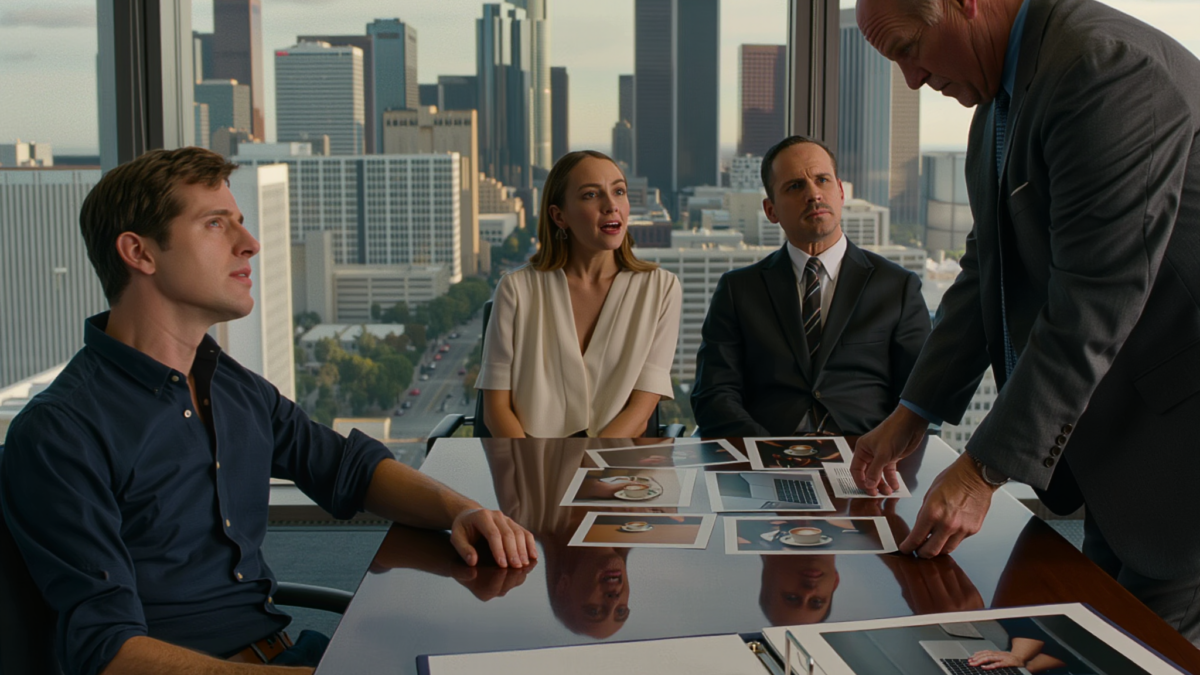
I found a highly rated law firm and arranged an emergency consultation with one of its partners, Mr. Bennett.
His office was on the thirtieth floor of a downtown skyscraper.
He was a man in his sixties, direct and serious, with a manner that made me feel he was paying attention to every detail.
I placed my evidence on his polished conference table.
There was a printed copy of the email containing my salary information, a USB drive holding the security footage, and screenshots showing which files had been opened on my laptop.
I explained everything from the beginning.
Mr. Bennett listened without interrupting.
When I finished, he leaned back and considered what I’d shown him.
“Mr. Foster,” he said, “this is not a simple family squabble. This is a clear pattern of harassment, conspiracy, and illegal access to private information. They haven’t just crossed a line. They’ve pole-vaulted over it.”
For the first time since Silas appeared, I felt that someone understood how serious the situation had become.
Mr. Bennett recommended seeking a temporary restraining order immediately.
“We will file this afternoon,” he explained. “Given your evidence, especially the video, a judge will almost certainly grant it. It will legally bar them from contacting you, coming near your home or your place of work.”
The process wasn’t pleasant.
I had to prepare a detailed written account of everything that had happened, including conversations I’d rather never think about again.
But I completed the paperwork with his help.
Two days later, we appeared before a judge.
Silas and Casha were there.
They seemed bewildered and offended that the matter had reached a courtroom.
Silas attempted to portray himself as a father who simply wanted to reconnect with his son.
Then Mr. Bennett played the security footage on a large screen.
The court saw Casha entering my office.
It saw Silas standing nearby while she accessed my computer.
Silas’s expression changed as the recording played.
The judge granted the temporary restraining order and scheduled a hearing to consider making it permanent.
Outside the courthouse, Silas looked at me with unmistakable anger.
He didn’t say anything.
But I didn’t believe he had accepted the outcome.
Even so, the order gave me some relief.
I had proof, legal support, and a clear boundary.
For the next few weeks, I heard nothing from him.
The permanent restraining order was granted. Neither Silas nor Casha appeared at the final hearing.
I began to relax.
I changed my apartment locks, upgraded my security system, and placed alerts on my financial accounts.
I’d been careful about money and security for most of my adult life, but now I felt I had to be careful about the people who could reach me as well.
I thought I had finally put an end to the ordeal.
I was wrong.
The next attack didn’t come through my apartment door.
It came through my workplace.
At first, I noticed only small changes.
A project I was leading encountered an unexpected problem with another department.
A colleague who’d always been friendly began avoiding me in the hallway.
I wondered whether I was imagining things.
Then my boss, Frank, asked me to come to his office for an unscheduled conversation.
Frank had always supported my career. He knew how hard I worked and had encouraged my professional growth.
That afternoon, however, he seemed unusually uncomfortable.
He moved papers around on his desk before looking at me.
“Ronan,” he began, “we’ve received some concerning correspondence regarding your employment here.”
I felt a chill.
“Correspondence? What are you talking about?”
He handed me a printed email.
It was anonymous.
I started reading.
The message accused me of lying about my qualifications on my resume. It alleged that I’d behaved unpredictably in the past and had been fired from a previous position for corporate espionage.
None of those allegations reflected my actual career.
The email presented me as someone my employer couldn’t trust.
Frank explained that several similar messages had been sent from different anonymous accounts to people in senior leadership and human resources.
I struggled to understand what I was seeing.
Then I remembered Silas’s warning.
“People in glass towers are very easy to break.”
I immediately suspected him.
He hadn’t received the money he wanted. I’d obtained a restraining order against him. Now someone was trying to undermine my reputation at the company where I’d built my career.
“Frank, this is all lies,” I said. “This is my estranged father. I have a restraining order against him. He’s doing this to retaliate.”
Frank held up a hand.
“I believe you, Ronan, or at least I want to. You’ve been an exemplary employee, but you have to understand our position. These are serious allegations. We have to investigate.”
He paused before continuing.
“According to company policy, until this is resolved, I have to place you on paid administrative leave.”
I stared at him.
Administrative leave.
I wasn’t being told I’d done anything wrong.
But I was being removed from my work while the company investigated claims made by people I couldn’t identify.
I had to surrender my company laptop and security badge.
When I walked out carrying my personal belongings in a cardboard box, I felt acutely aware of the people around me.
Some colleagues watched.
Others looked away.
For years, I’d measured my progress by the work I could do and the responsibilities I’d earned.
Now I was walking out of the building without knowing when I’d be allowed to return.
I drove home in a daze.
My apartment was still there, with its familiar skyline and carefully arranged rooms.
But it didn’t feel peaceful anymore.
I’d believed that working hard, following the rules, and protecting my finances would be enough to keep my life stable.
Yet anonymous allegations had managed to threaten the career that made that stability possible.
I felt trapped.
I didn’t know how to fight someone who could hide behind an email address and make accusations without identifying himself.
For the next two days, I barely functioned.
I paced around the apartment, feeling angry and helpless.
My friends called, but I didn’t answer.
My mother called, and I told her only that I was dealing with some difficulties at work. I didn’t want her to worry about another problem involving Silas.
At night, I sat in the dark, looking out at the city.
I kept thinking about the younger version of myself who’d promised never to depend on anyone.
After everything I’d done to build a secure future, I was facing the possibility of losing the professional reputation that had taken years to establish.
On the third day, I found myself staring at my personal laptop.
It was the same computer Casha had accessed during her first visit.
And suddenly I remembered something important.
I was a data analyst.
My entire career was based on examining information, finding patterns, and following evidence to its source.
I’d spent two days feeling powerless, but this was exactly the kind of analytical work I knew how to do.
My employer had provided copies of the anonymous emails for legal reasons.
I still had them.
I made coffee, put on instrumental music, and started examining the files.
Instead of focusing only on what the messages said, I studied the information attached to them.
The email headers contained technical details about how the messages had traveled through different servers.
Most people would have found the information difficult to interpret.
To me, it offered possible leads.
I went through the headers one by one.
Most of the messages appeared to have been sent using VPN services that concealed the originating connections.
Whoever sent them had made an effort to obscure where they came from.
But one email was different.
A later message contained an unmasked IP address.
It wasn’t enough to identify the sender, but it was more than I’d had before.
I checked the address using a geolocation database.
The result pointed to a small independent coffee shop called the Daily Grind, in a town outside Houston.
That caught my attention.
I knew Silas was living in that area.
Still, the connection was limited.
A public coffee shop could have many customers using the same internet connection. The IP address didn’t tell me who had sent the email.
I needed something else.
Then I thought about Casha.
She spent much of her time on her phone and seemed to enjoy sharing her life online.
I searched her public social media accounts.
Her Instagram profile contained photographs of expensive meals, selfies, and posts about how bored she was.
I started looking through the posts and comparing their dates with the anonymous messages my employer had received.
It was slow, careful work.
Then I found a photograph from three weeks earlier.
Casha was holding an expensive-looking latte and pouting at the camera.
Her caption read:
“Stuck running errands with my dad. So boring. At least the coffee here is decent.”
I checked when she’d posted it.
2:17 p.m.
A Tuesday.
Then I returned to the anonymous email with the unmasked IP address.
It had been sent at 2:23 p.m. on that same Tuesday.
The connection pointed to the Daily Grind.
Six minutes separated the two timestamps.
My heart began beating faster.
I enlarged Casha’s photograph and examined it closely.
She was wearing sunglasses.
In the reflection of one lens, I could make out someone sitting opposite her.
A man hunched over a laptop.
His hair was thin and gray.
And he appeared to be wearing a blazer I recognized.
Silas.
I looked between the photograph and the email information.
The timing, location, and reflection supported the possibility that Silas had been at the coffee shop when the anonymous message was sent.
To me, it was the strongest connection I’d found between him and the campaign against my job.
I sat back and stared at the screen.
For weeks, he’d treated my success as something he could exploit. He’d tried to get money from me, looked into my private life, and, I believed, targeted my professional reputation when I refused to cooperate.
He’d expected me to be overwhelmed.
But the information I’d spent my career learning to interpret had given me a way to respond.
I saved what I’d found.
Then I called Mr. Bennett.
When I explained what I’d discovered, there was a long silence on the other end of the line.
“Ronan,” Mr. Bennett finally said, “that’s not just good work. That’s brilliant. This changes everything.”
He considered the evidence significant enough to discuss a broader legal response.
In his view, the conduct could support claims involving defamation, libel, and interference with my employment.
He wanted to pursue an aggressive lawsuit.
I understood his reasoning.
Someone had tried to damage the career I’d built, and I didn’t want the allegations to follow me for years.
But I was exhausted by the idea of another long legal fight.
A lawsuit could become public, expensive, and complicated. Even if I eventually won, it would give Silas another opportunity to keep my name connected to his behavior.
I wanted a more immediate resolution.
“I want to arrange a meeting,” I told Mr. Bennett. “With you present, I want to show him my evidence and give him an ultimatum.”
Mr. Bennett hesitated.
He wanted to make sure I understood the consequences of confronting Silas again.
But after we discussed it, he agreed to arrange the meeting.
He sent a formal letter to Silas and Casha, asking them to come to his office for a mediation concerning recent legal matters.
I suspected they would assume it involved the restraining order.
Neither of them knew what we’d found in the anonymous emails.
Two days later, I sat beside Mr. Bennett in his conference room.
The windows offered a panoramic view of downtown Austin, but I barely noticed it.
A thick folder rested on the polished table between us.
Inside it were the materials I’d collected, including the information connecting the anonymous email to Casha’s Instagram photograph.
I felt calmer than I’d expected.
For weeks, every new interaction with Silas had left me reacting to something he’d done.
This time, I knew why we were there.
The door opened.
Silas and Casha entered.
Silas looked at me with contempt.
“What is this all about?” he demanded, turning toward Mr. Bennett. “We have nothing to say to him.”
Mr. Bennett didn’t respond immediately.
Instead, he opened the folder, turned it toward them, and pushed it across the table.
On top was a glossy eight-by-ten-inch printout of Casha’s Instagram photograph.
Beside it was a copy of the anonymous email, with the timestamp and IP address highlighted.
Underneath those pages was an enlarged, enhanced image of the reflection in Casha’s sunglasses.
Silas and Casha looked down.
At first, neither seemed to understand what they were seeing.
Then Casha’s expression changed.
Her mouth fell open.
Silas studied the photographs, then the email, then the enlarged reflection.
His confident expression disappeared.
He looked up at me.
“How?” he whispered.
I met his eyes.
“You’re not the only one who knows how to find things out.”
I explained what I’d discovered.
“You sent a dozen emails to my employer filled with lies trying to ruin my life. You violated a restraining order by harassing me through a third party. You committed libel. Mr. Bennett seems to think we have a very strong case.”
Silas said nothing.
He continued staring at the documents.
I wanted him to understand that the situation was no longer simply his word against mine.
There were records, dates, photographs, and other material that Mr. Bennett was prepared to use.
“So, here’s the deal,” I continued. “You have two options.”
I explained the first.
Mr. Bennett could pursue a multimillion-dollar lawsuit for defamation and damages, submitting the evidence we’d collected and seeking serious financial consequences.
The second option was different.
Silas could sign a legally binding written confession admitting what he’d done.
The document would state that the allegations against me were malicious lies, and he would agree never to contact me or my family again.
I told him that violating the agreement could result in the confession being presented to the court and serious legal consequences.
“You have five minutes to decide.”
Then I leaned back in my chair.
Silas looked from the documents to Mr. Bennett.
For much of my childhood, I’d felt powerless around my father.
Even after becoming an adult, his sudden return had made me feel vulnerable in ways I hadn’t expected.
Now I was sitting across from him with evidence I’d helped uncover.
I didn’t need him to approve of me.
I didn’t need him to explain why he’d abandoned us.
I wanted him to stop interfering with my life.
Silas stared at the papers.
Casha seemed close to tears.
For the first time since I’d met her, she wasn’t looking at her phone or making demands.
She was looking at the photographs in front of her.
“This is blackmail,” Silas finally said, his voice rough.
Mr. Bennett answered evenly.
“No, sir. This is a settlement offer. Blackmail is what you do with lies. This is what we do with the truth.”
He paused.
“You have three minutes left.”
Silas sat motionless.
I could see how much he resented being placed in a position where he couldn’t simply talk his way out.
He’d relied on explanations, guilt, and pressure from the moment he’d arrived at my apartment.
Now the discussion was about documents.
Finally, he reached for the pen Mr. Bennett had placed on the table.
His hand was trembling.
“Where do I sign?” he muttered.
He signed the confession.
Casha began crying quietly and signed as a witness.
The document recorded his admission that he’d made false allegations against me in an effort to get me fired as revenge.
I watched him sign.
I’d imagined for years what it would feel like to confront my father.
As a child, I wanted him to understand what his abandonment had done to us.
As a young adult, I sometimes thought about what I’d say if we ever met again.
But sitting in that conference room, I wasn’t looking for the apology I’d once wanted.
I was looking for an end to the situation.
Mr. Bennett took the signed document and made a copy.
He handed one to me.
“It’s done,” he said.
Silas and Casha stood to leave.
Silas avoided looking at me until he reached the door.
Then he stopped.
“You think you’re so smart?” he asked in a low voice.
I looked at him.
“No. I just learned from the best. You taught me that the world can be a cruel place. So, I learned how to be strong enough to face it. Goodbye, Silas.”
He left with Casha.
I stood beside the conference room window, holding the signed confession and looking out over the city.
It was the same kind of view I’d spent years working to afford.
But this time, it wasn’t my salary, apartment, or professional position that made me feel secure.
It was knowing that I’d finally confronted the man whose departure had shaped so much of my life.
And I could move forward without expecting anything more from him.
The next morning, I went to see Frank.
I entered his office and placed the signed confession on his desk.
He read it carefully.
As he worked through the document, his expression changed.
When he finished, he looked up at me.
“Ronan, I am so, so sorry,” he said. “We should have never doubted you.”
I was reinstated immediately.
The company also issued a formal apology.
For weeks, I’d worried that the anonymous allegations would permanently damage my reputation. Now I could return to the work I’d spent years building my life around.
Two weeks after my reinstatement, the company offered me a significant promotion.
It was the position I’d been working toward for the past year.
The offer meant more responsibility and a new team to manage.
After everything that had happened, receiving it felt especially meaningful.
I hadn’t just returned to my old position.
I was moving forward again.
But the weeks that followed also taught me something important.
Getting my career back didn’t automatically erase what I’d experienced.
For a long time, I’d believed that solving a problem meant removing its immediate cause.
The legal confrontation was over. My job was secure. Silas and Casha were no longer part of my daily life.
Yet I still carried memories and emotions that I’d spent years avoiding.
At first, I focused on work.
The promotion gave me plenty to do, and managing a new team meant interacting with coworkers more closely than before.
Gradually, the atmosphere at the office changed.
People who’d seemed uncomfortable around me during the investigation became friendly again.
The whispers and awkward glances disappeared.
Colleagues invited me to lunch and treated me with a warmth I hadn’t always experienced before.
I began realizing how much I’d kept other people at a distance.
I’d built a career around being reliable, independent, and good at solving problems.
I was less comfortable asking anyone for support.
Leo, Maya, and Ben were delighted when I returned to work.
They organized a small welcome-back party at my apartment.
We ordered pizza and drank cheap beer.
For the first time, I told them everything.
I explained how Silas had disappeared when I was nine, how I’d discovered the missing money, and how he’d returned after twenty-three years.
I told them about Casha, the medical story, the restaurant meeting, the recording from my apartment, and the allegations sent to my employer.
They listened.
There was no judgment about the fact that I’d allowed Silas back into my home, or that I’d wanted to believe there might be something genuine behind his return.
They were simply glad I was all right.
Sitting there with my friends, I began to understand that independence didn’t have to mean facing every difficulty alone.
I’d spent so many years trying not to need anyone that I’d overlooked the people who had chosen to be there for me.
Still, I knew there was more work to do.
The anger toward Silas had begun to fade, but the effects of his abandonment reached much further back than his recent actions.
A trusted colleague suggested I speak with a therapist.
I decided to try.
I started seeing Dr. Alysister Finch, a thoughtful and patient man who helped me examine experiences I’d spent years trying not to think about.
Our early sessions were uncomfortable.
I was used to analyzing facts and finding solutions.
Talking openly about sadness, fear, resentment, and childhood memories felt much harder.
For years, I’d handled distress by working harder.
When something hurt, I told myself to focus on the next goal.
As a teenager, that meant earning a scholarship.
During college, it meant holding down three jobs and maintaining my grades.
As an adult, it meant getting promoted, investing carefully, and providing financial security for my mother.
Those goals had helped me survive and succeed.
But Dr. Finch encouraged me to think about why I felt such a constant need to prove myself.
During one session, he told me something I kept returning to afterward.
“You spent your entire life in survival mode, Ronan. You built armor to protect yourself as a child, and it served you well. But now you’re safe. You don’t need the armor anymore. It’s time to learn how to put it down.”
I thought about those words for a long time.
I’d spent years believing the only way to protect myself was to be successful enough that nobody could hurt me again.
Money meant safety.
Career advancement meant independence.
Having my own apartment, my own investments, and control over my future meant I wouldn’t have to depend on someone who might leave.
But Silas’s return had shown me that even a stable life couldn’t prevent emotional pain.
I’d been trying to prove my worth to a father who had made me feel unwanted.
And the person I’d been working hardest to convince wasn’t even part of my life anymore.
Through months of therapy, I gradually began separating my worth from my job title and salary.
I also began looking differently at the nine-year-old boy I’d once been.
For years, a part of me had felt that I should have been able to do something when Silas left.
I remembered standing in the hallway, watching him walk out.
I remembered my mother collapsing onto the couch.
And I remembered the helplessness of finding that empty coffee tin.
As an adult, I knew a nine-year-old couldn’t have prevented any of it.
But understanding that intellectually was different from accepting it emotionally.
Dr. Finch helped me begin forgiving that younger version of myself.
I hadn’t failed my mother.
I hadn’t caused my father to leave.
And I didn’t need to spend the rest of my life proving that his decision had been a mistake.
The more I worked through those feelings, the more I wanted to do something useful with what I’d experienced.
I thought about my old high school in Ohio.
I remembered spending afternoons in the library, believing that education might be my only path to a different future.
I remembered Mr. Henderson, the guidance counselor who’d noticed my potential and encouraged me to apply for scholarships.
Without that opportunity, my life could have followed a very different path.
So I used part of my promotion bonus to establish a small scholarship fund at my old high school.
I named it after my mother.
The Foster Opportunity Grant.
Its purpose was to help students from low-income single-parent households get a head start on college.
I knew what it was like to be a teenager whose family couldn’t afford the things other students took for granted.
I knew how difficult it could be to imagine attending college when everyday expenses already seemed overwhelming.
The scholarship wasn’t large enough to solve every problem those students might face.
But it could make the path a little easier.
And perhaps it could help someone believe that their circumstances didn’t have to determine the rest of their life.
For me, establishing the grant was another way to recognize what my mother had done.
Silas had walked away.
She had stayed.
She’d worked two jobs, gone without things she needed, and done her best to make sure I had opportunities she hadn’t.
The grant carried her name because I wanted that kind of commitment to be remembered.
I no longer wanted my story to be defined only by the father who abandoned us.
I wanted it to reflect the mother who raised me and the opportunities that helped me move forward.
For the first time, I began feeling free from the need to measure my life against Silas’s choices.
About a year after our final confrontation, I received an unexpected phone call.
The number had an Ohio area code.
I didn’t recognize it.
I almost ignored the call, but curiosity made me answer.
“Ronan?”
The voice sounded hesitant.
“It’s Orson, your uncle, Silas’s younger brother.”
I hadn’t spoken to Uncle Orson in more than twenty years.
He’d always seemed different from Silas.
He was quiet and decent, and I remembered him as someone who rarely challenged his older brother.
After Silas left, Orson and I exchanged a few Christmas cards, but eventually we lost contact.
“Uncle Orson,” I said. “It’s been a long time. Is everything okay?”
He sighed.
“Not really, son. Not for Silas, anyway. I thought you should know.”
I waited.
Orson began telling me what had happened after Silas and Casha left Mr. Bennett’s office.
According to him, Silas’s second marriage had fallen apart.
Casha’s mother was a woman who cared deeply about appearances and financial security.
When she learned about the failed attempt to get money from me and the legal problems connected to Silas’s actions, she was furious.
Orson believed she was less upset about the way Silas had treated me than about the fact that his actions had created trouble for their own household.
His schemes had become a liability.
She filed for divorce and forced Silas out of their home.
I listened without interrupting.
Then Orson told me about Casha.
She’d been raised with expensive things and seemed to expect that her parents would continue funding her lifestyle.
During the divorce, according to Orson, she sided with her mother.
She secured her own financial position and stopped communicating with Silas.
She had also dropped out of college and was living on money from her mother’s settlement.
Orson said she continued posting photographs from yachts and exclusive clubs, but there was no sign of her father in those posts.
I remembered the girl who’d sat on my couch, put her designer sneakers on my coffee table, and asked for my Wi-Fi password.
I remembered her demanding a Lexus because she didn’t want to take the bus to college.
Her behavior had told me a great deal about what she’d come to expect from the people around her.
But even knowing that, I was struck by how quickly she’d apparently distanced herself from Silas once he could no longer provide the lifestyle she wanted.
“And Silas?” I asked.
Orson paused.
“It’s not a pretty picture,” he said. “He lost everything. The house, the money. He’s living in a cheap motel on the edge of town.”
Then he mentioned Silas’s health.
The story about the rare heart condition had been one of the first things Silas used when he came to my apartment.
At the time, I’d questioned the truth of it.
Now Orson told me that Silas really had become ill.
He believed the stress of the divorce, financial losses, and isolation had contributed to his condition.
“He’s all alone,” Orson explained. “Nobody wants anything to do with him after the truth about what he did to you got out.”
I sat quietly, holding the phone.
Years earlier, I might have imagined feeling triumphant if Silas ever faced consequences for the pain he’d caused.
When he first appeared at my apartment, I’d been overwhelmed by resentment.
During the legal conflict, I’d wanted to stop him from damaging my career and financial security.
Now, hearing that he’d lost his marriage, his home, and his relationship with Casha, I didn’t feel the satisfaction I’d once expected.
I didn’t feel happy about his circumstances.
But I didn’t feel responsible for fixing them, either.
There was a strange emptiness where my anger used to be.
His life had continued after he’d abandoned us, just as ours had.
He’d made his choices, and those choices had led him to the situation Orson was describing.
I couldn’t change what he’d done.
I also couldn’t spend the rest of my life trying to make him understand it.
For the first time, I felt that his problems no longer belonged to me.
I had spent much of my adult life working with patterns.
In my profession, I looked for relationships within data and tried to understand how one event connected to another.
Listening to Orson, I thought about the pattern of Silas’s decisions.
He’d abandoned one family, built another life, returned when he believed I could provide something valuable, and tried to damage me when I refused.
Eventually, the people around him had made their own decisions about whether to remain in his life.
He’d spent years treating relationships as something he could use.
Now, according to Orson, he was facing the consequences of that approach.
I didn’t need to celebrate those consequences.
I only needed to recognize that they were not mine to resolve.
After the call, I thought about how much my life had changed.
When I was young, I believed family was something I had to endure, even when it hurt.
I thought that being related to someone meant I had a responsibility to keep trying, no matter what that person did.
Silas’s return had forced me to reconsider that belief.
My mother had taught me what it meant to remain committed to someone.
She had worked through exhaustion and financial hardship because she wanted me to have a better future.
My friends had shown me that loyalty didn’t require a shared last name.
They’d supported me when my career was threatened, celebrated when my name was cleared, and remained part of my life without expecting anything in return.
And I was learning that allowing myself to depend on trustworthy people didn’t make me weak.
It made my life fuller.
Tonight, as I look around my apartment, I can see how different things have become.
The Austin skyline still glitters beyond the windows.
The furniture is familiar, and the rooms are the same ones I carefully arranged when I moved in.
But the apartment no longer feels like a place where I have to shut the rest of the world out.
It’s filled with people I love.
My mother is visiting for the week.
She’s sitting on the couch, telling a funny story to my girlfriend, Sarah.
Sarah is laughing so hard that she’s wiping tears from her eyes.
I can hear Leo, Maya, and Ben in the kitchen, good-naturedly arguing about which of them makes the best guacamole.
The smell of roasting chicken drifts through the apartment.
Their laughter carries into the living room.
For years, I believed the greatest reward for all my hard work would be having a home where I could enjoy complete peace and quiet.
And I did enjoy that for a long time.
I needed it.
But now I appreciate something else.
The apartment is no longer just a refuge from the uncertainty of the outside world.
It’s a place where people feel welcome.
It’s a place where my mother can relax, where my friends can laugh, and where I can enjoy the company of people who care about me.
Looking at them, I realize how different my understanding of security has become.
I used to think it meant having enough money that I would never need anyone else’s help.
I thought it meant being successful enough that no one could make me feel small again.
Now I understand that the people in this room have given me something I couldn’t purchase or earn through another promotion.
They’ve shown me that I don’t have to face every difficulty alone.
My mother looks across the room and catches my eye.
She smiles.
It’s the same woman who once sat crying on an old floral couch while I stood beside her, unsure how to help.
The same woman who worked late nights cleaning offices.
The same woman who looked at my first newspaper earnings and told me I was too young to carry that responsibility.
Now she’s sitting comfortably in my home, laughing with people who care about us.
We survived those years.
And we found our way to something better.
I’ll always remember the night Silas left.
I’ll remember the empty coffee tin, the cold mornings delivering newspapers, the long hours studying, and the years when I thought success was the only way to protect myself.
Those experiences shaped who I became.
But they no longer have to define every part of my life.
Silas’s absence taught me how painful abandonment could be.
My mother’s presence taught me how powerful loyalty could be.
And the people around me today have taught me that family is not determined only by blood.
It’s built through the choices people make.
It’s the people who show up when life becomes difficult.
The ones who respect your boundaries, celebrate your successes, and care about you without treating love as a transaction.
For most of my life, I was trying to escape the family history I’d been given.
Now, sitting in my apartment with laughter coming from the kitchen and my mother smiling across the room, I finally understand that I don’t have to spend my future running from my past.
I can build something different.
Family isn’t simply something you’re born into.
It’s something you build through trust, respect, and the decision to keep showing up for the people who matter.
And of all the choices I’ve made in my life, that may be the most important one.








