My mother told my golden-child brother he could move into my house while I was away on business, without ever asking me. At 7:14 a.m., I checked the security cameras from my Austin hotel room and saw a 26-foot moving truck crushing my lawn. Then two movers carried his scratched cherrywood dresser through my front door. I didn’t call my mother or my brother. I called the non-emergency police line instead.
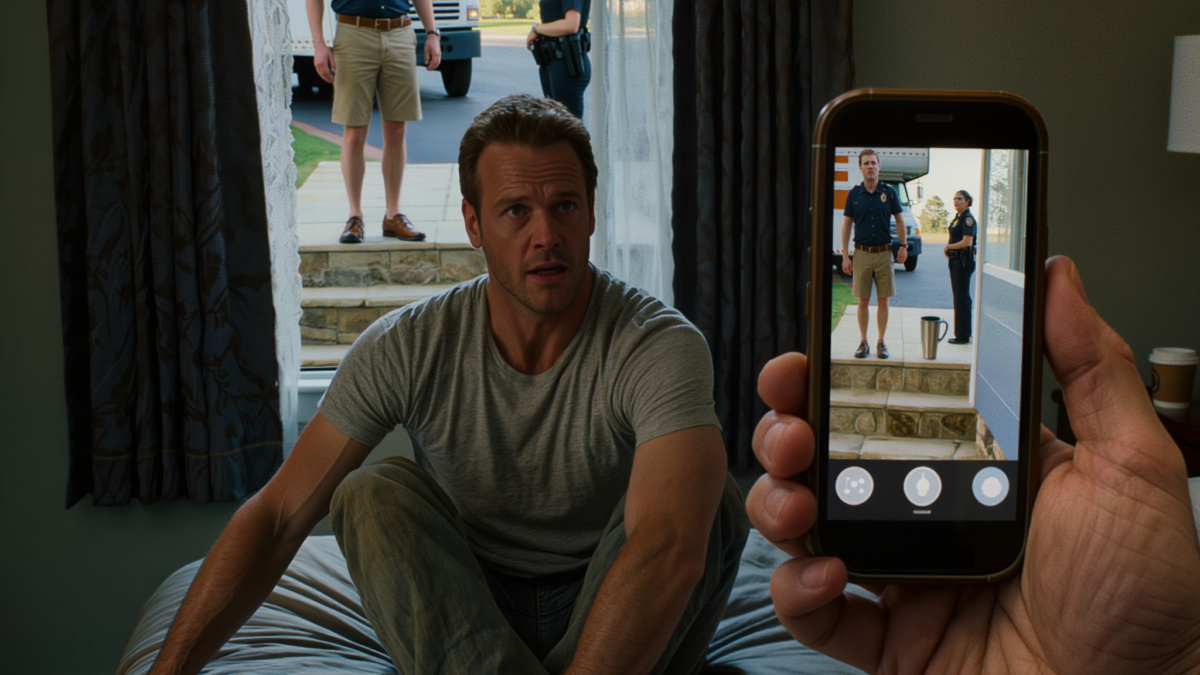
My name is Zachary Dawson. I’m 28 years old, and last July, while I was away on a demanding corporate assignment in Austin, Texas, my own family tried to take over my house.
They didn’t merely suggest that my older brother should live there. They didn’t ask whether I might be willing to help him.
They hired a commercial moving company, loaded a 26-foot truck with furniture, drove it onto my property, and began moving my brother’s belongings through my front door.
I hadn’t invited anyone. I hadn’t agreed to anything. And I certainly hadn’t given my mother permission to decide who could live in a house I had spent eight years working to afford.
But my mother had always believed that my brother Cameron deserved whatever he needed, regardless of who had to sacrifice for him.
There was a phrase she had used on me since childhood.
“You’re the practical one, Zachary.”
She said it with the casual certainty of someone explaining a fact that couldn’t possibly be disputed. Cameron was special. Cameron had potential. Cameron deserved the best.
And I was the practical one.
The one who could make do with less. The one who shouldn’t complain. The one who was expected to understand whenever something I wanted was given to someone else.
For most of my life, I had accepted that arrangement.
My family apparently believed I always would.
What they didn’t understand was that I had spent years quietly building a life in which their approval no longer determined what belonged to me.
I had the deed to my house. I had the mortgage documents. And I had an attorney who knew exactly how to protect the property.
By the time my family understood that I wasn’t going to surrender another thing, they were begging me to stop the legal consequences they feared.
But that morning in July, none of them seemed particularly concerned about consequences.
It was Tuesday, exactly 7:14 a.m.
I remember that time because I have replayed those minutes in my mind more often than I care to admit.
I was staying in a cramped hotel room in Austin, trying to salvage a failing client account for my company. The assignment had become exhausting. I was working fourteen-hour days, sleeping badly, and surviving on hotel coffee that tasted as though it had been sitting on a burner since the previous afternoon.
That morning, my lower back ached from the sagging mattress. The air conditioner rattled in the corner, struggling against the Texas heat pressing through the blackout curtains.
I dragged myself out of bed, poured coffee into a flimsy paper cup, and sat down again.
Then I opened the security camera app on my phone.
It was something I did every morning.
I had installed three high-definition cameras at my house. One covered the front porch and entryway. Another watched the back patio and the beautiful old oak tree in the yard. The third overlooked the driveway and garage.
I checked them regularly because that house represented nearly everything I had worked for as an adult.
For forty-seven seconds, I stared at the screen without moving.
At first, my exhausted brain couldn’t make sense of what I was seeing.
A massive commercial moving truck was backed into my driveway.
Its rear tires had rolled across the edge of my freshly maintained lawn, leaving deep muddy tracks in grass I had seeded myself three months earlier.
The truck’s rear doors stood open.
Inside were cardboard boxes, plastic storage containers, and furniture wrapped for transport.
Two men in gray moving-company uniforms were maneuvering a large gray sectional sofa out of the truck.
I watched them carry it up my stone front steps.
Then they walked straight through my front door.
My front door.
The heavy oak door I had personally locked before leaving for Texas.
I had been careful about security. The reinforced deadbolt had only two keys that I knew of: one on my keyring beside the hotel bed and another secured inside a fireproof metal lockbox under my desk at the office.
There wasn’t a spare key hidden outside. There wasn’t a lockbox hanging from the porch railing.
Yet two strangers were carrying furniture into my house.
I kept watching.
The movers emerged empty-handed and returned to the truck. This time they pulled out a heavy cherrywood dresser.
There was a long scratch near the bottom drawer on its left side.
I knew that scratch.
I knew that dresser.
It had been in Cameron’s bedroom since we were teenagers.
For a moment, I could hear my heartbeat more clearly than the air conditioner.
The moving truck wasn’t at the wrong address.
Someone wasn’t accidentally delivering furniture to my house.
My brother was moving in.
And he was doing it while I was out of state.
Oddly enough, the realization didn’t send me into the kind of panic I might have expected. The first rush of disbelief gave way to an almost uncomfortable clarity.
I knew exactly what would happen if I called my mother.
She would tell me I was overreacting. She would remind me that family helps family. She would explain why Cameron needed the house more than I did.
And if I called Cameron, he’d insist there had been a misunderstanding.
He would say he thought I knew about the arrangement. He would act offended that I wasn’t welcoming him.
I’d heard both versions of those conversations my entire life.
I wasn’t interested in having another one.
I wanted the people inside my home removed.
So I closed the camera app, called the non-emergency police line for my home city, and waited.
The phone rang three times.
“Dispatch,” a woman answered.
Her voice was calm and professional.
I took a breath before speaking.
“Hello, I need to report an unauthorized entry and a potential burglary in progress at my property. My name is Zachary Dawson. I am the sole legal owner of the residence at 442 Elm Street. I am currently out of state on a business trip, and I am watching a live feed from my security cameras. There are unauthorized individuals actively moving furniture into my home as we speak.”
Her tone sharpened.
“Sir, are you saying people are actively breaking into the residence?”
“I am saying they are currently carrying a cherrywood dresser through my front door, and they absolutely do not have my permission to be on the premises. I want them removed immediately. This is an illegal entry.”
She asked whether I had documentation of ownership.
“I have the deed, the current mortgage statement, and my comprehensive homeowner’s insurance policy. I have them saved as secure PDFs on my phone. I can email them to your precinct within the next four minutes.”
After a brief pause, she connected me with Officer Ranatada Delgado.
Officer Delgado asked for my full legal name, date of birth, and property address. She also provided an email address where I could send the documents.
I opened my secure folder and sent the deed and mortgage statement while we were talking.
She confirmed receiving them almost immediately.
“Okay, Mr. Dawson, I’m looking at your documents now. You are the legal owner. Everything checks out.”
Then she asked whether I could identify anyone at the property.
I reopened the live feed.
Cameron was standing on my front porch.
He wore expensive khaki shorts and a designer polo shirt. A stainless-steel travel mug rested in one hand while he used the other to direct the movers around my lawn.
He looked completely comfortable.
Like a man supervising work on a house that belonged to him.
“I have a brother,” I said. “His name is Cameron Hughes. He and his wife have been looking at houses recently. That is him standing on my porch right now.”
There was a pause.
Then Officer Delgado said she was dispatching officers to the address and asked me to remain on the line.
I sat on the edge of the hotel bed and watched.
Eventually, the reflection of flashing lights appeared along the side of the moving truck.
Two police cruisers had arrived.
That was the first moment I believed I might actually be able to stop what my family was doing.
But to understand why I called the police instead of calling my mother, you have to understand the family I grew up in.
Cameron is two years older than I am.
He inherited our mother’s bright green eyes and our father’s booming laugh. He also inherited something far more valuable in our household: the unquestioning belief that he was destined for greatness.
My parents treated his future as the family’s most important investment.
When we moved into our childhood home, I was seven.
Cameron was given the large master bedroom suite down the hall. It had a bay window overlooking the backyard, a walk-in closet, and its own bathroom with a soaking tub.
I got the small, drafty room beside the basement stairs.
The furnace was right next to my wall.
During winter, the vibration sometimes shook my bed frame. My room smelled faintly of dust and old metal, and the noise regularly kept me awake.
I asked whether Cameron and I could switch rooms for a year.
Mom patted my head.
“You’re the practical one, Zachary. You don’t need all that space. Cameron needs a quiet place to study. He’s going to be a CEO someday.”
That settled it.
Whenever Cameron wanted something, there was a reason he deserved it.
Whenever I wanted something, there was a reason I should be able to live without it.
His mistakes were learning opportunities. Mine were character flaws.
His ambitions were important. My needs were inconvenient.
When Cameron turned eighteen, my parents spent a substantial portion of their retirement savings on a brand-new Porsche.
They said a young man headed for corporate success needed the right image. The car, according to them, was an investment in his future.
Cameron had never held a serious job.
That didn’t matter.
Two years later, I turned eighteen.
Dad shook my hand and gave me a stiff, inexpensive leather wallet from Walmart.
There was a twenty-dollar bill inside.
He suggested I find a second minimum-wage job if I needed help paying for my community college textbooks.
There was no college fund waiting for me.
No family investment in my image.
No meaningful financial safety net.
I understood the message.
Cameron’s future deserved support. Mine was something I would have to build myself.
So I started saving money.
At first, I simply wanted enough to stop worrying about every unexpected expense. But the longer I worked, the more important financial independence became.
I pushed through school, eventually earning a degree from an affordable state institution while accumulating student debt.
After I got my first corporate job, I rented an apartment so small that my twin mattress touched two walls.
I drove a fifteen-year-old sedan with peeling paint, a struggling transmission, and a heater that seemed determined to blow cold air throughout the winter.
My colleagues went out for sushi, took weekend trips, and met for drinks after work.
I ate turkey sandwiches at my desk.
I worked overtime whenever it was available.
I volunteered for Christmas, Thanksgiving, and New Year’s shifts because the additional pay mattered more to me than another disappointing family gathering.
I accepted difficult projects other employees wanted to avoid because successful completion meant better performance bonuses.
When money reached my checking account, I transferred as much as possible into savings and investments.
I set up automatic contributions to index funds so that I wouldn’t even be tempted to spend it.
I rarely bought new clothes.
I didn’t take vacations.
From the outside, my life looked miserable.
My family assumed it was evidence that I hadn’t become successful.
I let them believe that.
Whenever Mom called, she asked whether I was still living in my “sad little shoe box.”
I’d tell her things were tight. Rent was expensive. Groceries cost more than they used to.
She would sigh sympathetically.
“Well, some people just aren’t built for the fast lane.”
Then she would begin talking about Cameron.
His latest promotion.
His ski trips to Aspen.
The luxury houses he and his wife were considering in gated communities.
Mom could spend forty minutes describing everything Cameron had supposedly achieved without once asking whether I needed anything.
I didn’t tell her about my investment accounts.
I didn’t tell her how much I was saving.
I’d learned that the moment my parents discovered I had something Cameron wanted, my resources would somehow become a family matter.
The final emotional break happened at Thanksgiving two years before the moving truck appeared.
I drove three hours through freezing rain to my parents’ house.
My car heater wasn’t working, so I wrapped myself in a blanket and shivered through most of the drive.
I’d bought an expensive pie from a bakery because I wanted to bring something nice to dinner.
I still hoped, occasionally, that spending time with my family might feel different.
It didn’t.
For forty-five minutes, Mom talked about Cameron’s new boat.
She described the leather seats, the engines, and the dock fees in extraordinary detail.
Dad sat at the head of the table looking proud.
Cameron’s wife complained about the cost of private preschool for their child, hinting that my parents might consider helping.
Nobody asked how my job was going.
Nobody asked whether I was happy.
The pie I’d brought remained untouched on the kitchen counter.
I sat there eating dry turkey, listening to people who shared my last name talk about everything except me.
Eventually, I said the weather was getting worse and I should leave.
Nobody tried to stop me.
Nobody offered me leftovers.
I drove three hours back to my apartment in the dark.
I didn’t cry.
I was too tired of hoping for a different result.
The next morning, I called my financial adviser, Patricia.
She had been managing my investments for years and knew how much I’d sacrificed to build them.
More than once, she had encouraged me to enjoy some of the money I’d earned.
She had also told me that my portfolio was strong enough to consider purchasing a home, either with cash or through a substantial down payment that would preserve my other investments.
“Patricia,” I said when she answered. “Let’s do it.”
“You’re sure, Zachary?” she asked.
“I’ve been sure for a long time. I just needed to feel it in my gut. And I feel it today. Let’s start looking at real estate. I want out.”
I wasn’t expecting my family to suddenly become fair.
I was finally ready to stop organizing my life around the possibility that they might.
In March of the following year, I closed on a house.
It was a beautiful four-bedroom Craftsman in a quiet, established neighborhood lined with mature trees.
The house stood about forty minutes from my parents and twelve minutes from my corporate office.
It had the kitchen I’d always wanted, with a professional-grade gas range and enough space to cook without bumping into every cabinet.
The backyard was large, with a magnificent sixty-year-old oak tree.
The front porch was wide, framed by stone steps, and caught the evening sunlight.
It was nothing like the apartment I’d spent years enduring.
I made a twenty-percent down payment.
The closing appointment at the title company took three hours. I signed page after page of documents, confirming my finances, ownership, and responsibility for the property.
When it was finished, the title agent handed me the keys.
I sat in my car in the parking lot for twenty minutes.
I didn’t celebrate loudly.
I didn’t call my parents.
I just looked at the keys in my hand.
Eight years of overtime, cheap meals, uncomfortable winters, and missed vacations had become something real.
A front door.
A yard.
Rooms where I could live without someone reminding me that Cameron deserved more.
When I unlocked the house for the first time, I walked through every empty room by myself.
The hardwood floors creaked beneath my shoes.
There wasn’t much furniture yet.
But the place was mine.
For once, I didn’t need to ask anyone’s permission to enjoy what I’d earned.
I told only two people.
Patricia, my adviser.
And my best friend Adam, who had known me throughout those years of turkey sandwiches and relentless saving.
Adam came over that first night carrying a cheap bottle of bourbon.
I hadn’t bought furniture because I wanted to choose good pieces carefully rather than fill the rooms with things I’d eventually replace.
So we sat on the bare kitchen floor, drank bourbon from paper cups, and ate takeout pizza.
We talked for hours.
It remains one of my favorite memories.
Keeping the purchase from my family required some effort.
I continued paying rent on my old apartment.
It was an unnecessary expense in purely financial terms, but I considered it the cost of privacy.
My mail still went there. I stopped by twice a week to collect it and check the place.
When Mom called, I occasionally complained about the noisy neighbors upstairs.
She never suspected that I had moved.
For a while, the arrangement worked perfectly.
Then my CEO, David Mercer, came into my office one Tuesday in June.
David was a demanding businessman who respected people who solved difficult problems.
He needed someone to travel to Austin and rescue a multimillion-dollar client relationship that was falling apart.
I accepted.
What should have been a three-week assignment stretched into six exhausting weeks.
I arranged furnished accommodations through a colleague, packed two suitcases, and left my new house secured.
Before departing, I checked the alarm system, deadbolts, and all three exterior cameras.
Everything was working.
I had no idea that a small oversight from the previous week would eventually lead my family straight to my front door.
A week before leaving for Texas, I’d met my cousin Blake Peterson at a local bar.
Blake was the kind of relative who acted friendly while quietly collecting information to repeat at family gatherings.
He’d insisted we meet for a beer.
I agreed because I didn’t want to appear suspicious or distant.
At one point, I walked over to the bartender to settle our bill.
I left my phone face up on the table.
A notification appeared from my property insurance app, confirming an update related to the Elm Street address.
I barely thought about it.
When I returned, I picked up my phone, said goodbye to Blake, and went home.
I learned later that Blake had seen the notification.
He hadn’t asked me about it.
Instead, after we parted ways, he went to my mother’s house and told her I appeared to be involved in a secret real estate purchase.
Mom didn’t call to ask me whether it was true.
She used the spare key I’d given her years earlier for emergencies and entered my old apartment while I was in Texas.
She searched my desk drawers and mail.
Eventually, she found a property tax notice that had slipped through my mail-forwarding arrangements.
She opened the first-class mail addressed to me.
That document revealed the purchase I’d kept private.
My mother now knew that her supposedly struggling younger son owned a four-bedroom house on Elm Street.
She could have called to congratulate me.
She could have asked why I hadn’t felt comfortable sharing the news.
Instead, she called Cameron.
By then, Cameron’s impressive lifestyle was concealing a serious financial problem.
He’d exhausted much of his savings, accumulated substantial credit card debt, and taken out unfavorable personal loans to maintain appearances.
His wife was growing increasingly concerned about their finances.
Cameron was desperate to find a way out without admitting how badly things had gone wrong.
When Mom gave him my address, he apparently saw an opportunity.
A beautiful house that was unoccupied while I was away.
A younger brother who had spent his entire life giving in.
And a mother who believed Cameron’s needs should come first.
He didn’t contact me.
He told his wife that our mother had arranged for them to live in a family investment property.
He hired a professional moving company, paid a large deposit with a high-interest credit card, and signed a moving contract listing my house as the destination.
He expected to move his family in before I returned from Austin.
By the time I got home, their furniture would be unpacked and their child’s belongings would be settled.
He seemed to believe that I wouldn’t have the nerve to make them leave.
I didn’t know any of those details while I was in Texas.
What I noticed was the silence.
Normally Mom called every other Sunday, usually to complain about something or explain how well Cameron was doing.
But for three weeks, I heard nothing.
No calls.
No messages.
No casual inquiries about my work.
The absence of contact made me uneasy.
I’d lived with my family’s behavior long enough to know that sudden silence didn’t necessarily mean they were leaving me alone.
Two weeks into the assignment, I used a rare thirty-minute lunch break to call Arthur Coleman.
Arthur was the attorney who had handled my real estate closing.
He also advised me on corporate contracts and estate planning.
I paid him a substantial retainer because he was efficient, direct, and unafraid of difficult situations.
Sitting in my rental car with the air conditioning running at full power, I explained my concerns.
I told him about Blake seeing something on my phone.
I told him my mother still had a key to the old apartment.
And I told him I had a bad feeling that my family might have discovered the house.
Arthur listened.
“Listen to me very carefully, Zachary,” he said. “If they step foot on that property, it is trespassing, pure and simple. You have sole title. No one else is on the deed. No one else is on the mortgage. Your mother has zero claim. Your brother has zero claim.”
He advised me not to negotiate if someone entered the property without permission.
“I don’t want to overreact,” I admitted. “I might just be paranoid, but my brother has a long history of claiming things that aren’t his, and my parents always back him up. They’ve done it my whole life.”
“Zachary,” he replied, “you pay me to overreact. You pay me to protect your assets so you don’t have to deal with the emotional fallout.”
He told me the ownership documents and cease-and-desist templates were ready if I needed them.
I ended the call feeling better.
For the first time, I wasn’t depending on my parents to decide what was fair.
There were documents that established ownership.
There was an attorney who could help enforce my rights.
I returned to work, hoping my concerns were unfounded.
A few days later, I woke up in Austin and saw Cameron’s moving truck on my camera feed.
Now, sitting in that hotel room, I watched the police arrive at my house.
Two black-and-white cruisers turned onto Elm Street without using their sirens.
The red and blue lights reflected against the aluminum side of the moving truck.
The vehicles stopped behind it, blocking its path out of my driveway.
Through the camera microphone, I heard doors closing.
Officer Delgado stepped out of the lead cruiser.
Her dark hair was pulled back tightly. She wore polarized sunglasses and approached the property with the deliberate composure of someone accustomed to difficult conversations.
Two other uniformed officers accompanied her.
The movers stopped working.
Cameron was standing on my front porch, leaning against the railing.
He wore a tailored Ralph Lauren polo shirt, crisp khaki shorts, and leather loafers.
He still held his stainless-steel travel mug.
Rather than looking concerned, he appeared mildly annoyed by the interruption.
He took another sip as the officers approached.
“Good morning, officers,” he called. “Is there a problem? Are we blocking the street with the truck? I told the driver to pull up as far as he could, but it’s a tight fit with the oak tree.”
Officer Delgado stopped near the bottom of the steps.
“Are you the homeowner, sir?”
Cameron laughed.
It was the same easy, confident laugh that had charmed my parents and relatives for years.
“Well, technically, it’s a family investment property. My mother handles the bulk of the tedious paperwork and the real estate logistics behind the scenes. But yes, my wife and I are the primary residents moving in today.”
He explained that they wanted to unload the heavy furniture before the summer heat became worse.
Officer Delgado listened without smiling.
Then she informed him that the registered owner had reported an unauthorized entry and a possible burglary in progress.
Cameron’s smile faltered.
Only briefly.
Then he waved one hand dismissively.
“Oh, that is just a massive ridiculous misunderstanding. A huge overreaction from someone who doesn’t understand the situation. My younger brother Zachary can be a little dramatic sometimes.”
He said I was confused about the moving timeline.
He insisted Mom had already authorized the move and that there was a verbal family agreement.
“Everything is perfectly legal, perfectly safe, and completely above board,” he assured her.
I was watching from hundreds of miles away, unable to believe how confidently he was describing a decision I’d never participated in.
In Cameron’s mind, Mom had approved the arrangement.
That was apparently enough.
Officer Delgado took a step toward the porch.
“A verbal agreement with your mother?”
“Exactly,” Cameron said.
He stepped down one stair, seemingly trying to make the conversation more personal.
“Look, officer, I know exactly how this looks on paper to someone walking in blind, but I assure you everything is completely fine. This is an internal family matter. I can call my mother right now on speakerphone if you need verification.”
He insisted she could clear everything up within two minutes.
Officer Delgado remained where she was.
“You can call whoever you want, sir,” she replied. “But unless your mother’s legal name is Zachary Dawson, she does not own this house.”
Then she explained that she had already reviewed the deed and current mortgage statement I’d emailed.
Neither Cameron nor our mother appeared on those documents.
“You have absolutely no legal right to be standing on this property, let alone forcing a commercial moving crew to carry furniture through that front door.”
Cameron laughed again.
This time the sound was less confident.
Behind him, the movers had stopped with a heavy cardboard box labeled “master bedroom.”
They were watching the conversation rather than carrying it inside.
“Hey guys, take a quick break for a second. Put the box down on the porch,” Cameron ordered.
Then he pulled out his phone.
“I need to clear this ridiculous misunderstanding up with the local precinct.”
I knew whom he was calling before he spoke.
He paced across my porch, his face growing red.
“Mom? Yeah, it’s Cameron. Look, I’m at the Elm Street house and the cops are here. Yes, the actual police. Zachary actually called the cops on me.”
His voice grew louder.
“Can you believe this kid? What is wrong with his brain? You need to talk to them right now and explain the family real estate arrangement. Tell them I am supposed to be here and that Zachary is just having a tantrum.”
He activated his speakerphone and held it toward Officer Delgado.
“My mother wants to speak with you. She will explain everything. Just listen to her.”
Officer Delgado didn’t take the phone.
“I do not need to speak with your mother, sir. This is not a family court mediation. This is not a civil dispute over Thanksgiving dinner.”
She reminded him that the legal owner had explicitly denied permission for anyone to enter or occupy the house.
Then she gave him two choices.
He could direct the movers to put the belongings back in the truck and leave immediately.
Or he could face arrest for unauthorized entry, with the possibility of the moving truck being impounded.
For the first time, Cameron seemed to understand that nobody was going to call Mom and ask her what should happen.
He stared at the officer.
“Arrest me? Are you insane?”
His voice rose.
“This is my family’s house. Zachary is just being a petty, jealous, spiteful little brat because he is struggling financially and I am not.”
Then he pointed out that he had a contract with the moving company.
That was the moment I stopped being a silent observer.
I’d spent nearly my entire life hearing Cameron explain why he deserved something that belonged to me.
I wasn’t going to sit there listening to him do it again.
I tapped the two-way audio feature on my security camera app.
Then I held down the microphone button.
“Cameron.”
My voice came through the speaker mounted above the porch.
Cameron jumped.
His travel mug slipped from his hand, bounced down the stone steps, and spilled dark coffee across the walkway.
He looked around wildly before realizing where the voice had come from.
The officers looked up at the camera, too.
“Zachary?” Cameron stammered.
“Get off my property,” I said.
My voice sounded unusually calm, even to me.
“You do not own this house. Mom does not own this house. I bought it in cash. My name is the only name on the deed, and my corporate lawyer has already drawn up the trespassing charges.”
I told him he had five minutes to leave and that I was prepared to pursue the available legal remedies if he refused.
For a few seconds, nobody spoke.
Cameron stared at the camera.
Then he looked back at Officer Delgado, who had one hand near her radio.
The movers seemed to have heard enough.
They turned around, retrieved the cherrywood dresser, and started carrying it back toward the truck.
“Zachary, you can’t do this to me!” Cameron shouted up at the camera.
His confident voice had disappeared.
“I already paid a massive non-refundable deposit on the moving company. I told my wife we were moving in today. She’s waiting for my text. You are ruining my life over a stupid technicality.”
“The property deed is not a technicality, Cameron,” I replied.
Then I addressed Officer Delgado.
“Thank you so much for your prompt assistance. I would like them removed from the premises immediately. Please ensure they do not leave any trash or damage behind.”
I released the microphone button.
From the hotel bed, I watched Officer Delgado direct Cameron toward the truck.
The moving crew began returning the boxes and furniture they had carried out.
Cameron hurried around trying to help.
His expensive clothes were damp with sweat.
He looked nothing like the confident man who had been casually drinking coffee on my porch a few minutes earlier.
I had never seen him so uncertain.
And I had never felt so certain about a decision involving my family.
For twenty-eight years, Cameron had expected other people to rearrange their lives around him.
This time, I wasn’t going to.
Once the police cruisers and moving truck finally left, I knew I couldn’t remain in Austin.
My hands were still shaking from the experience.
I called David Mercer and explained that there had been an unexpected family emergency involving unauthorized entry into my property.
I told him I needed to return home immediately.
I didn’t explain the history between Cameron and me.
David told me to take care of the situation and put the emergency flight on the company card.
“Handle your business, Zachary,” he said.
I booked a direct red-eye flight and headed to the airport.
As I moved through the bright terminal with my suitcase, my phone kept vibrating.
Nineteen missed calls from Mom.
Twelve from Cameron.
Even Blake called twice.
I didn’t answer.
I watched the notifications accumulate on the lock screen without opening the messages.
Whatever they wanted to say, they could wait until I was safely back in my house.
I landed shortly after midnight.
A rideshare took me directly from the airport to Elm Street.
The neighborhood was quiet.
There were no police lights and no moving truck.
The lawn was damaged where the truck’s tires had cut through the grass. The muddy ruts were deep enough that I knew I’d have to reseed and repair that area.
But the house was standing exactly where I’d left it.
I walked up the stone steps, unlocked the heavy oak door, and stepped inside.
The air conditioning was running.
The rooms smelled faintly of fresh paint and lemon floor wax.
I locked the deadbolt behind me.
Then I walked into the kitchen, rested my hands against the granite counter, and stood there in the dark.
I was exhausted.
My eyes burned from lack of sleep and the flight.
But for the first time since seeing the moving truck, I felt genuinely safe.
The house had remained mine.
I went upstairs, lay down on the simple mattress I was still using while choosing furniture, and slept more deeply than I had in years.
The next morning, I woke at exactly eight.
Sunlight was coming through the bedroom windows.
I went downstairs, made a strong pot of coffee, and carried it out to the back patio.
The branches of the sixty-year-old oak tree stretched over the yard.
For a little while, I stood there breathing the cool morning air.
Then I took out my phone.
I opened the voice-recording app and started recording before calling Mom. My state allowed one-party consent for that kind of recording, and after what had happened, I wanted documentation of our conversation.
She answered on the first ring.
“Zachary!” she shouted before I could even say hello.
“How dare you? How absolutely, unbelievably dare you? You had your own flesh and blood brother humiliated by the police in broad daylight. Do you have any idea what you have done to this family? Do you have any idea the embarrassment you caused us? The neighbors were watching.”
“Good morning, Mom,” I said.
I deliberately kept my voice quiet.
“I’m doing very well today. Thanks for asking. The flight back was smooth. How are you?”
“Don’t you dare play smart with me, you ungrateful little brat!”
She sounded exactly as she had when I was a teenager.
“Cameron is an absolute wreck. He had to cancel the movers at the last second. He lost a massive security deposit that he couldn’t afford to lose. His wife is furious with him.”
Then came the accusation I should have expected.
“You knew he needed that house, Zachary. You knew he was looking for a place to live. Why would you buy a massive house and hide it from us? Why would you be so incredibly selfish and sneaky? You lied to us.”
“Selfish,” I repeated.
The word stayed with me for a moment.
“I bought a house with my own money, Mom. Money I earned by working every major holiday, taking every grueling overtime shift, and eating garbage for eight straight years while you and Dad drained your retirement accounts to buy Cameron a Porsche.”
I reminded her that the house had been purchased for me to live in.
Then I told her something she clearly hadn’t expected.
“And you committed a federal offense to find out about it.”
The shouting stopped.
“What are you talking about?” she asked.
“The property tax notice, Mom. You used your emergency spare key to enter my apartment without my permission. You went through my personal desk drawers. And you physically tore open a piece of first-class mail addressed exclusively to me.”
I told her that opening my mail without authorization could carry serious legal consequences.
For the first time in the conversation, she sounded uncertain.
“I was just checking on you,” she said. “I am your mother. I have a right to know if my son is making massive financial decisions.”
Then she returned to the words I’d heard all my life.
“You are the practical one. Zachary, you don’t know anything about real estate or mortgages. I was trying to protect you from making a huge mistake. You could have been scammed.”
I couldn’t believe she was still trying to make the situation sound like an act of maternal concern.
“You weren’t trying to protect me,” I replied.
“You saw a resource and you immediately, without a single second of hesitation, tried to harvest it for Cameron. You told him to pack up a truck and move into my house. You told him it was a family asset.”
I paused before continuing.
“Let me make something incredibly crystal clear to you right now, and I want you to listen to me very carefully because I will only say this once. I am not a family resource.”
I told her my bank account was not a college fund for Cameron’s child.
My house was not an emergency solution to Cameron’s financial problems.
And neither of them had the right to decide what happened to it.
“This house belongs to me. My name is the only name on the deed. It is mine.”
Mom began crying.
“You could have just talked to us,” she said.
She suggested we could have called a family meeting and negotiated a rental agreement.
Then she accused me of being cruel for involving the police.
But I didn’t believe a rental agreement had ever been her intention.
“You didn’t want a rental agreement, Mom,” I said softly. “You wanted to break my spirit.”
I told her I understood the plan.
Cameron would move in while I was away. By the time I returned, his wife and child would be living there, and Mom would expect me to accept the arrangement rather than put them out.
They were counting on the younger brother who had spent his childhood being told to sacrifice.
They hadn’t expected him to refuse.
That conversation confirmed something I had been resisting for years.
My mother did not see a meaningful difference between asking me for help and making decisions about my property without me.
And if I wanted that to change, I needed boundaries that couldn’t be dismissed as another family argument.
Later that same week, Arthur Coleman began the formal legal response.
He drafted a detailed, multi-page cease-and-desist letter addressing my mother’s unauthorized entry into the old apartment and the opening of my mail.
He arranged for the letter to be delivered by certified mail, requiring her signature.
The document identified the conduct at issue and warned against future attempts to access my property, interfere with my financial information, or contact me about my real estate assets in violation of my stated boundaries.
It was a firm letter.
And it had the effect Arthur intended.
Mom stopped making demands.
But Arthur’s work didn’t end with her.
He also arranged for a private investigator at his firm to contact the moving company Cameron had hired.
Cameron had paid the deposit with his personal credit card and signed a contract naming my Elm Street property as the destination.
Those records mattered.
Until then, Cameron had tried to describe everything as a family misunderstanding.
The moving-company paperwork documented that he had formally arranged the move before ever securing my consent.
Arthur obtained certified copies through a legal request.
He then sent Cameron the relevant documentation together with a draft civil complaint addressing attempted property damage, trespassing, and emotional distress.
No lawsuit had been filed at that point.
But Cameron now understood that I had both a record of what happened and an attorney prepared to pursue the matter.
The response was immediate.
According to what I later heard through Blake Peterson, Cameron was devastated.
Blake had suddenly become much friendlier after discovering that I had more financial resources and legal support than he’d realized.
Through him, I learned what had really been happening in Cameron’s life.
The successful older brother whose promotions, expensive trips, and impressive lifestyle Mom had celebrated for years was deeply in debt.
He had developed a serious gambling problem that he’d hidden from our parents.
His credit cards were maxed out.
He’d taken out expensive personal loans to maintain the lifestyle everyone expected of him.
And the townhouse he shared with his wife was no longer financially sustainable.
They were three months behind on rent and facing eviction.
His wife had learned about the debt about a month before the moving incident.
She was furious that he’d concealed so much from her.
According to Blake, she had warned Cameron that if he didn’t fix their financial and housing situation, she intended to seek a divorce and full custody of their child.
That explained the urgency.
Cameron hadn’t simply decided my house looked nicer than his own.
He was trying to escape a financial crisis.
When Mom revealed that I had secretly purchased a large house, he treated it as a solution.
He told his wife that our parents had bought a family investment property and that they could live there rent-free while paying down their debt.
She apparently believed him.
He hired the moving company, arranged the truck, and began preparing for a new life in a house he had no right to occupy.
It was another lie layered over all the financial lies he’d already told.
And it collapsed on my front porch.
After Officer Delgado ordered him to leave, Cameron returned to his wife without having completed the move.
She demanded to see the paperwork proving they had a right to the house.
He couldn’t produce it.
Eventually, he admitted that the property belonged to his younger brother and that he had attempted to move in without permission.
That was the final betrayal his wife was willing to accept.
She packed her belongings, took their child, and left that afternoon.
The following week, she formally filed for divorce, citing his financial deception.
For years, my parents had treated Cameron as proof that their parenting had produced a future corporate star.
Now they were discovering that much of what they admired had been financed through debt and concealed problems.
Mom’s confidence disappeared.
Three days after she received Arthur’s certified letter, she called me again.
This time, there was no shouting.
“Zachary, please,” she whispered.
Her voice was shaking.
“Tell your lawyer to stop. Please, we won’t come near the house. I swear to you, we won’t contact you. Promise.”
She struggled to continue.
“Cameron has lost absolutely everything. His wife left him. He has no money. He has nowhere to go. Please don’t sue him. He can’t afford a lawsuit. A lawsuit will push him over the edge.”
I listened.
I didn’t feel the satisfaction I might once have imagined.
I wasn’t happy that his marriage had collapsed.
I wasn’t celebrating the financial trouble he’d created.
I simply wasn’t willing to sacrifice my security to solve those problems for him.
“I have absolutely no intention of suing a man who is already bankrupt, Mom,” I told her.
“There is no money to take from him anyway. But you need to understand the new reality of our relationship.”
I explained that she would never have a key to my house.
She would not have access to information about my income.
She would not be permitted to treat my address or property as something she could distribute to other family members.
And if Cameron returned to my property without permission, I would contact the authorities again.
“Do we understand each other?”
“I understand,” she said through tears.
Then she added something I had almost stopped expecting to hear.
“I’m so sorry.”
It was the first time I could remember my mother apologizing to me in twenty-eight years.
I didn’t feel triumphant.
There was no dramatic sense of victory.
I just felt tired, as though I’d finally set down something heavy that I’d been carrying since childhood.
Seven months have passed since that morning in July.
I’m sitting on my front porch now with a cup of coffee that actually tastes good.
The house looks different.
When I first bought it, the rooms were mostly empty. I slept on a mattress on the floor and ate takeout while deciding what furniture I wanted.
Now I’ve filled the house slowly, choosing solid wood pieces I genuinely like.
I turned the room with the best morning sunlight into a home office.
The kitchen is a place I enjoy using.
The old oak tree still dominates the backyard, its branches giving the property the sense of permanence that drew me to it in the first place.
For the first time in years, I regularly sleep through the night.
I no longer wake up worrying about whether my savings will be enough or whether my family will demand something I can’t afford to give.
The neighborhood has also given me something I didn’t expect.
A few weeks after the moving truck incident, my neighbor Mrs. Aldridge came over.
She’s in her late seventies and has the sharp attention of someone who notices everything happening on the street.
She carried a plate of warm cookies covered in foil.
“I saw the police cars a few weeks ago,” she told me. “I don’t know what kind of messy drama you brought with you, young man, but you handled it quietly and quickly. I appreciate that.”
Then she smiled.
“Welcome to the neighborhood. If you ever need a cup of sugar or someone to watch your house while you travel, you know where I am.”
It was such a small gesture.
A plate of cookies from someone who barely knew me.
But I remember standing on the porch afterward and realizing that this near-stranger had offered me more uncomplicated kindness than I’d felt at some of my own family’s gatherings.
She wasn’t asking me for anything.
She wasn’t comparing me to Cameron.
She was simply welcoming me home.
I haven’t spoken to Cameron since the day I told him to leave through the security camera speaker.
From what I’ve heard through relatives, his divorce is now final.
The process was difficult, and he lost custody of his child.
He lives in a small, expensive studio apartment across town and works a job he doesn’t enjoy while trying to deal with the debt accumulated through his gambling and lifestyle.
I don’t take pleasure in that.
But I also don’t believe his circumstances create an obligation for me to surrender the house I worked so hard to buy.
Dad called once in August.
The conversation lasted about five minutes.
He talked about the weather, asked whether I was following the baseball playoffs, and carefully avoided mentioning the house, Cameron, or the potential lawsuit.
Mom occasionally sends a polite message on major holidays.
I answer with a brief thank you.
That’s the extent of our relationship.
There was a time when keeping that distance would have filled me with guilt.
I used to believe that being family meant I had to accept whatever treatment came my way.
I thought I owed my parents obedience because they’d raised me.
I thought I owed Cameron endless understanding because he was my brother.
And somewhere along the way, I started believing that being “the practical one” meant never asking whether the sacrifices were fair.
I don’t believe that anymore.
The house didn’t create my independence.
I’d been building it for eight years, one saved dollar and one difficult workday at a time.
But the house made that independence real.
It gave me somewhere I could close the door and know that the life on the other side belonged to me.
I no longer need Cameron’s achievements to be measured against mine.
I no longer need Mom to recognize how hard I’ve worked.
And I no longer need to defend the idea that something I bought with my own money should remain mine.
Sometimes protecting your future means accepting that the people who benefited from your silence may become angry when you finally speak.
They may call you selfish.
They may say you’ve changed.
They may insist you’re betraying the family by refusing to let them make decisions for you.
But I’ve learned that I cannot build a secure life while allowing other people to treat its foundation as theirs to use.
I’m not the spare part in Cameron’s story.
I’m not a financial resource waiting to be assigned to whoever needs me most.
I’m Zachary Dawson.
I’m a homeowner.
And I finally understand that protecting my peace doesn’t require anyone else’s permission.
Last week, Adam came over for dinner.
Looking around the house, he used a word that has stayed with me.
“Settled.”
It was exactly right.
Not wealthy enough to stop caring about money. Not untouched by what happened with my family. Not somehow free of every worry.
Just settled.
I have a home I chose, a life I’ve built, and boundaries I’m no longer ashamed to maintain.
My name is on the deed.
And just like the roots of the old oak tree holding firm beneath my backyard, I finally feel firmly planted in a life that belongs to me.








