At Thanksgiving, my fiancée mocked my 80-hour workweeks in front of 20 friends and relatives while I paid our mortgage and the final $10,000 installment on her credit card debt. She praised her childhood friend Tyler for “being there” instead. Four days before my flight to Scotland, a wedding coordinator copied me on an email by mistake. I read the attachment, separated our finances, and placed my engagement ring on a date I had circled in red.
The crystal wine glasses were filled with imported Bordeaux, the antique silverware had been polished until it gleamed, and twenty of our closest friends and relatives were gathered around the sprawling mahogany dining table.
It was Thanksgiving at my fiancée’s parents’ $3 million suburban estate.
And Jessica Benson was about to humiliate me in front of everyone.
My name is Logan Foster. I’m 34 years old, and I’m a board-certified cardiovascular surgeon at one of the busiest Level One trauma centers in the American Midwest.
For years, I had worked exhausting 80-hour weeks, spent countless nights on call, and sacrificed much of my personal life to build a career in cardiac surgery.
I thought I was building a future with Jessica, too.
Apparently, she had a very different understanding of our relationship.
That Thanksgiving evening, I had stepped away from the table to take an urgent hospital call about a critically ill patient. When I returned, I explained to one of Jessica’s uncles why the call couldn’t wait.
Jessica looked at me with an expression I had come to recognize.
“You just work too much, Logan,” she said. “You are literally never present. Tyler actually knows how to be there for me when I need emotional support. You just throw money at things and expect everyone to bow down and worship you.”
Then she laughed.
The sound carried across the table, interrupting several conversations.
I sat there listening to my fiancée reduce years of demanding medical work to a selfish personality flaw.
What made it particularly difficult to swallow was that I had just finished paying the final $10,000 installment of her substantial credit card debt.
That debt had accumulated through designer clothing, luxury spa retreats, expensive brunches, and a lifestyle Jessica seemed to believe should never require compromise.
I paid our mortgage. I covered household expenses. I worked extra shifts to afford her engagement ring.
But apparently, none of that counted as being there for her.
As if to emphasize her point, Jessica smiled and passed a heavy silver bowl of organic cranberry sauce directly to Tyler Morgan.
Tyler was her childhood best friend.
He was also the man I would soon discover she had secretly married.
My future mother-in-law, Marion, joined the laughter. She took a sip of Chardonnay and announced that a modern woman needed someone who could attend afternoon tea, charity galas, and couples counseling, not merely pay for those things while spending his life in an operating room.
I looked around the table.
These were people who had repeatedly relied on my money, my time, and my medical expertise.
And they were laughing at the work that made their expectations possible.
I had no idea how thoroughly my trust had already been betrayed.
Four days after discovering the truth, I would find myself standing in Terminal 5 at O’Hare International Airport, preparing to leave the country while Jessica’s father faced the very medical emergency I had spent years warning the family about.
By then, I would have something far more valuable than their approval.
I would have the facts.
And for the first time in six years, I would be making decisions for myself.
***
The gate agent’s scanner beeped steadily as travelers lined up for boarding.
Jessica’s name appeared on my phone for the fourteenth time in less than an hour.
It was a chaotic Wednesday morning at O’Hare. Business travelers hurried toward their gates, families argued over forgotten belongings, and the fluorescent lights washed the color from everyone’s exhausted faces.
I had a window seat booked on a nine-hour international journey connecting onward to Edinburgh, Scotland.
This wasn’t a vacation.
For three years, I had worked on research involving complex coronary revascularization outcomes in high-risk geriatric patients.
The International Medical Board had accepted my paper for presentation at a prestigious medical symposium.
I had anticipated this opportunity for seven months.
A successful presentation could help secure my promotion to deputy chief of surgery, opening the door to new professional responsibilities and a substantial increase in salary.
It was something I had earned through years of difficult work.
Jessica had complained about the hours I spent preparing for it.
Now, as boarding began, I declined her call.
Forty seconds later, a text arrived.
“Logan, this is an absolute emergency. Dad collapsed at the house an hour ago. He couldn’t breathe and his chest is in absolute agony. The cardiologists at the hospital are saying it looks like an aortic dissection. You need to come back right now. Please, we need you. You are the only one who knows his history. Do not ignore me. You owe us this.”
I read the message twice.
The medical terminology was immediately familiar.
So was the demand at the end.
Gregory Benson’s condition had been a serious concern of mine for two and a half years.
I was the physician who had originally identified his ascending aortic aneurysm.
The problem had first appeared during what was supposed to be a routine evaluation after Gregory complained of discomfort during an expensive golf weekend.
He assumed it was indigestion.
The imaging told a different story.
Over the following years, I monitored the aneurysm through regular scans, medication adjustments, and difficult conversations about the risks of delaying surgery.
I remembered one of those conversations particularly clearly.
I had brought printed CT images to Gregory’s home and spread them across the dining table.
I explained the weakness in the artery wall and why an elective repair, performed while he was stable, offered a substantially better outlook than waiting for a medical crisis.
Gregory listened politely while swirling aged bourbon in a crystal glass.
He was 71, wealthy, accustomed to controlling negotiations, and reluctant to accept that some problems couldn’t be solved through determination or money.
Then Jessica intervened.
“He is 71 years old, Logan,” she said. “He does not want to go through open-heart surgery. It is way too invasive.”
She complained about the recovery period.
She wanted him present for their family vacation in Aspen. She also wanted him healthy and looking his best for the wedding photographs.
“Can you not just keep managing it medically? Give him better pills. Write a different prescription. You’re a smart doctor. Figure it out.”
I had explained the risks as clearly as I could.
Nevertheless, I continued managing his condition medically, against my better professional judgment.
I loved Jessica. I wanted to belong to her family. I wanted to protect them.
Now Gregory’s aneurysm had developed into precisely the kind of emergency I had feared.
The doctors suspected an aortic dissection, a dangerous condition in which the inner layer of the aorta tears and blood enters the vessel wall.
It required immediate specialist attention.
I understood the seriousness of that situation better than most people standing in the airport.
I also understood something Jessica didn’t yet realize.
I had already completed the formal transfer of Gregory’s medical care.
My approved leave was in place.
And I knew something about Jessica that fundamentally changed my relationship with the entire Benson family.
I locked my phone, put it into my coat pocket, and stepped forward when my boarding group was called.
***
To understand why I made that decision, you need to understand the family I had spent six years trying to please.
Gregory Benson had built a substantial medical supply company through decades of aggressive business dealings.
The company generated tens of millions in annual revenue, and his business success supported a lifestyle most people could only imagine.
The enormous house, luxury vacations, expensive cars, exclusive country club memberships, and designer wardrobes were treated as necessities rather than privileges.
His wife, Marian, was especially concerned with maintaining appearances.
She valued social standing, respectable connections, and the impression of effortless prosperity.
Jessica was their only child.
And in that family, Jessica rarely had to face consequences for her choices.
When she changed college majors repeatedly, her parents covered the additional expenses. When expensive parties resulted in property damage, someone paid the bill.
She had never needed a part-time job or student loans.
After a distracted-driving accident involving her Mercedes SUV and another family’s minivan, Gregory arranged an expensive settlement.
Jessica learned early that problems could usually be handed to someone else.
By the time I met her, that expectation was deeply established.
I was a successful surgeon with an excellent income, a growing retirement account, and a stable career.
At first, I thought our differences were manageable.
I was disciplined about finances. Jessica enjoyed spending.
I believed we could find a balance.
Instead, I gradually became responsible for nearly everything.
The mortgage on our sprawling five-bedroom home came from my income. So did the utilities, insurance premiums, groceries, and property taxes.
I paid for the furnishings and high-end appliances that filled the rooms.
I saved for our future while helping finance Jessica’s present.
Her family also began treating me as an unofficial medical consultant.
I checked blood pressure during gatherings. I discussed Marion’s migraines. I answered medical questions that other people would normally bring to scheduled appointments.
At charity events, they liked introducing me as their successful future son-in-law.
At home, they complained about my schedule.
And whenever I raised a concern about the financial arrangement, Tyler Morgan appeared.
Tyler was Jessica’s childhood friend, a man who always seemed to have a promising new business idea but rarely produced the results to support his confidence.
He drove a flashy red Porsche that appeared far beyond his actual means.
He rented a small apartment across town but spent an extraordinary amount of time at our house.
He attended neighborhood HOA meetings even though he didn’t live there.
He came to Sunday barbecues without contributing anything, ate the Wagyu steaks I purchased, drank my expensive craft beer, and made himself comfortable on furniture I had assembled.
Jessica defended him constantly.
“He is just incredibly delicate right now, Logan,” she told me.
His technology startup had apparently encountered problems. Investors had withdrawn their support, and Tyler needed emotional stability.
Jessica insisted her family had always been his safe space.
Whenever I questioned the boundaries of their friendship, she suggested I lacked empathy.
“You are a doctor. You take an oath to help people. You should have more basic human empathy instead of always thinking about money and budgets.”
I heard some version of that argument repeatedly.
If I worked, I was emotionally unavailable.
If I questioned spending, I was controlling.
If I objected to Tyler’s behavior, I was insensitive.
And if I paid for everything without complaint, it was simply what a loving fiancé should do.
I accepted that arrangement for far too long.
Then an email arrived at my hospital office.
***
It happened a few days before my scheduled trip to Scotland.
I was sitting at my desk in the cardiac surgery unit, finishing postoperative notes after a difficult shift.
The hospital was unusually quiet.
A notification appeared in the corner of my computer screen.
The sender was David Mercer, a coordinator who managed expensive wedding events at a downtown venue.
I recognized the name because Jessica had been planning our wedding.
Three email addresses appeared on the message.
Jessica Benson.
Tyler Morgan.
And mine.
The subject line read:
“Final payment confirmation and room assignment. Morgan Benson ceremony. October 12th.”
I stared at those words.
Morgan Benson.
Not Foster Benson.
At first, I wondered whether there had been some mistake involving names or another event.
Then I opened the attached PDF.
The invoice showed a finalized payment of $75,000.
At the top were the names Jessica Benson and Tyler Morgan.
The document identified them as the couple associated with the ceremony.
I continued reading.
On the second page, I found a reference to their official marriage registration with the municipal clerk’s office.
The registration date was six days before the email arrived.
The event scheduled for October 12 was a lavish celebration of a marriage that had already been legally registered.
I read the document several times.
For a moment, the ordinary sounds of the hospital seemed distant.
Jessica was not merely spending too much time with Tyler.
She had married him.
And she was still coming home to me every night, sleeping beside me and wearing the diamond engagement ring I had purchased after months of saving.
I thought about how many extra weekend trauma shifts I had worked to buy that ring.
I thought about the financial discussions Jessica kept bringing up.
She wanted to merge my salary and retirement savings with her investment accounts so we could purchase commercial real estate.
She had spoken about the future as though we were building it together.
Now I was looking at a document that told a completely different story.
A third-year medical student knocked on my office door to ask whether I could supervise a central line placement in the ICU.
I looked at him, then at the PDF.
I stood, buttoned my white coat over my scrubs, and went to the patient.
“Hold the ultrasound probe steady,” I instructed him. “Guide the needle at a precise 45-degree angle. Watch the monitor for the flash of dark venous blood. Do not advance the wire until you are absolutely certain of your placement. Precision is everything.”
My voice remained steady.
I had spent years learning to remain composed in medical emergencies.
Now I was relying on that same discipline to get through the afternoon.
During my lunch break, I checked the public county records.
The information was there.
Jessica Benson and Tyler Morgan were legally married.
I remembered the day of their registration.
Jessica had told me she was attending a late client dinner. She had even texted to ask whether I needed anything from Walmart on her way home.
While I believed she was working, she had signed a marriage certificate with another man.
Then she came home and asked about groceries.
I sat alone with that realization.
I wanted to cry, but the betrayal felt too carefully organized for tears to come easily.
There was the marriage certificate.
The expensive reception.
The ongoing wedding plans with me.
The discussions about my income and retirement funds.
I could no longer explain everything away as a misunderstanding.
And I knew that confronting Jessica immediately would give her an opportunity to redirect the conversation before I had protected myself.
So I made a decision.
I would deal with the documents first.
***
That evening, Jessica was curled up on our Italian leather couch, drinking Merlot and watching reality television.
She smiled when I entered.
“Hey honey, how was the hospital?”
“Fine, usual chaos. Just trying to keep people alive,” I replied.
I set down my briefcase and went into the kitchen for a glass of ice water.
When Jessica reached for her wine, I noticed the engagement ring on her left hand.
My ring.
She was legally married to Tyler and still wearing the ring I had given her.
Then she began discussing wedding details.
Her mother was apparently stressing her out over the catering choices. There was a debate between Chilean sea bass and filet mignon.
Jessica wanted my opinion about whether gold trim on the napkins justified an additional $3 per guest.
She also mentioned upcoming inheritance discussions involving her father’s corporate lawyer, Marcus Warren.
I listened.
I answered her questions.
I even offered to contact the caterer.
I couldn’t stop thinking about the registration document sitting in my computer files.
But I didn’t confront her.
Instead, I spent the next four days quietly handling the practical consequences of what I had discovered.
First, I addressed my professional responsibilities.
I compiled Gregory Benson’s complete clinical history, including his CT scans, echocardiograms, medication records, imaging results, and risk assessments accumulated over two and a half years.
I prepared a comprehensive care-transfer package for another cardiac team across town.
The accompanying letter explained that I would be outside the country attending an authorized medical conference and recommended that the receiving specialists assume responsibility for his monitoring.
I also completed my leave arrangements with Dr. Alexander Vaughn, the chief of surgery.
He approved the request, recognizing both my professional accomplishments and the amount of time I had spent working without a meaningful break.
I wanted the medical record to be complete and the transition documented.
Whatever happened in my personal life, I wasn’t going to leave unfinished professional responsibilities behind.
Once that was done, I turned to my finances.
I contacted my bank and separated our joint checking account.
I redirected my salary deposits to a private account in my name at another financial institution.
I updated my employee benefits, removing Jessica as a beneficiary from my life insurance and 401(k).
I documented furniture, appliances, and other household purchases I had made with my own money.
I also forwarded the utility bills to her personal email address.
Each action was practical.
Each one made it easier to leave a relationship I had finally recognized for what it was.
By the morning of my flight, I had completed the arrangements I believed were necessary.
I woke at 4:00 a.m.
The house was silent except for the low hum of the heating system.
Jessica was sleeping in the master bedroom.
I packed my clothes, watches, passport, medical credentials, and laptop.
I left the items we had purchased together.
Before walking out, I returned to the kitchen.
Moonlight fell across the hardwood floor and the dark granite island.
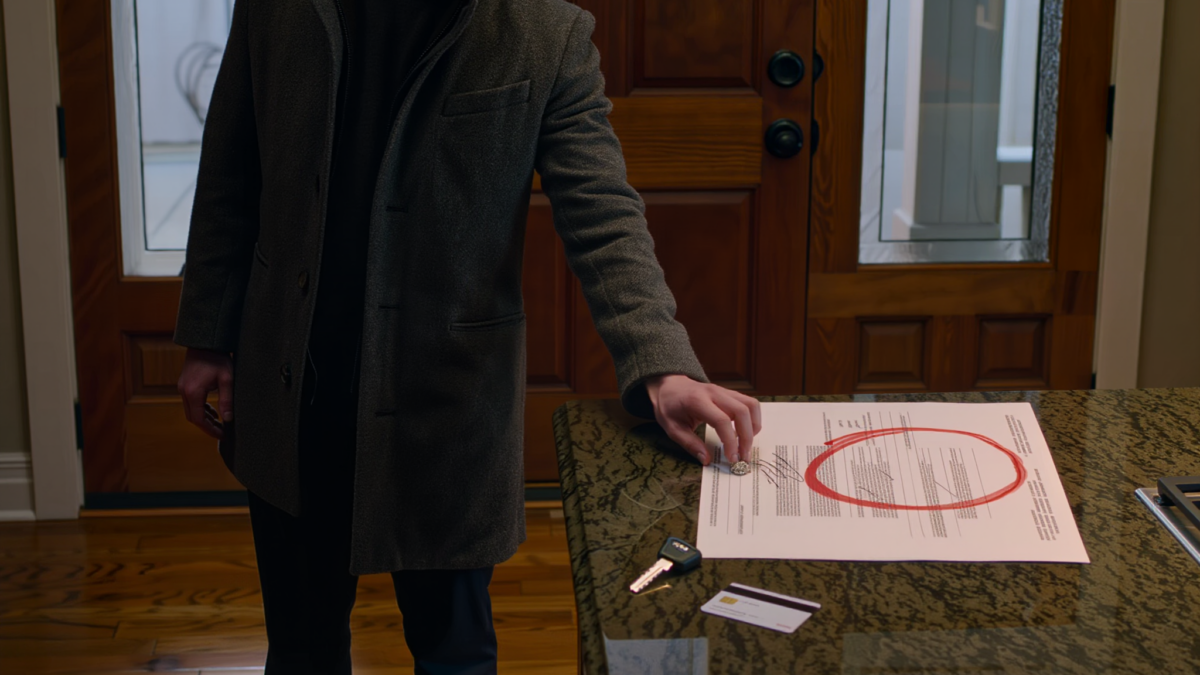
I placed three items in a row.
Her spare key to my car.
The supplementary platinum credit card I had given her for emergencies.
And a printed copy of the municipal marriage registry confirming her marriage to Tyler Morgan.
I took a red surgical marker and drew a thick circle around her signature and the registration date.
Then I placed my hospital ID badge beside the document.
Finally, I took my engagement ring and set it directly in the center of that red circle.
I didn’t leave a note.
The document already explained why I was going.
A private car took me to O’Hare through the cold Chicago morning.
I watched the skyline disappear behind us.
For years, I had been afraid that leaving Jessica would mean losing the future I had worked so hard to build.
Now I was beginning to understand that remaining with her might cost me even more.
***
Edinburgh was cold, gray, and beautiful.
The old buildings near the Royal Mile seemed almost immovable compared with the uncertainty I had left in Chicago.
I checked into a boutique hotel, unpacked my suits, and made my way to the international medical conference.
That afternoon, I discussed advanced cardiac techniques and complex surgical procedures with other specialists.
Among them was Jason Whitmore, an accomplished cardiovascular surgeon from Switzerland.
We discussed extended-criteria donor hearts, advanced perfusion methods, and the research questions that had occupied so much of my professional life.
Later, we shared single malt scotch at a local pub while continuing our conversation.
For the first time in years, I felt as though I was participating in my own life rather than simply financing someone else’s.
Nobody expected me to pay for a shopping trip.
Nobody accused me of being selfish because I wanted to discuss my work.
I was simply a physician among colleagues who respected the same profession I had devoted my adult life to mastering.
That peace didn’t last uninterrupted.
When I returned to the hotel and connected my phone to Wi-Fi, the notifications came pouring in.
Fifty-two missed calls.
Thirty voicemails.
Dozens of frantic text messages.
The first useful update came from my best friend, Lucas Bennett, an anesthesiologist at my hospital in Chicago.
“Logan, bro, it is hitting the fan here in the worst way possible.”
Gregory had been admitted through the emergency department with a massive type A aortic dissection.
Lucas said the situation matched the danger I had warned the family about two years earlier.
The hospital had tried repeatedly to contact me.
Jessica was demanding that I be brought back on a private jet.
Tyler had accompanied her to the hospital and was holding her hand in the family waiting room while she continued calling for me.
The next message from Lucas was even more troubling.
Caleb Anderson, another surgeon who had been competing for the promotion I hoped to receive, had stepped forward to take Gregory’s case.
But after reviewing the scans, he saw extensive involvement of the aortic arch and coronary arteries.
The operation was exceptionally complicated.
Lucas said Caleb had declined to proceed.
Then Caleb began suggesting that my absence was responsible for the difficulties.
He claimed I had taken Gregory’s files and abandoned him.
Lucas went directly to hospital administration.
He showed them the documentation confirming that Gregory’s care had been formally transferred.
“You are totally clear, man,” he told me. “But they are desperate. No one in the tri-state area wants to touch this case.”
I sat on the edge of my hotel bed, looking at the messages.
Based on what I knew of Gregory’s anatomy and condition, I estimated that the mortality risk could be around 60%, even with an experienced surgical team.
I understood why another surgeon might hesitate.
Three years earlier, I had operated on a comparable case.
It was a grueling twelve-hour procedure that had tested my endurance and judgment.
That patient survived.
But Gregory was older, and his condition involved complications that made the situation especially dangerous.
I was thousands of miles away.
Returning would mean abandoning the conference, arranging emergency travel, and potentially arriving exhausted before an exceptionally difficult operation.
I also knew I was no longer the physician responsible for his primary care.
Then my phone rang.
The number wasn’t Jessica’s.
I recognized it as the private family conference line at the hospital.
I had used that number many times when communicating with relatives of seriously ill patients.
Now someone was calling me from the same room.
I answered.
***
“Hello,” I said.
“Nathan, oh my God, Nathan, please, please tell me you are at the airport.”
Jessica sounded completely unlike the composed woman who had laughed at me during Thanksgiving.
She was crying and speaking so quickly that her words nearly ran together.
“You have to come back right now. You have to get on a private jet immediately. I will pay for it. My dad will pay for it. Just tell me what it costs. I don’t care about the money.”
She explained that Caleb Anderson had reviewed Gregory’s scans and refused to operate.
The other doctors were warning the family that Gregory’s condition was critical.
“You are the only one who knows how to fix this exact complication,” she pleaded. “You have to come home. We need you. You owe us this.”
There it was again.
You owe us this.
Even in the middle of an emergency, Jessica approached me as though my time, my work, and my decisions belonged to her.
I held the phone away from my ear for a moment.
Before I could answer, someone took the phone from her.
It was Marion.
“Nathan, this is Marion. Listen to me very carefully. This is completely unacceptable behavior.”
She accused me of abandoning my family.
She invoked my medical oath and described my conference as an ego-driven vacation.
Then she announced that she had spoken to the hospital administrator and was demanding that the hospital compel me to return.
“Gregory is your future father-in-law. You owe this family your absolute allegiance after everything we have done for you.”
She reminded me that they had welcomed me into their home and treated me like a son.
I looked out the hotel window at the rain-darkened cobblestones below.
“Marion,” I said, “I am not on a vacation.”
I explained that I was attending an authorized international medical symposium on approved leave.
I reminded her that I had formally transferred Gregory’s care to another cardiac team three days earlier, with documentation reviewed and signed through the hospital.
I told her that I was no longer Gregory’s treating physician and that my approved absence was not something she could simply overrule.
She became angrier.
“How can you be so incredibly heartless? You are supposed to be a part of this family.”
That word stayed with me.
Heartless.
I had spent years worrying about Gregory’s heart.
I had monitored his condition, adjusted treatment, reviewed scans, and spent personal time explaining his risks.
Now the family was treating the consequences of delayed treatment as though they were my personal failure.
“Let us talk about heartless, Marion.”
I reminded her of the conversations we had at that expensive dining table.
I reminded her that I had brought Gregory’s CT scans and explained the window in which elective surgery offered a much better chance of success.
I had recommended intervention twice, at times when I believed his survival prospects were above 90%.
Both times, the family had resisted because of recovery concerns, travel arrangements, and wedding plans.
I told her that the current emergency was not something they could reasonably blame on my conference attendance.
There was a long silence.
Then Jessica came back to the phone.
“Nathan, please,” she said.
Her voice had become small and uncertain.
“I know we made a mistake. I know I was awful to you at Thanksgiving. I know I took you for granted. I am so, so sorry.”
She began making promises.
We could move the wedding forward.
She would help purchase commercial property for the private clinic we had discussed.
She would put my name on the deed.
She would pay my remaining student loans and give me control over her inheritance.
“Just please save my dad. He’s bleeding inside his chest. The monitors are going crazy. Please, Nathan. I love you.”
I closed my eyes briefly.
For six years, I had wanted her to say she appreciated me.
Now she was offering money, property, and promises while her actual marriage to Tyler remained undisclosed.
I decided there was no reason to keep pretending.
***
“I am going to say a few things, Jessica,” I told her. “And you are not going to interrupt me.”
She stopped talking.
“First, you registered a legal marriage to Tyler Morgan exactly thirteen days ago at the municipal clerk’s office downtown.”
I told her about David Mercer’s email.
The $75,000 venue invoice.
The reception scheduled for October 12.
The municipal registration documents.
I explained how the coordinator had accidentally copied me on the message.
Jessica made a sharp sound on the other end of the line.
I continued.
“While you were sleeping in my bed, wearing a two-carat diamond ring that I paid for with blood, sweat, and endless weekend trauma shifts, you were legally bound to another man.”
I reminded her that my salary had been paying household expenses and her credit card debts while she was building a life with Tyler.
“Nathan, wait. No, no, I can explain,” she whispered.
I told her that the marriage registration was not an interpretation or a rumor.
It was a public record.
And I had confirmed it.
I no longer considered Jessica or her mother my family.
Whatever promises had existed between us, Jessica had made a legally documented commitment to someone else.
I also explained why I wasn’t agreeing to return for Gregory’s operation.
The procedure was exceptionally complex.
In my assessment, it carried an enormous mortality risk.
Returning across the Atlantic exhausted, attempting a lengthy emergency surgery, and potentially becoming involved in a dispute with the family afterward could expose me to serious professional and legal complications.
The approved transfer of care mattered.
I had completed my medical responsibilities before leaving.
I wasn’t going to pretend those arrangements disappeared because Jessica suddenly needed something from me.
She began crying again.
“I’m still your fiancée. Tyler means nothing to me. It was just a stupid legal thing for taxes, a loophole my dad wanted to use for the estate. I swear to God.”
I had already seen the marriage record.
Whatever she now wanted to call it, she had signed it.
I told her that Gregory’s designated healthcare proxy and the hospital’s established procedures governed his medical decisions.
The family also faced significant financial responsibilities associated with emergency treatment.
Since Tyler was now Jessica’s legal husband, I suggested she involve him in the financial discussions.
“Tell your husband Tyler to sign the financial consent forms,” I said.
Then I repeated the criticism she had thrown at me during Thanksgiving.
“Tell the man who knows how to be there for you emotionally to scrub in, grab a scalpel, and fix a torn aorta because I am completely, irrevocably done.”
The phone fell silent.
For a moment, nobody answered.
Then I heard Tyler in the background.
“Wait, what did he just say? What do you mean he knows? Jessica, what financial waivers? What the hell is he talking about? You said this was all handled privately.”
Jessica shouted at him to be quiet.
Then she turned her anger back toward me.
“Nathan, do not hang up this phone. You cannot do this to me. You owe me. I gave you the best years of my life. I put up with your schedule.”
“You sold the best years of my life to fund your delusions,” I replied.
But there was something else Tyler needed to understand.
And I suspected Jessica hadn’t explained it to him.
***
I told Jessica to put Tyler on speaker.
There was a burst of argument and movement before I heard the change in the phone’s audio.
“I’m listening,” Tyler said, his voice strained. “What is going on, Brooks? What kind of sick game are you playing with us?”
“Congratulations on your nuptials, Tyler.”
I stood near my hotel window, watching rain strike the glass.
Then I asked him a question.
“When Jessica rushed you to sign the marriage certificate and that massive stack of accompanying legal documents two weeks ago, did she happen to thoroughly explain the corporate indemnity clause you were signing as her legal spouse?”
“Corporate indemnity?”
Tyler sounded genuinely confused.
He said Jessica had described the paperwork as routine tax restructuring related to her trust fund.
According to him, her father’s corporate lawyers needed to update the arrangements before the end of the financial quarter to facilitate a real estate purchase in Florida.
He believed the documents protected her inheritance.
That was apparently all he had been told.
Before leaving Chicago, I had asked my own lawyer to review the publicly available corporate filings associated with Gregory Benson’s medical supply business.
The company, Fairweather Medical Group, had substantial financial exposure.
There was a $95 million debenture arrangement with a bank.
There was a $32 million accounts payable dispute with a German medical device manufacturer, already involved in international arbitration.
And there was a $60 million mezzanine lending facility supported by Gregory’s personal guarantee.
Those were not small obligations.
I explained to Tyler that the company had been experiencing financial problems for years.
Based on the filings and research I had reviewed, I believed its underlying position was much weaker than its public image suggested.
I also believed the family’s arrangements involved aggressive accounting and shell companies used to conceal the full extent of the problems.
When Gregory’s health began deteriorating, creditors became concerned about their security.
The family’s financial structure required additional guarantees.
Jessica was the principal heir, but her trust assets were not sufficient to cover everything.
According to the documents I had reviewed, the marriage-related agreements included provisions that could expose her spouse to substantial financial obligations.
Tyler’s voice became increasingly unsteady.
“No, no, no. I didn’t sign anything like that. I just signed the marriage license and a standard prenuptial agreement protecting her inheritance. She promised me I wouldn’t have any liabilities.”
“You didn’t read the appendices, Tyler,” I told him.
I explained that the documents included a spousal asset consent and a liability indemnification agreement.
In my understanding of those agreements, they could expose him to claims connected with the family’s financial obligations and potentially affect his future earnings.
Tyler had believed he was marrying into a wealthy family with a secure business and a substantial inheritance.
Now he was learning that the business might be facing obligations approaching $200 million.
The implications were very different from the future he had imagined.
“You set me up,” he shouted at Jessica. “You used me to absorb your father’s massive debt.”
I heard a chair being knocked over.
Jessica tried to calm him.
“Tyler, calm down. It’s not like that. Marcus Warren said it was just a formality.”
Her voice was shaking.
“We can fix it, Nathan. Please tell him we can fix it. Save my dad and my dad will fix the company.”
But I had seen the corporate filings.
I knew what the family was facing.
I told her that the company’s shares had reportedly fallen nearly 10% after news of Gregory’s hospitalization became public.
If his condition worsened, creditors might take steps to protect their positions.
The legal and financial consequences could reach far beyond the hospital.
Marion came back onto the call.
“You planned this?” she demanded. “You orchestrated this entire thing to ruin us because you were jealous.”
“I planned nothing, Marion,” I replied.
I had not created Gregory’s illness.
I had not arranged Jessica’s marriage.
I had not signed Tyler’s financial agreements.
I had not borrowed the company’s money.
I had simply stopped allowing their decisions to dictate my life.
I reminded her that I had spent two and a half years giving Gregory the medical care and advice I could provide.
I had given Jessica my loyalty, my income, and my future.
They had decided those contributions were not enough.
“You threw it all away because you wanted a man who could attend afternoon tea,” I told her. “Well, you have him.”
I suggested that Tyler speak to the hospital billing department.
The emergency surgery, if it proceeded, could cost more than $200,000 out of pocket.
My credit card was no longer available to cover those expenses.
“Nathan, please,” Jessica whispered.
“I love you. I made a massive mistake. Please don’t leave me like this.”
“I am already gone,” I said.
Then I ended the call.
***
The hotel room became quiet again.
I poured myself a small glass of the single malt scotch I had purchased earlier and drank it slowly.
I turned off my phone, set it on the nightstand, took a hot shower, and went to bed.
For the first time in years, I slept without spending the night wondering what new argument or financial emergency would be waiting for me the following morning.
When I woke, pale daylight was filtering through the hotel windows.
I ordered black coffee, eggs, and toast from room service.
My biomechanics panel was scheduled for 9:00 a.m., and I wanted to review my presentation notes.
At exactly 8:30, I switched my phone on.
The notifications were overwhelming.
I ignored the calls from unfamiliar numbers and opened a message from Lucas.
“Nathan, it’s over.”
Gregory Benson had passed away at 10:22 p.m. Chicago time the previous night.
Lucas explained that Gregory had suffered a secondary rupture.
The hospital team had attempted to stabilize him, but the damage was too extensive.
Jessica had left the hospital before the family received its formal notification.
Tyler had stormed out earlier, furious about the financial documents and threatening legal action.
Lucas also told me that the hospital administration had reviewed my records.
The clinical handover and transfer documentation had been accepted as thorough and properly completed.
The hospital’s legal team, according to Lucas, saw no basis to blame me for Gregory’s care after the transfer.
“Stay in Scotland,” he wrote. “Drink a pint for me.”
I sat with the news for a long time.
Gregory had been stubborn.
He had treated my medical recommendations as though they were merely suggestions he could negotiate around.
He had enabled Jessica’s behavior and expected me to accommodate the family’s preferences.
But I also remembered another side of him.
He had once bought me an expensive bottle of wine for my birthday.
He had awkwardly patted me on the shoulder and told me he was proud to have a hardworking doctor in the family.
Those memories were real.
So was my grief.
I felt sorrow for the loss of a human life and for the man whose health I had monitored for so long.
But I didn’t believe that sorrow required me to accept responsibility for decisions I hadn’t made.
I had explained the risks, recommended treatment, and arranged a formal transfer of care before leaving.
I couldn’t go backward and change Gregory’s choices.
Nor could I undo Jessica’s marriage or the financial commitments her family had made.
That morning, I returned my attention to the symposium.
I had worked for years to reach that point.
And for the first time, I was allowing myself to pursue something important without asking whether Jessica would approve.
***
Six months later, my life looked completely different.
The consequences for the Benson family had unfolded quickly.
Most of what I learned came through Lucas and other people at the hospital who continued hearing about the family’s problems.
Gregory’s funeral was sparsely attended and heavily protested.
Some creditors reportedly monitored the attendees, seeking information about the business and the people connected to it.
Without Gregory’s leadership, the company’s financial position deteriorated.
The bank called in the $95 million debenture.
The German medical device manufacturer pursued its arbitration claim, resulting in restrictions on international assets.
Within four weeks of the funeral, Farweather Medical Group filed for Chapter 11 bankruptcy protection.
The corporate bankruptcy did not resolve the separate obligations of people who had signed personal guarantees or indemnification agreements.
And Tyler was discovering just how expensive the documents associated with his marriage could become.
He faced claims involving substantial sums of money.
When he realized the extent of the liabilities he might have assumed, he filed for annulment.
He alleged fraud, coercion, and severe emotional distress.
He hired an aggressive divorce attorney and sued Jessica, Marion, and Marcus Warren, claiming they had conspired to make him responsible for financial obligations he hadn’t understood.
Those were Tyler’s allegations, and they became part of a highly publicized legal dispute.
The litigation attracted the attention of Chicago business publications.
For Jessica, the financial consequences were immediate.
Her trust fund was frozen during the bankruptcy proceedings.
The college fund she had previously discussed establishing for our future children was liquidated to cover legal retainers.
The family’s $3 million suburban estate was heavily leveraged.
When the mortgage payments stopped, the bank moved toward foreclosure.
One Tuesday afternoon, Lucas sent me a photograph taken from his car.
A large moving truck was parked in front of the Benson house.
Bank-appointed liquidators were carrying furniture out of the property.
Among the items was the antique mahogany dining table.
I recognized it immediately.
It was the table where Jessica had laughed at my profession during Thanksgiving.
The table where her relatives had watched her compare me unfavorably with Tyler.
The table where Gregory had once listened to me explain the risks associated with his aneurysm.
Seeing it carried out of the house was a strange moment.
For years, that dining room had represented everything I felt compelled to earn.
Acceptance.
Status.
A place in the family.
Now it was simply furniture being removed from a property the Bensons could no longer afford to keep.
Marion moved into a small two-bedroom condominium in a less desirable suburb.
Her country club membership was revoked after unpaid dues and the public financial scandal.
The social standing she had spent so much energy protecting had disappeared.
Tyler’s circumstances also deteriorated.
His technology startup, which had never achieved the success he repeatedly promised, collapsed when investors learned of his substantial legal problems.
His red Porsche was repossessed from the parking lot of his apartment complex.
The man who had once enjoyed expensive meals and drinks at my house without paying for them was now fighting a legal battle over obligations he claimed had been concealed from him.
His marriage to Jessica had become a source of lawsuits, anger, and financial uncertainty.
They remained connected through legal proceedings rather than the comfortable future they had expected.
I did not need to take further action against them.
The consequences were already unfolding.
***
Jessica contacted me once after I returned from Scotland.
It was approximately three months later.
I was sitting in my newly assigned corner office at the hospital, reviewing upcoming surgical schedules, when an email arrived from an unfamiliar address.
I opened it.
“Nathan, please. It’s Jessica. I know I have no right to ask, but I have nothing left.”
She explained that Tyler was pursuing her through the courts.
Her mother was struggling and drinking heavily.
The bank had taken the house.
“We lost everything. I made the biggest mistake of my entire life. I miss you. I miss us. Can we just talk? I’ll do anything. I’ll get a job, please. I am begging you to just look at me again.”
I read the message once.
There had been a time when an email like that would have pulled me back into the relationship immediately.
I would have worried about Jessica’s safety, her expenses, her emotional state, and what I could do to make things easier.
I would have rearranged my schedule.
I might have offered money or tried to solve the latest crisis.
But sitting in that office, I no longer felt responsible for rescuing her.
I didn’t hate her.
I didn’t feel the need to mock her or celebrate her difficulties.
I simply no longer wanted to be part of her life.
I deleted the email, blocked the address, and returned to reviewing the arterial scans for my next patient.
That was the last contact I wanted.
There was no final argument.
No lengthy explanation.
No attempt to make her admit everything she had done.
The relationship had already ended.
And I had finally accepted that ending.
***
My own financial situation remained secure.
Before leaving for Scotland, I had separated the accounts connected to my earnings, documented my purchases, and removed Jessica from my benefit arrangements.
When the Benson family’s financial problems became public, my savings and credit remained intact.
The diamond engagement ring was still gone.
I had left it on the kitchen counter beside the marriage registry, and I suspected it had eventually become entangled in Jessica and Tyler’s disputes over property and legal fees.
I didn’t attempt to recover it.
Considering what I had nearly lost, I viewed that ring as an extraordinarily small price for my freedom.
The symposium in Edinburgh had also been a success.
My presentation on coronary revascularization outcomes was well received by the international board.
The conversations I had with Dr. Jason Whitmore led to promising collaborative research opportunities.
For years, I had imagined how much further my career might progress if I could devote my time and energy to it without constantly managing Jessica’s demands.
Now I was finding out.
When I returned to Chicago, I did not go back to the suburban house.
My lawyer helped finalize the termination of my lease obligations on the property, removing my name from the arrangement before the family’s bankruptcy proceedings could complicate matters.
I moved into a modern high-rise apartment downtown.
The apartment had floor-to-ceiling windows overlooking Lake Michigan.
It was quiet, uncluttered, and entirely mine.
Nobody arrived unexpectedly to drink my expensive liquor.
Nobody expected me to finance an extravagant shopping trip.
Nobody complained that my work was an inconvenience while depending on the salary it provided.
I could come home from a long shift, sit by the window, and enjoy the silence.
Two weeks after returning from Edinburgh, I was asked to attend a meeting in the hospital’s executive boardroom.
Dr. Alexander Vaughn sat at the head of the table.
He offered me the position of deputy chief of cardiovascular surgery.
It was the promotion I had worked toward for years.
After the meeting, Vaughn spoke to me privately.
“You handled the Benson situation with absolute textbook professionalism, Dr. Brooks,” he said.
He told me the hospital appreciated how carefully I had documented Gregory’s clinical history and arranged the transfer of care.
He also praised my ability to maintain professional boundaries under extraordinary personal pressure.
In his view, that judgment reflected the leadership the department needed.
The promotion brought a significant salary increase and greater administrative responsibilities.
It also gave me more opportunities to mentor younger surgical residents.
I enjoyed that part of the work enormously.
I could teach them the technical skills required for difficult operations, but I also wanted them to understand something I had learned through painful experience.
Being dedicated to helping people does not mean surrendering every boundary in your own life.
A demanding profession can ask a great deal of you.
The people closest to you should not automatically assume they are entitled to whatever remains.
Outside the hospital, I began rebuilding my personal life.
I spent weekends reading medical journals on my balcony, exploring Chicago, and reconnecting with people who appreciated me for more than my income.
Eventually, I started dating again.
Slowly.
Carefully.
I paid more attention to how people handled disagreement, responsibility, and money.
I learned to recognize patterns I had previously excused because I wanted a relationship to succeed.
And I stopped believing that love could be measured by how much inconvenience I was willing to endure.
***
Looking back, I sometimes think about David Mercer’s accidental email.
At the time, opening that document felt like the destruction of everything I had built.
I had invested six years in a future with Jessica.
I believed we would marry, raise a family, and enjoy the rewards of the sacrifices I was making.
Instead, I discovered that she had already committed herself to another man while continuing to depend on me financially.
The truth was devastating.
But discovering it gave me the opportunity to make a choice before I became even more deeply entangled in her family’s affairs.
Had that email never arrived, I might have continued paying the mortgage, covering Jessica’s expenses, tolerating Tyler’s constant presence, and considering the financial arrangements she wanted me to sign.
I might have kept telling myself that everything would improve after the wedding.
I might have continued confusing sacrifice with love.
The email forced me to stop.
It showed me the difference between the future Jessica described and the decisions she had actually made.
Gregory had made decisions about his health.
Jessica had made decisions about our relationship.
Tyler had made decisions about the financial documents he signed.
I could not control those choices, and I could not erase their consequences.
What I could control was whether I continued participating.
So I chose to leave.
I chose to protect my career, my savings, and the professional responsibilities I had spent years building.
I chose to stop financing a relationship that no longer existed in the way I believed it did.
And eventually, I chose to move forward without waiting for Jessica to understand my decision.
I am a cardiovascular surgeon.
My work is devoted to repairing damaged hearts and helping people through some of the most frightening moments of their lives.
For a long time, I believed that made it my responsibility to rescue everyone close to me, no matter how they treated me.
I no longer believe that.
Sometimes, the most important decision is recognizing that a relationship has become harmful and that continuing to sacrifice yourself will not repair it.
I spent years trying to earn a permanent place at the Benson family’s table.
In the end, the life I wanted was waiting beyond that house.
And the most important heart I finally learned to protect was my own.








