Then booked a trip to Hawaii. A week later, her big day collapsed, and my phone blew up with calls.
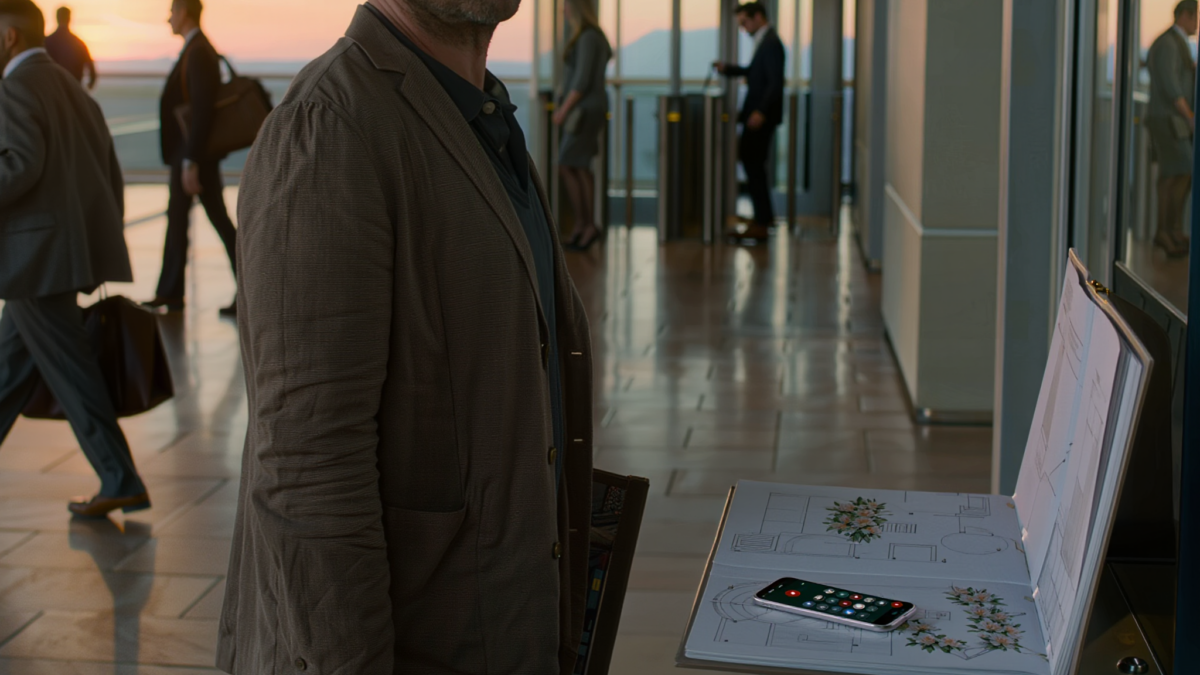
“My sister said, ‘You don’t deserve to attend my engagement party.’ I stayed silent, just smiled, then booked a trip to Hawaii. A week later, her big day collapsed, and my phone blew up with calls.”
Some stories need time before you can tell them. You have to let the anger settle, let the sharp edges soften, and figure out which parts still matter after everything else has faded.
My name is Leo Marshall, and my story began on what should have been an ordinary Tuesday afternoon in my Nashville office.
The Tennessee sun slanted through the tall windows, catching dust motes in the light. My desk was a controlled chaos of blueprints, fabric swatches, vendor invoices, and half-empty cups of coffee. I was an architect, and for the previous three months, nearly every spare hour of my life had been consumed by one project.
It was not for a paying client.
It was for my little sister, Chloe.
She was getting engaged, and as her older brother, I wanted to give her the world. Since my world revolved around design, structure, and spaces that brought people together, I decided to create the most beautiful engagement party Nashville had ever seen.
I waived my professional fee, of course.
This was family.
Long after my regular workday ended, I stayed in the office sketching three-dimensional models of the rooftop venue Chloe had chosen. I pictured strings of warm lights glowing against the Nashville skyline and floral arrangements filled with magnolias and roses.
Brian Walsh, a florist I had worked with for years, helped me develop the arrangements. Together, we planned a look that blended rustic Tennessee charm with modern elegance.
I still remember tracing the lines of a custom-built sweetheart table on my computer screen and smiling to myself. I had called in favors to make everything possible. Mr. Ortiz, the notoriously strict venue manager, finally agreed to let us suspend a floral chandelier over the dance floor after I personally explained the rigging plan and assured him it could be installed safely.
I spent hours speaking with Mrs. Morgan from the catering company, debating the merits of miniature hot chicken biscuits versus shrimp-and-grits shooters. Every detail, from the linen napkins to the font on the place cards, carried my fingerprints.
I was tired, but it was the satisfying kind of tired that came from creating something beautiful for someone you loved.
That afternoon, I was finalizing the lighting plan and making sure the glow would be warm and flattering when my phone buzzed beside a stack of invoices.
I expected another vendor confirmation.
Instead, I saw Chloe’s name.
My heart lifted because I thought she might be sending another excited message about the dress she had chosen. I picked up the phone with a smile already forming.
Then I read her words.
“Leo, Derek and I have talked. You don’t really fit the vibe of the party. You don’t deserve to be there.”
I read the message once.
Then I read it again.
For several seconds, the words did not connect in my mind. They looked like a language I should have understood but suddenly could not.
The air in the office felt thinner. The fluorescent lights overhead seemed louder, almost mocking, as my stomach tightened into a cold knot.
My own sister—the woman for whom I had spent three months designing this celebration—had removed me from it with a text message.
There was no warmth in her words. No hesitation. No regret.
“You don’t deserve to be there.”
Deserve?
What did that even mean?
I thought about the late nights, the money I had paid out of my own pocket for deposits, and the creative energy I had poured into making her evening perfect. Apparently, none of it had earned me the right to stand inside the space I had created.
My first instinct was to call her, hear her say it aloud, and demand an explanation. But as I stared at the screen, my hand trembling slightly, something else took over.
A strange calmness moved through me.
The hurt remained—a sharp, physical ache in my chest—but beneath it, a quiet resolve began to form.
I placed the phone facedown on my desk as though I could smother the message. Then I looked at the glowing event design on my computer.
Her beautiful party.
A slow, deliberate smile crossed my face. It was not happiness. It was the expression of a man who had just realized a line had been crossed and that he would no longer pretend otherwise.
A plan began taking shape.
It did not involve begging for an invitation to her precious party. It involved a plane ticket to the farthest place I could imagine—a place with sand, sunshine, and an ocean large enough to swallow every ounce of bitterness I felt.
Somewhere far from Nashville.
And I knew that when Chloe’s perfect day began falling apart, my phone would light up with calls I had no intention of answering.
But I am getting ahead of myself.
After staring at the wall for what felt like an hour, I decided I could not let that message hang in the air without an explanation. This had to be a mistake, a cruel joke, or some kind of misunderstanding.
My first call was not to Chloe.
It was to my mother, Nancy.
She had always presented herself as the family mediator, the person who smoothed over disagreements and restored calm. I thought that if anyone could make sense of Chloe’s behavior, it would be her.
I moved to a quiet corner of the office, my heart pounding against my ribs, and called.
She answered on the second ring.
“Leo, honey, how are you? I was just thinking about you. Is the seating chart finalized?”
Her cheerful, oblivious tone struck me like a slap.
I drew in a shaky breath.
“Mom, I just received a text from Chloe.”
There was a pause.
It lasted only a second, but it was long enough for me to understand.
She already knew.
“Oh,” she said, trying to sound casual. “What about, sweetie?”
“She told me I’m not invited to the party anymore.”
The words felt foreign and ugly in my mouth.
“She said I don’t deserve to be there.”
Silence stretched between us. I could hear the faint sound of a television playing in her living room.
When she finally answered, the warmth had disappeared from her voice. It had been replaced by a firm, almost scolding tone.
“Leo, you know how your sister gets. She’s under a lot of stress. Planning a wedding is a huge deal, and Derek’s family has high expectations.”
“Mom, I’m the one planning the party. I’ve been working on it for three months for free so everything would be perfect for her.”
My voice rose despite my effort to keep it steady.
“And we all appreciate that, honey. We really do,” she said, though her words felt hollow. “But sometimes you have to be the bigger person. You’re the older brother. Be strong. Don’t make a fuss over every little thing.”
Every little thing.
She was dismissing my work, my pain, and my very presence as an inconvenience.
“It’s her special day,” Mom continued. “Let her have it the way she wants it.”
I felt heat crawl up my neck.
“So you’re okay with this? You’re okay with your son being excluded from his own sister’s engagement party?”
“I’m saying you shouldn’t make it a bigger issue than it is,” she replied sharply. “The family needs to be united right now, not fighting. Just let it go, Leo. Do it for the family.”
I ended the call without saying goodbye.
My hand gripped the phone so tightly that my knuckles turned white.
For the family.
The words echoed in my mind.
Apparently, family meant protecting Chloe’s feelings while treating mine as disposable.
When it became clear that my mother would not help me, I did what I should have done in the first place.
I called Chloe.
I needed to hear the words directly from her.
She answered with an irritated greeting.
“What, Leo? I’m busy.”
“I received your message.”
I kept my voice level and professional, as though I were speaking to a difficult client.
She released a dramatic sigh.
“Look, I was hoping you’d be mature about this. It isn’t a big deal.”
“It isn’t a big deal?” I repeated, my voice becoming dangerously quiet. “You removed me from the engagement party I designed and planned from the ground up. How is that not a big deal?”
“Fine,” she snapped. “You want the truth? It’s Derek’s friends. They come from a different world.”
“What does that mean?”
“They’re investment bankers. They’re people with a certain status. You, with your art projects and dusty blueprints, just don’t fit in. You would make us look bad. It would be awkward.”
For a moment, I could not speak.
My art projects.
I was a licensed architect with a growing reputation in Nashville. I had designed award-winning spaces, but to my sister, I was an embarrassing man who played with dusty drawings.
“Derek and I want a classy, sophisticated event,” she continued, her voice filled with condescension. “And you’re just not that. It isn’t personal. It’s about the image we want to project. I can’t have my awkward older brother standing in a corner and making my fiancé’s high-powered boss uncomfortable.”
It isn’t personal.
The phrase hung between us.
She had accepted my time, my money, my connections, and my professional talent. Now she was throwing all of it back in my face because she considered me a social liability.
The thought of Chloe standing proudly inside the beautiful space I had designed while feeling ashamed of the person who created it wounded me more deeply than I expected.
“I see,” I said, my voice emptied of emotion. “Well, Chloe, I hope your party is everything you want it to be.”
I ended the call before she could respond.
At that moment, I understood that there had been no misunderstanding.
This was not wedding stress.
It was deliberate cruelty.
And my parents—the people who should have defended me—were standing behind her.
You might think that after those two calls, my family would have left me alone to process what had happened.
They did not.
Three days passed.
For three days, I moved through life almost mechanically. I woke up, went to work, and stared at Chloe’s party plans on my computer.
The joy was gone.
They were only lines on a screen now.
I stopped calling the vendors. At first, I told myself I simply needed time to process everything, but the truth was that I felt paralyzed.
Then, on Friday afternoon, my father called.
Steven Marshall was an accountant who seemed to view the entire world as a spreadsheet of debits, credits, obligations, and returns. He rarely handled emotion well.
“Leo,” he began without asking how I was. “We need to discuss the engagement gift.”
I froze, my pen hovering over a blueprint.
“The gift?”
“Yes,” he said, his tone entirely businesslike. “Your mother and I have decided that a significant cash contribution would be the most appropriate gesture. Chloe and Derek are planning a luxury honeymoon in Italy. We believe three thousand dollars from you would be suitable. It’s your duty as the older brother.”
I almost laughed, but the sound that tried to escape was bitter.
I leaned back in my chair, the leather creaking beneath me.
“Let me understand this,” I said, with an icy calm I did not know I possessed. “You want me to give Chloe three thousand dollars for a celebration I have been explicitly forbidden from attending?”
“Don’t be dramatic, Leo,” he scoffed as though I were a teenager throwing a tantrum. “This isn’t about the party. This is about family responsibility and showing support. Your sister is beginning a new life with a very promising young man. This is your part to play. We all have a part.”
A few years earlier, my grandmother had left me a modest inheritance. It was not a fortune, but it gave me some financial security, and my parents knew about it.
The timing of my father’s demand felt opportunistic. This was not a request for a thoughtful gift. It was an obligation they intended to enforce.
“Dad, I have done my part. I’ve given Chloe three months of my life, professional services that would have cost a client a five-figure sum, and money from my own pocket. My part is finished. I am not giving them another dime.”
His voice hardened.
“I’m very disappointed in you, Leo. You’re being selfish. After everything we did for you—helping with your college fund and supporting your career choice—this is how you repay us? By being petty?”
Then he hung up.
It had not been a conversation.
It had been a demand, and I had failed to obey.
I was no longer only the embarrassing brother. Now I was also the ungrateful, selfish son.
The weight of it was crushing. They were not merely pushing me out of the family. They were trying to extract everything useful from me before they did.
That evening, I opened Instagram and began scrolling mindlessly, hoping to quiet the conversations replaying in my head.
That was when I saw a new post from my cousin Brenda Reed.
The photograph showed a group of people raising champagne glasses beneath the fashionable neon lights of the Starlight Lounge. Chloe stood in the center, looking radiant. Derek had one arm around her, and a dozen friends crowded around them.
The caption read:
“Celebrating our beautiful bride-to-be. Best bachelorette-party kickoff ever. Love you, Chloe and Derek.”
My stomach dropped.
I had not merely been removed from the engagement party.
I had been erased from every celebration surrounding it.
What made the photograph even worse was the location.
The Starlight Lounge was a new, exclusive rooftop bar that was nearly impossible to book. I had used my professional relationship with the owner, a former client, to secure the reservation.
Chloe had described it as a small dinner with her bridesmaids. I had arranged it as another gift to her.
She had taken the reservation, used my connection, and held the celebration without me.
Every smiling face in the photograph felt like another betrayal.
I sent Brenda a short message.
“Hey, I saw your post. It looks fun. Was I supposed to be there?”
Her reply arrived almost immediately.
“Oh, hey, Leo. It was just a last-minute thing. We didn’t think you’d care.”
I stared at the words.
They did not think I would care.
I closed the application. The phone felt cold and heavy in my hand.
They had either forgotten I existed or decided that my feelings did not matter. I was useful when they needed money, labor, expertise, or connections. Once those things had been secured, I became disposable.
The last remaining hope that this was all a misunderstanding disappeared.
It was intentional.
It was a pattern.
And I was finished allowing it.
The next morning, I woke feeling as though I had a hangover, even though I had not touched alcohol. Emotional exhaustion had settled into my bones, making every movement feel heavy.
I knew I could not remain alone in my apartment, cycling between anger and hurt. I needed to speak to someone who was actually on my side.
So I called my best friend, Sam Fiser.
Sam and I had known each other since college. He was a freelance journalist—sharp, cynical, fiercely loyal, and incapable of quietly tolerating injustice.
If my family was a cold front of judgment, Sam was a warm fire of righteous indignation.
We met at our usual coffee shop, a worn little place halfway between our apartments that smelled of roasted beans and old books.
I entered the booth and dropped the thick folder of party documents onto the table.
Then I told him everything.
I described Chloe’s text, my mother’s dismissal, my sister’s comments about my dusty blueprints, my father’s demand for three thousand dollars, and the photograph from the Starlight Lounge.
Sam listened without interrupting. He drank his black coffee and slowly narrowed his eyes.
When I finished, he leaned forward.
“Leo, I’m going to ask you a question, and I need you to answer honestly. Why are you still doing any of this? Why haven’t you closed that folder and walked away?”
I hesitated.
The thought had crossed my mind, but it felt drastic and almost unthinkable.
“They’re my family, Sam,” I murmured, even though the words tasted like ash. “You don’t just walk away from family.”
“Yes, you can,” he replied, his voice rising enough to make a woman at the next table glance over. “They already walked away from you. They used you, insulted you, humiliated you, and then tried to charge you for the privilege.”
He pointed toward the folder.
“That isn’t family, Leo. It’s a toxic arrangement. Open the folder.”
I reluctantly opened it.
Inside were copies of contracts, work orders, schedules, confirmations, receipts, and vendor agreements. My careful handwriting filled the margins of nearly every page.
“Whose name is on those contracts?” Sam asked, his eyes fixed on me. “Who is personally and professionally responsible if a vendor isn’t paid? Who made the agreements with Mr. Ortiz and Mrs. Morgan?”
The answer arrived slowly.
“Me,” I whispered. “My name is on all of them.”
“Exactly.”
A grim smile appeared on his face.
“You’re sitting here feeling powerless because you think they hold all the cards. But you’re wrong. You have been so busy trying to prove that you deserve their love that you missed one important fact.”
He leaned closer.
“You hold the power. You built this entire event from the ground up. You’re the foundation. What happens when you remove the foundation from a house?”
“It collapses.”
The word sent a thrilling, frightening shiver down my spine.
“It collapses,” Sam repeated. “You don’t owe them anything. You don’t need to shout, fight, or beg. You simply stop. Step back and let them manage the situation they created.”
His words turned a key inside me.
I had been so consumed by the emotional betrayal that I had ignored the practical reality. I was not only the uninvited brother.
I was the project manager, designer, primary contact, and only person who understood how every moving part of the event connected.
Without me, it was not merely a party missing one guest.
It was a project without a leader.
I looked at my signature in black ink on the venue contract.
Leo Marshall.
For the first time, my name looked strong rather than burdensome.
The fog of pain and obligation began to lift.
I looked at Sam and felt the first genuine smile I had managed in days, though it was not a warm one.
“You’re a genius, Sam.”
He grinned.
“No. I’m just a friend who is tired of watching a good person be treated without respect. Now, what are you going to do?”
I left the coffee shop feeling like a different man.
The pressure that had been sitting on my chest was replaced by clarity and purpose. I returned to my office with the determined stride of someone who had finally understood that defending himself was not the same as attacking others.
I sat at my desk as the afternoon light cast long shadows across the room.
Then I opened my email and drafted three separate messages.
The first went to Mr. Ortiz at the venue. The second went to Mrs. Morgan at the catering company. The third went to Brian Walsh, who was overseeing the floral decorations.
The wording needed to be professional, polite, and final.
“Dear Mr. Ortiz,
“Please be advised that, effective immediately, I will be stepping back from my role as the planner and primary contact for the Marshall engagement party on the twenty-first. Due to unforeseen personal circumstances, I am no longer involved in the management of this event.
“All future communications, logistical questions, and final confirmations should be directed to my sister, Miss Chloe Marshall. Her contact information is attached.
“Thank you for your understanding.
“Sincerely,
“Leo Marshall.”
I used the same basic message for the other two vendors, changing only the names and relevant details.
I did not explain what Chloe had done.
I did not apologize.
I simply severed the professional connection cleanly and attached Chloe’s phone number and email address.
My finger hovered over the send button.
Once I did this, there would be no going back.
I took a breath and clicked.
One.
Two.
Three.
Done.
The silence afterward felt profound—the silence of a chapter ending.
Within fifteen minutes, Mrs. Morgan called.
“Leo, I just received your email. Is everything all right? Honey, you’re the only person who knows the timeline for the hot appetizers. Your sister won’t know what to do.”
“I’m sure she’ll figure it out,” I said calmly. “Thank you for your concern, Mrs. Morgan, but my decision is final.”
Then Brian texted me.
“Leo, you can’t be serious. Who is going to supervise the floral-arch installation? Your sister thought peonies grew in Tennessee in October.”
I did not respond.
The most telling reaction came from Mr. Ortiz.
He was a man of few words, but his email was direct.
“Mr. Marshall, your name is on the signed contract. You are the responsible party. I trust this will not become an issue.”
I replied carefully.
“Mr. Ortiz, I have fulfilled my design and planning obligations. Execution of the event is now in the client’s hands. I have every confidence that they will manage it.”
That final sentence was a bluff.
I had no confidence in them at all.
My name was on the agreement for the booking and deposit, both of which I had already handled. The final payment and on-site management now belonged to Chloe.
With the logistical connection cut, I moved to the last part of my plan.
I opened a new browser tab and searched for flights to Hawaii.
Until that moment, the idea had been a fantasy—a distant place I imagined whenever Nashville and my family felt too suffocating.
Now it was becoming real.
I was not merely stepping away from their party. I was removing myself from the situation entirely.
I found a direct flight from Nashville to Honolulu departing at seven o’clock on Saturday morning, the day of the party.
It was perfect.
I pictured myself sitting on a plane, climbing above the clouds, while my sister discovered what happened when she took the architect for granted.
I entered my information. My heart pounded with a strange mixture of fear and exhilaration as my finger hovered over the purchase button.
This was more than a vacation.
It was a statement.
I was choosing myself, my sanity, and my freedom.
I clicked.
The confirmation page loaded, and an email containing my itinerary appeared in my inbox.
It was real.
I was going to Hawaii.
I leaned back in my chair and released a long breath that felt as though I had been holding it for months.
The strings had been cut.
For the first time, I felt genuinely free.
The next few days were strangely peaceful. Once the decision had been made, the constant low-level anxiety that had followed me for weeks disappeared.
I focused on my real clients—the people who valued my expertise and treated me with respect. I found myself enjoying the ordinary mechanics of my profession again: the clean geometry of a blueprint, the balance of a room, and the challenge of solving a difficult structural problem.
My family remained silent.
They were either ignoring my withdrawal or arrogantly assuming they could manage everything themselves.
They did not need me as a guest, after all.
Surely, they did not need me to run the event.
On the evening before my flight, I packed methodically. I folded linen shorts, light cotton shirts, and swim trunks into my suitcase. I added a thick novel I had meant to read for months.
Packing for paradise while a storm gathered over my family felt surreal.
As I placed a blue shirt inside the suitcase, my phone buzzed on the bed.
It was my mother.
“Leo, your father tells me you still haven’t sent the gift money. Don’t be selfish. This is for your sister.”
The audacity was almost impressive.
Even after everything, their concern was still the money. Not my pain. Not my absence. Not the fact that their daughter had humiliated their son.
Only the check they believed they were owed.
A month earlier, that message would have sent me into a spiral of anger and guilt. Now it felt as though it had been sent to someone else.
I held my finger on the message and deleted it.
I did not block her number. Part of me wanted them to have a way to reach me when the panic began.
Perhaps that was not my finest thought, but at the time, it felt like a small measure of justice.
I continued packing.
I pulled the suitcase zipper closed, and the sound felt decisive in the quiet apartment.
Then I walked to my desk and looked at the empty corner where Chloe’s event folder had once rested. I had taken it to the office and buried it inside a filing cabinet beneath old projects.
That simple act felt like placing the entire experience behind me.
I stood at the window and looked over the Nashville skyline as the city lights came alive. Somewhere in the distance, final preparations were supposedly being made at a rooftop venue I knew intimately.
I wondered whether it still resembled the elegant space I had designed or whether signs of neglect had already begun to show.
I poured a small glass of bourbon, the amber liquid catching the light, and raised it toward the window.
It was not a toast to their failure.
Not entirely.
It was a toast to my freedom—to choosing peace over toxic obligation and walking away from people who could not recognize my worth.
I took a sip.
The bourbon was warm and smooth, and for the first time in a very long time, a genuine sense of calm settled over me.
The chaos would arrive the next day.
There would be angry calls, desperate messages, and accusations.
But by the time their carefully constructed world began to crumble, I would be thirty thousand feet above it, heading west toward a new beginning.
They would be left to stand inside the ruins of the party they wanted—and the family they had so carelessly discarded.
I was not at the rooftop venue to witness the full disaster myself. Later, I pieced together what happened from a detailed email from Mr. Ortiz, a long voicemail from Mrs. Morgan, and information Sam gathered from mutual acquaintances.
Several days later, as I sat on Waikiki Beach listening to the waves, I reconstructed the disastrous Saturday evening.
The problems began early.
Chloe apparently believed the party would assemble itself according to my plans, so she did not arrive until one hour before the guests. Even then, she did not come to supervise.
She went directly into the bridal suite to have her hair and makeup touched up.
Derek was worse.
He was drinking at a nearby bar with his groomsmen, “pregaming,” as he called it.
Mr. Ortiz was the first person to understand that something was seriously wrong.
My timeline required a final sound check at four o’clock and a lighting check at five. Without anyone directing the technicians, they stood around waiting for instructions.
The custom floral chandelier—the centerpiece of my design—remained in pieces on the floor because Brian could not find anyone authorized to approve the rigging.
He called Chloe.
She did not answer.
He called Derek.
The call went directly to voicemail.
When the guests began arriving at six, they entered a scene of restrained panic.
Half of the tables had no centerpieces. The elegant rustic atmosphere I had planned was nowhere to be seen. In a desperate attempt to fill the empty space, Brian arranged a few mismatched balloons that clashed with the color palette.
Guests began whispering and looking around with confused expressions.
Then came the food problem.
Mrs. Morgan was a consummate professional, but she could only prepare what the client approved. After I withdrew, Derek called her and made several cost-cutting changes without consulting Chloe—or apparently anyone with an understanding of the event.
He replaced the popular hot chicken sliders with cold, premade pinwheel sandwiches. He canceled the shrimp-and-grits station to avoid paying for an additional chef.
The result looked more appropriate for a rushed corporate lunch than a high-end engagement celebration.
Mrs. Morgan later told me that she had tried to warn him, but Derek insisted that he knew best. He said he wanted a more modern, minimalist menu.
The guests were not impressed.
According to more than one witness, the word “tacky” circulated around the rooftop.
The breaking point came at approximately seven-thirty.
When Chloe finally emerged from the bridal suite and saw the condition of her party, she reportedly cried out in horror.
She marched to the buffet, lifted a pinwheel sandwich between two fingers as though it were something unpleasant, and went looking for Derek.
She found him near the bar, laughing with his friends.
According to one of Sam’s sources, the confrontation was loud, public, and deeply embarrassing.
“What is this?” Chloe demanded, holding the sandwich in front of him. “This is my party, and it looks like a cheap office reception.”
Derek’s face was red from alcohol and anger.
“Maybe things would be different if your useless brother hadn’t abandoned us.”
“My brother?” Chloe shouted, her voice carrying across the rooftop. “You’re the one who told me to uninvite him. You said he was an embarrassment and that you could handle everything.”
“I could have handled it if you weren’t so busy having your picture taken,” Derek snapped. “This is your fault, Chloe. Yours and your dramatic family’s.”
The supposedly happy couple stood in the center of the rooftop arguing in front of their relatives, friends, and Derek’s high-powered boss.
The music stopped.
Everyone stared as the image they had worked so hard to create disintegrated in front of them.
Guests began slipping away. Mr. Ortiz instructed his staff to start cleaning, even though the party had been scheduled to continue for another three hours.
The beautiful evening I had spent months designing became a public spectacle of failure and humiliation.
And the people responsible had no one to blame but themselves.
While the earliest signs of that disaster were surfacing in Nashville, I was sitting in the sterile quiet of the airport terminal.
It was six-thirty. The sunrise was a pale pink line on the horizon, and I drank lukewarm coffee from a paper cup while travelers hurried past with expressions that ranged from excitement to exhaustion.
My phone, silenced but not yet placed in airplane mode, rested facedown on the empty seat beside me.
I felt strangely detached, as though I were watching a film of my own life. I knew the party preparations were beginning, and I knew problems were likely developing, but Nashville already seemed a million miles away.
At approximately six-forty-five, just as the gate agent announced preboarding, my phone gave one sharp vibration.
I turned it over.
My mother had written:
“The party is a mess. Call me now.”
Her tone was no longer dismissive or condescending.
It was panicked.
I did not answer.
One minute later, my father wrote:
“Leo, where are you? The caterer says the order is wrong. Fix this.”
Fix this.
Not please help.
Not we were wrong.
An order, as though I were still an obedient employee expected to report for duty.
Then the messages began arriving faster.
My phone vibrated continuously against the vinyl seat.
Chloe wrote:
“Leo, where are you? The flowers are wrong. Everything is wrong.”
Then another message appeared.
“Mr. Ortiz is looking for you. Everyone is asking for you. You have to come here.”
Then:
“I’m sorry. Okay? I’m sorry. Just please come and fix this. I’m begging you.”
The frantic capitalization and punctuation seemed to carry the sound of her panic.
Then the calls began.
My mother.
My father.
Chloe, again and again.
I watched Chloe’s smiling contact photograph appear and disappear on the screen. Somewhere in Nashville, she was probably standing in the middle of the confusion, striking the glass with her perfectly manicured nails and expecting me to rescue her.
My father sent several messages in quick succession.
“This is your responsibility.”
“You signed the contract.”
“You are embarrassing this family.”
“I am ordering you to get down here and salvage this situation.”
I laughed at the last one.
Ordering me.
He had no idea that I was sitting less than fifty feet from a gate that would carry me thousands of miles beyond his commands and disappointment.
The announcement for my boarding group came over the loudspeaker.
I stood and picked up my carry-on while the phone continued buzzing.
As I approached the gate, one final message from Chloe appeared.
“You’ve ruined my life. I hate you.”
I stopped before reaching the gate agent and looked at the words.
One week earlier, they would have shattered me.
Now they were simply words on a screen—the final outburst of someone facing the consequences of her own decisions.
I did not hate her.
I felt nothing but the emptiness left behind where my family had once been.
I handed the agent my boarding pass and smiled.
As I walked down the jet bridge, I removed my phone one last time and powered it off.
The screen went dark.
The frantic buzzing stopped.
I was done.
Landing in Honolulu felt like stepping into another world.
The air was warm and heavy with the scent of salt and flowers. I kept my phone turned off while taking the shuttle to my hotel in Waikiki.
Nashville belonged to my old life.
For those first few days, I wanted nothing to do with it.
My hotel was small, but its balcony overlooked the impossibly blue Pacific.
Every morning, I walked along the beach and let the warm water move around my ankles. The tension of the previous months seemed to dissolve into the ocean.
I ate poke bowls from food trucks, read my novel beneath palm trees, and allowed myself to breathe.
For the first time in years, I was not an architect, a son, or a brother.
I was simply Leo.
The anger and pain did not disappear, but they became manageable. By the third day, I believed I had survived the worst.
I thought I had made my point and could finally begin healing.
I was wrong.
On the fourth morning, I sat on the balcony watching surfers move across the waves and decided to turn my phone back on.
I expected angry messages and voicemails.
I did not expect the screenshot from Sam.
It showed a post in a Facebook group called the Nashville Community Forum.
The post was written by Chloe.
My blood went cold as I read it. Her profile photograph made her appear sad and vulnerable, and the accompanying message was a carefully constructed mixture of manipulation and false accusations.
“I need to share a very painful story as a warning to others in our community,” she wrote. “As many of you know, my fiancé and I recently had our engagement party. Unfortunately, the event was sabotaged from the inside by my own brother, Leo Marshall of Marshall Designs.
“For months, we believed he was helping us, but it appears he was going through a serious emotional crisis fueled by jealousy over my happiness. He deliberately mishandled orders, gave vendors incorrect information, and disappeared on the day of the event to watch it all fall apart.
“It was a malicious and calculated act that left my family heartbroken and my professional reputation in tatters. I’m sharing this because I don’t want another family to endure what we have. Please be cautious when dealing with him. We are hoping that he receives the help he needs.”
I read the post three times before I fully absorbed what she had done.
Sabotage.
Emotional crisis.
Jealousy.
She had taken the disaster she created and transformed herself into its innocent victim. In her version, I was erratic, dangerous, and vindictive.
My hands began shaking.
This was no longer a private family conflict.
Chloe had used my full name and the name of my business in a community group with more than fifty thousand members.
She was publicly attacking my character and career.
I scrolled through the comments, my stomach tightening.
There were hundreds of them.
“So sorry you went through this, Chloe.”
“Sending prayers.”
“What an awful thing for him to do.”
“I’ll make sure I never use Marshall Designs.”
“Thank you for being brave enough to share this.”
“I hope your brother is held accountable.”
It had become an online pile-on, and I was the target.
She had taken my quiet act of self-preservation and turned it into a public smear campaign.
The peaceful bubble I had built in Hawaii burst. My anger returned hotter than before.
This was no longer about being excluded from a party.
It was about my livelihood, reputation, and future.
Chloe was not satisfied with pushing me out of the family. She was trying to tear apart the life I had built beyond it.
Then an email arrived.
The subject line read:
“Cancellation of Consultation.”
It was from a major prospective client whose project I had been excited to discuss.
“Mr. Marshall,
“In light of disturbing information that has recently come to our attention regarding your professional conduct, we will be canceling our upcoming meeting.
“We wish you the best.”
I felt nauseated.
Chloe’s accusations were already working.
The blue sky, warm breeze, and gentle ocean suddenly felt like the bars of a cage. I was thousands of miles away while my sister methodically dismantled my professional reputation.
My first instinct was to book the next flight to Nashville and answer every accusation publicly.
But an emotional confrontation would make me appear unstable, exactly as Chloe had described me.
My hands trembled so badly that I struggled to dial Sam.
“You’re not going to believe what she’s done,” I said when he answered, my voice cracking.
“I’ve seen it,” he replied. His voice was grim but steady. “I’ve been watching it all day. Do not respond. Don’t engage with her and don’t post anything until we talk. This is what she wants. She wants you to have a public breakdown.”
His calmness anchored me.
He was right.
A frantic response would be a losing strategy. This was no longer a family argument.
It had become a public-relations battle.
“What do I do?” I asked, my voice barely above a whisper. “She’s telling people I’m unstable. She’s ruining my business.”
“We fight back,” Sam said. “Not with emotion. With facts. Cold, verifiable facts. You’re the architect, remember? You have the blueprints. You have the paper trail.”
For the next two hours, we planned.
Sam approached the situation with a journalist’s methodical focus. He instructed me to retrieve every email, text message, receipt, and invoice related to the party.
He wanted a complete timeline supported by evidence.
While I worked, he promised to make several calls to professional contacts who valued facts more than family gossip.
I spent the rest of the day inside my hotel room with my laptop instead of on the beach.
I gathered my original proposal to Chloe, the messages confirming every detail, the invoices I had paid myself, and the texts in which she praised my work before Derek began influencing her.
I found the reservation details for the Starlight Lounge and every vendor communication proving that I had worked diligently and professionally.
The evidence filled an entire digital folder.
I labeled the compressed file “The Truth” and sent it to Sam.
Meanwhile, he contacted Mr. Ortiz, Mrs. Morgan, and Brian Walsh.
He introduced himself as a freelance journalist researching a story about event planning in Nashville.
At first, he did not mention my name. He simply asked about their experiences with the Marshall engagement party.
Sam called that evening.
“It’s better than I expected,” he told me, a note of triumph in his voice. “They’re furious, but not at you. They believe Chloe and Derek damaged their professional reputations. They’re willing to speak as long as I protect their names and avoid creating unnecessary legal trouble.”
Mr. Ortiz told Sam that Leo Marshall’s plans had been meticulous and that the event failed because of catastrophic on-site mismanagement by the client.
Mrs. Morgan explained how Derek had rejected her professional advice and insisted on replacing the carefully planned food with cheaper options.
Brian still had a series of unanswered messages he had sent Chloe on the day of the party.
Sam spent the following day writing.
He did not compose an angry Facebook response. He wrote a polished, professional article that presented the situation as a case study in professional integrity and client negligence.
He used the emails, receipts, contracts, and timeline I had provided. He included anonymous statements from the vendors, each one confirming that I had planned the event responsibly and that Chloe and Derek had failed to manage it.
The article described a dedicated professional who had been used, excluded, and then blamed by his own client and family.
Its headline read:
“Nashville Event Disaster: How a Planner’s Vision Was Derailed by His Own Family.”
When Sam sent me the draft, hope stirred in me for the first time since I had seen Chloe’s post.
It was my truth, presented clearly enough that no emotional performance could erase it.
A lawyer friend reviewed the draft to ensure that we were not creating unnecessary legal exposure.
He approved it.
“Are you ready?” Sam asked over the phone.
“Publish it,” I said, my voice steady for the first time in days. “Let’s dismantle her lies with the truth.”
Sam posted the article on a popular local news blog where he frequently contributed.
Then we waited.
The article made an immediate impact.
It spread through Nashville’s social circles faster than gossip in a neighborhood salon. Sam placed a link to it directly beneath Chloe’s original post in the Nashville Community Forum.
Almost immediately, the public narrative began to change.
Readers compared her accusations with the contracts, communications, timeline, and vendor testimony in Sam’s article.
The language in Chloe’s post, which had initially sounded vulnerable, began to look calculated and manipulative.
The statements from respected Nashville vendors became the decisive proof against her story.
Her claim that an unstable, jealous brother had sabotaged the event collapsed under the weight of documented evidence.
The comments changed.
“So you used your brother’s labor, excluded him, and then tried to ruin his career?”
“I attended that party. It was a disaster, and now I understand why.”
“Shame on you, Chloe Marshall.”
“This is character assassination. Your brother should speak to an attorney about defamation.”
By the time I returned to Nashville several days later, the online battle was effectively over.
Chloe had lost.
My lawyer friend sent her a cease-and-desist letter regarding her defamatory statements. Her post disappeared within an hour.
But removing the post could not reverse what had happened.
The real-world consequences were only beginning.
The first major consequence was the engagement.
According to mutual friends, Chloe and Derek’s argument at the party exposed problems that already existed in their relationship. The public backlash shattered whatever remained.
Derek was obsessed with image and status. Once Chloe became a source of embarrassment in their social circle, he ended the engagement.
He told friends that he could not remain associated with so much drama.
Derek’s family was equally image-conscious.
Before the scandal, they had planned to invest a significant amount of money in a boutique clothing business Chloe wanted to open.
After the article appeared and the engagement ended, they withdrew the funding.
Chloe’s dream of becoming a business owner with support from her fiancé’s wealthy parents vanished.
My own family attempted to control the damage, but they were too late.
My mother left a long, tearful voicemail.
“Leo, this has gone too far. Your sister is heartbroken. You’re tearing the family apart. You have to stop this.”
Stop what?
I had done nothing except defend myself with evidence.
Even then, she regarded me as the aggressor. Chloe had attacked my career publicly, yet Mom believed the real offense was my refusal to accept it quietly.
I deleted the voicemail.
My father sent a brief message.
“We need to meet. This has affected my business connections.”
I did not respond.
Their commands and guilt no longer had any power over me.
The most significant consequences came from Nashville’s professional event community.
The failed engagement party became a cautionary story among local planners, caterers, venue managers, and florists.
After the article cleared my name, the vendors I had worked with became intensely loyal to me. Quietly, they warned their colleagues about Chloe and the Marshall family.
They developed a reputation as nightmare clients.
No established florist, caterer, or planner wanted to work with them.
The social status they had tried to elevate by excluding me sank instead.
I expected to feel triumphant, but I did not.
I did not celebrate Chloe’s broken engagement or failed business plans.
What I felt was relief—a deep, quiet satisfaction that the truth had finally corrected a world that had been twisted against me.
I had endured the attack and defended myself without lies, shouting, or unnecessary revenge.
I had used facts.
The people who tried to deny me respect were left facing the consequences of their own decisions.
I began to understand that the most powerful form of justice was not loud or destructive. Sometimes it was simply stepping aside and allowing people to live with what they had created.
In the weeks and months that followed, something unexpected happened.
The story that I feared would permanently stain my professional life became the opposite.
It became my calling card.
Instead of seeing me as unstable or unprofessional, people saw an architect who valued integrity, refused to compromise quality, and remained composed during a public smear campaign.
My phone began ringing again.
This time, the calls did not come from panicked relatives demanding that I rescue them.
They came from potential clients.
The first major call was from the organizers of a local music festival.
The lead organizer, a formidable woman named Sarah, met me for coffee.
“I read the article about you,” she said while stirring her cappuccino. “Frankly, I was impressed. Anyone who can remain calm and use facts to dismantle a smear campaign like that is someone I want managing my quarter-million-dollar staging budget.”
We signed the contract that day.
It became the largest project of my career.
After that, new opportunities arrived rapidly.
A young couple planning their wedding contacted me.
“We want someone who values honesty,” the bride-to-be said. “After reading your story, we knew you were our guy.”
A technology company hired me to design its new corporate headquarters.
The chief executive told me that my architectural ability mattered, but so did my willingness to stand up for professional principles.
“We value people with a strong backbone,” he said.
The experience that had once felt like a wound became a form of professional armor.
It became evidence of my character.
I realized I had a choice. I could allow the betrayal to define me and make me bitter, or I could use it as the foundation for something better.
I chose to build.
Marshall Designs had begun as a one-person operation, but the new workload quickly became too much for me to manage alone.
Six months after my Hawaii trip, I hired my first employee, a talented young architecture graduate named Maria.
Several months later, I hired a project manager.
We moved into a small, sunlit office in a renovated downtown Nashville warehouse, not far from the rooftop where my life had changed.
I promised myself that the company would be the opposite of the environment my family had created.
Our principles were respect, transparency, and mutual support.
There was no backstabbing or manipulation. We celebrated one another’s successes. When someone made a mistake, we admitted it and solved the problem together.
The business became more than a way to earn a living.
It became my sanctuary.
My personal life began healing as well.
I reconnected with friends I had neglected during the months when Chloe’s party consumed my time.
Then I met Clara.
She was a landscape artist with a kind smile and a calm, gentle presence that felt like a balm to my soul.
On our third or fourth date, I told her the entire story.
I described the party, the exclusion, the calls, the public accusations, and the article that finally exposed the truth.
I expected her to see me as too complicated or burdened by too much family conflict.
Instead, she listened patiently.
When I finished, she reached across the table and took my hand.
“It sounds like you went through something terrible,” she said softly. “But what I hear is a story about a man who discovered his own worth. That isn’t baggage, Leo. That’s strength.”
Looking back, the irony was extraordinary.
By declaring me unworthy and casting me out, my family had pushed me toward a level of success and happiness I had never imagined.
They believed my value depended on their approval.
Once I no longer needed that approval, I finally discovered how much I could build without them.
I created a professional life founded on integrity and a personal life built around genuine love and respect.
In that new life, the ghosts of my past were not allowed through the gates.
Approximately one year passed.
It was a year of steady work, healing, and peace.
My firm won a prestigious local design award for the music festival staging project. My relationship with Clara became the healthiest and most loving partnership I had ever experienced.
Life was no longer defined by constant family tension.
I had completely ended contact with my parents and Chloe. Their phone numbers were blocked. Letters were returned unopened.
That chapter was closed.
One sunny afternoon, I was working at the site of our newest project, a sleek boutique hotel under construction in downtown Nashville.
It was a career-defining assignment—the kind of project I had imagined while sketching designs in my college dorm room.
I stood on what would become the fifth-floor terrace, discussing a structural detail with the foreman. Nashville stretched beneath us, the familiar skyline rising beyond the construction site.
As I pointed toward a support beam, my attention drifted to the street.
That was when I saw Chloe.
At first, I barely recognized her.
The confident, immaculately dressed social climber was gone.
Her hair was pulled into a messy ponytail, and she wore a dull, poorly fitting uniform from a nearby café that served office workers.
She was carrying a heavy trash bag toward a dumpster in the alley.
For a moment, she stopped and pushed a loose strand of hair away from her face.
Her shoulders sagged with exhaustion.
The arrogance was gone.
So was the condescension.
What remained was a tired woman living a life that had nothing to do with mine.
She did not look up.
She had no idea that I was standing high above her on the terrace of a building representing everything I had created after she tried to tear me down.
A strange feeling moved through me.
It was not triumph.
It was not anger or pity.
It was nothing more than a quiet recognition of someone who had once mattered.
She was living with the consequences of her choices, just as I was living with the results of mine.
The foreman asked me a question.
I turned away from the street and returned to the blueprints.
I did not look at Chloe again.
There was no confrontation, dramatic speech, or final cutting remark.
In its own way, that absence was the most powerful ending possible.
Her struggles and unhappiness no longer held any emotional control over me.
She had become irrelevant.
As I drove home that evening, the sunset turned the Tennessee sky orange and pink. I thought about how long I had believed family was an unbreakable bond and an unconditional source of love.
I had learned the difficult truth that sometimes family members were simply people with whom you shared blood.
The bonds that truly mattered were built from kindness, respect, trust, and mutual appreciation.
For years, I had tried to become the perfect brother and the perfect son.
The real victory did not come when Chloe’s accusations were exposed or when my business succeeded.
It came when I stopped trying to earn my family’s love and began giving myself the respect they had always withheld.
That became the foundation of my new life.
And unlike the party I had designed for my sister, it was one structure that would never, ever collapse.








