2. My brother’s new girlfriend mocked me at dinner, and everyone laughed. My dad told me to “stop making the family look bad.” So I let them mock me, until she mentioned her job. Then I pulled out my phone, and watched their smiles fade.
The air in the grand ballroom was thick with the scent of expensive flowers and quiet ambition. A hundred guests, dressed in their best, murmured their approval while champagne glasses chimed softly beneath the music.
It was my older brother Alex’s engagement party.
On the enormous screen behind the stage, a slideshow of Alex and his fiancée, Chloe, played on a loop. Perfect smiles. Exotic vacations. Carefully framed photographs of a life designed to impress anyone watching.
I stood near the back of the ballroom, almost invisible among the guests. That was exactly where my family expected me to be.
Alex was the golden child. I was Jason, his quiet younger brother—the awkward programmer they introduced only when social etiquette required it.
Alex stepped up to the microphone with one arm wrapped possessively around Chloe’s waist.
“Thank you all for coming,” he said, his voice smooth and confident. “And now, I’d like to invite my little brother, Jason, to say a few words. Come on up, Jay. Don’t be shy.”
A ripple of polite applause moved through the ballroom.
Every face turned toward me.
Alex’s invitation sounded generous, but I knew what it was. It was another power play. He wanted to put me on display as the quiet, socially awkward brother who made his own success look even more impressive.
Chloe whispered something into his ear and smiled.
I walked toward the stage with my heart beating in a steady rhythm against my ribs. I could feel the familiar expectations settling over me. They wanted me to stumble through an awkward toast, make everyone laugh for the wrong reasons, and disappear into the background again.
But that night, the script was going to change.
I reached the microphone and looked across the crowd. My parents sat in the front row, their expressions filled with pride for Alex and mild embarrassment for me. Chloe watched with amused condescension.
Instead of unfolding a speech, I removed a small remote from my pocket.
“Before I say a few words about the happy couple,” I began calmly, “I want to share a little project Chloe has been very interested in lately.”
I pressed the button.
The romantic slideshow vanished.
A video file appeared on the enormous screen.
The smiles in the front row froze. Chloe’s expression changed from triumph to cold horror. Alex’s jaw went slack. My father began rising from his chair, his face turning dark red.
The ballroom fell silent.
The only sound came from the opening seconds of the recording.
This was no longer a toast.
It was a reckoning.
To understand how we reached that moment, you have to go back several weeks to a Sunday dinner that began like almost every other family dinner of my life. Văn bản đã dán (1)
My mother, Eleanor, insisted on Sunday dinners. She liked calling them a family tradition, as though giving them a warm name could change what they had always felt like to me.
They were command performances.
Alex was the star. Everyone else existed to praise him, admire him, or provide a favorable comparison.
That Sunday, Alex brought Chloe to meet us properly. She was not like the flashy women he usually dated. There was a sharpness behind her polished smile and a calculating stillness in her eyes.
She worked for a powerful venture-capital fund called VCF, and she carried her ambition like an expensive designer coat.
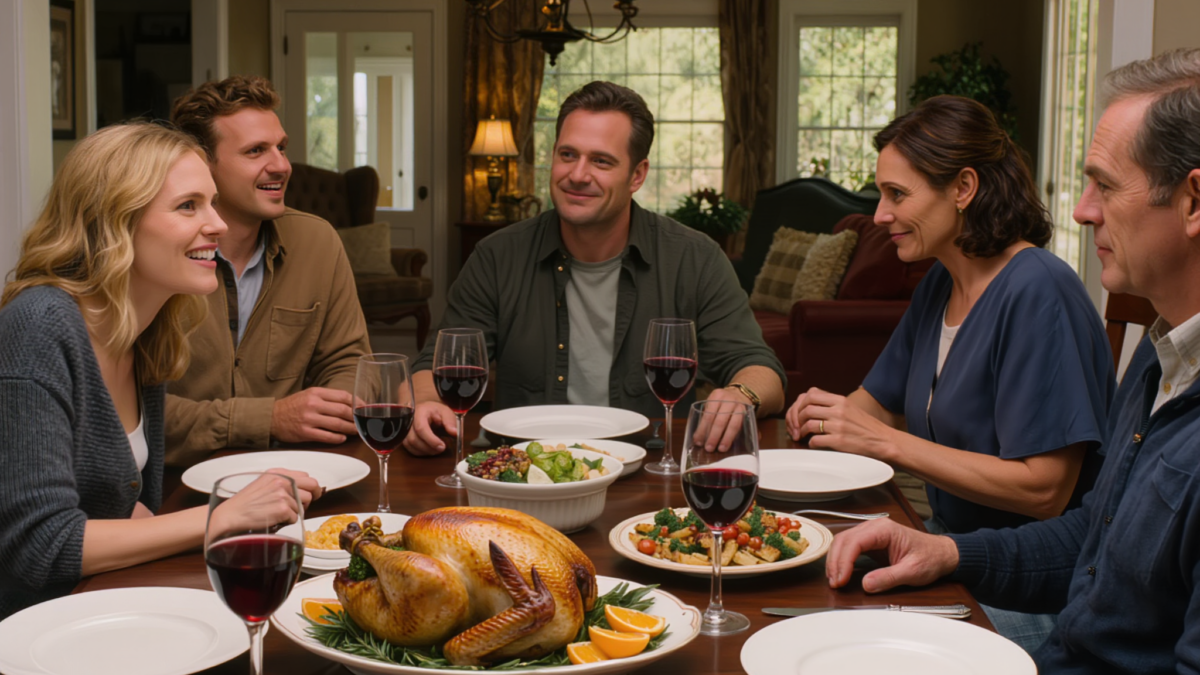
We sat around the polished mahogany table my parents were so proud of. My mother had prepared roasted chicken and several side dishes, but the conversation, as always, revolved around Alex.
He talked about his latest real-estate deal, his new car, and an upcoming trip to Aspen.
I quietly moved food around my plate and tried to remain unnoticed.
Then Chloe turned toward me.
“So Alex tells me you’re a programmer, Jason?”
The way she said programmer made it sound like a mildly embarrassing condition.
“I’m a data scientist,” I said gently. “I run my own company—”
She cut me off with a delicate laugh.
“Oh, that’s adorable. You have your own little spreadsheet company. It’s so sweet that you found a hobby that pays the bills.”
The table erupted in laughter.
It was not openly cruel laughter. That might have been easier to confront. It was the dismissive, patronizing kind—the laughter of people who had already agreed I was beneath them.
Alex draped an arm over Chloe’s shoulder.
“She’s a firecracker, isn’t she?”
My mother joined in with an expression of false concern.
“Jason, dear, we just worry about you. That world is so unstable. It isn’t like Alex’s work.”
My father, Richard, cleared his throat. In our family, that sound usually meant a verdict was coming.
“Your brother builds things, Jason. He deals with people and real assets. You sit in a dark room and type. We just want you to have a secure future.”
Each sentence placed another stone in the wall they had spent my entire life building around me.
The message was always the same.
Alex was substantial. I was not.
Alex belonged. I was tolerated.
Chloe watched me with a small, satisfied smile. She was testing how far she could push the family’s designated punching bag, and my family was encouraging her.
I tried once more to explain.
“I’ve been developing a forensic-accounting AI. It’s designed to identify sophisticated financial fraud across enormous transaction sets.”
Chloe waved one manicured hand.
“Oh, honey, leave that kind of work to the big players. My firm is actually looking to acquire a small AI company right now. Real professionals. They have a brilliant algorithm that could change the entire industry.”
She looked me up and down.
“It’s a little out of your league.”
Alex snickered. My parents nodded as though she had offered valuable career advice.
I placed my fork and knife on my plate. The metallic clink sounded unusually loud.
For several seconds, I said nothing. I looked from Chloe to Alex and then to my parents, waiting to see whether anyone would finally decide that she had gone too far.
My father leaned toward me.
“Jason, don’t be rude,” he hissed. “Stop making the family look bad.”
Not, That’s enough, Chloe.
Not, Don’t speak to my son that way.
His concern was that my silence might embarrass them.
My role was to absorb the insults gracefully so the family could preserve its image.
I picked up my fork again, but I could no longer eat. I sat at the table feeling like a ghost in my own family, the laughter still hanging in the room.
Yet beneath the humiliation, something inside me began to wake up. Văn bản đã dán (1)
Driving home that night, I watched the city lights blur through my windshield. The laughter from the dinner table replayed in my head, but I understood that Chloe was not the real problem.
She was merely the newest voice in a chorus that had been singing the same song for more than thirty years.
When I was ten, I won first place at my school science fair. I had built a miniature volcano with carefully painted slopes and a hidden chamber for the baking soda and vinegar.
I brought the blue ribbon home and placed it proudly beside the project.
No one noticed.
The family had gathered around Alex because he had made the junior-varsity basketball team. My ribbon remained on the coffee table while everyone congratulated him.
At my high-school graduation, I was valedictorian. I had spent weeks preparing a speech about technology, possibility, and the future.
My parents and several relatives left the ceremony early because Alex had a preseason soccer game that afternoon.
It was not a championship. It was not even a regular-season game.
He scored once, and they celebrated as if he had won the World Cup.
My valedictorian plaque eventually disappeared into a box in the garage.
That was how our family worked. Alex was the sun, and the rest of us existed in his orbit. My passion for computers was treated like an eccentric hobby. My quiet personality was described as a social deficiency.
My achievements were “nice.”
Alex’s smallest accomplishments required champagne.
Five years before that dinner, I had developed the foundation of what would become Aurelia Analytics. It was only a concept then, but I knew it had potential. I needed twenty thousand dollars for server capacity, software licenses, and the resources to build a working prototype.
I wrote a detailed business plan. I practiced my presentation repeatedly and finally brought it to my father’s study.
He listened with the expression of someone being forced to endure an unpleasant medical diagnosis.
“Jason, I can’t,” he said, shaking his head. “It’s too risky. This computer fantasy of yours isn’t a career. You need a real job with a real salary.”
Two weeks later, he bought Alex a new BMW to congratulate him for being named salesman of the month at his real-estate agency.
Twenty thousand dollars would barely have changed the price of that car.
I asked my mother why they could invest so much in Alex but nothing in me.
“Your father and I already put a great deal into Alex’s college fund and helped him get started,” she explained. “His career path is a sure thing. We have to be intelligent about our investments. You understand, don’t you?”
I did understand.
They did not consider me a smart investment.
After that, I never asked them for another dollar. I worked two jobs, coded through the night, and built my “computer fantasy” with coffee, exhaustion, and a quiet anger I rarely allowed anyone to see.
By the time I reached my driveway after the dinner with Chloe, one thought had become impossible to ignore.
My family had no idea what I had built in the silence they had forced upon me.
Perhaps it was time they found out.
I did not go inside my apartment. Instead, I drove to the small, unremarkable office building where I rented two rooms.
It was the official headquarters of Aurelia Analytics.
In reality, it was a glorified workspace shared by me and my co-founder, Ben. I found him hunched over a keyboard beneath the glow of three monitors, with a half-empty pizza box beside him.
Ben had been my closest friend since college. He was one of the few people who saw me not as Alex’s strange little brother, but as an equal and a partner.
He looked up when I entered.
“Whoa,” he said. “Let me guess. Sunday dinner?”
I dropped into the chair beside him and gave him the abbreviated version: Chloe’s insults, my family’s enthusiastic participation, and my father’s command that I stop making them look bad.
Ben listened without interrupting. His expression hardened with each detail.
When I finished, he turned toward one of his monitors.
“You know,” he said, “while you were being verbally assaulted over roasted chicken, I was on a call with the mergers-and-acquisitions team from Sterling Westwood.”
Sterling Westwood was a massive technology conglomerate in the final stages of acquiring Aurelia Analytics. The negotiations were so confidential that my family did not know the name of my company, much less that the sale could make Ben and me wealthy.
“How did it go?” I asked.
Ben turned back toward me with a fierce grin.
“The executive overseeing the deal asked about you specifically. He called you the most valuable asset in the entire acquisition. He said your brain is the reason they’re paying eight figures.”
I stared at him.
“He also wants you to lead the new AI division after the merger.”
The words hung between us.
Eight figures.
A leadership position at one of the largest technology companies in the country.
At dinner, my family had called my company a hobby that paid the bills.
“They don’t know who you are,” Ben said softly.
“They don’t want to know,” I replied. “They already have a version of me they’re comfortable with. I’m the failure. That version makes Alex look better.”
Ben nodded.
“So what are you going to do?”
Before I could answer, my phone buzzed.
An email invitation appeared on the screen, decorated with digital confetti.
Alex and Chloe’s engagement party.
It was elaborate and formal, exactly the kind of event they would use to display their perfect future to everyone they wanted to impress.
Ben watched me read it.
“You aren’t actually going, are you?”
I looked at the invitation, then back at him.
“Oh, I’m going,” I said. “I wouldn’t miss it for the world.” Văn bản đã dán (1)
For two days, the invitation remained in my inbox like a ticking clock.
The part of me that had been trained to avoid conflict wanted to delete it. I could send a polite excuse, remain safely in my office, and let the family continue believing whatever made them comfortable.
But every time I considered declining, I heard my father’s voice.
Stop making the family look bad.
The invitation did not feel like an act of inclusion. It felt like a summons. They expected me to attend, welcome Chloe into the family, smile for photographs, and accept my position beneath both of them.
I was about to archive the invitation again when another email appeared.
It came from an encrypted address. The subject line contained only three letters:
VCF.
My heartbeat accelerated.
I opened it.
The message was brief.
Be careful. VCF isn’t buying. They’re stealing. They’re trying to reverse-engineer the algorithm belonging to their AI acquisition target. The director leading the effort believes the founder is a small-time amateur they can overpower. Don’t be that amateur.
I read it several times.
VCF could have been examining dozens of companies. The message could have been a mistake, a hoax, or an attempt to create panic.
Then I remembered Chloe at dinner.
My firm is looking to acquire a small AI company right now.
They have a brilliant algorithm.
Her questions about my programming language and technical framework had sounded like condescending small talk at the time. Now they felt different.
They had been reconnaissance.
Chloe had not merely been mocking me. She had been trying to determine how much I knew and how easily I could be manipulated.
Someone inside VCF knew what was happening and had decided to warn me.
My hands began shaking, not from fear, but from rage.
Chloe had sat at my parents’ table, accepted their hospitality, laughed at my work, and quietly gathered information that could help her steal it.
My family had made the process easier. By portraying me as a harmless, socially awkward failure, they had convinced her that I would never recognize the threat.
She was counting on me being exactly the man they believed I was: weak, passive, and easy to dismiss.
I reopened the engagement invitation.
This time, I clicked RSVP.
Attending: One.
The game had changed.
They believed they were inviting a compliant relative.
I was coming as an auditor. Văn bản đã dán (1)
The anonymous warning gave me suspicion. I still needed proof.
For the next forty-eight hours, Ben and I turned our office into a war room. We lived on coffee, takeout, and the grim satisfaction of finally understanding the threat.
I began where any data scientist would begin: with the data.
Aurelia’s core algorithm was protected behind several layers of security. Potential investors could access a sandboxed demonstration version under strict confidentiality agreements, but the source code remained inaccessible.
Sterling Westwood’s activity was clean. Its team tested the software professionally and respected every boundary.
VCF’s access logs told a different story.
Their first sessions looked normal. During the previous week, however, the activity had become increasingly aggressive. Someone using VCF’s credentials was no longer evaluating the product. They were testing the walls.
We found repeated attempts to enter the source-code directory.
Every attempt had been blocked, but the pattern was unmistakable. Someone was trying to pick the digital lock.
It was damaging evidence, but still circumstantial.
I returned mentally to the dinner. Chloe had asked specific questions about the language behind the neural network and the framework used for data processing.
She had not been making conversation.
She had been fishing for blueprints.
Then another question occurred to me.
How had Chloe learned enough about Aurelia to target us in the first place?
I was intensely private about my work. Only Ben, a few trusted contractors, and several relatives knew what I had been developing.
Several months earlier, during a family barbecue, I had spoken with my cousin David. Unlike the others, David sometimes appeared genuinely interested in my work.
I told him about a breakthrough in the AI’s predictive modeling.
Alex wandered over with a beer in his hand and overheard us.
“Still tinkering with that robot brain of yours, Jay?” he joked. “You should find a real hobby. Try golf.”
David defended me.
“No, this is impressive. Jason is building something important.”
At the time, I had appreciated his support.
Now, the memory made my stomach tighten.
Alex had heard enough to speak with Chloe.
I began cross-referencing the IP addresses behind the suspicious activity. Most had been concealed through virtual private networks, but some of the earliest attempts were careless.
One traced back to a residential connection.
The registered address belonged to David.
I stared at the result in disbelief. The cousin who had seemed to support me had not simply listened to my explanation. Information from his home network had been involved in attempts to access my company’s systems.
I called him immediately.
“Why, David?”
There was a pause.
“Jason? What are you talking about?”
He sounded confused enough that I almost questioned myself.
“The IP address that has been trying to breach my company’s servers belongs to you.”
Silence followed.
I heard him inhale sharply.
“I don’t know what you mean,” he stammered.
The lie was thin and desperate.
“Stop. Did you tell Alex and Chloe about my project?”
Another pause.
“I only mentioned it to Alex,” he finally admitted. “I thought what you were doing was impressive. I was bragging about you.”
“Bragging?”
A humorless laugh escaped me.
“You gave them enough information to identify my company and target it.”
“I didn’t know she was going to do this,” he pleaded. “Alex said Chloe’s firm was interested in technology, and I mentioned your startup. I had no idea.”
David worked in finance. He was not naïve. He knew what interest from an aggressive venture-capital executive could mean.
He had shared my information to gain favor with Alex, the branch of the family everyone considered successful.
“Please don’t tell your parents,” he said. “Or Alex. It was a mistake.”
He was not sorry that he had betrayed me. He was frightened of the consequences.
“Don’t worry,” I said. “I’m not going to tell them.”
His relief was immediate.
“Thank God, Jason.”
“I’m going to show them.”
I ended the call.
When I told Ben, his expression became grim.
“So we fight back,” he said.
“No.”
He looked at me.
“We let them believe they’re winning. Then we set a trap.”
The core of our plan was an isolated section of the demo server that appeared to contain a vulnerability leading toward Aurelia’s source code.
We called it the honeypot.
To an authorized user, it would appear unimportant. To someone actively searching for a back door, it would look irresistible.
The moment anyone entered, the system would trigger an alert and record the activity. It would preserve the keystrokes, screen movements, and communications surrounding the attempted theft.
“Are you certain about this?” Ben asked as he studied the code. “We’re entering dangerous territory.”
“They started the game,” I said. “I’m going to finish it.”
We sent a routine system-maintenance notice to all demo users. It mentioned a temporary adjustment to certain security protocols—just enough information to tempt someone already looking for a weakness.
Then we waited.
My initial instinct was to send any evidence directly to Sterling Westwood. A quiet corporate response would protect the company.
But it would not address the deeper problem.
My family had spent decades defining me as a failure. Chloe had turned that fiction into a weapon. If the truth disappeared inside a conference room, my family would dismiss whatever happened as a misunderstanding and continue blaming me.
The exposure needed to be undeniable.
Then Ben received an unexpected piece of information.
During a logistics call, the Sterling Westwood executive overseeing our acquisition mentioned that he would be attending an engagement party that weekend through an old business connection.
It was Alex and Chloe’s party.
The coincidence felt impossible.
The man who understood the value of my work would be in the same room as the woman trying to steal it and the family that had spent years ridiculing it.
I contacted the event coordinator, Isabelle, and told her I was preparing a surprise tribute for the couple. She provided the technical specifications for the ballroom projector.
The stage was ready.
The audience was confirmed.
All we needed was for Chloe to take the bait.
The night before the party, the honeypot triggered.
We had our evidence. Văn bản đã dán (1)
Despite everything, doubt arrived that night.
Exposing Chloe would also destroy Alex’s engagement and publicly confront my parents. Once I played the recording, nothing in our family could return to what it had been.
I found myself scrolling through my contacts until I reached the name of someone I had not called in years.
Dr. Ana Sharma had been my graduate-school adviser. She was brilliant, demanding, and kind. She had recognized potential in me when I was still a nervous student filled with ideas.
In many ways, she had been more of a mentor than my father had ever been.
I called her.
She answered on the second ring.
“Jason Miller,” she said warmly. “To what do I owe this unexpected pleasure?”
I told her everything.
The years of being overlooked. The dinner. Chloe’s plan. David’s betrayal. The evidence Ben and I had collected. The public exposure I intended to stage.
She listened without interrupting.
When I finished, the line remained silent for several seconds.
“That is an extraordinary burden to carry,” she said. “And the plan you have created is both brilliant and terrifying.”
“I don’t know whether I can do it,” I admitted. “It feels destructive.”
“It is destructive,” she said. “But sometimes diseased structures must come down before anything healthy can grow.”
Then she asked the question that changed how I understood the entire situation.
“What is your goal, Jason? Is it revenge, or is it liberation?”
Revenge was tempting.
I wanted Chloe to experience the humiliation she had inflicted on me. I wanted Alex and my parents to see their perfect hierarchy collapse in front of the people they most wanted to impress.
But revenge would give me only a moment of satisfaction followed by years of bitterness.
Liberation felt different.
Liberation meant telling the truth because I no longer wanted to carry their version of me. It meant stepping outside the role they had assigned me.
“Liberation,” I said quietly. “I want to be free.”
“Then your path is clear. Do not act from anger. Act from truth. Present the facts calmly. Your purpose is not to destroy them. Your purpose is to reclaim your own story. The consequences of their decisions belong to them.”
When the call ended, the doubt was gone.
I was not going to the party as an avenger.
I was going as a witness.
I arrived fashionably late wearing a well-tailored navy suit. It was not flashy, but it fit me perfectly. I did not want to look like the charity case my family believed they had invited.
I wanted to look like myself.
The ballroom was already crowded. My parents stood among several well-dressed guests, holding court as if the event belonged to them.
My mother noticed me and gave a small wave before immediately looking for someone more important.
Alex and Chloe approached together. Alex carried a glass of champagne, and Chloe clung to his arm like an expensive accessory.
“There he is,” Alex announced, clapping me too hard on the shoulder. “Glad you made it, little brother. For a moment, I thought you might be too busy with your…you know.”
He waved vaguely, as though my profession was too insignificant to name.
Chloe smiled sweetly.
“We were just talking about you, Jason. I was telling Alex how impressed I am by your dedication. It’s rare to find someone so passionate about their little projects.”
They wanted me to react. Anger would confirm everything they believed about me.
Instead, I smiled.
“Thank you, Chloe. That means a great deal. My little project is about to have a very important week.”
Her eyes narrowed briefly.
Before she could respond, a distinguished man with silver hair approached us.
It was Mr. Harrison from Sterling Westwood.
My father hurried forward, his face transforming into an eager smile.
“Harrison, I’m so glad you could attend. You know my son Alex, of course, and this is his brilliant fiancée, Chloe.”
Mr. Harrison greeted them politely.
Then he looked at me.
Recognition crossed his face.
“And this is our other son, Jason,” my father said as an afterthought.
Mr. Harrison immediately extended his hand.
“Jason, it is a pleasure to finally meet you in person. Everyone at Sterling Westwood is extraordinarily excited about what you’ve been building.”
My family became silent.
Alex looked between us.
My father blinked.
“You two know each other?”
“In a manner of speaking,” Mr. Harrison replied. “Jason has become something of a legend within our research-and-development team.”
Chloe recovered first.
“Jason is full of surprises,” she said with a light laugh. “I keep telling him that one day his company might be noticed by a major investment fund. He simply has to keep dreaming.”
That was the final arrogant jab.
I looked at her calmly.
“I think you’re going to be very interested in what happens next.”
The master of ceremonies tapped the microphone.
It was time for the toasts.
Alex delivered a short speech filled with praise for Chloe and barely concealed admiration for himself. Then, with a smug smile, he invited me to the stage.
I walked forward with the remote in my hand.
“Thank you, Alex,” I said. “I don’t have a long speech prepared. I’ve always believed actions speak louder than words, and lately I’ve become aware of some very interesting actions.”
I looked at Chloe.
Her smile had begun to strain.
“Chloe has shown an unusual interest in forensic-accounting AI. She has been especially curious about my little project. So instead of offering a traditional toast, I thought I would share part of that project with everyone.”
I pressed the button.
The slideshow disappeared.
A screen recording replaced it. A date and timestamp appeared in one corner. The user was connected through VCF’s network.
The cursor moved rapidly across the screen, attempting to enter protected directories and bypass security restrictions.
A murmur traveled through the ballroom.
Then the audio began.
Chloe’s voice filled the room.
“Come on. Find the core algorithm. We only need the source code, and then we can build our own version. By the time we launch, the little accounting nerd who created this will never know what happened.”
The ballroom went completely silent.
Chloe’s face lost all color.
Alex stared at her, then at the screen.
The recording continued, documenting her directions to a small team as they attempted to penetrate Aurelia’s security. Every impatient order, every expression of greed, and every contemptuous comment about the anonymous founder played through the ballroom speakers.
When the video ended, I turned back to the microphone.
“The little accounting nerd she was referring to is me.”
No one moved.
“The company she was attempting to steal from is Aurelia Analytics. Aurelia is my company.”
My father looked as though the floor had shifted beneath him.
I continued.
“Chloe was also correct when she said a major company was interested in acquiring a brilliant AI platform. Sterling Westwood finalized its acquisition of Aurelia this morning.”
I glanced toward Mr. Harrison.
“Tomorrow, Aurelia becomes Sterling Westwood’s new AI division. As part of that agreement, I accepted the position leading it.”
I looked directly at Chloe.
“So, in a way, you were right. Your fund is very interested in my work. And beginning tomorrow morning, I’ll be your boss’s boss.”
The words landed like a physical impact.
Chloe swayed and reached for Alex’s arm. He pulled away from her, his face filled with disgust and humiliation.
My parents stared at me as if they were seeing a stranger.
Mr. Harrison rose from his chair. He did not speak. He simply gave me one decisive nod.
It was all the confirmation anyone needed. Văn bản đã dán (1)
The party did not end so much as shatter.
Guests began whispering and quietly leaving the ballroom. No one wanted to be associated with the scandal unfolding in front of them.
Chloe remained frozen for several seconds. Then she pushed through the crowd and fled.
Alex did not follow.
He stood beneath the stage, staring at me as though he had never seen me clearly before. For the first time, he was not looking at the brother he considered a failure.
He was looking at the man who had dismantled his carefully curated world.
Mr. Harrison approached me through the dispersing crowd and shook my hand.
“That was unorthodox,” he said, allowing himself a restrained smile. “But effective.”
He glanced toward a stern-looking woman speaking intensely into her phone.
“That is Ms. Vance, Chloe’s managing director. I suspect Chloe will hear from legal counsel before she hears from human resources. Sterling Westwood does not conduct business with thieves.”
Ms. Vance gave me a brief nod before leaving the ballroom.
The message was clear.
Chloe’s career at VCF was over.
The staff began clearing abandoned glasses from the tables. My parents, Alex, and several relatives stood together like a small island of misery.
My aunt Carol whispered furiously to my mother. David remained in a corner, pale and sick, trying to make himself invisible.
I ignored all of them.
I walked to the open bar, poured a glass of water, and drank slowly.
The storm had passed.
I was still standing.
Alex finally approached me.
“Why?” he asked. “Why would you do this, Jason? You ruined everything. We were going to be a family.”
“We were never a family,” I said. “We were characters in a play, and I was tired of my role.”
He stared at me.
“Chloe did not create this by herself. You helped. All of you did. You let her mock me. You laughed while she belittled my work. You spent years telling me I was nothing.”
His mouth opened, but no clever response came.
“You just learned that I’m not.”
For the first time in his life, my golden-boy brother had nothing to say.
His identity had always depended on being superior to me. That foundation had disappeared in a single evening.
I placed the empty glass on the bar and walked away.
I nearly reached my car before my parents and Alex caught up with me in the parking garage.
“Jason, wait,” my father called.
I stopped but did not turn around.
“You can’t just leave,” my mother said. Her voice trembled with anger. “You embarrassed this family in a way I never thought possible. You humiliated your brother. You destroyed his future.”
I turned to face them.
Under the harsh fluorescent lights, they looked smaller than they had inside the ballroom.
“My future was the one at risk,” I said. “Chloe was attempting to steal years of my work. Did you hear that part, or were you too focused on the social embarrassment?”
“She was ambitious,” my father said bitterly. “Perhaps she went too far. But what you did had no class. You aired the family’s private problems in public.”
“It stopped being a private family problem the moment you chose her over me. It stopped being private every time you praised Alex for existing and criticized me for succeeding.”
My father’s face tightened.
“You did not want a son,” I continued. “You wanted a reflection of yourselves. When I did not become that reflection, you tried to make me smaller.”
Alex stepped forward.
“You could have told me.”
I laughed for the first time that evening.
“Told you? You laughed louder than anyone when your fiancée called my life’s work adorable. You would not have listened. You never listen. You wait for your turn to speak.”
Silence settled over the garage.
In that moment, I understood something important.
They were not horrified that Chloe had attempted to steal from me. They were horrified that I had exposed it.
They were angry because I had disrupted a family structure built on the convenient fiction of my mediocrity.
“I’m done,” I said quietly.
My mother’s expression changed.
“I’m done being your disappointment. I’m done being Alex’s stepping stone. I’m done needing your approval.”
She began crying, but the tears looked more like frustration than remorse.
“What about us?” she demanded. “After everything we’ve done for you?”
“What you’ve done is teach me an important lesson.”
I looked at each of them.
“Sometimes the family you are born into is not the family you are meant to keep. Goodbye.”
I got into my car and drove away.
In the rearview mirror, the three of them became smaller beneath the garage lights.
I no longer felt angry.
I felt free. Văn bản đã dán (1)
Six months can feel like a lifetime.
The Sterling Westwood acquisition proceeded smoothly. My official title became vice president of the AI Innovation Division.
It sounded absurdly corporate, but the work was everything I had wanted.
For the first time, I had access to the resources and talent required to expand Aurelia’s potential. I led a team of brilliant people who questioned me, challenged me, and respected my judgment.
Mr. Harrison treated me as a partner.
We moved beyond identifying existing fraud. We began building predictive systems designed to prevent financial crises before they spread. My little spreadsheet company was creating tools that could genuinely protect people.
The change was not only professional.
The quiet Jason who avoided confrontation began to disappear. I learned to speak confidently in boardrooms, defend my decisions, and trust my own instincts.
I reconnected with friends I had neglected during the years I spent coding in isolation.
Eventually, I began dating again. This time, I understood that a healthy relationship was not built on status, control, or the need to prove your worth.
It was built on mutual respect.
My family remained mostly silent.
Through mutual acquaintances, I heard that Alex and Chloe’s breakup had been immediate and vicious. The story from the engagement party spread rapidly through their social circle.
Alex lost clients. He lost much of his confidence and nearly all of the image he had spent years cultivating.
He was no longer the golden boy.
He had become the man whose fiancée tried to steal from his brother and whose perfect engagement collapsed in front of a hundred guests.
I did not celebrate his downfall.
Most days, I barely thought about him.
The silence where my family’s criticism had once lived felt peaceful.
One afternoon, I received a call from an unfamiliar number.
“Hello, Jason. It’s Mrs. Gable.”
Mrs. Gable had been our neighbor for years. She was a quiet widow and one of my mother’s longtime friends.
“Mrs. Gable, it’s good to hear from you.”
“I’m sorry to call while you’re working,” she said. “I was at the engagement party, and there is something I’ve wanted to tell you.”
I waited.
“I have spent thirty years waiting for someone to stand up to them. I always knew you were the special one, Jason. The quiet ones often are. I am so terribly proud of you.”
Tears stung my eyes.
Being truly seen by someone who had quietly observed my life meant more than any title, promotion, or acquisition.
“Thank you,” I said. “That means more than you know.”
Before ending the call, Mrs. Gable offered one final observation.
“Your parents bet on the wrong horse. Now they are learning that a horse with an impressive pedigree is not valuable if it cannot run.”
The comparison was harsh, but it stayed with me.
My parents had invested everything—emotionally, socially, and, as I would soon discover, financially—in a son who offered style without substance.
The bill was finally arriving.
About a month later, my assistant contacted me.
“Jason, your mother is on the phone. She says it’s an emergency.”
The word emergency still triggered an instinctive fear. I immediately imagined an accident or illness.
I took the call.
“Mom, what happened? Is everyone all right?”
“You have to help your brother,” she said.
There was no greeting and no question about my life. Only a demand.
“Help him with what?”
“His life is falling apart. He lost his job. His clients won’t return his calls. Chloe is suing him for emotional distress or some other nonsense. He is a complete mess. He needs you.”
I leaned back in my chair.
After everything that had happened, she still expected me to repair the golden child’s mistakes.
“What exactly do you expect me to do?”
“You’re successful now,” she said, making the word sound accusatory. “You have money and connections. You could give him a loan. You could introduce him to the right people. Help him get back on his feet. He is your brother.”
“He is my brother,” I agreed. “And he laughed while his fiancée planned to destroy my company. He called me a failure for most of my life. You want me to reward that?”
Her desperation hardened into anger.
“This is your fault. If you had not made that disgusting scene, none of this would have happened. You did this to him.”
There it was.
The blame.
The complete refusal to accept responsibility.
“No,” I said. “His decisions did this. Chloe’s decisions did this. Your decisions did this.”
“Our decisions?” she shouted. “We gave you everything.”
Then, in her frustration, she revealed the truth that explained more than she realized.
“Your father and I invested everything in Alex. We put our savings into his real-estate projects. We thought he was the sure thing. Now it’s gone. The inheritance, the savings—everything. It’s all gone, and you’re sitting in your expensive office doing nothing.”
The word inheritance settled between us.
Their favoritism had never been only emotional.
It had been a financial calculation.
Alex was the high-risk investment they believed would make them wealthy. I was the forgotten account they expected to remain quiet in the background.
Their praise, disappointment, and family hierarchy had all functioned like portfolio management.
Their prized investment had collapsed.
For the first time, I felt something close to pity. They had become so obsessed with money and appearances that they had failed to recognize the actual value of either son.
“I see,” I said. “That explains a great deal.”
“Are you going to help us or not?”
“I cannot give you money, but I can offer advice. I know a very good financial adviser who specializes in bankruptcy and debt management. I’ll send you his information.”
The silence on the other end was extraordinary.
“That is all you can do?” she whispered.
“That is all I am willing to do,” I corrected her. “My help is no longer available. My wallet is closed. Goodbye, Mom.”
I ended the call.
I was not angry.
I was not sad.
I felt the final chain break.
Several weeks later, I sat at a small outdoor café in Florence, Italy. Warm sunlight touched my face, and the air carried the scent of espresso and old stone.
A half-eaten pastry rested beside my cappuccino. Beyond the café, the dome of the Florence Cathedral rose against the brilliant blue sky.
I had booked a one-way ticket.
After the call with my mother, I realized I needed more than a new job and a new apartment. I needed distance and perspective.
I had spent most of my life fighting inside a world my family had defined for me. It was time to see the rest of the world on my own terms.
I had enough money. I could manage my work remotely for several months. No family obligation remained strong enough to pull me back.
For the first time, there was only me.
I watched couples walk through the piazza, families laugh over meals, and artists sketch the old buildings.
In Florence, I was not Alex’s brother. I was not the family disappointment or the quiet programmer people underestimated.
I was simply a man enjoying coffee in the sun.
I still thought about my family occasionally, but the memories had begun to feel like scenes from an old film.
I hoped Alex would someday understand that his value was not tied to his car, clients, or reputation.
I hoped my parents would learn that love was not an investment strategy.
But their journey belonged to them.
It was no longer mine to carry.
My phone buzzed.
Ben had sent a photograph of our team celebrating a successful product launch in the old Aurelia office. Everyone was smiling and holding champagne glasses.
His message said, Wish you were here.
I smiled and typed back, Me too, but the gelato is better here.
Then I pulled a postcard from my bag. The front showed a beautiful photograph of the Ponte Vecchio.
I began writing to Ben.
I did not mention the merger or our financial success. I described the pasta, the color of the sunset over the Arno River, and the feeling of walking through streets that had existed for centuries.
I was finally free.
Not because I had won.
Not because Chloe, Alex, or my parents had lost.
I was free because I had stopped playing their game. I had stepped away from the board and discovered an entire world where I did not have to make myself small so someone else could feel important.
In that world, I could simply be Jason.
For the first time, that felt like more than enough.
I signed the postcard, placed a stamp on it, and walked toward the nearest mailbox.
My steps felt lighter than they had in years.








