My Brother Blamed Me for Mom’s Assisted Living Move at Her 80th Birthday
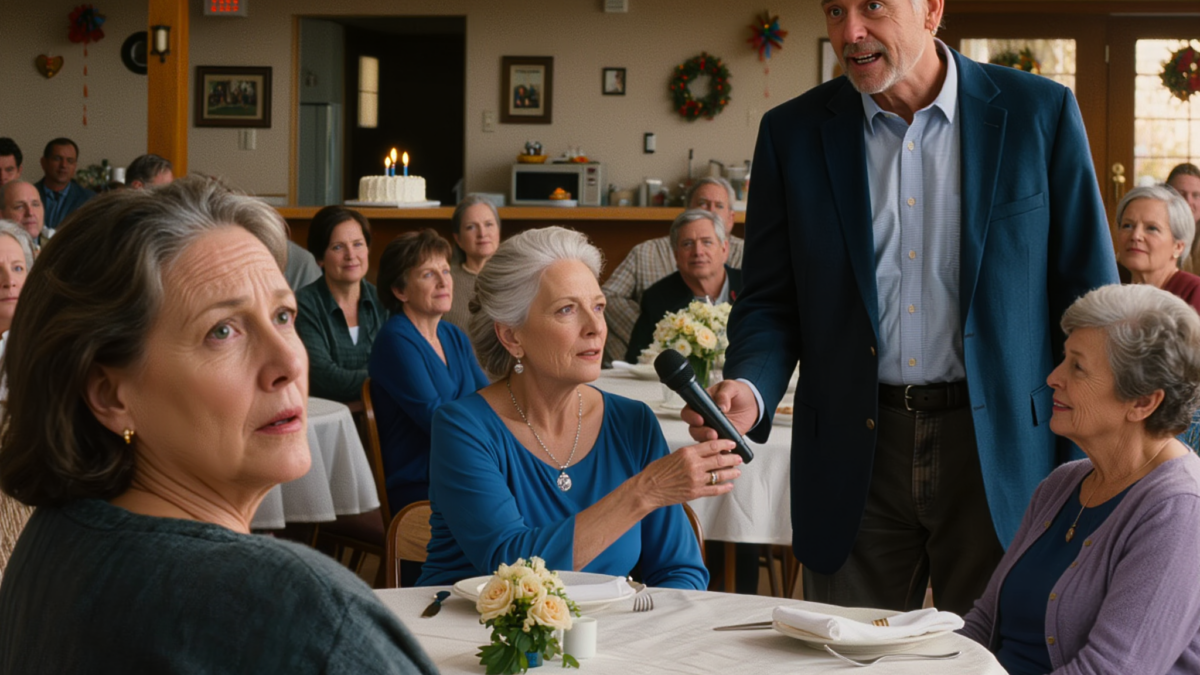
My brother chose our mother’s 80th birthday party to tell sixty relatives that I had abandoned her.
He stood at the front of the community hall, a microphone in one hand and a glass of iced tea in the other. Behind him, a banner read Happy 80th Birthday, Helen! My mother sat three tables away, wearing the blue dress she’d picked out weeks earlier.
Dean raised his glass.
“Mom’s had quite a year,” he began. “A lot of changes. Some of them harder than they needed to be.”
I recognized that tone immediately.
My brother had always been good at making accusations sound like expressions of concern.
“When Claire decided to put Mom in a home, I tried to keep her with family. I even offered her a room at my place. But sometimes one person makes a decision, and the rest of us have to live with it.”
Several heads turned toward me.
My cousin Patricia lowered her eyes. A woman across the table gave me the kind of sympathetic look people reserve for someone who has done something disappointing.
Dean continued.
“Still, we’re here to celebrate Mom. And I want her to know she’ll always have a place with me.”
The applause started.
I sat with my hands in my lap, listening to sixty people congratulate my brother for something he hadn’t done and quietly judge me for something I hadn’t done either.
Because I hadn’t put our mother anywhere.
She had chosen where she wanted to live.
And Dean knew it.
My name is Claire Parker. I’m fifty-one years old, and I work at a public library outside Dayton, Ohio.
I’ve spent most of my adult life being the practical person in our family. The one who remembers appointments, helps with paperwork, and handles problems without expecting much attention.
My older brother Dean is fifty-five. He manages an automobile dealership and has always been the person everyone notices first.
He’s charming, confident, and generous when he wants to be. He’s also accustomed to having the final word.
Growing up, Dean organized the neighborhood games and decided who played where. I was the one making sure nobody got left out.
We carried those habits into adulthood.
Dean made decisions. I managed the details.
And when something went wrong, I was usually the person expected to fix it without making anyone uncomfortable.
For years, I thought that was simply what being a good daughter and sister meant.
Then Mom started talking about moving.
Four months before her birthday, she called me on a Thursday evening.
“I’ve been looking at some places,” she said.
“What kind of places?”
“Places where somebody else takes care of dinner.”
I laughed.
“Are you talking about restaurants?”
“No, Claire. I’m talking about somewhere to live.”
My mother was seventy-nine then, still sharp-minded and stubbornly independent.
She kept a calendar full of church choir rehearsals, volunteer shifts, lunches with friends, and appointments she’d arranged herself.
But everyday life was becoming harder.
The stairs in her house made her nervous. Some mornings, cooking breakfast exhausted her before the day had properly started. She’d stopped using the upstairs linen closet because she didn’t like carrying laundry down the steps.
She wasn’t confused.
She wasn’t incapable of making decisions.
She was simply tired of pretending she could still manage everything as easily as she had ten years earlier.
“I don’t want to spend the next ten years acting like nothing’s changed,” she told me.
I asked whether she wanted help researching assisted living communities.
“Already did that.”
Of course she had.
Mom had a notebook filled with addresses, phone numbers, and questions. She’d researched several communities and even visited one with her younger sister, Aunt Lillian.
She hadn’t mentioned any of it to me.
“Why didn’t you tell me sooner?”
“Because I wanted to know what I thought before everybody started telling me what they thought.”
That was my mother.
She might ask for assistance, but she didn’t appreciate being treated as though asking for help meant surrendering her judgment.
Unfortunately, Dean saw things differently.
When Mom told him she was considering assisted living, he immediately objected.
“Absolutely not. You’re not going into one of those places when you’ve got family.”
Mom put down her fork.
“I’m not asking permission, Dean.”
“I’m just saying we have options.”
“I know we have options. That’s why I’m looking at them.”
Dean offered her the spare bedroom in his house.
I believed he meant well.
He loved Mom, and the thought of her living somewhere else made him uncomfortable. He wanted to know she was safe, and he genuinely believed having her under his roof would be the best solution.
But Mom didn’t immediately accept.
She asked how she would get to church choir, whether her friends could visit, and what would happen to her volunteer work at the neighborhood reading program.
Dean said they’d figure everything out.
Mom wanted to know what that actually meant.
They discussed the arrangement for nearly an hour.
I wasn’t there for most of their conversation, and Mom didn’t ask me to get involved.
“I’ll work it out with your brother,” she said afterward.
Two weeks later, she asked me to accompany her to another assisted living community.
I took a personal day from the library.
The place was modest but pleasant. There was a small dining room, a courtyard with raised flower beds, and a common area where residents sat reading or talking.
Mom was more interested in the activity schedule than the apartment.
She wanted to know about transportation, visiting hours, meals, and what assistance would be available if her needs changed.
The woman showing us around answered every question.
Then Mom asked something that made me smile.
“Can I bring my own coffee maker?”
“Of course,” the woman said.
Mom nodded approvingly.
“Good. I don’t trust anybody else’s coffee.”
After the tour, we sat in my car.
“What do you think?” I asked.
“I’d like to come back for lunch.”
“To try the food?”
“To see whether the people eating it look miserable.”
We returned the following Tuesday.
Mom talked with two residents and asked detailed questions about the transportation schedule. She liked that she could attend activities without waiting for one of her children to drive her.
By the time we left, she’d made up her mind.
She reviewed the expenses against her retirement income and savings, chose an apartment, and signed the agreement herself.
I helped sort her belongings, arrange the move, and decide which furniture would fit.
I didn’t choose the community.
I didn’t sign anything on her behalf.
I didn’t pressure her to leave her house.
I helped my mother do what she’d already decided she wanted to do.
For a while, I thought everyone understood that.
Then Dean started telling a different story.
At first, it was subtle.
“Claire thinks Mom will be better off there,” he’d say.
Then it became, “Claire’s handling all this.”
Eventually, I overheard him telling a relative, “Claire decided it was time.”
The first time I confronted him, he waved his hand.
“You know what I mean.”
“No, Dean. Mom decided.”
“Fine. Mom decided. You helped.”
“There’s a difference.”
“You’re taking everything personally.”
I tried to explain that helping someone make arrangements wasn’t the same thing as choosing their life for them.
He didn’t seem interested in the distinction.
At Easter, he asked Mom whether she was “allowed” to leave the building for lunch.
She stared at him.
“Dean, it’s my apartment. Not a prison.”
Everyone laughed, and he changed the subject.
But the comments continued.
At another gathering, he talked about how sad it was that older people were being encouraged to leave their family homes instead of being cared for by their children.
He didn’t mention me by name.
He didn’t need to.
I confronted him privately afterward.
“You’re making it sound like I forced Mom to move.”
“You encouraged it.”
“I supported what she wanted.”
“Same difference.”
“No. It isn’t.”
Dean crossed his arms.
“You know, I offered to have her live with me. Nobody seems interested in remembering that.”
“Mom remembers.”
“Then why didn’t she come?”
I looked at him.
“Have you asked her?”
He glanced away.
“She’s stubborn.”
I could have pushed harder.
Instead, I let the conversation end.
That was a mistake I didn’t recognize until later.
I told myself Dean would eventually accept Mom’s decision, especially once he saw she was doing well.
She had her own apartment, a regular routine, and people to spend time with.
When I visited, she complained about the overcooked carrots, praised the staff member who remembered how she liked her coffee, and told me about the activities she’d joined.
One afternoon, I found her beside her apartment window with the weekly calendar spread across her lap.
She’d signed up for a gardening class and a museum trip.
“Are you happy here?” I asked.
“I’m still getting used to it.”
“Do you regret moving?”
Mom looked over her glasses.
“Claire, I spent forty years making everybody else’s dinner. Yesterday somebody served me chicken and mashed potatoes, then cleared my plate. I nearly applauded.”
We laughed.
Then she grew serious.
“I miss some things. Of course I do. But missing something doesn’t mean you made the wrong choice.”
I remembered that sentence.
Dean, unfortunately, seemed to remember only that she’d turned down his spare bedroom.
As her eightieth birthday approached, he announced that we needed to throw a proper celebration.
Mom wanted a quiet lunch.
Dean wanted a party.
He reserved a community hall, arranged catering, and invited relatives and old friends.
Mom protested until he promised there wouldn’t be any surprises.
Two days before the party, Dean called me about the seating arrangements.
“You’re at table four,” he said.
“That’s fine.”
“Mom’s up front with me and Aunt Lillian.”
“Okay.”
He paused.
“I’m probably going to say a few words.”
Something in his voice made me uneasy.
“Dean, this is Mom’s birthday. Not a family meeting.”
“I’m aware of that.”
“Then keep it about her.”
He sighed.
“You always assume the worst of me.”
“I’m asking you not to make her living situation into an argument.”
“I know how to give a birthday toast.”
He ended the call shortly afterward.
I considered warning Mom.
But she’d been looking forward to seeing everyone, and I didn’t want to upset her over something Dean hadn’t actually done yet.
So I wrapped the book she’d been wanting, bought a flowering plant for her apartment window, and went to the party determined to enjoy the afternoon.
When I arrived, the hall was already crowded.
Round tables were covered with white plastic tablecloths. Family photographs stood beside simple floral centerpieces. An enormous sheet cake waited near the kitchen doors.
Mom sat beside Aunt Lillian, wearing her blue dress and a silver necklace I hadn’t seen in years.
When she noticed me, she raised both hands.
“There’s my girl.”
I hugged her.
“Happy birthday.”
“You brought the book, didn’t you?”
“Maybe.”
“Your wrapping always gives it away.”
She looked genuinely happy.
For the first half hour, everything went beautifully.
Friends told stories. Cousins took pictures. Mom laughed so hard at something Lillian said that she had to remove her glasses.
Then Patricia approached me near the drinks table.
“Claire, can I ask you something?”
“Sure.”
“How’s your mom doing? Really?”
“She’s doing well.”
Patricia hesitated.
“Dean made it sound like she didn’t have much choice.”
My stomach tightened.
“What did he say?”
“Just that things happened pretty fast. That you thought she needed to be somewhere else.”
“Mom researched places herself.”
Patricia looked surprised.
“Oh. I didn’t know that.”
“She chose where she lives.”
“I’m glad to hear it.”
She touched my arm and walked away.
I stood there holding my lemonade, wondering how many people had heard Dean’s version of events.
I’d corrected him before.
I’d assumed he understood.
Now I was beginning to realize that he’d continued telling the story exactly the way he wanted it told.
By the time lunch ended, I felt exhausted.
Then Dean stood and tapped his glass with a spoon.
“Everybody, can I have your attention?”
People turned their chairs.
He started well.
He talked about Mom’s sense of humor, the birthday cards she always mailed early, and her ability to remember someone’s favorite dessert after meeting them once.
People laughed.
Mom looked pleased.
Then he began talking about the past year.
And I knew he’d ignored my warning.
“When Claire decided to put Mom in a home, I tried to keep her with family.”
He paused.
“I even offered her a room at my place. But sometimes one person makes a decision, and the rest of us have to live with it.”
I watched Mom’s expression change.
Dean continued, telling everyone that he’d always have a place for her.
The applause was polite but real.
A woman across the table glanced at me with pity.
I felt heat rising into my face.
He hadn’t merely explained that he disagreed with Mom’s decision.
He’d made me responsible for it.
And he’d done it in front of sixty people who might never hear the truth.
I wanted to stand up.
But Mom was sitting there in her beautiful birthday dress, surrounded by friends and relatives. I couldn’t bear the thought of turning her celebration into a shouting match.
So I stayed seated.
Then Aunt Lillian stood.
“Dean,” she said, “I think you’ve left something out.”
My brother lowered his glass.
“Yes, Aunt Lillian?”
“Your mother asked me to visit that assisted living community with her before Claire knew she was looking.”
Dean frowned.
“Well, Mom was considering a lot of things.”
“She’d already been considering it for weeks. I was there. She made the appointment herself.”
Several people turned toward Mom.
Lillian continued.
“Claire didn’t talk Helen into leaving her house. Helen asked Claire to help after she’d started looking at places.”
I hadn’t expected anyone to intervene.
For months, I’d been trying to correct the story quietly, one conversation at a time.
Now someone who’d actually been there was telling the truth in front of everyone.
Dean gave an uncomfortable laugh.
“Nobody’s saying Mom didn’t have opinions.”
“That’s not what you said.”
“Lillian, I was making a birthday toast.”
“Then you should have made a birthday toast.”
A couple of relatives looked down at their plates.
Dean set down his glass.
“Fine. Mom looked at places. But that doesn’t change the fact that I offered her a room in my house. I was willing to take care of her. I don’t think that’s something I should have to apologize for.”
Nobody had asked him to apologize for offering Mom a room.
That wasn’t the issue.
But I could see he believed the offer itself proved he was right.
And until that moment, I hadn’t fully understood why Mom had turned him down.
I knew they’d discussed his spare bedroom.
I knew she’d asked questions about her activities and how she’d get around.
But she’d never told me exactly how their conversation had ended.
She’d simply said she would work things out with Dean herself.
Now Mom folded her napkin and set it beside her plate.
Then she raised her hand.
“Dean, honey, may I have the microphone?”
He looked surprised.
“Mom, you don’t have to make a speech.”
“I know.”
She held out her hand.
“I’d like it, please.”
Dean walked over and handed her the microphone.
For a moment, I thought she would thank everyone for coming and move on to the birthday cake.
Instead, she looked directly at my brother.
“Dean, since you’ve told everybody about the room you offered me, would you mind telling them what I would have had to give up to live in it?”
Dean didn’t answer immediately.
He glanced around the tables.
“Mom, we talked about what would work for our household.”
“Yes,” she said. “We did.”
She adjusted the microphone.
“And I’d like you to tell them what that meant.”
Dean rubbed the back of his neck.
“It meant we needed a routine. You know that.”
“What kind of routine?”
He looked toward me as though I might rescue him from the conversation.
But I hadn’t been there.
This wasn’t mine to explain.
Mom continued.
“You told me there wouldn’t be time to take me to my activities. Didn’t you?”
“Well, we’re both working, Mom.”
“I understand that. I’m not criticizing you for working.”
She paused.
“You told me I’d have to stop volunteering at the reading program because nobody could drive me there twice a week.”
Dean started to speak.
Mom raised one finger.
“And you said church choir would have to depend on whether it fit your schedule.”
“That’s reasonable.”
“It might be reasonable for you. It wasn’t reasonable for me.”
Several people shifted in their chairs.
Mom looked around the room.
“Dean also explained that having friends visit during the week would be difficult because everyone in his house has their own routines.”
“Mom, you’re making it sound worse than it was.”
“I’m telling them what we discussed.”
Dean opened his mouth, then closed it.
I stared at my mother.
She wasn’t angry in the way I’d expected.
She wasn’t raising her voice or trying to embarrass him.
She was simply explaining the choices she’d been given.
And for the first time, I understood why his offer hadn’t been enough.
Dean wanted Mom safe in his house.
But he hadn’t figured out how she would continue living the life that mattered to her.
He’d offered her a place to stay without really considering what she’d do once she got there.
Mom looked down at the microphone.
“I don’t think my son meant to be unkind,” she said. “He wanted to know I was safe. He thought he was offering me what I needed.”
She looked at Dean.
“But you weren’t offering me a life. You were offering me a bedroom.”
My brother’s expression changed.
“I was offering you my home.”
“I know, sweetheart. And I appreciated the offer.”
Her voice softened.
“But I wasn’t ready to spend my days waiting for somebody to have time to take me somewhere.”
Lillian reached across the table and touched her arm.
Mom patted her sister’s hand.
“I’ve spent eighty years being a person. I have friends. I like singing. I like helping children learn to read. I like having lunch with my sister.”
She paused.
“And I don’t want those things to disappear because I need a little help getting around.”
Dean looked down.
Mom continued.
“Claire understood that.”
Hearing my name made my throat tighten.
For months, Dean had talked as though helping our mother meant deciding what was best for her.
Now Mom was explaining the difference.
“I called Claire after I decided I wanted to move. She helped me look at apartments. She helped me figure out which furniture would fit. She took me to appointments and helped me pack.”
She smiled.
“She also tried to convince me to get rid of a coffee maker that works perfectly well.”
A few people laughed.
“But she never told me where I had to live.”
Mom looked directly at me.
“She asked me what I wanted.”
I lowered my eyes.
I’d spent months trying not to turn the disagreement into a competition between my brother and me.
I didn’t want a prize for being the better child.
I wanted people to stop treating Mom’s decision as something I’d done to her.
And I hadn’t realized how much it mattered to hear Mom say that aloud.
Dean stood beside the front table, looking uncomfortable.
“Mom, I didn’t mean to make you sound helpless.”
“I know,” she answered.
“But that’s what you did.”
He flinched.
“And you made your sister sound cruel because she wouldn’t talk me out of something I wanted.”
For a moment, I felt almost sorry for him.
Dean wasn’t a terrible son.
He visited Mom. He worried about her. He’d made a sincere offer to bring her into his home.
But he’d become so focused on being the person who could take care of her that he hadn’t listened when she explained what care meant to her.
He finally spoke.
“I just didn’t want you to think you couldn’t come to me.”
Mom’s expression softened.
“Oh, Dean. That’s not what I think.”
She reached out her free hand.
He took it.
“I think you love me,” she said. “I also think you have trouble hearing me when I want something different from what you want.”
He stared at their hands.
Mom turned toward the guests.
“I like my apartment. I like my neighbors. I don’t like the carrots, but I’ve made my peace with that.”
The laughter came easily this time.
“I go to my activities. I see my children. Lillian visits. I’m not locked away from anybody.”
She adjusted the microphone one final time.
“And if I ever decide I don’t like living there anymore, I’ll tell you. Because I’m still here, and I still get a say.”
She placed the microphone on the table.
“Now, can somebody bring me my birthday cake?”
For several seconds, nobody moved.
Then Lillian laughed.
“That’s my sister.”
A few people started clapping.
Soon the sound spread around the hall.
But it felt different from the applause Dean had received earlier.
People weren’t congratulating someone for making a sacrifice.
They were acknowledging the woman whose life they’d been discussing as though she hadn’t been sitting there all along.
The caterer brought out the cake.
Mom had insisted on having all eighty candles represented, though someone had sensibly chosen two large number candles instead.
We sang happy birthday.
She closed her eyes before blowing them out.
I wondered what she wished for.
The afternoon wasn’t ruined.
That was what surprised me most.
People ate cake. Children wandered between tables. Old friends told stories about Mom’s younger years.
There were awkward moments, of course.
But there was also a change in how people spoke to her.
Instead of asking me whether she was comfortable at the assisted living community, they asked Mom what she liked about her apartment.
Instead of asking Dean how she was adjusting, they asked Mom what she did during the week.
She seemed delighted to answer.
Patricia found me while I was helping clear the tables.
“Claire?”
I looked up.
“I owe you an apology.”
“You don’t.”
“I think I do.”
She hesitated.
“Dean made it sound like you were pushing your mother out of her house. I should have asked her instead of assuming.”
I nodded.
“Thank you.”
Patricia glanced toward Mom, who was laughing with Lillian.
“For what it’s worth, she seems really happy.”
“She is.”
“That’s what matters.”
I wished it had always been that simple.
Dean avoided me until most of the guests had left.
I was carrying a box of decorations toward the exit when I saw him standing near the coat rack.
“Claire.”
I stopped.
He looked tired.
“I didn’t know Aunt Lillian was going to stand up.”
“Neither did I.”
He rubbed his forehead.
“I was trying to do something nice for Mom.”
“I know you planned the party.”
“That’s not what I mean.”
I waited.
“I really did want her to move in with me.”
“I believe you.”
“Then why does everybody act like I was wrong to offer?”
“Nobody said it was wrong to offer.”
“That’s what it felt like.”
I set the box on a nearby chair.
“Dean, you offered Mom a room. She didn’t want the arrangement you could provide. That doesn’t mean she rejected you.”
He looked away.
“She made it sound like I wanted her to sit alone all day.”
“Did you talk to her about how she’d get to the places she wanted to go?”
“I told her we’d work it out.”
“And when she asked how?”
He didn’t answer.
I understood his frustration.
Dean was accustomed to solving problems. He was the one relatives called when something broke or someone needed help moving.
But Mom hadn’t asked him to solve her life.
She’d asked him to respect the solution she’d found.
“Look,” he said finally. “Maybe I could’ve handled it better.”
“Maybe.”
He looked at me sharply.
I wasn’t going to soften the truth to make him comfortable.
“You told sixty people I put Mom in a home.”
“I didn’t mean it like that.”
“Then why did you say it like that?”
He opened his mouth.
No answer came.
I picked up the box.
“I’ve spent four months explaining Mom’s decision to people because you keep telling them I made it. I’m not doing that anymore.”
“Claire—”
“If you want to know how she’s doing, call her. If you have something to say about where she lives, say it to her.”
He stared at me.
“And if you’re upset with me, talk to me. Don’t use Mom’s birthday to settle it.”
His shoulders dropped slightly.
“You’re right about the birthday,” he said.
It wasn’t an apology for everything.
But it was the first thing he’d said that afternoon without immediately making an excuse.
I nodded and carried the box outside.
Mom was waiting near the entrance with Lillian.
“Do you need a ride?” I asked.
“Lillian’s taking me.”
“Are you sure?”
Mom gave me a familiar look.
“Claire, I have been leaving buildings for eighty years.”
Lillian laughed.
I hugged Mom.
“I’m sorry about what happened.”
She leaned back.
“Why are you apologizing?”
“Because I knew Dean had been telling people things. I should have dealt with it before today.”
Mom considered that.
“Maybe you should have told me how much he was saying.”
“I didn’t want to upset you.”
“Well, you can stop deciding what will upset me without asking.”
She said it gently.
But I knew she meant it.
I nodded.
“Fair enough.”
Then she squeezed my hand.
“I love both my children. But loving you doesn’t mean I need you to agree about my life.”
I glanced toward the hall.
“I think Dean has trouble with that.”
“He does.”
“Are you angry with him?”
“Of course I’m angry with him.”
She sounded almost surprised I’d asked.
“But he’s my son. I’ll figure out what I want to say to him.”
There it was again.
What I want.
Mom had been telling us the same thing for months.
Only one of us had really been listening.
When I got home, I put the leftover birthday decorations on my kitchen counter and sat down.
My phone buzzed.
It was a message from Patricia.
Your mom was wonderful today. I’m glad she spoke up.
I read it twice.
Then I set the phone down.
For most of my life, I’d believed that keeping peace in our family meant absorbing the discomfort other people created.
Dean would make a thoughtless comment, and I’d explain it away.
He’d promise to do something, and I’d help him follow through.
He’d get frustrated, and I’d wait until he calmed down.
I had become so accustomed to smoothing things over that I rarely stopped to ask whether the problems were mine to solve.
This time, I wasn’t going to keep doing it.
A week after the party, Dean called.
I let the phone ring once before answering.
“Hey,” he said.
“Hi.”
“Have you talked to Mom?”
“This morning.”
“How is she?”
“Ask her.”
There was a pause.
“Claire.”
“I’m not being difficult. I’m serious.”
He sighed.
“I called yesterday. She was busy.”
“Doing what?”
“Some kind of group thing.”
“Then call her back.”
He was quiet.
I could almost hear him preparing to argue that I was making everything harder than necessary.
Instead, he said, “Okay.”
We talked briefly about work.
Then, before hanging up, he said something I hadn’t expected.
“I’m sorry I put you on the spot at the party.”
I waited.
“And I’m sorry I said you made her move.”
“Thank you.”
“I still wish she’d come to my house.”
“I know.”
“I just thought it would be better.”
“Better for whom?”
He didn’t answer immediately.
Then he said, “I guess that’s the question.”
I appreciated that more than another long explanation.
I didn’t tell him everything was forgiven.
I didn’t promise we could pretend the birthday party hadn’t happened.
I simply told him I was glad he’d called.
Over the following weeks, things slowly changed.
Dean began calling Mom directly instead of asking me for updates.
At first, she complained that he asked too many questions about her meals.
Then she told me he’d visited one afternoon and stayed for nearly two hours.
They’d argued a little.
She said he’d apologized for what he’d said at the party, but he’d also tried to explain why he believed living with him would have been better.
“I told him I already understood his reasons,” she said. “I just wanted him to understand mine.”
“Did he?”
“He’s getting there.”
That was enough for her.
It was enough for me, too.
I didn’t expect Dean to become a different person overnight.
He’d spent fifty-five years believing that good intentions should count for something.
And they did count.
But they didn’t erase the need to listen.
Sometimes he still called me to complain that Mom hadn’t answered his messages.
I reminded him that she had her own schedule.
Sometimes Mom asked whether I’d spoken to Dean.
I told her we were working things out.
Nobody was being excluded.
Nobody was required to pretend nothing had happened.
We were learning how to have separate relationships without making one person responsible for managing all of them.
About six weeks after her birthday, I stopped by Mom’s apartment after work.
She was sitting at the small dining table, looking through the community’s monthly activity calendar.
The flowering plant I’d given her was blooming near the window.
“You’re late,” she announced.
“By seven minutes.”
“Still late.”
She pushed a mug toward me.
“I made coffee.”
I sat down.
“What’s on your schedule?”
“Choir on Tuesday. Museum trip next week. Lillian wants lunch on Friday.”
She marked the dates with a blue pen.
“And Dean’s taking me out on Sunday.”
I looked up.
“He is?”
“Apparently.”
“Where are you going?”
“He asked where I wanted to go.”
I waited.
Mom raised her eyebrows.
“That’s new.”
I laughed.
“It is.”
She told me she’d chosen a little diner she liked, the one Dean usually complained was too far out of his way.
This time, he’d said that sounded fine.
“Progress,” I said.
“Maybe.”
She returned to her calendar.
Then she pointed to another date.
“I’ve got a volunteer shift here next Thursday. They’re starting a reading group, and I told them I used to help children practice.”
“That sounds perfect for you.”
“I think so.”
She circled the date.
“By the way, don’t come over Thursday afternoon. I’ll be busy.”
I looked at her.
Eighty years old.
Living in an apartment she’d chosen.
Making plans with friends, volunteering, singing in choir, and arranging lunch with her son.
She still needed help with certain things.
She still missed parts of her old home.
But she was making choices, changing plans, and deciding how she wanted to spend her days.
I took a sip of coffee.
“All right, Mom. I’ll call before I come.”
“Good,” she said.
Then she picked up her blue pen and went right on planning her week.








