My Brother Called Me Dad’s Chauffeur at His 80th Birthday Party
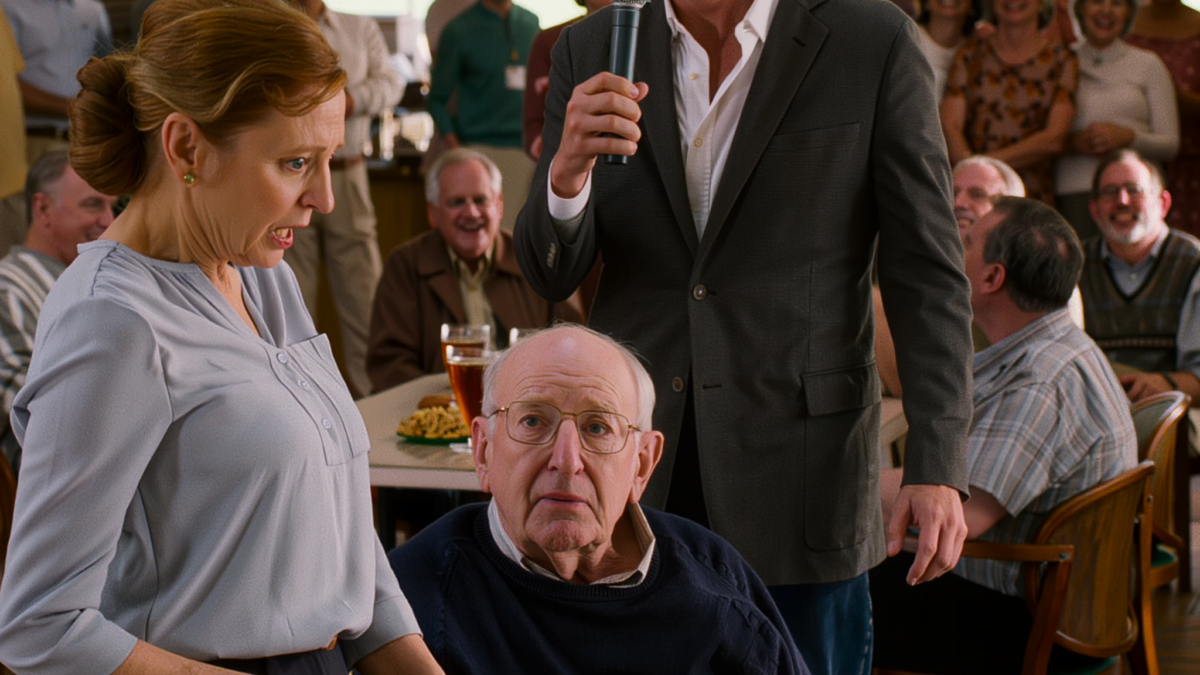
My brother called me “the family chauffeur” at our father’s 80th birthday party, and seventy people laughed.
I was standing beside the birthday cake, holding a knife with frosting still clinging to the blade, when Paul raised his glass of iced tea and pointed in my direction.
“And of course, we couldn’t have pulled this off without my big sister, Janet,” he announced into the microphone. “She’s Dad’s personal chauffeur, grocery delivery service, and appointment reminder all rolled into one.”
People chuckled.
“Seriously, Jan, you ought to start charging him by the mile.”
More laughter.
My brother grinned, pleased with himself.
I looked down at the cake I’d spent the morning arranging, then toward the rows of smiling faces.
Some of those people had known me since childhood. Others were neighbors, cousins, and old friends of my father.
They all seemed to think Paul was being charming.
But what hurt most came a few seconds later.
“Dad knows he can always count on me,” Paul continued. “Whether it’s making sure he’s comfortable or helping him figure out what comes next, I’m just a phone call away.”
Someone started clapping.
Then the rest of the room joined in.
My younger brother stood beneath the birthday decorations I’d spent an hour hanging, accepting applause for taking care of our father.
He had arrived twenty minutes before the guests.
I’d been there since seven that morning.
And for the past four years, I’d been the one rearranging my entire life whenever Dad needed something.
Yet somehow, standing in front of seventy relatives and friends, I was the chauffeur.
My name is Janet Price. I’m fifty-two years old, a widow, and the manager of a public library branch in a small Ohio town.
I’ve always considered myself an ordinary person with an ordinary life.
I have a house that needs more repairs than I can afford, a daughter I’m incredibly proud of, and a job I genuinely enjoy.
My husband died six years ago. In the months after his death, I learned how quiet a house can become when the person you’ve shared it with is suddenly gone.
I filled that quiet with work.
Extra hours at the library. Helping neighbors. Keeping busy.
So when my father needed me, being useful came naturally.
Four years before his eightieth birthday, Dad underwent hip surgery after months of worsening pain and difficulty walking.
He’d always been independent. He was the kind of man who fixed his own gutters, changed his own oil, and considered calling a repairman an admission of defeat.
Recovery wasn’t easy for him.
He needed rides to physical therapy and follow-up appointments. Some household chores became difficult, especially while he was rebuilding his strength.
Dad could still make his own decisions. His memory was sharp, and he understood his finances perfectly well.
But he needed practical help.
At first, my brother and I agreed to share the responsibility.
Paul was forty-seven, a successful real estate agent living about two hours away.
He drove down the weekend after Dad came home, filled the refrigerator, organized some paperwork, and helped make the house more comfortable.
I appreciated it.
Then Monday came.
Paul returned to his appointments, clients, and busy schedule.
Dad still needed help.
I lived fifteen minutes away.
So I took him to physical therapy.
I picked up his prescriptions.
I brought groceries after work.
When he needed help sorting bills, I sat at his kitchen table until we understood them.
And when the temporary difficulties of recovery gradually became the smaller, ongoing challenges of growing older, I continued helping.
Nobody officially assigned me those responsibilities.
They simply became mine.
If Dad had a doctor’s appointment, I adjusted my work schedule.
If the kitchen faucet leaked, I found someone to fix it or helped Dad figure out what needed replacing.
If he needed groceries, I stopped at the store on my way home.
Paul called most Sundays.
I visited four or five times a week.
Sometimes I missed dinner with my daughter because Dad needed something.
Sometimes I canceled plans with friends.
Sometimes I arrived home too exhausted to cook, ate whatever was available, and went straight to bed.
I didn’t complain much.
Partly because I loved my father.
Partly because after losing my husband, I had become accustomed to keeping myself busy.
And partly because I didn’t know how to explain that something I willingly chose to do could still become too much.
My daughter, Emily, understood before I did.
She was twenty-six, worked at an elementary school, and had inherited her father’s talent for asking questions nobody wanted to answer.
One Thursday evening, she stopped by my house and found me standing over the kitchen sink, eating crackers.
“Mom, have you had dinner?”
“I was going to make something.”
“When?”
I glanced at the clock.
Almost nine.
“Dad needed a few things.”
Emily opened the refrigerator and looked inside.
“Grandpa needed groceries?”
“And he wanted to replace his kitchen faucet.”
She turned around.
“Tonight?”
“He wanted to go to the hardware store.”
“Could that have waited until Saturday?”
I hesitated.
“Probably.”
“Then why didn’t it?”
I didn’t have an answer.
Emily leaned against the counter.
“Mom, you know you can tell Grandpa you’re busy, right?”
“He’s eighty, practically.”
“He’s seventy-nine. And he’s perfectly capable of hearing the word no.”
I told her she would understand when she was older.
She gave me a look that reminded me painfully of her father.
“I’m pretty sure I understand now.”
I changed the subject.
That’s what I usually did when she got too close to something I didn’t want to examine.
A few months later, Paul called with an idea.
“Dad’s turning eighty. We should throw him a real party.”
“Dad said he wanted something small.”
“That’s because he doesn’t want anyone making a fuss. He’ll love having everybody together.”
Paul offered to reserve the community center and cover the deposit.
I agreed to handle the arrangements.
At the time, it sounded reasonable.
He would pay for the venue.
I would organize the celebration.
But organizing a celebration for seventy people turned out to involve more than either of us acknowledged.
I made the guest list, ordered invitations, confirmed the catering, arranged the cake, and checked whether the community center had enough tables.
I remembered which relatives needed accessible parking and made sure Dad would have a sturdy chair with arms.
Emily helped me make decorations.
Paul sent encouraging messages to our family group chat.
“Looking great!”
“Dad’s going to love this!”
“Thanks for handling the details, Jan!”
I told myself he meant well.
And I believed that.
My brother wasn’t a monster.
He loved Dad. He called him regularly, remembered his birthday, and always had a funny story ready when he visited.
But he was very good at being involved in ways that didn’t inconvenience him.
I was very good at making sure nobody noticed.
On the morning of the party, I arrived at the community center at seven.
I arranged flowers, checked the food delivery instructions, covered tables, and hung a large birthday banner.
At ten-thirty, I picked Dad up.
He was waiting by the front door wearing a navy sweater over a button-down shirt, his cane resting against the wall.
“You look handsome,” I told him.
“I’m eighty, not dead.”
I laughed as he settled into the passenger seat.
On the drive, he asked whether I’d slept.
“Of course.”
“How much?”
“Enough.”
He gave me a sideways look.
“You’ve been doing too much for this party.”
“It’s your birthday, Dad.”
“That’s not an answer.”
“I’m fine.”
He looked out the window.
“You always say that.”
I turned up the radio.
I didn’t notice him watching me for another moment.
By early afternoon, the room was filled with people.
Dad’s old coworkers arrived with stories I’d heard a hundred times. Neighbors brought birthday cards, and distant cousins came carrying photographs.
Mrs. Collins, Dad’s sixty-eight-year-old neighbor, brought a picture from a block party nearly thirty years earlier.
She’d lived next door to him for seventeen years and knew more about his daily routine than almost anyone outside our family.
Dad laughed at the picture of his old haircut.
For a while, the whole thing felt worth the exhaustion.
Then Paul arrived in his expensive blazer, greeting everyone like he was hosting an important business event.
He hugged Dad, shook hands with the guests, and made his way around the room.
After lunch, he picked up the microphone.
His speech began beautifully.
He spoke about our mother, who’d died twelve years earlier, and how much she’d loved celebrating birthdays.
He remembered Dad coaching us as children and teaching us how to change a tire.
He told everyone how grateful he was that our father was still healthy enough to enjoy the afternoon.
I felt myself relax.
Then he turned toward me.
“And of course, there’s our Janet.”
His expression changed into the familiar grin he wore whenever he was about to make a joke at somebody else’s expense.
He called me the family chauffeur.
The grocery delivery service.
The appointment reminder.
People laughed.
I tried to smile politely, but I could feel my face growing warm.
I might have managed to ignore the joke if he’d stopped there.
But then he talked about how Dad could always count on him.
He accepted the applause.
I looked toward our father.
Dad wasn’t clapping.
His hands rested on the arms of his chair, and he was watching Paul carefully.
I set down the cake knife and moved toward the kitchen.
I needed a minute away from the crowd.
Paul spotted me before I reached the door.
“Jan, where are you going? We need our chauffeur for the cake!”
More laughter.
I stopped walking.
Something about hearing the joke a second time made it impossible to pretend I didn’t mind.
“Paul, could you please stop calling me that?”
My voice wasn’t loud.
But he heard me.
His smile faltered.
“Oh, come on. I’m teasing.”
“I know. I’m asking you to stop.”
He glanced at the guests.
“See? Big sisters. Always keeping little brothers in line.”
A few people gave uncertain laughs.
“I’m serious, Paul.”
His expression tightened.
“Janet, don’t make a thing out of this.”
I looked at him.
For four years, I’d helped Dad through appointments, household problems, and the thousand little things that didn’t fit neatly into a Sunday phone call.
I was tired.
And I wasn’t going to apologize for asking my brother to stop making me the joke.
“I wasn’t going to,” I said. “I just wanted you to stop.”
Paul stared at me as if I’d embarrassed him.
Then Emily stepped forward.
“Uncle Paul, you keep saying you’re the one making sure Grandpa has everything he needs.”
Paul turned toward her.
“Emily, honey, this is between your mother and me.”
“But it’s not true the way you’re telling it.”
People near the cake table turned around.
Emily stood with her hands clasped together. I could tell she was nervous.
But she continued.
“My mom takes Grandpa to his appointments. She helps with his groceries and his house. She’s there when something needs fixing, and she’s the person everyone calls when there’s a problem.”
I wanted to tell her to stop.
Not because she was wrong.
Because I knew how uncomfortable the afternoon was becoming, and I’d spent most of my adult life trying to prevent uncomfortable family conversations.
Then Emily said something I’d never managed to put into words.
“You don’t get to make fun of her for doing those things and then accept applause for them.”
Paul’s face reddened.
“That’s not fair. I do plenty for Dad.”
“Then talk about what you do,” Emily said. “Not what Mom does.”
A woman near the front nodded.
Paul looked toward me, apparently expecting me to intervene.
I didn’t.
Before he could respond, Mrs. Collins stood up.
“I don’t usually involve myself in other people’s family conversations,” she began.
She glanced at Dad, then at me.
“But I’ve lived next door to Leonard for seventeen years. I know who comes by when the porch steps are icy. I know whose car is outside when he needs help getting ready for an appointment.”
She turned toward Paul.
“And I know Janet has checked on him more times than anybody could count.”
Her voice was firm, but not unkind.
“Your sister’s been very good to your father. There’s no shame in saying so.”
Nobody laughed.
A cousin came over and touched my shoulder.
Someone else quietly said, “I had no idea you were doing all that.”
I nodded because I wasn’t sure I could speak without crying.
I’d spent years believing my family simply didn’t see what I did.
Now two people had described my life more clearly than I ever had.
I thought that would be the end of it.
Then Dad stood up.
He leaned on his cane, waited until he was steady, and extended his hand toward Paul.
“Son, let me have that microphone.”
Paul hesitated.
“Dad, we don’t need to keep—”
“Please.”
Paul handed it to him.
Dad looked at Emily, then Mrs. Collins, and finally at me.
“I think there’s something I need to tell my family. Something I decided a little while ago.”
He paused.
“And I haven’t told either of my children yet.”
I stared at him.
Dad was not a man who enjoyed speaking in front of crowds. He’d spent most of the party talking quietly with old friends.
But now he held the microphone firmly.
“I had a lot of help after my surgery,” he began. “I needed it. More than I wanted to admit.”
He glanced at his cane.
“Getting old is a strange business. One year you’re fixing your own gutters, and the next you’re wondering if you ought to carry the laundry basket down the stairs.”
A few guests nodded.
“I’ve been lucky. My daughter has been there for me. And I’ve allowed that to become something I expected instead of something I appreciated.”
“Dad,” I began.
He lifted a finger.
“Let me finish, sweetheart.”
I sat down in the nearest empty chair.
“About a month ago, I went to the senior center and talked to the people who run their transportation program.”
I blinked.
A month earlier, Dad had asked me where the senior center was.
I’d given him directions while putting away his groceries.
I assumed he wanted to attend one of their activities.
I hadn’t thought to ask.
“They showed me how their rides work,” Dad continued. “I filled out the paperwork. I’ve arranged transportation for some of my regular appointments, starting next month.”
Paul frowned.
“You went there by yourself?”
“Mrs. Collins gave me a ride to the first meeting.”
Mrs. Collins smiled.
Dad continued.
“I’ve also hired a little help around the house. Somebody to come in a few hours a week for cleaning and the things I have trouble doing safely.”
My first instinct was to ask him how much it cost.
My second was to ask why he hadn’t told me so I could help arrange everything.
Dad seemed to know exactly what I was thinking.
“I’ve looked at my budget. My pension and savings can cover what I’ve arranged. I may have to make a few adjustments, but I can afford it.”
He turned toward me.
“And I made those arrangements because I wanted to.”
Paul stepped closer.
“Dad, you should have talked to us first. We could have figured something out.”
Dad looked directly at him.
“We’ve had four years to figure something out, Paul.”
The words weren’t angry.
They didn’t need to be.
“Janet has been figuring it out every week. The rest of us have gotten comfortable letting her.”
Paul lowered his eyes.
Dad shifted his weight, leaning more heavily on his cane.
“I don’t want my children to feel obligated to spend every spare hour taking care of me. I’m still capable of deciding how I live.”
Then he looked at me.
“Janet, I know you’ve missed things because of me. You don’t complain, but I know.”
My throat tightened.
“I never wanted you to feel like a burden,” I said.
“I know you didn’t. But I’m the one who should have noticed when helping me became too much.”
He paused.
“I want you to come visit because you want to see me. Not because there’s always another chore waiting.”
Emily reached for my hand.
I held it tightly.
Dad turned toward Paul.
“And as for you, son, I love hearing about your work. I’m proud of what you’ve built. But when your sister is taking me to appointments while you’re telling everyone how well you’ve got things handled, something isn’t right.”
Paul swallowed.
“Dad, I wasn’t trying to—”
“I don’t think you were,” Dad interrupted. “But you still did it.”
For once, my brother didn’t have an explanation ready.
After a moment, he nodded.
“You’re right.”
Dad let out a breath.
“Good. Now can somebody get me a piece of my birthday cake before the candles burn down the building?”
People laughed.
This time, I laughed too.
Not because everything was suddenly fixed.
Because my father had done something I never expected.
He had recognized a problem without waiting for me to solve it.
And instead of putting me in the middle of another family argument, he’d taken responsibility for his own decisions.
We finished the celebration.
The candles were blown out, the cake was served, and Dad returned to talking with his friends.
But Paul came over while I was collecting paper plates.
“Jan.”
I looked up.
“Yeah?”
He put his hands into his pockets.
“I didn’t realize how much you were doing.”
I kept stacking plates.
“You didn’t ask.”
He looked uncomfortable.
“I know.”
“You’d call Dad on Sunday, ask if he needed anything, and he’d tell you he was fine. Then you’d call me and say it sounded like everything was under control.”
“I thought if there was a serious problem, you’d tell me.”
“I did tell you when things came up.”
“I mean something you couldn’t handle.”
I stopped what I was doing.
“That’s the problem, Paul. I handled things, so you figured there wasn’t a problem.”
He rubbed his forehead.
“I guess I did.”
For a moment, neither of us spoke.
Then he said, “I’m sorry about what I said up there.”
I believed him.
Paul could be careless, but he wasn’t incapable of recognizing he’d hurt somebody.
Still, an apology wouldn’t change four years of habits overnight.
“Thank you,” I said.
He started to walk away.
“Paul?”
He turned.
“I’m not taking everything back over if Dad’s new arrangements don’t work perfectly the first week.”
He looked startled.
“I wasn’t asking you to.”
“I know. I’m telling you anyway.”
He considered that.
Then he nodded.
“Fair enough.”
After the guests left, Emily and I began cleaning up the community center.
Paul returned from loading his car.
“I can stay and help.”
I nearly told him we had everything covered.
It was automatic.
A sentence I’d said hundreds of times, even when I was exhausted.
Instead, I pointed to the folding chairs.
“Those need to go into the storage closet.”
“Got it.”
He picked up two chairs and carried them away.
Nobody applauded.
Nobody thanked him repeatedly for helping.
He simply did the work.
And for the first time in a long while, I didn’t feel responsible for making everyone comfortable while I finished everything myself.
That evening, I drove Dad home.
He sat beside me with a container of leftover cake balanced carefully on his lap.
The sky was turning pink over the rooftops.
For several miles, we rode quietly.
Then I asked the question that had been bothering me.
“Why didn’t you tell me about the senior center?”
Dad watched the houses passing by.
“Because I knew you’d offer to make all the calls and fill out the forms.”
“I would have helped.”
“I know. That’s what worried me.”
I smiled despite myself.
He turned toward me.
“You’ve been helping for a long time, honey. It was time I took care of something myself.”
A strange feeling settled in my chest.
For years, I’d been the person who knew all the details.
The appointment times. The prescription refills. The grocery list. The repair schedules.
Being needed had become part of my identity.
Now Dad was telling me he wanted to need me less.
I should have felt relieved.
Instead, part of me was frightened.
“What if the transportation doesn’t work?” I asked.
“We’ll find out.”
“And if the woman helping with the house isn’t reliable?”
“Then I’ll talk to the agency.”
“What if you need something else?”
He chuckled.
“Janet, I’m not moving to the moon. Sometimes I’ll still need you.”
At a red light, he reached over and patted my hand.
“I just don’t want you to think being my daughter is a full-time job.”
I looked straight ahead until the light changed.
When we reached his house, Dad insisted on carrying his cake inside.
I followed him into the kitchen.
On the refrigerator, beneath a small magnet, was a brochure from the senior center.
Beside it hung a handwritten calendar.
There were appointments on that calendar I hadn’t entered into my phone.
Dad had written them himself.
I looked at it for a moment.
Then I kissed his cheek and went home without asking whether he wanted me to organize anything.
The next few weeks were not perfect.
The first transportation pickup arrived late.
Dad called me because he wasn’t sure the driver had the right address.
My keys were already in my hand before I stopped myself.
“Did you call the transportation office?” I asked.
“No.”
“Try them first. They can tell you where the driver is.”
He grumbled, but agreed.
Twenty minutes later, my phone rang again.
“Wrong entrance,” he announced. “They’re coming around to the side door.”
“Good.”
“Look at that. Solved it myself.”
I laughed.
The woman helping around his house turned out to be dependable.
Dad complained that she kept moving his dish towels into the wrong drawer.
I asked what he’d done about it.
“I told her where I wanted them.”
“And?”
“She put them back.”
Another problem handled without my involvement.
Paul needed more time.
Two weeks after the party, he called one evening.
“Hey, do you know if Dad’s running low on groceries?”
I was sitting at my kitchen table reading a novel.
Normally, I would have opened my notes and checked Dad’s shopping list.
Instead, I said, “You’ll have to ask him.”
Paul paused.
“Right. Of course.”
A few minutes later, he sent a message.
Talked to Dad. He’s making a list. I’m going to order groceries for delivery next week.
I sent back a thumbs-up.
Then I put my phone down.
I didn’t ask whether Paul had checked the delivery window or whether somebody would be home.
Dad knew how to answer the door.
Paul knew how to place a grocery order.
They could figure it out.
Over the following weeks, Paul began visiting more often.
One Sunday, he brought lunch and spent the afternoon with Dad without asking me to coordinate the visit.
Another time, he missed a planned phone call because an open house ran late.
Dad called him the next morning.
Paul apologized and arranged another time to talk.
Nobody asked me to intervene.
These were small changes.
But small things had caused the problem in the first place.
It seemed reasonable that small things would be part of fixing it.
About a month after the party, Paul and I were washing dishes at Dad’s house while he watched baseball in the living room.
Paul was drying a plate when he asked, “Can I ask you something?”
“Sure.”
“Did you really think I didn’t care about Dad?”
I looked at him.
“No.”
He seemed relieved.
“I thought you cared,” I continued. “I just didn’t think you understood how much time caring for someone can take.”
Paul stared at the dish towel in his hands.
“I guess I only saw the big things.”
“What big things?”
“His surgery. Holidays. Birthdays. Stuff like that.”
I handed him another plate.
“Most of it isn’t big. It’s getting a phone call at four because the pharmacy closes at five. It’s realizing there’s no milk after you’ve already gone home. It’s changing your plans because somebody else has an appointment.”
He nodded slowly.
“I never thought about all those little things adding up.”
“They do.”
He put the plate away.
“I should’ve asked you what you needed.”
I turned off the water.
“Maybe. But you can ask Dad what he needs now.”
Paul gave a short, embarrassed laugh.
“Yeah. I can.”
That conversation mattered more to me than another public apology would have.
We weren’t suddenly the closest brother and sister in the world.
He still got distracted by work.
I still sometimes felt irritated when somebody praised him for helping with something I’d done quietly for years.
But I stopped pretending those feelings meant I didn’t love him.
And Paul began paying attention to responsibilities he’d previously left to me.
The biggest change, however, was harder for me to get used to.
I had free time.
Real free time.
On Thursday evenings, I’d usually leave the library, drive to Dad’s house, and return home too tired to enjoy anything.
Now there were evenings when nobody needed me.
At first, I didn’t know what to do with them.
I cleaned cupboards.
I rearranged my pantry.
I made lists of repairs I couldn’t afford.
One evening, Emily came over and found me standing in the kitchen, reorganizing canned goods.
“Mom, what are you doing?”
“Cleaning.”
“Why?”
“Because I have time.”
She looked around.
“The kitchen’s already clean.”
“I know.”
She studied my face.
“Are you aware you’re allowed to enjoy having time?”
I laughed.
She pulled two movie tickets from her bag.
“Good. Because you’re coming with me Friday.”
“What movie?”
“Does it matter?”
I thought about it.
“No, I guess it doesn’t.”
We went to the movies.
I bought popcorn, laughed at a silly comedy, and didn’t check my phone every fifteen minutes.
When I got home after ten, nothing had gone wrong.
Dad was fine.
Paul was fine.
The world had continued without my constant supervision.
That shouldn’t have surprised me.
But it did.
Dad started attending a weekly coffee gathering at the senior center.
He reconnected with a man he’d worked with decades earlier.
He complained about the coffee, praised the conversations, and became surprisingly enthusiastic about the card games.
Sometimes he still needed my help.
The difference was that he asked.
And he accepted my answer.
One afternoon, he called while I was preparing for an author event at the library.
“Can you bring me some lightbulbs?”
I looked at the clock.
“Not today, Dad. I’m working late.”
“All right.”
“I can stop by Sunday.”
“Don’t worry about it. Paul ordered a few things for me. I’ll ask him to add them.”
I waited.
For disappointment.
For a sigh.
For some indication that I’d failed him.
None came.
“Have a good event,” Dad said.
“Thanks.”
“Tell me about it next time you visit.”
We hung up.
I sat at my desk for a moment, looking at my phone.
For years, I’d treated every request as something that needed to be solved immediately.
Now Dad had asked for something, accepted that I wasn’t available, and found another solution.
There was nothing else I needed to do.
Three months after the birthday party, Dad invited the family over for Sunday dinner.
Not because the sink was leaking.
Not because he needed help organizing paperwork.
He just wanted to see us.
Paul brought a casserole from a restaurant near his office.
Emily brought a salad.
I brought a pie.
When I arrived, Dad had already set the table.
I walked into the kitchen and opened a cabinet.
“Janet,” he called.
“What?”
“Sit down.”
“I was just checking if you needed plates.”
“They’re already on the table.”
“Oh.”
He pointed toward the living room.
“Go talk to your brother. I can get dinner ready.”
I almost argued.
Then I closed the cabinet.
Paul was sitting on the couch, showing Emily photographs of a house he’d recently sold.
He moved over when he saw me.
“Hey, Jan. Sit down.”
So I did.
During dinner, we talked about baseball, the weather, Emily’s students, and Dad’s latest argument with the dishwasher.
Paul told an old story about getting stuck in a tree when he was nine.
Dad insisted Paul had climbed too high because he’d wanted to impress the neighborhood kids.
Paul claimed he was simply an adventurous child.
Emily laughed so hard she nearly spilled her drink.
Nobody mentioned the birthday party.
There was no need.
After dinner, Emily took a photograph.
Dad sat at the head of the table, smiling.
Paul was reaching for the salad.
I was beside Emily, laughing at something she had said.
The photograph was ordinary.
There were no birthday decorations.
No microphone.
No seventy-person audience.
And for once, I wasn’t standing in the background carrying something, arranging something, or making sure everyone else was comfortable.
I was simply sitting with my family.
The next morning, Emily sent me the picture.
I printed it and placed it on my refrigerator.
For a long time, I’d believed that loving my family meant being available whenever they needed me.
I’d confused being dependable with never having limits.
And because everyone else had grown accustomed to that arrangement, I’d begun to think it was the natural order of things.
It wasn’t.
My father hadn’t stopped needing me.
My brother hadn’t become a different person overnight.
And I hadn’t stopped caring about either of them.
But something important had changed.
They were learning to make room for my life.
And I was learning to let them.
A few weeks later, I stopped by Dad’s house on a Sunday afternoon.
He was sitting on the porch with a book and a glass of lemonade.
“Want some?” he asked.
“Sure.”
He got up carefully and went inside.
I almost followed him to help.
Then I remembered that he knew where the glasses were.
I sat down.
A minute later, he returned carrying another glass of lemonade.
We talked about the weather.
He told me about the men at the senior center and the neighbor’s dog that kept digging beneath the fence.
I told him about an author who’d visited the library and how excited the children had been.
For nearly an hour, neither of us asked the other to do anything.
Eventually, Dad glanced at the clock.
“Want to stay for dinner?”
“Not tonight. Emily and I are meeting some friends.”
“Sounds nice.”
“It will be.”
He nodded toward my car.
“You’d better get going, then.”
I stood and kissed his cheek.
“Love you, Dad.”
“Love you too, sweetheart.”
I walked down the porch steps.
Behind me, Dad called my name.
“Janet?”
I turned.
He was still sitting in his chair, his book resting on his lap.
“Thanks for coming by.”
I looked at him.
“For what?”
He smiled.
“For visiting.”
I smiled back.
And for the first time in a long while, that was all I’d come to do.








