At Grandma’s 85th Birthday, Mom Accused Me of Stealing Her House
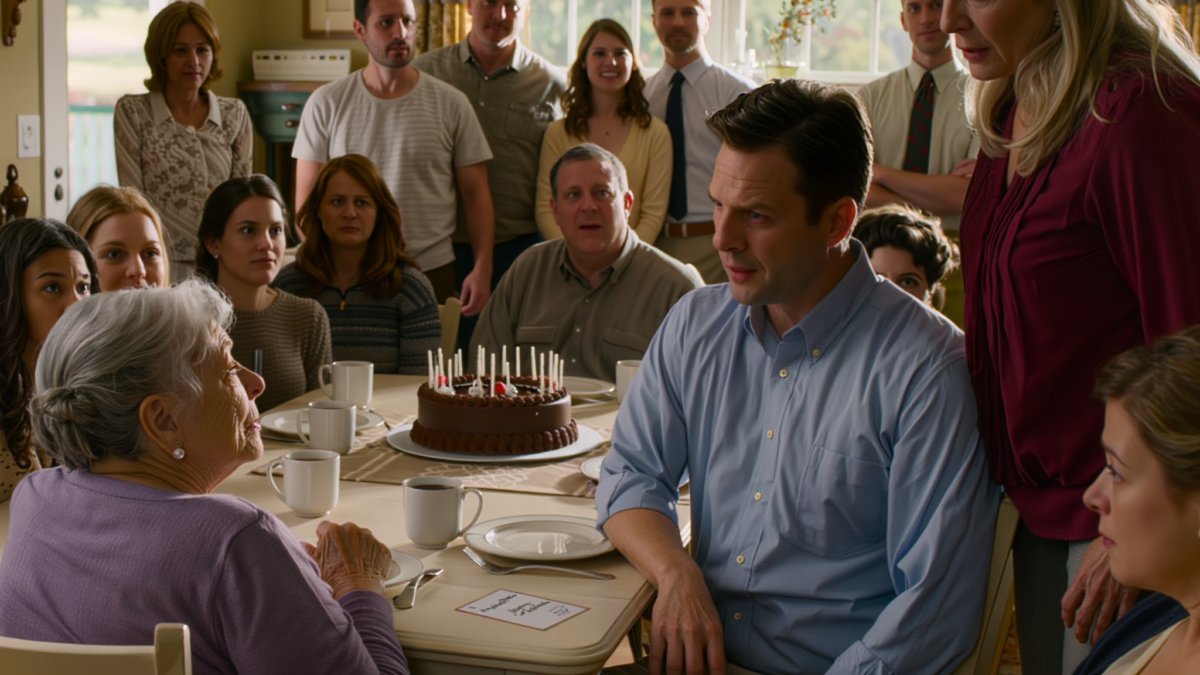
My mother waited until everyone had a piece of birthday cake before standing up and announcing that I’d stolen my grandmother’s house.
“Before we celebrate anything else,” she said, tapping her fork against a glass, “I think Rachel owes this family an explanation.”
Seventeen relatives were gathered in my mother’s dining room. My grandmother, June Whitmore, sat at the head of the table wearing a lavender sweater and the pearl earrings she’d owned for more than forty years.
It was her eighty-fifth birthday.
There were balloons tied to her chair, a homemade chocolate cake in front of her, and a card signed by everyone in the room.
It should have been a happy afternoon.
Instead, my mother had apparently decided to put me on trial.
“Rachel sold Mom’s house,” she announced. “Without telling the family. And nobody seems to know where the money went.”
Every conversation stopped.
My younger brother, Todd, set down his coffee cup.
“Is that true?” he asked me.
I looked at my mother.
“Linda, what are you doing?”
“Don’t call me Linda. I’m your mother.”
“Then why are you accusing me of stealing from Grandma?”
Mom straightened her burgundy blouse.
“Because someone needs to ask the questions everybody else is afraid to ask.”
Todd leaned forward.
“Rachel, it’s a simple question. Where’s the money?”
I could feel seventeen pairs of eyes moving between us.
But the only person I wanted to look at was Grandma.
She was sitting very still, her fork resting beside her untouched cake.
I had spent months helping her make one of the hardest decisions of her life.
Now my mother was turning that decision into evidence against me.
And as I looked around the table, I began to understand that this argument wasn’t really about whether Grandma had been allowed to sell her house.
Someone had been counting on that house for something.
I just didn’t know what yet.
My name is Rachel Hayes. I’m forty-seven years old, and I’ve helped run a public library in Dayton, Ohio, for nearly twenty years.
I’m not wealthy. I drive an aging Subaru, own a modest two-bedroom house, and know exactly how much is left in my checking account before payday.
I’ve built a life I’m comfortable with.
My mother has never considered that much of an accomplishment.
My younger brother, Todd, is forty-three. He owns a roofing company, drives a truck that costs more than my annual salary, and has spent most of his adult life being described by Mom as someone who’s “going places.”
Sometimes those places have included meetings with creditors.
But according to Mom, Todd is ambitious.
I’m dependable.
For years, I thought that was a compliment.
When Todd needed someone to watch his children, I rearranged my schedule.
When Mom needed groceries or help around the house, she called me.
When Grandma started having trouble getting around, I was the one who took her to appointments, picked up prescriptions, and checked that she had enough food in the refrigerator.
Todd visited when he could.
Mom visited when it was convenient.
I came because Grandma needed me.
Nobody thought much about the difference.
Except Grandma.
She’d always noticed things the rest of the family ignored.
When I was thirty-nine and going through a painful divorce, she arrived at my door with a pot of chicken soup and a loaf of homemade bread.
She didn’t tell me everything would work out.
She didn’t ask what I’d done wrong.
She put the soup on the stove, washed the dishes I’d been avoiding, and sat beside me until I was ready to talk.
That was how Grandma loved people.
She showed up.
And when she began needing help herself, I wanted to do the same.
Grandma had lived in the same two-story brick house for fifty-two years.
It had green shutters, a deep front porch, and a maple tree that had grown so large its roots were beginning to lift part of the sidewalk.
My grandfather had spent countless weekends repairing things around that house.
After he died, Grandma kept everything almost exactly as he’d left it.
The oak dresser remained in the upstairs bedroom.
His favorite chair stayed beside the living room window.
Even the old toolbox was still in the basement.
But the house was becoming difficult for her to manage.
The laundry machines were downstairs. The only full bathroom was upstairs. The bathtub had a high side that made getting in and out increasingly risky.
Grandma hated admitting that anything had become difficult.
She’d survived raising children, losing her husband, and decades of ordinary troubles without asking anyone to take care of her.
But one afternoon in February, I found her sitting halfway down the staircase.
One hand was wrapped tightly around the banister.
Her face was pale.
“Grandma?”
She looked up.
“I’m all right, sweetheart.”
“Did you fall?”
“No.”
“Then what’s wrong?”
She looked down at the remaining steps.
“My knee started shaking. I thought it was going to give out.”
I sat beside her.
We stayed there for nearly ten minutes before she felt steady enough to finish coming downstairs.
That evening, over grilled cheese sandwiches, Grandma stared at the kitchen window and said something I’d never heard her say before.
“I’m tired of being brave in my own house.”
I put down my sandwich.
“What do you mean?”
She gestured toward the staircase.
“I love this place. But lately, every time I go upstairs, I wonder whether I’ll make it back down.”
“Have you thought about living somewhere with everything on one floor?”
She gave me a tired smile.
“More than I’ve admitted.”
That was how the conversation started.
Not with money.
Not with an inheritance.
And certainly not with me trying to get anything from her.
It started with an eighty-four-year-old woman who was frightened of falling in the house she’d spent her entire adult life taking care of.
Over the next several weeks, we looked at alternatives.
Grandma wanted something small, quiet, and close to her doctor.
We toured three apartments.
She disliked the first because it barely got any sunlight.
She rejected the second because the bedroom overlooked a busy parking lot.
The third had a sunny kitchen, a walk-in shower, and a little patio beside a raised garden bed.
Grandma stood in the kitchen looking out the window.
“I could put my rosemary right there,” she said.
I smiled.
“You could.”
“And maybe some tomatoes.”
“You could grow whatever you wanted.”
She turned toward me.
“Do you think I’m too old to start over?”
I shook my head.
“I think you’re old enough to decide what makes you happy.”
She didn’t answer immediately.
She just looked out at the garden again.
A few days later, she asked me to help her find a real estate agent.
I made the appointment.
Grandma asked the questions.
She decided on the asking price, reviewed the offers, and chose the buyer.
She had her own finances, her own accounts, and her own judgment.
I wasn’t her financial representative.
I didn’t have power of attorney.
I couldn’t sign anything for her, and I didn’t want to.
My job was to drive her where she needed to go and make sure she didn’t feel rushed.
She handled the rest.
When she eventually accepted an offer, she told me she’d like to tell the family after the closing.
“I don’t want everyone arguing about it while I’m still deciding,” she said.
I understood.
Mom had a habit of turning every family decision into a committee meeting, with herself as chairperson.
Todd usually supported her.
Grandma wanted to make this decision without having to defend it at every step.
So I respected her wishes.
The sale closed two weeks before her birthday.
Grandma arranged to stay briefly with my aunt Susan while the new apartment was prepared.
I thought the difficult part was over.
Then Mom called me at work.
“Why didn’t anyone tell me Mother’s house was being sold?”
Her voice was sharp enough that I stepped away from the circulation desk.
“Grandma wanted to tell you herself.”
“She’s eighty-five, Rachel.”
“I know how old she is.”
“She’s not thinking clearly about these things anymore.”
That made me stop walking.
“She understands exactly what she’s doing.”
“How would anyone know? You’ve been taking her everywhere.”
“Because she’s been making these decisions herself, Mom.”
“You should have discussed this with me.”
“It’s her house.”
“I’m her daughter.”
“And she’s the owner.”
There was a long silence.
Then Mom said, “We’ll talk about this on Saturday.”
I knew that tone.
In our family, it usually meant Mom intended to have an argument in front of an audience.
Still, I went to the birthday party.
It was Grandma’s birthday, and I’d promised to bring her favorite lemon cookies from the bakery near the library.
I wasn’t about to let an argument with my mother keep me from seeing her.
I arrived early.
Aunt Susan and I arranged food, carried extra chairs into the dining room, and helped Grandma settle into her place at the table.
Todd arrived twenty minutes late.
Mom greeted him like he’d been away for six months.
“There’s my hardworking boy!”
He kissed her cheek, complained about a difficult customer, and sat down.
Nobody asked whether Susan and I needed help.
That was normal.
I told myself not to think about it.
By the time we finished lunch, Grandma seemed happy.
She’d opened her presents, laughed at the cards, and spent several minutes talking with Susan about the garden at her new apartment.
Then Mom stood up with her glass.
And everything changed.
“Rachel sold Mom’s house,” she announced. “Without telling the family. And nobody seems to know where the money went.”
I stared at her.
“That’s not true.”
“So you didn’t help sell the house?”
“I helped Grandma find a real estate agent.”
“And you went to the appointments?”
“Yes.”
“And you helped her choose another place to live?”
“Yes, because she asked me to.”
Mom looked around the table.
“Well, there you have it.”
I couldn’t believe what I was hearing.
“Telling Grandma about her options isn’t stealing from her.”
Todd pushed his chair back.
“Nobody’s saying you physically took anything.”
“Your mother just told everyone I stole Grandma’s house.”
“Then clear it up,” he said. “Where did the money go?”
“Ask Grandma.”
Mom laughed.
“Of course. Put it all on an eighty-five-year-old woman who probably doesn’t understand half the paperwork she’s signed.”
I felt my face getting hot.
“Don’t talk about her like that.”
“I’m trying to protect her.”
“From what?”
“From people taking advantage of her.”
Every head turned toward me.
I looked at the relatives around the table.
Some avoided my eyes.
Others looked genuinely uncertain.
Mom had been telling people for years that I was difficult, overly sensitive, and resentful of Todd’s success.
Now she was giving them something worse to believe.
Todd leaned forward again.
“I just want to know what happened to the family asset.”
I stared at him.
“What family asset?”
“Grandma’s house.”
“No. It was Grandma’s house. Not yours. Not mine. Not Mom’s.”
“Don’t play word games, Rachel.”
“I’m not.”
He crossed his arms.
“That house has been in this family longer than you’ve been alive.”
“And Grandma has been alive longer than any of us. She gets to decide what she does with it.”
Mom pointed at me.
“See? That’s the attitude. You think because you’ve been helping her, you can make every decision.”
I looked toward Grandma.
She was sitting quietly at the head of the table, watching all of us.
Nobody had asked whether she liked her apartment.
Nobody had asked how she felt about leaving the home she’d shared with Grandpa.
Nobody had even asked whether she was comfortable.
They wanted answers about the money.
And somehow, they expected all of those answers from me.
I started to speak again.
Then Grandma placed her fork beside her plate.
“I believe I’ve heard enough.”
Mom immediately softened her voice.
“Mother, we’re just trying to protect you.”
Grandma looked at her.
“Protect me from what, Linda?”
“From making a terrible mistake.”
Grandma sat back in her chair.
“I’ve made plenty of mistakes in eighty-five years. Selling my house wasn’t one of them.”
Mom opened her mouth.
Grandma raised one finger.
“Let me finish.”
I’d never seen my mother become quiet so quickly.
“I sold my house because I wanted to,” Grandma continued. “I chose the real estate agent. I reviewed the offer. I signed the documents.”
She looked around the table.
“The money is in an account in my name. Rachel doesn’t have access to it. She hasn’t received one dollar from that sale.”
Todd glanced toward Mom.
Grandma noticed.
“And she didn’t take anything from you, either, Todd.”
Nobody spoke.
Grandma folded her hands on the table.
“I’ve spent more than fifty years looking after that house. I’ve paid the taxes, repaired the appliances, worried about the roof, and hired people to shovel snow when I couldn’t do it myself.”
Her voice remained steady.
“But I don’t want to spend the rest of my life worrying about whether I’ll fall down the stairs.”
I looked down at my hands.
I’d wanted someone to understand that for months.
Now Grandma was saying it herself.
“I found an apartment I like,” she continued. “It has a walk-in shower and a little garden. I can get to my doctor without depending on someone to drive across town.”
She looked toward me.
“Rachel helped me find it because I asked her to. That’s all.”
My eyes filled with tears.
For years, I’d been the dependable daughter who was expected to help without asking for anything in return.
And now, in front of the same family that had just accused me of stealing, Grandma was defending me.
Not because I needed her to fight my battles.
Because she knew the truth.
Mom looked embarrassed.
“We understand that, Mother. But there were other options.”
Todd leaned forward.
“Exactly. That’s all we’re saying.”
Something changed in Grandma’s expression.
She studied Mom for a moment.
Then she turned toward my brother.
“And some of those options apparently involved your bank.”
Todd stopped moving.
His shoulders tightened.
His eyes flicked toward our mother.
I noticed it immediately.
So did Grandma.
She folded her napkin, placed it beside her plate, and looked straight at him.
“Todd, why did the bank call me about my house?”
For several seconds, nobody spoke.
Todd picked up his coffee cup, then set it down without taking a drink.
“What bank?” he asked.
Grandma didn’t look away.
“The bank where you were trying to arrange a seventy-five-thousand-dollar loan.”
I turned toward my brother.
“What loan?”
“Rachel, stay out of it,” Mom said sharply.
Grandma looked at her.
“No, Linda. I think Rachel ought to hear this.”
Todd shifted in his chair.
“It wasn’t anything official.”
Grandma waited.
“I was looking at some financing options for the company.”
“Using my house?”
“I never said anything was going to happen.”
“Then why did the bank call me?”
Todd rubbed his forehead.
“Because they were checking what assets might be available.”
Grandma nodded.
“That’s what the woman told me.”
Aunt Susan looked confused.
“What assets?”
Todd exhaled.
“Collateral. For a business loan.”
He glanced at me.
“We’ve had a rough year.”
I knew the company had been struggling.
Todd had mentioned customers who were late paying their bills, a supplier who had tightened credit terms, and a truck that needed expensive repairs.
But he’d always made those problems sound temporary.
A slow month.
A late payment.
A contract that hadn’t come through yet.
Mom always repeated the same explanation.
Todd was building something.
Businesses had difficult years.
People who didn’t own companies couldn’t understand the pressure.
What neither of them had mentioned was that Todd was considering Grandma’s house as part of his financial plan.
Grandma looked directly at him.
“Did you tell the bank I agreed to use my property?”
“No.”
“Then what did you tell them?”
“That I might have access to property that could support the loan if we worked something out.”
“With whom?”
Todd hesitated.
“With you.”
“But you hadn’t asked me.”
“Not yet.”
The room became painfully quiet.
Grandma nodded once.
“That’s the problem, Todd.”
I leaned forward.
“Wait. You gave the bank information about Grandma’s house before asking whether she’d help you?”
Todd frowned.
“I was only exploring options.”
“Did you give them her contact information?”
“Yes, because they said they’d need to speak with the owner before anything could move forward.”
Grandma turned toward me.
“The loan officer called about six weeks before the house was sold. She explained that Todd had mentioned my property as possible security for financing.”
I looked at her.
“You never told me.”
“I know, sweetheart.”
She continued.
“The woman asked whether I would be willing to discuss using the house as collateral. I told her no.”
Todd shifted in his chair.
“That’s all it was, Grandma. A conversation. Nothing was signed.”
“I know.”
“No loan was approved. There wasn’t any lien against the house.”
“I know that, too.”
She paused.
“But it frightened me that someone was already talking to a bank about using my home before I’d even been asked.”
Mom stood beside the table, her lips pressed together.
“Mother, nobody was going to force you to do anything.”
Grandma turned toward her.
“Did you know Todd was considering my house for that loan?”
Mom hesitated.
“I knew he was trying to keep his business going.”
“That wasn’t my question.”
“Yes,” Mom said finally. “I knew he thought you might be willing to help.”
“And did you encourage him?”
“I told him family should support family.”
Grandma took a breath.
“Linda, I have supported this family for most of my life.”
Mom looked offended.
“Nobody’s denying that.”
“But I am eighty-five years old. I am not putting my home at risk to secure a business loan.”
Todd looked down.
Grandma continued.
“I didn’t work all these years, pay off a mortgage, and keep that house standing so someone else could decide what to do with it.”
Mom’s voice rose.
“Your grandson employs six people! Six families depend on that business!”
“And I hope his business succeeds,” Grandma said. “But those six families aren’t made safer by putting my home at risk.”
Nobody answered.
Then Grandma said something I would remember for a long time.
“I love my grandson. That doesn’t mean I can afford to be responsible for his debts.”
I looked at my mother.
“So that’s why you’re upset about the house being sold.”
“Don’t start, Rachel.”
“You knew Todd wanted to use it for a loan.”
“I knew he was looking for help.”
“And when Grandma sold it, that option disappeared.”
Mom said nothing.
I looked at Todd.
“Is that what this is about?”
He leaned back.
“I needed seventy-five thousand dollars to refinance some business debt and keep things operating. I thought Grandma might be willing to help.”
“Then why didn’t you ask her?”
“I was going to.”
“When?”
“When I had a better idea of what the bank needed.”
Grandma shook her head.
“Todd, you had it backward. You should have asked what I was willing to do before making plans involving my house.”
He looked away.
I felt the pieces settling into place.
Mom hadn’t accused me because she’d discovered some mysterious missing money.
She knew the house had been sold.
She knew Grandma had made the decision.
And she knew Todd had been hoping the property could help solve his financial problems.
By accusing me in front of the family, Mom had created pressure around the money from the sale.
If everyone believed I’d somehow taken control of it, perhaps they could push Grandma into proving otherwise.
Perhaps she’d offer Todd some of the proceeds just to end the argument.
I looked at Mom.
“You wanted Grandma to feel guilty.”
“Excuse me?”
“You wanted everyone questioning what happened to the money, so she’d feel pressured to use it to help Todd.”
“That is not what I was doing.”
“Then why accuse me of stealing?”
Mom looked around the table.
Nobody came to her rescue.
Finally, she said, “I just think we should help each other when someone is in trouble.”
Grandma answered before I could.
“Then you should have asked me for help instead of accusing Rachel of a crime.”
Mom’s face turned red.
“You make it sound so terrible.”
“It was terrible,” Grandma said.
Her voice wasn’t loud.
That made it worse.
“You took a decision I made for my own safety and used it to humiliate someone who’s been good to me.”
Aunt Susan, who had remained quiet for most of the argument, finally spoke.
“Linda, I don’t understand something.”
Mom looked at her sister.
“What?”
“You knew Mom was thinking about moving. She talked about it months ago.”
“She talked about lots of things.”
“Yes, and we should have listened.”
Susan looked toward Grandma.
“Mom stayed with me after the closing. She showed me the apartment. She was excited about it.”
“Nobody said she wasn’t,” Mom replied.
“Then why did you spend her birthday telling everybody Rachel had taken advantage of her?”
Mom looked away.
Susan continued.
“I heard what you said about the sale. I thought maybe there was something I didn’t know.”
She glanced at me.
“I’m sorry, Rachel.”
My throat tightened.
“You don’t have to apologize for asking questions.”
“No,” Susan said. “But I should have spoken up before things got this far.”
For years, Susan had avoided disagreeing with my mother.
She’d change the subject when Mom criticized me. She’d leave the room when Todd and I argued. She was kind, but she hated confrontation.
Hearing her speak so plainly was almost as surprising as Grandma’s question about the bank.
Todd stood up.
His chair scraped against the floor.
“Fine. I should have asked Grandma before bringing up her house. I get it.”
Grandma looked up at him.
“Thank you.”
“But I wasn’t trying to hurt anyone.”
“I believe you.”
He looked relieved.
Then she added, “That doesn’t mean it was a good decision.”
Todd nodded reluctantly.
“I know.”
He turned toward me.
“I still think you could’ve handled the whole house situation better.”
For a moment, I almost laughed.
Not because it was funny.
Because after everything he’d just admitted, he still wanted to make me responsible for some part of it.
“Handled what better?”
“Communication.”
I stared at him.
“Grandma wasn’t selling my house. She wasn’t selling yours. She didn’t need us to approve it.”
“You knew Mom would be upset.”
“Yes.”
“And you didn’t think that mattered?”
I looked at Grandma sitting beside the birthday cake, her lavender sweater bright against the dark wooden chair.
“I thought Grandma being safe mattered more.”
Todd had nothing to say to that.
Mom pushed her chair back.
“This family used to understand what it meant to make sacrifices.”
Grandma turned toward her.
“Who are you asking to make the sacrifice, Linda?”
Mom frowned.
“What?”
“Because Todd is asking me to put my home at risk. You’re asking Rachel to take the blame for something she didn’t do.”
“That’s ridiculous.”
“Is it?”
Mom looked toward the other relatives.
Several people lowered their eyes.
Grandma leaned forward.
“I’ve helped this family when I could. I’ve given money, time, meals, rides, a place to stay. I don’t regret helping people I love.”
She looked at Todd.
“But help has to be something I choose to give.”
Todd nodded slowly.
Then Grandma looked at Mom.
“And Rachel doesn’t owe anyone an apology for helping me move somewhere I can live comfortably.”
Mom crossed her arms.
“I can’t believe you’re all acting like Todd has done something criminal.”
“Nobody said that,” Susan replied.
“You’re making him sound like a terrible person.”
“No,” Grandma said. “We’re telling him he was wrong about this one thing.”
Mom started to respond, but Grandma shook her head.
“Linda, I don’t want to spend my birthday arguing about my money.”
Her voice softened.
“I’d rather hear about how everyone’s doing. I’d rather open my presents and eat my cake.”
She looked around the table.
“Has anyone thought to ask whether I like my new apartment?”
Nobody answered immediately.
Susan reached for her hand.
“I’d love to hear about it, Mom.”
Grandma smiled.
“There’s a raised garden bed outside the kitchen. I won’t have to kneel down to plant things anymore.”
Her face brightened.
“And the woman next door says she grows tomatoes. She’s promised to show me how she keeps the squirrels away.”
Something about that made my eyes fill with tears.
Not the argument.
Not the money.
The tomatoes.
Grandma had spent fifty-two years taking care of a house and everyone who passed through it.
Now she wanted a little garden where she could grow herbs without hurting her knees.
It was such an ordinary wish.
And we’d nearly spent her entire birthday fighting over the money from the house she’d finally been brave enough to leave.
Mom wasn’t finished.
“Rachel, I hope you’re satisfied.”
I looked at her.
“With what?”
“You’ve turned your grandmother against her own grandson.”
I took a slow breath.
“Mom, I didn’t know anything about Todd’s loan until ten minutes ago.”
“You could still show some compassion.”
“I do feel bad that his business is struggling.”
“Then you should understand why he needs help.”
“I understand that he needs help. I don’t understand why Grandma has to risk everything to give it to him.”
Mom shook her head.
“You’ve always been so cold about family.”
That one landed.
It always did.
I’d spent most of my life trying not to be the selfish daughter my mother seemed convinced I was.
I’d helped when I was tired.
I’d shown up when I had plans.
I’d swallowed insults because arguing made holidays uncomfortable.
And still, the moment I disagreed with her, I was selfish.
I looked at her across the table.
“Mom, I came here to celebrate Grandma’s birthday. You stood up and told everyone I’d stolen her money.”
“That’s not exactly what I said.”
“It is what you said.”
She looked away.
I continued.
“I’ve spent years trying to make things easier for this family. And somehow, whenever something goes wrong, I’m still the person you’re angry with.”
“You’re being dramatic.”
“Maybe. But I’m not taking responsibility for Todd’s loan, and I’m not apologizing because Grandma made a decision you didn’t like.”
Mom’s expression hardened.
“I raised you to respect your family.”
“I do respect my family.”
“Then you have a funny way of showing it.”
I looked at her for a moment.
“Respect doesn’t mean agreeing with everything you say.”
She stared at me.
Before she could answer, Grandma reached over and took my hand.
“Rachel.”
I turned toward her.
“You’ve done enough today.”
Those five words nearly broke me.
Nobody in my family had ever said them to me quite that way.
There was always another errand.
Another favor.
Another problem someone needed me to solve.
Grandma squeezed my hand.
“You came here to celebrate my birthday.”
I nodded.
“Then that’s what we’re going to do.”
She looked toward Susan.
“Would you pass me the cake?”
Susan smiled.
“Of course, Mom.”
Grandma picked up her fork.
“And somebody please light those candles again. I haven’t made my wish yet.”
The party didn’t suddenly become cheerful.
People spoke more quietly. A few relatives left earlier than they’d planned.
Todd spent a long time in the driveway on his phone.
Mom stayed in the kitchen, rearranging leftovers that didn’t need rearranging.
But Grandma ate her cake.
She opened her presents.
She laughed at a card from one of Susan’s grandchildren.
And when we lit the candles again, she closed her eyes and made a wish.
I didn’t ask what she’d wished for.
Afterward, while I was gathering plates, Susan came into the kitchen.
“Rachel?”
I turned around.
“I’m sorry.”
“For what?”
She hesitated.
“For letting Linda talk to you like that for so many years.”
I put down the plates.
Susan glanced toward the dining room.
“I knew she treated Todd differently. I knew you were always the one everyone called when they needed something.”
I didn’t know what to say.
“I should have said something sooner,” she continued.
That hurt more than I expected.
Because I’d spent years wondering whether anyone else noticed.
Whether I was imagining the difference.
Whether every family had one person who could never quite do enough.
Apparently, people had noticed.
They’d just gotten used to it.
“Thank you,” I said.
Susan nodded.
“I know it doesn’t fix much.”
“No,” I replied. “But I’m glad you said it.”
When I left that evening, Grandma hugged me at the door.
“I’m sorry your day was ruined,” she whispered.
I held her a little tighter.
“It wasn’t my birthday.”
She laughed softly.
“Well, mine turned out to be quite an event.”
I smiled.
“That it did.”
Then she pulled back and looked at me.
“Don’t worry about me, Rachel. I know what I’m doing.”
I believed her.
Mom called the next morning.
I was sitting at my kitchen table drinking coffee when her name appeared on my phone.
For a moment, I considered letting it go to voicemail.
Then I answered.
“Hello?”
“I hope you’re happy.”
No good morning.
No asking how I was.
Just straight to the point.
“About what?”
“Your brother barely slept last night.”
“I’m sorry to hear that.”
“He’s got enough problems without being humiliated in front of the family.”
I looked out the kitchen window.
A squirrel was trying to steal seed from the bird feeder.
“Mom, Todd wasn’t humiliated because of me.”
“You could have defended him.”
“Against what?”
“Against everyone acting like he’d done something terrible.”
“He admitted he should have asked Grandma before involving her house in his plans.”
“He was trying to save his business.”
“I understand that.”
“Then why can’t you show some compassion?”
I set down my coffee.
“Yesterday you told seventeen people I stole Grandma’s money.”
She went quiet.
“You accused me of taking advantage of her because she’s old. And you let Todd question me when you already knew why he was upset about the house.”
“That’s not how I remember it.”
“Well, that’s how it happened.”
A long silence followed.
Then she said, “Are you going to hold this over my head forever?”
I closed my eyes.
For most of my life, I’d treated that question as an instruction.
Stop being upset.
Stop bringing it up.
Make everybody comfortable again.
But this time, I didn’t feel like doing that.
“I don’t want to hold anything over your head,” I said. “I just want you to acknowledge what you did.”
“Families have disagreements.”
“Yes. And people can apologize.”
She sighed.
“I am not apologizing for worrying about my mother.”
“I’m not asking you to.”
“Then what do you want?”
I thought for a moment.
“I want you to stop treating me like the person who has to absorb everyone else’s anger.”
She didn’t answer.
“And I want you to understand that Grandma’s money belongs to Grandma.”
“She’s my mother.”
“I know.”
“You can’t keep me away from her.”
“I’m not trying to. You’re welcome to visit her.”
“Then what is this?”
“It’s me telling you what I won’t put up with anymore.”
Mom gave a bitter laugh.
“You’ve been reading too many self-help books.”
Maybe I had.
I worked in a library.
There were worse things.
“I’m going to hang up now,” I said.
“Rachel—”
“Goodbye, Mom.”
I ended the call.
My hands were shaking slightly.
But I didn’t call back.
Two weeks later, Grandma moved into her new apartment.
It was on the ground floor of a quiet building with wide hallways, a community room, and a walking path behind it.
The movers brought in her favorite blue armchair, her small dining table, and the oak dresser Grandpa had made when they were first married.
She’d sold or donated much of the furniture from the old house.
At first, I’d worried that giving away so many familiar things would make her sad.
But Grandma seemed relieved.
“I spent years dusting things I never used,” she told me. “I’m not starting that again.”
Susan came over with sandwiches.
I unpacked kitchen boxes while Grandma sat in her chair and directed traffic.
“The good plates go on the lower shelf.”
“Yes, ma’am.”
“And don’t put the coffee mugs too high.”
“Yes, ma’am.”
“And Rachel?”
I turned around.
“What?”
“You’re doing that thing again.”
“What thing?”
“Trying to finish everything before you let yourself sit down.”
I looked at the half-empty box.
Grandma pointed toward the table.
“The dishes aren’t going anywhere. Come eat.”
So I did.
We sat together in the little kitchen, eating turkey sandwiches while afternoon sunlight came through the window.
Outside, someone had planted marigolds beside the walkway.
Grandma pointed toward the empty raised garden bed.
“I think I’ll put basil next to the rosemary.”
“Sounds good.”
“And maybe tomatoes.”
“You’re going to have an entire farm out there.”
She laughed.
“At my age, a person should be allowed a little ambition.”
I laughed with her.
Then I noticed something.
Grandma wasn’t looking anxiously toward a staircase.
She wasn’t worrying about the basement laundry.
She wasn’t talking about repairs, contractors, or the cost of replacing the roof.
She was talking about tomatoes.
She looked happy.
And for the first time in years, her home seemed to fit the life she actually wanted to live.
Todd eventually found another way to handle the business.
He sold an extra truck, negotiated different payment terms with one supplier, and began taking smaller jobs to keep money coming in.
It wasn’t an easy solution.
He had to make changes he didn’t want to make.
But he did it without Grandma’s property.
The house was never pledged as collateral, no lien was placed against it, and the proposed loan involving her property never went forward.
About a month after the party, Todd called Grandma.
I wasn’t there.
She told me about it during one of our Sunday visits.
“He apologized again,” she said.
“Did he?”
“Yes. Properly this time.”
I raised an eyebrow.
Grandma smiled.
“Don’t look so surprised. People can learn things.”
“Sometimes.”
“He said he was afraid of losing his business.”
“I know.”
“And I told him I was afraid of losing my independence.”
I looked at her.
“What did he say?”
“He said he hadn’t thought about it that way.”
Grandma sipped her tea.
“That’s the trouble with getting old. Some people think that because you’ve lived a long time, your future doesn’t matter as much as theirs.”
I didn’t know what to say.
She set down her cup.
“I love Todd. I hope his business succeeds. But if he ever needs money from me again, he’ll have to ask.”
“And you can say no.”
“Exactly.”
Mom was slower to change.
For several weeks, she barely spoke to me.
When she did, she acted as though the birthday party had been an unfortunate misunderstanding everyone should simply forget.
She never gave me a real apology.
I stopped waiting for one.
When she called because she wanted me to drive across town to pick up something she could easily collect herself, I told her I had plans.
When she complained that I spent too much time with Grandma, I reminded her she was welcome to visit.
And when she tried to discuss Grandma’s bank accounts, I told her to speak directly with Grandma.
At first, she acted offended.
Then she called less often.
I still saw her at family gatherings.
We were civil.
But I no longer rearranged my life to prevent her from being disappointed in me.
That was new.
And sometimes uncomfortable.
But I was beginning to understand how much energy I’d spent trying to keep someone happy who was rarely satisfied.
A couple of months after the birthday party, I visited Grandma on a Sunday afternoon.
She’d called that morning to ask whether I wanted to come over for coffee.
Not because she needed groceries.
Not because something was broken.
Not because she wanted help with paperwork.
Just coffee.
When I arrived, she was sitting on her patio with two mugs and a plate of shortbread cookies.
Her rosemary was doing beautifully.
The basil looked a little sad.
Grandma insisted it was merely adjusting.
I sat beside her and watched a pair of birds investigate the garden.
After a while, she said, “I want to tell you something about that birthday party.”
I looked at her.
“You don’t have to.”
“I know.”
She wrapped both hands around her mug.
“When your mother started talking about the house, I was angry.”
“I noticed.”
Grandma smiled faintly.
“Not because she questioned the sale. She had every right to ask me why I was moving.”
She paused.
“I was angry because she used you.”
I looked down at my coffee.
“I know.”
“No, sweetheart. I don’t think you do.”
I looked up.
“You spent months helping me make a difficult decision. You never tried to make it for me. And when I finally did something for myself, they accused you of stealing from me.”
My throat tightened.
“I just wanted you to be comfortable.”
“I know.”
She reached over and patted my hand.
“That’s what made it so unfair.”
I hadn’t realized how badly I needed to hear those words.
Not that I was right.
Not that Mom was wrong.
Just that what had happened to me was unfair.
And that someone who loved me had noticed.
For a while, we sat without speaking.
Then I asked, “Do you miss the old house?”
Grandma looked toward the garden.
“Of course I do.”
She smiled.
“I miss your grandfather sitting on the porch. I miss the way the front door sounded when the wind blew in winter. And I miss that old kitchen, even though half the drawers never closed properly.”
I smiled.
“But I don’t miss the stairs,” she continued. “And I don’t miss worrying about a house that’s become too much for one person.”
“Are you happy here?”
She looked around.
At the little patio.
At the herbs growing beside her chair.
At the sunlight stretching across the concrete.
“Very.”
Then she turned back to me.
“Are you?”
The question caught me off guard.
I almost gave my usual answer.
Of course.
Everything’s fine.
Don’t worry about me.
But Grandma was looking at me like she actually wanted to know.
So I thought about it.
I thought about my quiet little house and the job I still enjoyed.
I thought about the friends who called because they wanted my company, not because they needed a favor.
I thought about my mother, who still struggled to understand that disagreeing with her wasn’t the same as disrespecting her.
And I thought about Grandma, who had decided at eighty-five that she wasn’t obligated to spend the rest of her life in a house that no longer suited her.
“I’m getting there,” I said.
Grandma nodded.
“Good.”
She reached for another cookie.
“That’s enough for now.”
I used to think being a good daughter meant making everyone else’s life easier.
If someone needed help, I should offer it.
If someone was upset, I should calm them down.
If Mom was angry, I should apologize before the argument got worse.
Somewhere along the way, I’d convinced myself that if I did enough, people would eventually appreciate me.
But the requests never stopped.
There was always another favor.
Another appointment.
Another problem that somehow became mine to solve.
Grandma helped me see that kindness didn’t have to work that way.
She’d spent fifty-two years taking care of a house she loved.
She’d raised a family there, made memories, and watched people come and go through its doors.
But she hadn’t promised that house the rest of her life.
And she certainly hadn’t promised it to Todd’s bank.
She was allowed to choose something different.
She could move.
She could keep her money.
She could say no to someone she loved.
None of those choices made her selfish.
They simply belonged to her.
Grandma still speaks to Todd. She’s glad his business is doing better.
She still loves Mom, although she’s made it clear that nobody gets to make financial decisions on her behalf.
And I still help Grandma when she needs me.
Sometimes that means taking her to the doctor.
Sometimes it means carrying a heavy bag of potting soil.
Most Sundays, it means sitting on her patio, eating cookies, and talking about whatever book I’m reading.
I don’t mind helping.
I never did.
What I mind is being told that helping means I no longer get to have a choice.
Last Sunday, I arrived to find Grandma standing beside her raised garden bed.
She was holding a pair of pruning shears and looking extremely pleased with herself.
“Rachel! Come see what I’ve grown.”
I walked over.
Three ripe tomatoes were hanging from a plant that had barely reached my hand when we’d first put it in the soil.
“Well, look at those.”
Grandma beamed.
“I told you they’d grow.”
“You did.”
She picked the largest tomato and handed it to me.
“Take this home.”
“Grandma, you grew it. You should keep it.”
“I’ve got two more.”
“Are you sure?”
She gave me the same look she’d given my mother across the birthday table.
“Rachel, I’m eighty-five years old. If I want to give my granddaughter a tomato, I believe I’m qualified to make that decision.”
We both laughed.
I took the tomato.
Later, driving home, I thought about the birthday party.
I remembered Mom standing beside the table, accusing me of taking something that wasn’t mine.
I remembered Todd’s expression when Grandma asked about the bank.
And I remembered Grandma sitting in her lavender sweater, calmly explaining to a room full of people that she still had the right to decide what happened to her own home.
For a long time, I’d thought the most important part of that afternoon was having my name cleared.
But it wasn’t.
What stayed with me was the sight of my grandmother standing up for herself.
She didn’t need someone to rescue her.
She needed the people who loved her to respect her decisions.
And she needed them to stop treating her remaining years as though they mattered less than everyone else’s plans.
At eighty-five, Grandma had finally given herself permission to choose the life she wanted.
At forty-seven, I was learning to do the same.
When I got home, I put the tomato on my kitchen windowsill.
The next morning, I sliced it for breakfast.
It tasted like a tomato grown in a small garden by a woman who was finally living exactly where she wanted to be.
And that was more than enough.








