My Mother Called My Reading Club a Hobby at Our Family Bookstore’s Anniversary
My mother called eleven years of my work “a cute little hobby” in front of nearly sixty people.
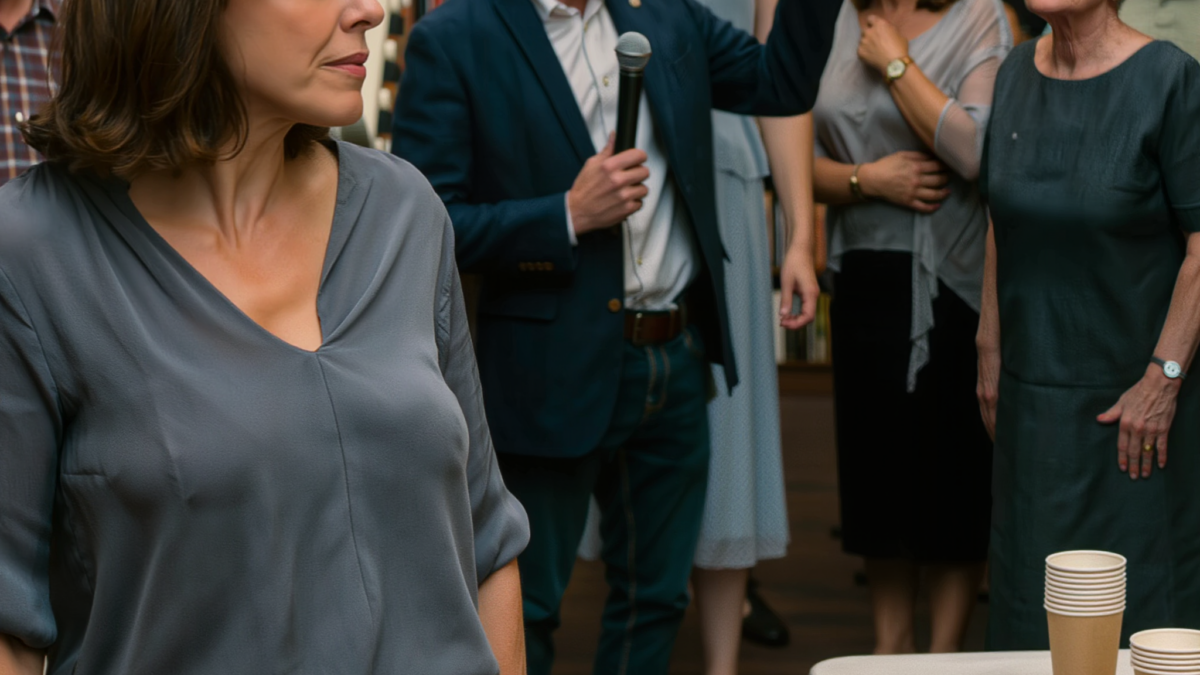
She said it into a microphone at our family bookstore’s fiftieth anniversary celebration, standing beneath a banner my brother had ordered and beside a cake I’d picked up that morning.
I was forty-nine years old. Old enough to know better than to let one sentence from my mother hurt me.
It hurt anyway.
“Oh, and we can’t forget Claire,” she said, spotting me near the children’s section. “She’s kept herself busy with that cute little hobby of hers upstairs. The children do love their stories.”
A few people smiled politely.
Then my mother turned toward my older brother.
“But Evan is the one who understands what it takes to keep a business alive.”
The applause came easily.
Evan stepped forward in his navy blazer, looking comfortable with the attention. My mother handed him the microphone and stepped aside.
I stood beside a folding table covered with paper cups and napkins.
I had spent the morning arranging chairs, checking the catering order, and making sure the bookstore looked exactly the way my mother wanted.
I was also the person who had spent eleven years building the children’s reading program she’d just dismissed.
I could have survived that speech.
I’d survived worse from her.
But what happened when Evan took the microphone was something I hadn’t prepared myself for.
He pointed toward the upstairs reading room.
“Claire’s already agreed to our plans for that space,” he told the crowd.
My stomach tightened.
Because nobody had asked me to agree to anything.
And the room he was talking about was the one place in that bookstore that had ever felt like mine.
Maple & Main Books sat on the corner of a narrow downtown street in a small Pennsylvania town where people still remembered which businesses had occupied which buildings thirty years earlier.
My mother, Ruth Bennett, opened it when she was twenty-two.
By the time I was old enough to work the register, I knew the sound of the front doorbell, the smell of the wooden floors after rain, and which customers wanted their books wrapped in brown paper.
The bookstore wasn’t fancy.
The shelves didn’t match perfectly. The heating system made strange knocking sounds in January. We had an old counter with scratches from decades of customers setting down keys and purses.
But people loved the place.
My mother had worked hard to make it last.
I never questioned that.
My brother Evan was three years older than me.
He was the outgoing one. He could strike up a conversation with anyone, remember their children’s names, and convince somebody who had come in for a greeting card to leave with three books.
Mom loved that about him.
“Your brother has a head for business,” she’d say.
What I had, apparently, was patience.
I could spend twenty minutes helping a customer find a book they remembered from childhood. I could calm a frustrated parent whose special order hadn’t arrived. I could sit with a child struggling through a paragraph and make them feel as though finishing it was the most important achievement in the world.
Those things mattered to customers.
To my mother, they were simply the things I was good at.
Evan’s work was business.
Mine was helping.
I didn’t resent my brother for being good at sales.
The bookstore needed someone who understood advertising, promotions, and bringing people through the door. Evan worked hard at those things.
What I resented was how easily my mother treated his contributions as the reason our family business mattered, while mine seemed to count only when there was something that needed doing.
For years, I convinced myself the difference wasn’t important.
Then I started the reading club.
And for the first time, I created something at Maple & Main that felt entirely different from the work my mother expected me to do.
The reading club began when I was thirty-eight.
A teacher from a local elementary school stopped by one afternoon looking for inexpensive books.
The school had lost funding for an after-school literacy activity, and she wondered whether we had a space where a few children could meet on Saturdays.
I immediately thought of the upstairs room.
At that point, it was mostly used for extra folding chairs and boxes of seasonal displays.
When I asked my mother about it, she barely looked up from her paperwork.
“Is this going to cost us anything?”
“I don’t think so. We could use donated books and ask for volunteers.”
“Fine,” she said. “Just don’t let it interfere with the store.”
That was the entire conversation.
I found cushions, collected books, and persuaded a few retired teachers to help.
The first Saturday, four children showed up.
One refused to speak.
Another cried when her father tried to leave.
The youngest spent most of the session lying on the floor, turning a picture book upside down.
I went home exhausted, wondering whether I’d made a terrible mistake.
The following Saturday, seven children came.
By the end of the first year, parents were asking whether younger siblings could join.
We read stories, talked about characters, made bookmarks, and sometimes invited parents to read aloud.
Nothing about it seemed extraordinary from the outside.
But I saw things other people didn’t.
I saw a little boy who had trouble finishing a paragraph begin volunteering to read whole chapters.
I watched a girl whose parents were divorcing discover that she could talk about frightened characters when she couldn’t talk about herself.
I saw children begin to believe they belonged in a room full of books.
Those moments stayed with me.
I kept their drawings, handwritten notes, and favorite-book cards in a box behind my desk.
Every year, I promised myself I’d organize them.
Every year, another stack appeared.
Eleven years passed.
Some of the children from our earliest sessions were old enough to be in college.
Occasionally, one would visit during school breaks.
They’d walk upstairs, look around, and laugh about how small the room seemed.
It was small.
There were uneven bookshelves, a rug that never stayed flat, and a blue wooden stool with a chip in one leg.
But those children remembered it.
And I thought my mother understood what that meant.
I was wrong.
Three weeks before the anniversary, I noticed something strange.
The next four Saturday reading sessions had disappeared from the store calendar.
I was in the office checking our schedule when I saw the empty spaces.
At first, I assumed it was a mistake.
Evan had been rearranging events for weeks, preparing for our fiftieth anniversary celebration.
Maybe he’d accidentally removed the reading club while updating the calendar.
I found him at his laptop.
“Evan, what happened to the Saturday sessions?”
He barely looked up.
“Oh, yeah. We’re reworking the upstairs schedule.”
“Reworking it how?”
“Mom and I are talking about some new ideas.”
“What happens to the kids on Saturdays?”
He closed his laptop.
“We’ll figure it out.”
I waited for him to explain.
He didn’t.
That afternoon, I asked my mother.
She was behind the counter, comparing invoices with a calculator.
“Evan says you’re changing the upstairs schedule.”
“We’re looking at options, Claire.”
“Are you moving the reading club?”
She sighed.
“Must we discuss everything in the middle of a workday?”
It was almost closing time. There were no customers in the store.
“I need to tell the families if something’s changing.”
“Nothing has been decided.”
I wanted to believe her.
Instead, I went back to the office and printed the old schedule so I’d remember which sessions still needed confirmation.
I put it in my desk drawer.
Something about those empty Saturdays bothered me.
Not because the schedule couldn’t change.
I knew it could.
My mother owned the bookstore, and she had the right to decide how to use the building.
What bothered me was that nobody thought I needed to be part of the conversation.
Business had been difficult that year.
I knew that better than most people.
Winter sales were slow, special orders weren’t as reliable as they used to be, and our online business hadn’t grown as quickly as Evan hoped.
My mother was seventy-two.
She had spent fifty years keeping Maple & Main open, and I knew the financial pressure frightened her.
Evan wanted to expand our events.
He had ideas for author appearances, writing workshops, and evenings when customers paid for tickets in advance.
Some of his ideas were genuinely good.
I’d told him so.
We needed more reasons for people to visit the store.
But I never understood why he seemed to believe that anything without an admission fee was taking something away from the business.
The reading club brought families through our doors every week.
Parents bought books while they waited.
Grandparents stopped in to pick up birthday presents.
Teachers recommended us to other teachers.
Not everything valuable came with a receipt attached.
A week before the anniversary, I tried again.
“Mom, can we talk about the Saturday schedule before you announce anything?”
She was arranging books in the front window.
“Claire, please. Your brother is trying to help this place survive.”
“So am I.”
She stopped moving the books.
“I didn’t say you weren’t.”
“You don’t have to.”
Her expression changed.
“I am seventy-two years old. I have spent fifty years keeping these doors open. Do you think I enjoy worrying about whether we’ll make payroll?”
I looked at her.
For a moment, I saw the tired woman who had opened the bookstore before either of her children was born.
“I know you’re worried,” I said. “I just want to know what’s happening to the room.”
“We’ll talk after the celebration.”
That was the end of it.
I let it be the end because the anniversary was approaching and there was still so much to do.
I had no idea they were already preparing to announce a decision.
The morning of the celebration, I arrived at seven.
The party wasn’t scheduled to begin until five that evening, but someone needed to accept the bakery delivery, check the seating, label the reserved books, and make sure the staff knew which customers had placed special orders.
Evan arrived just after ten.
He was carrying a garment bag and talking on his phone.
“Everything ready?” he asked.
“Almost.”
“Great. You’re a lifesaver.”
Then he disappeared into the office.
I used to love being called that.
A lifesaver.
Dependable.
The person everyone could count on.
By the time I reached forty-nine, I’d begun hearing something else underneath those compliments.
Nobody worried about how much a dependable person could carry.
They just kept handing her things.
At four-thirty, I went upstairs to change my blouse.
The reading room was empty.
A stack of newly printed promotional flyers sat on the table.
I recognized Evan’s design immediately.
Cream-colored paper, dark green lettering, the Maple & Main logo across the top.
I picked one up.
It advertised a new series of evening events beginning the following month.
I read the description twice.
There was nothing about the Saturday reading club.
I turned the flyer over, hoping the regular weekly programs were listed on the back.
They weren’t.
I heard footsteps on the stairs.
Evan appeared in the doorway.
“Hey. Mom’s looking for you.”
I held up the flyer.
“What is this?”
“The new event series.”
“Where’s the reading club?”
He rubbed his forehead.
“Can we not do this right now?”
“Evan.”
“Please. Tonight is important.”
He looked genuinely tired.
For a moment, I wondered whether he was as nervous about the celebration as I was.
I put the flyer down.
“All right,” I said. “But we are talking about it.”
He nodded.
I went downstairs.
By six, the bookstore was crowded.
Longtime customers stood talking between the shelves.
Former employees shared memories.
A few local business owners had come to congratulate my mother.
Several families from the reading club were there, too.
Tessa Morgan, a librarian who had helped with our program for years, arrived carrying a small bouquet of flowers.
She found me near the register.
“Congratulations,” she said.
“It’s Mom’s anniversary.”
“It’s yours, too. You’ve spent half your life in this place.”
I laughed.
“Not quite.”
“Close enough.”
Then she handed me a card.
Inside were signatures from several families who had participated in the reading club over the years.
I recognized the handwriting of children who were no longer children.
One message stopped me.
You were the first person who made me think I could finish a whole book.
I ran my thumb over the words.
“Where did you get this?”
“Took some organizing.”
“Tessa, you didn’t have to.”
“I know.”
She squeezed my arm before going to find a seat.
I tucked the card into the drawer beneath the register.
I didn’t want to cry before the speeches.
At six-thirty, my mother stepped in front of the counter and tapped the microphone.
She looked beautiful.
Her gray hair was neatly styled, and she wore the pearl earrings she saved for special occasions.
She told stories about the bookstore’s early years.
About slow winters.
About customers who became friends.
About the time a water pipe burst and nearly ruined an entire shipment of books.
People laughed.
I did, too.
I remembered that flood.
Then she began thanking the people who had helped keep Maple & Main alive.
She mentioned our employees by name.
She thanked our customers.
Then she looked at me.
“And, of course, Claire has kept herself busy with that cute little hobby of hers upstairs. The children do love their stories.”
I felt my face warm.
A few people smiled.
My mother meant the reading club.
Eleven years of Saturday mornings.
Hundreds of children.
All the volunteers, donated books, lesson plans, and conversations with worried parents.
She had reduced all of it to a hobby.
Then she turned toward Evan.
“My son is the one who understands the future of this business. Without his ideas, I don’t know where we’d be.”
Everyone applauded.
Evan walked forward.
Mom handed him the microphone and stepped aside.
I clapped, too, although my hands felt strangely disconnected from the rest of me.
It wasn’t that Evan didn’t deserve recognition.
It was that my mother seemed incapable of praising him without making my work smaller.
Evan began talking about the future of Maple & Main.
He thanked the community and discussed the importance of giving independent bookstores new ways to survive.
Much of what he said made sense.
I listened carefully.
Then, before he could move to the next part of his speech, Tessa raised her hand.
“Would you mind if I said something?”
Evan paused.
My mother looked surprised.
“Oh. Of course, Tessa.”
Tessa stood beside the children’s section.
Evan held the microphone toward her, but she was close enough to speak without taking it.
“I just wanted to mention the reading club,” she said. “Because I think people should know what Claire has done.”
I stared at her.
Tessa wasn’t someone who interrupted speeches.
Usually, she was the person reminding everyone that a program needed to finish on time.
“For eleven years, Claire has given children in this town a place where nobody makes them feel embarrassed about struggling with a book.”
A woman standing beside the fiction shelves nodded.
“My daughter was one of those kids.”
Another parent spoke up.
“My boys practically grew up in that room.”
Tessa continued.
“She built that program, organized the volunteers, kept it going when attendance was low, and made sure children who couldn’t afford new books still had something to read.”
My mother adjusted her pearl earring.
Tessa looked directly at me.
“That isn’t a hobby, Claire. It’s something this town has benefited from for a long time.”
People applauded.
Not everyone.
Not dramatically.
But enough.
A few parents turned toward me, smiling.
An older man near the history shelves said, “Well deserved.”
I didn’t know what to do with the attention.
For years, I’d assumed that if people understood what I contributed, someone would eventually say something.
Now they had.
And it hadn’t required a promotion or an award.
They had simply described what I did.
My mother gave a tight smile.
“Of course we’re grateful for Claire’s work.”
Then she gestured for Evan to continue.
He cleared his throat.
“Actually, this leads perfectly into something we wanted to share tonight.”
He held up one of the cream-colored flyers.
“We’ve been working on a new direction for our upstairs space.”
I looked at the paper.
My chest tightened.
“Our author evenings and workshops will give Maple & Main the kind of programming that can support the business for years to come.”
A few people nodded.
Then Evan said the sentence that changed everything.
“Claire’s already agreed to our plans for that room.”
I turned toward him.
He didn’t look at me.
“And with her help, we’ll make the transition as smooth as possible.”
Evan lowered the microphone.
I waited for my mother to correct what he’d just said.
She didn’t.
Three weeks of unanswered questions suddenly made sense.
The missing calendar entries.
The printed flyers.
The conversations that ended whenever I asked about the children.
My brother had just told nearly sixty people I’d agreed to a plan I knew nothing about.
And my mother was allowing everyone to believe him.
“Evan,” I said.
He turned back toward the crowd.
“Starting next month, we’ll be introducing a regular calendar of ticketed events—”
“Evan.”
This time, he stopped.
He looked annoyed.
“What?”
“I haven’t agreed to anything.”
The nearest customers turned toward me.
He gave an uncomfortable laugh.
“Claire, we’ll go over the details later.”
“No. You just told everyone I’d agreed.”
My mother stepped forward.
“Please, not during the celebration.”
I looked at her.
“Did you know he was going to say that?”
Her expression answered before she spoke.
“Your brother and I have been discussing the space.”
“How long?”
“That isn’t important.”
“It is to me.”
Evan lowered the flyer.
“We need to make better use of the upstairs room, Claire. We’ve talked about this.”
“We’ve talked about finding ways to bring in money. We haven’t talked about ending the reading club.”
A woman near the window spoke.
“Ending it?”
I looked from her to Evan.
“Is that what you’re planning?”
Evan glanced at our mother.
She said nothing.
Finally, he answered.
“We’re converting the upstairs room into an event space. Paid author appearances, workshops, private group bookings when they’re available.”
“And Saturday mornings?”
He sighed.
“The reading club can’t keep taking up the best space in the building for free.”
I felt something settle inside me.
Not anger exactly.
More like the end of an argument I’d been having with myself for years.
“You already made this decision.”
My mother lifted her chin.
“We own a business, Claire. We have to make difficult choices.”
“You own the business,” I said. “I understand that. But you told me nothing had been decided.”
“We were trying to work out the details.”
“Then why has the schedule been cleared? Why are there printed flyers? Why did Evan tell everyone I agreed?”
Evan shifted his weight.
“I assumed you’d understand once we explained it.”
“You assumed I’d do whatever you needed.”
“That’s not fair.”
“Isn’t it?”
He looked away.
I turned toward my mother.
“You had weeks to tell me. I asked you both. More than once.”
She glanced toward the guests.
“We can talk privately.”
I considered it.
A younger version of me would have followed her into the office.
I would have listened to her explanation, accepted a vague promise about finding another time for the children, and spent the next month apologizing to families for a decision I hadn’t made.
But she’d described my work in front of everyone.
And Evan had used my name to make their decision sound unanimous.
I wasn’t willing to carry responsibility for that.
“No,” I said. “You announced the change here. I’m going to answer it here.”
My mother’s face tightened.
“Claire, please don’t turn this into something it isn’t.”
“I’m not arguing about your right to use the room,” I said. “It’s your bookstore. You can change the schedule.”
Evan looked relieved.
For a moment, I think he believed I’d finished.
“But you don’t get to tell people I agreed when nobody asked me.”
He looked down at the flyer.
“And you don’t get to tell the families that I’m responsible for ending the program.”
A parent near the front spoke.
“So the Saturday club is canceled?”
My throat tightened.
I looked at her.
“I don’t know what Maple & Main plans to do after tonight. But I can tell you I won’t be running the club under an arrangement where decisions are made without me and announced in my name.”
My mother took a sharp breath.
“You’re making this sound very dramatic.”
“I don’t want drama, Mom. I wanted a conversation.”
Evan stepped closer.
“Could you at least acknowledge that we have financial problems? The upstairs room isn’t bringing in enough money.”
“I know we have financial problems.”
“Then what do you expect us to do?”
“Tell me the truth.”
He stared at me.
“I might have helped you plan the new events. I might have helped find another place for the children. We could have talked about whether a different schedule was possible. But you didn’t give me a chance to be part of the decision.”
My mother looked tired suddenly.
“We thought you’d be upset.”
“I am upset.”
“That was what we were trying to avoid.”
I looked at her for a long moment.
“You weren’t trying to avoid upsetting me. You were trying to avoid having to hear me be upset.”
She didn’t answer.
Neither did Evan.
I didn’t enjoy watching them struggle to explain themselves.
These were people I loved.
I’d spent decades trying to make life easier for them.
Seeing the consequences of their choices didn’t make me happy.
It made me realize how little they’d expected me to object.
Tessa approached after a moment.
“Claire,” she said gently, “you don’t have to solve everything tonight.”
My mother seemed grateful.
“Thank you, Tessa.”
But Tessa wasn’t speaking to her.
She looked at me.
“We can talk tomorrow about what the children need.”
I nodded.
Evan set the flyer on the counter.
“Look, I should have discussed this with you before saying anything. I’ll admit that.”
It was more than he’d said all evening.
But I still needed to ask one question.
“Would you have told me before you canceled the first Saturday?”
He hesitated.
My mother answered instead.
“We would have found a way to let everyone know.”
Everyone.
Not me.
Everyone.
I picked up my purse from behind the register.
“I think I’m going home.”
My mother looked startled.
“We still have guests.”
“I know. The other staff can handle the rest of the evening.”
“I thought you were helping with cleanup.”
“I was.”
I turned toward the door.
For once, I didn’t stay to make the evening comfortable for everyone else.
Outside, the air had cooled.
The bookstore windows glowed behind me, and through the glass I could see Evan speaking quietly to our mother.
I wondered whether they were discussing the business.
Or me.
Then I started walking toward my car.
I had spent enough years worrying about conversations I wasn’t allowed to be part of.
Tessa called the next morning.
I’d barely finished my coffee.
“Are you all right?”
“Not especially.”
“Fair answer.”
I sat at my kitchen table, looking at the card she’d given me.
“I hate that it happened in front of everyone.”
“I know.”
“I keep wondering whether I should have waited until afterward.”
“Would waiting have changed what they planned to do?”
“No.”
“Then I don’t think the timing is the biggest problem.”
I rubbed my forehead.
“Tessa, those children have been coming every Saturday for years. I don’t know what I’m supposed to tell them.”
“Well,” she said, “there may be another option.”
I straightened.
“What kind of option?”
“We have a community room at the library.”
I knew the room.
It was used for craft workshops, local history talks, and occasional community meetings.
“It’s booked quite often,” she added. “And I can’t promise anything. We’d need to talk with the director, check the schedule, and make sure the program fits our guidelines.”
“Would they even consider it?”
“Claire, you’ve been running a successful children’s reading group for eleven years.”
“I know, but—”
“That’s relevant experience.”
I almost laughed.
Somehow, hearing my work described that way made it sound like something substantial.
“Would you talk to the director?” I asked.
“I will. But I want you there for the conversation.”
We met two days later.
The library director listened while we explained the program, its usual attendance, the volunteer arrangements, and the kinds of books we used.
She asked sensible questions.
How many children typically came?
Would parents stay?
Did we need storage?
Could volunteers follow the library’s procedures?
I had answers because I’d dealt with those questions for years.
Finally, the director looked at Tessa.
“I think we could try four Saturday mornings and see how it works.”
I stared at her.
Four Saturdays.
It wasn’t a permanent home.
But it was a beginning.
I still had a job at Maple & Main.
That complicated things.
The bookstore paid my wages.
I couldn’t pretend the relationship was only emotional.
For eleven years, I’d run the reading club alongside my regular duties, sometimes preparing materials on my own time because I enjoyed it.
I could stop volunteering for the program immediately.
Walking away from my paid work required more thought.
I reviewed my savings, checked my monthly expenses, and considered how long I could manage without my regular income.
I didn’t have a secret fortune.
I had bills, a modest emergency fund, and the ordinary worries of someone approaching fifty who hadn’t planned to change jobs.
For the next few weeks, I continued handling my assigned bookstore work while quietly exploring other employment.
I stopped organizing Saturday sessions upstairs.
I also stopped taking responsibility for every last-minute problem that had nothing to do with my job.
The first time Evan asked me to stay late to reorganize his event materials, I told him I had other plans.
He looked surprised.
“Since when?”
“Since I made them.”
He almost smiled, then realized I was serious.
My mother was less amused.
One afternoon, she called me into the office.
“I hear you’re moving the reading club to the library.”
“Tessa and I are arranging a trial program.”
She folded her hands.
“You could have told me.”
I looked at her.
“You’re right. I could have.”
She recognized the irony.
Her mouth tightened.
“I’m not trying to stop you, Claire.”
“Good.”
“But people are going to think we’ve driven you out.”
“I can’t control what people think.”
She looked toward the closed door.
“I never wanted you to feel unappreciated.”
I wanted to believe her.
But there was a difference between not wanting someone to feel hurt and being willing to stop doing the thing that hurt them.
“Mom, you called eleven years of my work a hobby.”
“I was trying to keep the speech light.”
“And you let Evan tell everyone I’d agreed to give up the room.”
She pressed her lips together.
“That was handled badly.”
I waited.
She didn’t say anything else.
It wasn’t an apology.
But it was the closest she’d come to acknowledging that what happened hadn’t been right.
“I need us to do things differently,” I said.
She looked weary.
“At my age, Claire, I don’t know how much differently I can do things.”
I studied her.
Then I answered quietly.
“I think that’s something you’ll have to decide.”
The first Saturday at the library was not a grand occasion.
We had twelve children.
Three were new, and one little boy spent the first fifteen minutes refusing to let go of his grandmother’s coat.
The library room was brighter than the old reading room, with large windows overlooking a parking lot.
There were no uneven shelves, no worn rug, and no blue wooden stool.
I missed those things more than I expected.
I had brought a small box of supplies from home.
Inside were bookmarks, colored pencils, a few laminated activity sheets, and the old index cards where children could write down books they’d enjoyed.
Tessa helped arrange the chairs.
“You look nervous,” she said.
“I feel like it’s my first day of school.”
She laughed.
“Good. Maybe now you know how the kids feel.”
A few minutes before ten, a mother came through the door with two girls.
“We found you,” she said.
That nearly undid me.
More families arrived.
Some had heard through Tessa.
Others had received the message I’d sent to parents who had chosen to stay in touch about the program.
A grandmother I’d known for years brought her youngest grandson.
“He was worried there wouldn’t be stories anymore,” she said.
I crouched beside him.
“There are still stories.”
He looked around the room.
“Where’s your blue chair?”
I laughed.
“That chair stayed at the bookstore.”
He considered this.
“Can you still read without it?”
“I think I can manage.”
He nodded solemnly and chose a seat.
At ten o’clock, we began.
I opened the book, looked around at the children, and started reading.
Halfway through the first page, the little boy who had been clinging to his grandmother leaned forward.
By the end of the story, he was asking questions.
It was an ordinary Saturday morning.
And after weeks of uncertainty, that was exactly what I needed.
The bookstore’s new event series started the following month.
Some evenings were well attended.
Others were not.
Evan worked hard to promote them, and I was glad when one succeeded.
I didn’t want Maple & Main to fail.
My mother had given fifty years of her life to that place.
My brother had given years of effort, too, even when his decisions frustrated me.
I simply no longer believed that loving a family business meant surrendering my own judgment.
I continued working at the store while searching for a position elsewhere.
Eventually, I found paid work handling customer orders and inventory for a local printing company.
The work was different.
I had a lot to learn.
But the hours were predictable, and I could keep my Saturdays.
On my last afternoon at Maple & Main, I cleared out the desk I’d used for years.
There were old pens, receipts, handwritten customer requests, and a tin of paper clips.
In the bottom drawer, I found the first attendance sheet from the reading club.
Four names.
Four children who had shown up on a Saturday morning eleven years earlier.
I sat there looking at it longer than I expected.
Then I placed it carefully inside my bag.
Evan knocked on the doorframe.
“Mom said you’re almost done.”
“I am.”
He glanced at the half-empty desk.
“You know, I didn’t expect you to actually leave.”
“I know.”
He leaned against the doorway.
“For what it’s worth, I should have talked to you before announcing the upstairs changes.”
“Yes, you should have.”
He nodded.
“I thought if we announced it first, you’d go along with it.”
There it was.
The truth, without an excuse.
“That’s what hurt,” I told him.
He looked down.
“I know that now.”
We stood there for a moment.
Then he said, “The first author event did pretty well.”
“I heard.”
“The second wasn’t great.”
“That’s how events go sometimes.”
He gave a short laugh.
“You sound like Mom.”
“Don’t insult me on my last day.”
This time, we both laughed.
It didn’t repair everything.
But I was glad we could manage a small, ordinary conversation without pretending the past hadn’t happened.
My mother called the following Sunday.
I answered after letting the phone ring twice.
“Hello, Mom.”
“Claire.”
She sounded uncertain.
“Evan says you finished up on Friday.”
“I did.”
A pause.
“How’s the library program?”
It was the first time she’d asked without making a joke about it.
“Good. We started with four Saturdays, and they’ve agreed to keep us on the calendar for another trial period.”
“That’s nice.”
I waited.
She cleared her throat.
“I suppose there are children who would miss it if you stopped.”
“There are.”
Another pause.
“Your brother has been working very hard.”
“I know he has.”
“And I have, too.”
“I know that, Mom.”
She seemed dissatisfied.
Perhaps she’d expected me to argue.
Perhaps she wanted reassurance that nobody was blaming her.
I wasn’t interested in assigning every moment of our family’s history to a winner and a loser.
I wanted to have a relationship with my mother without being required to make myself smaller.
“Mom, I hope the events work,” I said. “I mean that.”
“I know.”
“But I also hope you understand why I couldn’t stay.”
She was quiet.
Finally, she said, “I wish we’d handled it differently.”
It wasn’t everything I’d wanted to hear.
She didn’t say she was proud of me.
She didn’t ask forgiveness.
She didn’t suddenly become the mother I’d spent years wishing she could be.
But she had stopped insisting that nothing was wrong.
“I wish that, too,” I said.
We talked for a few more minutes about her garden and the weather.
Then we said goodbye.
I didn’t cry afterward.
I didn’t feel triumphant, either.
I just put my phone on the table and continued making lunch.
There was something peaceful about not having to solve the entire relationship in one conversation.
By autumn, the library reading club had found its rhythm.
Some Saturdays were crowded.
On others, attendance was small.
We learned which books worked in the new room and which activities needed more space.
Tessa helped recruit volunteers who understood the library’s procedures.
I learned to ask for help before I was exhausted.
That last part was surprisingly difficult.
At Maple & Main, I’d gotten used to being the person who knew where everything belonged and how every problem should be fixed.
At the library, I sometimes had to admit I didn’t know something.
Nobody seemed offended.
One Saturday, a new volunteer asked whether she could lead the next session.
My first instinct was to explain everything she might need to prepare.
Instead, I handed her the book.
“Of course,” I said. “What do you need from me?”
She thought for a moment.
“Maybe you could sit with the children who need extra help?”
I smiled.
“I’d love to.”
So the following Saturday, I sat near the back while someone else read the story.
I helped a little girl follow the lines with her finger.
When she stumbled over a word, I gave her time.
She tried again.
And again.
Finally, she got it.
Her eyes brightened.
I wanted to tell her that being good at something didn’t always mean being the loudest person in the room.
But she was seven, and she didn’t need a speech about family expectations.
She needed someone to listen.
So I listened.
A few weeks before Christmas, Tessa came into the community room carrying a cardboard box.
“This was left at the front desk for you.”
I looked inside.
There were old books, several packs of colored pencils, a bundle of bookmarks, and the blue wooden stool from Maple & Main.
One leg still had the familiar chip.
A note was taped to the seat.
Found this while rearranging upstairs. Thought you might want it.
It was signed by Evan.
I sat down on the nearest chair.
Tessa touched the stool.
“Is this yours?”
I looked at the little piece of furniture that had sat in the same corner for eleven years.
“It used to be in our reading room.”
“Do you want to keep it here?”
I ran my hand over the worn blue paint.
For a moment, I could almost hear the old wooden floorboards creaking and the front doorbell ringing downstairs.
I thought about the four children from our first session.
The mornings when nobody wanted to read.
The Saturday when a little boy finished his first chapter.
All the times I’d gone home wondering whether I’d done enough.
“Yes,” I said. “I think we have room for it.”
Tessa carried it to the front of the room.
We placed it beside the bookcase.
The next Saturday, the children noticed immediately.
“You got your chair back!” one of them shouted.
I laughed.
“Apparently.”
“Does that mean this is the real reading room now?”
I looked around.
There were children pulling books from shelves, a grandmother helping her grandson remove his coat, and a volunteer setting out paper and pencils.
Tessa was checking the attendance sheet near the door.
Nobody was waiting for my mother to approve the morning.
Nobody needed Evan to announce that the program mattered.
And I wasn’t wondering whether I’d earned the right to be there.
I sat on the blue stool, opened our book, and looked at the children.
“Are we ready?”
They settled into their seats.
One little girl moved closer so she could see the pictures.
I turned the first page.
And I began to read.