My father told me, “You’re not worth the money anymore,” after my family hid my cancer results for weeks and convinced me $120,000 would buy only a few extra months. Then my oncologist called during dinner and said my cancer was actually stage one with a favorable prognosis. That night, I opened my own patient portal—and found the January 6 note showing exactly when my family changed course.
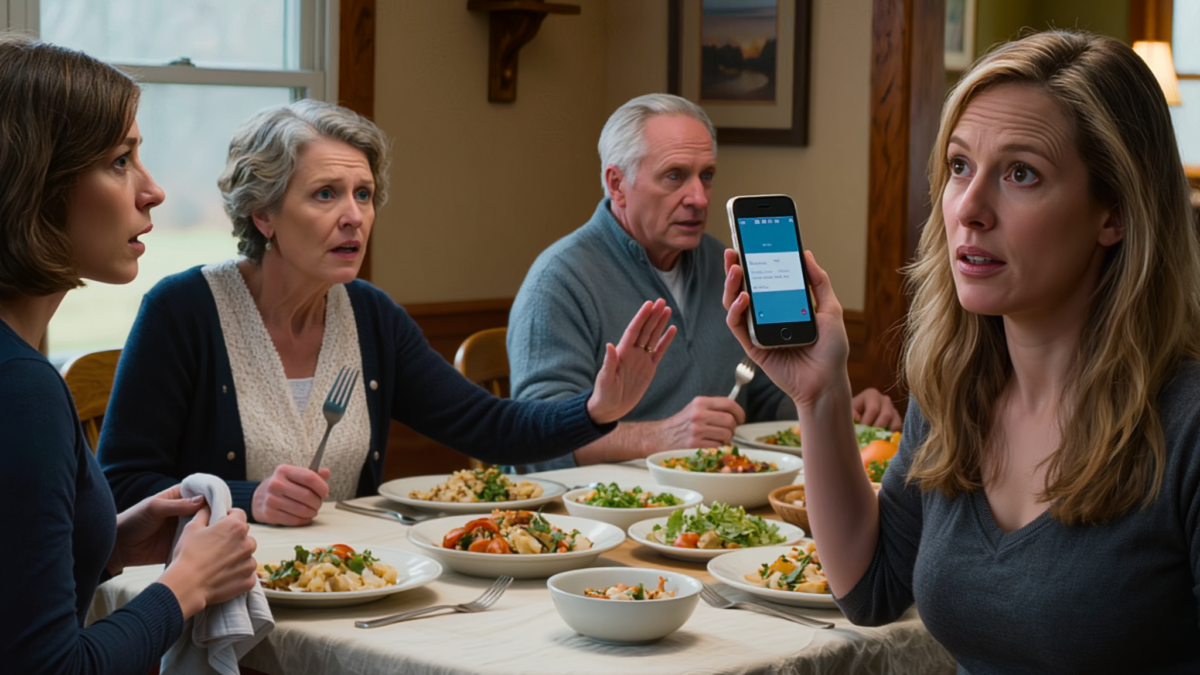
My father looked straight at me across the dinner table and said it like a final decision.
“You’re not worth the money anymore. We’re not wasting another dollar on treatment.”
I froze.
“What treatment? I haven’t even seen any results.”
The silence that followed was the real answer.
They had already received my cancer results weeks ago. They had read every page. They had decided I wasn’t worth saving, and they had hidden the entire file from me.
My sister sat two feet away, eyes locked on her plate, and never once looked up.
She had known the whole time.
Then my phone rang.
It was my oncologist.
The first name he said wasn’t mine.
It was my father’s.
My name is Kathleen Heler. I’m 33 years old.
To understand how I ended up sitting at that table, you have to go back before the diagnosis, before the phone call, back to a card on a refrigerator and a woman I barely got the chance to remember.
My mother’s name was Eleanor.
She died when I was four years old from ovarian cancer, the kind they find too late. I don’t have many memories of her that I can trust. Most of what I think I remember is probably a photograph I’ve looked at so many times that my brain turned it into a scene.
But I have one real thing.
A birthday card in her handwriting that she wrote for me before she died.
It was for the fifth birthday she knew she wouldn’t see. On the front was a little cartoon rabbit. Inside, in blue ink, slightly slanted, she wrote:
“Whatever it costs to be happy, you’re worth everything, my Kathleen.”
I kept that card on my refrigerator for years. I used to read it every morning.
Then, at some point, I read it so many times that I trained myself to stop letting it land. It became furniture, a magnet holding up a piece of paper. I’d walk past it with my coffee and not really see it.
That, it turns out, was a skill I’d been practicing my whole life.
Not seeing the thing that would hurt if I looked at it directly.
My mother left me more than a card.
She left $80,000 in life insurance.
I know that number now the way you know a scar.
Eighty thousand dollars.
When she died, the payout went to my father because he was her husband and her beneficiary. But he always told me it was mine.
“It’s your mother’s money,” he’d say. “It’s there for you when you really need it.”
I believed him for 29 years.
My father remarried when I was six. Her name is Diane.
Two years later, my half-sister Colette was born.
That was when the shape of my childhood was set, though I couldn’t have explained it at the time. You don’t notice the water you grow up in.
Here was how it worked in our house.
Colette had “a real future ahead of her.”
That was the phrase.
Diane said it the way other people said grace.
“Colette has a real future ahead of her.”
Nobody ever said that sentence about me.
It wasn’t cruelty exactly. It was more like a weather pattern.
Colette got private school.
Colette got braces the first time a dentist so much as frowned.
Colette got the car at sixteen. A used Honda, but still a car.
When money moved in that house, it moved toward Colette. It moved the way water moves downhill, as if it were simply obeying gravity.
I remember one example especially clearly.
I was seventeen. There was a senior-year class trip to Washington, D.C. It cost around $400, and I wanted to go the way you want things at seventeen, with your whole body.
I asked my father if we could use a little of Mom’s money.
He got quiet.
Diane didn’t.
“That money is for real emergencies,” she said. “A field trip isn’t an emergency.”
Then she added, “You’ll survive missing a bus tour of some monuments.”
So I didn’t go.
I stayed home and told everyone I hadn’t wanted to go anyway.
That was practically the family religion.
Pretend you never wanted the thing you didn’t get.
Three months later, Colette got braces from an orthodontist across town, the expensive one, because Diane didn’t trust the provider our insurance covered.
Nobody called that an emergency.
Nobody had to.
The money came from somewhere, and I was seventeen, not stupid. I already knew there was only one somewhere it could have come from.
I just did what I always did.
I filed it away in the place where I kept things I wasn’t allowed to be angry about, and I closed the drawer.
That drawer got very full over the years.
The last truly normal family dinner I can remember happened the fall before any of this, before I ever found the lump.
Colette had just gotten engaged.
Her fiancé’s name was Preston, and he was a decent man. That matters later because I don’t want anyone thinking he was part of what they did.
He wasn’t.
He married into this family the way I was born into it, and he understood it about as well as a stranger would.
That entire dinner revolved around the wedding.
Diane had a binder, an actual three-ring binder with tabs for venues, flowers, and a spreadsheet of guests.
My father sat at the head of the table, nodding at things. Every so often, Diane would say a number out loud, the deposit for the venue, the estimate from the florist, and my father would nod at that too.
Nobody so much as blinked at $34,000 for the wedding.
Then there was another $40,000 to help with a down payment on a house because, as Diane put it, “You don’t want them starting out renting, Walter. That’s just throwing money away.”
Numbers moved across that table like weather.
Easy.
Expected.
Owed.
At one point, Colette asked me to be a bridesmaid.
I said yes, and I meant it.
Because I loved my sister.
Before all of this, I loved her plainly and without an asterisk.
Diane smiled.
“Kathleen’s so easy. She’ll wear whatever we pick.”
Kathleen’s so easy.
In my family, even the compliments were instructions.
I drove home from that dinner and thought almost nothing about the $34,000.
That’s the part I need to make clear.
I didn’t sit in my car seething about it.
Money was for Colette the way money had always been for Colette, and I had stopped noticing which way the water ran a very long time ago.
It would be months before I found out where that $34,000 had actually come from.
By then, I would have learned that in my family there was always money for a beginning and never a single dollar for keeping me alive.
My father, in all of this, wasn’t the loud one.
He was the quiet one.
The man who avoided a fight by leaving the room. The man who would rather agree with whoever was standing in front of him than sit in the discomfort of disagreeing.
Diane made the decisions.
My father made the peace.
And the peace was always paid for by me because I was the cheapest piece available.
I was the easy one.
That was my job, and I was good at it.
I took the smaller room without being asked.
I ordered last at restaurants so everyone else could get what they wanted first.
I learned to want less out loud because wanting less out loud was what made me useful.
“Kathleen won’t mind,” Diane would say whenever there wasn’t enough of something.
And she was right.
Kathleen didn’t mind.
Kathleen had been trained not to mind before she could spell her own name.
I wasn’t a saint.
I was resentful quietly, the way you’re resentful of weather. I just never did anything with it.
I told myself that keeping the peace was a kind of love.
Maybe sometimes it was.
Mostly it was fear wearing love’s coat.
By the time I was in my thirties, my life was small and mine, and I had made my peace with small.
I worked as a dental assistant at Lakeshore Family Dental in the Milwaukee suburbs. I had an apartment about twenty minutes from my father’s house. I paid my own bills. I had a marketplace health plan I mostly forgot I had.
And I had a coworker named Nora who had somehow decided we were friends whether I liked it or not.
Nora was the kind of person who noticed things and then said them out loud.
At first I found that exhausting.
Later, it saved me.
One afternoon, we were getting lunch when she watched me tell the waiter, “Oh, whatever’s easiest.”
She put down her menu.
“You always order last so everyone gets what they want first. You know that’s not a personality, right?”
I laughed it off.
But she said something else that day that I only understood much later.
My phone had died, so she wrote her cell number on the back of my hand with a pen.
“If it were ever something big, you’d call me first, right?”
“Sure,” I said.
I knew even as I said it that I wouldn’t.
If something big happened, I would call my family because that was what you did.
Then I would spend the whole crisis managing my family’s feelings about the crisis while the crisis happened to me.
That was the arrangement.
That was the water I had been swimming in for 33 years.
Two weeks after that lunch, I found the lump.
It was November.
I’d like to tell you I was calm and rational and did the responsible thing immediately.
I didn’t.
I found it in the shower and stood there while the water went cold, telling myself it was nothing.
A cyst.
A swollen gland.
The kind of thing that turns out to be nothing in every story except the ones where it doesn’t.
I got out. I dried off. I got dressed. I went to work.
I cleaned teeth, handed instruments to a dentist, and smiled at frightened children.
The whole time, there was a small hard fact under my arm that I was pretending not to know about.
I waited four days before I called my doctor.
Four days alone in my apartment, walking past my mother’s card on the refrigerator without reading it because I already knew what it said and couldn’t stand to hear it in her voice.
On the fourth night, I couldn’t sleep.
Around two in the morning, I finally admitted to myself that probably nothing is not a plan.
The next morning, I made the call.
The first appointment was fine in the way those appointments are fine right up until they aren’t.
My regular doctor felt the lump, and her face did a small thing she tried to hide.
“It’s probably nothing,” she said, “but we don’t guess with this.”
She sent me for imaging.
That was the sentence that made it real.
We don’t guess with this.
You don’t say that about nothing.
I finally told my father because I was scared and because calling him was the reflex.
And when I told him, he was good.
He was so good.
“You’re not doing this alone,” he said.
He came over that same night. He sat at my little kitchen table and took my hands. There were tears in his eyes, real ones.
“I’ll drive you. I’ll handle the paperwork, all of it. You just get through the appointments and I’ll take care of everything else. That’s my job.”
I cried in relief.
For the first time in my adult life, it felt as if someone was going to carry something for me instead of the other way around.
I was so grateful I could have gotten down on the floor.
That gratitude was the trap.
He drove me to Lakeside Mercy for the mammogram. When they wanted a closer look and scheduled a biopsy, he sat beside me in the waiting room.
He brought me terrible vending-machine coffee and held it while my hands were too unsteady to manage it.
At registration, he filled out the forms so I wouldn’t have to.
I let him.
My hands were shaking, and that was supposed to be the whole point.
He would carry it.
When the woman at the desk asked who my emergency contact was, my father wrote his own name before I could answer.
I didn’t think anything of it.
Of course it was him.
Who else would it be?
Then she asked if I wanted to set up the online portal where results and messages would come.
“I’ll do that part for her,” my father said.
He took out his phone and entered everything.
His email.
His phone number.
There was also a designation in the system called a care partner, which meant full access.
He made himself that too.
The mailing address on my chart, the address every letter would go to, was his house.
Not my apartment.
His.
“Don’t worry about the portal or the bills,” he said, patting my knee. “I set all that up. It comes to me now.”
I never logged in myself.
Not once.
That was the least fine decision of my life, and I made it in about four seconds.
Because I was frightened, and someone I trusted said, “Let me.”
Nora texted me the morning of the biopsy.
Want me to drive you?
I wrote back that my dad had it.
He’s really stepped up.
She answered:
Okay, but you have my number. It’s probably washed off your hand by now. Get it again.
I remember smiling at my phone.
I remember thinking how lucky I was to have a father who had stepped up and a friend who wouldn’t quit.
I remember feeling surrounded by people.
That was the cruel joke of the whole thing.
I had never felt less alone than I did in the exact weeks I was being most completely abandoned.
On the day of the biopsy, my father arrived before I did. He found parking and figured out which building we needed, so when I arrived shaking, he could take my elbow and walk me inside as if he had done it a hundred times.
In the waiting room, he told me a long, pointless story about a fishing trip he had taken as a boy.
I understood what he was doing.
He was giving my brain something small and stupid to hold instead of the needle waiting in the next room.
It worked.
I loved him for it.
When they called my name, he squeezed my hand.
“I’m right here. I’m not going anywhere.”
He wasn’t lying exactly.
He was right there for the part where I needed a hand to hold.
He just wasn’t going to be there for the part where I needed a life.
I didn’t know yet that those were two different jobs.
The biopsy was on a Tuesday in the middle of December.
They told me the results would come back in about a week.
After that week, every single thing I learned about my own body came through my father’s mouth.
Not through a doctor.
Not through a page I read with my own eyes.
Through him.
The week the results came back, the whole house changed temperature, and I was too frightened to interpret the change correctly.
“You focus on resting,” Diane told me the first time I came over after the biopsy. “Let your father deal with the phone calls.”
And the phone did ring.
A lot.
Every time, my father would look at the screen, and something would cross his face. Then he would stand, walk out to the back porch, and slide the glass door shut behind him.
I would watch through the window as he paced, his free hand on the back of his neck.
When he came back in, his face would be arranged into something soft and terrible.
“That was the clinic,” he’d say. “The doctor wasn’t optimistic.”
“Which doctor?” I asked the first time. “Can I talk to him?”
“We’ll set it up.”
We never did.
There was always a reason.
The doctor was booked.
They wanted more information first.
They needed to run one more thing before there was any point in me coming in.
Every time I asked to see a document or speak to someone who had actually gone to medical school, there was a reason I couldn’t.
And the reasons sounded reasonable.
I started believing them because believing them was easier than the alternative.
The alternative was that the people carrying me were carrying me somewhere I didn’t want to go.
One evening, I tried calling the clinic myself.
I found the main number and dialed from my kitchen.
A scheduler answered. I gave her my name and date of birth.
There was a pause, some typing.
“Oh, it looks like your care coordinator is your father, Walter Heler. He’s the contact of record here. I’d honestly have him give us a call. He’s got the whole picture.”
That was it.
Ninety seconds.
I hung up feeling absurdly as though I had done something wrong.
As if I had gone over someone’s head.
I had been so thoroughly written out of my own medical file that a stranger trying to be helpful gently redirected me to my father when I called about my own cancer.
A few days later, I tried another way in.
I asked my father if I could come with him to the next appointment and sit in the room so I could hear the doctor with my own ears.
He and Diane exchanged a look.
That quick married-people look that carries a whole conversation in half a second.
Diane spoke gently.
“Honey, I don’t think you should be putting yourself through those rooms right now. You’ve seen what stress does to you. Let your dad be the one who hears the hard things. That’s what he’s for.”
“I’d like to hear them,” I said. “They’re about me.”
“And you will,” my father said. “When there’s something to actually decide, we’ll all sit down together. I promise.”
He put his hand over mine on the table.
The same hand that had signed me out of my own file.
He looked so sad and so sincere that I let it go again.
That’s how it happens.
It isn’t one big locked door.
It’s a hundred small, gentle, reasonable hands on your shoulder, easing you back into your chair until you forget you were ever standing.
“When there’s something to actually decide.”
There had already been something to decide.
They had decided it on January 6.
I just wasn’t one of the people allowed in the room.
There was another thing that week I noticed and then argued myself out of noticing.
A manila envelope sat on the kitchen counter at my father’s house. The Lakeside Mercy logo was in the corner.
It had my name printed on it.
Official.
I picked it up.
Before I could open it, Colette walked in.
“Was there mail for me?” I asked.
“No,” she said too quickly. “Nothing.”
I looked at the envelope in my hand, then at her face.
Something didn’t line up.
But I was already carrying so much fear that I set it back down.
The next day, the envelope was gone.
No one had put it anywhere I could find.
Colette left the room whenever I entered it for the rest of that week.
I told myself she was uncomfortable.
People get strange around sick people.
That was what I told myself.
I was very good at telling myself things.
Then they started giving me a number.
$120,000.
Diane said it at the same kitchen table with the practical calm of someone reading a weather report.
“And for what? A few extra months? You don’t put a family through that, Kathleen. You don’t put yourself through that.”
One hundred twenty thousand dollars.
She said it so many times over the following weeks that it stopped being a number and became a kind of chant.
“It’s spread.”
“It’s aggressive.”
“$120,000 for a few extra months.”
“The doctors aren’t optimistic.”
“Some fights aren’t worth the money.”
I wish I could say I fought back.
I didn’t.
I did something worse.
I agreed.
I think people who have never been inside a family like mine have trouble understanding that.
When everyone who is supposed to love you tells you gently, sadly, with tears in their eyes that you are dying and that trying to live would be an expensive, selfish, doomed thing to do, you start to believe them.
Not all at once.
In pieces.
Your own voice gets quieter and quieter until you can’t hear it over theirs.
I stopped calling the clinic.
I started getting my affairs in order.
I wrote down my passwords in a spiral notebook, just in case.
I told my supervisor at the dental office that I might need to reduce my hours in the new year.
I watched her eyes fill, and I patted her arm and comforted her because even while believing I was dying, I was managing someone else’s feelings about it.
One night, I sat on my living-room floor and started making a list of who should get my things.
My books to Nora.
My mother’s card to…
I couldn’t finish the line.
I sat with the pen over the paper and couldn’t decide who in the world would want a card that said, “You’re worth everything.”
That was the closest I came during that whole dark stretch to understanding that something was wrong.
But I didn’t chase the thought.
I capped the pen and went to bed.
That week at work, Nora found me in the break room staring at nothing, a cup of coffee cooling in my hands.
She sat across from me.
“Talk.”
I told her the version I had been given.
I said it was bad. That it had spread. That the doctors weren’t hopeful. That treatment would cost a fortune for almost no time.
I said it the way you repeat something you’ve heard so many times that it begins to sound like your own thought.
Nora didn’t say she was sorry.
She frowned.
She had a frown where one eyebrow did most of the work.
“Who told you all that?”
“My family. They’ve been dealing with the doctors.”
“But did a doctor tell you to your face?”
I opened my mouth to say yes.
I couldn’t.
Because no one had.
Not once.
Every terrible thing I believed about my own body had reached me secondhand through the mouths of people who loved me.
And I had never questioned the chain of custody.
You don’t expect the people carrying you to be the ones dropping you.
“I’m sure they’re just protecting me from the details,” I said.
Nora looked at me for a long moment.
“Kathleen, nobody protects you by keeping you out of the room where they decide about you.”
Then she squeezed my arm and went back to work.
I told myself she simply didn’t understand my family.
I was right about that.
It took me another two weeks to understand that not understanding my family was the healthiest thing about her.
Around then, I took my mother’s card off the refrigerator and put it in a drawer.
I couldn’t stand seeing “You’re worth everything” every morning while the people at my dinner table were doing the math and arriving at a smaller number.
“Some fights aren’t worth the money,” Diane said again one Sunday.
“Okay,” I said.
I hated the way I said it.
As if I were agreeing to skip dessert.
As if it were reasonable.
As if I were being mature.
One afternoon, I called my landlord and asked what would happen if I couldn’t finish out my lease.
I told him I might be moving somewhere with more care available.
He was kind.
He said we would figure something out. No pressure.
I hung up and sat on my kitchen floor with my back against the cabinets.
And I realized I had started dismantling my own life to make my death cheaper and tidier for everyone else.
That was how deep it went.
That is what a lie like theirs does when your entire family tells it in one voice.
It doesn’t just take your treatment away from you.
It reaches inside and turns your own hands against you so that you help them pack you away.
I sat there thinking, I’m so tired.
I had agreed to disappear quietly.
That was the plan.
And it was working.
Then they made one mistake.
They invited me to dinner.
It was a Sunday in early March, still cold, the kind of Wisconsin cold that finds the gaps around the window frames.
The good dishes were out.
That should have told me something.
You don’t use the good dishes for a casual conversation.
My father had set the table himself.
Colette was quiet in a way that wasn’t like her, folding and refolding her napkin.
When I sat down, she said, “Can we just eat first?”
There was something behind her voice, some pressure I noticed but didn’t understand.
My father put down his fork before anyone had taken a bite.
That was how I knew.
He looked directly at me and spoke the way someone delivers a verdict he has decided is mercy.
“You’re not worth the money anymore, Cath. We’re not wasting another dollar on treatment. I’m sorry.”
Something in me went very still.
I heard the word anymore.
As if there had been a period when I was worth it, and that period had expired.
Then I heard another dollar.
Which meant there had already been dollars.
Which meant money had already moved.
Which meant decisions had already been made in rooms I wasn’t in about a body that was mine.
“What treatment?” I asked. “I haven’t even seen any results.”
There it was.
The quiet.
Diane looked at her plate.
My father looked at his hands.
And Colette, sitting two feet away from me, kept her eyes down.
Her fingers tightened around the edge of her napkin until her knuckles went white.
She did not look up.
“Colette,” I said. “Look at me.”
She didn’t.
Her silence answered a question I had not even asked out loud.
Whatever the file said, whatever they had read and decided, my little sister had been standing on the other side of it the entire time.
Close enough to touch me.
And she had chosen not to say a word.
That was when my phone rang.
It was lying face up on the table.
All of us looked at it as if a fourth person had suddenly walked into the room.
The screen said Lakeside Mercy Oncology.
“Don’t answer that,” Diane said quietly.
Too fast.
I answered.
“Kathleen?”
A man’s voice. Warm, a little rushed.
“Good. I’m glad I reached you directly. This is Dr. Brennan. I’ve been trying to get the family. I spoke with your father, Walter, back in December, but I really needed to talk to you yourself.”
December.
It was March.
No one at that table had ever told me there had been a December conversation.
I kept my voice level.
I still don’t know how.
“Go on.”
“I don’t want you to lose any more time on this,” he said. “With a stage one like this, the outlook is genuinely very good, but we’ve already lost a lot of weeks, and I’d like to get you scheduled this week if I can.”
Stage one.
The outlook is genuinely very good.
I looked around the table.
My father stared at the tablecloth as though it might open beneath him.
Diane had gone gray.
Colette pressed one hand over her mouth.
“Dr. Brennan,” I said, “I need you to hear me clearly. No one told me any of that. No one told me it was stage one. No one told me the outlook was good. I was told I was dying and that treatment would be $120,000 for a few extra months.”
The line went quiet.
A long quiet.
Then he spoke carefully.
“Kathleen, I think you and I need to have a real conversation. Can you come in tomorrow? I’d suggest coming alone or with someone who isn’t family.”
“I’ll be there.”
I set the phone down very gently beside the good dishes.
Then I looked around the table.
“I’d like to see my own file. All of it.”
Nobody answered.
For the first time in 33 years, I did not fill the silence for them.
That dinner was the hinge of the whole story.
My family had not hidden that I was sick.
They had hidden that I could live.
Those were not the same thing.
I didn’t sleep that night.
I sat in my apartment with the lights off.
Around midnight, I did something I had not done during the entire ordeal.
I opened my laptop, went to the Lakeside Mercy website, and created a new patient account.
My email.
My phone number.
Mine.
When I finally got inside my own chart, the screen filled with notifications going back to December.
Results ready.
Message from your care team.
Please call to schedule.
Reminder: results available.
Message from your care team.
Again and again.
Weeks of them.
All of it sitting there unread in an account I had never controlled, routed through the man who had told me with tears in his eyes that he would handle everything.
I read the messages in the dark, the laptop the only light in the room.
One from late December:
Your test results are available. Please contact the office to discuss next steps.
One from early January:
We attempted to schedule your treatment consultation. Please call to confirm.
Another later that month.
Then another.
Each one a little more insistent.
My whole missed life was sitting in that inbox.
Timestamped.
Patient.
Ignored.
Nobody had deleted the notices.
Nobody had hacked anything.
The system had done exactly what it was supposed to do.
It had sent every notice on time to the account my father had built and controlled.
My father had simply chosen not to tell me they had arrived.
I found the care-partner setting.
Walter Heler.
Full access.
There was a small gray button beside his name.
Remove.
The system asked if I was sure.
I had never been more sure of anything in my life.
Then I kept reading.
A February message said the clinic had been unable to reach me, that timely treatment was important, and that they were mailing a letter to the address on file.
The address on file.
My father’s house.
I saw the manila envelope on the kitchen counter in my mind.
My name on it.
Gone the next morning.
Before I gave up on sleeping, I called the clinic’s after-hours line and asked to have my appointment history read back to me.
This time, I was asking as myself.
Using my own account.
My own steady voice.
The person on the phone walked through the history.
A treatment-planning consultation offered in early January.
Cancelled.
A follow-up offered later that month.
Cancelled.
Another in February.
No response.
“Cancelled by who?” I asked.
There was a pause.
Some clicking.
“It looks like the holds came through your contact of record,” she said.
“Who?”
“Walter Heler.”
I thanked her and hung up.
Every door out of the sickness I had been told didn’t exist had existed all along.
Someone had walked to each one, quietly turned the lock, and then told me the house had no doors.
I went to the clinic alone the next day.
That was where I met Gwen Albbright.
She was a nurse navigator, a job I hadn’t known existed. Her entire role was to help cancer patients move through the maze without getting lost in it.
She came into the small room carrying a folder and sat across from me in a way that made it seem as though there was nowhere else in the building she needed to be.
“You should have had all of this in December,” she said.
No drama.
Just a fact laid flat.
“So here’s what we’re going to do today. We get you your complete record, everything, and then we get you scheduled because that part is easy, and I’m not going to let it get complicated again.”
She helped me sign a release in my own name for my complete medical record.
While we waited for it to print, she said something carefully.
“You should know your father spoke with us before you ever did, back in December.”
My stomach went cold.
“What did he say?”
She hesitated.
“I think you should read the notes yourself in order by date. It’s going to mean more coming from the chart than from me.”
So I read the notes.
That was when I stopped being a woman who was being carried and became a woman who was building a case.
The first page was the pathology report.
I made myself read every line, even the parts I didn’t understand.
Then I reached the part I did understand.
Printed plainly near the bottom:
Stage one. Favorable prognosis with standard treatment.
Favorable prognosis.
I read those words maybe ten times.
I thought about Diane at the kitchen table saying, “A few extra months.”
They had not been wrong about my odds.
They had lied about them.
Then I turned to the care-coordination notes.
December 28.
Spoke with Walter Heler. Authorized contact. Family will proceed with treatment. Father states he will cover costs.
I read it again.
December 28.
My father had been on the phone with the clinic telling them to proceed.
Telling them he would pay.
For nine days in late December, while I sat in my apartment believing I was dying, my father wanted me alive.
He had chosen me.
I put my hand over the line on the page as if I could feel some warmth still coming from it.
I let myself feel that for a second because it was real.
He had chosen me.
Then I turned the page.
January 6.
Family requests hold pending financial discussion.
Nine days.
Something happened in those nine days.
Between “We’ll proceed, I’ll cover it” and “hold pending financial discussion.”
Someone sat my father down between December 28 and January 6 and changed his mind.
After January 6, the notes became a slow drumbeat.
Appointment offered, not confirmed.
Call placed to contact of record, Walter Heler, not returned.
Call placed to contact of record, not returned.
February.
Unable to reach patient.
Letter sent.
I made copies of everything.
Gwen helped me request the rest of the record.
Then I sat in my car in the parking lot.
I took my mother’s card out of my bag. I had started carrying it again.
I laid it on the passenger seat beside the printed chart note.
“You’re worth everything, my Kathleen.”
And:
Family requests hold pending financial discussion.
Two documents.
Two different sums.
I looked at them for a long time.
Feelings can be denied, I thought.
Dates cannot.
That was the day I stopped being the person things happened to.
I bought a plain paper folder and started putting everything inside in chronological order.
The pathology report.
The care notes.
Screenshots of portal messages.
My appointment history.
I photographed every page with my phone and emailed the pictures to myself, then to Nora.
Some quiet, newly careful part of me had learned that things in my family had a way of disappearing off kitchen counters.
For 33 years, I had been a woman who trusted that the people around her were telling the truth.
In about a week, I became a woman who kept receipts.
Now I needed to understand what the “financial discussion” had actually been about.
I had been told there was no money.
$120,000 we don’t have, Kathleen.
And I was beginning to suspect that number was as false as everything else in the story they had built around me.
I went to my father’s house on a Wednesday when I knew Diane had book club and the house would be half empty.
I told myself I was going there to talk to my father.
What I was really going to do was find the envelope.
And find the money.
I found both.
The envelope was in Colette’s old room, in the back of a dresser drawer under a stack of folded sweaters that clearly had not been worn in years.
Lakeside Mercy in the corner.
My name on the front.
Postmarked in February.
Unopened.
She had had it for six weeks.
Six weeks.
She had sat on a letter that was trying to get me into treatment.
Every day during those six weeks, she had looked at me across a table and said nothing.
I stood in her childhood bedroom holding it and understood something I had refused to understand before.
My sister’s silence had not been discomfort.
It had been a task she was performing.
I just didn’t know yet what she believed she was protecting.
The money was in my father’s desk.
In the same drawer where it had apparently lived for years was a cheap vinyl folder containing my mother’s old passbook.
Blue cover.
Soft at the corners from decades of handling.
The statements were behind it.
$80,000.
That was what it had started with in 1997, the year my mother died.
Then, page by page, year by year, I watched where it went.
A withdrawal the year Colette started private school.
A withdrawal the year she got the Honda.
A large one when she started college.
Tuition.
Tuition.
Tuition.
My class trip to Washington, D.C., the one I had been told was not an emergency, existed in the gaps between those withdrawals.
Then came the recent entries.
Wedding deposit.
Lakeside Mercy diagnostic.
The mammogram.
The biopsy.
The “handling” my father had done.
The words “we’re not wasting another dollar” had been technically, disgustingly true.
He had paid for the tests that told him I could be saved using my dead mother’s money.
Then he had decided my actual life was not worth any more of it.
The balance at the bottom of the last page was $9,000.
Eighty thousand dollars down to nine.
My mother had left behind something that could have helped save my life.
Over 26 years, most of it had gone toward the daughter with “a real future ahead of her,” and toward the tests that proved I could live.
Almost nothing remained.
And they had looked at that almost nothing, looked at me, and decided I was the thing to cut.
Under the passbook was a printout.
A wedding budget in Diane’s neat spreadsheet columns.
Wedding: $34,000.
House assistance for the down payment on the place Colette and Preston wanted: $40,000.
Seventy-four thousand dollars laid out cleanly for the daughter with the future.
There was a column labeled “contingency.”
It was blank.
There was no line anywhere on the page for me.
I wasn’t a contingency.
I wasn’t even a maybe.
I had been zeroed out before the dinner where they told me so.
Clipped to the budget was a printed email from Diane to my father.
I almost didn’t read it.
I’m glad I did.
I also wish I hadn’t.
It said:
“We are not repeating what happened with his first wife. He nearly lost everything chasing a cancer that took her anyway. Not again.”
His first wife.
My mother.
Eleanor.
A woman Diane had never even met because Diane came into our lives two years after Eleanor was in the ground.
I stood in that room and the entire story rearranged itself in front of me.
When my mother was dying, my father had spent everything trying to save her.
And she died anyway.
He had never gotten over it.
Maybe not only losing her.
Maybe losing everything and still losing her.
Somewhere over the years, that grief had hardened into a rule.
Cancer takes the money and the person.
So you do not chase it.
You cut your losses.
Diane had not invented that rule.
She had found it already living inside my father, sharpened it, and pointed it at me.
And the cruelest part was that my cancer was not my mother’s cancer.
Mine had been caught early.
Mine was favorable.
The doctor had put that in writing in December.
They took a treatable thing and treated it like a doomed thing because the doomed version was cheaper and because the doomed version let the wedding continue as planned.
Then I heard the front door.
My father was home early.
I didn’t hide anything.
I sat down at his desk with the passbook and the notes spread in front of me.
And I waited.
When he entered the room and saw me, then saw what I was holding, he stopped in the doorway like a man who had walked into the wrong house.
“Cath.”
“On December 28,” I said, “you told the clinic to proceed. You told them you’d cover it. What happened by January 6?”
“It’s complicated.”
“Two dates aren’t complicated, Dad.”
He came into the room and sat heavily on the edge of the bed.
He covered his face with his hands.
For a moment, I thought I was finally going to get the truth.
Then he said, “You don’t understand what it was like with your mother. I can’t. I couldn’t go through that again. Watching the money go and watching her go anyway, both at once.”
“I’m not her.”
He looked up.
“The doctor told you I’m not her,” I said. “On the 28th, he told you it was stage one and treatable, and you said proceed. You knew I could live, and then you changed your mind.”
“I was going to fix it,” he said. “I swear to you, Kathleen, I was going to fix it. I just needed… There was the wedding, and Diane said…”
“Diane said.”
There it was.
The whole marriage in two words.
I took out my phone.
A week earlier, while going through old voicemails looking for missed calls from the clinic, I had found one I had forgotten.
It was from December 28.
One of the good nine days.
I had been too numb to check my messages then.
I checked it now.
I set my phone on the desk between us and pressed play.
His own voice filled the room.
Warm.
Certain.
“Kath, it’s Dad. Don’t you worry about a single dime. You hear me? Not one dime. We are going to fight this thing together. I’ve got it handled. I love you. Get some rest.”
He listened to himself.
His face came apart slowly.
Not all at once.
“You meant it when you said it,” I told him. “That’s the part I can’t forgive. Not that you never cared. That you did. And then you let her talk you out of my life. You had until January 6, and you chose the wedding.”
He didn’t argue.
He didn’t get the chance.
The front door opened again.
Diane came down the hall and stopped when she saw us.
Me at the desk.
The blue passbook open.
The chart notes spread beneath the lamp.
Diane did not do shame.
Where my father crumbled, she squared up.
She looked at the papers.
Then at me.
She folded her arms.
“So now you’re snooping.”
“Now I’m reading my own medical file,” I said. “And my mother’s bank statements.”
“Your mother’s?”
She said it as though the idea were almost childish.
“Kathleen, that money kept this family afloat for 26 years. Where do you think your Christmases came from? Your father raised you. He fed you and clothed you and kept a roof over your head after your mother left him with a four-year-old and a stack of hospital bills. That money was the least he was owed.”
“It had my name on it.”
“It had all our names on it. That’s what a family is. You pool what you have and spend it where it’ll do the most good.”
I recognized the last phrase.
It was almost word for word from the email clipped to the wedding budget.
Then she said the thing that made the entire logic of their decision finally visible.
“Somebody in this family has to be practical. Colette is 26. She’s building an entire life. You’re…”
She stopped.
“Go ahead,” I said. “Say it.”
“You’re 33 and alone. No husband, no children. We did the math that any family would do. And I am not going to stand here and apologize for being the only person in this house willing to do it out loud.”
There it was.
Not a monster’s speech.
A budget.
The most chilling part was that she believed she had been the brave one.
The only adult clear-eyed enough to put a price on a human life and read the total at the bottom of the page.
I didn’t argue with her.
You cannot argue with someone who has decided your worth is a math problem.
I looked at her calmly.
“I want you to remember that you said that word for word because you’re going to get one more chance to say it out loud in front of the whole family.”
Something moved behind her eyes.
For the first time in my life, Diane looked slightly afraid.
My father spoke from the edge of the bed.
“What are you going to do?”
I thought about it.
I could have screamed.
I could have called a lawyer.
I had thought about it.
But the life-insurance payout had legally gone to my father decades earlier. There was no clean lawsuit waiting to solve this for me.
There was only the truth.
And truth doesn’t always fit in a courtroom the way it fits in a room full of people who thought they knew you.
“There’s a dinner on the calendar,” I said. “Easter.”
Everyone would be there.
Aunt Judith.
Colette.
Preston.
The family.
I picked up my mother’s passbook and my folder of notes.
The weeks between that Wednesday and Easter were the strangest of my life because two things were happening at once, and they did not match.
On one track, I was starting to live.
Gwen got me scheduled.
When they ran the treatment through my own insurance, a plain marketplace plan, my share of the cost came out to a fraction of the number my family had repeated to me for weeks.
Not $120,000.
Not even close.
The number they had used to make me surrender had never been real.
That was almost worse than learning they would not pay.
They had invented a price tag for my life, repeated it until I gave up, and then behaved as though giving up had been my choice.
“You caught it early,” Gwen told me while going over the treatment plan. “Surgery, then radiation. Your odds are excellent, Kathleen. You start this on your terms now, not theirs.”
On my terms.
I had done almost nothing on my own terms for 33 years.
At one of the planning appointments, I said something to Gwen that I had been carrying around like a stone.
“I should have logged in myself back in December. This is partly my fault. I just handed all of it to him.”
Gwen put down her pen.
She didn’t rush to comfort me.
That was one of the reasons I trusted her.
“You were newly diagnosed and terrified,” she said. “Your father sat next to you and offered to carry it, and you let him. That’s not a character flaw, Kathleen. That’s what family is supposed to be for. You didn’t do anything wrong by trusting your own father. He did something wrong by being untrustworthy. Those aren’t the same thing.”
Then she picked up her pen again.
“Now let’s talk about surgery.”
She never gave me another speech that long.
She did not solve my family for me.
She just kept handing me back the pieces of myself they had talked me out of.
On the other track, I said nothing to my family.
Nothing.
That was harder than I expected.
Everything in me had been trained to smooth things over. To explain. To offer one more chance. To manage everyone else’s feelings one last time.
I didn’t.
I let them keep telling their version because a lie you allow someone to keep repeating is a lie they may eventually repeat in front of an audience.
And they were repeating it.
I stopped by the house one afternoon to return a dish I had borrowed.
I heard Diane speaking on the phone with Aunt Judith, my father’s sister, the relative who had always been a little softer with me than the rest.
“She’s decided against treatment,” Diane was saying in a voice full of tender concern. “We’ve tried, Judy. Believe me, we’ve tried. But it’s her choice, and we have to respect it.”
She said it beautifully.
She had said it so many times that I think she had begun remembering it instead of inventing it.
Three nights before Easter, Colette came to my apartment without warning.
She stood in my hallway with her arms crossed against the cold.
I let her in.
She stood in my kitchen looking everywhere except at me.
“I know you found the letter.”
“I found a lot of things.”
She started crying.
Not theatrically.
Quietly, like someone who had been holding it in for too long and had finally lost control of the edges.
“I wanted to tell you,” she said. “So many times.”
“But you didn’t.”
“Mom said it would only make it harder for you. She said knowing wouldn’t change anything. It would just make your last months worse. I told myself I was protecting you.”
She had driven across town.
She had come to me.
For one brief moment, the truth was right there in her mouth.
Three days before I intended to put it on the Easter table.
I looked at her.
“It’s not too late, Colette. You could stand next to me on Sunday. You could just tell the truth out loud before I have to.”
I watched her want to.
For one long second, my little sister wanted to be brave.
Then she wiped her face.
“I can’t. The wedding, and Mom, and Preston’s family is going to be there, and I just… I can’t blow all of it up.”
Then she left.
She chose the wedding too.
She was her father’s daughter after all.
I closed the door behind her.
I wanted to be furious.
Mostly, I was tired.
And sad in a way I had not expected because I understood her.
I had spent most of my life doing exactly what she was doing then.
Keeping the peace.
Swallowing the truth to keep the family comfortable.
She was simply doing it about something that could have cost me my life.
That was the difference.
The stakes.
And stakes are how you discover what a person is actually made of.
I told Nora everything.
We sat in her car in the clinic parking lot, and I laid it all out.
The dates.
The money.
The voicemail.
The blank contingency column.
Colette standing in my kitchen choosing the wedding.
Nora was quiet for a long time.
For Nora, that was remarkable.
Then she asked, “What do you need from me?”
Not, What are you going to do?
Not, You should sue them.
Just:
“What do you need from me?”
That was the difference between people who love you and people who manage you.
It took me 33 years and a folder full of receipts to learn how to tell them apart.
“Come to Easter,” I said. “Stand near the door. If my hands are shaking too hard to hold the folder, hold it for me. That’s all. The rest is mine.”
“Done.”
Then, after a moment, she added, “Kathleen, for the record, you are always worth it.”
I had to look out the window for a while after that.
The Easter invitation came as a text from Diane.
Family only, please. Let’s keep it civil.
I read it twice.
Let’s keep it civil.
I looked at the folder on my kitchen table, the manila envelope, and the blue passbook.
I had every intention of keeping it extremely civil.
That was the point.
You don’t need to raise your voice when the paper can speak for itself.
Easter fell on April 5.
My father’s house was full.
Aunt Judith was there, along with a couple of cousins, Colette, and Preston.
Preston kept trying to fold me into conversations because Colette had told him I had been “going through it.”
He had no idea what he was standing in the middle of.
Most of the room didn’t.
That mattered.
I needed people there who had not already agreed to the family version.
The good dishes were out again.
I sat where I wanted to sit.
Not in the seat beside the kitchen door that had always been mine.
I watched my father notice.
Diane moved around the room as if nothing were wrong.
At one point, she smiled around the table.
“Let’s not make today heavy.”
I understood the message.
Behave.
Be the easy one.
There’s company.
I waited until everyone was seated and served.
I waited for one of those comfortable family lulls during dinner, all forks and small talk.
Then I set down my own fork the way my father had set down his three weeks earlier.
“Can I ask something? Just so it’s clear for everyone here at the table.”
Faces turned toward me.
Pleasant.
Expecting nothing.
“Did I refuse treatment?”
Diane did not miss a beat.
She reached over, covered my hand with hers, and looked at me with practiced warmth.
“For the benefit of Judith and Preston and the cousins and God himself, you did, honey, and we respect your choice. Nobody at this table is judging you for it.”
“Okay.”
I let the silence settle.
“I just wanted witnesses for that.”
Something flickered in Diane’s face.
She heard the word witnesses.
She didn’t like its shape.
I reached beside my chair for the folder.
I took out the first page and slid it toward the center of the table, toward Aunt Judith.
“This is my pathology report. From December. Read the bottom. It says stage one, and it says, I’m quoting the doctor now, ‘favorable prognosis with standard treatment.’”
I kept my voice level.
I had practiced saying it without my voice breaking.
“I didn’t refuse treatment for a terminal illness. There was no terminal illness. It was caught early. The doctor wrote the word favorable in December, the same month my father was told.”
Judith picked up the paper.
Her eyes moved down the page.
Then stopped.
“That’s out of context,” Diane said quickly. “This really isn’t the place.”
“Then let’s add context.”
I slid the second page across the table.
“These are notes from my file. December 28. It says my father was told the family would proceed with treatment and that he would cover the cost.”
Then I put down the next page.
“January 6. ‘Family requests hold pending financial discussion.’ So between December 28 and January 6, somebody decided a discussion was worth more than my treatment. I’d just like the table to know that a discussion happened and that I wasn’t in the room for it, even though it was about whether I would live or die.”
My father had gone very still.
At some point, Diane’s hand had left mine.
“This is a private family matter,” she said, turning toward everyone else as if she could gather the room back under her control.
“I have one more thing,” I said. “Then I’ll stop. I promise.”
I took out my phone.
I found the voicemail.
And in my father’s dining room on Easter, in front of his sister, his daughter, and the man about to marry that daughter, I played my father’s own voice.
“Kath, it’s Dad. Don’t you worry about a single dime. You hear me? Not one dime. We are going to fight this thing together. I’ve got it handled. I love you. Get some rest.”
The recording ended.
Nobody moved.
There is something strange about hearing a person’s own kindness played back after they have betrayed the person they were kind to.
My father could not look at the phone.
He could not look at me.
He stared into the middle of the table.
I watched him hear himself promise me the world in his own warm voice.
And I watched him realize that everyone else at the table was hearing it too.
Aunt Judith set down the pathology report very slowly.
She turned toward him.
Her voice was almost gentle, which somehow made it worse.
“Walter, you told me she refused. You sat in my kitchen and told me she refused.”
My father opened his mouth.
Nothing came out.
“She never even knew,” Judith said.
That was when I placed the last two things on the table.
First, the manila envelope.
“This came to this house in February. It’s a letter from my clinic asking me to please come in and get scheduled because they couldn’t reach me by phone. My phone number wasn’t on my own file. My father’s was. It’s still sealed. I found it hidden in a dresser drawer six weeks after it arrived.”
Every head turned slowly toward Colette.
Then I put down the blue passbook.
“And this is my mother’s money. $80,000 in life insurance that my father told me my whole life was mine for when I really needed it. There’s $9,000 left.”
I looked at the people around the table.
“It went to private school, a car, and college tuition.”
I didn’t even have to read the wedding budget.
Everyone at that table who was old enough to understand already did.
“And a wedding,” I said. “I really needed it in December. It was already gone.”
The silence in that room was not the polite quiet of a family stepping around an uncomfortable subject.
It was the quiet of a story dying.
I could feel their version collapsing.
The story where I was the stubborn woman who had chosen not to fight.
The story where my family had tried everything.
The story where they were simply respecting my wishes.
It could not carry the weight of the paper sitting on that table.
One of my cousins whispered, “Oh my God,” into her napkin.
Preston had gone completely still beside Colette.
He wasn’t looking at me.
He wasn’t looking at Diane.
He was looking at Colette.
He had come to a family Easter and learned that the woman he loved had hidden a letter from her sister’s clinic.
You could watch him recalculating who she was.
My father finally tried to speak.
“Kathleen, please. Let’s not do this here. Let’s talk about it as a family in private.”
“We already did it in private,” I said. “That was the whole problem. Everything happened in private. I’m just moving it into a room with the lights on. That’s all.”
Then Colette broke.
She had been shrinking in her chair for most of the conversation.
Now she put both hands flat on the table as if she needed it to hold her up.
“I hid the letter.”
Her voice cracked.
“I hid it. And in February, I typed you a message to warn you. And I didn’t send it. I never sent it. But I never deleted it either. I’ve looked at it every single day since.”
She was crying openly now.
“I’ve been sick about it every day. Kathleen, I came to your apartment. I almost… I’m so sorry. I’m so sorry.”
She turned her phone around.
There it was.
A message saved in her notes.
Never sent.
Dated in February.
I didn’t read it aloud.
I didn’t need to.
The fact that it existed was enough.
My sister had known enough to write a warning and had been too afraid to send it.
The confession was sitting there in her own hand.
Preston stood up without seeming to realize he had done it.
Judith covered her mouth with one hand.
And Diane made the last move people like Diane always make when they have learned absolutely nothing.
“We were protecting this family.”
I stood.
If this had been a revenge story, maybe I would have delivered the speech I had every right to deliver.
But the truth was already standing in the room on its own.
It did not need me to shout it into existence.
It only needed me to stop apologizing for it.
I took my mother’s birthday card from the back of the folder.
I held it up so they could see the little cartoon rabbit.
Then I opened it.
“Whatever it costs to be happy, you’re worth everything, my Kathleen.”
I looked at my father.
“The word is worth. She spelled it out for me 30 years ago. You just couldn’t afford to believe it.”
Nobody said anything.
Diane, for once, had nothing.
“I’m not here to take anything from you,” I said. “There’s nothing left to take. And even if there were, I’m not going to spend the years I just fought for sitting in a courtroom trying to get money out of the people who decided I wasn’t worth it. That would just be one more thing I handed you.”
I put the card back in the folder and closed it.
“I came here to stop you from taking anything else from me. That’s the whole thing. That’s all it ever needed to be.”
I left the envelope on the table.
I left the passbook.
I didn’t need the originals anymore.
I had copies of everything that mattered.
The originals had done their work.
I walked toward the door where Nora was standing.
She didn’t say a word.
She simply opened it.
I stepped out into the cold April evening.
Behind me, my family was still trying to figure out what to say to one another.
For once, my exit wasn’t quiet because I was small.
It was quiet because I was finished.
Justice did not arrive in a thunderclap.
Real consequences rarely do.
They came slowly and sideways, and they were never as clean as the fantasy.
I made a kind of peace with that.
Aunt Judith called me two days later.
She did not make excuses for my father.
She did not try to broker a reconciliation.
That was how I knew she was serious.
“I believed them,” she said. “For months, I believed every word, and I’m ashamed of it. I wanted you to hear me say so.”
Then she asked if she could drive me to a treatment appointment sometime.
I said yes.
She did.
More than once.
The family did not divide neatly into good people and villains.
It quietly reorganized itself around the truth.
The wedding got smaller.
I heard that secondhand.
I won’t pretend I felt nothing when I did.
Colette and Preston are still together as far as I know, but something about how the family talked about the wedding changed after Easter.
It stopped being the center of the universe.
Because everyone at that table now knew what had paid for it.
My father sent me a text about a week after Easter.
He didn’t call.
Maybe he couldn’t.
It said:
“I know it’s too late. I still should say it. What I did was unforgivable and I’m not asking you to forgive it. I just needed you to know that I know.”
I didn’t answer immediately.
People expect one of two clean endings.
The tearful reunion.
Or the triumphant slammed door.
My actual life gave me neither.
An apology is a sentence.
Trust is a long paragraph.
My father had only written the first line of it.
I read that message many times.
I still haven’t completely decided what it is worth.
I have learned that I’m allowed not to decide.
You can leave a door a little open and mostly shut and stand in that gap for as long as you need.
Colette writes me long letters by hand.
I think that is her way of making it cost her something to reach me.
I respect that more than I can say.
I haven’t opened the last two.
I don’t throw them away either.
That is exactly where I am with my sister.
It is not forgiveness.
It is not nothing.
It is a drawer with letters inside that I’m not ready to read yet.
Maybe one day I will be.
Maybe the fact that I keep them at all is its own quiet kind of answer.
And me?
I had surgery in the middle of April.
A lumpectomy, which is a strange, almost gentle word for something that can save your life.
I started radiation afterward.
Gwen was there for the first appointment.
Nora was there.
Aunt Judith came to a couple of them.
I sat in that chair surrounded by the people who showed up instead of the people who were supposed to.
For weeks, I had believed I was too expensive to save.
The people who actually helped save me showed up for free.
Not the medicine.
The medicine had a bill.
But showing up was always free.
At my last check-in, Gwen told me the prognosis still held.
“You caught up on the time they cost you,” she said. “You’re going to be fine, Kathleen.”
You’re going to be fine.
Nobody had said those words to me in months.
My own family had spent an entire season making sure I would never get to hear them.
There is something that happens to a family after a truth like that gets out.
It is not fireworks.
It is erosion.
Diane still hosts dinners, I hear, but fewer people attend them now.
Aunt Judith doesn’t.
A couple of the cousins don’t either.
The story my family had always told about itself, practical, loving people making a difficult but gracious decision, did not survive contact with a sealed envelope and a dead woman’s passbook.
Once a story like that cracks, people stop repeating it.
And a family that stops repeating its own story begins coming apart at the seams so slowly that you could almost miss it.
My father lives in that quiet now.
I think it may be the closest thing to a consequence he will ever truly face.
And I have decided that it is enough.
Because spending my recovered life engineering his punishment would simply be another way of letting him decide what I do with my time.
I am done letting them decide what I do with my time.
At one of my radiation appointments, another patient in the waiting room asked if I had family around to help.
“Some of them are around,” I said.
She nodded.
“You’re lucky.”
A year earlier, I would have agreed automatically.
Reflexively.
The same way I agreed to everything that was handed to me.
Instead, I said, “I’ve got good people.”
And I did.
They just weren’t the people I had been raised to call by that name.
I moved to a new apartment a little farther from my father’s house and a little closer to the water.
I unpacked slowly.
When I reached the box with my kitchen things, I found my mother’s card.
I found a magnet too.
I stood in front of my new refrigerator and almost put the card back where it had always lived.
Furniture.
Something I had trained myself not to see.
Instead, I bought a frame.
A real one.
Glass and wood.
I framed the card and hung it on the wall where I would actually look at it.
Where I could not turn it into background noise.
Where every day I would have to see the word my mother had written for me before she ran out of time to say it to my face.
I framed the card.
Not the passbook.
In the end, both were proof of what I was worth to my family.
But only one was proof of what I was worth.
It took me most of my life to learn the difference.
I think about the girl who took the smaller room without being asked.
The woman who ordered last so everyone else could get what they wanted first.
The daughter who sat at that table in March and heard, “You’re not worth the money.”
And for a few weeks, believed it.
I don’t hate her.
She was doing the only thing anyone had ever taught her to do.
Make herself smaller so there would be room for everybody else.
I just don’t live in her house anymore.
I’m still here.
Not because my family decided I was worth it.
Because I did.
My mother wrote it down more than 30 years ago in blue ink on a card with a cartoon rabbit.
It took me my whole life and one terrible spring to believe her.
But I believe her now.
And there is no discussion, financial or otherwise, that is ever going to change it again.
Whatever it costs to be happy, I’m worth everything.








